
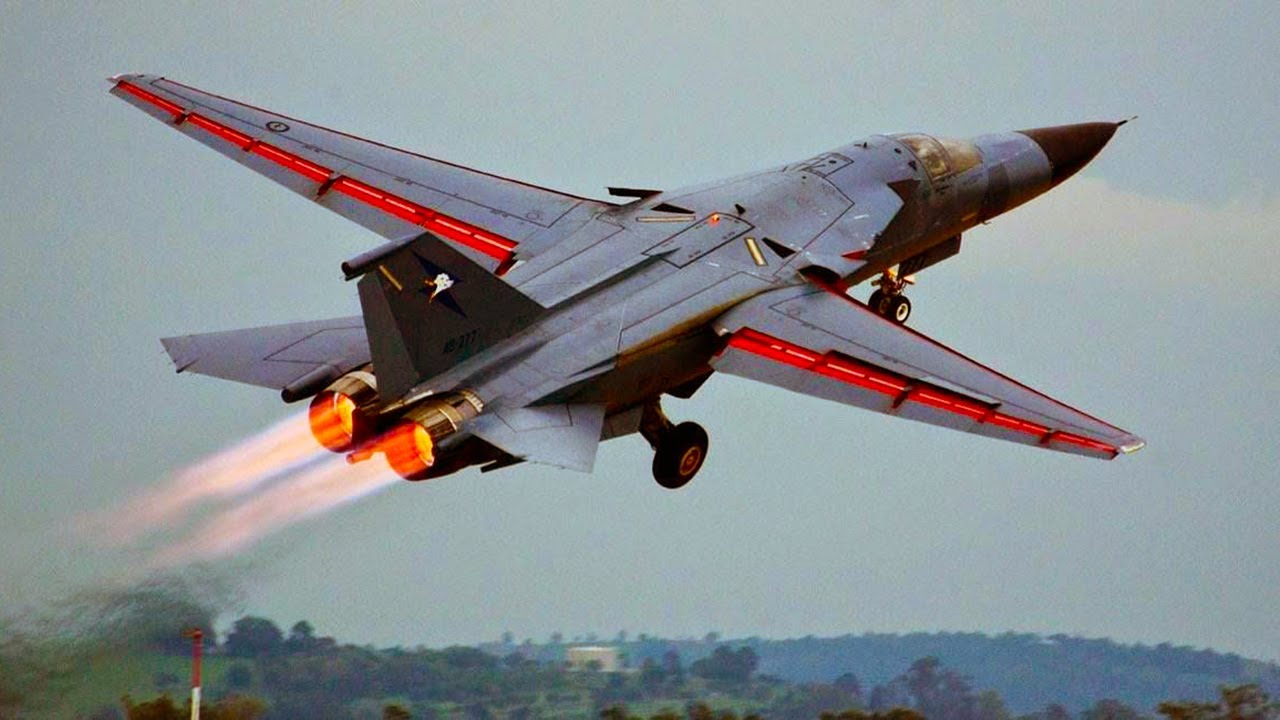
The General Dynamics F-111 Aardvark supersonic fighter-bomber was affectionately nicknamed “the Pig” by the pilots of the Royal Australian Air Force (RAAF), and that makes perfect sense for two reasons:
-“Aardvark” is an Afrikaans word that literally means “earth pig,” though granted, one could nitpick by noting that since the F-111 is an airplane and not a tank, perhaps “Lugvark”—“air pig”—would be more technically apropos.
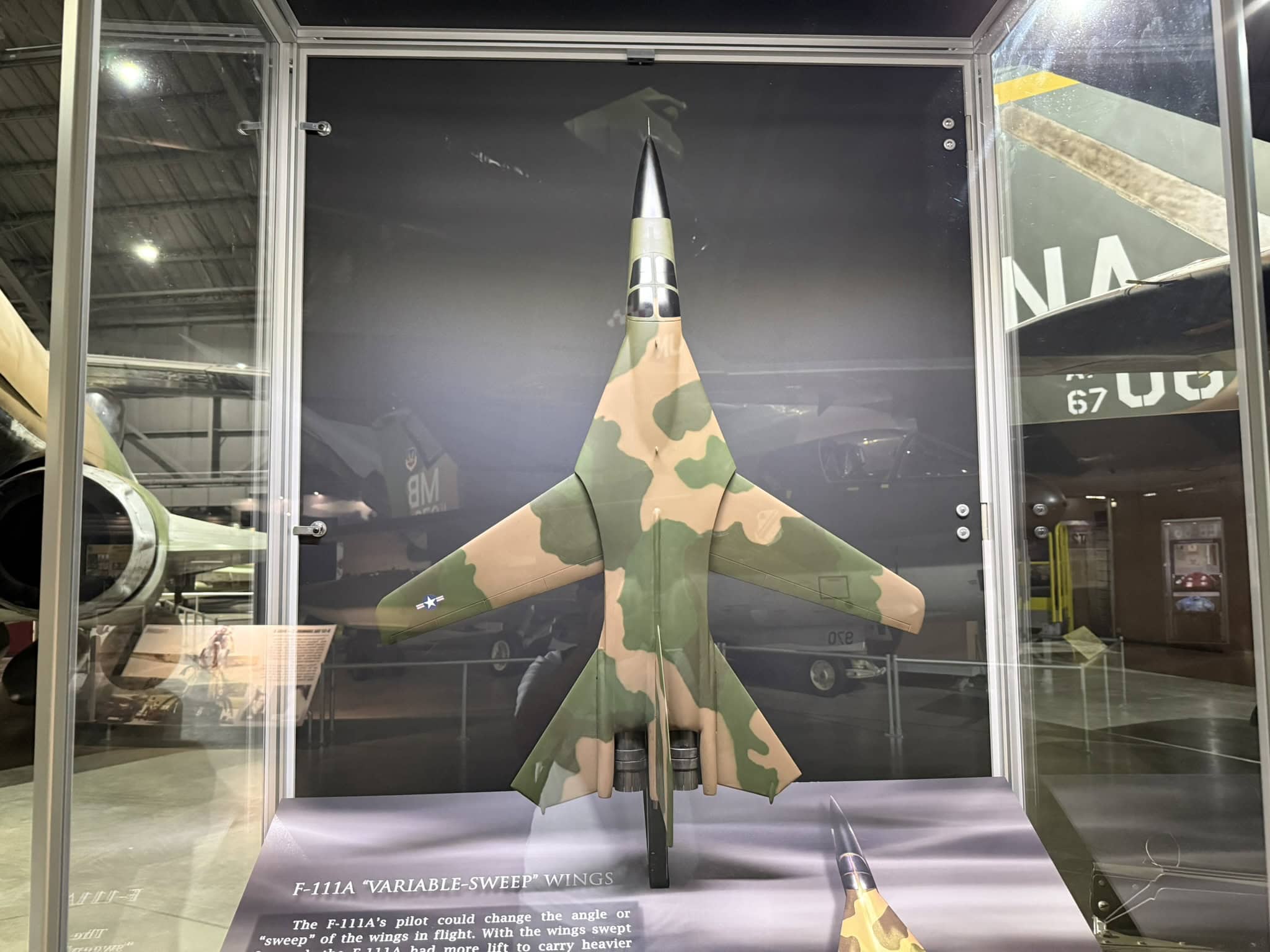
F-111 On Display at the National Museum of the U.S. Air Force. Take on July 19, 2025 by Harry J. Kazianis for 19FortyFive.com
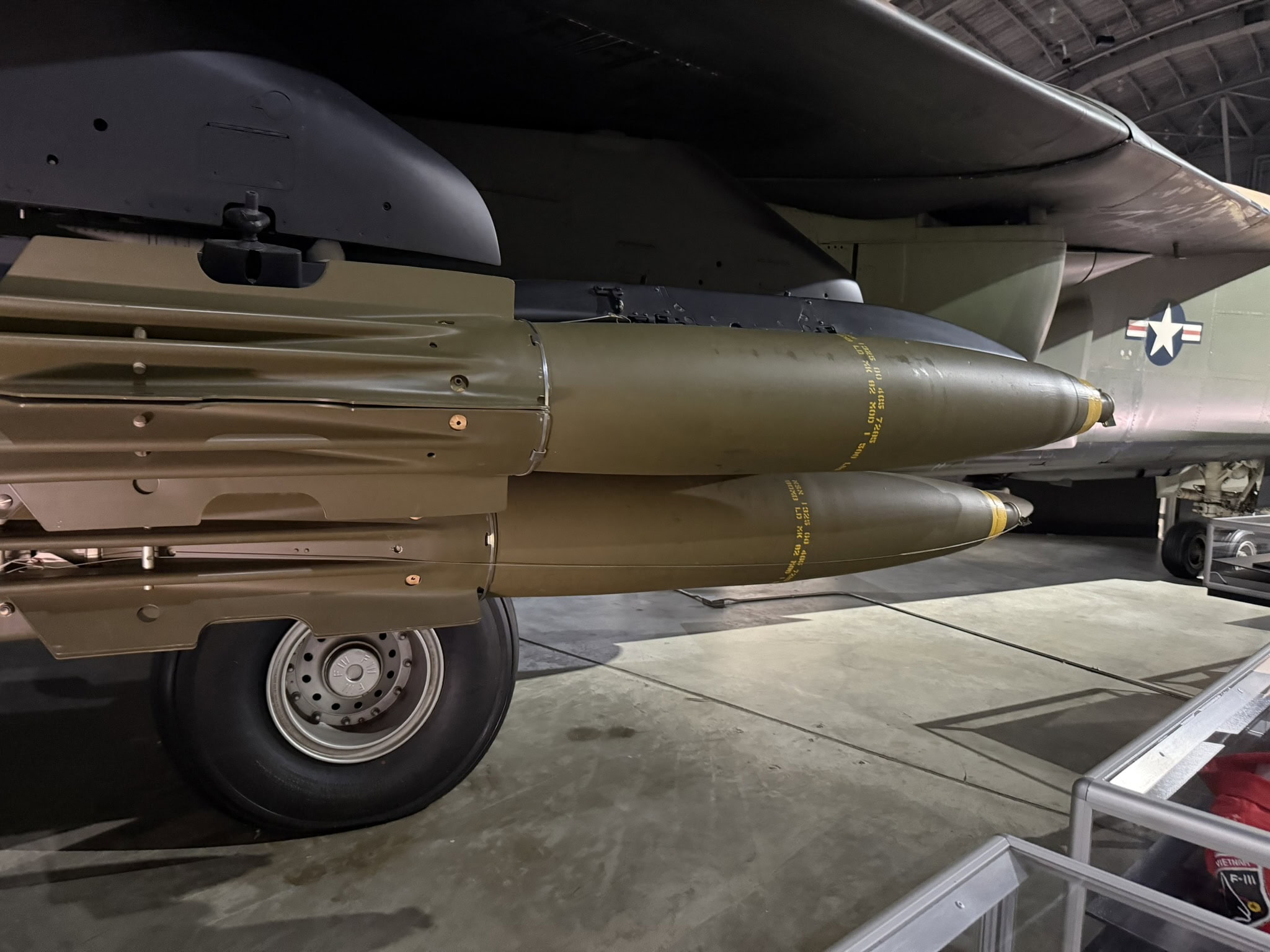
F-111 On Display at the National Museum of the U.S. Air Force. Take on July 19, 2025 by Harry J. Kazianis for 19FortyFive.com
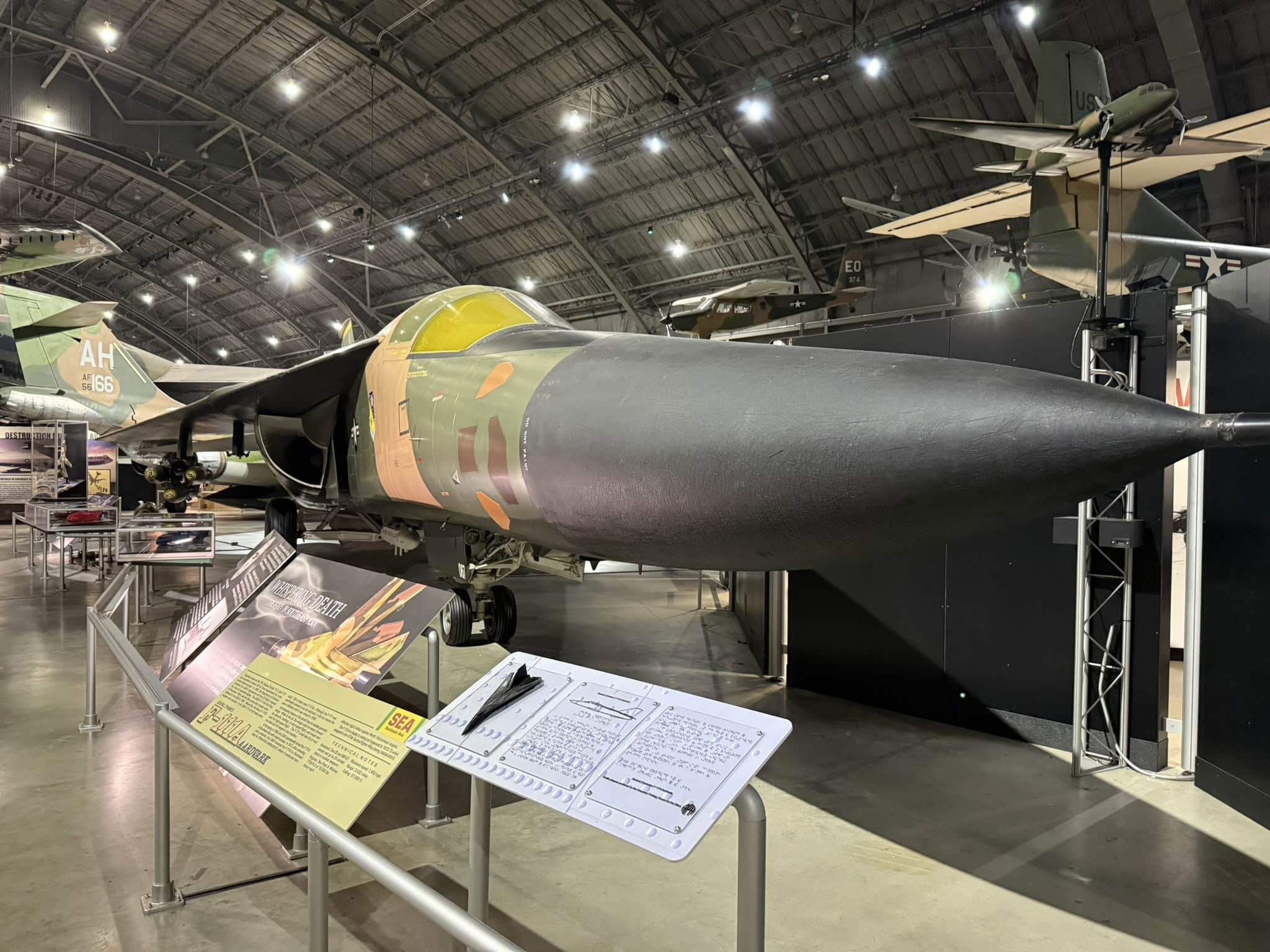
F-111 On Display at the National Museum of the U.S. Air Force. Take on July 19, 2025 by Harry J. Kazianis for 19FortyFive.com
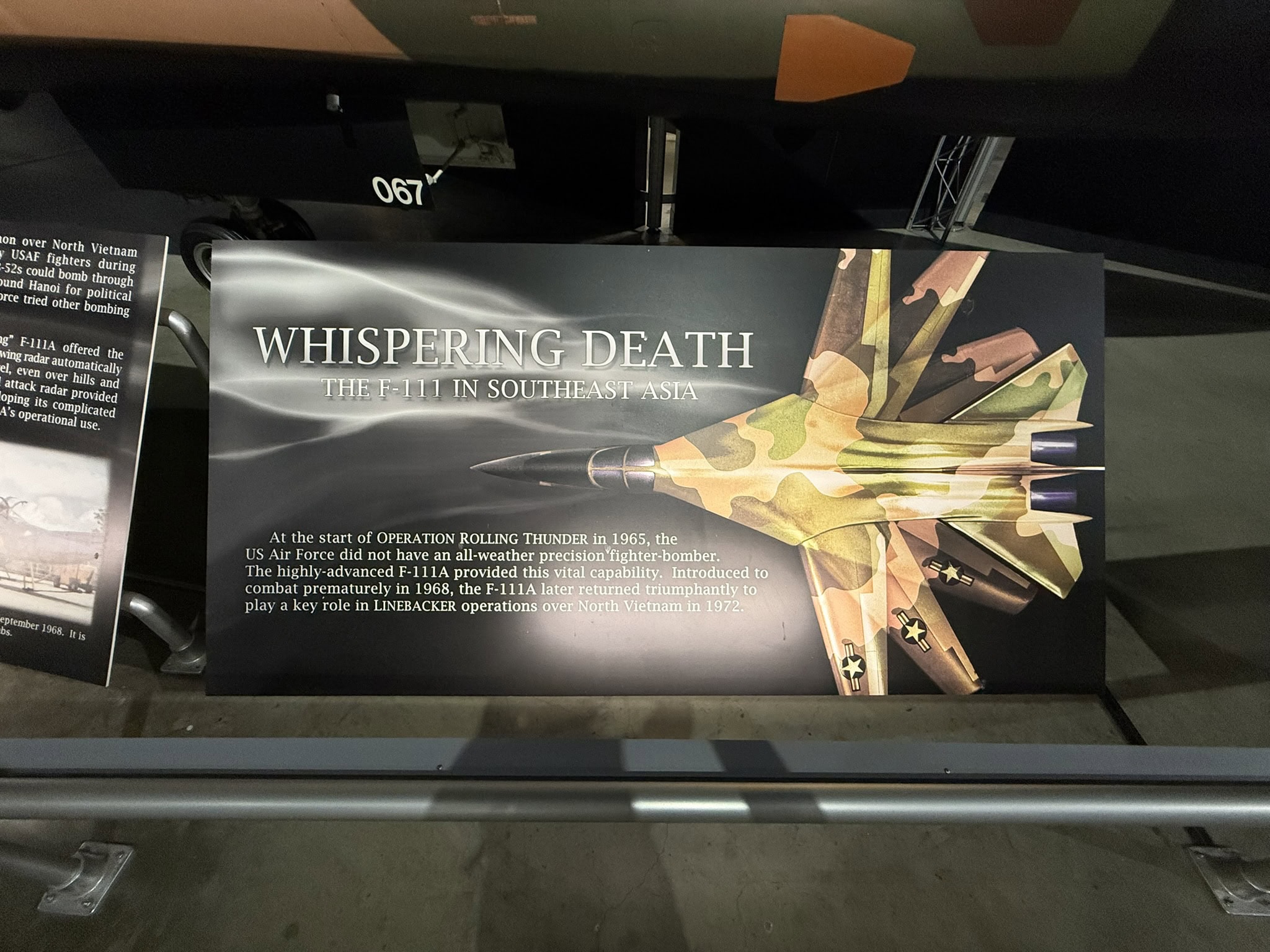
F-111 On Display at the National Museum of the U.S. Air Force. Take on July 19, 2025 by Harry J. Kazianis for 19FortyFive.com
-Just like flesh & blood pigs, the F-111 “Pig” gets a bum rap; many critics have deemed the Aardvark to be an utter boondoggle and failure, with one pundit going so far as to dub it “The F-35 Of Its Day.”
Well, in the humble opinion of this bacon-loving former U.S. Air Force officer, both of those pigs’ bum raps are undeserved.
Since this is a military-oriented publication rather than a culinary one, this writer shall discuss the history of the warbird instead of the mammal.
F-111 Aardvark Initial History and Premise
In fairness, it’s understandable why some would consider the F-111 to be a failure, in light of the “guilt by association” philosophy.
In this instance, guilt by association was attributed to Robert Strange McNamara, U.S. Secretary of Defense (SECDEF) under both JFK and LBJ. A lot of what Mr. McNamara touched in his tenure as SECDEF indeed didn’t turn out well, and his name was particularly reviled amongst Vietnam War fighter pilot veterans.
The Aardvark was hatched as part of McNamara’s Tactical Fighter Experimental program in 1961, intended to meet the USAF’s requirement for a long-range ground-attack and close-air-support (CAS) plane as well as the U.S. Navy’s requirement for a loitering interceptor. The “squids” rejected it outright, whilst the “zoomies” accepted it very reluctantly. In other words, an attempt to please everyone by doing too much too soon ended up pleasing no one.
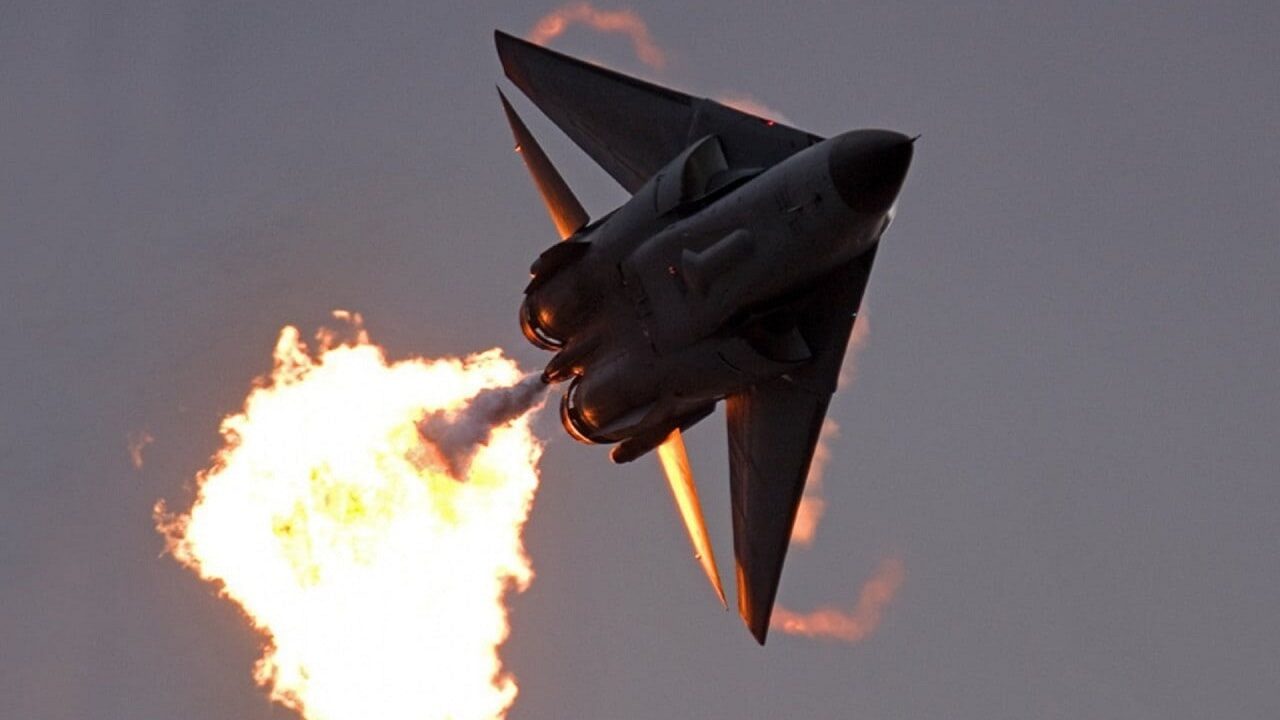
F-111. Image Credit: Creative Commons.
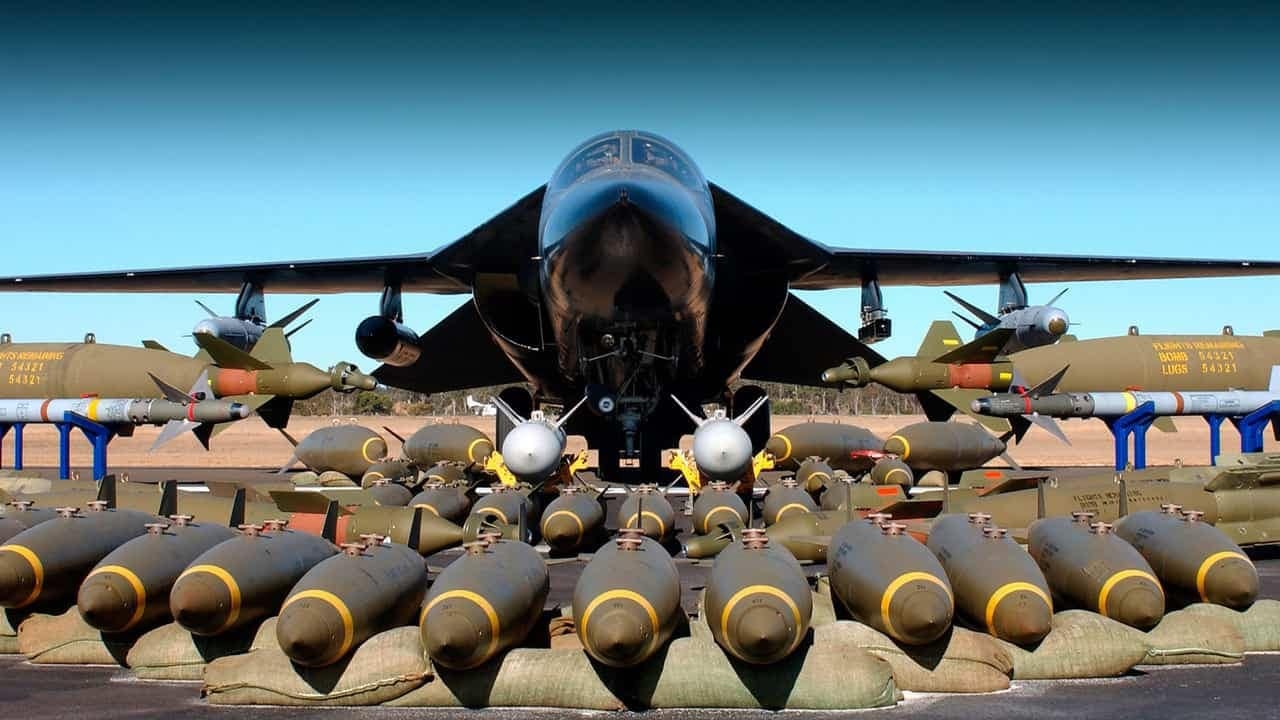
F-111 weapons loadout. Image Credit: Creative Commons.
But as one saying goes, “Even a broken clock is right twice a day.” The Aardvark made its maiden flight on 21 December 1964, and, despite the aforementioned reluctance of the brass, it officially entered USAF service on 18 July 1967. The RAAF followed suit by adopting “The Pig” in March 1973.
The Yanks and Aussies alike ended up with a variable-sweep winged, Mach 2.5, medium-range, multirole combat aircraft, powered by Pratt & Whitney TF30-P-103 or TF30-P-109 turbofan engines, and armed with a 20mm M61A1 Vulcan cannon and a payload capacity of up to 35,500 lb. of munitions in the bomb bay and on pylons.
“Pig” Combat Performance: Succeeding In Spite of the Naysayers
The F-111 was first blooded in combat in that same Vietnam War that McNamara and LBJ buggered up so badly.
Ignoring the armchair experts and instead turning to someone who actually flew the warbird, we note these words from former F-111 pilot Richard Crandall, “The radar was the best in the fighter world at the time.” As a result of the Aardvark’s successful participation in 1972’s Operation Linebacker and Linebacker II—154 low-level sorties flown during the latter—the North Vietnamese nicknamed the aircraft “Whispering Death.
All in all, the maligned warbird ended up flying more than 4,000 combat missions in the deadly skies over Vietnam with only six combat losses! In addition, it established the best safety record of any of the aircraft in the “Century Series” of fighters, with only 77 aircraft losses in a million flying hours.
Fast-forward a full decade past the end of the Vietnam War, and the F-111 had its shiniest moment in the spotlight: Operation El Dorado Canyon, an airstrike ordered by then-POTUS Ronald Wilson Reagan against maniacal madman Muammar Gaddafi’s Libya on April 15, 1986, in retaliation for the terrorist bombing of a West Berlin discotheque bombing ten days earlier; the bombing claimed the lives of three people, including US Army Sergeants Kenneth T. Ford and James E. Goins.
18 F-111s of the 48th Tactical Fighter Wing (TFW) participated, completing the longest fighter combat mission in history: a round-trip flight between RAF Lakenheath and Libya spanning 6,400 miles and 13 hours.
End results: 45 of Gaddafi’s troops and officials killed, and three to five Ilyushin IL-76 “Candid” transport planes destroyed along with 14 MiG-23 “Flogger” fighter jets, two choppers, and five major ground radars, in exchange for the loss of one F-111, flown by Captains Fernando L. Ribas-Dominicci and Paul F. Lorence.
Fast-forward again, this time to the 1991 Persian Gulf War, aka Operation Desert Storm, and “The Pig” turned in an arguably even more impressive—yet way underappreciated—wartime achievement: it outperformed a far more critically acclaimed “flying pig,” that being the legendary A-10 Warthog! Using their PAVE Tack targeting pods combined with laser-guided bombs, F-111s took out over 1,500 Iraqi armored vehicles belonging to then-strongman Saddam Hussein; by contrast, the Warthogs killed a comparatively modest 900 enemy armored vehicles, a mere two-thirds of the Aardvarks’ tank kill tally.
Some “failure,” eh?
Where Are They Now?
The USAF retired the Aardvark in 1998. The Aussies held on to their Pigs until 2010, making them the longest-serving bomber/strike aircraft in RAAF history, with a service life spanning 37 years.
Of the 563 total F-111 airframes built, roughly 40 survive today; among them is a Desert Storm veteran on display at the National Museum of the United States Air Force at Wright-Patterson AFB near Dayton, Ohio, which our esteemed Editor-in-Chief was lucky enough to visit not too long ago.
Parting Thoughts
As another saying goes, “One man’s trash is another man’s treasure.” Based upon our assessment of the real-world combat record of “the Pig,” the worst thing we can say about this warbird is that it was—to use a favorite paradoxical phrase of the late U.S. historian Thomas A. Bailey—a “successful failure.” That’s way better than can be said about a lot of military aircraft, past and present.
MORE – Why Nothing Can Beat the US Navy’s Seawolf-Class Submarine
About the Author: Christian D. Orr
Christian D. Orr is a Senior Defense Editor. He is a former Air Force Security Forces officer, Federal law enforcement officer, and private military contractor (with assignments worked in Iraq, the United Arab Emirates, Kosovo, Japan, Germany, and the Pentagon). Chris holds a B.A. in International Relations from the University of Southern California (USC) and an M.A. in Intelligence Studies (with a concentration in Terrorism Studies) from American Military University (AMU). He is also the author of the book “Five Decades of a Fabulous Firearm: Celebrating the 50th Anniversary of the Beretta 92 Pistol Series,” the second edition of which was recently published.