
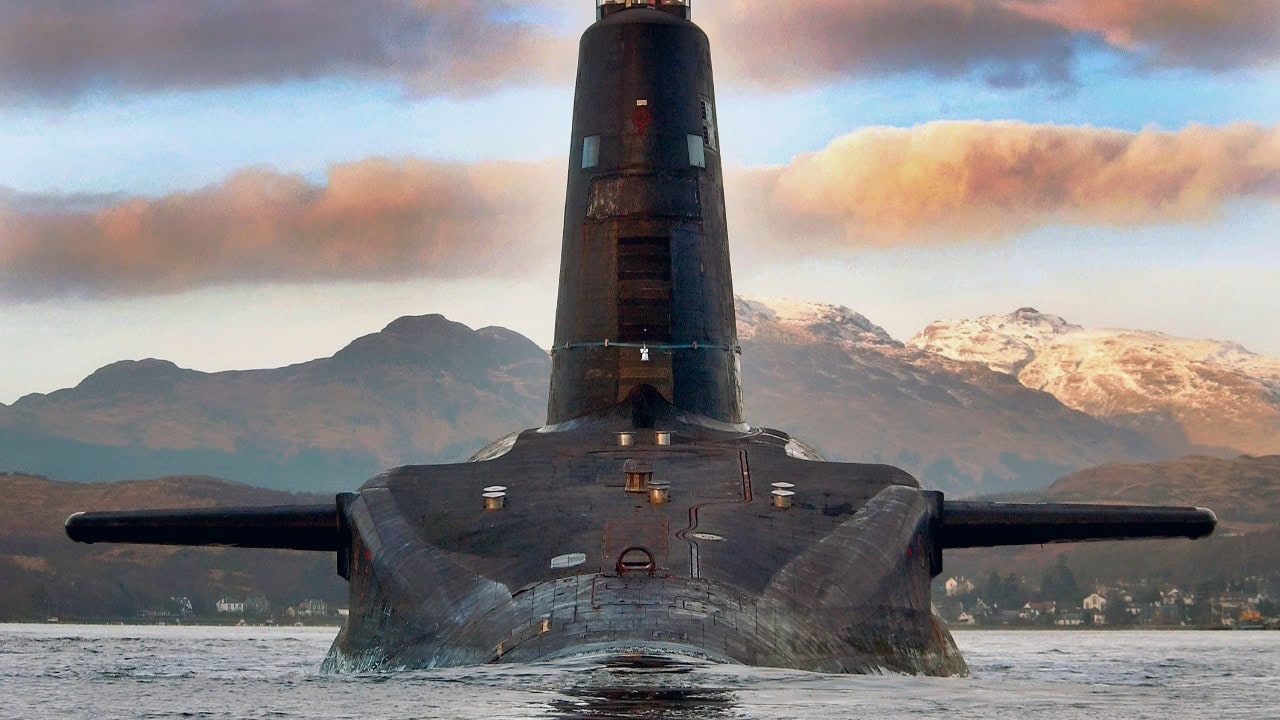
Vanguard-Class SSBNs in August 2026: Four Boats, Trident II and the Dreadnought Transition – Britain’s four Vanguard-class ballistic-missile submarines remain the country’s only operational strategic nuclear delivery system in August 2026. One boat is kept at sea at all times under Operation Relentless, continuing a Royal Navy mission that has run without interruption since 1969.
The Ministry of Defence does not identify the submarine conducting the current patrol. It also withholds the locations and immediate readiness of HMS Vanguard, HMS Victorious, HMS Vigilant and HMS Vengeance. The secrecy is central to the mission. An adversary must assume that one nuclear-armed submarine remains hidden and able to retaliate after an attack on Britain.
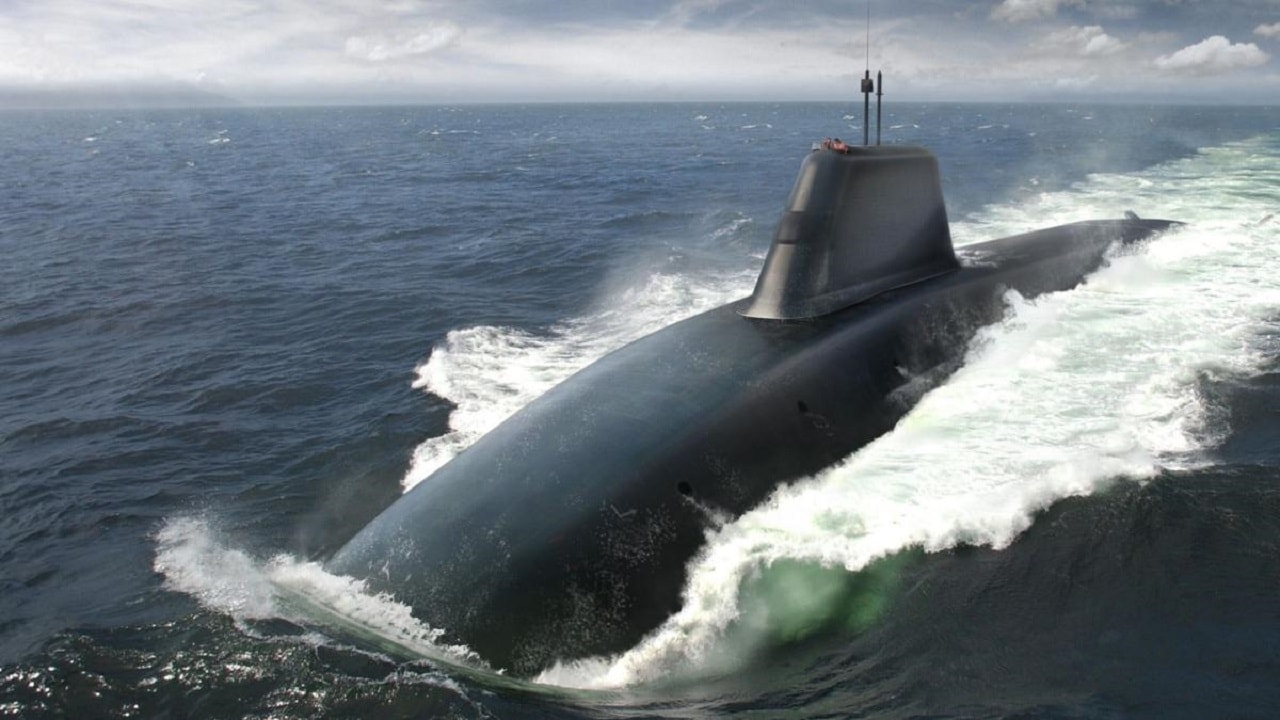
The Dreadnought-class is the future replacement for the Vanguard-class of ballistic missile submarines.
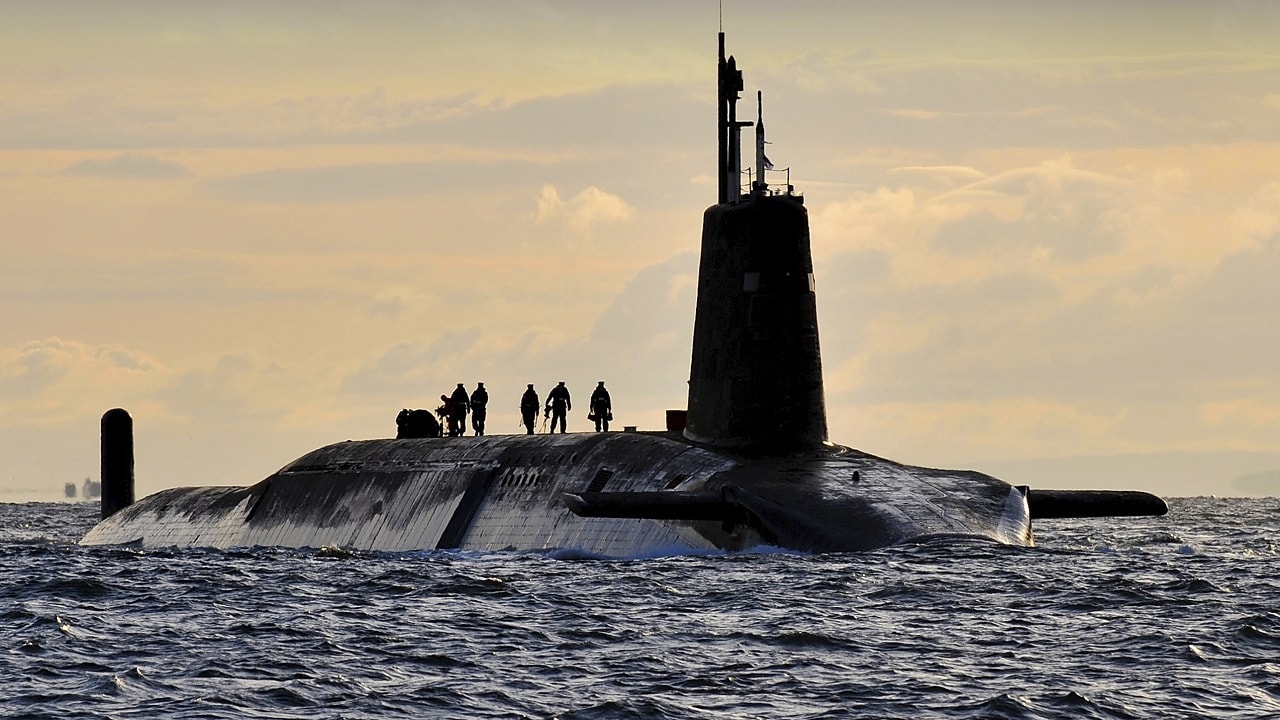
Nuclear submarine HMS Vanguard arrives back at HM Naval Base Clyde, Faslane, Scotland following a patrol.
The age of the fleet is less secret. Vanguard entered service in 1993, while the youngest boat, Vengeance, was commissioned in 1999. The oldest is now 33 and the youngest 27, well beyond the 25-year service assumptions used during early planning.
The Royal Navy confirmed that another Vanguard-class boat and its 140 submariners returned to HM Naval Base Clyde on April 18 after completing a deterrent patrol. The service did not name the submarine, preserving the pattern of operational ambiguity surrounding the fleet.
The Vanguard Class Replaced Britain’s Polaris Submarines
The Vanguard program began after the British government decided to replace the Resolution-class submarines and their Polaris missiles with the American-designed Trident II D5 system. Vickers Shipbuilding and Engineering, now part of BAE Systems, built all four boats at Barrow-in-Furness.
Vanguard was commissioned in August 1993. Victorious followed in 1995, Vigilant in 1996, and Vengeance in 1999. The class assumed the full Continuous At-Sea Deterrent mission previously carried by the four Resolution-class submarines.
The United Kingdom later withdrew its remaining air-delivered nuclear weapons, making the Vanguard fleet the sole operational platform for Britain’s sovereign nuclear arsenal.
Vanguard-Class by the Numbers
The Royal Navy lists each Vanguard-class submarine at 149.9 meters long and 15,900 tonnes submerged. The nominal crew consists of 132 officers and sailors, although patrols can include additional personnel.
A Rolls-Royce PWR2 pressurized-water reactor generates steam to drive the turbines and power the electrical systems. The published submerged speed is 25 knots. Nuclear propulsion gives the submarine effectively unlimited cruising range, with food, maintenance requirements, and crew endurance setting the practical limit.
The large missile section makes a Vanguard roughly twice as heavy as the Polaris-armed Resolution class. The boats remain among the largest vessels in Royal Navy service despite spending almost their entire operational lives underwater.
Trident II D5 Missiles Form the Main Weapon
Each boat was built with 16 independently controlled ballistic-missile tubes for Trident II D5 submarine-launched missiles. The UK draws its missiles from a shared pool maintained with the United States at Kings Bay, Georgia, while operating them under independent British command.
The nuclear warheads are British. The existing Mk4A design is maintained by the Atomic Weapons Establishment, with a replacement warhead program underway for introduction from the late 2030s.
Under the policy announced in 2010, a patrol submarine carried no more than eight operational missiles and around 40 warheads. The government stopped publishing deployed missile and warhead totals after the 2021 Integrated Review. The current operational load is therefore classified, while the national stockpile ceiling stands at no more than 260 warheads.
Four 533mm torpedo tubes give the submarines a conventional self-defense weapon. A Vanguard-class boat completed sea-acceptance testing of the modernized Spearfish Mod 1 heavyweight torpedo, which received a new warhead, electronics, fuel system, and fiber-optic guidance link.
Where the Four Vanguard Submarines Stand in August 2026
The public fleet picture consists of one boat on patrol, others preparing for or recovering from patrols, and one undergoing deep maintenance. Exact assignments remain undisclosed.
HMS Vanguard has completed its major refit, reactor work, sea trials and certification. The Submarine Delivery Agency says the lead boat rejoined the operational cycle as planned.
HMS Victorious is the visible exception. It entered Devonport for a platform-wide life-extension program under a £560 million contract. Babcock’s June 2026 results placed the submarine in dry dock and progressing through the rebuild phase. The work is intended to keep Victorious conducting patrols well into the 2030s.
Vigilant and Vengeance remain commissioned members of the operational pool. Their detailed schedules are hidden, but they must share patrol preparation, training and maintenance with Vanguard while Victorious remains unavailable.
That is demanding arithmetic for a four-boat force. Maintaining one submarine continuously at sea requires another approaching readiness, one recovering or undergoing shorter maintenance, and the fourth moving through deeper work. A long defect or delayed refit removes most of the margin.
The Dreadnought Class Is Now Fully Under Construction
Britain is replacing the four Vanguards with HMS Dreadnought, HMS Valiant, HMS Warspite and HMS King George VI. All four are now under construction at Barrow after steel was cut for King George VI in September 2025.
The Dreadnought class will displace 17,200 tonnes and measure 153.6 metres. Each submarine will carry about 130 people and use a Rolls-Royce PWR3 reactor designed for a longer service life and lower maintenance burden.
The new boats will have 12 ballistic-missile tubes rather than Vanguard’s 16, while continuing to use the Trident II D5. X-shaped stern controls, pump-jet propulsion, quieter machinery, and a fly-by-wire control system are intended to make the class harder to detect and easier to operate.
On July 30, the government announced £8.4 billion for the fourth production phase. The funding is meant to carry Dreadnought through sea trials and entry into service, bring Valiant to the beginning of its sea trials and continue construction of Warspite and King George VI.
The full Dreadnought acquisition program is budgeted at £31 billion, with a £10 billion contingency. The first boat is due to enter service in the early 2030s, followed sequentially by its three sisters.
The Vanguard-to-Dreadnought Handover Cannot Leave a Gap
Dreadnought’s delivery will not immediately retire all four Vanguards. The lead submarine must finish sea trials, certify its reactor, weapons, and crew, and demonstrate that it can assume an operational patrol. The older boats will leave service one by one as the new class becomes available.
That schedule explains the scale of the Victorious refit. Britain is rebuilding a submarine commissioned in 1995 because the deterrent patrol cannot wait for Barrow to finish Dreadnought.
At Devonport, workers are reinstalling equipment inside Victorious. At Barrow, sections of the first Dreadnought are moving through assembly. The submarine presently carrying Britain’s deterrent remains unnamed, submerged, and absent from the public fleet list.
MORE – The Royal Navy’s Astute-Class Nuclear Submarines are in Trouble
About the Author: Harry J. Kazianis
Harry J. Kazianis (@Grecianformula) was the former Senior Director of National Security Affairs at the Center for the National Interest, a foreign policy think tank founded by Richard Nixon in Washington, D.C. Harry has more than a decade of experience in think tanks and national security publishing. His ideas have been published in The New York Times, The Washington Post, The Wall Street Journal, CNN and many other outlets worldwide. He has held positions at CSIS, the Heritage Foundation, the University of Nottingham and several other institutions related to national security research and studies. He is the former Executive Editor of The National Interest and The Diplomat. He holds a master’s degree focusing on international affairs from Harvard University.

