
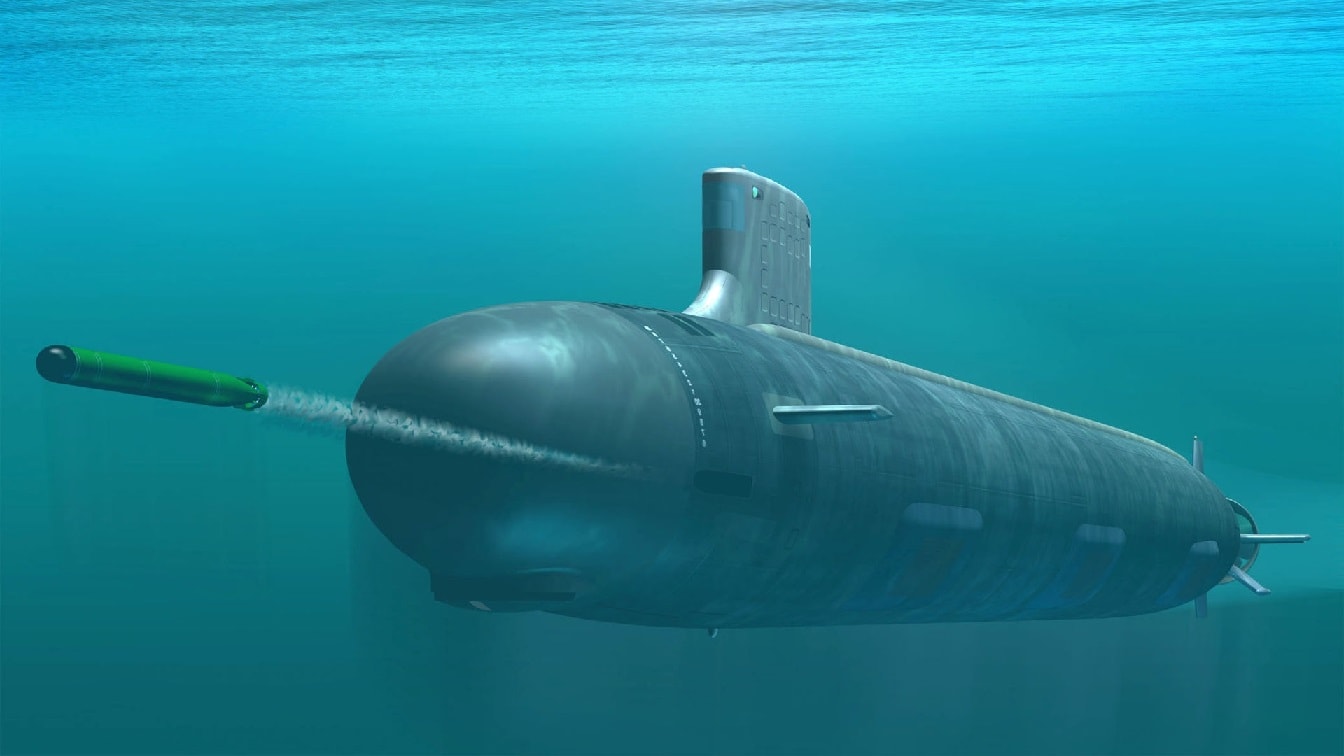
The Navy Deferred SSN(X) to 2040. The Yards That Would Build It Are Already Full. – Well, this is strange: The US Navy’s next attack submarine has no name, hull number, or frozen design. It has a designation, SSN(X), and a sentence the service has been repeating for years: take the speed and payload of the Seawolf class, the quieting and sensors of the Virginia class, and the operational availability of the Columbia class, and put them in one boat. That sentence is the program, for better or worse.
SSN(X): Explained
Under the Navy’s fiscal 2020 thirty-year shipbuilding plan, the first SSN(X) was to be procured in fiscal 2031.
Later budgets moved the buy to fiscal 2035. The fiscal 2025 submission moved it again to fiscal 2040, which the Navy attributed to limitations on the Navy’s total budget. The fiscal 2026 request did not pull the date forward. A January 2025 Congressional Budget Office report priced the average hull at $7.1 billion by the Navy’s estimate and $8.7 billion by CBO’s, in constant fiscal 2024 dollars.
The fiscal 2026 research budget asked for $622.8 million to keep the work alive: $366.0 million for class development and $256.8 million for next-generation fast-attack nuclear propulsion. The fiscal 2027 request for the class-development line is $315.9 million, down year-over-year.
That is still real money. It is not a ship. The May 2026 thirty-year plan says “planned lead boat construction in the early 2040s,” with a mixed Virginia and SSN(X) force “starting in the mid-2040s,” after more Virginia Block VI and Block VII boats, and after Columbia has taken its cut of Electric Boat and Newport News.
No Navy official has canceled the boat, well, at least for now. On March 8, 2024, Undersecretary of the Navy Erik Raven said the service had “knowingly took risk in the schedule” on the next-generation programs to protect readiness and the undersea work already under contract. A boat that slips from a 2031 buy to a 2040 buy before a lead hull is ordered is not waiting on a drawing. It is waiting on yards that already cannot emit the class they are building.
The Requirement Is Three Older Classes in One Hull
The Navy wrote the requirement in unusually plain public language. The fiscal 2026 research-justification book says SSN(X) will provide “greater speed, increased horizontal [i.e., torpedo room] payload capacity, improved signatures, flexibility to adapt to future threats, and higher operational availability.” It is also supposed to run “full spectrum undersea warfare” and to “employ and coordinate with a larger contingent of remote autonomous systems (RAS) and sensors as a force multiplier.”

(June 30, 2011) The Virginia-class attack submarine USS California (SSN 781) underway during sea trials. (U.S. Navy photo by Chris Oxley/Released).
An earlier budget book, for fiscal 2021, was more specific about the trade. Virginia was designed for multi-mission work in the littoral. SSN(X) is supposed to have greater transit speed under stealth, carry a larger inventory of weapons and diverse payloads, and put renewed priority on anti-submarine warfare against sophisticated threats in greater numbers. It is also supposed to defend against unmanned undersea vehicles and to work with off-hull vehicles and sensors. In July 2021, Rear Adm. Bill Houston, then the director of undersea warfare, put the same idea in three parts: Seawolf speed and payload, Virginia acoustics and sensors, Columbia availability and service life.
The strategic case is not mysterious. Los Angeles-class boats are leaving faster than Virginias arrive. The attack-submarine goal is still 66. The May 2026 plan bottoms the force in the mid-40s in fiscal 2030–31, and those tables do not subtract AUKUS transfers (more on that in a second). China is building nuclear attack boats at Huludao on a clock the U.S. industrial base has not matched. SSN(X) is how the Navy wants to restore a qualitative lead after the quantitative trough. The problem is that the qualitative boat is scheduled to arrive after the trough has already passed.
What Is Public About Size and Weapons — and What Is Not on SSN(X)
No official length, beam, crew, tube count, or vertical-launch layout has been released. Anyone publishing a weapons diagram is guessing. What can be sourced is narrower, and it is enough.
CBO’s January 2025 analysis of the fiscal 2025 shipbuilding plan assumes a submerged displacement of about 10,100 tons — roughly 11 percent more than Seawolf’s 9,138 tons, and well above a Block I–IV Virginia at about 7,800 tons. That is an estimating assumption, not a signed specification. It exists because later U.S. submarine designs have grown as quieting, sensors, and payloads have been added. If SSN(X) is supposed to carry a Seawolf-sized torpedo room and host unmanned systems, CBO’s extra displacement is the accounting that follows, not a scoop.
The official weapons language is “increased horizontal payload.” In Navy usage, that means the torpedo room, not a new vertical farm. Seawolf stows up to fifty weapons and has eight tubes. Virginia has four 21-inch tubes plus vertical cells (payload tubes), and Block V adds the Virginia Payload Module for a large Tomahawk load. SSN(X) is being sold as more of the Seawolf kind of magazine — more heavyweight weapons on the centerline — plus the ability to launch and control unmanned vehicles. The May 2026 plan says the boat will be “engineered from the outset to accommodate and utilize unmanned systems and payloads” and will have “organic hosting” of robotic and autonomous systems. That is a requirement. It is not a loadout card. And, of course, this could all change.
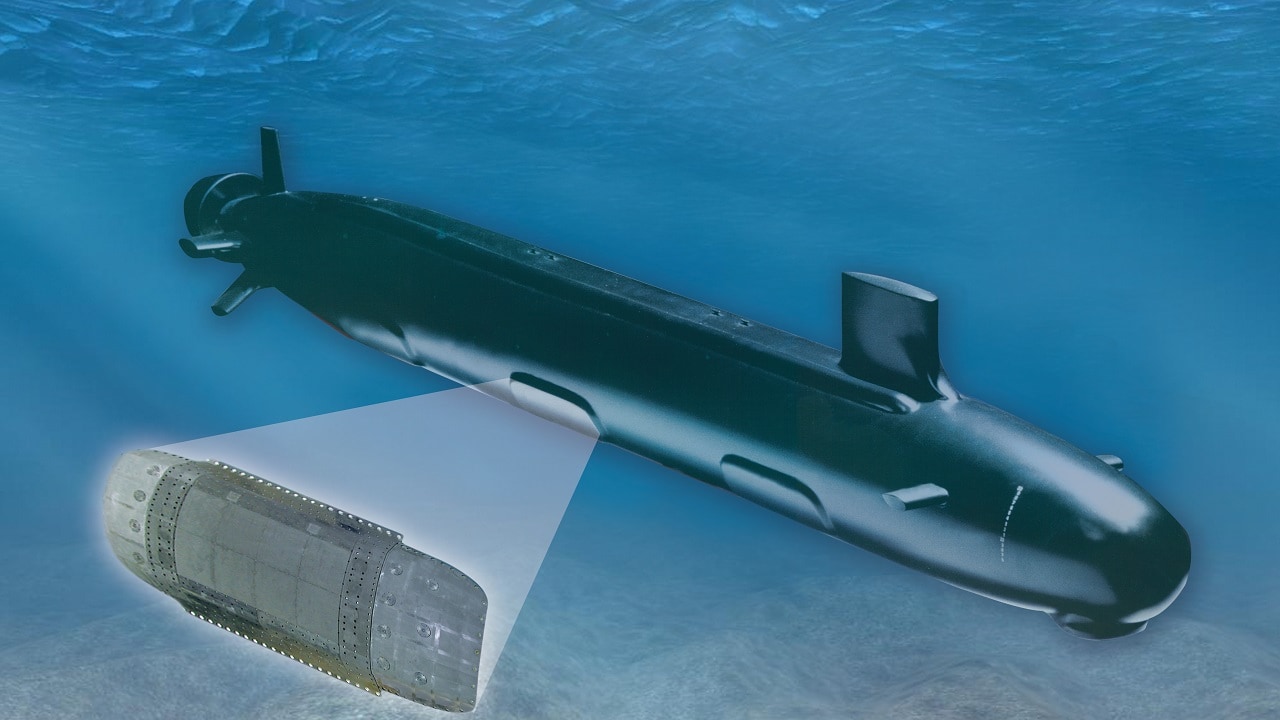
Block IV Virginia-class Submarine.
Propulsion is in the same state. More than $250 million of the fiscal 2026 request is allocated to next-generation fast-attack nuclear propulsion, not to a named plant. CRS asked whether the later buy date opened the door to a low-enriched-uranium reactor. A Navy information paper to CRS dated May 17, 2024, said the service would not pursue that path. Highly enriched uranium remains the position. No public budget book or CRS report treats electric drive as a chosen system.
The honest sentence is this: SSN(X) is being designed to be faster and roomier in the torpedo compartment than Virginia, quieter and more available than Seawolf, and able to fight with unmanned systems Seawolf never carried. The drawings that would make that sentence a ship are not public, and the yards that would turn drawings into steel are not free.
The Price Tag Moved Faster Than the Design
A Virginia-class boat with a payload module is about $5.0 billion in the fiscal 2026 budget when bought two a year. SSN(X), on paper, is 40 to 75 percent more than that before the first hull is designed. CBO is 23 percent above the Navy. Both figures are average procurement costs in fiscal 2024 dollars, and they include the more expensive lead ship. Combat-system growth and inflation between now and a mid-2040s delivery are not in those averages. There is no published standalone lead-ship price and no published total program cost.
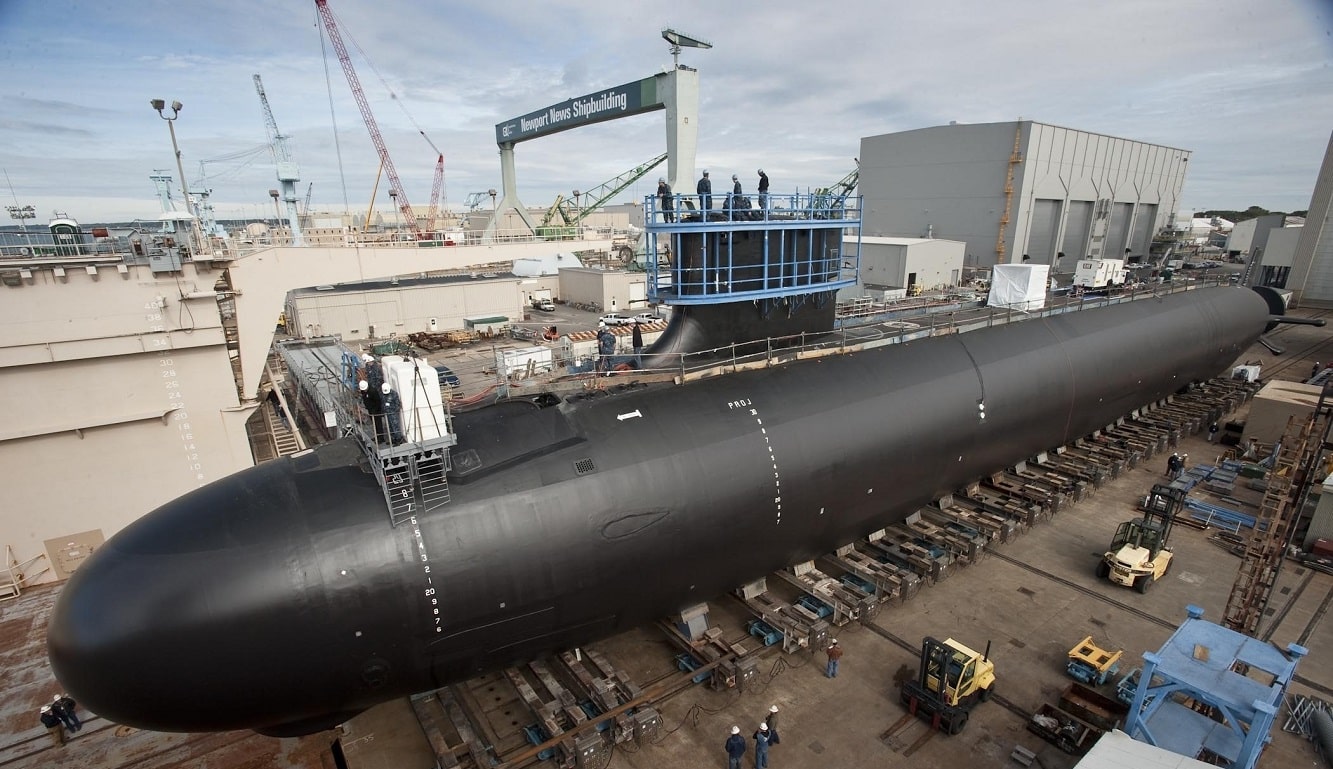
The Virginia-class attack submarine Minnesota (SSN 783) is under construction at Huntington Ingalls Newport News Shipbuilding. (U.S. Navy photo courtesy of Newport News Shipbuilding/Released)
Congress has treated the line as a program that can wait. The fiscal 2025 research request came in $208 million below the amount programmed in the prior five-year plan. House authorizers cut the class-development line that year and labeled the cut “program delay.” Senate appropriators trimmed fiscal 2026 money for prior-year carryover and to “rephase program growth.” The fiscal 2027 class-development request, $315.9 million, is lower again. Research can run for a long time at that level. Authorizing an $8 billion-class submarine in a budget that is already carrying Columbia, two Virginias, AUKUS industrial-base money, and a Ford-class carrier at Newport News is a different vote.
There is a second cost that doesn’t appear on the unit-price line. The fiscal 2025 thirty-year plan warned that delaying SSN(X) construction from the mid-2030s to the early 2040s “presents a significant challenge to the submarine design industrial base” because of the gap between Columbia design work and SSN(X) design work. Designers, unlike welders, do not sit idle for a decade and then restart at full skill. A program can die of an empty drawing office as easily as of an empty dry dock.
The Yards Are Already Booked Through the 2030s
Only two U.S. yards can build a nuclear submarine: General Dynamics Electric Boat in Groton and Quonset Point, and Huntington Ingalls at Newport News. Electric Boat builds only submarines. Newport News also builds carriers. The supplier base behind them consists of hundreds of firms, many of which are sole-source. That is the entire industrial fact that governs SSN(X).
Those yards are already under a load the Navy calls 1+2: one Columbia and two Virginias a year. The May 2026 plan calls for the top industrial-base priority and aims to hit it by fiscal 2031. One Columbia is roughly two and a half Virginias of work. The actual Virginia delivery rate since 2022 has been about 1.1 to 1.2 boats per year. CNO Adm. Daryl Caudle told USNI News in May 2026 that two a year would arrive around 2032. AUKUS wants 2.33 to cover boats sold to Australia, but that might change now as Canberra might get used Virginia-class boats. Regardless, adding a third class on top of that math is not a scheduling tweak. It is a request for a third nuclear shipbuilding nation that the United States does not have.
Columbia is the Navy’s top shipbuilding priority. It will stay that way until the first boats relieve the Ohio class. Virginia Block VI and VII are what the May 2026 plan uses to keep attack-boat numbers from falling through the floor and to keep the design and production workforce from thinning out before SSN(X) exists. The Navy’s public argument is that a 2040s SSN(X) will arrive once the current industrial-base investments have paid off. That argument assumes the investments work. Two Virginias a year is still a goal. It is not a rate.
CRS has already flagged the build-strategy choice the Navy has not made: team the two yards on every hull, as with Virginia and, in modified form, Columbia, or give whole boats to one yard, as with earlier classes. Either choice collides with the same welders, the same foundries, and the same reactor-plant vendors. The July 2026 award of $76.6 billion for nine more Virginias and five Columbias demands certainty. It is also a claim on the 2030s that SSN(X) does not yet have.
Fiscal 2040 Is a Buy Year, Not a Boat
If the first SSN(X) is procured in fiscal 2040, construction follows in the early 2040s and delivery later still. The last time CRS published a paired date, when first procurement still sat in fiscal 2035, delivery was shown in fiscal 2042. A 2040 buy implies a mid-2040s boat at the earliest, and that is if the design is mature and the yards have finally hit two Virginias a year. The Los Angeles retirements that open the 66-boat hole do not wait for that calendar. Neither does the Chinese nuclear-attack construction line.
The alternatives are already on the table, even when nobody calls them cancellations. Buy more Virginias. Stretch Block VII. Slip SSN(X) again. Each of those options is cheaper in the year it is voted on and more expensive in the decade it leaves the Navy, with the 1990s and 2000s quieting against a 2030s opponent. The Seawolf cut taught the same arithmetic in reverse: cancel the expensive boat, design a cheaper one, and spend twenty years discovering you cannot produce the cheaper one on time.
SSN(X) is still funded. The Navy still writes the three-class sentence. The May 2026 plan still projects the early 2040s. What the program lacks is a shipyard slot that can accommodate a 10,000-ton-class attack submarine without putting a Columbia or a Virginia on the waiting list. Until that slot exists, SSN(X) will keep looking like a requirement the service believes in, and a hurdle the budget can keep postponing.
The fiscal 2026 combined research request was $622.8 million. The fiscal 2027 class-development request is $315.9 million. The first procurement date on the books is fiscal 2040. CBO’s working displacement is about 10,100 tons. None of those figures is a submarine alongside a pier.
About the Author: Harry J. Kazianis
Harry J. Kazianis (@Grecianformula) was the former Senior Director of National Security Affairs at the Center for the National Interest (CFTNI), a foreign policy think tank founded by Richard Nixon based in Washington, DC. Harry has over a decade of experience in think tanks and national security publishing. His ideas have been published in the NY Times, The Washington Post, The Wall Street Journal, CNN, and many other outlets worldwide. He has held positions at CSIS, the Heritage Foundation, the University of Nottingham, and several other institutions related to national security research and studies. He is the former Executive Editor of the National Interest and the Diplomat. He holds a Master’s degree focusing on international affairs from Harvard University.