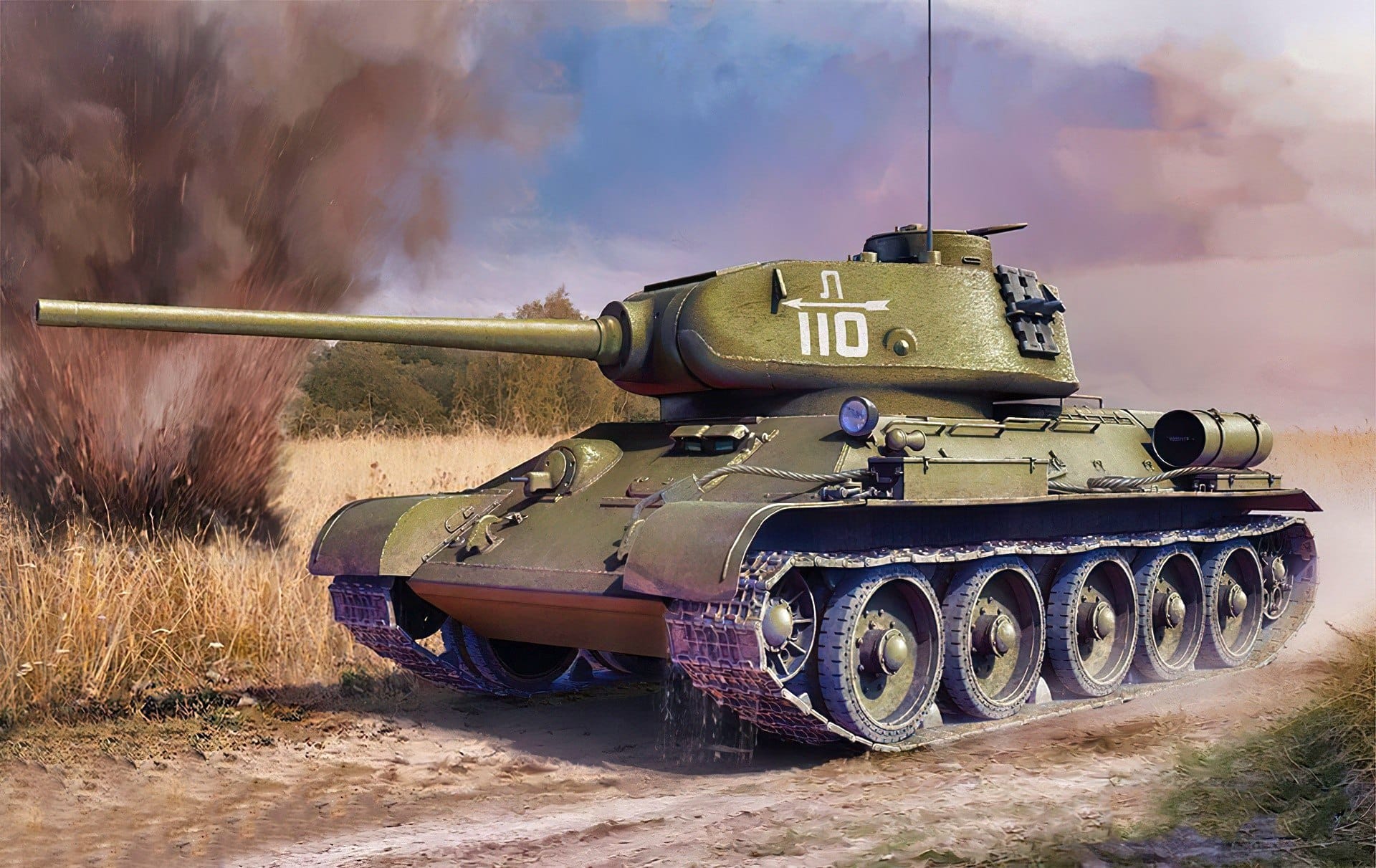
In Russia, the T-34 has a near-mythic status. It is no mistake that in every Victory Day parade from 1945 to the present, the T-34 has always been present, leading the charge. For many, the tank symbolizes the Soviet Union’s industrial prowess and fighting spirit. But was the T-34 really that good? Is it really the best tank in WWII?
Several things can be true at once.
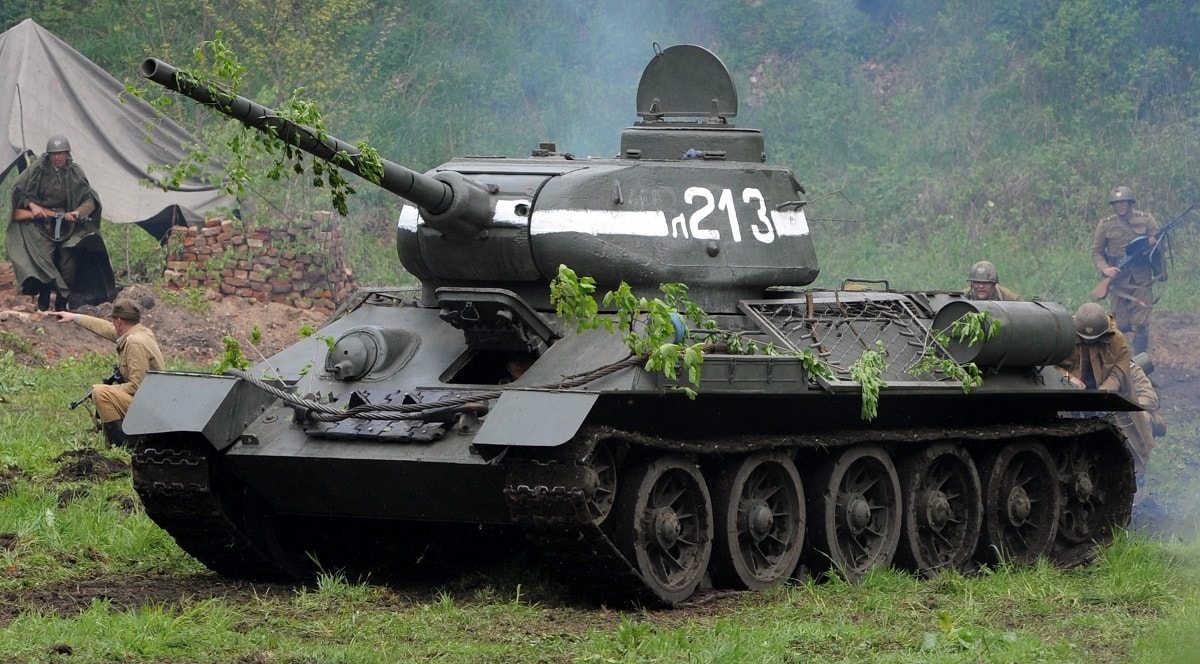
T-34.
In terms of armor, firepower, and survivability, the T-34 was inferior to several contemporary tank designs.
It is also true that the tank was an invaluable asset to the USSR and that its simple design and high production rate were instrumental in the Soviet Union’s victory.
Design and Development
The T-34 was designed at the Kharkiv Komintern Locomotive Plant (KhPZ) by Mikhail Koshkin. Koshkin observed the performance of other Soviet designs during border skirmishes with Japan and the Spanish Civil War.
He observed that Soviet tanks were often lacking in armor and firepower, and that their petrol engines were prone to catching fire.
Koshkin therefore sought to design a new medium tank that would be quick enough to operate the Soviets’ developing concepts of high-speed maneuver warfare while being more survivable than previous designs.
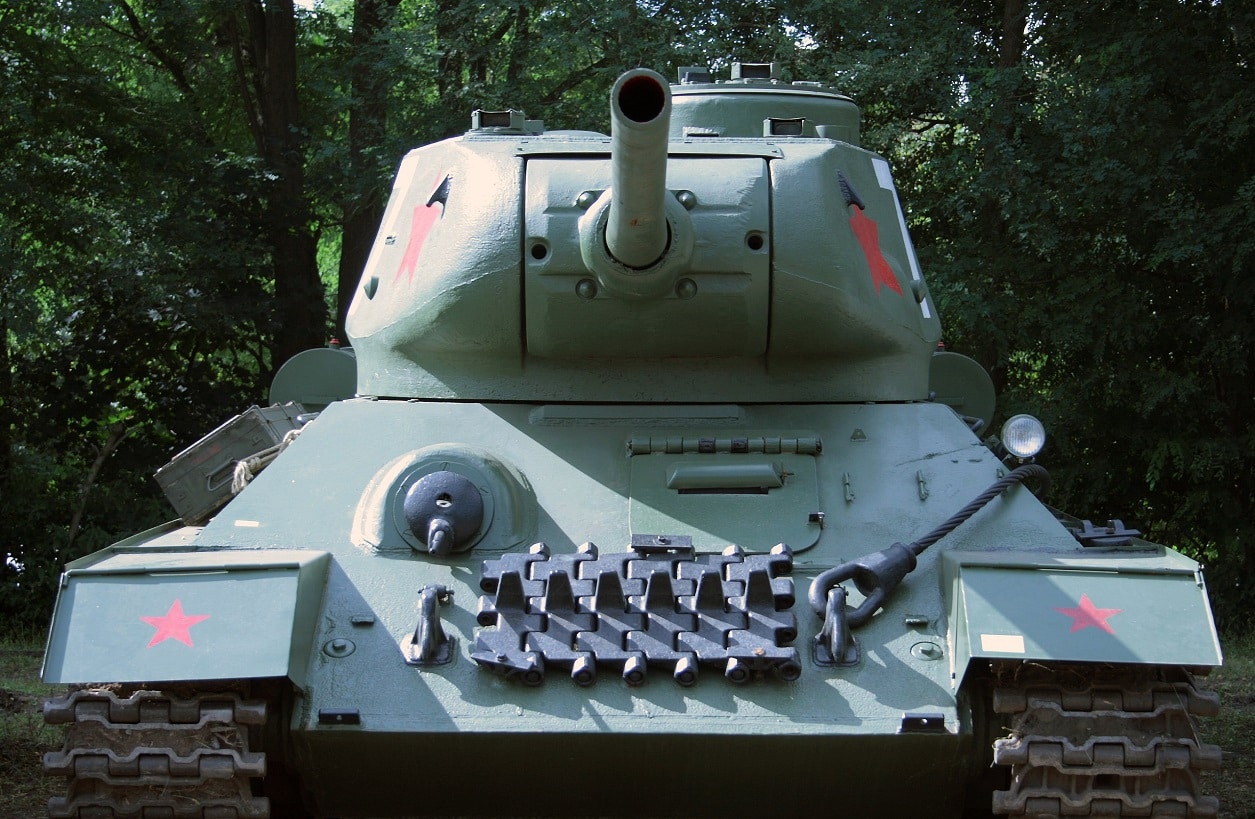
T-34 Tank. Image Credit: Creative Commons.
The result was prototype A-32, an innovative design that incorporated heavily sloped armor and a 32 mm gun. As a sidenote, the T-34 is often mentioned as a pioneer of sloped armor.
This, however, is not true.
Many tank designs as far back as WWI incorporated sloped armor. The T-34’s armor was sloped and much thicker than many of its predecessors, hence why it was so successful.
Prototype A-32 was put through rigorous state trials, during which Koshkin himself died of hyperthermia.
Initially, Soviet command hesitated to put the tank into service, fearing the new design would cost too much to manufacture.
However, after other Soviet tanks performed abysmally during the Winter War, high command relented, and the tank was accepted under the designation T-34.
The T-34 benefited greatly from its Christie suspension, designed by American engineer J. Walter Christie.
The Christie suspension, combined with the tank’s V-12 Diesel engine, gave the tank exceptional maneuverability for its time, especially for a medium tank.
Barbarossa: The T-34 in Action
When Germany launched its surprise invasion in 1941, the Soviets had around 900 T-34 tanks. Initially, the Germans were surprised by the tank’s armor, which was nearly impervious to the Panzer III and Panzer IV’s guns at the time, but the USSR did not have nearly enough tanks to stop the German advance.
The Wehrmacht advanced so quickly, in fact, that the Soviets were forced to physically relocate all of their tank factories West of the Ural Mountains.
This process slowed down tank production for a time, forcing the USSR to throw literally everything they could at the Germans in the meantime.
Once the factories were set up, the main task was to produce as many tanks as humanly possible.
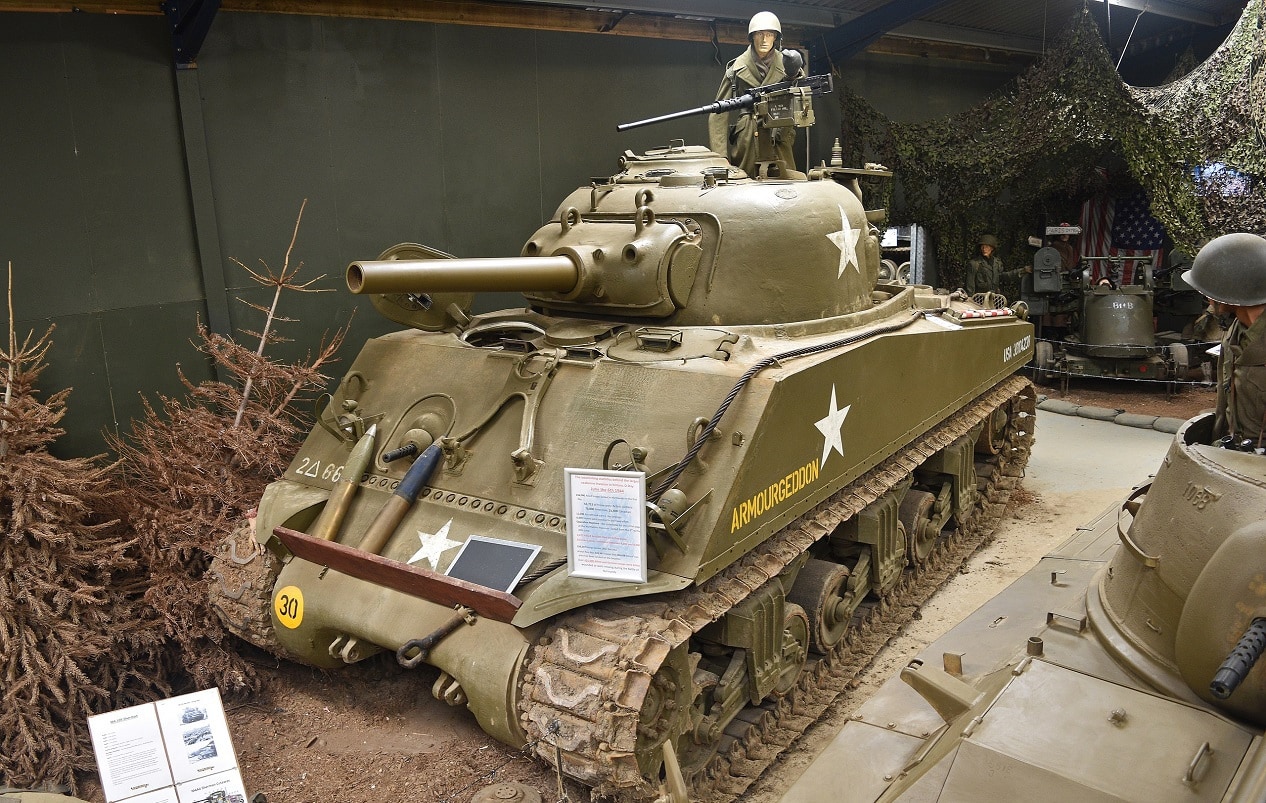
M4 Sherman Tank.
To that end, they stripped the tank of pretty much everything not deemed absolutely necessary for combat to cut costs and shorten production time.
As the war progressed, the T-34 evolved to meet its battlefield needs.
The original turret, small and cramped, was replaced with a slightly larger hexagonal design. Its main armament was likewise replaced from the 76.2 mm gun to the 85 mm ZiS-S-53, which became the staple of the T-34-85.
The Germans likewise developed better methods of defeating Soviet tanks.
With the introduction of the Tiger and the Panther, the T-34 was outgunned and out-armored by the German big cats, but never outnumbered.
Once the production lines were established, the Soviets produced T-34s at an astonishing rate.
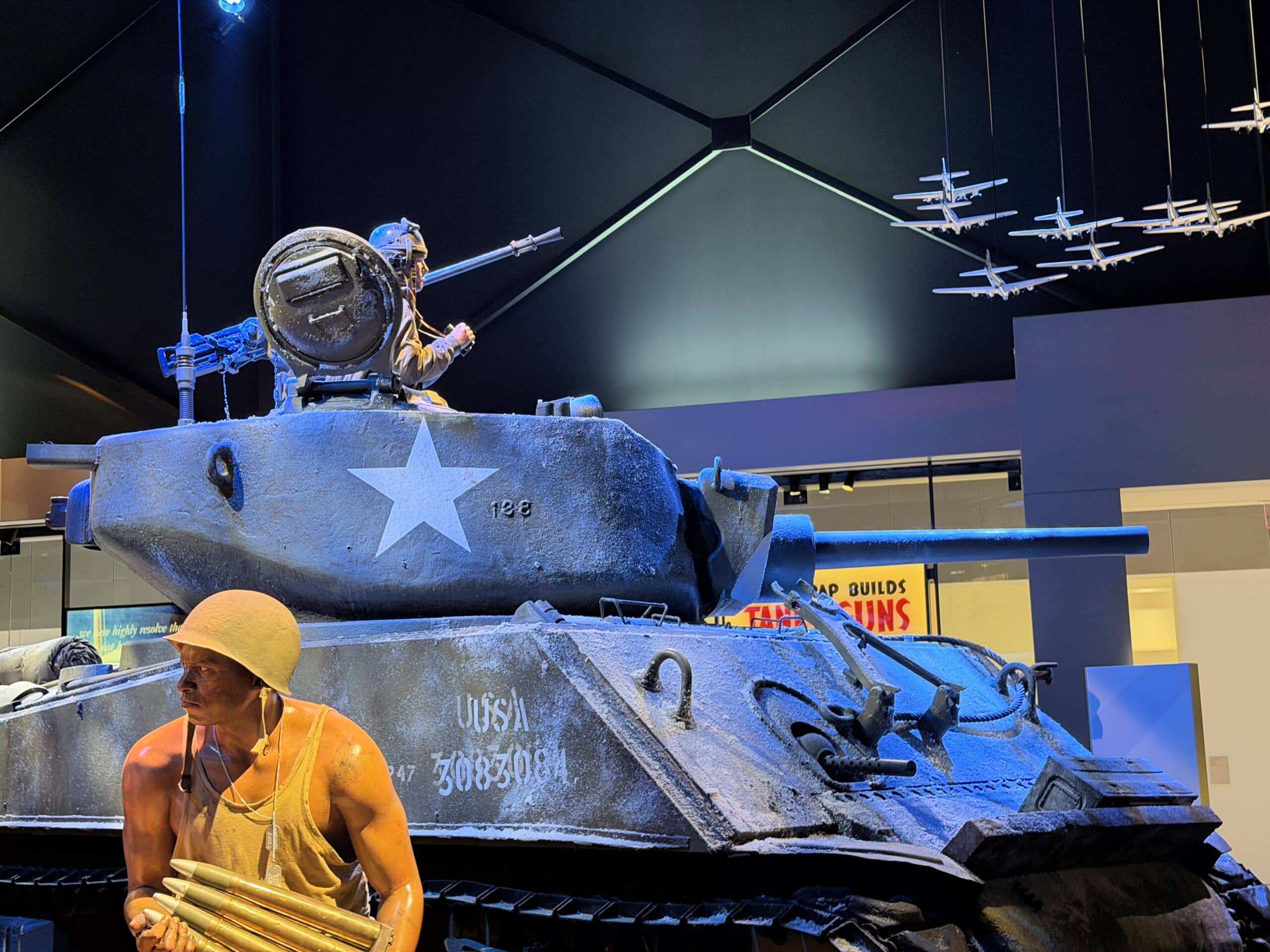
M4 Sherman. 19FortyFive Image.
By 1953, the USSR was producing 1,300 tanks a month, and when the war ended, factories had churned out more than 50,000 T-34s of all types, surpassing even the industrial might of the United States.
Highly Overrated or the Best Tank of the War?
Overall, the T-34’s performance was mixed. While the tank was initially impervious to German anti-tank weapons in 1941, poor training and tactics resulted in widespread losses in the early days of Operation Barbarossa.
By the time the Soviets improved their training, the Germans were much better equipped to counter them.
Poor tactics, along with the improvement of German countermeasures, often resulted in lopsided casualty rates.
During the war, the USSR lost around 44,000 medium tanks, the majority of which were T-34s. The Germans, meanwhile, lost somewhere between 12,000 and 15,000 tanks.
Despite the lopsided casualty rate, the T-34 was undoubtedly instrumental in the Soviet Union’s victory over Germany.
This was because the USSR achieved an astronomically high rate of production rate by the end of the war. While the Soviets could replace their losses, the Germans could not.
Their industrial base was much slower, and Allied bombardments constantly attacked their factories. Soviet high command was cold-heartedly pragmatic.
They knew the average lifespan of a tank was only a few days once it reached the front lines, so they simplified their tanks to reflect that reality.
The T-34 was rugged and simple compared to the finely (often overly) crafted German tanks, but it was this rugged simplicity that allowed it to be produced in the tens of thousands.
One could make a compelling argument that the M4 Sherman was a better-designed tank, but the T-34-85 was exactly the tank that the Soviets needed to win the war.
About the Author: Isaac Seitz
Isaac Seitz, a Defense Columnist, graduated from Patrick Henry College’s Strategic Intelligence and National Security program. He has also studied Russian at Middlebury Language Schools and has worked as an intelligence Analyst in the private sector.