
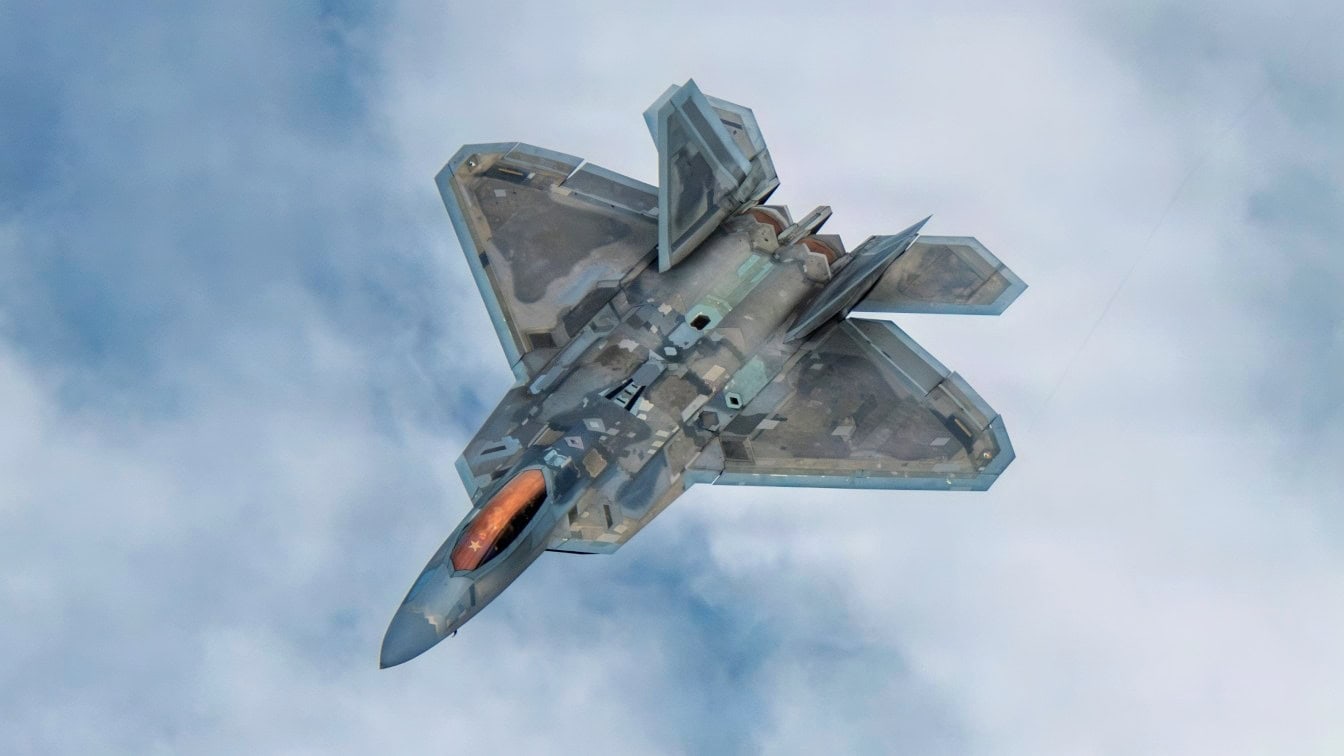
Forgotten Aviation History Fact: The United States Air Force set out to buy 750 F-22 Raptors. It built 187 operational jets, plus eight test airframes, 195 in all, before the line at Marietta closed forever. The shortfall is usually framed as a procurement story dating back to 2009. It is better understood as arithmetic that is still running, because the number has never stopped shrinking: 750 planned, 187 built, 183 or 184 flying today after crashes, roughly 142 of those combat-coded once the training jets are set aside. But this might be the worst number of all; by the Air Force association’s own capacity analysis, about 56 mission-capable and ready if the nation had to fight tonight.
That last number is the one that matters, and it is seven percent of the original plan. And it can’t ever be fixed.
How 750 Became 187
The Advanced Tactical Fighter program was born in 1981 to beat the next generation of Soviet fighters, and 750 aircraft were the one-for-one plan to replace the F-15 fleet.
The Soviet collapse started the descent: 648 by 1991, 442 in 1993, 381 as the Air Force’s stated military requirement in the 2000s, 277, and finally the 2009 decision, when Defense Secretary Robert Gates, backed by a White House veto threat, capped the program at 187; the Senate stripped the last production funding by a vote of 58 to 40 that July.
The reasoning was coherent at the time: the world’s most expensive fighter had no peer opponent in sight, the country was fighting insurgencies where a stealth air-superiority jet had little use, and the F-35 was coming in volume.
The last Raptor was accepted in May 2012, the supplier base dispersed, and a 2017 restart study priced resurrection out of consideration. The bet was that America would have time before a peer threat arrived.
The bet was lost.
The Impact Today
The consequences run through every part of the force. A $32 billion development bill spread over 187 airframes instead of 750 is why the Raptor carries a program unit cost near $370 million, and the same small denominator curses the sustainment accounts: fixed costs, boutique parts, and a vanished vendor base shared across a tiny fleet.
Mission-capable rates that hovered in the low fifties for years fell to about 40 percent in 2024, at flight-hour costs around $85,000.
Thirty-two of the surviving jets are Block 20 trainers not certified for combat, and the Air Force has spent years asking to retire them to fund the F-47 while Congress, seeing no replacement in hand, refuses; the current law bars shrinking the fleet, and a House amendment this June would extend the freeze into 2032.
The service is thus paying twice, upgrading a fighter it cannot enlarge, more than $4 billion this decade, while buying its successor.
Meanwhile, the fleet the Raptor exists to beat grows monthly: China’s J-20 force passed 300 documented aircraft last September, may approach 500 this year at production rates near 120 annually, and the Heritage Foundation’s assessment notes that the FY2026 budget leaves 169 F-22As and zero F-15Cs, against the more than 650 air-superiority fighters
America last prepared to fight a peer in 1987.
Every Pacific deployment, every Middle East surge, every alert commitment comes out of the same few dozen available tails.
What 750 Would Have Meant
At the fleet’s demonstrated readiness rates, 750 Raptors would put roughly 220 mission-capable air-superiority fighters on the ramp on a given morning, instead of 56, spread across twenty-plus squadrons rather than a handful, with a permanent presence in the Pacific and Europe rather than rotational visits.
The F-15C fleet would have retired on schedule instead of being wrung out for two extra decades.
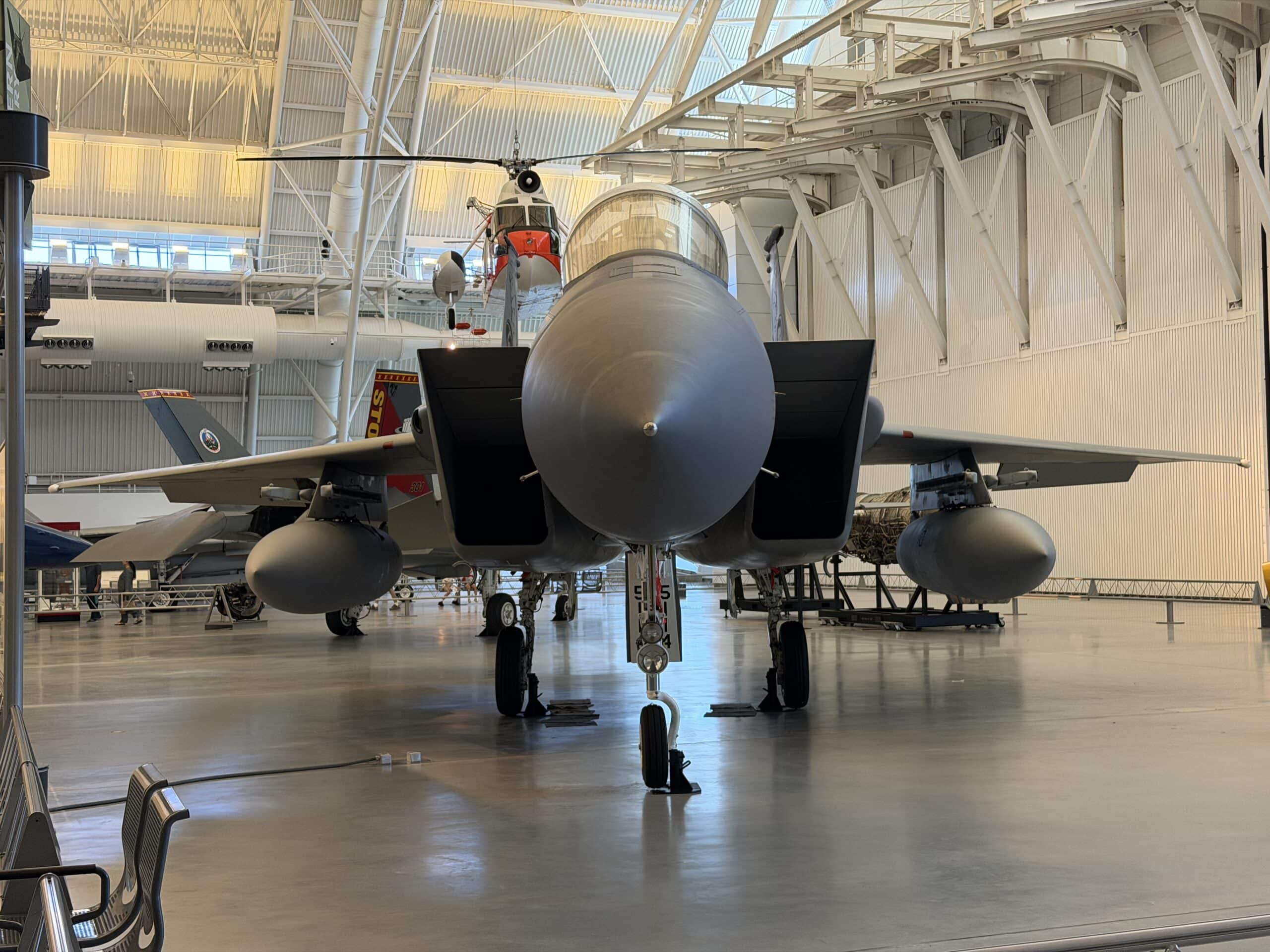
F-15C. Taken at the Smithsonian by 19FortyFive.com staff.
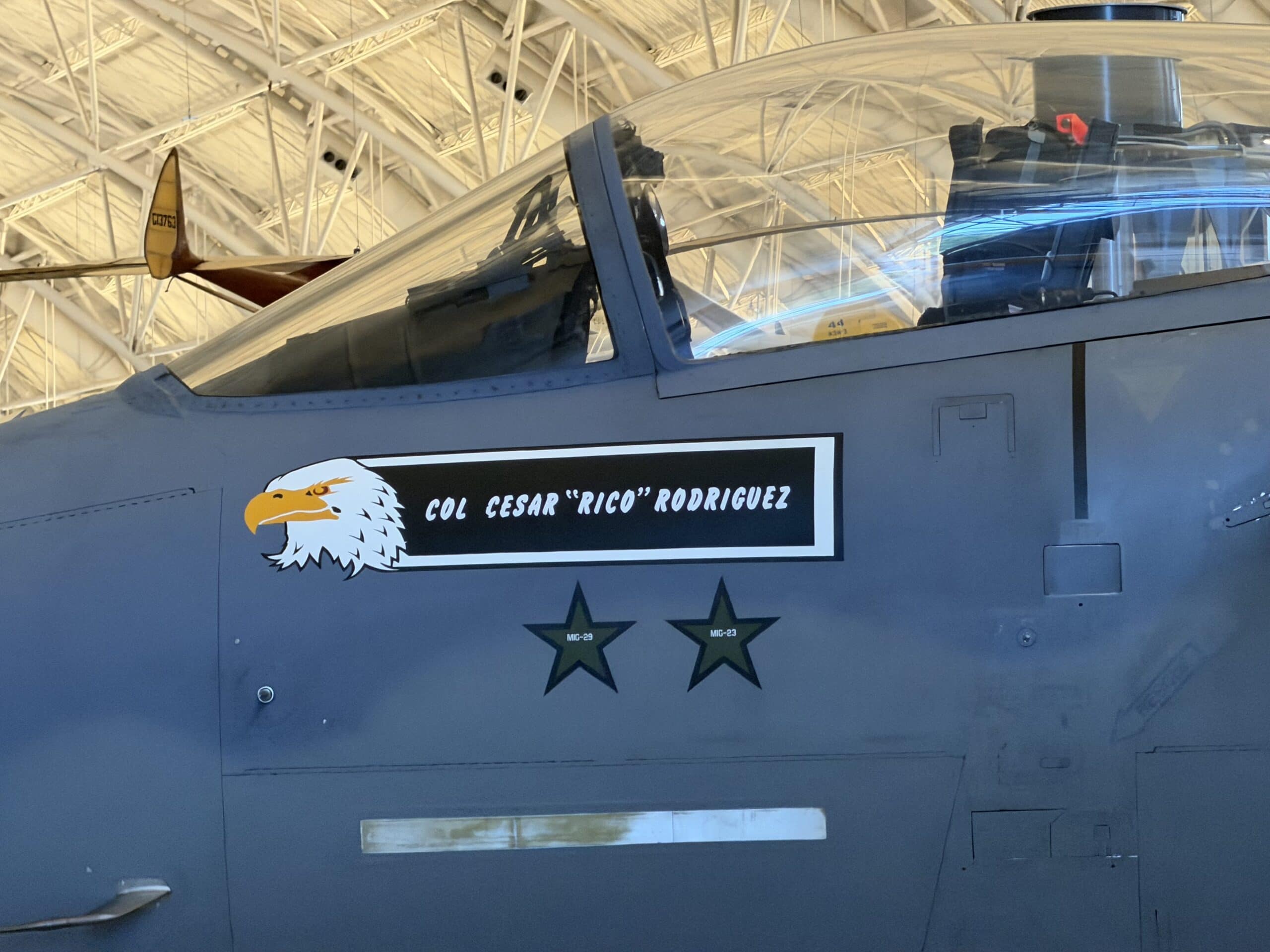
F-15C. Taken at the Smithsonian by 19FortyFive.com staff.
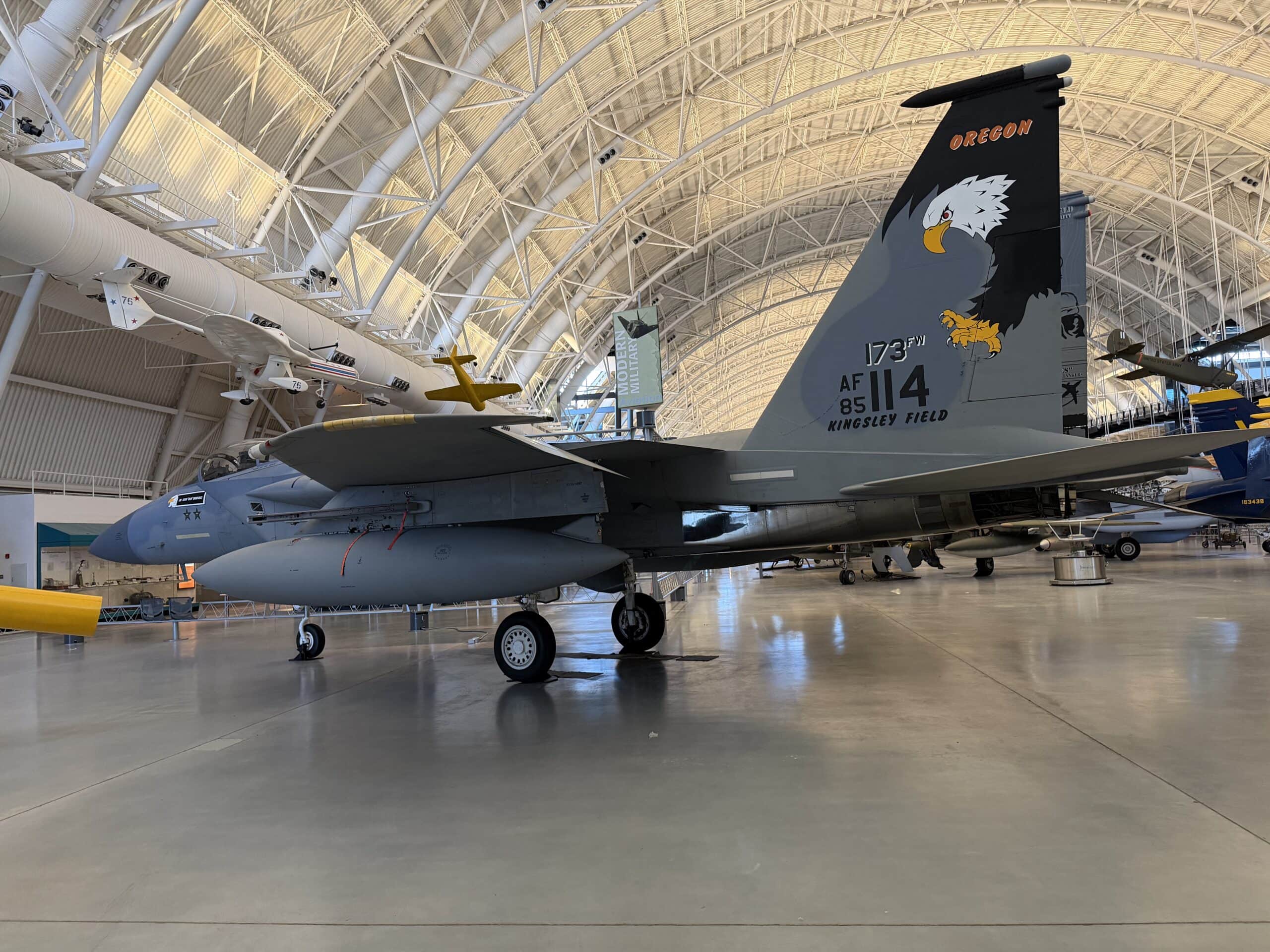
F-15C. Taken at the Smithsonian by 19FortyFive.com staff.
The development bill, spread over 750 jets, would have roughly halved the unit cost critics used against the program. Attrition, the quiet killer of small sophisticated fleets in a long war, would be survivable: analysts writing on fighter fragility note that forces built on small numbers of exquisite aircraft cannot regenerate combat losses, and 750 buys the depth that 187 forever forecloses.
A living production line might also have reopened the export question that the Obey amendment closed, putting allied Raptor squadrons in Japan facing the J-20 fleet today.
The honest counterweight is that none of this was free: 750 Raptors meant tens of billions that the 2009 budget did not want to spend on a threat it could not yet see, and a 750-jet fleet would now be midlife and expensive in its own right. The decision was defensible with the information from 2009.
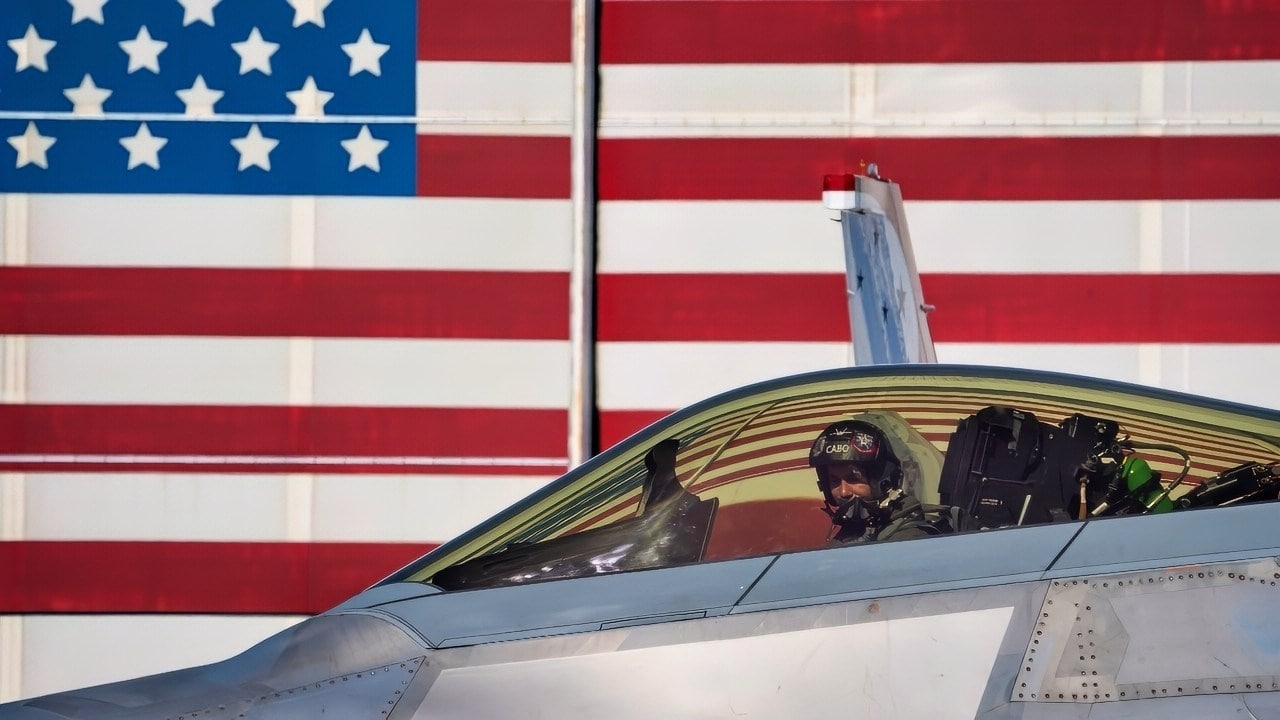
U.S. Air Force Maj. Josh Gunderson, F-22 Demo Team commander, taxis by the Wallops Island Flight Facility NASA hanger June 17, 2021, at Wallops Island, Va. The primary function of the F-22A Raptor is an air dominance and multi-role stealth fighter, and can carry a combination of air-to-air missiles and air-to-ground bombs. (U.S. Air Force photo by Staff Sgt. Don Hudson)
With the information of 2026, it reads as the purchase of a short-term saving at the price of the one capability, air superiority in mass, that a Pacific war would demand first and that no amount of money can now buy back before the F-47 arrives.
The line is closed. The ladder keeps counting down: 750, 187, 183, 142, 56.
About the Author: Harry J. Kazianis
Harry J. Kazianis (@Grecianformula) was the former Senior Director of National Security Affairs at the Center for the National Interest (CFTNI), a foreign policy think tank founded by Richard Nixon based in Washington, DC. Harry has over a decade of experience in think tanks and national security publishing. His ideas have been published in the NY Times, The Washington Post, The Wall Street Journal, CNN, and many other outlets. He has held positions at CSIS, the Heritage Foundation, the University of Nottingham, and several other institutions related to national security research and studies. He is the former Executive Editor of the National Interest and the Diplomat. He holds a Master’s degree focusing on international affairs from Harvard University.