
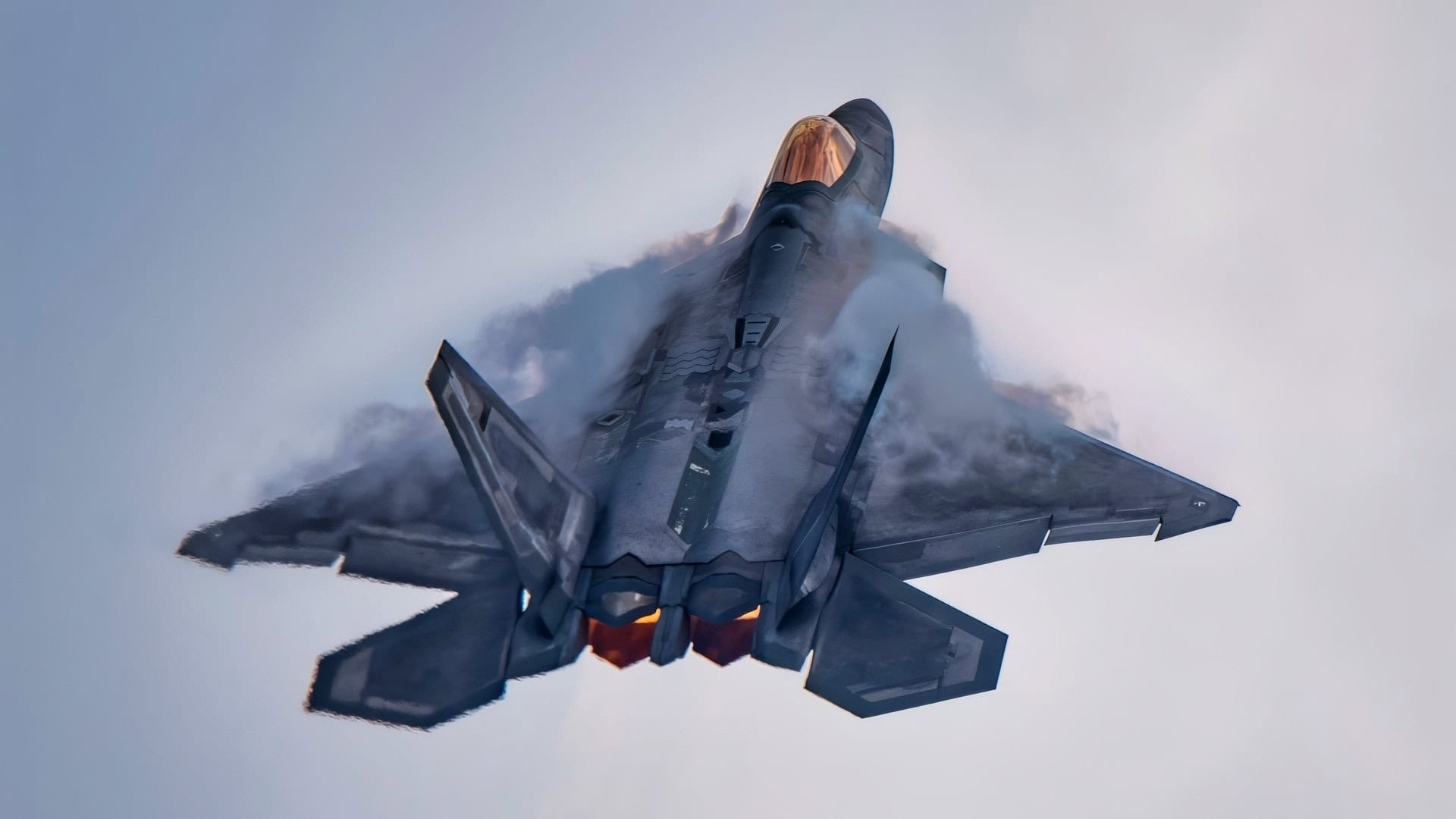
The Air Force Planned 750 F-22 Raptors. Production Stopped at 187: The US Air Force began the Advanced Tactical Fighter program planning 750 aircraft as a one-for-one replacement for its F-15 air-superiority fleet. The buy fell through the 1990s and 2000s until Secretary of Defense Robert Gates and the Obama administration ended production at 187 jets.
The last official Selected Acquisition Report, dated December 31, 2010, put total acquisition cost at about $67.3 billion in then-year dollars: $32.4 billion for research and development, $34.2 billion for procurement, and $676.6 million for military construction. That produced a program acquisition unit cost of $369.5 million. The Air Force still publishes a separate unit cost of $143 million, a flyaway-style figure that does not carry the full development bill.
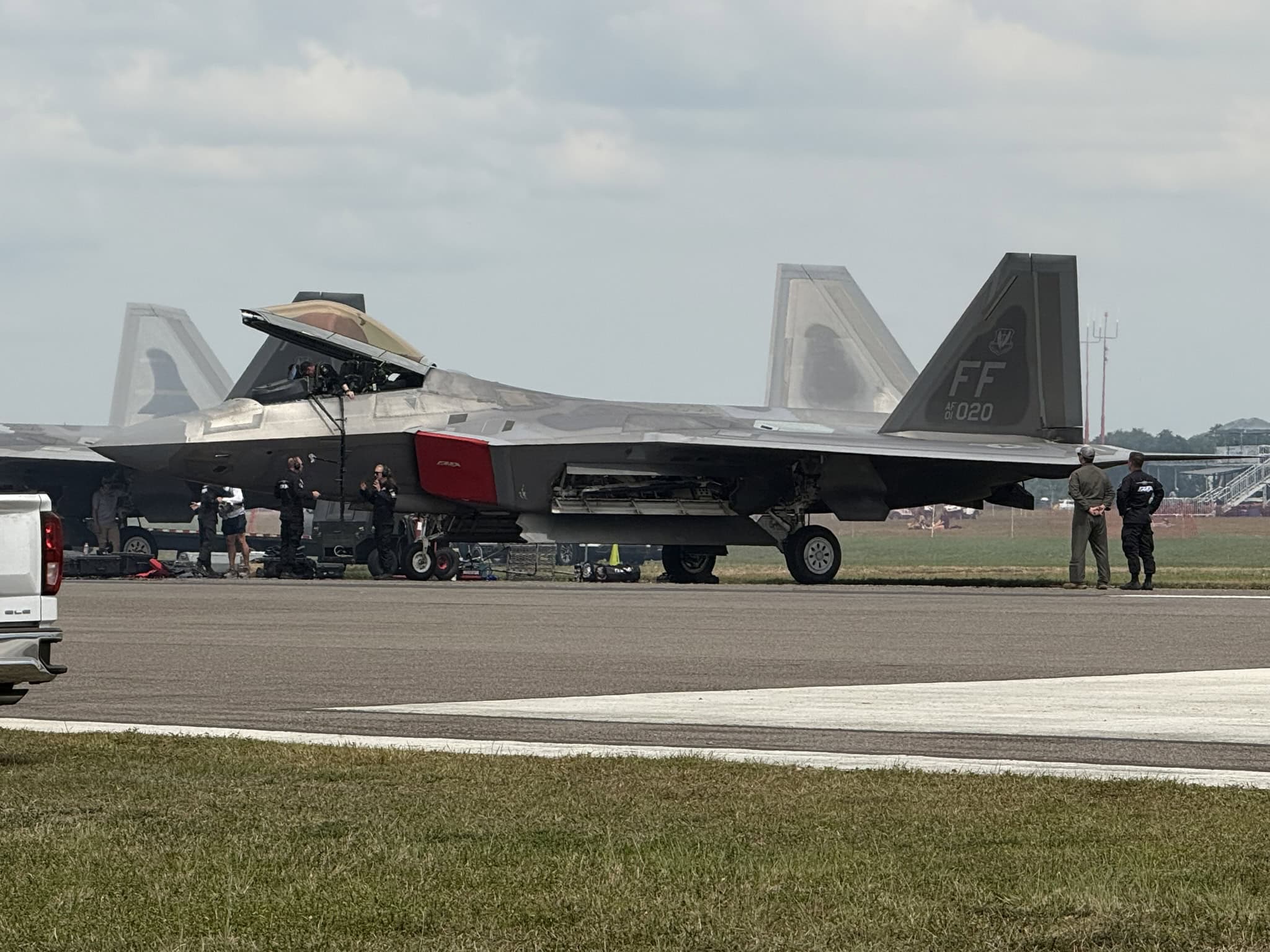
F-22 Raptor. 19FortyFive Photo from Lakeland, Florida Airshow on 4/19/2026.
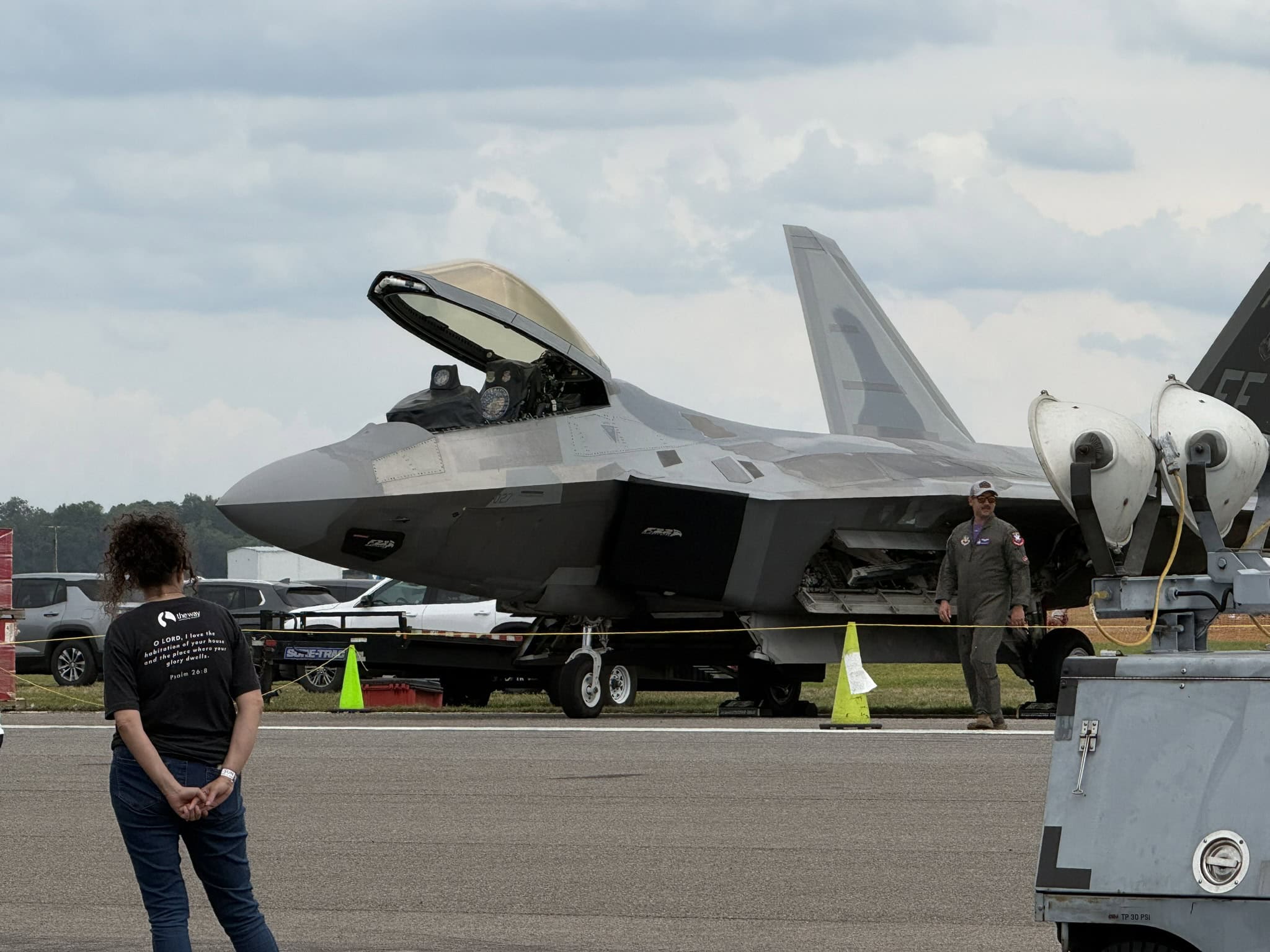
F-22 Raptor Lakeland Florida Airshow. Taken on 4/19/2026.
Lockheed Martin’s final production Raptor, tail number 4195, left Dobbins Air Reserve Base on May 5, 2012, for Joint Base Elmendorf-Richardson. The service later studied reopening the line. A 2017 Air Force report to Congress priced 194 additional jets at about $50 billion. The factory stayed closed.
The cut did more than shrink the fleet. It loaded the development cost of a first-of-its-kind stealth fighter onto fewer than 200 airframes, then made the production base too expensive to rebuild when a peer air threat returned.
The Raptor Was Built to Replace the F-15 Fleet
The Advanced Tactical Fighter was meant to keep U.S. pilots first to shoot against Soviet-designed fighters and the air defenses those aircraft would fly behind.
The F-22 combined low observability, thrust-vectoring maneuverability, and supercruise above Mach 1.5 without afterburner.
The Air Force still describes that mix as unmatched by any known or projected fighter.
The service’s own force-structure math never considered 187 jets sufficient. To fill ten Air Expeditionary Forces with a 24-aircraft F-22 squadron each, plus trainers, test jets, backups, and attrition, the Air Force held a requirement of 381 aircraft.
Gates ended production at less than half that number.
Development Costs Stayed High as the Order Collapsed
The quantity cuts came first; then the unit-cost problem followed.
The 1991 Major Aircraft Review reduced the plan to 648. The 1993 Bottom-Up Review cut it to 442. The 1997 Quadrennial Defense Review set 339. Later budgets drifted through the 270s before Donald Rumsfeld’s Pentagon locked procurement near 183 in the mid-2000s. Four jets in a fiscal 2009 supplemental brought the official cap to 187.
Each reduction left the same industrial facts in place. The F-22 was the first operational stealth air-superiority fighter. It used specialized coatings, unique structural work, and a supplier base that never reached F-35 volumes. Congress also barred foreign sales under the Obey amendment, so no export customer could spread the overhead. The $32.4 billion research-and-development account did not shrink with the production run.
Divided across 750 aircraft, it would have been a large but digestible surcharge. Spread across 187, it is why a published $143 million unit cost and a $369 million program unit cost can both be true.
The remaining combat-coded Raptors still do the air-superiority job the program was built for. There were never enough of them to do it at the scale the Air Force originally wrote into its plans.
Iraq and Afghanistan Made Air Superiority Look Optional
By the mid-2000s, the wars that consumed the defense budget were insurgencies. The F-22 did not fly combat over Iraq or Afghanistan. Critics treated that absence as proof that the jet was a Cold War leftover.
Supporters treated it as proof that the United States already owned the air. Both arguments helped the cheaper, multi-role F-35 look like a substitute rather than a different aircraft.
The fight inside the Pentagon turned personal. In 2008, Gates asked Air Force Secretary Michael Wynne and Chief of Staff Gen. T. Michael Moseley to resign. Wynne later said their refusal to accept a ceiling of 183 F-22s was central to that decision. On April 6, 2009, Gates announced he would end F-22 production after the jets already built or under contract were delivered. President Barack Obama promised a veto if Congress added more. On July 21, 2009, the Senate stripped $1.75 billion that would have kept the line open, a vote the White House publicly praised.
The stated case was straightforward. Current wars need other things more. The F-35 would arrive in larger numbers. A small F-22 fleet could hold the high-end air-to-air mission. The unstated industrial effect was just as direct: once Marietta stopped building Raptors, every later argument for more jets had to pay to recreate the factory.
A Restart Study Priced the Factory Out of Reach
The Pacific air threat the F-22 was designed to counter did not go away. Through the 2010s, China fielded new fighters and sensors while the United States flew a Raptor inventory measured in the low hundreds. Congress ordered the Air Force to study restarting production.
The numbers killed the idea.
A RAND analysis a few years after shutdown had already put a 75-aircraft restart in the neighborhood of $17 billion in fiscal 2008 dollars. The Air Force’s own 2016 study, delivered to Congress in 2017, went further.
Restarting the line and buying 194 additional F-22s would cost about $50 billion. Nearly $9.9 billion of that was non-recurring startup money: tooling, supplier requalification, subsystem redesign, and government costs. The jets themselves were estimated at $206 million to $216 million each, well above the old published unit cost.
The War Zone later published the internal breakdown. About $5.8 billion was spent on redesigning four subsystems. Another $1.2 billion went to requalifying parts and materials. Tooling refurbishment was the cheap line item, about $228 million. The expensive work was recreating a classified industrial base that had already been paid for once.
Air Force spokeswoman Capt. Emily Grabowski said the service had “no plans” to restart the line and that it “wouldn’t make economic or operational sense.” The money, the Air Force argued, belonged with the Air Superiority 2030 path that later became the F-47.
The existing Raptors would be upgraded, not reproduced. Building new F-22s was treated as a closed option.
About the Author: Harry J. Kazianis
Harry J. Kazianis (@Grecianformula) was the former Senior Director of National Security Affairs at the Center for the National Interest (CFTNI), a foreign policy think tank founded by Richard Nixon based in Washington, DC. Harry has over a decade of experience in think tanks and national security publishing. His ideas have been published in the NY Times, The Washington Post, The Wall Street Journal, CNN, and many other outlets worldwide. He has held positions at CSIS, the Heritage Foundation, the University of Nottingham, and several other institutions related to national security research and studies. He is the former Executive Editor of the National Interest and the Diplomat. He holds a Master’s degree focusing on international affairs from Harvard University.

