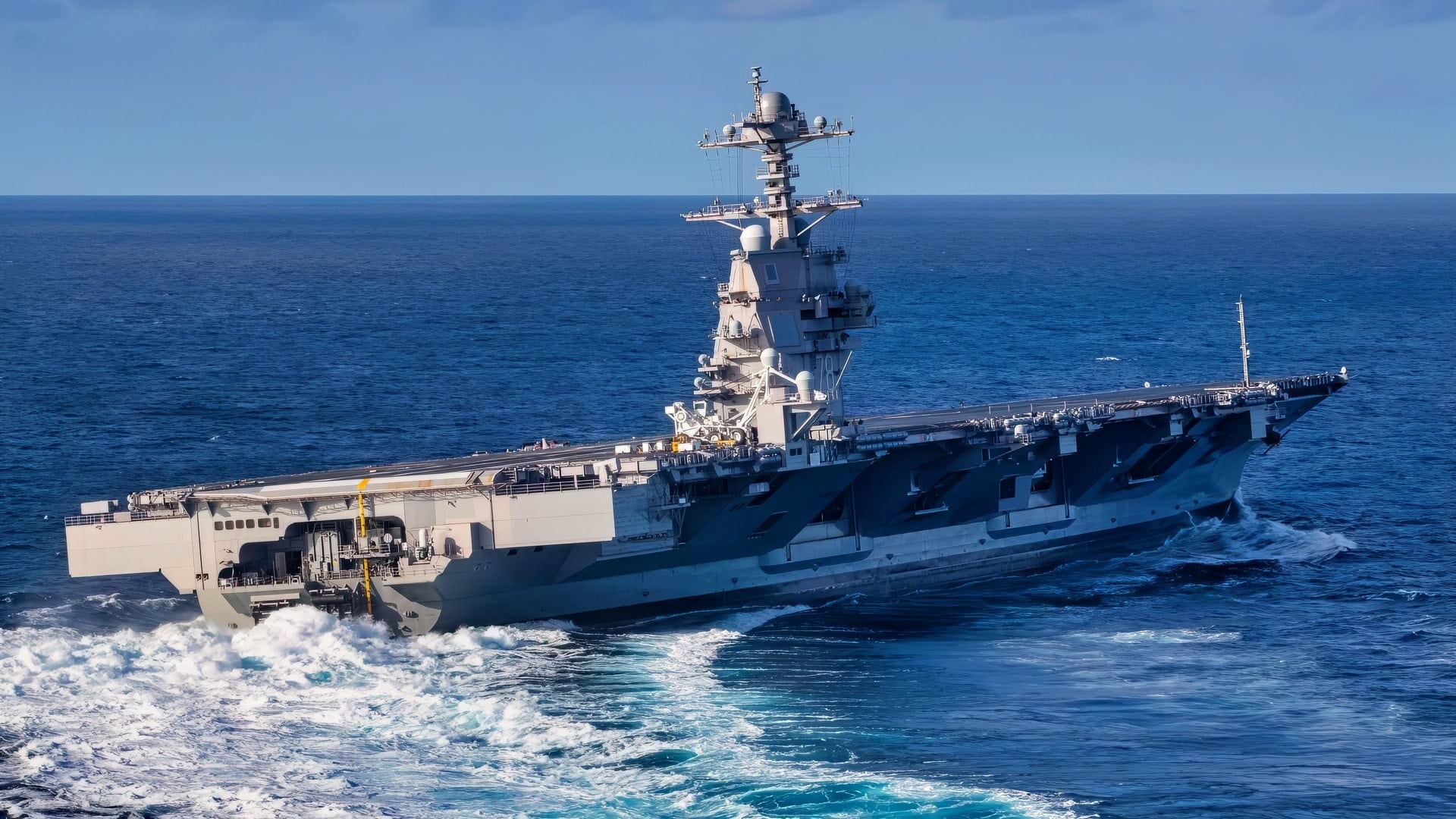
The US Navy’s Ford-Class Aircraft Carrier Has 2 Nuclear Reactors: The United States Navy is a carrier-based superpower. It has held a dominant position among the world’s navies in terms of carriers since the height of the Second World War, when carriers determined the fate of the Pacific Theater. Since then, the Americans have maintained a massive carrier fleet. Today, the US Navy operates a fleet of 11 aircraft carriers.
Similarities and Differences
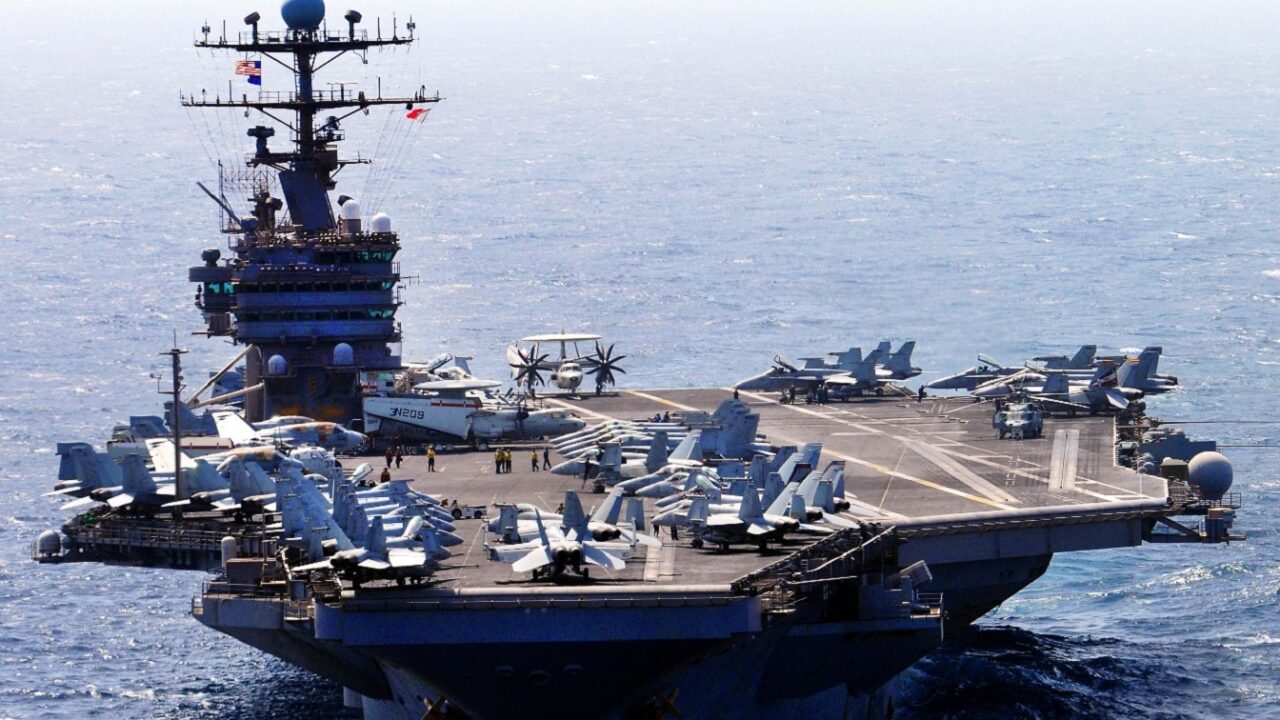
ARABIAN SEA (May 24, 2012) The Nimitz-class aircraft carrier USS Abraham Lincoln (CVN 72) transits the Arabian Sea. Abraham Lincoln is deployed to the U.S. 5th Fleet area of responsibility conducting maritime security operations, theater security cooperation efforts and support missions as part of Operation Enduring Freedom. (U.S. Navy photo by Mass Communication Specialist 3rd Class Amanda L. Kilpatrick/Released)
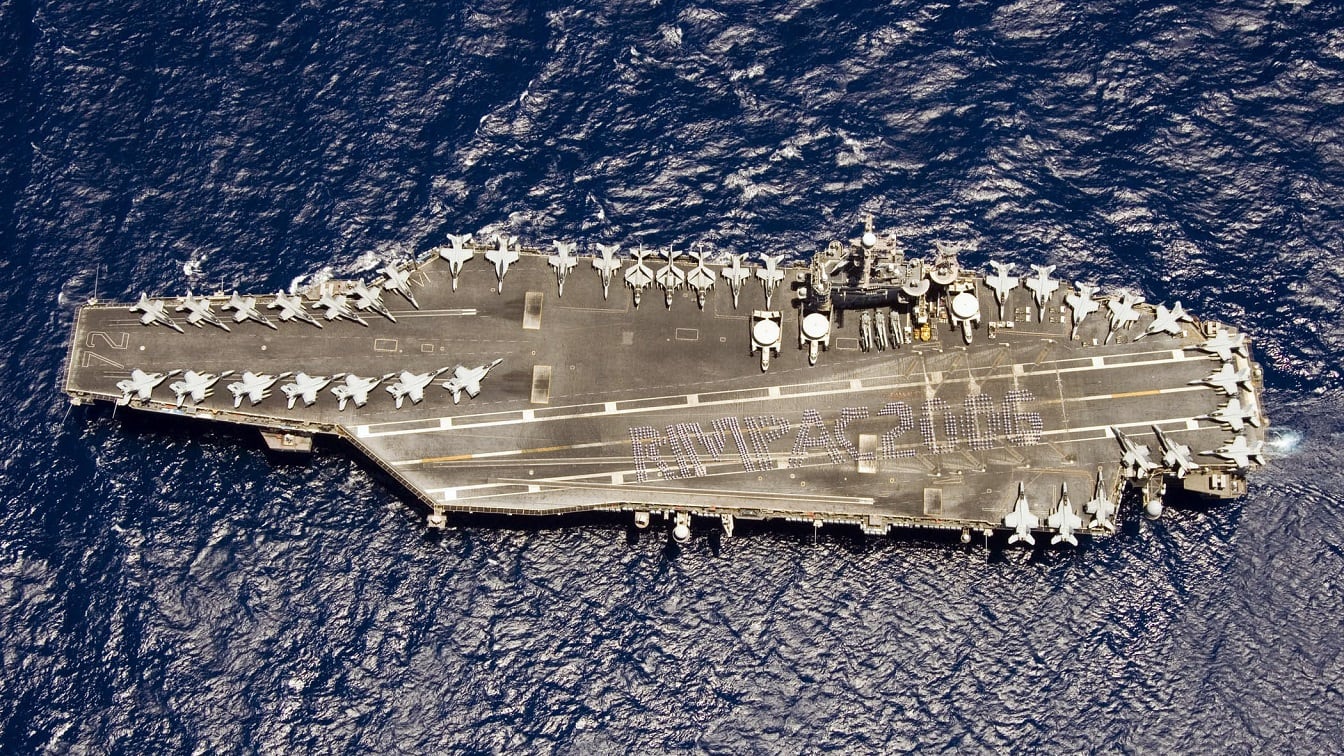
Aerial overhead view of US Navy (USN) Sailors aboard the USN Nimitz Class Aircraft Carrier USS ABRAHAM LINCOLN (CVN 72) spelling out RIMPAC 2006 on the flight deck of the ship during a photo exercise during Exercise Rim of the Pacific (RIMPAC) 2006 in the Pacific Ocean (POC). The exercise is designed to increase the tactical proficiency of participating units in a wide array of combined sea operations. RIMPAC 2006 brings together military forces from Australia (AUS), Canada (CAN), Chile (CHL), Peru (PER), Japan (JPN), the Republic of Korea (KOR), United Kingdom (UK) and the United States (US).
U.S. Navy photo by Mass Communication Specialist Seaman James R. Evans (RELEASED)
America’s current fleet of aircraft carriers is all nuclear-powered ships, and most belong to the aging Nimitz-class, while the Gerald R. Ford-class is coming online (the USS Gerald R. Ford has already hit the high seas, with the USS John F. Kennedy slated to enter service next, followed by the USS Enterprise and the USS Doris Miller).
Although the Nimitz-class is older and is slowly being phased out and replaced by the newer Gerald R. Ford-class carrier, the two classes share much in common; after all, they both displace roughly 100,000 tons, go faster than 30 knots, and operate massive air wings of fixed- and rotorwing aircraft.
In the case of the Gerald R. Ford-class, there have been many technical kinks that have needed to be worked out — so much so that the USS Gerald R. Ford itself has not reached optimal performance (despite a record-making first deployment last year).
Nevertheless, the Pentagon believes that the Gerald R. Ford-class will match–and eventually surpass–its Nimitz-class predecessor.
Both classes are powered by two nuclear reactors each.
That’s an exceptional amount of power per ship.
Considering the size of the two classes of aircraft carriers and the operations these ships are required to perform, it makes sense that the United States Navy would want them to possess ample power.
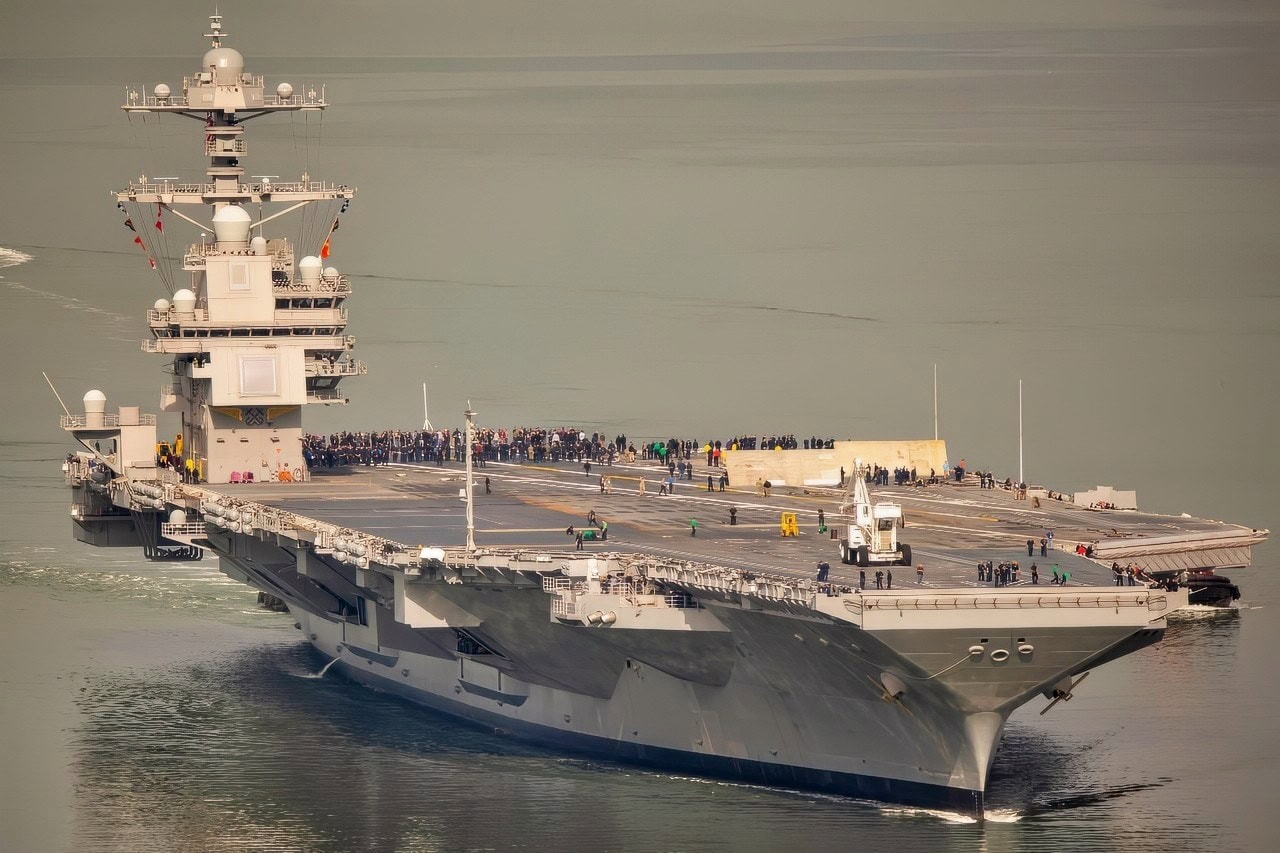
NEWPORT NEWS, Va. (Oct. 25, 2019) USS Gerald R. Ford (CVN 78) gets underway for the first time since beginning its post-shakedown availability July 2018. Ford is currently conducting sea trials, a comprehensive test of the ship’s systems and technologies. (U.S. Navy photo by Mass Communication Specialist 3rd Class Connor Loessin)
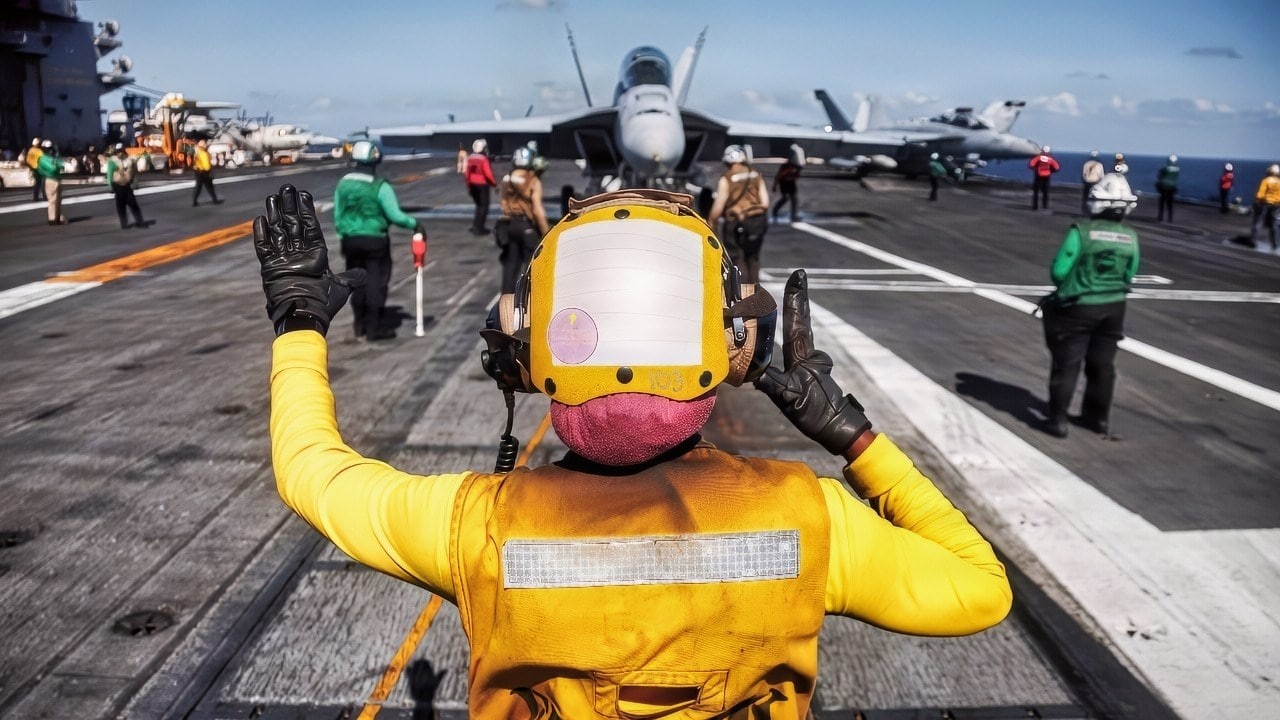
A U.S. Sailor signals to an F/A-18F Super Hornet aircraft, attached to Strike Fighter Squadron 213, on the flight deck of the world’s largest aircraft carrier, Ford-class aircraft carrier USS Gerald R. Ford (CVN 78), while underway in the Caribbean Sea, Feb. 5, 2026. U.S. military forces are deployed to the Caribbean in support of the U.S. Southern Command mission, Department of War-directed operations, and the president’s priorities to disrupt illicit drug trafficking and protect the homeland. (U.S. Navy photo)
Nuclear power produces steam, which propels the ship forward.
These ships measure more than 1,000 feet in length.
They must move relatively fast and be capable of high-speed evasive maneuvers, all while performing onerous flight deck operations under intense battle conditions.
The Two Reactor Mandate
By placing two nuclear reactors on each Nimitz-class and Gerald R. Ford-class aircraft carrier, the Navy is ensuring the survivability of these leviathans.
Plus, they provide redundancy in battle. If one reactor goes down, the other can pick up the load. But the reactors on the two classes differ significantly.
The ten Nimitz-class carriers possess two Westinghouse A4W pressurized-water reactors. As an aside, the designation of these reactors is interesting.
The “A” stands for “aircraft carrier,” the number four is the reactor generation (so, the fourth generation of nuclear reactors), and the “W” is for the firm that created the reactor (“Westinghouse”). At the time of its adoption by the Nimitz-class carrier, the A4W was a significant enhancement over the previous generation of nuclear reactor that powered America’s older nuclear-powered supercarrier, the USS Enterprise.
That older nuclear carrier required an astonishing eight reactors.
So, by the time of the Nimitz-class, the Navy was able to halve the number of nuclear reactors.
The upside for the two-reactor qualification goes beyond mere redundancy.
The carrier’s steam-catapult aircraft launch and recovery systems can be powered by one, while the other supplies much-needed power to the ship. It’s an equitable relationship.
Since the creation of the Nimitz-class, though, the Navy’s power needs have amplified.
Back in the early days of the Nimitz-class, there weren’t digital control systems and powerful onboard computers that were power hogs.
The newer generation of radars and communication gear also pulled significant amounts of power when compared to the energy needs at the start of the Nimitz-class aircraft carrier’s lifespan.
Requirements
When the Navy began developing entirely new carriers, it wanted the Gerald R. Ford-class to be fully electric and use an electromagnetic aircraft launch system (EMALS), which requires much more power than the Nimitz-class.
To meet these needs, the Navy has placed two Bechtel A1B nuclear reactors in the Ford-class carrier.
These new reactors provide greater generating capacity while employing a simplified plant architecture.
Toward that end, the Gerald R. Ford-class has roughly three times the generating capacity available than does the Nimitz-class.
That’s why the Trump administration’s decision to possibly dismantle the EMALS on the USS Doris Miller in favor of older steam catapults will complicate the plan to transition the force to all-electric power systems.
These changes were expensive. USS Gerald R. Ford cost a stunning $13.3 billion in procurement funding.
That figure does not include $5 billion in research and development costs to develop technologies for the class. The Navy expects subsequent ships to cost less as construction techniques mature.
Congressional Research Service (CRS) figures place USS John F. Kennedy at about $12.7 billion. At the same time, Enterprise and Doris Miller have been estimated at $12 billion-plus apiece, depending on the budget year and accounting method used.
Supporters of the Ford-class insist that the long-term costs over the carrier’s proposed 50-year operating life will offset the upfront costs.
In fact, the Navy says that the new carriers, with the new Bechtel reactors, will save the taxpayer $4 billion per ship in lifecycle operating costs compared to the Nimitz-class.
Plus, the Ford-class has lower manpower and maintenance requirements, which purportedly contribute to overall savings compared to the more manpower-heavy Nimitz-class.
For the Future
The Nimitz-class carrier’s A4W reactors were built to power the greatest carrier of the Cold War era. The Ford’s two A1Bs do the same basic job.
Yet, they provide a larger electrical reserve than electromagnetic catapults, advanced sensors, weapons elevators (and other power-intensive systems) demand.
So, the Nimitz inspired much of the Ford-class. But the new carriers took it further.
About the Author: Brandon J. Weichert
Brandon J. Weichert is the Senior National Security Editor at 19FortyFive.com. He also manages The Weichert Brief on Substack. Weichert also hosts “National Security Talk” on Rumble. He is the author of four bestselling national security books, the most recent of which is A Disaster of Our Own Making: How the West Lost Ukraine (Encounter Books). Follow him via Twitter/X @WeTheBrandon.