America’s defense industrial base is a mess. According to NATO Secretary General Mark Rutte last year, it takes NATO a whole year to produce what Russia can produce in three months.
Here in the United States, it isn’t just missile, tank, or warplane production that is stalled because of the sclerotic defense industrial base.
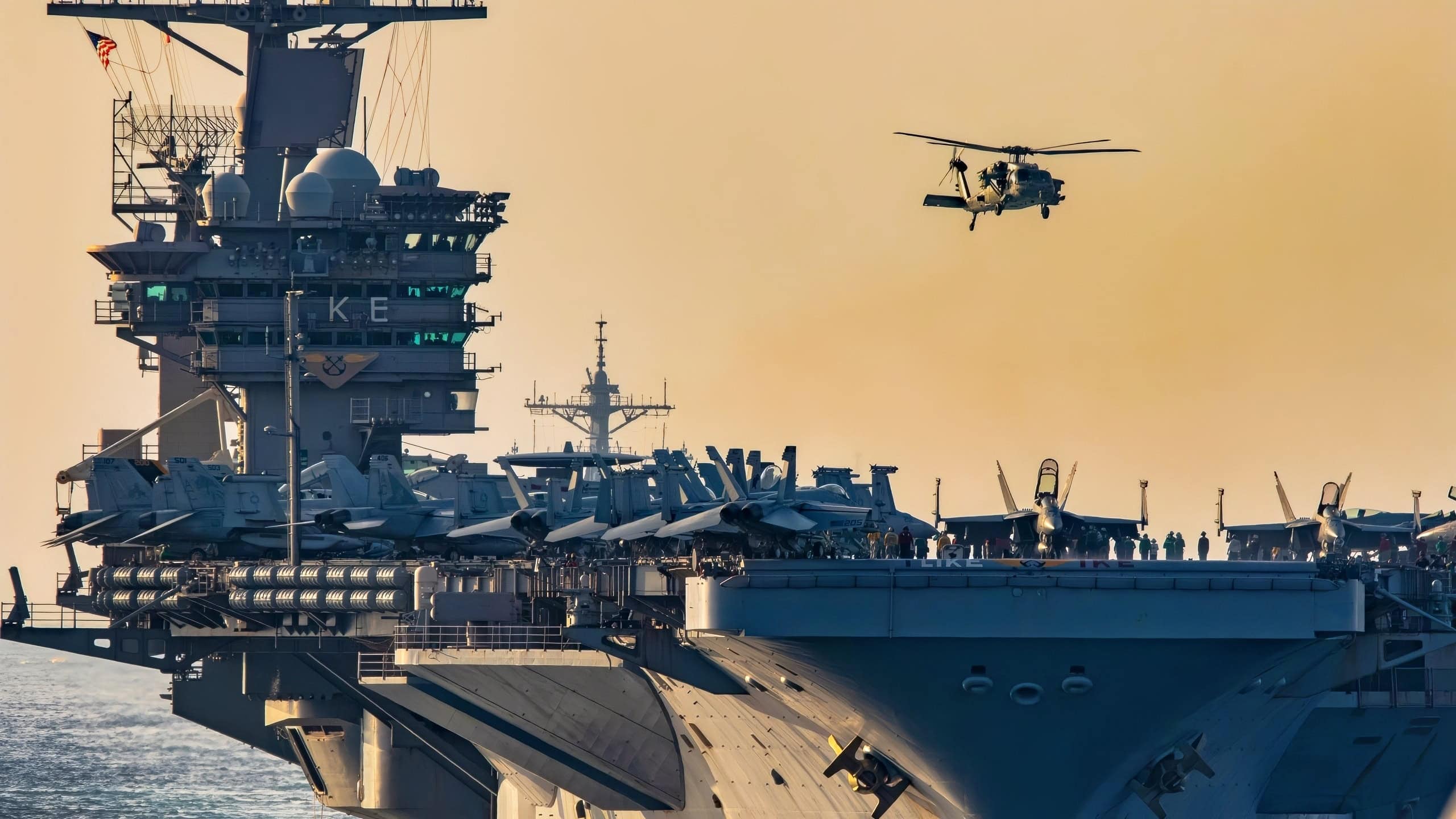
Components of the Dwight D. Eisenhower Carrier Strike Group (IKECSG), guided-missile destroyer USS Stethem (DDG 63) and French Navy frigate FS Languedoc (D 653) transited the Strait of Hormuz. IKECSG is deployed to the U.S. 5th Fleet area of operations to help ensure maritime security and stability in the Middle East Region. (U.S. Navy photo by Electronics Technician 2nd Class Daniel Goodin)
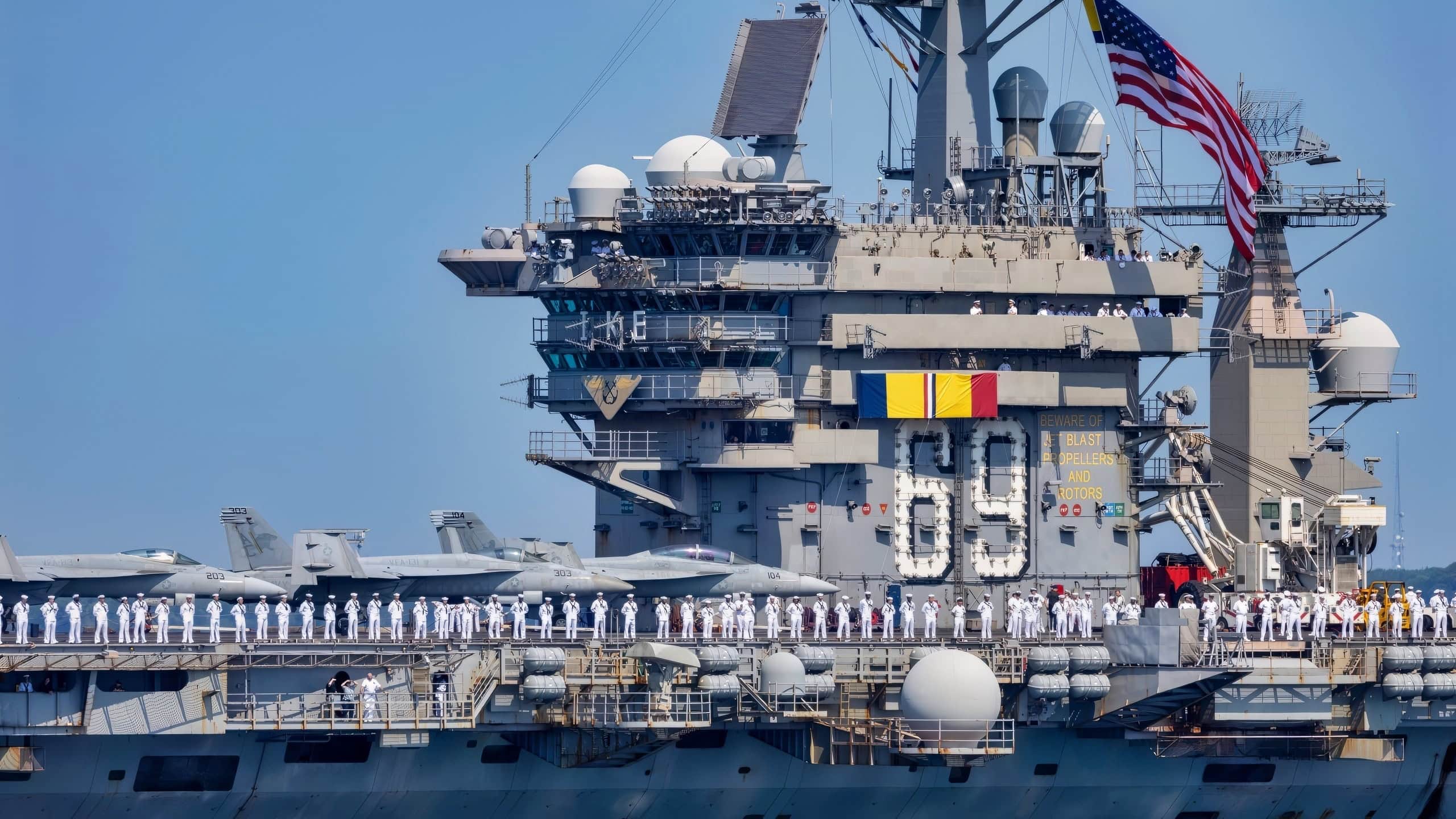
(July 14, 2024) The Nimitz-class aircraft carrier USS Dwight D. Eisenhower (CVN 69) returns to Naval Station Norfolk, July 14, 2024, concluding a nine-month deployment to the Atlantic. Eisenhower, the flagship of the Ike Carrier Strike Group, departed Norfolk October 14, 2023 to conduct a scheduled deployment to U.S. 5th and 6th Fleet area of operations in support of maritime security operations, theater security cooperation efforts, and enhanced vigilance activities operations with NATO Allies and Partners. (U.S. Navy Photo by Mass Communication Specialist 2nd Class Hunter Day)
The country’s naval shipyards are utterly sclerotic. An inadequate number of workers, far too much bureaucracy, critical supply-chain bottlenecks, and a basic lack of shipyards capable of building and maintaining American warships have led to the crisis in American shipbuilding.
A Major Crisis
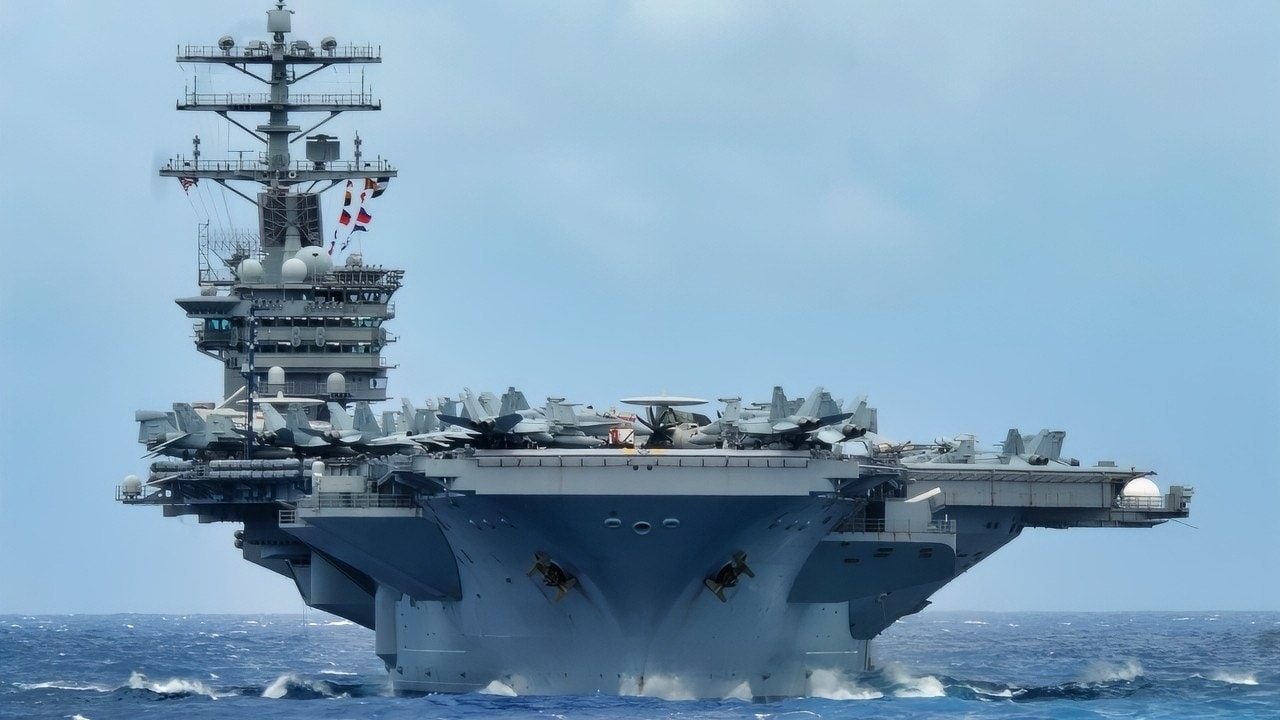
Possibly the most fundamental problem facing the US Navy’s ailing shipyards is that only one shipyard can build and refuel the essential aircraft carrier fleet.
That’s the Newport News Shipbuilding facility in Virginia. America has 11 aircraft carriers. It is decommissioning some of the older Nimitz-class aircraft carriers while the Newport News Shipbuilding facility in Virginia is constructing three more Gerald R. Ford-class carriers.
If an accident, natural disaster, or a labor shortage (due to a strike, for instance) occurs at that location, America’s production of carriers stops until that crisis is resolved.
Meanwhile, the Newport News facility conducts the important, complex overhauls of the existing carrier force.
While 11 carriers are in service, only about 4 (at best) are available for deployment at any given time.
The rest are stuck in long maintenance cycles — made longer by the finite space at that one shipyard (and limited number of workers) as well as by the wear-and-tear that increased deployments are having on the overall carrier fleet.
Indeed, President Donald Trump’s newest scheme to build a new battleship might be hampered by the fact that Newport News’ shipyard lacks the room to build such a monstrosity.
Of course, that might be a hidden blessing.
It has become a bit of a political hot potato to create workarounds for this severe problem afflicting the American carrier force.
That’s because the Navy requires greater shipyard capacity immediately, and there is no way to expand such capacity in the near term under current conditions.
One solution has been to employ civilian groups to augment the Newport News facility’s capacity, though that comes with its own set of complications.
Another suggestion that few in Washington appear interested in hearing has been to outsource the construction, and possibly maintenance, of some of America’s warships to the closest allies (such as South Korea) of the United States.
One thing the Trump administration has done since returning to office last year is call for an expansion and enhancement of America’s ailing public shipyards.
Under the president’s Shipyard Infrastructure Optimization Program (SIOP), the White House has called for the establishment of a fifth shipyard to increase carrier and submarine repair capacity.
But this is a 20-year timeline, as the fifth shipyard is barely in the study phase.
New Shipyards Being Built Won’t Help
In July, Military Times reported that the Navy published a notice for a $30 billion contract to build its new multi-mission dry dock on the West Coast.
The goal of that program is to modernize the four existing public shipyards.
Yet none of these shipyards–including the proposed multi-mission dry dock on the West Coast, which will be ready by 2038–can perform the complex overhaul that Newport News can.
And that’s the real rub here.
Because the Navy only commissions a new Gerald R. Ford-class carrier once every four or five years, Huntington Ingalls Industries (HII), the company that exclusively builds American carriers and owns the Newport News facility, won’t build a second shipyard.
Building such a new facility with the specialized nuclear tooling, heavy machinery, manufacturing plants, and a drydock capable of assembling a 100,000-ton supercarrier would cost tens of billions of dollars long before a single piece of steel was even cut.
HII’s solution has been to outsource minor manufacturing tasks to smaller, regional commercial shipyards. But this is a patch.
If the United States Navy intends to continue its commitment to nuclear-powered aircraft carriers, then it must demand that a new shipyard capable of building and conducting complex overhauls of the carriers be built.
Arsenal of Democracy No More?
The bottom line is that the United States is a long way from the days when it was the “arsenal of democracy” and could produce warships and warplanes like sausages.
Now China appears to be the only one capable of that.
The longer this situation persists, where the Pentagon insists on building complex, expensive systems, like aircraft carriers, but lacks the requisite shipyard capacity to build and maintain them effectively, the US Navy will be set up for failure in a great-power war (which is coming).
Instead, the United States should commit to building at least one more major shipyard capable of constructing and maintaining aircraft carriers.
Or, even better, the Navy must step back from its commitment to aircraft carriers as its primary surface combatant. In any event, the current structure in America’s failing naval shipyards will not work well for the Navy.
About the author: Brandon J. Weichert
Brandon J. Weichert is the Senior National Security Editor at 19FortyFive.com. He also manages The Weichert Brief on Substack. Weichert also hosts “National Security Talk” on Rumble. He is the author of four bestselling national security books, the most recent of which is A Disaster of Our Own Making: How the West Lost Ukraine (Encounter Books). Follow him via Twitter/X @WeTheBrandon.