
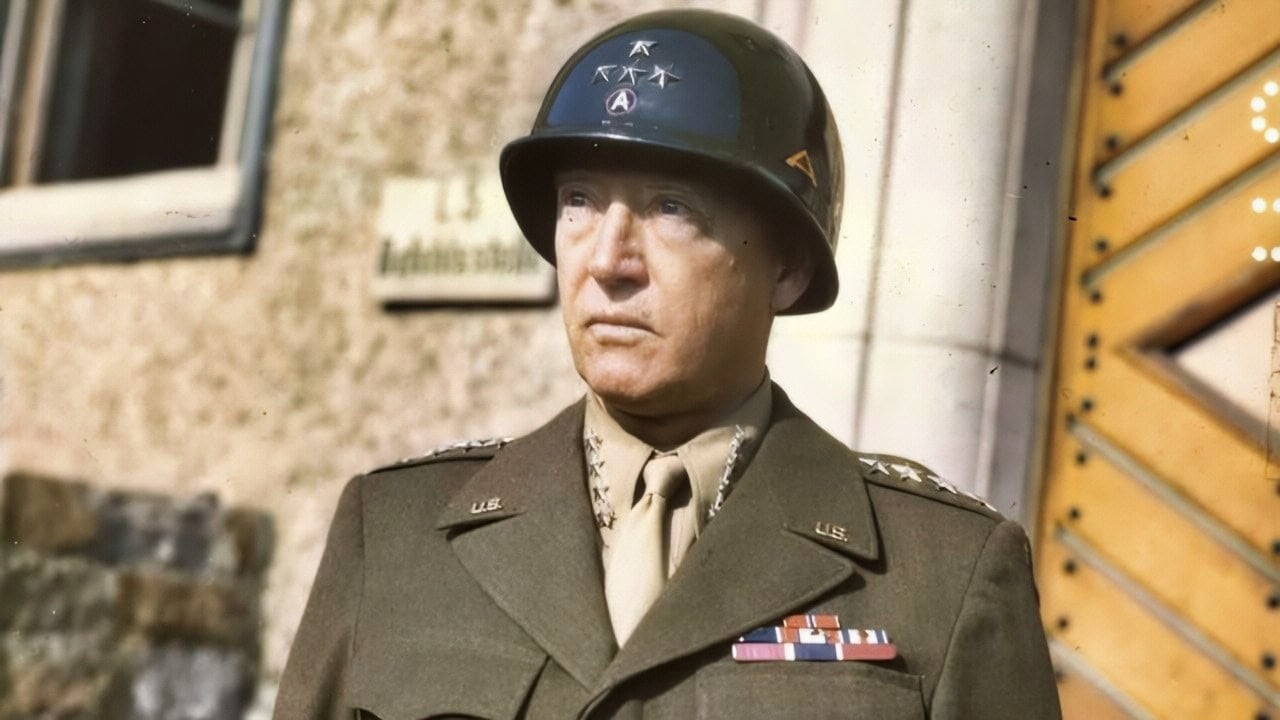
Summary and Key Points: “Better to fight for something than live for nothing.” General George S. Patton said that, and then the shooting stopped, and he outlived it by seven months. On 9 December 1945, in occupied Germany, his staff car collided with an Army truck. Patton broke his neck. He was paralyzed from the neck down, lingered for 12 days, and died in his sleep at about six in the evening on 21 December, aged 60, of pulmonary edema and congestive heart failure. A man who had ridden in the Pancho Villa expedition, been wounded in the Meuse-Argonne, commanded the Seventh Army in the Mediterranean and the Third Army across France and Germany, died in a hospital bed after a low-speed traffic accident. He is buried at the Luxembourg American Cemetery, at the head of the men he commanded.
General George Patton Deserves a Place in the History Books
“Better to fight for something than live for nothing.” That quote is one of the lesser-known and less profane sayings attributed to General George Patton.
George C. Scott’s rendition of Gen. Patton’s immortal Speech to the Third Army in the opening scene of the 1970 Oscar-winning film Patton was certainly memorable. However, the language therein was toned down slightly to obtain a “PG” rating from the Motion Picture Association of America. The original, unplugged version of the speech would have garnered an “R” rating.
That said, we now embark on a brief bio of the legendary Gen. Patton.
Early Childhood and Pre-Military Life
George Smith Patton Jr. was born on November 11, 1885, in San Gabriel, California, to George S. Patton and his wife, Ruth Wilson.
Unbeknownst to many, young Georgie was dyslexic and had great difficulty learning to read and write. However, thanks to his innate intelligence, drive, and determination (taking to heart his father’s exhortation to “Do your damnedest always”), young Georgie adapted, improvised, and overcame.

General Patton Portrait. Image Credit: Creative Commons.
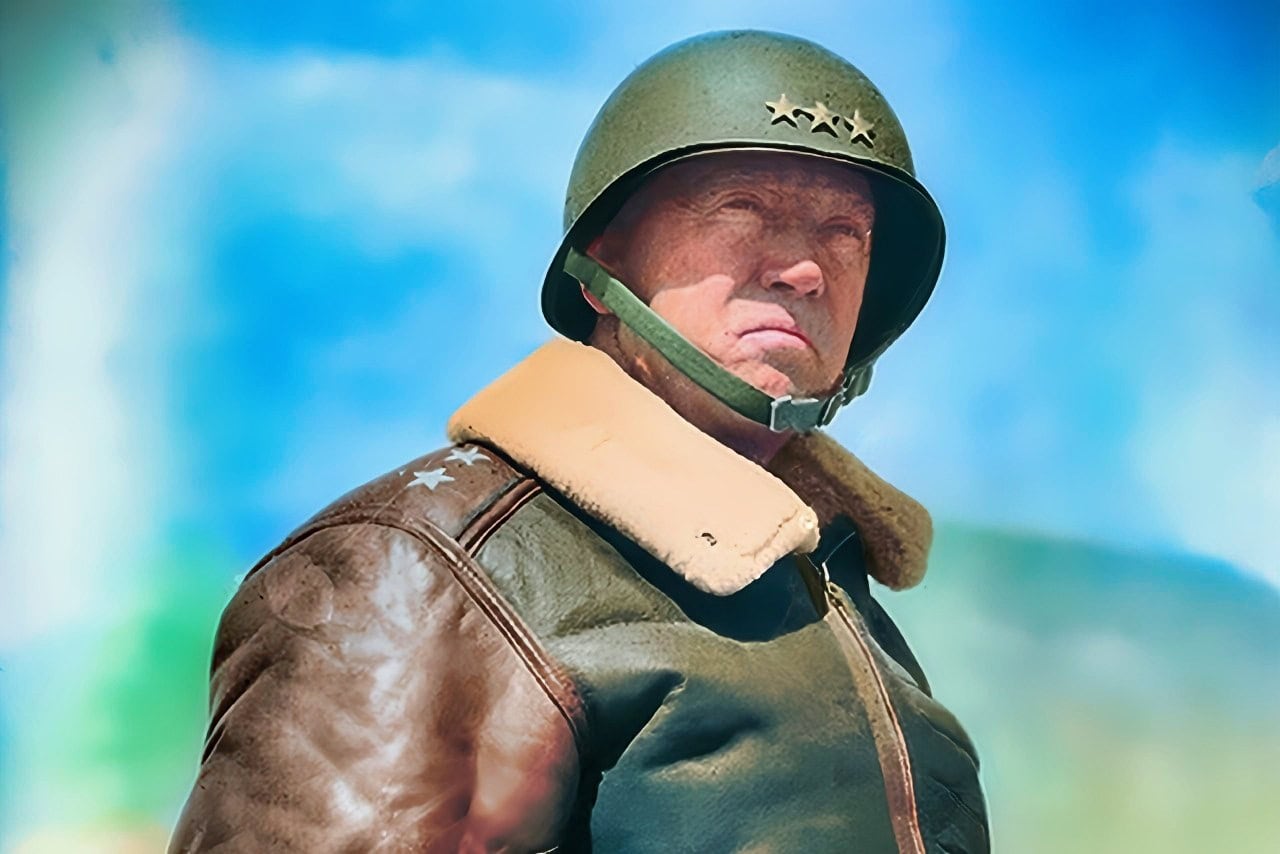
George Patton U.S. Army Photo
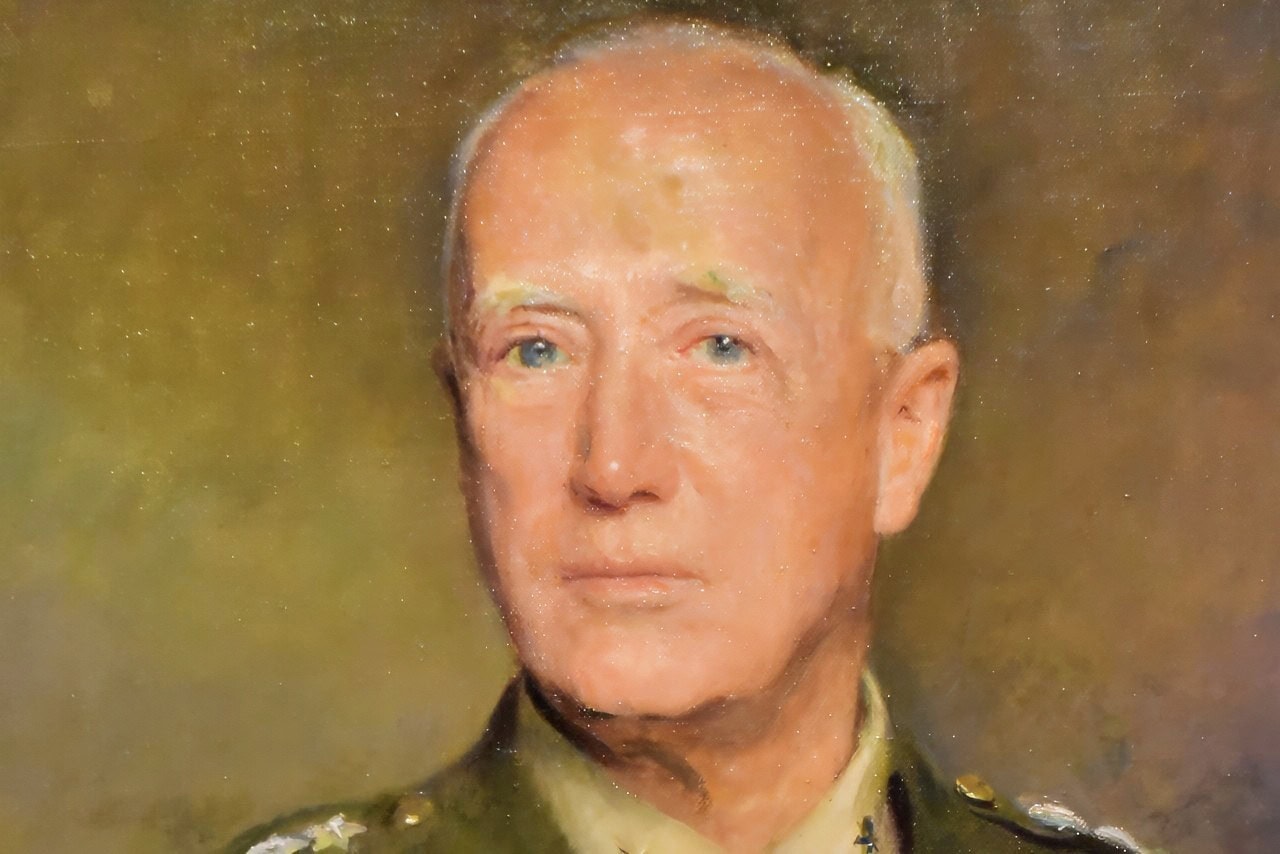
General George Patton National Portrait Gallery Photo. Image Taken by 19FortyFive on 1/23/2026 in Washington, DC.
VMI and West Point
George Jr. started his military career by following in his father’s footsteps at Virginia Military Institute (VNI), attending his father’s alma mater from 1903 to 1904. While at VMI, George was nominated for the U.S. Military Academy at West Point by Senator Thomas R. Bard (the “Father of Port Hueneme”).
Thanks to that year at VMI, Patton easily adjusted to the hazing of plebe year at West Point. However, his learning difficulties forced him to repeat the miserable first year after failing mathematics. (One could say that “math” was Patton’s least-favorite four-letter word.)
Patton persevered, attaining the billets of cadet sergeant major during his junior year and cadet adjutant his senior year. As a testament to his athleticism, Cadet Patton competed in the pentathlon at the 1912 Summer Olympics in Stockholm, finishing fifth, right behind four hometown hero Swedes.
Patton graduated number 46 out of 103 cadets on June 11, 1909, earning a commission as a second lieutenant in the Cavalry branch. The following year, he married Beatrice Banning Ayer, with whom he would have two daughters and one son.
The Pancho Villa Expedition
Patton’s commissioning took place eight years before the United States entered World War I, but he didn’t have to wait long to see the action he craved.
During General John “Black Jack” Pershing’s Pancho Villa Expedition of 1916, Patton wielded his Colt Single Action Army “Peacemaker” revolver, which later ended up as one of his two famous ivory-handled revolvers.
World War I
During the Great War, Patton first demonstrated his prowess in tank warfare. He became the first officer assigned to the Tank Corps and was charged with establishing the First Army Tank School. Soon enough, Patton shipped off to Europe.
He took to the battlefield like a fish to water, first during the St. Mihiel Offensive on September 12, 1918, and again during the Meuse-Argonne Offensive. He was wounded in the latter battle, but he kept on fighting and was promoted to colonel for his troubles. Coincidentally, the Armistice came on his 33rd birthday.
Between the World Wars
Immediately after the war, Colonel Patton was sent to Fort Meade, where he befriended Dwight David Eisenhower and introduced Ike to Major General Fox Conner, who became a great intellectual mentor to the eventual five-star general and president.
During the interwar years, Patton became a major advocate for the development of tank warfare tactics and strategy, stressing that tanks should be used not merely as infantry support but as an independent fighting force.
World War II and (Barely) Beyond
So much has been written about George Patton’s World War II service and all-too-brief postwar career that we could not add much here, so we’ll give you the short version.
At the start of that war, Major General Patton was Commanding General of the 2nd Armored Division.
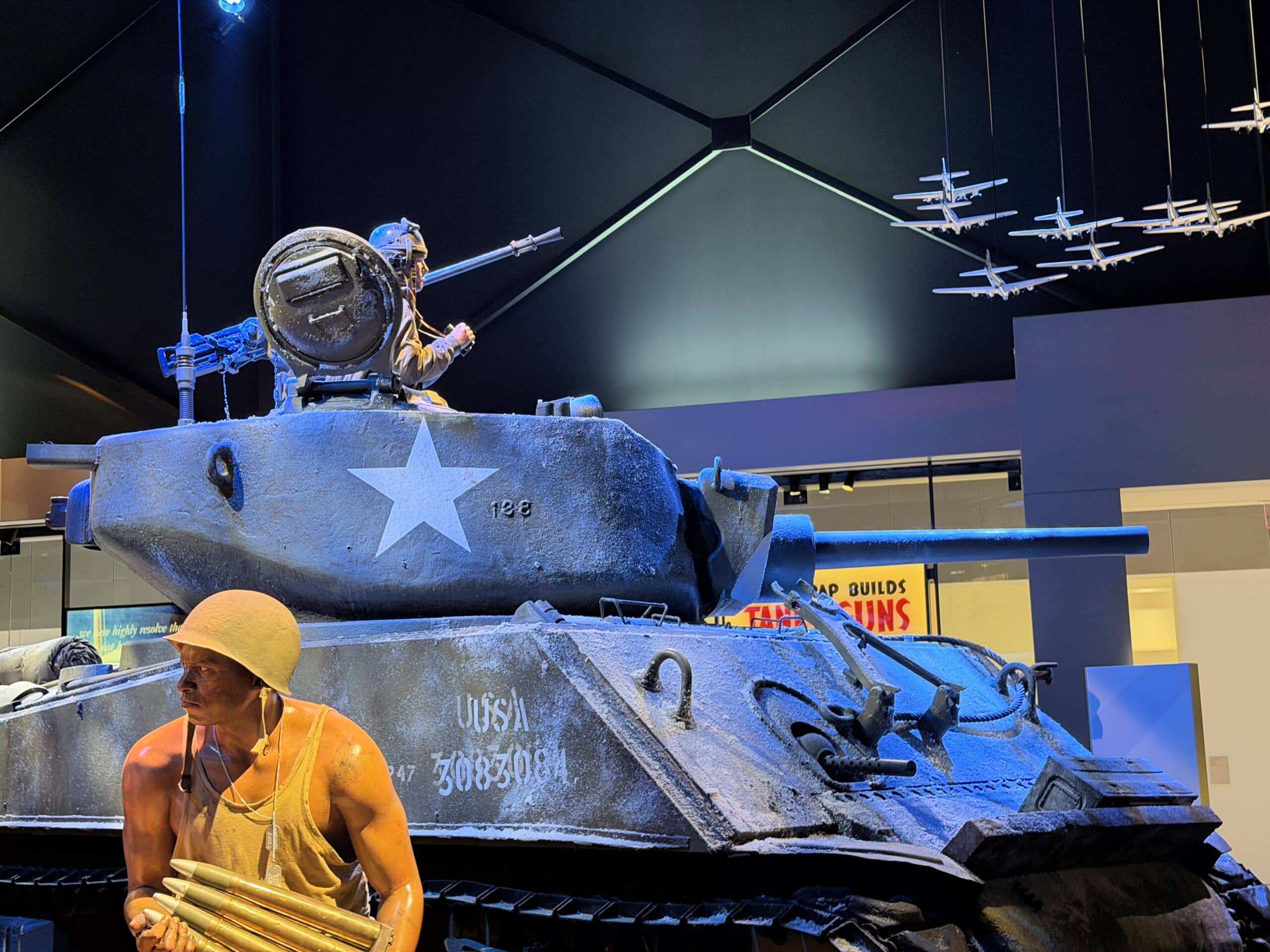
M4 Sherman. 19FortyFive Image.
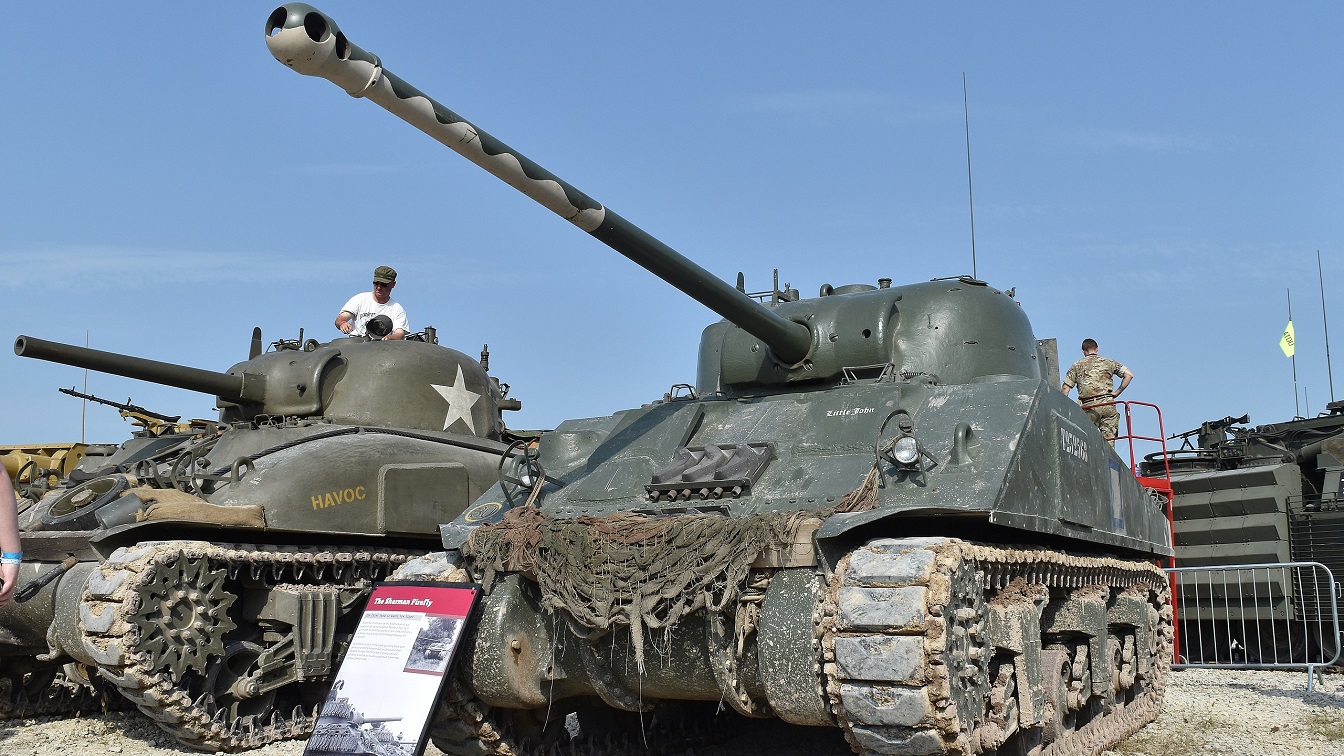
Serial No:- 16912 Official designation:- M4A4 Tank Medium 17Pdr. Total production:- 2,100-2,200 Main armament:- QF 17-pounder Anti-tank Gun The Firefly was a British modification of the M4 Sherman, with a 17 pounder gun replacing the usual 75mm. This gun was able to puncture the armour of a Tiger I or Panther, making the Firefly one of the few Allied tanks genuinely feared by Axis forces. This example comes from the Bastogne Barracks in Belgium, part of the Belgian Royal Military Museum. It was manufactured in the USA in 1942 and delivered to Europe in 1943 carrying the running number ‘USA 3017218’. It was converted to a Firefly in early 1944 and saw British service as ‘T232568’. She is fully operational and is seen in the ‘Tank Park’ after making a guest appearance at TankFest 2019. The Tank Museum, Bovington Camp, Dorset, UK.
By the end of the war, he was a four-star general, having commanded the Seventh Army in the Mediterranean Theater, followed by the Third Army in France and Germany after D-Day. Shortly after Germany’s surrender, General Patton was appointed as military governor of Bavaria, where he somewhat controversially led the Third Army in denazification efforts.
On December 9, 1945, Patton was the victim of a fatal vehicle accident when his staff car collided with an Army truck driven by T/5 Robert L. Thompson. The general suffered a broken neck and spinal cord injury that rendered him paralyzed from the neck down.
He lingered for 12 days before dying in his sleep of pulmonary edema and congestive heart failure at about 6:00 p.m. on December 21, 1945, at age 60. Three days later, he was laid to rest at the Luxembourg American Cemetery and Memorial in the Hamm district of Luxembourg City.
Patton’s Lasting U.S. Military Legacy
Appropriately, Patton has been honored and memorialized in more ways than you can count.
Since he was renowned for his genius in tank warfare, it should come as no surprise that there have been four U.S. Army tanks named in his honor: officially the M46, M47, and M48, which debuted in 1949, 1951, and 1952, respectively; and unofficially the M60, which debuted in 1959.
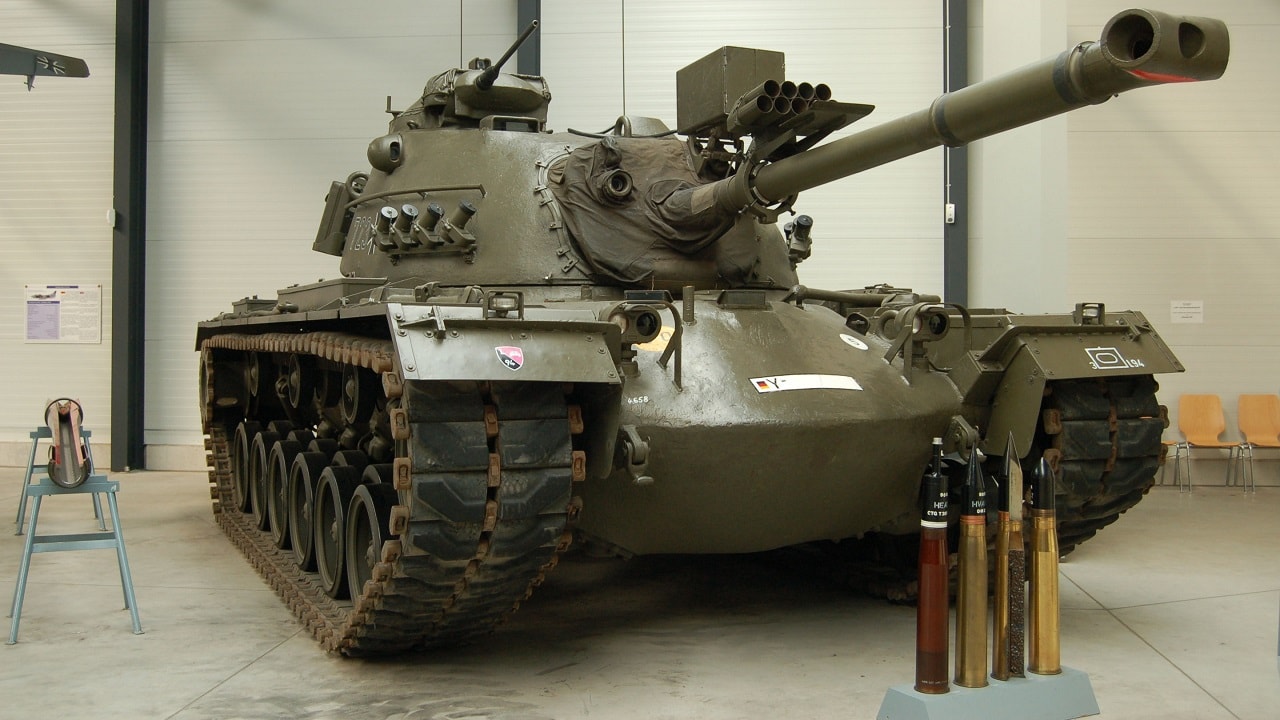
M48 Patton Tank. Image Credit: Creative Commons.
And, of course, he has also been immortalized in cinema. In addition to the 1970 motion picture, George C. Scott reprised the role in the 1986 made-for-TV movie The Last Days of Patton, based on the bestselling biography by Ladislas Farago. The final minutes of the latter film are absolutely heart-wrenching.
About the Author: Christian D. Orr, Defense Expert
Christian D. Orr is a Senior Defense Editor. He is a former Air Force Security Forces officer, Federal law enforcement officer, and private military contractor (with assignments worked in Iraq, the United Arab Emirates, Kosovo, Japan, Germany, and the Pentagon). Chris holds a B.A. in International Relations from the University of Southern California (USC) and an M.A. in Intelligence Studies (concentration in Terrorism Studies) from American Military University (AMU).