

Summary and Key Points: Wounded Knee – The US Army’s own commanding general called it the most brutal massacre he had ever heard of; its own 1891 investigation recorded women shot down fleeing with their children; and Congress expressed its deep regret a century later — while twenty soldiers hold the nation’s highest honor for it. The fully sourced account of the fight that did not end in September 2025: the review, the unreleased report, the decision, the two bills alive in the 119th Congress, and the strongest honest case each side makes for what those medals now mean.
The Battle over the Battle of Wounded Knee and The Medal of Honor
On the morning of December 29, 1890, soldiers of the US Army’s 7th Cavalry were disarming a band of Lakota led by the Miniconjou chief Spotted Elk, also called Big Foot, in their camp along Wounded Knee Creek on the Pine Ridge reservation in South Dakota.
The chief was prostrate with pneumonia. Colonel James Forsyth’s troopers had surrounded the camp and placed four Hotchkiss rapid-fire guns on the rise above it, and as the weapons search proceeded, a shot was fired, the circumstances argued over ever since.
The soldiers opened fire on a camp that had already surrendered. Estimates of the Lakota dead range from about 150 to more than 350, with 250 to 300 the band most commonly cited by historians and federal estimates running to 350 to 375 killed or wounded, the majority unarmed men, women, and children, some pursued for miles across the winter prairie. In testimony to the Army’s own investigation in 1891, the Lakota leader American Horse described women shot down fleeing with their babies, and Turning Hawk called the killing indiscriminate.
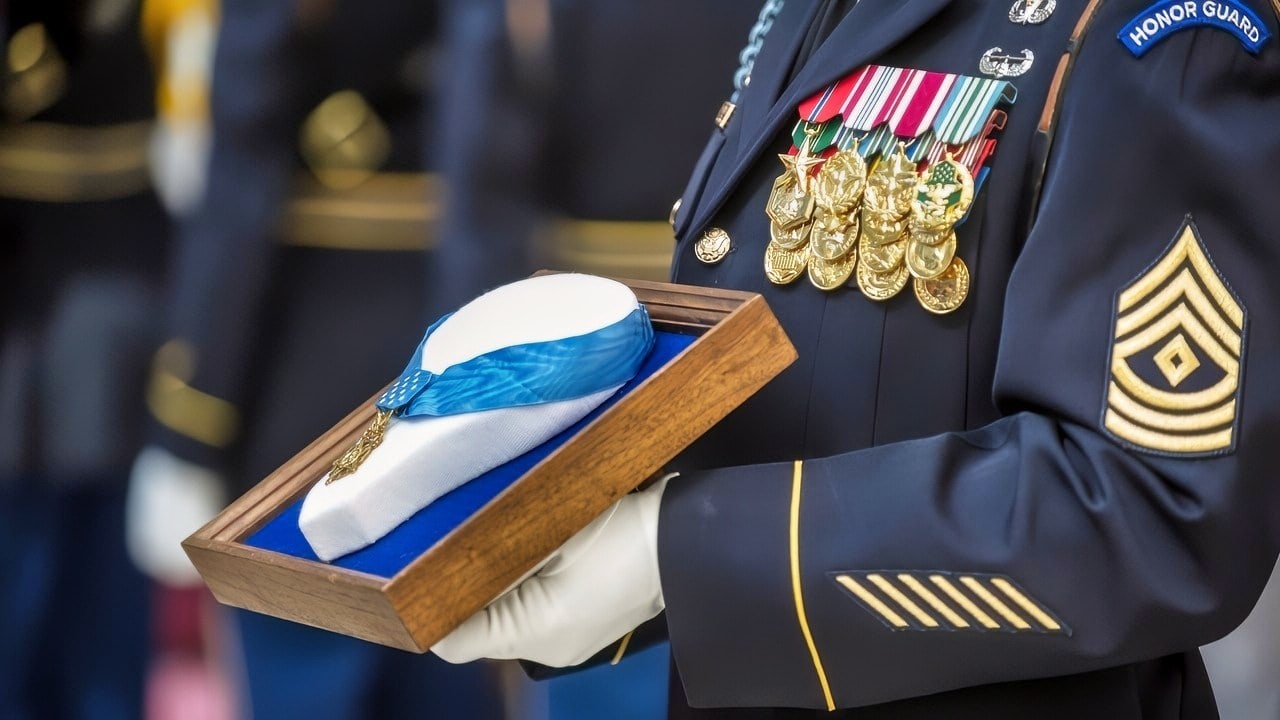
U.S. Army 1st. Sgt. Robert Durbin holds 1st Sgt. David McNerney’s Medal of Honor during an Enshrinement Ceremony at the Smithsonian National Postal Museum in Washington, D.C., on Sept. 22, 2013. The Smithsonian Institution accepted McNerney’s Medal of Honor for inclusion in the National Postal Museum collection where it will be displayed in the National Stamp Salon of the William H. Gross Stamp Gallery. (DoD photo by Staff Sgt. Teddy Wade, U.S. Army/Released)
About 25 soldiers also died, a number of them likely by their own side’s crossfire. A blizzard followed, and the frozen dead were buried in a mass grave. The Army’s commanding general, Nelson Miles, wrote that he had never heard of a more brutal, cold-blooded massacre. A century later, Congress adopted a resolution, S. Con. Res. 153, expressing its deep regret on behalf of the United States, language the current Congress’s own committee reports still cite.
And in the year after the killing, the Army awarded its soldiers the Medal of Honor for actions there: 20 by the count used in every modern accounting, though scholars note the day’s own tally runs to 19 with more for the wider campaign, an ambiguity so real that verifying the roster was itself part of the government’s recent review.
Those medals are now the object of one of the most charged historical fights in American government, and it is a live one, not a curiosity.
What the Review Was Supposed to Settle
Lawmakers wrote a recommendation into the fiscal 2022 defense bill urging a review of the Wounded Knee awards, and in July 2024 Defense Secretary Lloyd Austin acted on it, convening a five-member panel to examine each recipient individually, with a recommendation due to him by October 15, 2024.
The panel’s charge, as the administration described it, was to ensure that no soldier was recognized for conduct that did not merit recognition under the standards applicable at the time, a formulation both sides would later lean on.
The process drew bipartisan attention: Senator Elizabeth Warren of Massachusetts, the revocation effort’s leading advocate, and Senator Mike Rounds, Republican of South Dakota, jointly urged the Pentagon to give tribes and descendants more time to submit evidence, arguing they held information critical to the panel’s work, and the South Dakota state senate passed its own resolution seeking an inquiry.
The panel finished on schedule. Austin, in the final months of his tenure, never announced a decision and left office in January 2025, leaving the question of his successor on the desk.
The Decision
On September 25, 2025, Defense Secretary Pete Hegseth answered it in a video posted to social media. He said the review panel had concluded that the soldiers should keep their medals, criticized Austin by name for what he called careless inaction that left their recognition in limbo, and announced his decision in unambiguous terms: the soldiers who fought at Wounded Knee in 1890 will keep their medals, they deserve those medals, and their place in history is no longer up for debate. Two details around the announcement matter for the record.
First, Hegseth characterized the panel’s conclusion, but a defense official could not say whether the report would be made public, so the panel’s actual reasoning has not been released, and the world has his description of it. Second, the decision arrived amid a broader administration effort on historical questions, following a presidential executive order titled Restoring Truth and Sanity to American History, the renaming of Confederate-linked bases, and, in the same month, the order to begin styling the Pentagon as the Department of War. Supporters saw a secretary refusing to erase soldiers from history. Critics saw a pattern. Both readings are part of the story.
The Case for Taking the Medals Back
Should the Medals be taken back?
Its advocates note that the government’s own record calls Wounded Knee a massacre, that Congress formally expressed deep regret in 1990, and that the Medal of Honor is awarded in the name of Congress for gallantry beyond the call of duty, a standard they argue cannot describe the killing of noncombatants documented in the Army’s own 1891 testimony.

U.S. Secretary of Defense Pete Hegseth signs the “Unleashing U.S. Military Drone Dominance” memorandum during a drone demonstration at the Pentagon, July 10, 2025. The event was hosted to portray the Secretary of Defense’s initiative of Unleashing U.S. Military Drone Dominance. (U.S. Marine Corps photo by Lance Cpl. Alondra Y. Lopez Gonzalez)
In May 2025, Senators Warren and Jeff Merkley and Representative Jill Tokuda reintroduced the Remove the Stain Act, with co-sponsors including Senators Blumenthal, Padilla, Sanders, Schiff, and Smith, to rescind all 20 awards.
Warren said the country cannot be one that celebrates and rewards horrifying acts of violence against Native people.
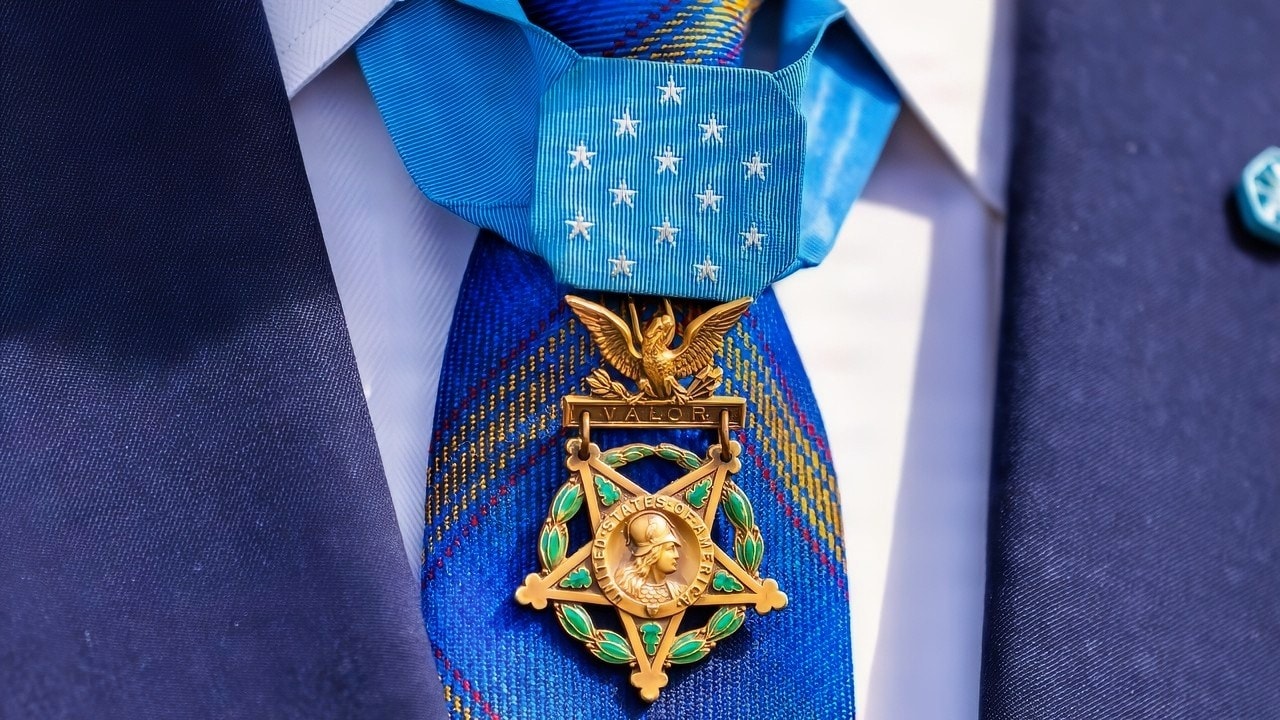
A detail photo of the Medal of Honor at the Tomb of the Unknown Soldier, Arlington National Cemetery, Va., Mar. 25, 2025. The Ceremony was hosted by Maj. Gen. Trevor J. Bredenkamp, commanding general, Joint Task Force-National Capital Region and U.S. Army Military District of Washington. (U.S. Army photos by Sgt. Christopher Grey)
Tokuda called the massacre a crime against humanity and said honoring the perpetrators adds insult to a deep wound. The bill carries the endorsement of tribal governments, and its moral lineage runs through figures like Marcella LeBeau, a Lakota Army nurse who served at the Battle of the Bulge in the Second World War and spent her final years advocating for the medals’ revocation; her grandson, the chairman of the Cheyenne River Sioux Tribe, invoked her in supporting the reintroduction.
For the Lakota, the medals are not an abstraction: they are official commendations attached to the deaths of named ancestors. December 29, 2025, marked the massacre’s 135th anniversary, and descendants observed it, as they have for decades, with the medals still standing. Congress has meanwhile advanced a companion effort on a separate track, the Wounded Knee Massacre Memorial and Sacred Site Act, to protect the ground itself, a measure whose own committee report recounts that those who tried to escape in 1890 were hunted down and killed.
The Case for Leaving Them
So should the Medals stand?
The argument rests on four points.
The first is the review itself: the panel Austin convened, examining each recipient individually against the standards applicable at the time, concluded, by Hegseth’s account, that the medals should stand, and its defenders argue that a process demanded by Congress should be honored when it produces an answer Congress dislikes as much as when it produces one Congress wants.
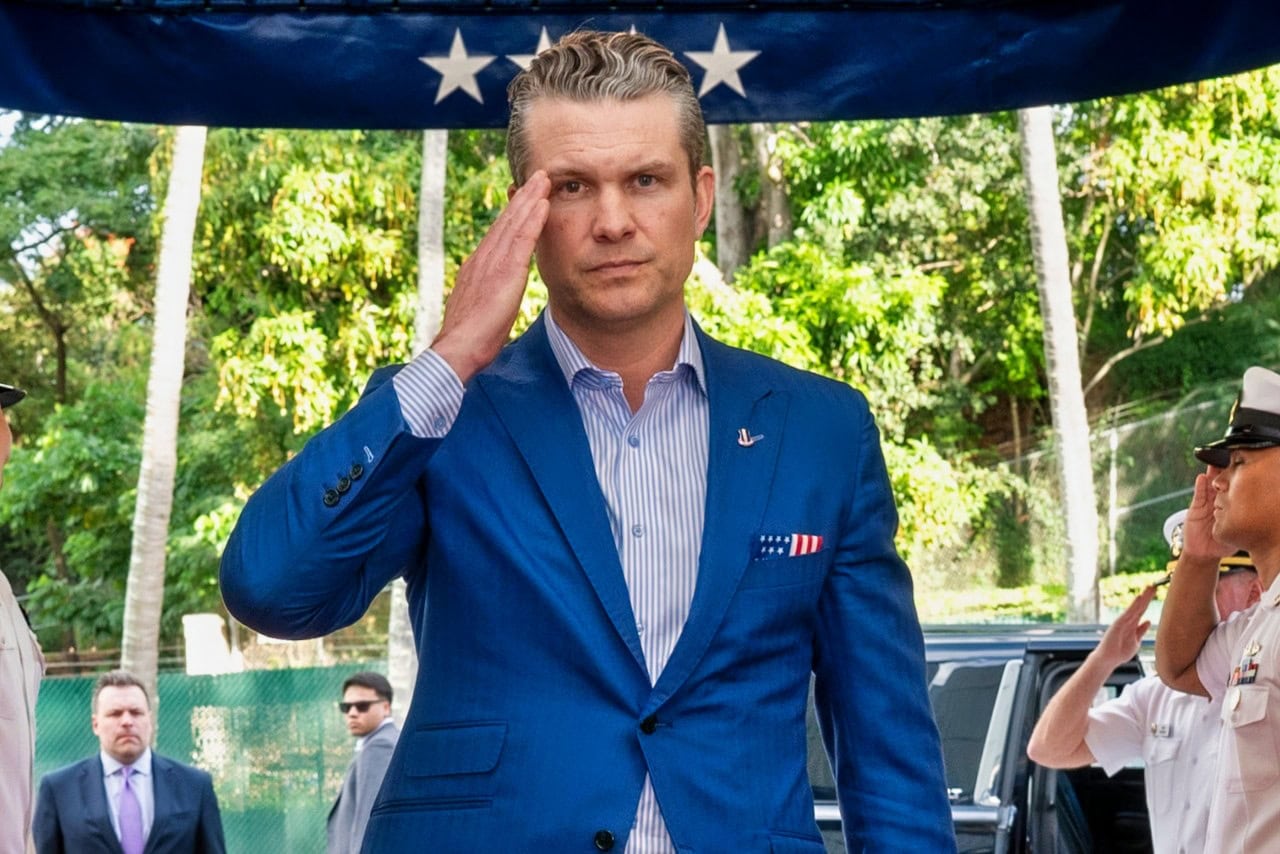
U.S. Secretary of Defense Pete Hegseth is piped aboard at the U.S. Pacific Fleet boathouse in Pearl Harbor, Hawaii, March 24, 2025. USINDOPACOM is committed to enhancing stability in the Indo-Pacific region by promoting security cooperation, encouraging peaceful development, responding to contingencies, deterring aggression and, when necessary, prevailing in conflict. (U.S. Navy photo by Mass Communication Specialist 1st Class John Bellino)

Secretary of Defense Pete Hegseth participates in a live virtual interview with “Fox and Friends” from the Pentagon, Washington, D.C., Jan. 31, 2025. (DoD photo by U.S. Navy Petty Officer 1st Class Alexander Kubitza)
The second is the era’s context: the Medal of Honor was effectively the Army’s only decoration in 1890, awarded under far looser criteria than today’s, and several citations describe discrete acts, recovering wounded comrades under fire among them, that recipients’ defenders say deserve evaluation as individual conduct rather than collective judgment; even establishing which awards belong on the Wounded Knee list proved complicated, which retention advocates cite as reason for caution about revoking by category.
The third is precedent. In a plea to the Senate Armed Services Committee, reported by CNN, a leading voice in the Medal of Honor community warned that rescinding the awards would set a precedent for future generations of Americans to rescind medals from any conflict, judging every war’s soldiers by the standards of whoever holds power later.
The fourth is Hegseth’s own stated ground: that the soldiers earned recognition under their own time’s rules, and that a nation should not relitigate its history award by award.
There is also a structural fact constraining the whole fight: because the medals were awarded by the executive, Congress cannot simply vote them away, and any revocation must ultimately come through the military itself, which is precisely the channel that has now said no.
Where It Stands, and Why It Will Not End
As of this writing, the Remove the Stain Act of 2025 sits in committee in the 119th Congress, where its predecessors of 2019 and 2021 also stalled, and its sponsors have shown no sign of letting it lapse.
The secretary’s decision is final within this administration, and plainly reversible by a future one, which is the deeper truth of the September announcement: a question that has remained open for 135 years. Only time will tell what happens next.
About the Author: Harry J. Kazianis
Harry J. Kazianis (@Grecianformula) was the former Senior Director of National Security Affairs at the Center for the National Interest (CFTNI), a foreign policy think tank founded by Richard Nixon based in Washington, DC. Harry has over a decade of experience in think tanks and national security publishing. His ideas have been published in the NY Times, The Washington Post, The Wall Street Journal, CNN, and many other outlets. He has held positions at CSIS, the Heritage Foundation, the University of Nottingham, and several other institutions related to national security research and studies. He is the former Executive Editor of the National Interest and the Diplomat. He holds a Master’s degree focusing on international affairs from Harvard University.

