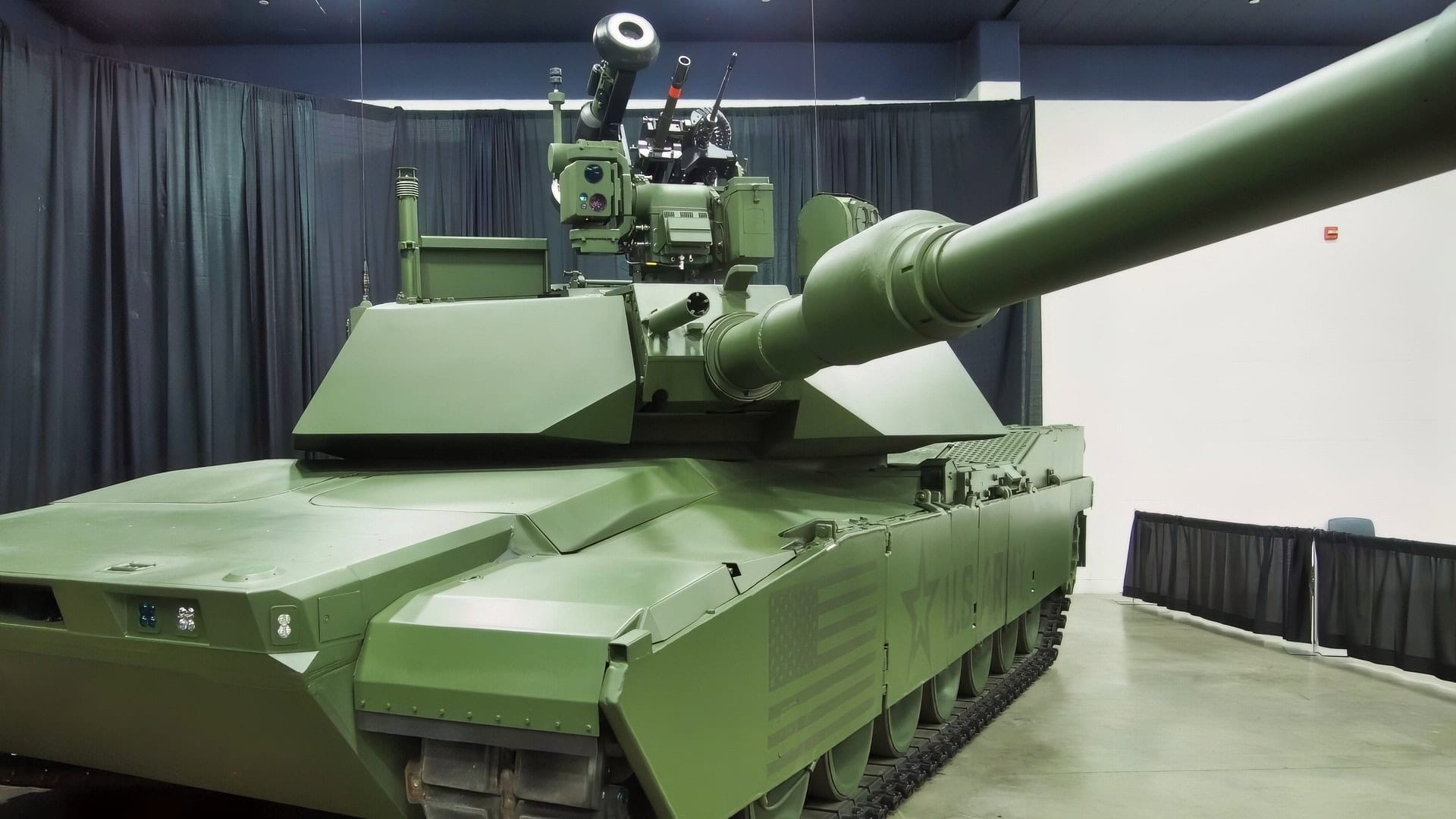
Summary and Key Points: The U.S. Army is building a new main battle tank, and that looks like a bad idea. The M1A2 SEPv3 Abrams weighs 73 tons, and after finding that the upgrades it wanted would add weight, the Army canceled the SEPv4 and turned to the M1E3 Abrams: a hybrid diesel-electric design meant to come in at 60 tons, with roughly $740.5 million requested for the first 30 vehicles on top of a $17.04 billion upgrade program that covered 2,116 tanks.
The M1E3 Abrams Mistake?
The United States Army does not really need a new Main Battle Tank.
It has the M1A2 Abrams MBT, and that is more than enough–especially because the ground combat of the modern age is ill-defined by the MBT, as the war in Ukraine has demonstrated.
What is needed are drones and smaller systems that are more maneuverable and can act as motherships for unmanned ground vehicles (UGVs).
Yes, the M1A2 is old. But there’s no reason that US engineers cannot simply create some top-side armor defenses and better counter-drone capabilities rather than build a completely new, expensive combat system.
An Entirely New Abrams
Yet, the Army is building the M1E3 Abrams MBT. According to the Army’s leadership, they were originally interested in simply enhancing the M1A2 and extending its lifespan.
But their engineers determined that certain key modifications could not be made without first increasing the system’s weight, which was a non-starter for Big Green.
The current M1A2 SEPv3s weigh around 73 tons (depending on their configuration, with additional protection packages pushing their combat weight even higher).
The Army believes it can reduce the M1E3 to roughly 60 tons. We’ll see.
Of course, we don’t want to create a tank so heavy it cannot cross many bridges or struggles to do its most basic tasks in the rugged conditions of combat.
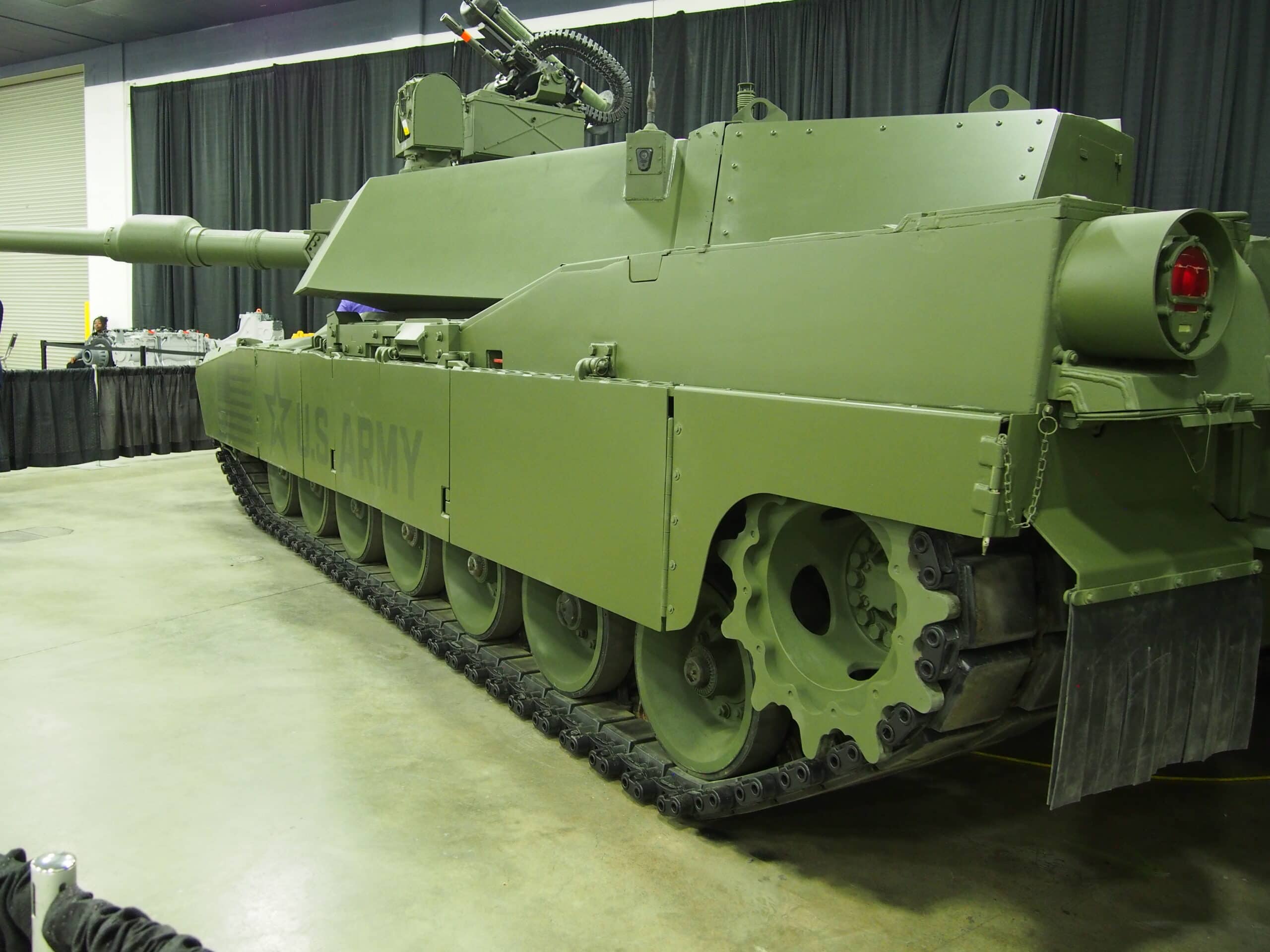
M1E3 Tank Photo from the Detroit Auto Show. 19FortyFive Photo.
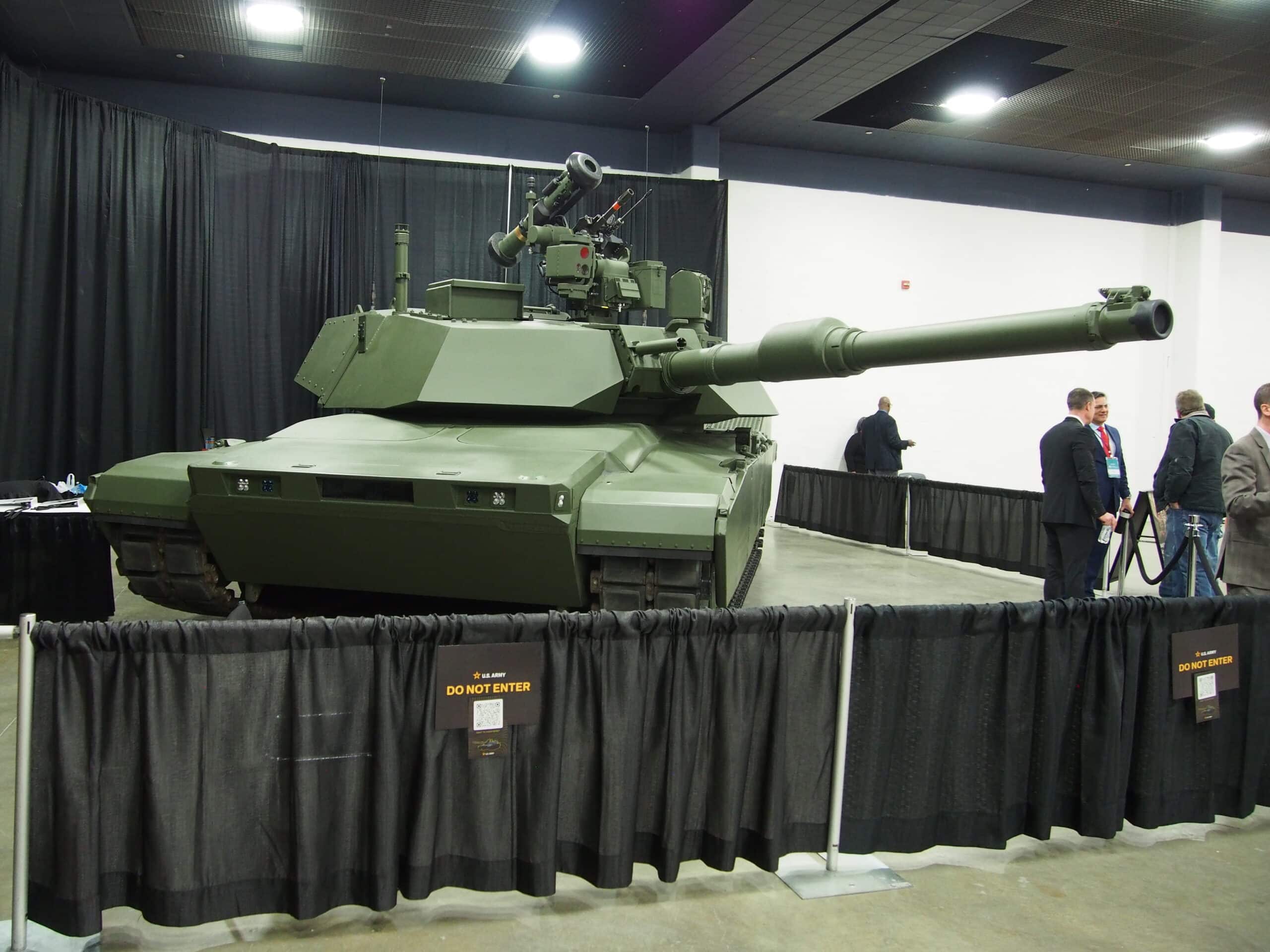
M1E3 Tank Photo from the Detroit Auto Show. 19FortyFive Photo.
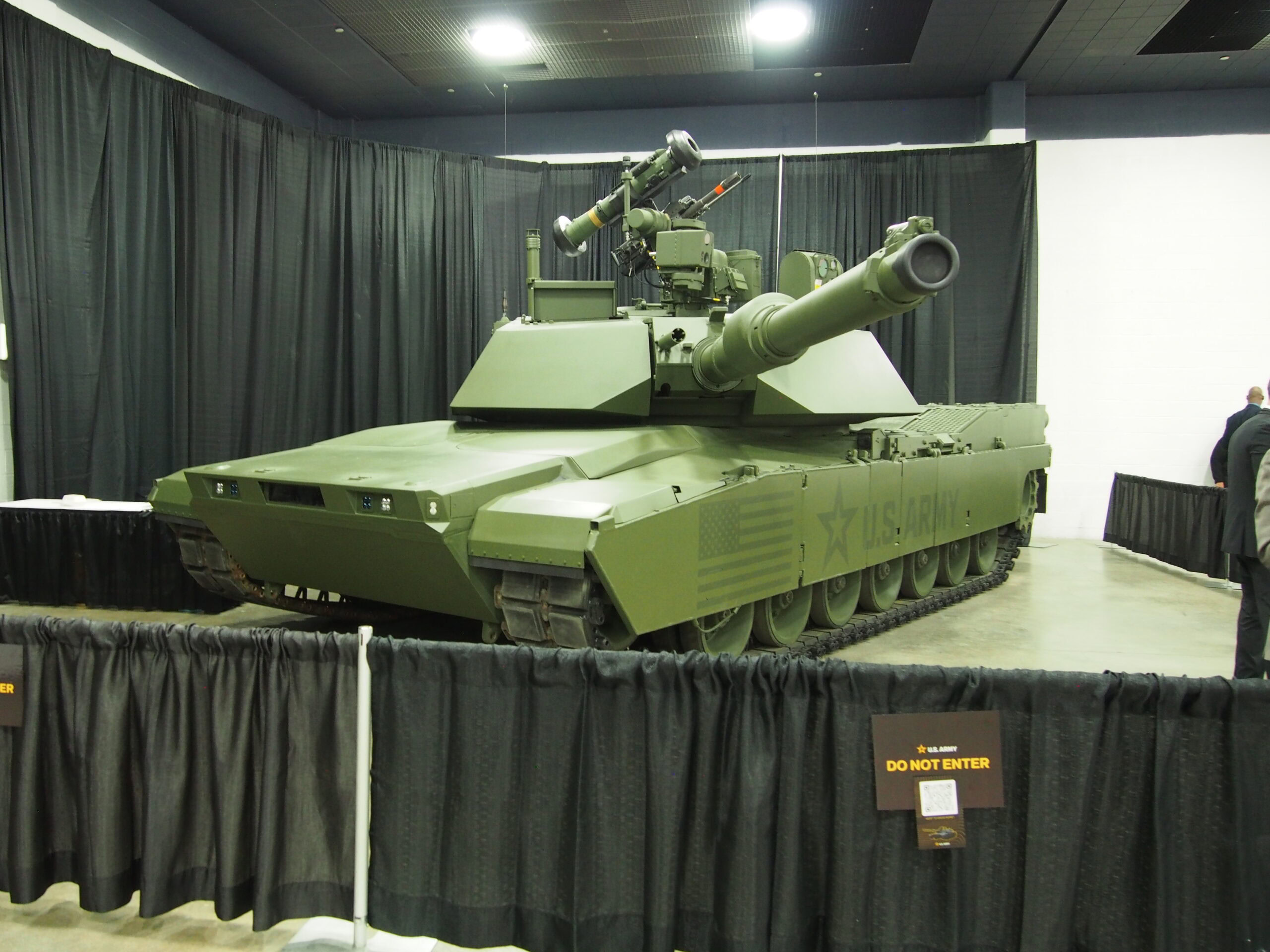
M1E3 Tank Photo from the Detroit Auto Show. 19FortyFive Photo.
But MBTs operating in the war in Ukraine have demonstrated to the world that they are more vulnerable to drones than they are helpful in frontline settings.
What’s more, MBTs really work in the modern combat setting if they are employed along the periphery of a battlefield as a kind of mobile artillery, evading enemy counter-battery fire and drones, while operating within a protective envelope of their own drone swarms.
Anyway, one of the Abrams’ greatest weaknesses has always been its rather infamous appetite for fuel.
Increasing its weight would complicate the logistical chain that supplies and maintains the Abrams in combat.
That tank has a 1,500-horsepower AGT1500 gas-turbine engine that provides excellent performance for such a massive vehicle, but supplying large formations of Abrams tanks requires massive numbers of fuel trucks and other support vehicles.
Big Green wants the M1E3 to be a hybrid diesel-electric vehicle that improves fuel efficiency and reduces the logistical footprint of armored formations.
The Army Says It Can’t Just Upgrade the Existing Fleet of M1A2 Abrams
There are also concerns that more electronics, such as advanced counter-drone systems, will demand more power and cooling capacity than the M1A2 SEPv3 provides.
The Army was originally looking at the SEPv4. But the ground branch decided against that route and wanted an entirely new system.
The Army intends to incorporate all manner of new technologies while embracing a Modular Open Systems Architecture, making subsequent upgrades easier and supposedly less resource-intensive.
The Army requested around $740.5 million for 30 tanks.
The broader Abrams upgrade program has listed approximately $17.04 billion for 2,116 vehicles throughout its history.
The M1E3, while different from the now-canceled M1A2 SEPv3 upgrade, is a substantial, fundamental improvement rather than a minor set of modifications upon what came before.
What the Army wants to do, therefore, is maintain the potent firepower of the Abrams while enhancing its protection.
But the Army no longer believes it can keep adding capabilities to the same physical architecture.
The M1E3 is the Army’s attempt to preserve what makes the Abrams lethal while removing weight, fuel consumption, and other constraints.
Not Understanding the Real Problem
The problem is that the Army is going to be essentially reinventing the wheel when all it needs to do is work out how best to protect its existing fleet of Abrams MBTs from drones, while making the Abrams UGV motherships and creating an entirely new set of strategies for tank warfare that sees the MBT being used more as mobile artillery on the periphery of the modern battlefield.
The MBT is not going away.
Its role is just evolving.
There’s no need to spend gobs of tax dollars creating something that resets what came before.
Instead, the Army needs to improve its existing fleet of Abrams and develop smarter doctrine for armor warfare that acknowledges drones as the new king of battle.
About the author: Brandon J. Weichert
Brandon J. Weichert is the Senior National Security Editor at 19FortyFive.com. He also manages The Weichert Brief on Substack. Weichert also hosts “National Security Talk” on Rumble. He is the author of four bestselling national security books, most recently A Disaster of Our Own Making: How the West Lost Ukraine (Encounter Books). Follow him via Twitter/X @WeTheBrandon.