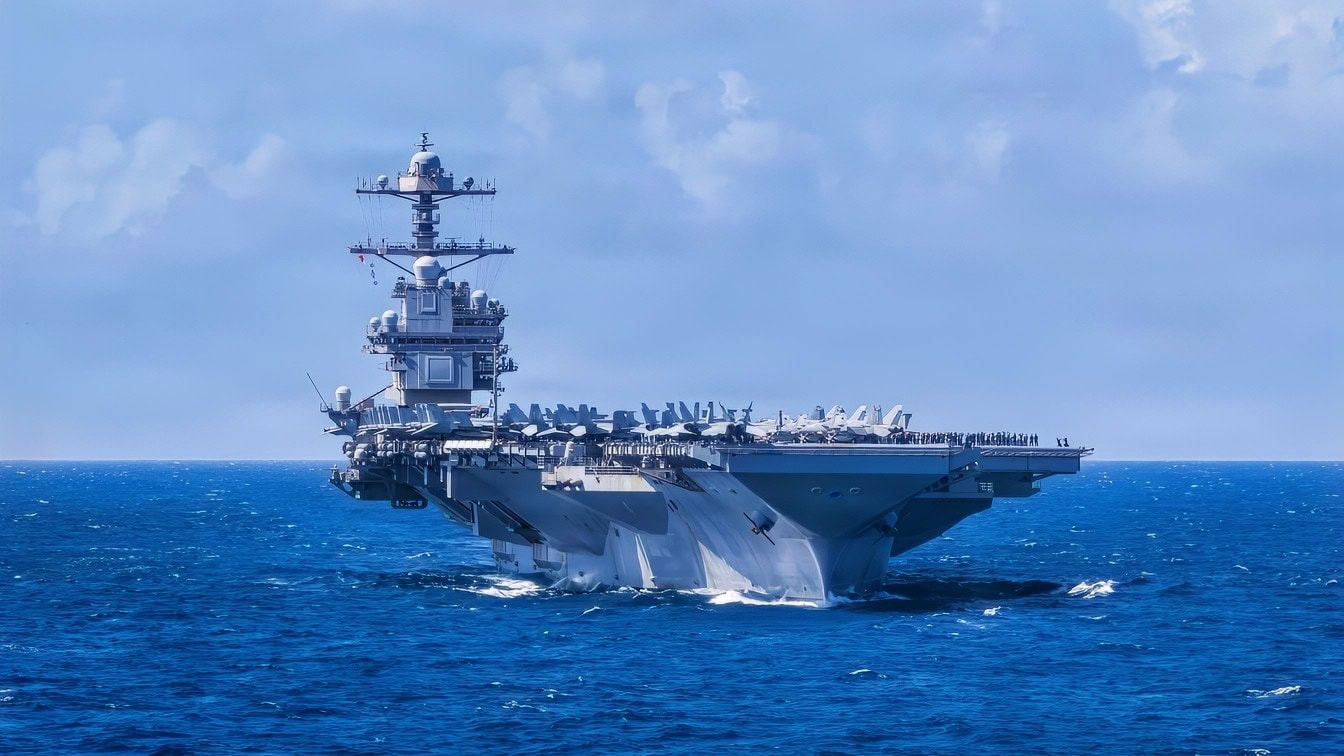
Summary and Key Points: On 12 March 2026, while operating in the Red Sea in support of Operation Epic Fury, a fire started in the aft laundry space of the USS Gerald R. Ford, a US Navy nuclear aircraft carrier. The Navy’s initial account was that it was non-combat-related, contained, had not touched the propulsion plant, and had left two sailors with non-life-threatening injuries. What has emerged since is considerably larger.
The USS Gerald R. Ford: The Investigation Continues
The U.S. Navy is still investigating the fire that engulfed the nuclear aircraft carrier USS Gerald R. Ford earlier this year, causing major damage and forcing the world’s largest aircraft carrier to undergo major repairs at Norfolk Naval Shipyard.
The fire, which hit international headlines and forced U.S. planners to respond while actively engaging in strikes against Iran, began on March 12, 2026.
The fire started in a main laundry space aboard the nuclear-powered carrier while it was operating in the Red Sea in support of Operation Epic Fury – and while the fire has been publicly acknowledged, the Navy had not publicly disclosed the exact time when it began or provided more than the bare minimum in the way of details.
Initially, the Navy said that the fire was non-combat-related and had been contained.
The Navy also said that it caused no damage to the propulsion plant and that the two sailors who were injured were left with non-life-threatening injuries.
But in the wake of the fire, it has become clear it was more serious than the first announcement suggested.
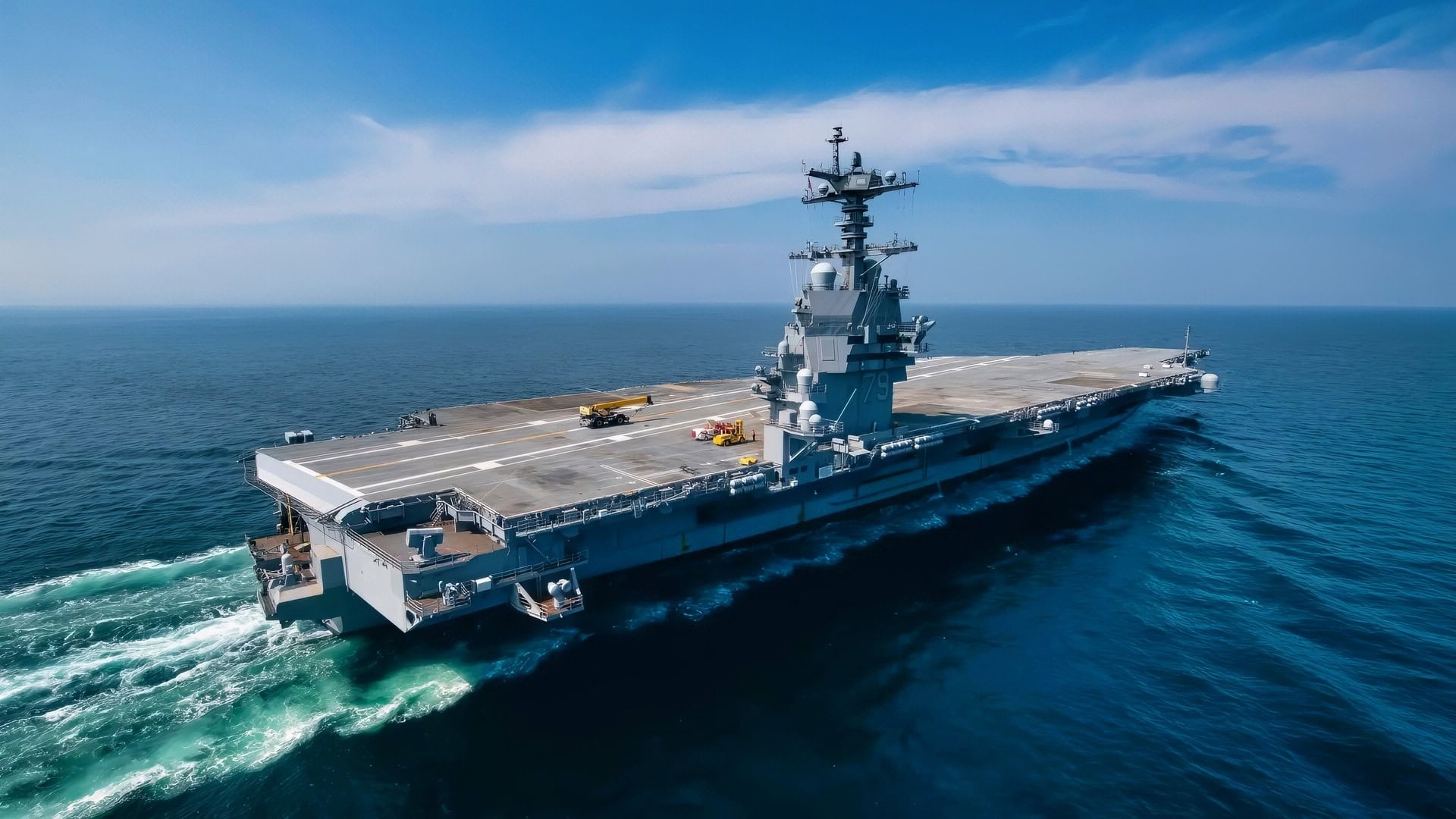
Ford-class Aircraft Carrier Industry Photo Handout
The fire spread beyond the laundry area and damaged berthing compartments, the world has since learned. It displaced hundreds of sailors and interrupted the Ford’s combat operations.
And, six months later, investigators still have not publicly released a final determination of what exactly happened.
The Fire Spread Beyond the Laundry Room
The initial fire appears to have originated in the carrier’s aft laundry facility — the shipboard laundry room located toward the rear, or stern, of the vessel.
Reports in the wake of the fire showed smoke and fire damage extending into nearby berthing areas, and images of the damage have circulated online in recent months.
More than 200 sailors were treated for smoke inhalation before returning to duty, according to sources cited by news outlets, including USNI News.
One sailor was reportedly medically evacuated after being injured during the firefighting effort, and two were treated for lacerations.
Over 100 sleeping racks were also reportedly lost, and the damage is believed to have deprived 600 sailors of access to their bunks.
The Navy responded to the fire by removing 1,000 mattresses from the future USS John F. Kennedy and sending them to the Ford, ensuring sailors had somewhere to sleep.
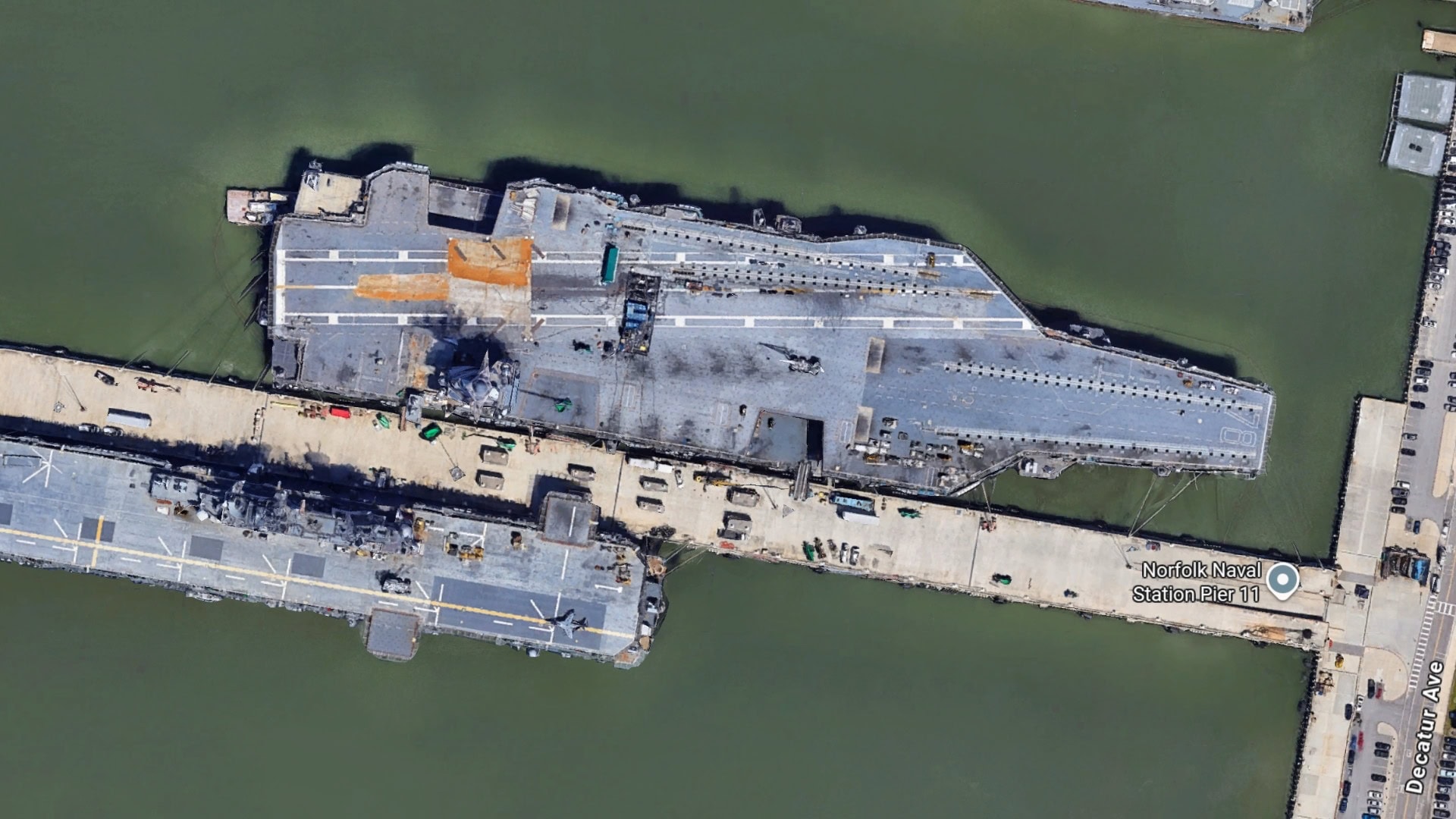
USS Gerald R. Ford Google Maps Photo Screenshot.
Roughly 2,000 sweatsuits and other clothing items were also collected because much of the ship’s laundry capacity was taken out by the fire.
CNN reporting also described how it took 30 hours to extinguish the fire completely, clean the affected compartments, and prevent the blaze from reigniting.
The news outlet also obtained video footage that appeared to show the bunks in a severely burned state, with twisted metal and hanging electrical wiring inside living spaces.
Questions About the Ship’s Fire Suppression System
One of the biggest unanswered questions is how quickly the fire spread, given that the Navy’s newest aircraft carrier should have had systems in place to suppress it.
CNN reporting in June suggested that the Ford’s fire suppression system did not operate as intended, citing a sailor who fought the fire and a senior U.S. official who confirmed the claim.
The sailor said that the system should have extinguished the fire before it caused such extensive damage.
He also described the crew’s response as a fight for survival, suggesting the fire could have easily caused more damage than it did if soldiers had not acted quickly.
Chief of Naval Operations Adm. Daryl Caudle appeared to acknowledge the severity of the incident in comments to CNN published on June 4. He said that the fire was “significant” and again confirmed that it began in the laundry and dryer area.
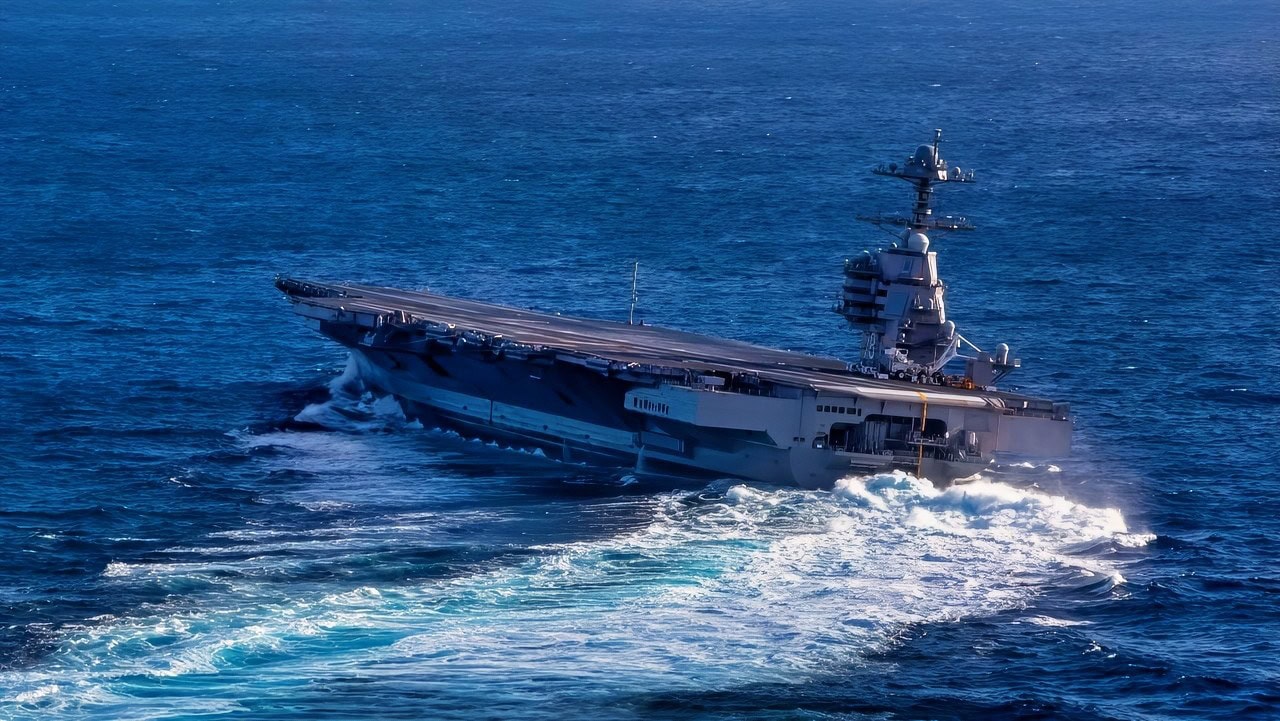
ATLANTIC OCEAN (Oct. 29, 2019) USS Gerald R. Ford (CVN 78) conducts high-speed turns in the Atlantic Ocean. Ford is at sea conducting sea trials following the in port portion of its 15 month post-shakedown availability. (U.S. Navy photo by Mass Communication Specialist 3rd Class Connor Loessin)
“Big fires are always a challenge, and this was significant — laundry and dryer-based fire,” Caudle told CNN.
“The crew handled that so well, and they fought it brilliantly and courageously, and basically were back in the fight within a matter of days.”
He also confirmed that the incident affected Ford’s combat operations.
The carrier halted combat sorties for two days after the fire, though the crew managed to get the ship operational and back into the fight within a matter of days.
But since then, the Navy has not publicly confirmed the nature of the fire suppression system failure or explained which part of the system may have malfunctioned.
Those unanswered questions have since attracted the attention of legislators on Capitol Hill, with Sens.
Chris Coons and Patty Murray asked the Pentagon on August 31 when congressional defense committees would receive the Navy’s final investigation.
Ford Undergoing Repairs
While Congress awaits the full report, the Ford is undergoing maintenance at Norfolk Naval Shipyard.
The Navy is conducting its planned post-deployment work as well as repairs stemming from the fire.
The carrier is expected to return to service in about six months.
About the Author: Jack Buckby
Jack Buckby is a British researcher and analyst specializing in defense and national security, based in New York. His work focuses on military capability, procurement, and strategic competition, and he produces and edits analysis for policy and defense audiences. He brings extensive editorial experience, with a career output spanning over 1,000 articles at 19FortyFive, and has previously authored books and papers on extremism and deradicalization.