
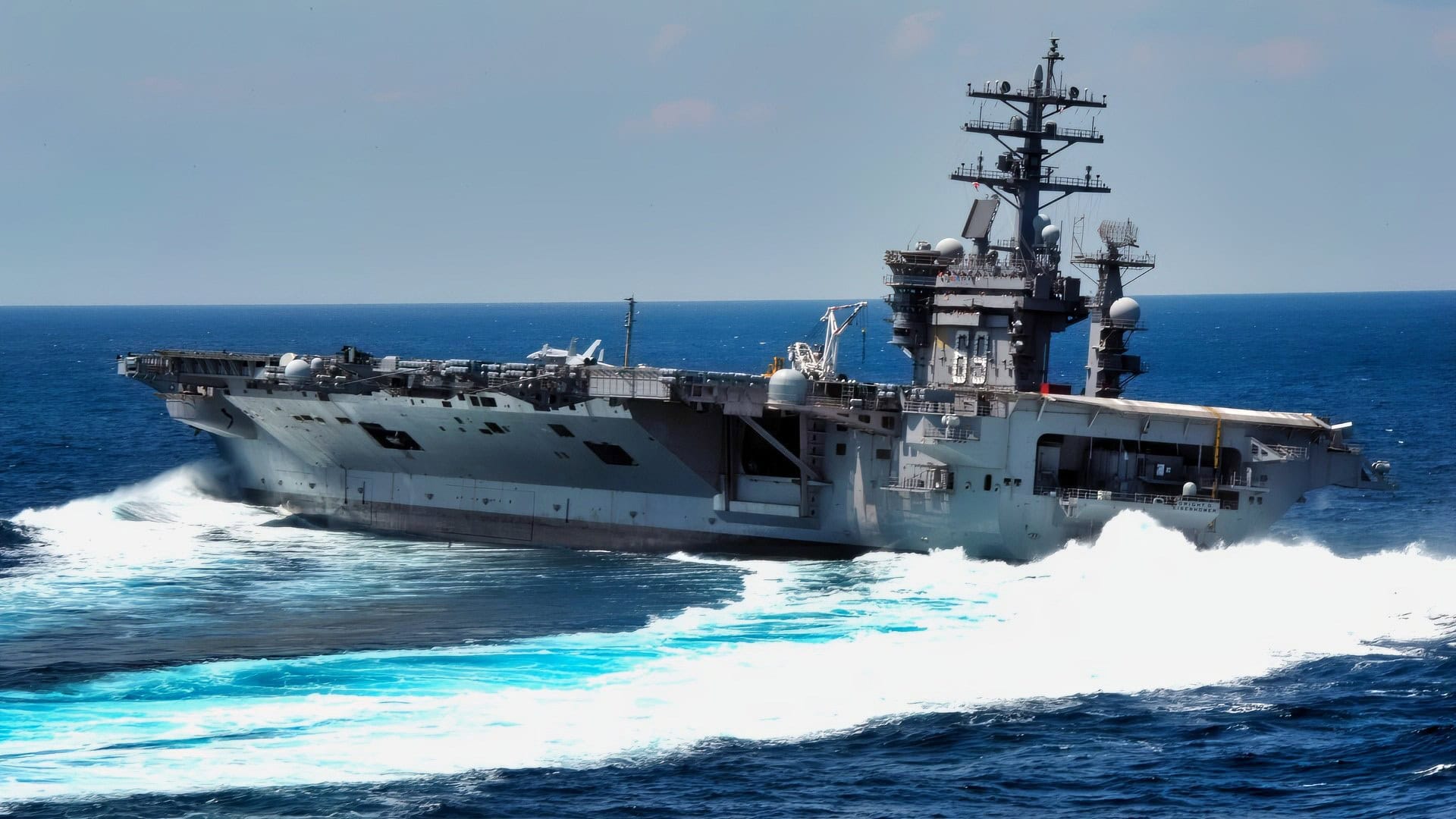
Summary and Key Points: On 28 February, Iran struck Naval Support Activity Bahrain with missiles and one-way attack drones. The damage forced the US Navy to move its Middle East logistics operations to Diego Garcia in the Indian Ocean, roughly 2,000 miles from carriers operating off Iran, and everything that followed came from that distance. USS Gerald R. Ford stayed deployed for 326 days, a post-Cold War record. USS Abraham Lincoln spent more than 280 days away from home, including 264 without a single port visit, with roughly 5,000 sailors and Marines aboard, broken plumbing, and shortages of basic hygiene supplies. Now, USS Theodore Roosevelt is preparing to sail from San Diego, and the Navy’s two most senior officers have publicly said what they are changing before she goes.
The US Navy’s Aircraft Carrier Challenges
The U.S. Navy has spent six months fighting Iran, and the conflict has pushed its aircraft carriers and crews to their limits and certainly beyond their ordinary deployment schedules.
The war has strained the service’s logistics network, and in some cases it has even left sailors struggling with poor living conditions.
As conflicts go, it’s hard to describe the last six months as much of a success, but there is one upside: the Navy has learned a lot from the conflict.
USS Gerald R. Ford was deployed for 326 days – a post-Cold War record. Meanwhile, USS Abraham Lincoln has spent more than 280 days away from home and went 264 days without a port visit.
The Lincoln’s deployment was also complicated by the destruction of Naval Support Activity in Bahrain, forcing the Navy to support ships in alternate ways, operating around Iran from facilities thousands of miles farther away.
Now, with USS Theodore Roosevelt preparing for another expected deployment to the Middle East, two of the U.S. Navy’s most senior leaders say they have learned from these problems and are changing how carriers prepare for war.
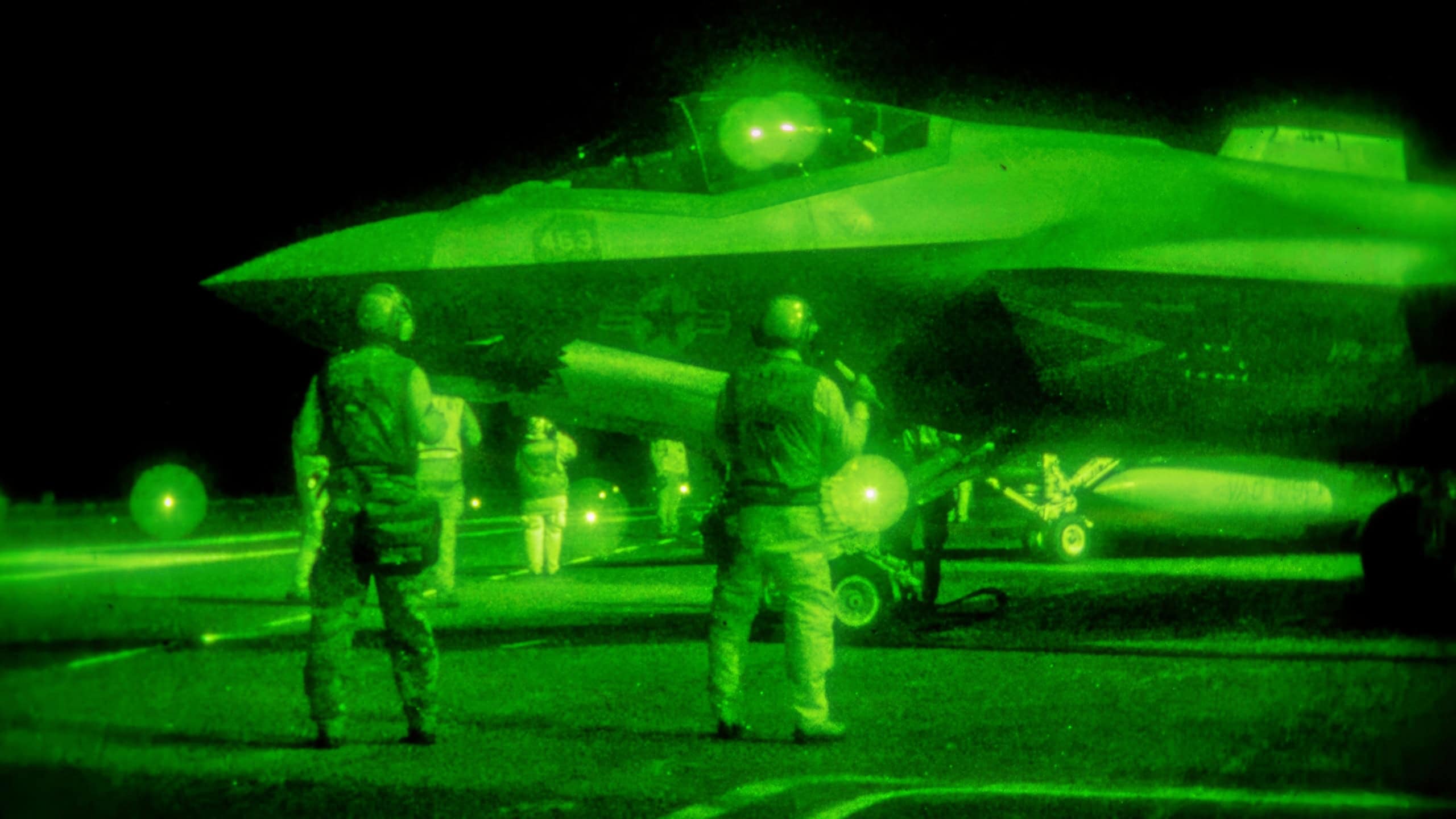
PACIFIC OCEAN (Jan. 23, 2026) –U.S. Navy Sailors conduct routine flight operations on the flight deck of the Nimitz-class aircraft carrier USS Theodore Roosevelt (CVN 71) Jan. 23, 2026. Theodore Roosevelt, flagship of Carrier Strike Group (CSG) 9, is underway conducting exercises to bolster strike group readiness and capability in the U.S. 3rd Fleet area of operations. (U.S. Navy photo by Mass Communication Specialist 2nd Class Ryan Holloway)
Navy’s Top Brass Address Roosevelt Deployment
In a video released Tuesday, September 8, Chief of Naval Operations Adm. Daryl Caudle and Master Chief Petty Officer of the Navy John Perryman offered insight into preparations for Roosevelt’s deployment from San Diego in the coming weeks.
In the clip, Caudle said that the Navy is taking lessons directly from the experiences of the Lincoln and Ford administrations and applying them before Roosevelt even reaches the Middle East.
“That starts with logistics,” Caudle said. “Roosevelt is maximizing its loadout of food, retail products, and hygiene items before getting underway.”
He spoke alongside Perryman, who also said the vessel’s crew is converting some spaces into additional storage to prepare for longer-than-usual deployments.
He also said the additional storage was intended to allow longer periods between resupplies.
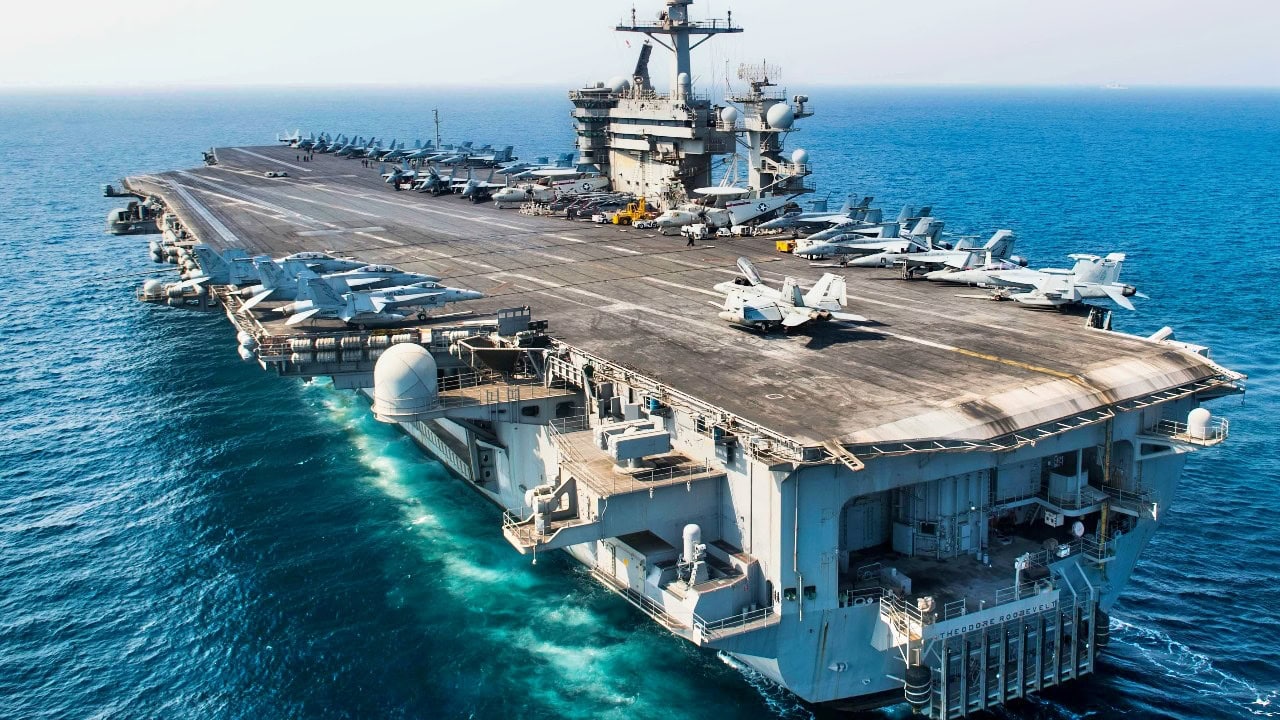
(Oct. 10, 2015) The aircraft carrier USS Theodore Roosevelt (CVN 71) transits the Arabian Gulf. Theodore Roosevelt is deployed in the U.S. 5th Fleet area of operations supporting Operation Inherent Resolve, strike operations in Iraq and Syria as directed, maritime security operations and theater security cooperation efforts in the region.

PHILIPPINE SEA (Feb. 24, 2024) A U.S. Air Force B-52 Stratofortress, attached to the 5th Bomb Wing, and aircraft attached to Carrier Air Wing (CVW) 11, fly in formation over the Nimitz-class aircraft carrier USS Theodore Roosevelt (CVN 71), Feb. 24, 2024. Theodore Roosevelt, flagship of Carrier Strike Group Nine, is underway conducting routine operations in the U.S. 7th Fleet area of operations. U.S. 7th Fleet is the U.S. Navy’s largest forward-deployed numbered fleet, and routinely interacts and operates with allies and partners in preserving a free and open Indo-Pacific region. (U.S. Navy photo by Mass Communication Specialist 1st Class Thomas Gooley)
Iran Hit the Navy’s Supply Chain
The changes being made are intended to address a problem that began almost immediately after the U.S. and Israeli strikes launched the war in February.
Iran responded by striking Naval Support Activity Bahrain using missiles and one-way attack drones on February 28.
The strikes badly damaged the facility, which had, until then, served as the Navy’s primary logistics hub in the Middle East.
The Navy was forced to move its logistics operations to Diego Garcia in the Indian Ocean — some 2,000 miles or more from carrier forces operating close to Iran.
That distance matters in an active, high-tempo military operation and made replenishment substantially more complicated.
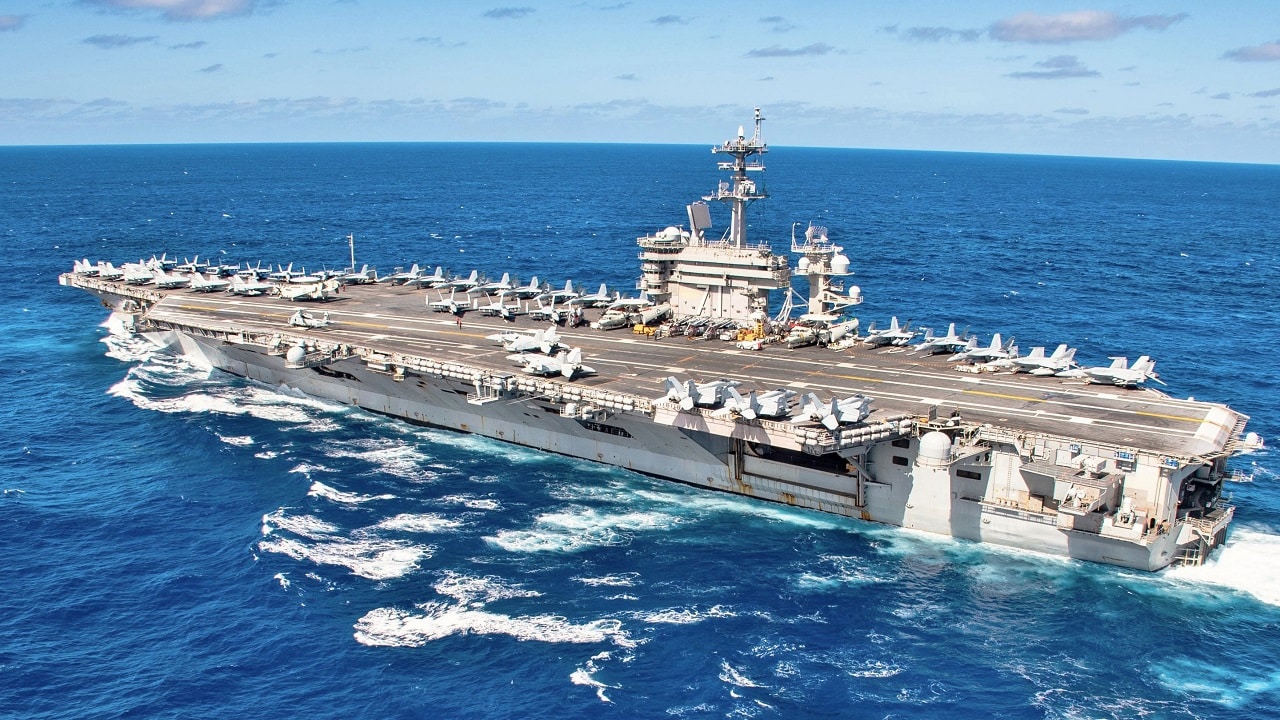
(Jan. 25, 2020) The aircraft carrier USS Theodore Roosevelt (CVN 71) transits the Pacific Ocean Jan. 25, 2020. The Theodore Roosevelt Carrier Strike Group is on a scheduled deployment to the Indo-Pacific. (U.S. Navy photo by Mass Communication Specialist Seaman Alexander Williams)

U.S. Navy sailors view the Nimitz-Class aircraft carrier USS Carl Vinson (CVN-70) from the hangar bay of the aircraft carrier USS Theodore Roosevelt (CVN-71). Theodore Roosevelt was deployed in the U.S. 5th Fleet area of responsibility supporting Operation Inherent Resolve, strike operations in Iraq and Syria as directed, maritime security operations and theater security cooperation efforts in the region.
Those problems led to major headlines about deteriorating onboard conditions and Navy service members struggling to access basic hygiene products while deployed.
Caudle has acknowledged that the Navy won’t be returning to its old Bahrain-based arrangements any time soon, and has even discussed possible port visits in the likes of Kenya, India, and Diego Garcia for ships operating in the region — although each one of those would involve what he called a “transit tax,” meaning that vessels must leave their operating areas in order to reach them.
As a result, Roosevelt is being prepared to carry far more supplies from the beginning.
Lincoln Sailors Endured Months At Sea
The Lincoln’s deployment was also marred by complaints about broken plumbing, shortages of basic supplies, and deteriorating morale among the roughly 5,000 sailors and Marines aboard the vessel.
Those headlines were particularly damaging, with reports about sailors experiencing suicidal thoughts and extreme mental health problems.
Those stories appear to have influenced preparations for Roosevelt, too, with Caudle noting that the Navy is installing new entertainment equipment on mess decks.
He also said new fitness equipment and additional cardio machines would be installed, and that holiday supplies are being purchased before departure in anticipation of a long deployment.
Navy officials are also said to be working with the carrier’s ombudsman and family readiness groups to improve communication with families throughout the deployment.
Roosevelt Count Be Entering A Busy War
The last six months of conflict with Iran have been eventful, but also marked by long periods of relative calm.
Now, the conflict is escalating, with Iran promising to commit more of its vast stockpile of missiles to directly target U.S. military assets, carriers, and oil infrastructure designed to move crude through alternative routes.
The Navy does not know how long Roosevelt will remain deployed, but the measures being taken now seem to reflect the current reality: that the regime in Tehran is not willing to back down and that its hardline government is willing to expend every resource it has to fight back against the United States and drag the entire global financial system, economy, and oil trade down with it.
Sailors aboard the Roosevelt, then, should have reason to celebrate in that preparations are being made – but perhaps also reason to prepare for a long and difficult deployment amid a higher-tempo war.
About the Author: Jack Buckby
Jack Buckby is a British researcher and analyst specializing in defense and national security, based in New York. His work focuses on military capability, procurement, and strategic competition, and he produces and edits analysis for policy and defense audiences. He brings extensive editorial experience, with a career output spanning over 1,000 articles at 19FortyFive, and has previously authored books and papers on extremism and deradicalization.