
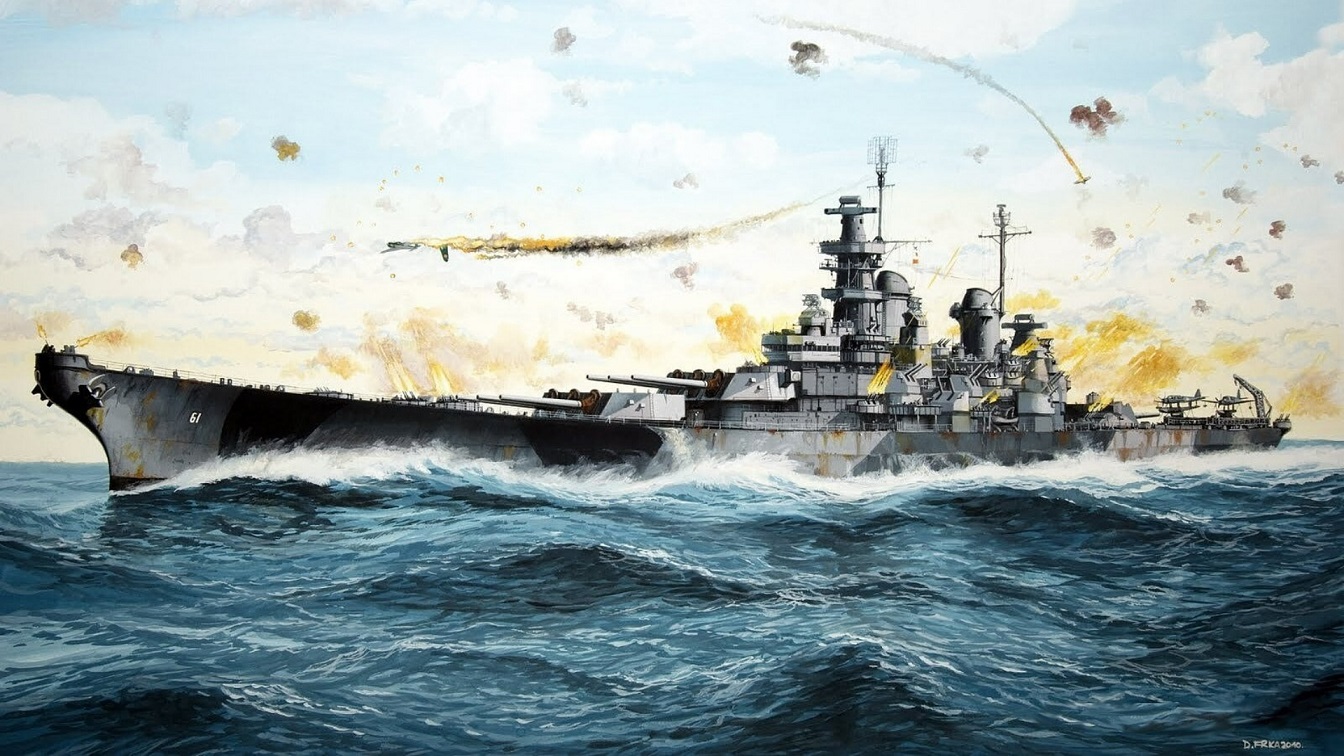
Yamato vs. the Montana-Class: The Battleship Duel Where Only One Ship Was Real: Japan built the largest battleship in history and sent her to war. America answered on paper, drew a ship to beat her, and then never cut the steel. The Montana-class exists as a finished design, five assigned names, and a file of General Board studies; Yamato exists as a combat record and a wreck. I decided to create a mythical matchup on paper to see who would win: the Yamato-class or the Montana-class. While it never had a chance of happening, this is a request many of our readers have asked for, so here is my best effort to declare a battleship winner.
The Ship Japan Built and the Ship America Drew
Yamato in her final configuration displaced about 72,800 tons at full load, made 27 knots, and mounted nine 18.1-inch Type 94 rifles behind a 16.1-inch inclined belt and 25.6-inch turret faces, with a 1944 refit having traded her wing 6.1-inch turrets for twenty-four 5-inch guns and a thicket of 25mm barrels, and radar sets her navy used for search while her gunnery stayed optical.
The final Montana design, designated BB67-4, answered at 70,965 tons full load on a 921-foot hull, 28 knots on 172,000 shaft horsepower, twelve 16-inch/50 Mark 7 guns in four triple turrets, twenty of the new 5-inch/54s, a 16.1-inch inclined belt of its own, and 22.5-inch turret faces.
Five ships were authorized in the Two-Ocean Navy Act, named on December 28, 1940, suspended in May 1942, and canceled in July 1943 before a single keel was laid, which froze the design at the moment of its greatest refinement.
The two ships are near twins in mass, 1,800 tons apart, wearing identical belt thicknesses, built to answer each other.
Twin Belts, Different Bets
The Navy’s own description of the class settles what the design was for: the Montanas would have been the only new American battleships of the war adequately armored against guns of equal power, a deliberate trade of speed for protection that reversed the Iowa bet.
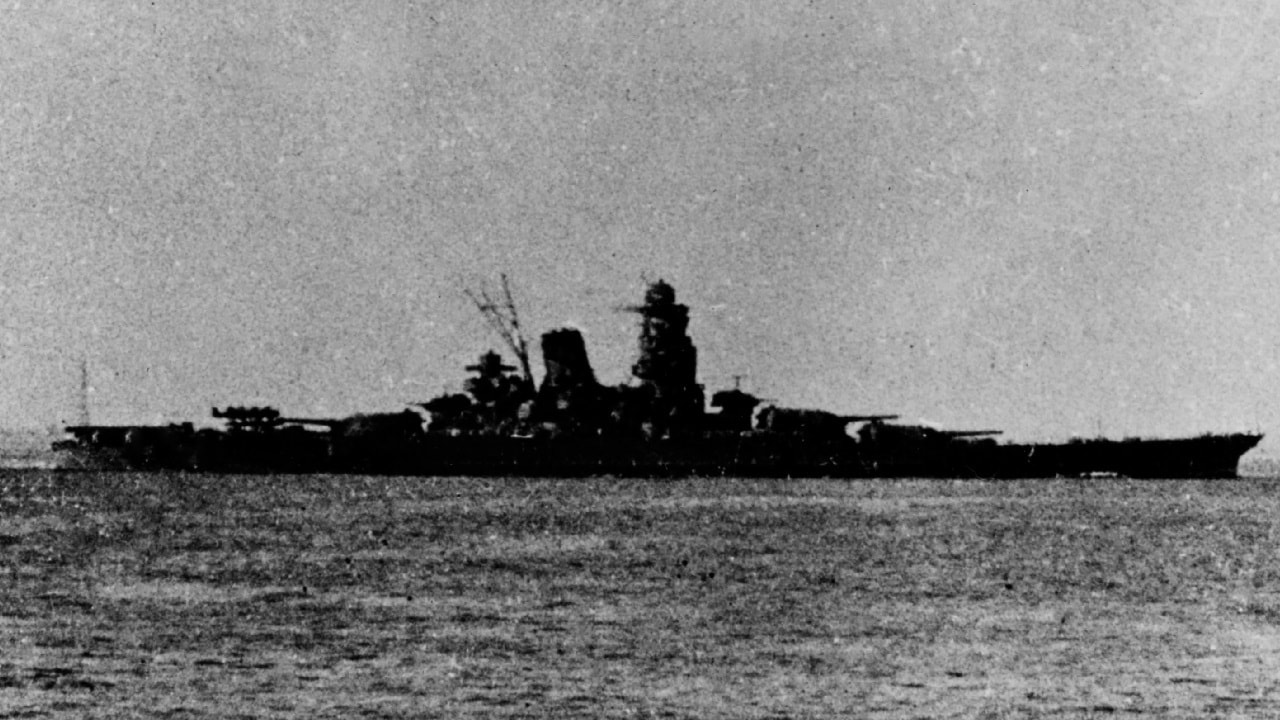
Yamato-class battleship Yamato. Image Credit: Creative Commons
The armor analysis bears it out. Against the 2,700-pound superheavy shell, the Montana scheme maintained an immune zone from 18,000 to 31,000 yards, the widest of any American design, with only Yamato’s guns posing a serious threat.
Yamato’s protection was the deepest ever floated, and her record proves what it could absorb: her sister took nineteen torpedoes and seventeen bombs before capsizing. Yet the one hard test of Yamato-class armor against American shells favors the American gun.
At Dahlgren after the war, in the trials of the Naval Proving Ground’s November 1947 report, a 16-inch superheavy fired into a 25.6-inch turret-face plate punched entirely through it, the projectile continuing undamaged into the Potomac and the examiners grading the steel at pre-World War I quality.
The plate was made for Shinano late in the war, when Japanese armor production had degraded, and the shot was fired at short range and at a near-normal angle, so it tests the metallurgy without testing every geometry. What survives all the caveats is this: each ship’s guns, according to the archival penetration tables, defeat the other’s belt at roughly 20,000 yards, and the Montana design is the only ship America ever drew that could stand in that zone with a real chance of taking the reply.
Sixty-Four Thousand Eight Hundred Pounds a Minute
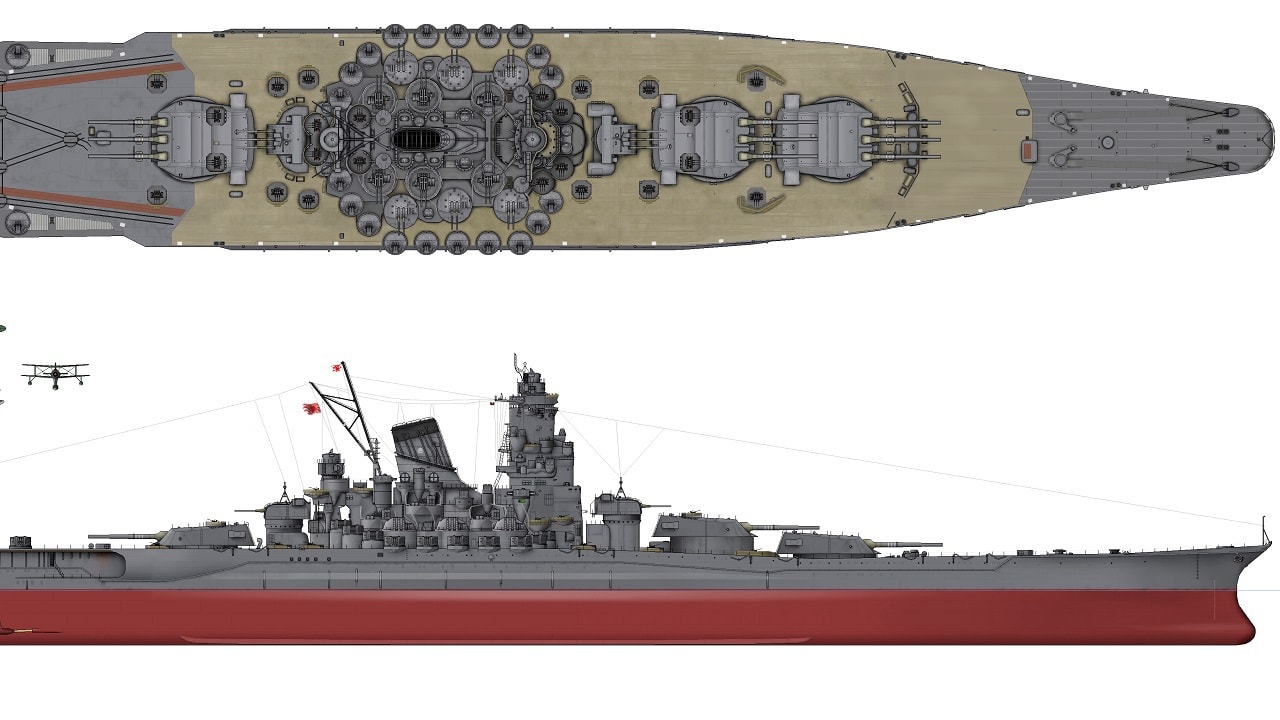
Battleship Yamato Blueprint. Image Credit: Creative Commons.
Yamato’s nine rifles threw the heaviest shells ever fired at sea, 3,219 pounds apiece to roughly 45,900 yards, at about 1.5 rounds per gun per minute. Nine times 3,219 is 28,971 pounds of armor-piercing steel per salvo.
The Montana’s twelve Mark 7s threw the 2,700-pound Mark 8 to 42,345 yards at about two rounds per gun per minute, and twelve times 2,700 is 32,400 pounds per salvo. The 16-inch ship out-throws the 18-inch ship on every salvo, by sixteen tons of shell to fourteen and a half.
Sustained, the gap widens into a different class of firepower entirely: 64,800 pounds of shell per minute against about 43,500.
Yamato keeps a reach advantage of roughly 3,500 yards on paper, at ranges where World War II gunnery of any nation scored almost nothing, and gives away half again the weight of fire everywhere battles were actually decided.
The Radar Verdict Carries Over
The Montana-class design carried the same fire-control architecture as the Iowas, Mark 38 directors fed by Mark 8 radar, the system whose record against optical gunnery the war wrote in two engagements.
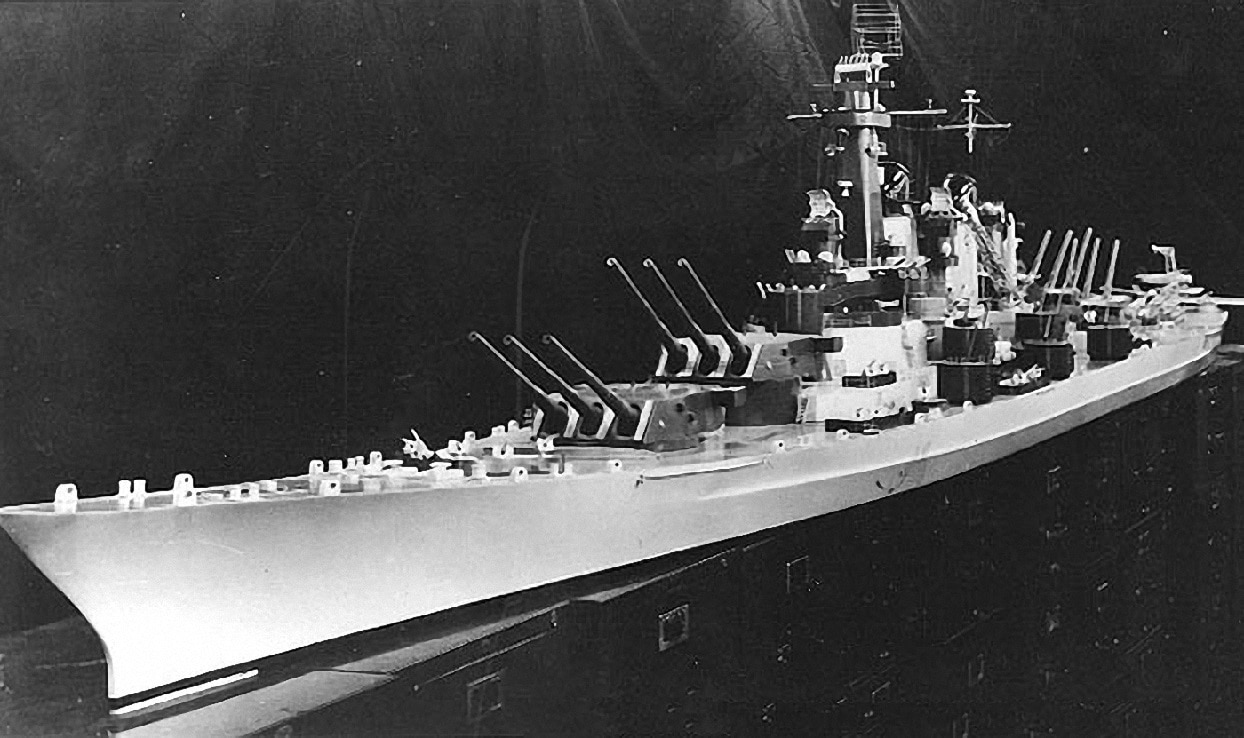
Montana-class Battleships. Image: Creative Commons.
Off Guadalcanal in November 1942, Washington’s radar brought her unseen inside 9,000 yards of Kirishima, and the Navy’s summary credits her with at least nine 16-inch hits, possibly twenty, against a single 14-inch shell in reply, from an enemy the same summary records as unable to even locate her. At Surigao Strait two years later, the radar-directed battle line annihilated its opponents in the Navy’s last line engagement.
Yamato sits on the other side of that ledger, and not hypothetically, because her main battery fired at ships exactly once.
Off Samar on October 25, 1944, her force misidentified slow escort carriers as fleet carriers, her opening salvos straddled White Plains without a confirmed kill, and smoke and squalls collapsed her optical solutions.
Then destroyer torpedoes turned the largest battleship afloat away from her only surface battle at its crisis, leaving her a contested share of Gambier Bay as the sum of her gunnery war. Every hitting contest in the matchup is reflected in that record.
A Fight Neither Ship Can Refuse
Here, the fight no longer resembles the Iowa matchup because the speed margin is 1 knot.
Twenty-eight against twenty-seven controls nothing: no range dictation, no disengagement, no geometry games.
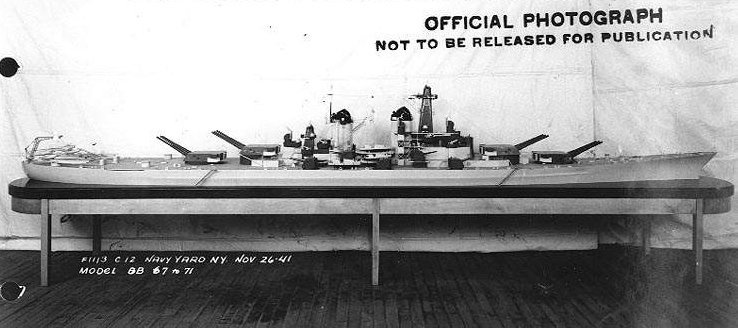
Montana-class model.

Montana-class drawing.
Once these two ships sight each other, the battle runs to a finish, which is precisely the fight the Montana was designed for and the fight Yamato’s admirals spent a war avoiding. Picture it in the same gray Pacific weather: the Montana’s radar finds Yamato far beyond gun range and tracks her through the murk while the optical rangefinders on the pagoda strain for a silhouette.
The American ship opens around 28,000 yards, radar walking the salvos on. Yamato answers minutes behind, straddling by eye between squalls. Both ships take hits, because neither can leave and both are built to be hit.
The difference compounds a salvo at a time: four turrets against three, two rounds a minute against one and a half, corrections measured on a radar scope against corrections guessed through shell splashes.
When the 3,219-pound shells land, they hurt, and a magazine hit ends any battleship ever built; the Montana absorbs the survivable hits within the widest immune band America has ever designed and keeps shooting.
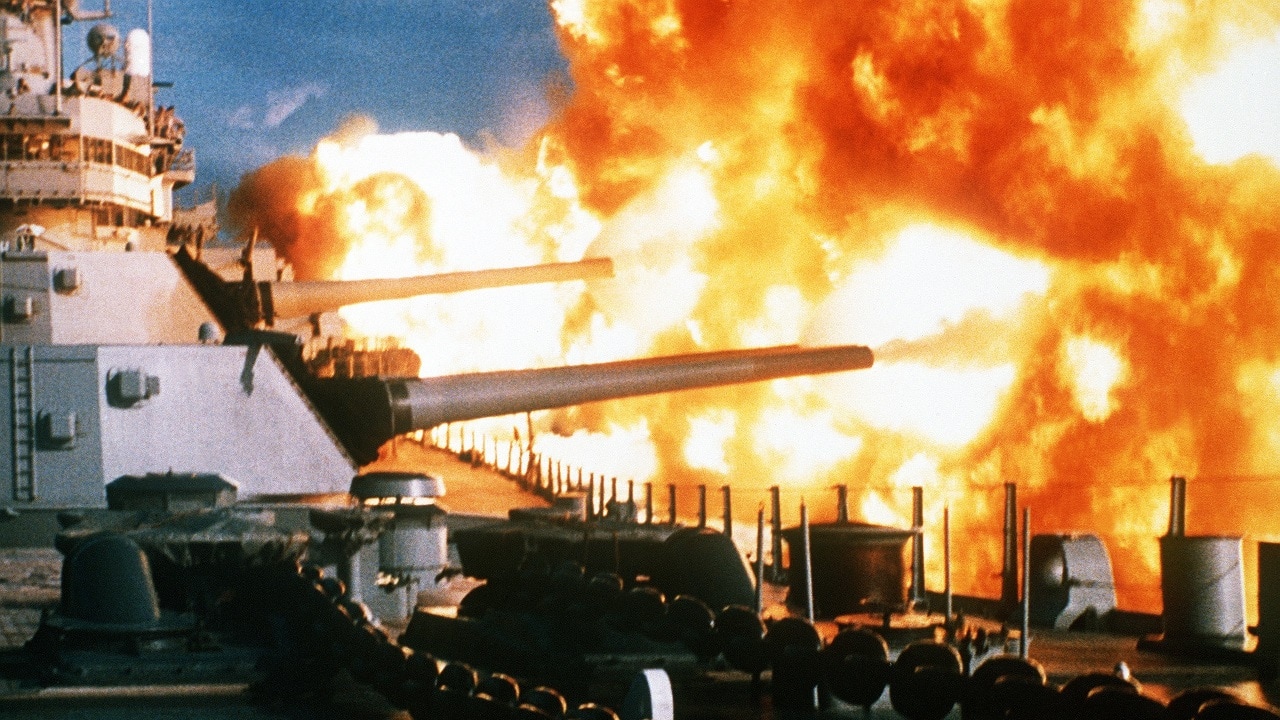
The Iowa-class battleship USS New Jersey fires at positions near Beirut on 9 January 1984 during the Lebanese Civil War.
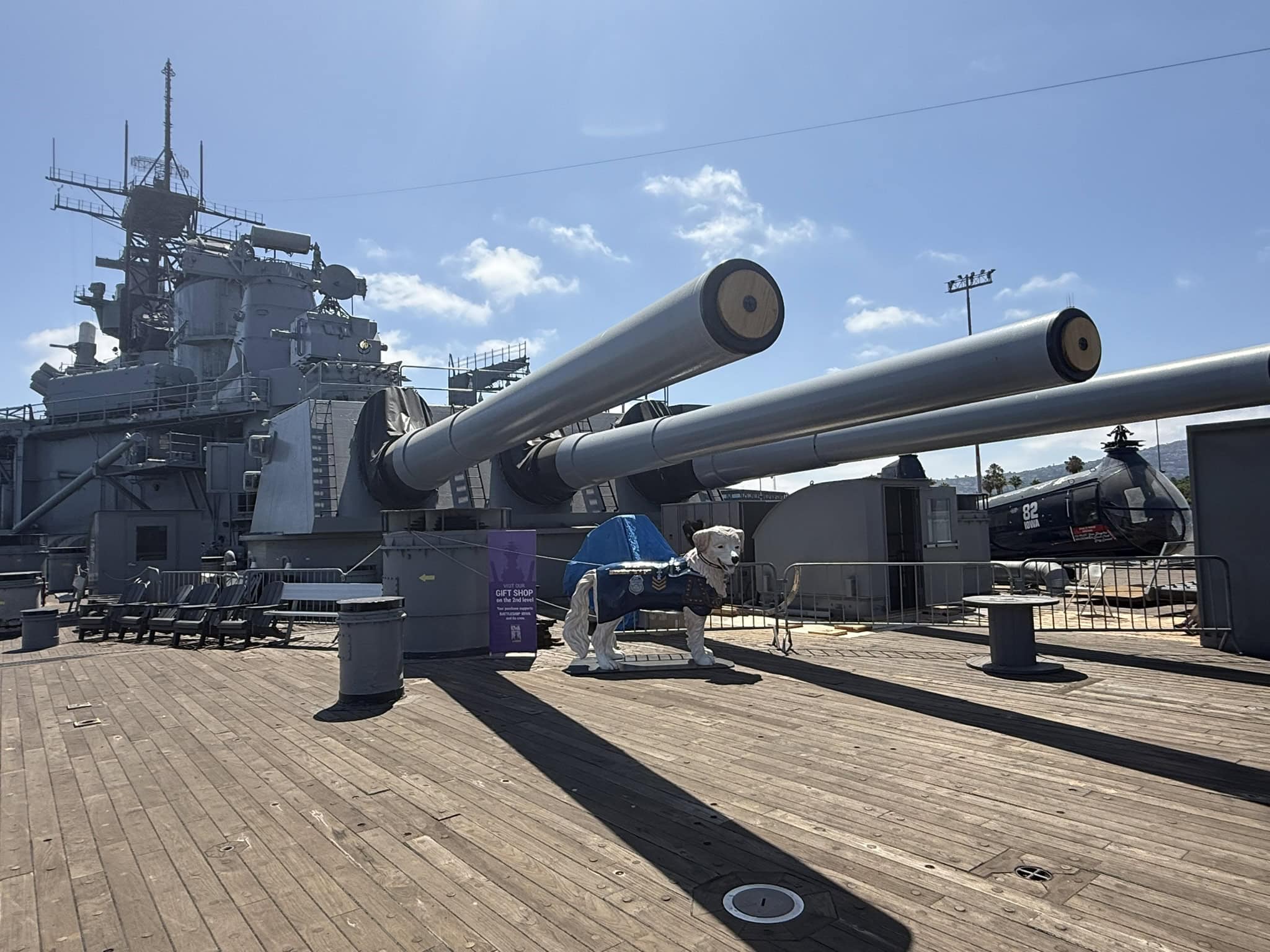
USS Iowa Gun. Photo by Harry J. Kazianis for 19FortyFive.
When the Mark 8s land on the pagoda, the fight tips for good, because a blinded Yamato at Samar could not hit slow escort carriers in daylight, and a blinded Yamato here is a target absorbing sixteen tons of steel per salvo.
An hour in, one ship is silenced, burning, and steering by her engines. It is the ship that fought by eye.
The Verdict
The Montana-class battleship wins, and wins the harder version of the fight, the long daylight grind, not only the night rout the Surigao script promises. The reasoning holds in three parts.
The hitting contest belongs to radar, on the full evidence of Guadalcanal, Surigao, and Samar.
The wrecking contest belongs to the heavier sustained broadside, 64,800 pounds a minute. And the surviving contest, the one the Iowa could never quite claim, belongs to the only American design armored to stand in the mutual killing zone and take the answer.
The honest asterisk stays attached: the Montana’s numbers are a design, never floated, never shaken down, never hit, while Yamato bled real crews through three years of war, and paper ships keep their promises more easily.
The fairest reply is that the same drafting rooms promised the South Dakota and the Iowa, and both delivered as drawn. The verdict rests on the drawings because they came from the people who kept them.
The two designs answered each other to the end, and Japan knew it: her planned follow-on Yamatos were redrawn with deeper protection largely in response to the Montana order, ghosts revised to fight ghosts.
This site has weighed the class before, in the judgment that it never had a chance against the carrier era, the case that its fire control gave it one decisive advantage over anything afloat, and the earlier house verdict on this exact matchup, which reached the same conclusion.
The war rendered both ships obsolete by the same hand.
The Montana was suspended and then canceled as the yards turned to carriers, amphibious ships, and submarine hunters; Yamato was sunk by 386 carrier aircraft on her final sortie, and the class left a 70,000-ton warning that every navy since has had to read.
One physical trace of the matchup exists.
The only 18.1-inch rifles ever to reach the United States, two guns built for Shinano, arrived at Dahlgren in June 1946, were tested against the armor they were built to defeat, and were cut up for scrap in the 1950s.
The Montana class’s sixty barrels were never forged at all.
About the Author: Harry J. Kazianis
Harry J. Kazianis (@Grecianformula) was the former Senior Director of National Security Affairs at the Center for the National Interest (CFTNI), a foreign policy think tank founded by Richard Nixon based in Washington, DC. Harry has over a decade of experience in think tanks and national security publishing. His ideas have been published in the NY Times, The Washington Post, The Wall Street Journal, CNN, and many other outlets worldwide. He has held positions at CSIS, the Heritage Foundation, the University of Nottingham, and several other institutions related to national security research and studies. He is the former Executive Editor of the National Interest and the Diplomat. He holds a Master’s degree focusing on international affairs from Harvard University.

