
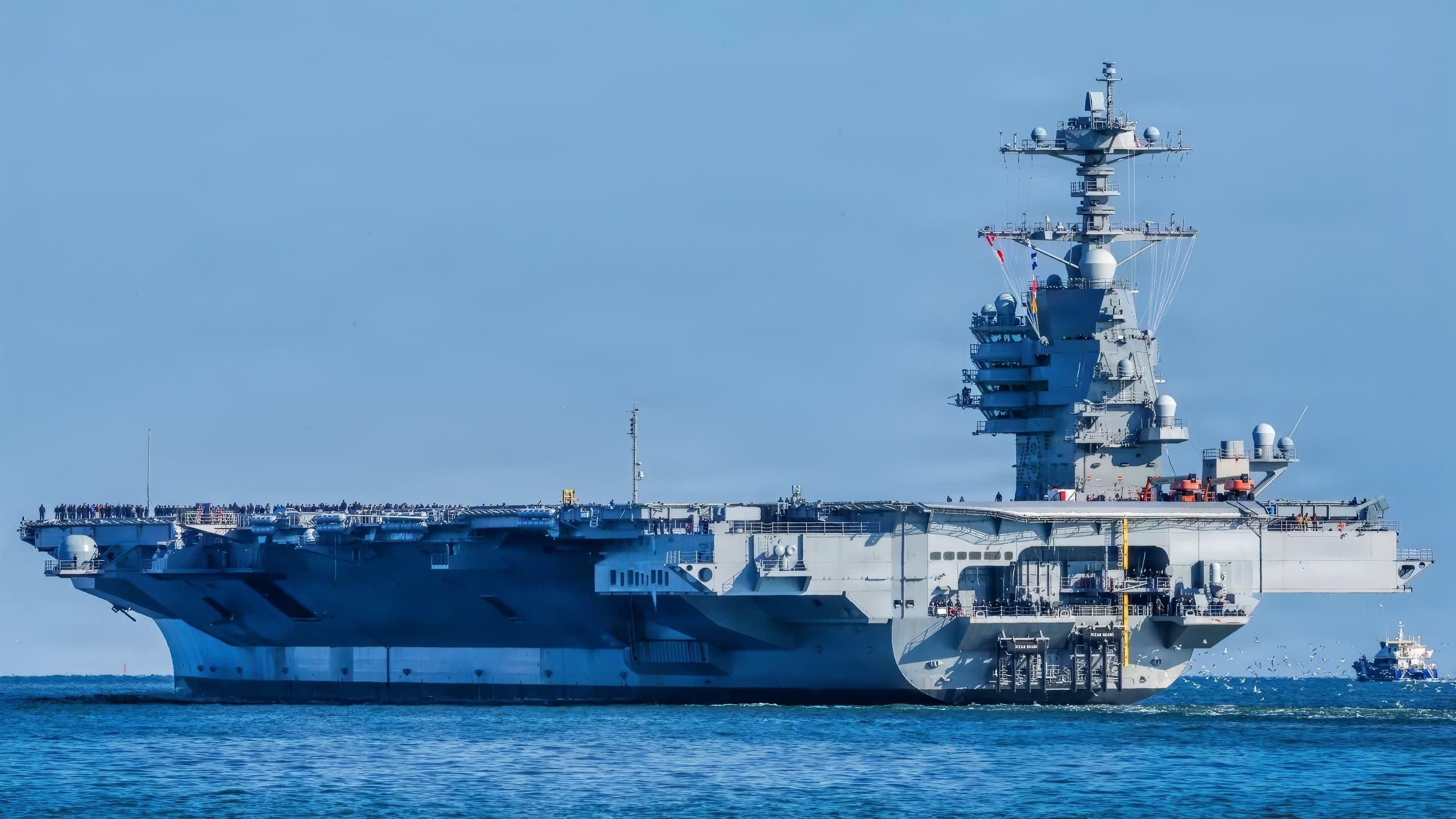
The U.S. Navy’s newest aircraft carrier is approaching completion — just as the U.S. Navy is being forced to rotate its most valuable carriers in unexpected ways to maintain a constant presence in the Gulf. But there is still a lot of work to be done before it can join the operational fleet and potentially support operations against Iran. The future USS John F. Kennedy completed its acceptance trials on August 15 after four days at sea off the Atlantic Coast.
The USS John F. Kennedy of the Ford-Class Aircraft Carriers Is Nearing Readiness for the US Navy
The trials mean the vessel, the second of the Gerald R. Ford-class carriers, has undergone a series of stress tests intended to show the Navy’s Board of Inspection and Survey that the ship meets its requirements.
It also comes after Kennedy went to sea for the first time in January of this year, completing eight days of builder’s trials before it returned to Newport News Shipbuilding in Virginia on February 4.
On August 17, the Navy publicly claimed that the USS John F. Kennedy was 98% complete – meaning that the $13 billion-plus carrier is now closer than ever to joining the fleet.
Kennedy Still Has Work Ahead
Acceptance trials are the next major step for America’s newest carrier.
They give the Navy an opportunity to inspect the carrier before taking ownership.
The trials saw Kennedy’s propulsion, maneuvering, navigation, combat, communications, and other systems put to the test at sea.
And after that, there is the preliminary acceptance.
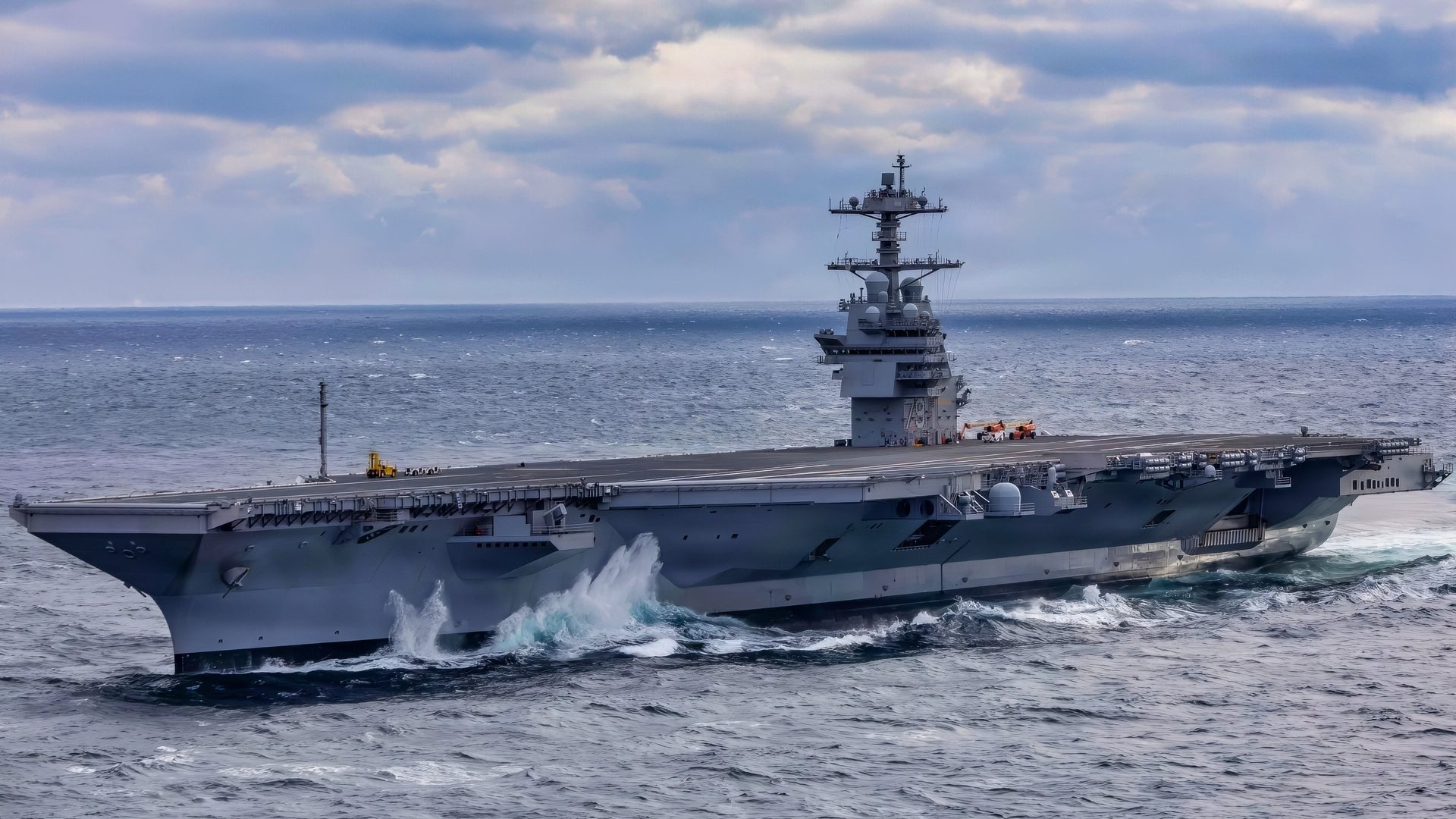
Pre-Commissioning Unit John F. Kennedy (CVN 79) transits the Atlantic Ocean during Builder’s Sea Trials, Jan. 28, 2026. Builder’s Trials provide an opportunity to test ship systems and components at sea for the first time, and make required adjustments prior to additional underway testing. (U.S. Navy photo by Mass Communication Specialist 2nd Class Kaitlin Young)
That means the Navy will begin additional testing of systems that are unique to Kennedy, while Newport News Shipbuilding continues completing other work aboard the ship.
One particularly important unfinished job for the Kennedy relates to its Advanced Weapons Elevators – the electromagnetic elevators that are designed to move ammunition from magazines inside the carrier to the flight deck.
Last month, USNI News reported that seven of Kennedy’s 11 elevators were complete, with four left to finish.
The seven completed elevators now provide access to all of the ship’s magazines, allowing training and certification work to go ahead while the remaining ones are finished.
Final delivery of the aircraft carrier is expected in spring 2027, with Navy budget documents previously suggesting March as the target.
USS John F. Kennedy: It’s Running Late
Kennedy will arrive soon, but the project is running behind schedule.
The aircraft carrier was initially expected to reach the Navy years earlier.
The carrier was procured in fiscal year 2013, and that year’s budget projected delivery for September 2022.
The current schedule therefore puts the ship roughly four and a half years behind that original target.
But why?
Part of the problem was a change in how the Navy planned to deliver the ship.
Originally, Kennedy was to be delivered in two phases, with additional work completed on board later.
That decision was later reversed in favor of completing more of the carrier before delivery, to reduce the risk of complications.
Congress also required that the Kennedy be capable of operating the F-35C Lightning II before completing its post-delivery work.
The ship has faced requests for modifications after it was first commissioned, and it must now fully support the stealth fighter before completing all post-delivery work.
It was also fitted with the Enterprise Air Surveillance Radar.
There have been other problems, too, including delays in certifying some of the Ford class’s newer technologies — notably, the Advanced Arresting Gear used to recover aircraft and the Advanced Weapons Elevators, which have been the source of much media attention.
The carrier, when complete, will have taken roughly 16 years to build — assuming the latest schedule sticks.
What Makes Kennedy Different
Kennedy is part of the Ford-class, but it is not exactly the same as the USS Gerald R. Ford that came before it.
As the second ship in the class, it was built with years of lessons from the first ship in mind at every stage.
It will incorporate new technologies and fixes implemented on the first ship, and there are signs those systems are delivering results the USS Gerald R. Ford struggled with at first.
In August, Chief of Naval Operations Adm. Daryl Caudle revealed that the Ford had exceeded the performance of the older Nimitz class during a test of its aircraft launch and recovery systems in February, thanks to the modernized Electromagnetic Aircraft Launch System and Advanced Arresting Gear, as well as a redesigned flight deck intended to support a higher sortie rate with fewer sailors.
More Are Coming
And Kennedy is far from the end of the class.
The third carrier, the future USS Enterprise, is under construction but has slipped behind schedule.
Delivery of that third aircraft carrier is now expected in March 2031, and the fourth, the future USS Doris Miller, has been pushed back two years to February 2034 because of limited construction space at Newport News.
About the Author: Jack Buckby
Jack Buckby is a British researcher and analyst specializing in defense and national security, based in New York. His work focuses on military capability, procurement, and strategic competition, producing and editing analysis for policy and defense audiences. He brings extensive editorial experience, with a career output spanning over 1,000 articles at 19FortyFive and National Security Journal, and has previously authored books and papers on extremism and deradicalization.