How A Routine Interception Turned into a Five-Hour Sortie: A former RAF F-4 Phantom pilot recalled how an ordinary Cold War intercept turned into a five-hour sortie. Alan “Al” Winkles detailed how his 43(F) Squadron Phantom was scrambled from RAF Leuchars to intercept two Soviet Tu-95 Bear Deltas that were approaching United Kingdom territory.
The help Winkles had expected upon arriving in the Bay of Biscay never showed up for a bizarre reason.
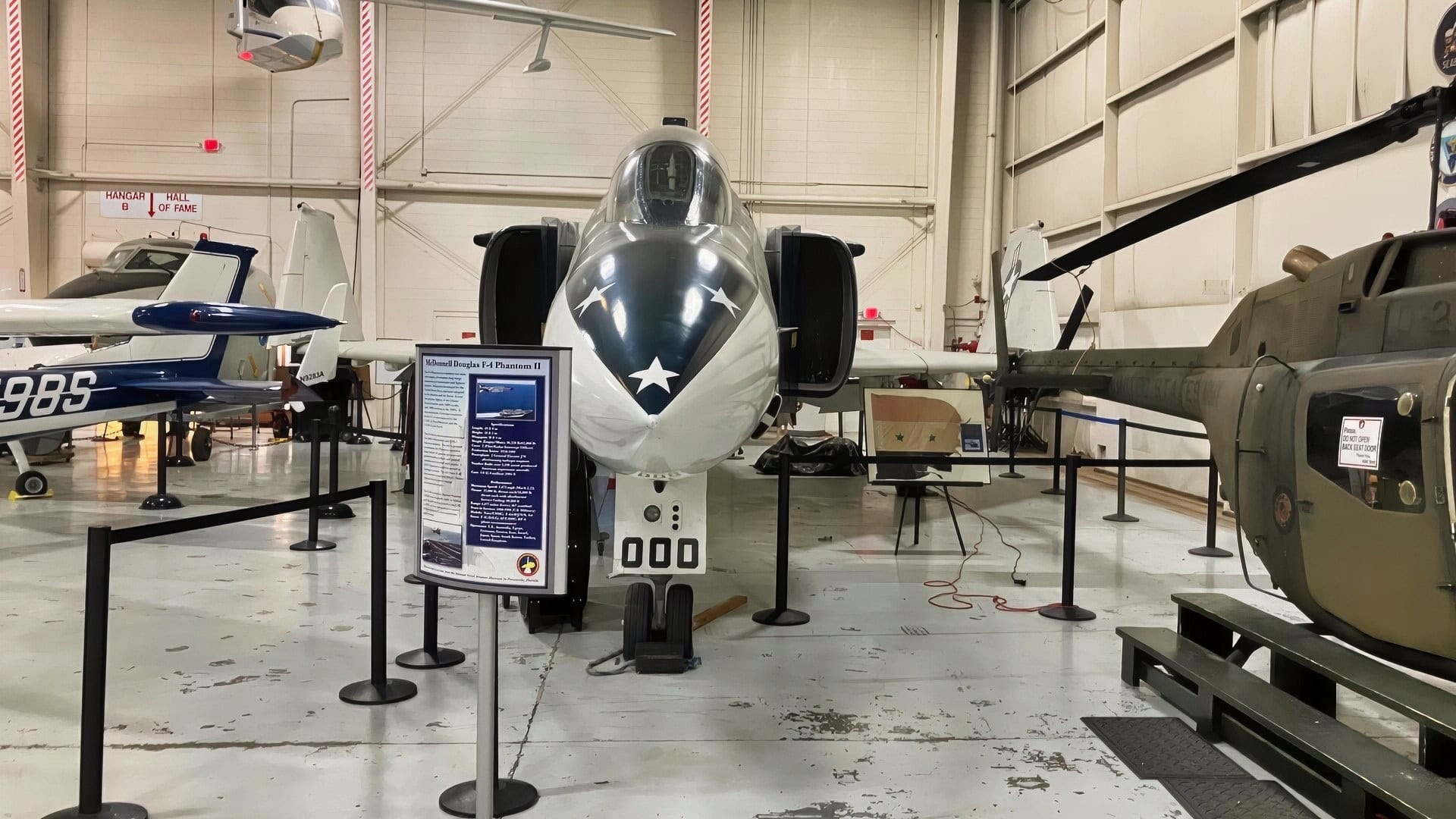
F-4 Phantom Fighter Aviation Museum of Kentucky. Taken by 19FortyFive on March 1, 2026.
The F-4 Phantom
Designed in the 1950s in response to Royal Navy requirements for a high-altitude interceptor to defend aircraft carriers, the F4H Phantom II (later renamed F-4) embarked on its maiden flight in 1958.
Its performance and versatility saw it become one of the most widely used aircraft in the history of military aviation, with the Phantom attracting the interest of the United States Air Force and ten other nations.
By 1977, the Phantom was almost exclusively used for interception over UK airspace.
Bastille Day
On 14th July 1987, former Phantom pilot Winkles quickly discovered the French fondness for Bastille Day.
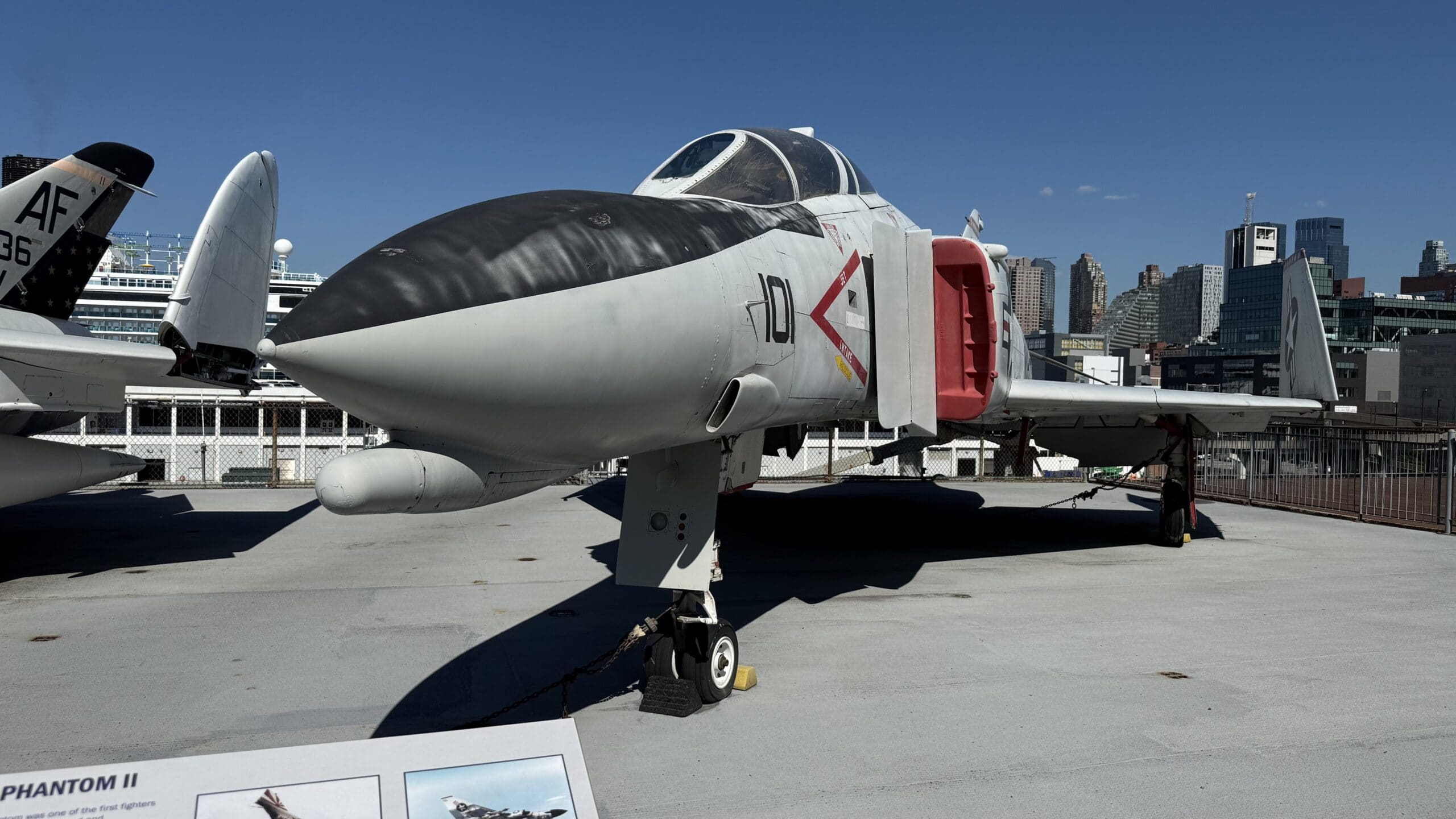
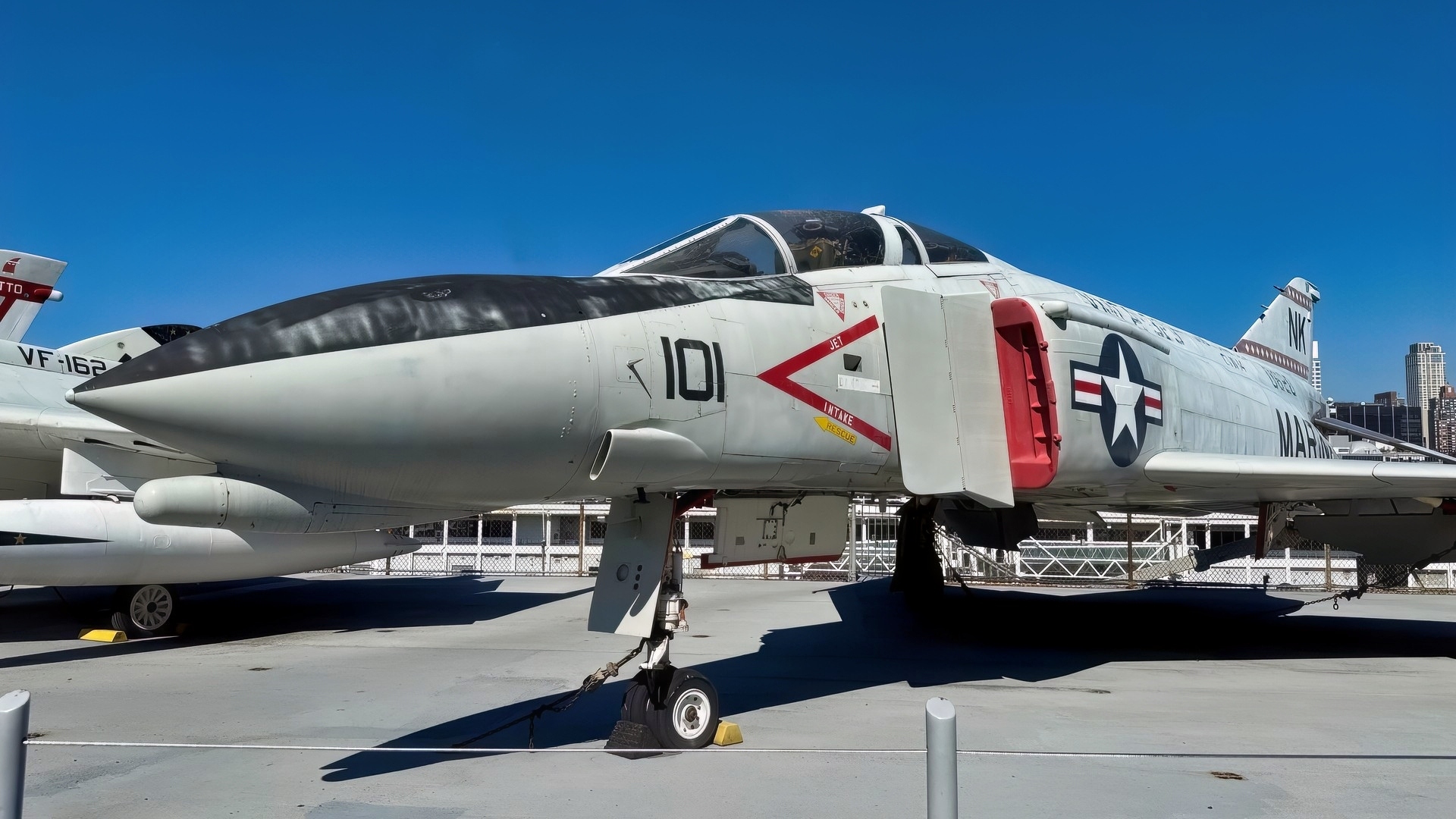
F-4 on USS Intrepid. 19FortyFive Image.
Celebrated on the same date every year, Bastille Day marks the storming of the Bastille prison on 14th July, 1789, when civilian insurgents and mutineers of the French Guards stormed the fortress to free those imprisoned for political reasons.
The storming of the Bastille was a key moment during the French Revolution, effectively marking the beginning of the end for centuries of absolute monarchy. It has been celebrated every year since, and is France’s national holiday.
Winkles’ Five-Hour Sortie
Back in Britain, it was just another day ending in ‘y’ for Al Winkles and his squadron.
“The day for me and for my navigator started well enough. It was an unexceptional Tuesday with the two of us on duty with another pilot/navigator crew,” he said in Robert Pike’s book Phantom Boys. “We were supported by a team of squadron engineers in the quick reaction alert (QRA) set-up at RAF Leuchars. Two Phantoms, kept at readiness to be airborne in a matter of minutes when ordered by the ground radar controller at RAF Buchan, were in a special hangar next to a couple of crew rooms, one for the aircrew and one for the engineers. As the commanding officer of 43(F) Squadron at the time, I was not often on QRA duty although I liked to ensure I was rostered for the occasional stint. If, as the saying goes, all was quiet on the Western Front, it was, for one thing, an opportunity for me to catch up on irksome paperwork from HQ.”
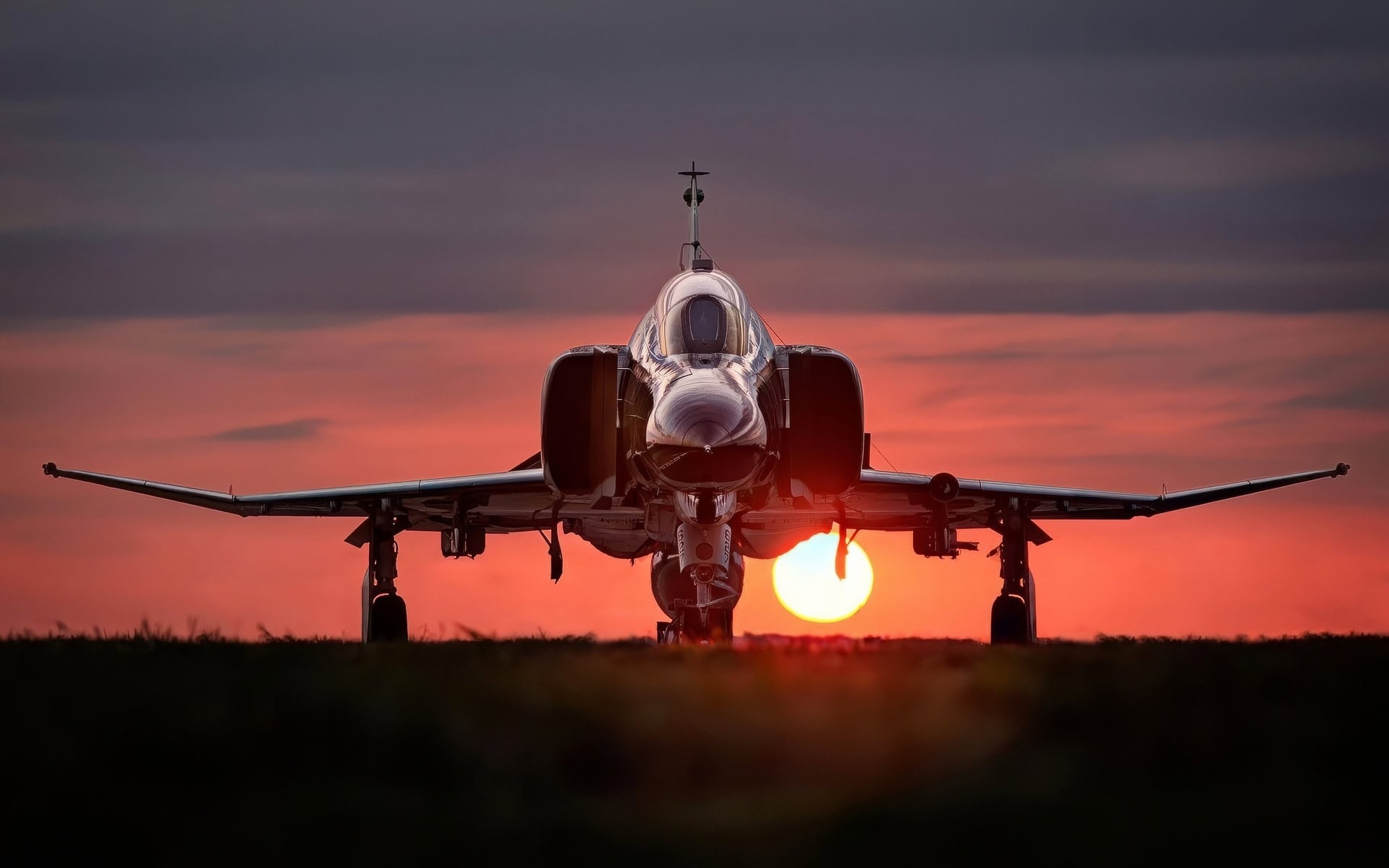
F-4 Phantom Fighter Creative Commons Image
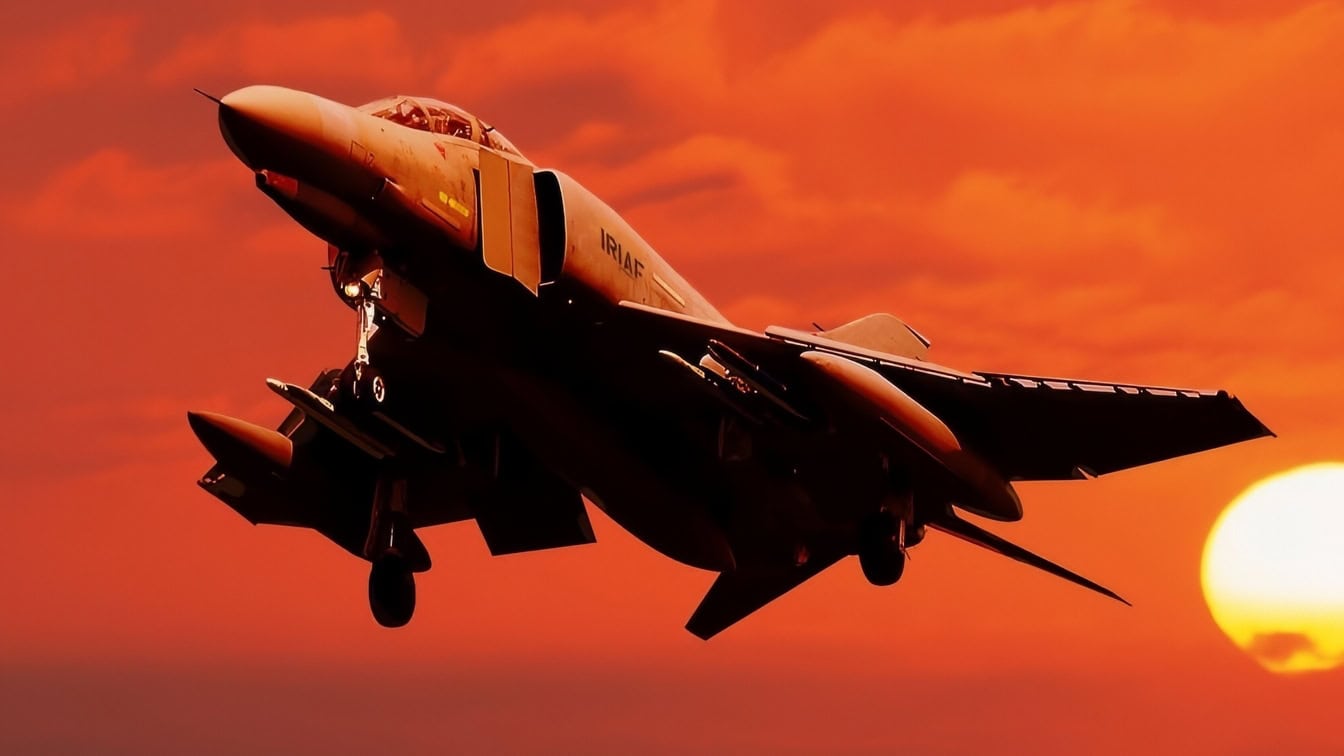
Iran F-4 Phantom Fighter Creative Common Art Work
Later that day, Winkles was scrambled to await the expected arrival of two Bear-Ds en route to Cuba.
“Sure enough, my trusty navigator made radar contact with them at an astounding range, and we motored in behind them,” Winkles added. “First, we closed in on the rear Bear to read its door number, before edging forward to the leader to read its number. Fully satisfied, we then stayed with the Bears for the next 30 minutes or so, seeing them safely off on their westerly heading over the Atlantic. Turning away to the south-east, we headed for home – or so we thought.”
Winkles was directed back after the Bears they were shadowing had vectored southwards down the Irish Sea.
The Bears, unusually, had not continued towards Cuba, but instead headed towards the Bay of Biscay.
“We were joined by a VC10, pulled off its training sortie over the North Sea,” Winkles said. “The tanker fell into line astern as we stationed ourselves on the Bear’s port side. By this time the two Russian aircraft had joined together in loose formation. About 150 miles south of Cornwall, my navigator announced in a small voice that we had fallen off his map. However, as we entered the Bay of Biscay, we were certain that we would soon be relieved by the French Air Force, and we therefore kept a sharp lookout for Mirage fighters.”
But that help never came, as the French fighters would not be launched due to the ongoing Bastille Day festivities. “Far be it for me, I reasoned, to deny the French their day of Bastille celebrations, but surely there were other considerations too,” Winkles said. “I could not avoid a feeling of irritation when I pictured our Mirage colleagues as they attended their Bastille barbecues on this mid-summer’s day.”
Norway Comes to the Rescue
Efforts to contact French airfields fell on deaf ears, and Winkles and his squadron were now navigating blind. “At this point we felt very vulnerable. We had no maps of France, no specific diversions, no weather information, and no radio contact with anyone except for the departing tanker,” he said.
“At this point the Bears seemed quite friendly and, possibly having been monitoring our situation over the radio, they turned towards the north-west. At least now we felt we were heading home. A very long 30 minutes passed and then very faintly we heard what appeared to be a distant conversation between our departing VC10 and the one arriving. Sure enough, the new tanker soon appeared and carried out an immaculate join-up using our air-to-air TACAN. The return route was flown in reverse by the Bears and ourselves, and we finally handed the Soviets over to Norwegian fighters, which escorted them on their way back to Murmansk.”
As a result of the ordeal, Winkles ordered that all 43 Squadron QRA aircraft carry maps of Northern France in case a similar scenario should arise again.
About the Author: Shay Bottomley
Shay Bottomley is a British journalist. He has written for the Western Standard, Business Insider, Maidenhead Advertiser, Slough Express, Windsor Express, Berkshire Live and Southend Echo.