
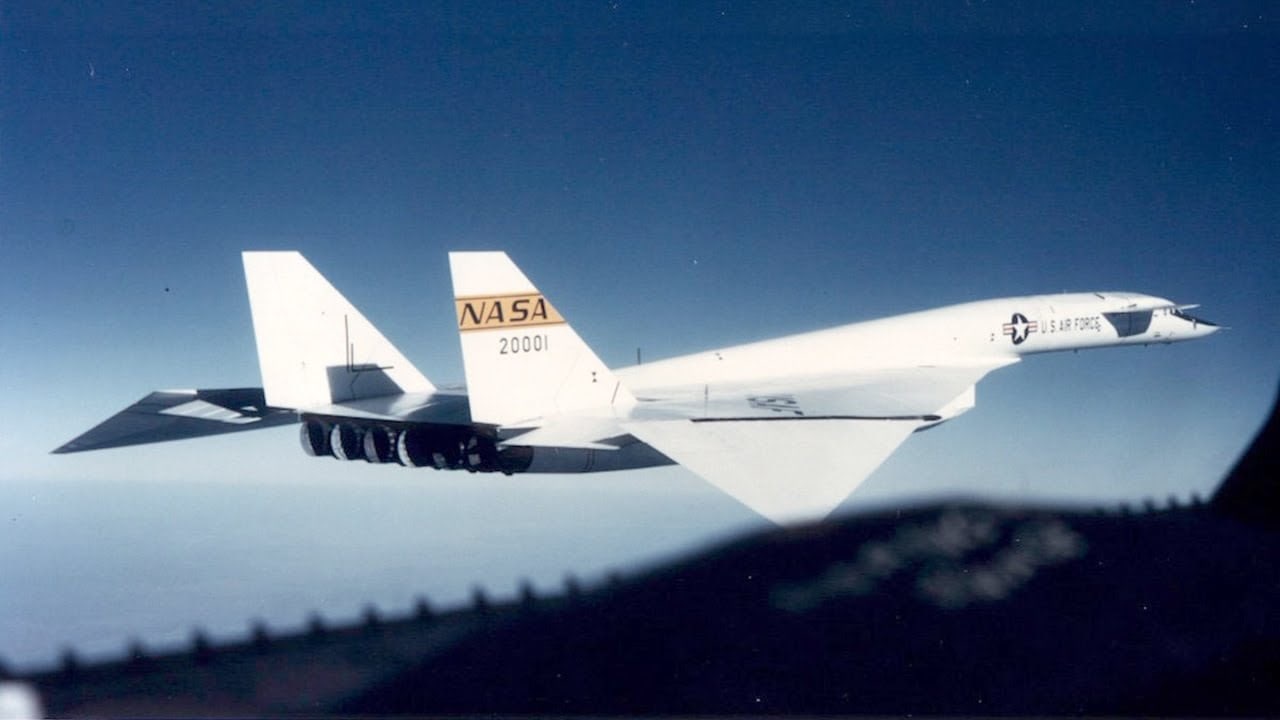
Summary and Key Points: North American Aviation’s XB-70 pushed 1950s engineering to its limits. Six General Electric YJ93 turbojets made more than 172,000 pounds of thrust, a stainless-steel honeycomb skin shrugged off Mach 3 heat, and the wingtips folded down in flight so the bomber could ride its own shock wave for extra lift. It could carry about as much as a B-52 at three times the speed. But Robert McNamara held the program to two prototypes; one was lost in a 1966 midair collision with an F-104 Starfighter, and the Air Force moved to low-level penetration and later stealth, carrying the Valkyrie’s data into the B-1B Lancer.
The XB-70 Bomber Experiment Failed for the US Air Force
In May 2024, the North American XB-70 Valkyrie — the only surviving example of the U.S. Air Force’s Mach 3 strategic bomber project — was towed out of the fourth hangar at the National Museum of the United States Air Force in Dayton, Ohio, for restoration and the reshuffling of exhibits.
The massive six-engine aircraft’s movement was insignificant, amounting to little more than a reshuffle.
Still, its reappearance in the news media serves as a pretty timely reminder of how far bomber design philosophy has changed over the years.
The impressive XB-70 – which is easily one of the most remarkable sights in the museum – represents an era when speed and altitude were seen as the ultimate forms of survivability.
Today, however, the U.S. Air Force relies more heavily on stealth, range, and networked coordination.
Not to mention automation and drone capabilities.
But looking back at the Valkyrie’s short life helps explain precisely why the U.S. Air Force changed direction, and how debates about the future of American air power are shaping up as hypersonic systems become central to modern planning.
The XB-70 is a prototype of the planned B-70 nuclear bomber—a striking design that earned its place in the history books.
North American Aviation developed it in the late 1950s to outrun Soviet defenses and deliver nuclear weapons deep into enemy territory.

The futuristic XB-70A was originally conceived in the 1950s as a high-altitude, nuclear strike bomber that could fly at Mach 3 (three times the speed of sound) — any potential enemy would have been unable to defend against such a bomber.
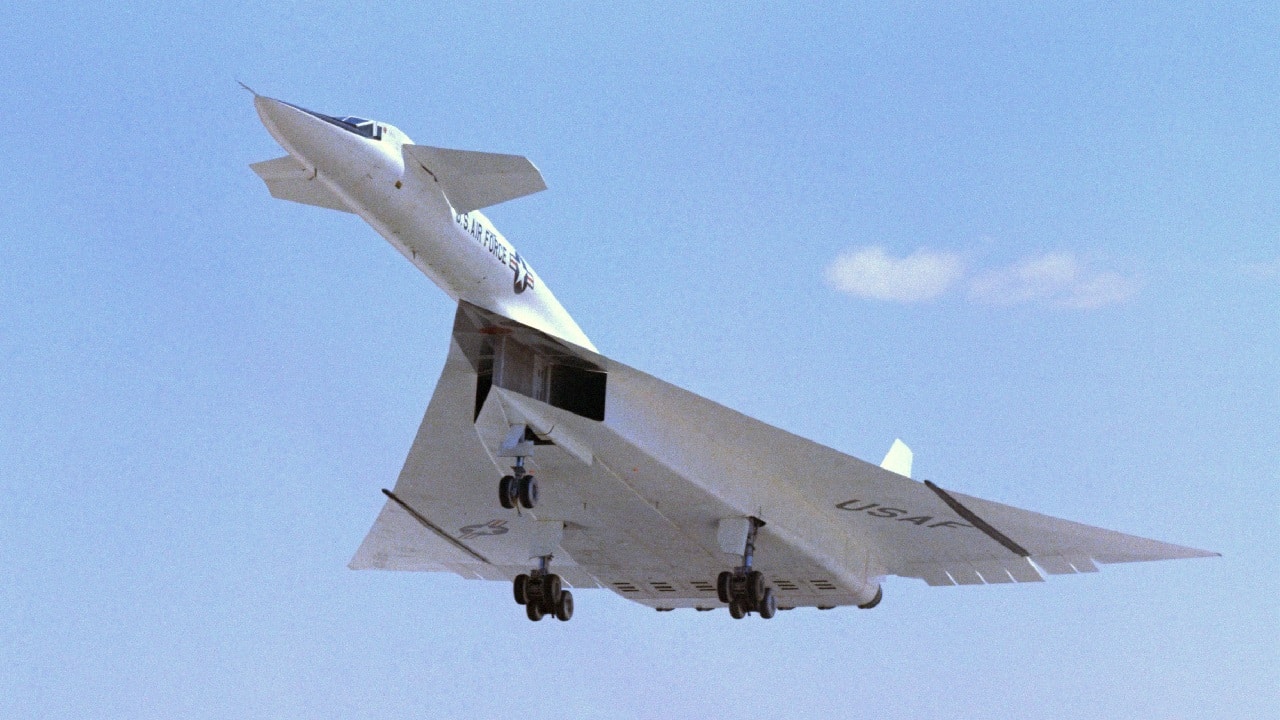
XB-70 Valkyrie. Picture Details: Viewed from the front the #1 XB-70A (62-0001) is shown climbing out during take-off. Most flights were scheduled during the morning hours to take advantage of the cooler ambient air temperatures for improved propulsion efficiencies. The wing tips are extended straight out to provide a maximum lifting wing surface. The XB-70A, capable of flying three times the speed of sound, was the world’s largest experimental aircraft in the 1960s. Two XB-70A aircraft were built. Ship #1 was flown by NASA in a high speed flight research program.
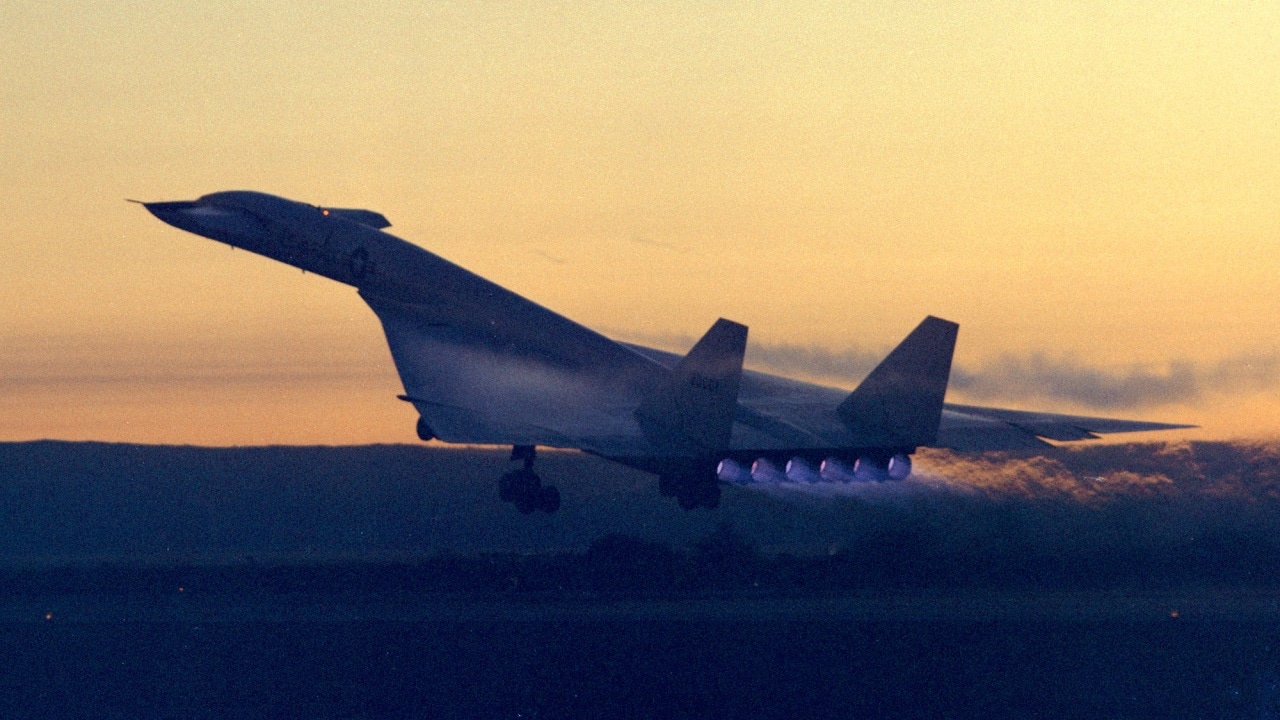
Image is of a an XB-70, another Cold War experimental bomber.
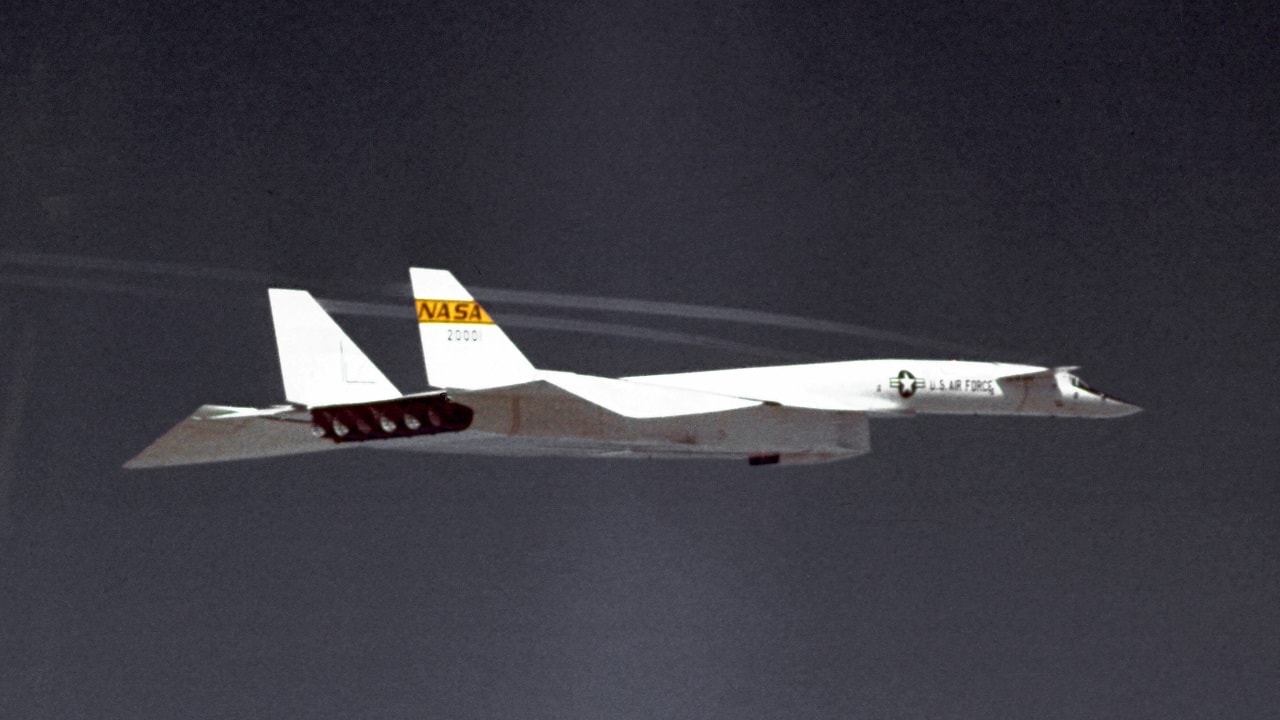
In this view the #1 XB-70A (62-0001) is in a level cruise flight mode at a relative high altitude judging from the darkness of the sky. The XB-70A, capable of flying three times the speed of sound, was the world’s largest experimental aircraft in the 1960s. Two XB-70A aircraft were built. Ship #1 was flown by the NASA Flight Research Center (now NASA Dryden), Edwards, California, in a high speed research program.
Perhaps most notably, aside from its striking design with enormous wings, it was designed to cruise at Mach 3 and at altitudes well above 70,000 ft.
The aircraft’s six General Electric YJ93 turbojet engines also generated more than 172,000 lb of thrust.
Among the key innovations of the time were its folding wingtips, designed to generate additional compression lift at high speeds, and a stainless-steel honeycomb structure capable of withstanding the heat generated at Mach 3.
The aircraft could also carry a payload of up to 50,000 lb – roughly equal to that of the B-52 Stratofortress – but at three times the speed.
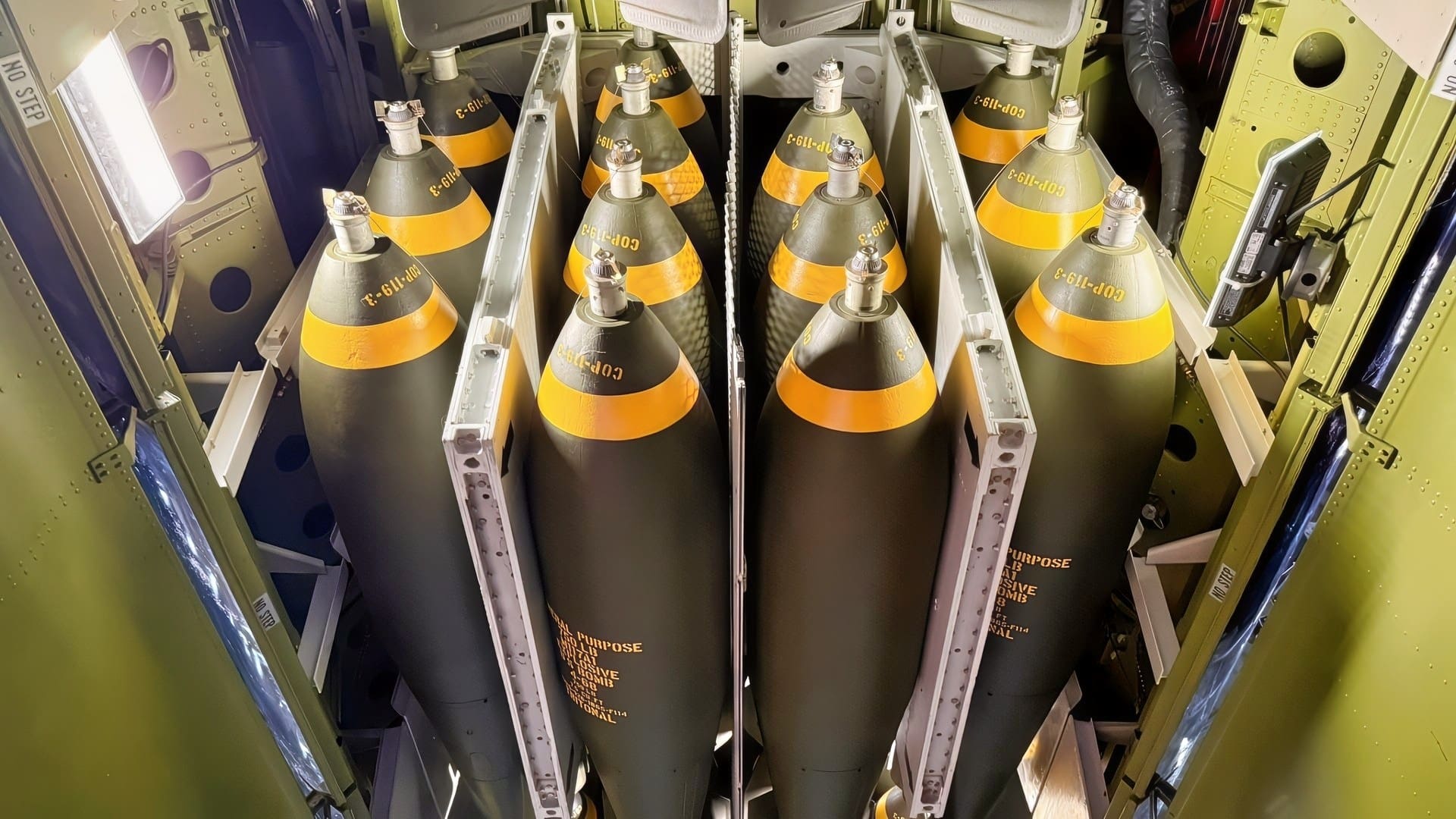
19FortyFive.com B-52 Bomber Bombs. By Harry J. Kazianis in 2025 from the National Museum of the Air Force.

A B-52 Stratofortress assigned to the 2nd Bomb Wing takes off for a Red Flag 21-3 training mission at Nellis Air Force Base, Nevada, July 21, 2021. RF-Nellis 21-3 is unlike any previous Red Flags, as the 414th Combat Training Squadron builds upon the most challenging Red Flags in recent history. (U.S. Air Force photo by Tech. Sgt. Alexandre Montes)
The Valkyrie’s performance was completely unmatched at the time.
In 1965, it reached Mach 3.08 at 74,000ft, which was faster and higher than any bomber before or since.
So, why was it retired? Largely: timing. The aircraft arrived at a time when speed was no longer enough to guarantee survivability.
Why the XB-70 Program Collapsed
By the early 1960s, the strategic environment had changed. Soviet surface-to-air missiles like the SA-2 Guideline might make high-altitude bombers vulnerable for the first time.
Intercontinental ballistic missiles also provided faster, cheaper nuclear delivery with no risk to the crew.
In response to the changing threat environment, Secretary of Defense Robert McNamara canceled the production version in 1961, approving only two prototypes for research flights.
Cost also came into play.
Each aircraft cost roughly $700 million in today’s dollars, and the total program cost was projected to exceed $10 billion if 210 aircraft had been built as planned.
The end of the program officially arrived in June 1966 when one prototype collided mid-air with an F-104 Starfighter during a publicity flight, killing two crew members.
Only one Valkyrie survived, and by the late 1960s the Air Force had fully adapted to low-level penetration tactics and, later, to stealth technology as radar and missile systems continued to improve.
A Necessary Flop?
Although the aircraft never actually entered service, the design was instructive in multiple ways.
The XB-70 generated important aerodynamic and materials data that was later used in the development of the SR-71 Blackbird and B-1B Lancer programs.
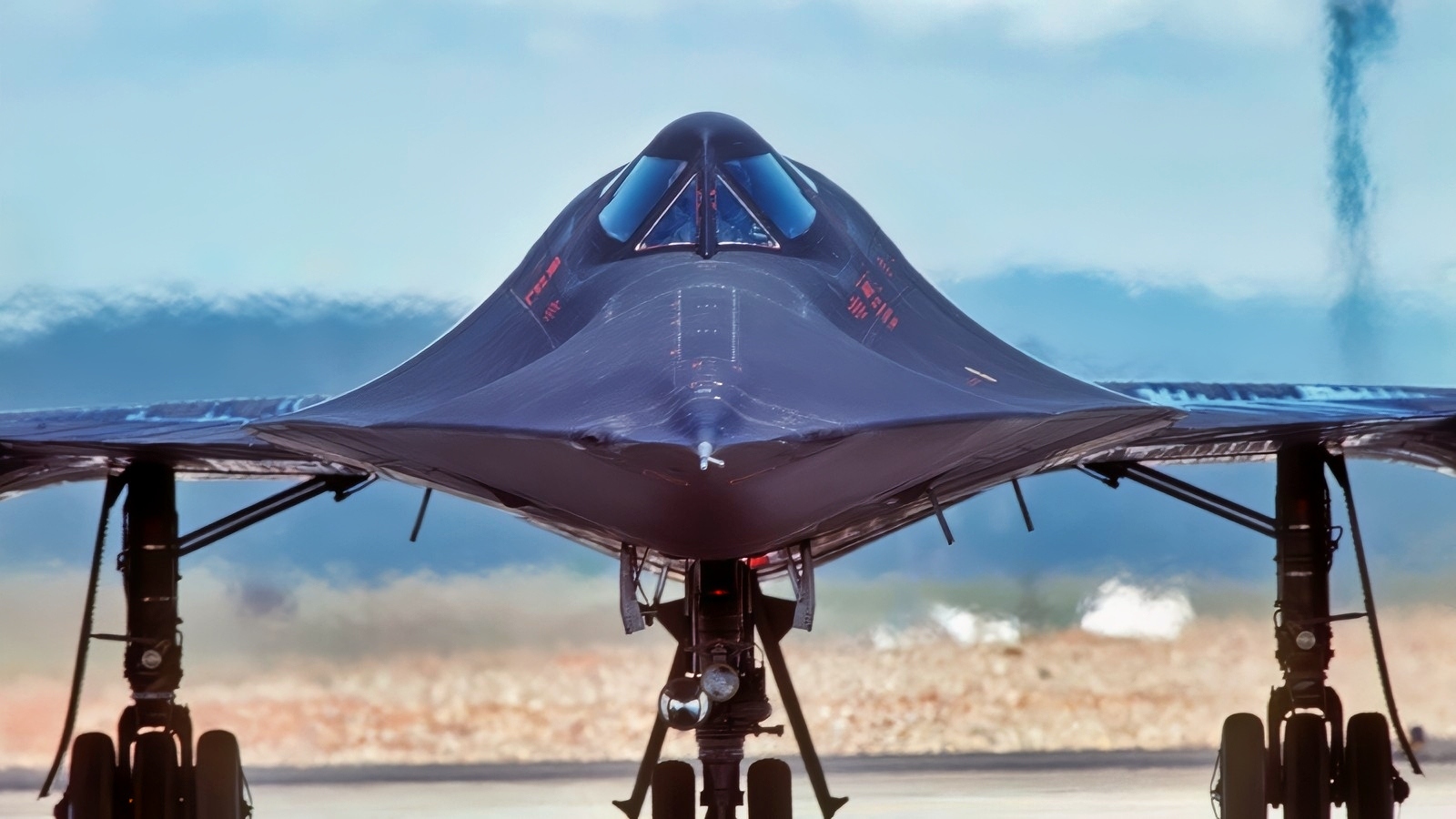
SR-71 Blackbird on the Tarmac Creative Commons Photo
The Valkyrie also validated theories of supersonic airflow and high-temperature stress loads, which became foundational to later designs.
The aircraft was built to withstand incredible speeds and, consequently, incredible heat — a legacy modern aircraft designs have built on.
The XB-70 also demonstrated that performance alone cannot define an aircraft’s value. This was one of the highest-performing aircraft ever made, and it achieved everything its designers promised—but by the time those designers could prove what it was capable of, the mission demands had changed entirely.
As soon as radar coverage, missile range, and computing power improved, the need for a Mach 3 bomber disappeared virtually overnight.
The Valkyrie failed, yes—but it succeeded in instructing future platforms.
It didn’t arrive too soon, as is the age-old excuse. It wasn’t “ahead of its time.” In fact, it was too late for its own war.
The aircraft certainly proved what engineers could achieve, but not what the Air Force needed at the time.
The lesson that raw performance isn’t always the answer is relevant today, too.
It’s a lesson worth remembering as the United States invests in stealth bombers and hypersonic weapons: yes, these assets are necessary, but are we also missing a trick?
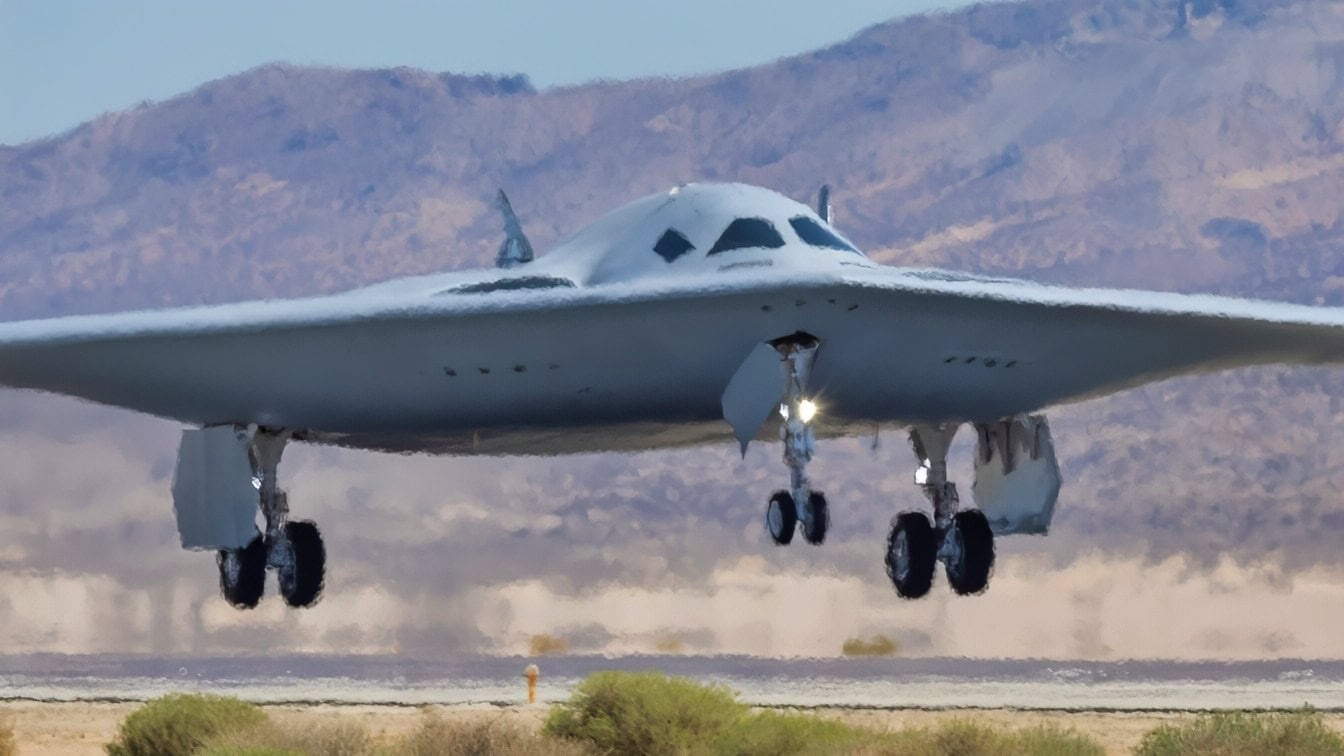
A B-21 Raider test aircraft lands at Edwards Air Force Base, Calif., during ongoing developmental flight testing, Sept. 11, 2025. The B-21 will be the backbone of the bomber fleet; it will incrementally replace the B-1 Lancer and B-2 Spirit bombers. (U.S Air Force photo by Todd Schannuth)
And could that trick be cheap, autonomous systems?
About the Author:
Jack Buckby is a British author, counter-extremism researcher, and journalist based in New York. Reporting on the U.K., Europe, and the U.S., he analyzes and understands left- and right-wing radicalization and reports on Western governments’ approaches to today’s pressing issues. His books and research papers explore these themes and propose pragmatic solutions to our increasingly polarized society. His latest book is The Truth Teller: RFK Jr. and the Case for a Post-Partisan Presidency.