Summary and Key Points: Sean Spoonts traces how the F-22 Raptor, born of the 1980s Advanced Tactical Fighter program to beat Soviet MiG-29s and Su-27s, lost its enemy and then its production run: 750 planned, cut to 648 in 1990, 339 in 1997, 277, and 187 when Robert Gates capped it in 2009, pushing unit cost past $300 million. A 1998 export ban blocked Australia, Israel, and Japan; the line closed in 2012. The Air Force awaits the F-47.
The US Air Force F-22 Raptor Has One Bad Chapter of Military History
At the height of the Cold War in the 1980s, the Air Force launched the Advanced Tactical Fighter program.
The goal was to produce an aircraft capable of achieving absolute air superiority over Soviet fighters like the MiG-29 and Su-27.
In the anticipated land battles in Europe following a Soviet and Warsaw Pact invasion, victory would require the Air Force to first establish Air Superiority over the battlefield by sweeping enemy fighters from the sky.
It would then seek Air Dominance, allowing US and NATO fighters and bombers to operate freely without air opposition.
The aircraft that came from this program was the F-22 Raptor by Lockheed Martin.
The F-22 Raptor Didn’t Have A Foe To Fight With The Soviet Union Gone And The War On Terror Being Mostly On The Ground
When the Soviet Union collapsed in the early 1990s, the Raptor’s near-peer adversaries vanished from the skies almost overnight.
No other country could put comparable stealth or counter-stealth systems on a pair of wings, and the Air Force’s strategic justification was gone.
Following the 9/11 attacks on September 11, 2001, the US military faced a new kind of war. A vast counterinsurgency and asymmetrical conflict in Iraq and Afghanistan.
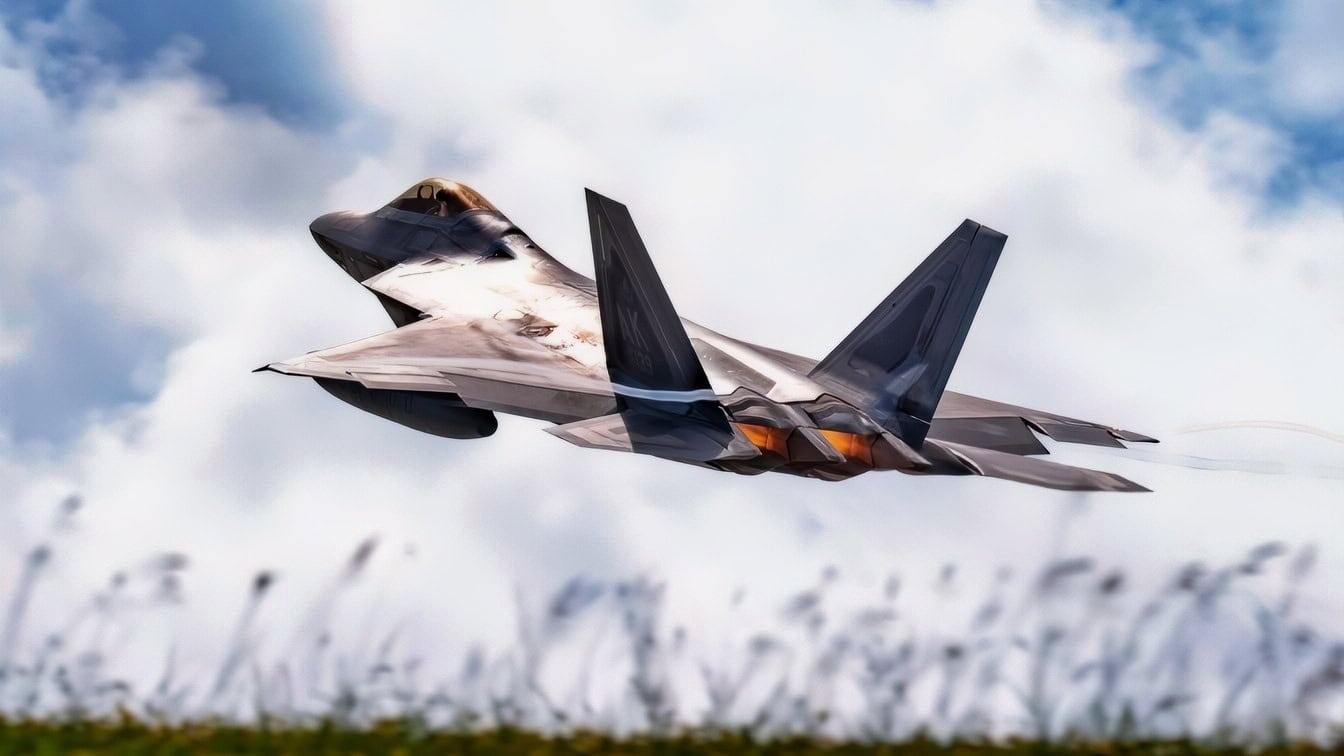
A U.S. Air Force F-22 Raptor assigned to the 525th Fighter Squadron, 3rd Wing, Joint Base Elmendorf-Richardson, Alaska, takes off at Andersen Air Force Base, Guam, Aug. 9, 2021. Approximately 800 Airmen and 35 aircraft participated in Pacific Air Forces’ Dynamic Force Employment operation in Guam and Tinian. The operation focused on projecting forces into the U.S. Indo-Pacific Command’s area of responsibility in support of the 2018 National Defense Strategy, calling on the military to be a more lethal, adaptive and resilient force. (U.S. Air Force photo by Master Sgt. Richard P. Ebensberger)

U.S. Air Force Capt. Nick “Laz” Le Tourneau, pilot and commander of the F-22 Raptor Aerial Demonstration Team, performs for the 2026 Cleveland National Air Show in Cleveland, Ohio, Sept. 6, 2026. Le Tourneau showcased the aircraft’s performance capabilities through a series of planned maneuvers designed to highlight its speed, agility and operational employment. (U.S. Air Force photo by Staff Sgt. Lauren Diaz)
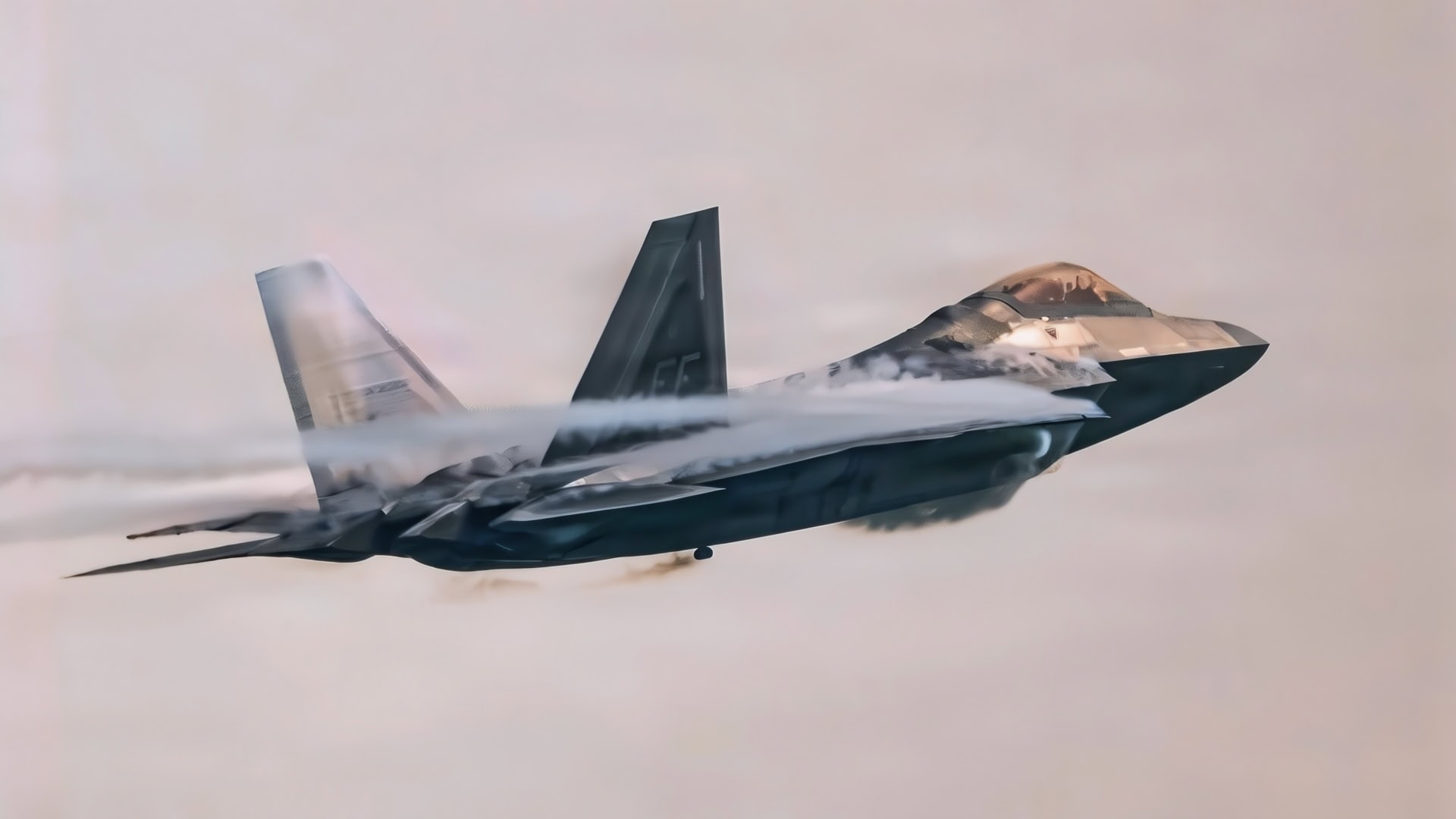
U.S. Air Force Capt. Nick “Laz” Le Tourneau, pilot and commander of the F-22 Raptor Aerial Demonstration Team, performs an aerial demonstration for the Chicago Air and Water Show in Chicago, Illinois, August 14, 2026. The F-22 is designed to perform high-performance maneuvers that showcase its maneuverability and control in flight. The visible vapor forms when rapid changes in air pressure and humidity around the aircraft cause water vapor in the air to condense. (U.S. Air Force photo by Staff Sgt. Mary Bowers)
The Air Force enjoyed air supremacy by default in both these countries, and the nature of the conflict shifted priorities to ground attack, close air support, and intelligence and reconnaissance missions for better-suited aircraft like unmanned drones, the A-10, F-16, F/A-18 strike fighter, and helicopters.
Flying a nimble but expensive dogfighter like the F-22 this close to the ground to drop bombs was out of the question.
Cutting The Number Of F-22 Raptors Made Them Cost Their Weight in Gold
Of the 750 Raptors originally ordered, the number was pared back to 648 in 1990.
Then, in 1997, the number was cut again to 339, and then to 277.
Finally, in 2009, with the War on Terror in full swing, the country in a recession, and the Pentagon spending more and more money on ground operations, the hammer fell.
Defense Secretary Robert Gates announced that the F-22 was a Cold War relic built to fight a threat that no longer existed and was draining resources from the ground wars in Iraq and Afghanistan.
He capped the Raptor at just 187 units.
Imagine supplying a company that ordered things years in advance but replaced its management every two years.
That was the position Lockheed-Martin found itself in with the US Government.
They committed to a multi-year, $67 billion R&D program and 750 units of the finished product, then cut the order to just 187.
Lockheed Martin’s contract entitled it to recover the project’s R&D and tooling costs even with the reduced number of planes ordered.
This meant every F-22 Raptor was delivered at more than $300 million instead of $150 million per copy on the entire order of 750.
Congress and the media both screamed about the plane’s cost.
Lockheed-Martin was in a corner; it couldn’t sell the Raptor to anyone but the Air Force.
Lockheed-Martin was also in an export trap with the F-22.
In 1998, Congress banned foreign sales of aircraft like the F-22 to protect classified stealth technology and radar-absorbing coating from prying, envious eyes.
Even though US friendly buyers like Australia, Israel, and Japan wanted to buy F-22s, Lockheed’s hands were tied.
They could not sell them to recoup their capital investment or justify extending the production line.
They finally closed that line in 2012.
While Not Dogfighter Like The F-22, the F-35 Was More Versatile
While the F-22 Raptor was a pure air superiority fighter of unsurpassed ability, the Pentagon moved its priorities to the Joint Strike Fighter program to develop the F-35 as a less expensive, multi-role stealth platform for the Air Force, the Navy, and the Marine Corps in variants suited to all three services’ needs as well as foreign allies.
The Pentagon decided that the F-35’s multi-role mission capabilities- air-to-air, air-to-ground, carrier operations, VTOL, and intelligence-gathering sensors- offered more options than the F-22, which would soldier on without a clear role to fulfill.
After Cutting It Loose, the Air Force Found Out It Needed the Raptor After All. But It Was Too Late To Get It Back
In retrospect, the decision to end the F-22 Raptor program has been hotly contested ever since, largely because defense priorities shifted too hastily.
The rapid appearance of new 5th Generation air superiority fighters like the J-20 from China and Russia’s Su-57 suddenly changed a lot of minds about needing a pure dogfighter once again, and the Pentagon made inquiries about restarting the F-22 production line, hoping it might be a cheap way to restore relative parity in air superiority fighters.
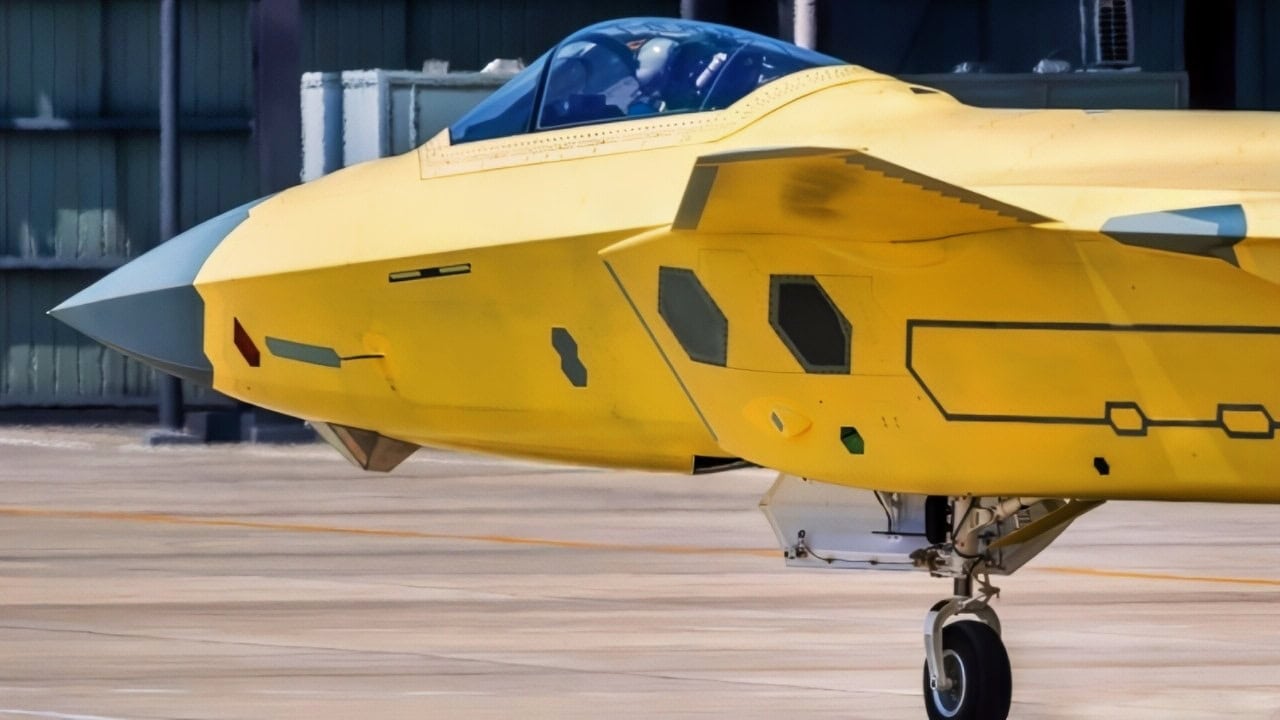
J-20 Fighter in Yellow Paint. Weibo Screenshot.
Lockheed Martin quickly set them straight.
It would not be cheap.
Aviation History We Can’t Fix
The Air Force now finds itself buying “4th Gen and-a-Half fighters like the Boeing F-15EX and putting its money on the Next Generation Air Dominance fighter, the Boeing F-47, to replace what they should have held onto, the F-22 Raptor.
The first Boeing F-47 is not expected to enter Air Force service until the mid-2030s, and most experts expect only 185 to be built. And China is already flying a 6th-generation fighter.
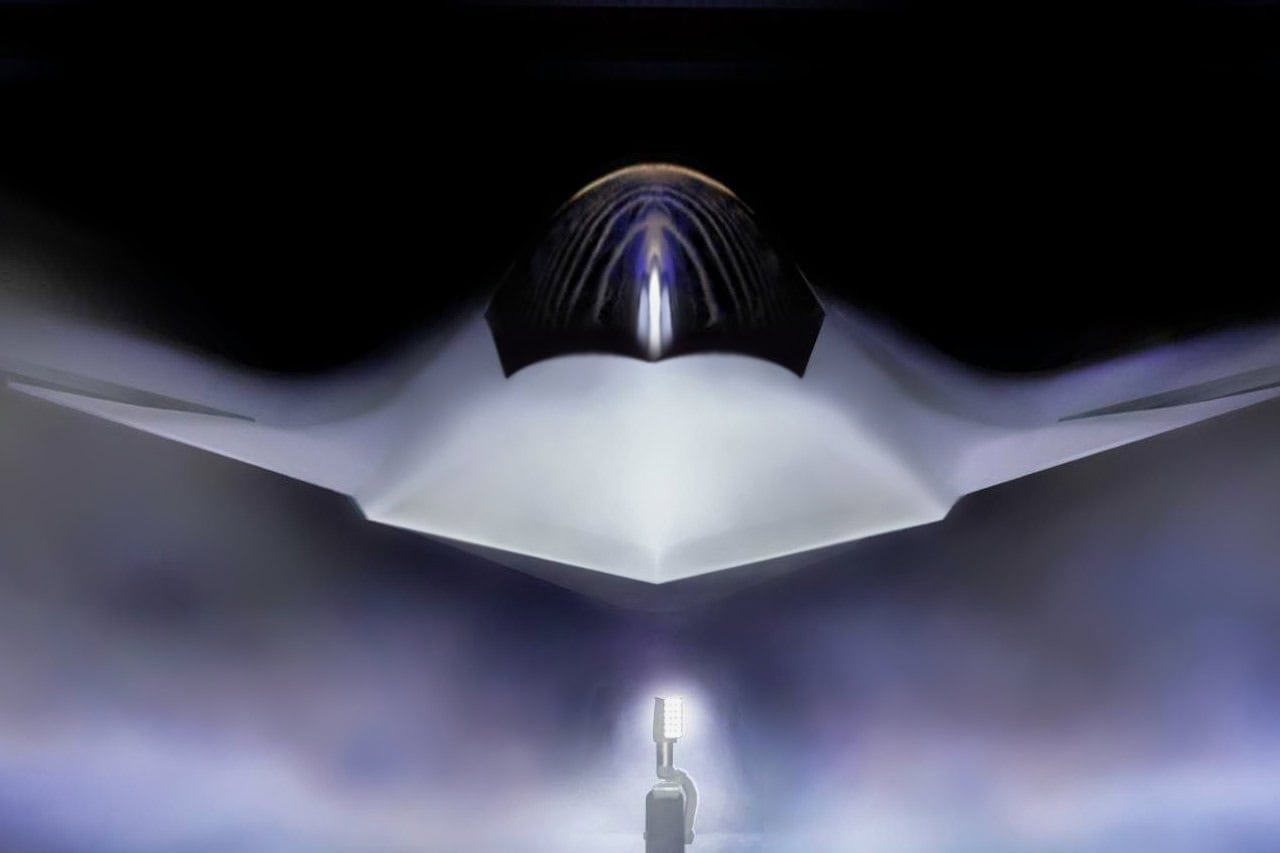
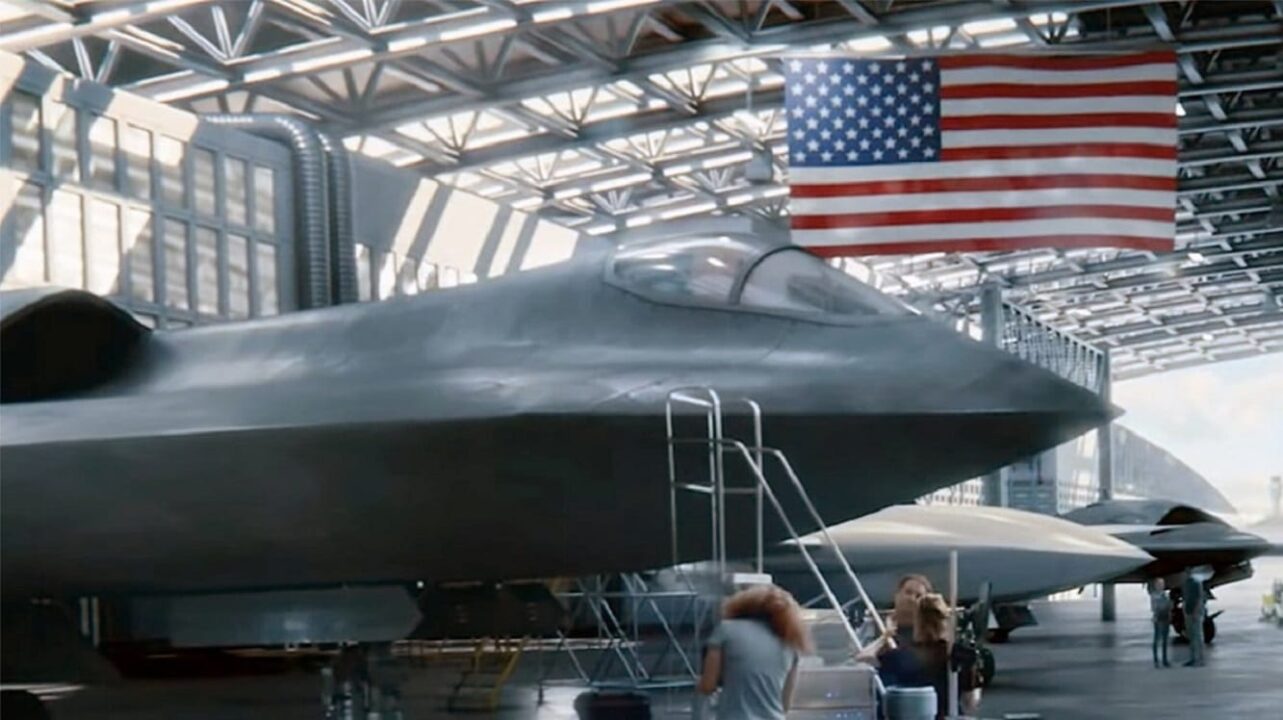
Shown is a graphical artist rendering of the Next Generation Air Dominance (NGAD) Platform. The rendering highlights the Air Force’s sixth generation fighter, the F-47. The NGAD Platform will bring lethal, next-generation technologies to ensure air superiority for the Joint Force in any conflict. (U.S. Air Force graphic)
About the Author: Sean Spoonts
Sean Spoonts is the former Editor-In-Chief of SOFREP.com. He is a military analyst, writer, and commentator whose work has appeared in Newsweek, CNS News, Ukrinform, and various military/veteran media networks and professional publications, including the Military Intelligence Professional Bulletin. He is a U.S. Navy veteran, having served as an Aviation Anti-Submarine Warfare Operator and Search and Rescue Helicopter Aircrewman.