
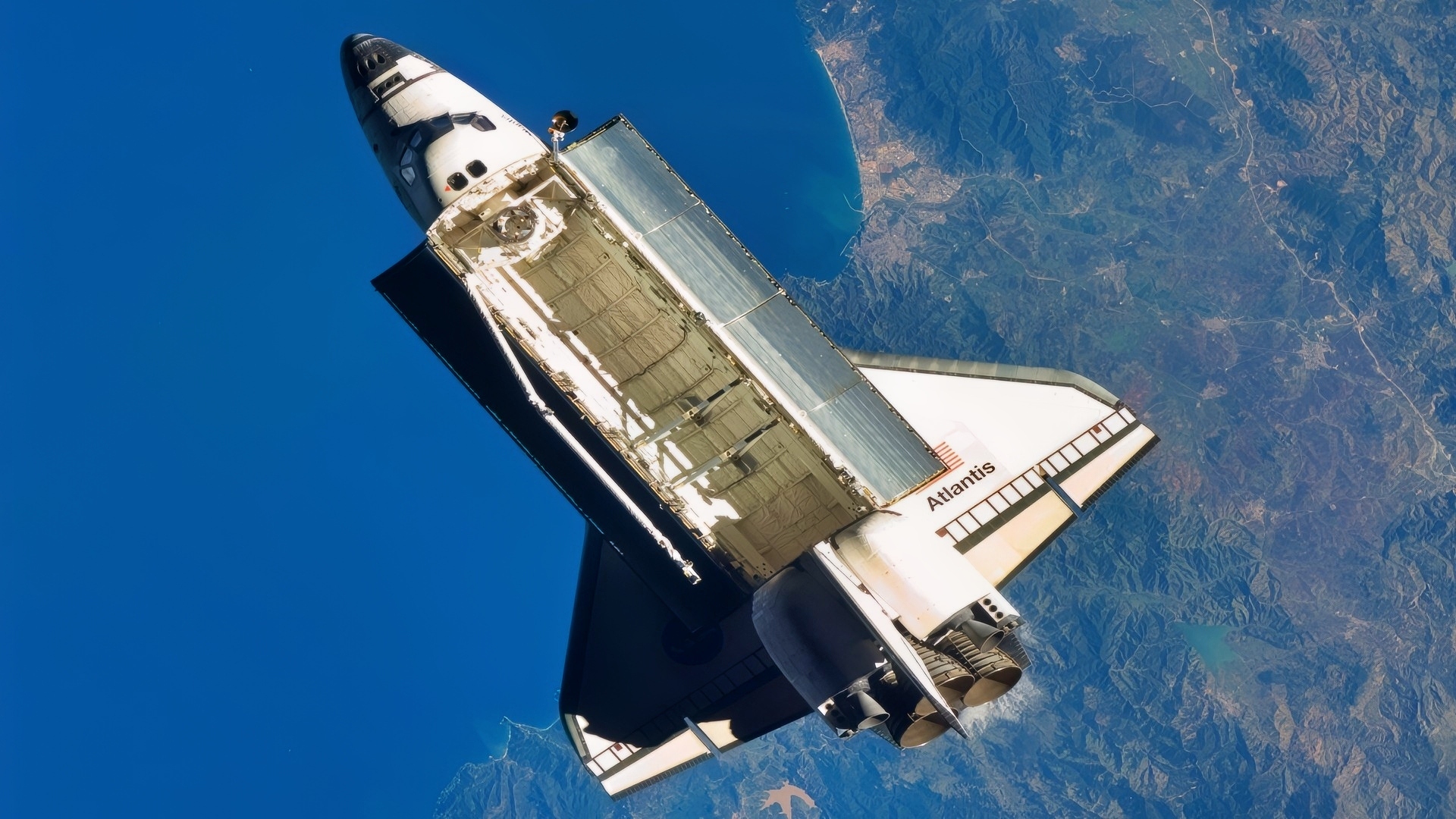
Summary and Key Points: Harry J. Kazianis tells the Space Shuttle’s full story: Nixon’s January 5, 1972 promise of $20 million flights, a $5.15 billion development that cost $10.6 billion, 135 missions by Columbia, Challenger, Discovery, Atlantis and Endeavour at about $1.5 billion each, 24,000 hand-glued tiles, the Enterprise rollout to the Star Trek theme, Hubble’s 1993 rescue, the ISS, Challenger’s 73 seconds in 1986, Columbia’s foam strike in 2003, and Atlantis’ last Mach 25 glide, July 21, 2011.
NASA’s Space Shuttle Made No Military History But Could Hit Mach 25 and Smoke the SR-71 Blackbird in Raw Speed Numbers
I have been fortunate to see quite a few retired Space Shuttles over the years, and I have included some of my best photos, along with those of staff I have sent to see this amazing piece of space history. My uncle even worked as an engineer on the program in the 1990s.
The Space Shuttle fleet, Columbia, Challenger, Discovery, Atlantis, and Endeavor, flew 135 missions across thirty years, built a space station, saved the most important telescope ever made, killed fourteen astronauts on its two worst mornings, and remains, in the judgment of many engineers, the most complex machine human beings ever built.
Oh, and it could hit Mach 25, faster than the SR-71 Blackbird making all the headlines these days.
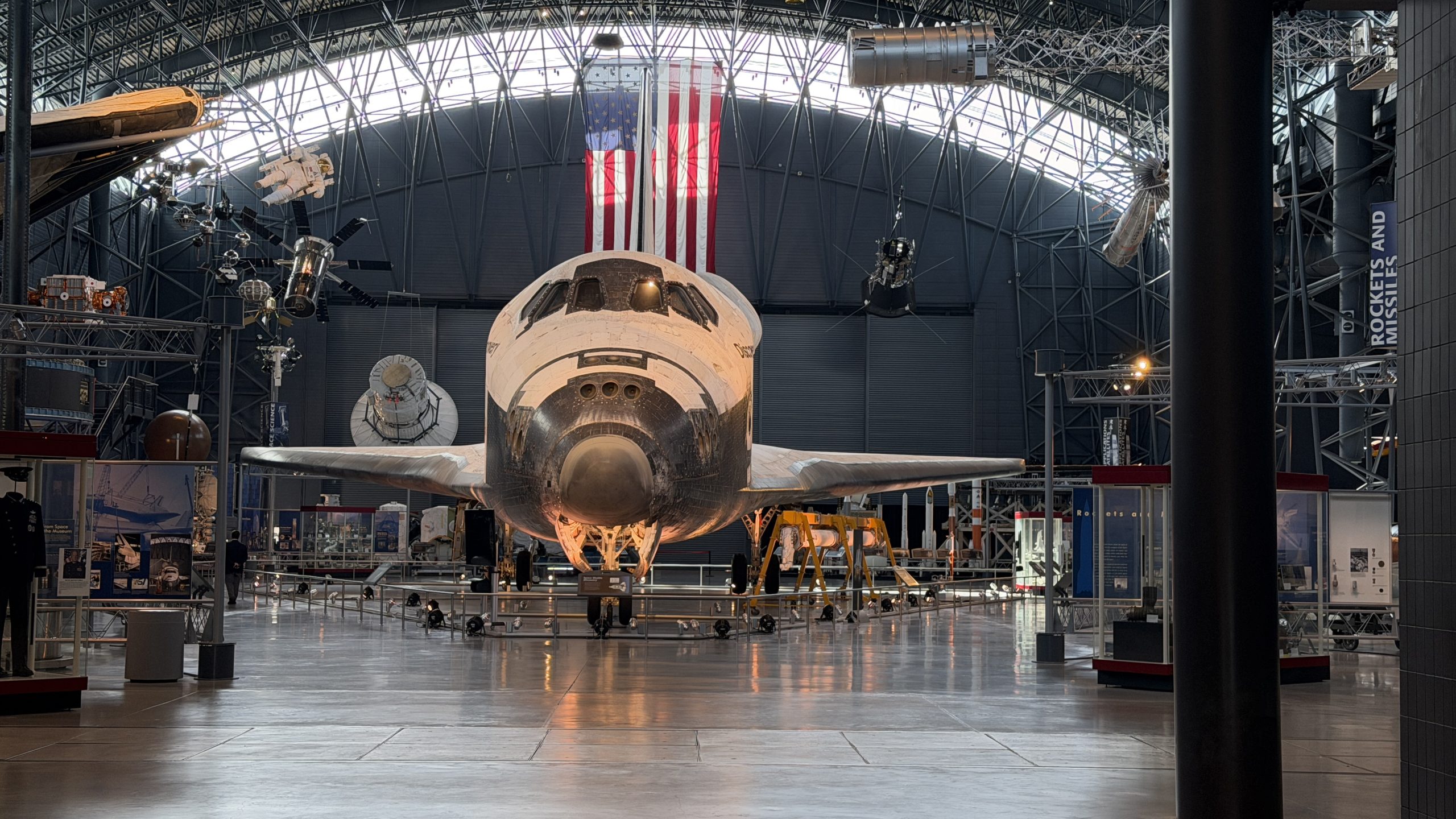
NASA Space Shuttle at the Smithsonian 19FortFive Space Shuttle Photo Shoot.
The Bargain and the Bill
The program began with a signature and a sales pitch. On January 5, 1972, President Richard Nixon announced America would build a reusable space transportation system, one he said would “revolutionize transportation into near space,” and the pitch to Congress was economic: a fleet of reusable spaceplanes flying as often as once a week, at a marketed cost as low as $20 million a flight, would make orbit routine. The context was austerity. NASA’s budget had been cut from 4.4 percent of federal spending in 1966 to 1.6 percent by 1972, and the shuttle was the lone survivor of a grander post-Apollo plan that had included a space station and Mars; the vehicle meant to serve that future was approved without the future attached.
The bill read differently from the pitch. Development was projected at $5.15 billion; NASA spent about $10.6 billion between 1972 and 1982, more than double the estimate, and nine years passed between approval and first flight.
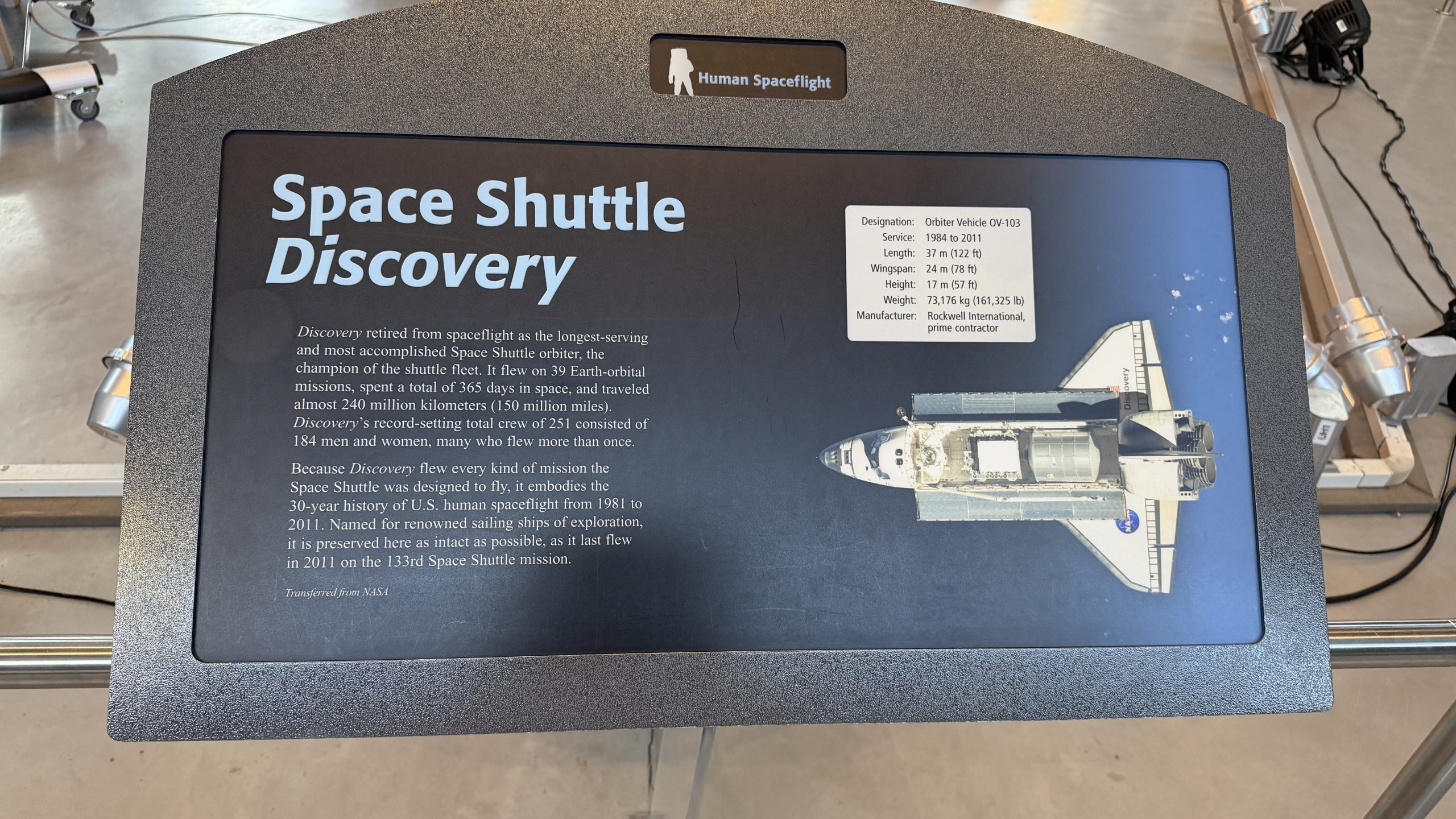
NASA Space Shuttle at the Smithsonian 19FortFive Space Shuttle Photo Shoot.
Over its lifetime, the program cost roughly $200 billion in 2010-era dollars, about $1.5 billion per mission flown, and the fleet never managed more than 9 flights in a single year.
The routine airline-to-orbit never arrived. Instead, a vehicle arrived that could do things nothing else has done before or since.
Building the Impossible
The engineering explains both the delays and the greatness. The Shuttle’s three main engines were the first large reusable rocket engines ever built, running on staged combustion at pressures that tormented test stands for a decade.
Its belly wore more than 24,000 silica tiles, nearly every one a unique numbered shape, individually glued by hand, protecting an aluminum airframe from reentry heat with a material so fragile a fingernail could gouge it. Its twin solid boosters were the first solid rockets ever to launch humans, unstoppable once lit.
Its big delta wing existed largely because the Air Force demanded the ability to steer far off the orbital track on the way home, a military requirement that shaped a civilian ship.
The whole 4.5-million-pound stack carried no crew escape system in operational service; the machine itself had to work.
And before any of it flew to space, a shuttle that never would proved the strangest part of the design.
NASA planned to name the first test orbiter Constitution, with a rollout on Constitution Day 1976, until fans of a canceled television series buried the White House in letters, by NASA’s own account, hundreds of thousands, and President Ford directed the change.
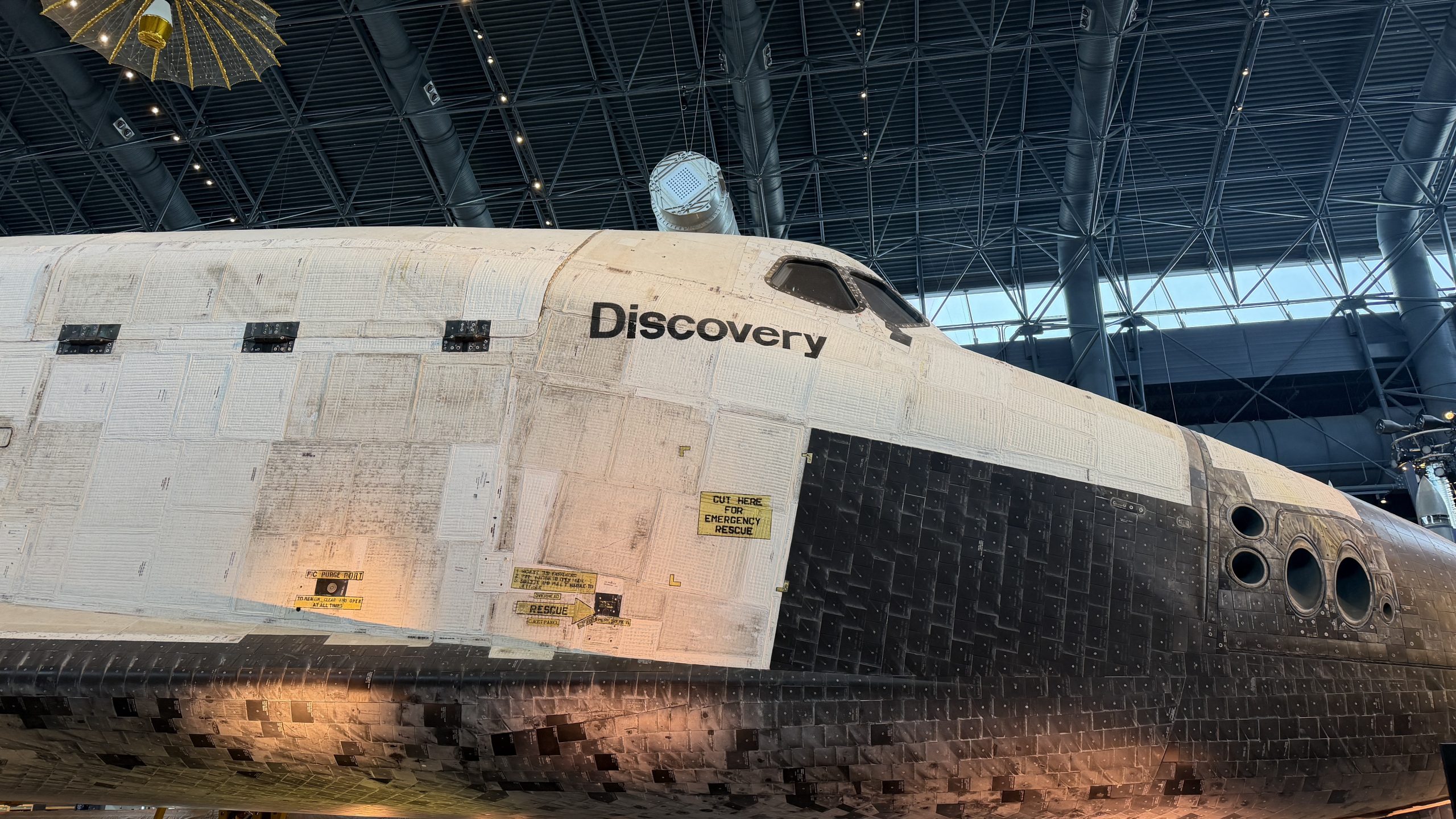
NASA Space Shuttle at the Smithsonian 19FortFive Space Shuttle Photo Shoot.
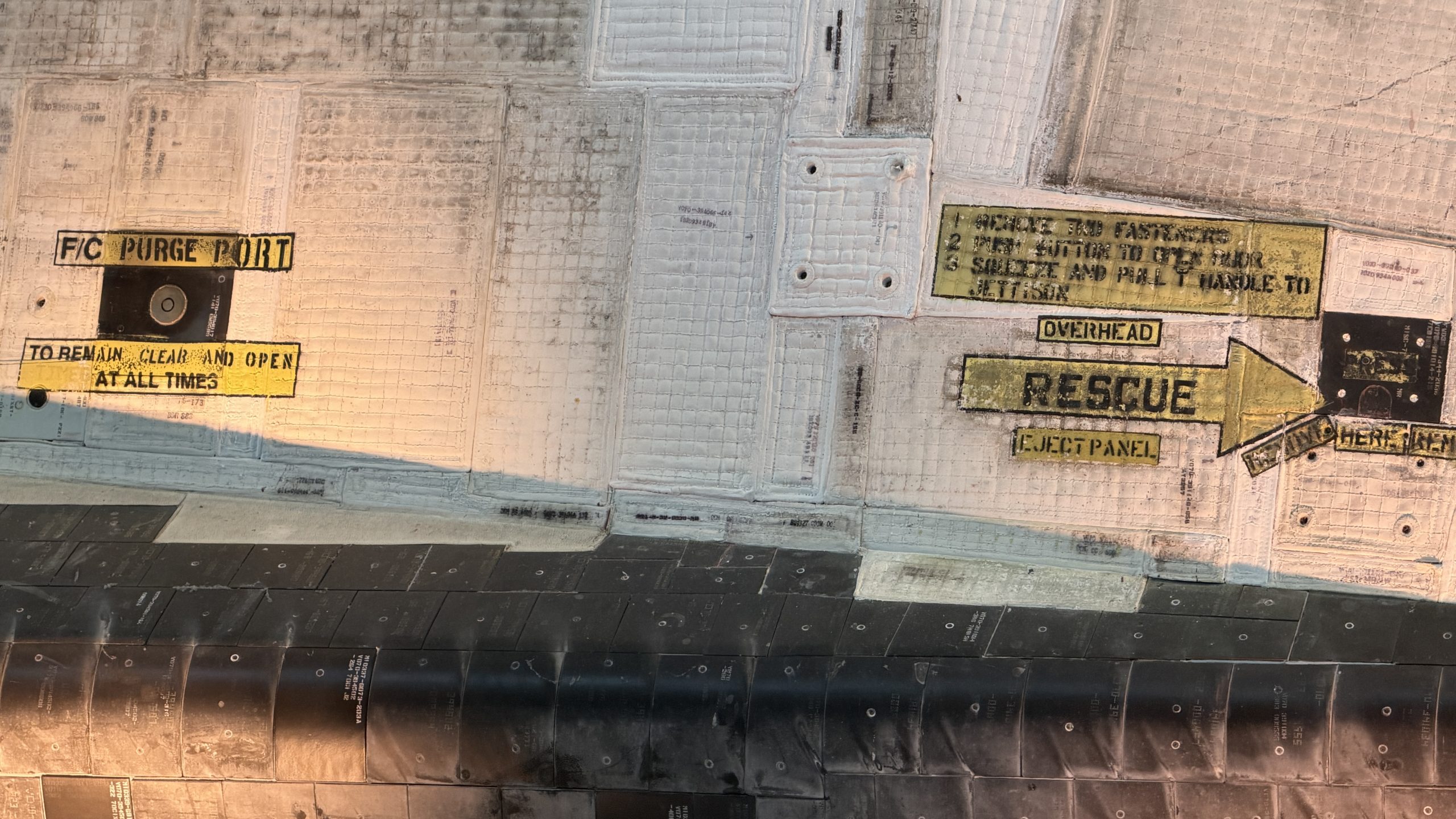
NASA Space Shuttle at the Smithsonian 19FortFive Space Shuttle Photo Shoot.
When the vehicle rolled out at Palmdale on September 17, 1976, an Air Force band played the Star Trek theme while Gene Roddenberry and his cast looked on, and the shuttle Enterprise, carried aloft on a modified 747 through 1977, glided to the landings that proved a returning orbiter needed no engines at all. Enterprise never got a heat shield and never reached space; it stands today aboard the Intrepid museum in New York, where Leonard Nimoy, who watched the 1976 rollout, waited on the tarmac to greet its final ferry flight in 2012.
The Flying Years: Aviation History and Space History Made
Columbia, named for the first American ship to sail around the world, launched on April 12, 1981, twenty years to the day after Yuri Gagarin’s flight, with John Young and Robert Crippen aboard, marking the first time in history the United States launched astronauts on a vehicle’s maiden flight.
What followed was the broadest flying resume any spacecraft has compiled. Sally Ride became the first American woman in space in June 1983; Guion Bluford became the first African American in space that August; Eileen Collins became the first woman to pilot and then command an American spacecraft; John Glenn returned to orbit in 1998 at age 77, the oldest person to fly there in his century.
The fleet deployed more than 100 satellites and three of NASA’s Great Observatories, sent Magellan to Venus and Galileo to Jupiter, flew the Spacelab laboratory, docked with Russia’s Mir station, and remained the only vehicle ever built that could also bring large satellites home, a party trick it performed by plucking broken spacecraft out of orbit for repair.
In April 1990, it released the Hubble Space Telescope, then did the thing that justified the whole design: when Hubble’s mirror proved flawed, a shuttle crew flew up in December 1993 and fixed it, the first of five servicing missions only this vehicle could perform. It hauled the International Space Station into existence piece by piece across dozens of flights. In all, 355 people from 16 countries flew, filling more than 800 seats over three decades.
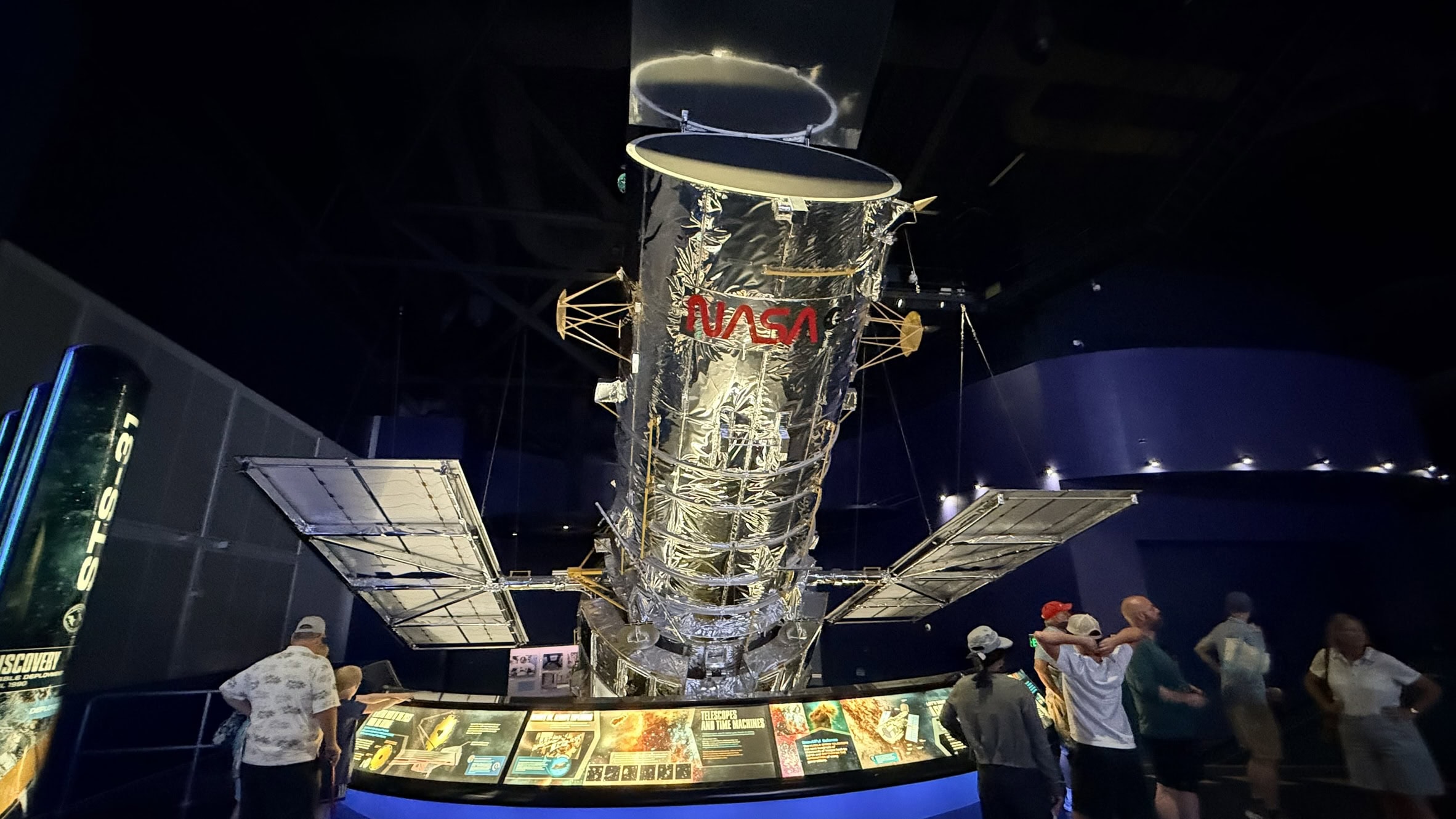
NASA Hubble Telescope Mock-Up. 19FortyFive Original Photo.
The Two Mornings
The program’s tragedies are inseparable from its record, and they deserve plain telling. On January 28, 1986, Challenger broke apart 73 seconds after liftoff when cold-stiffened O-rings in the right solid booster failed on the coldest launch morning the program had attempted, killing all seven aboard, among them Christa McAuliffe, the teacher whose presence had put classrooms across America in front of televisions.
The fleet stood down for nearly three years while the Rogers Commission dissected the launch decision, and NASA built Endeavor from structural spares to replace the lost orbiter. Seventeen years and 88 missions later, on February 1, 2003, Columbia disintegrated sixteen minutes from home. A briefcase-sized slab of foam had struck its left wing 81.7 seconds after launch, sixteen days earlier, breaching the heat shield, and the investigation board concluded NASA had failed to learn the organizational lessons of Challenger. Fourteen astronauts, two mornings.
The second loss set the program’s end date: finish the station, service Hubble once more, and retire the fleet.
The Last Flight and the Long Glide Home
Atlantis closed it out. STS-135 landed in the Florida dark on July 21, 2011, and America would not launch astronauts from its own soil again for nine years.
The surviving orbiters dispersed to their retirements: Discovery, the fleet leader with 39 flights, to the Smithsonian’s Udvar-Hazy Center in Virginia; Atlantis to the Kennedy Space Center, displayed in flight attitude with its payload doors open; Endeavour to Los Angeles, where it crawled twelve miles through city streets in 2012 as crowds lined the sidewalks, and where it has since been mounted upright on boosters and tank, waiting in launch position for its new museum wing to open.
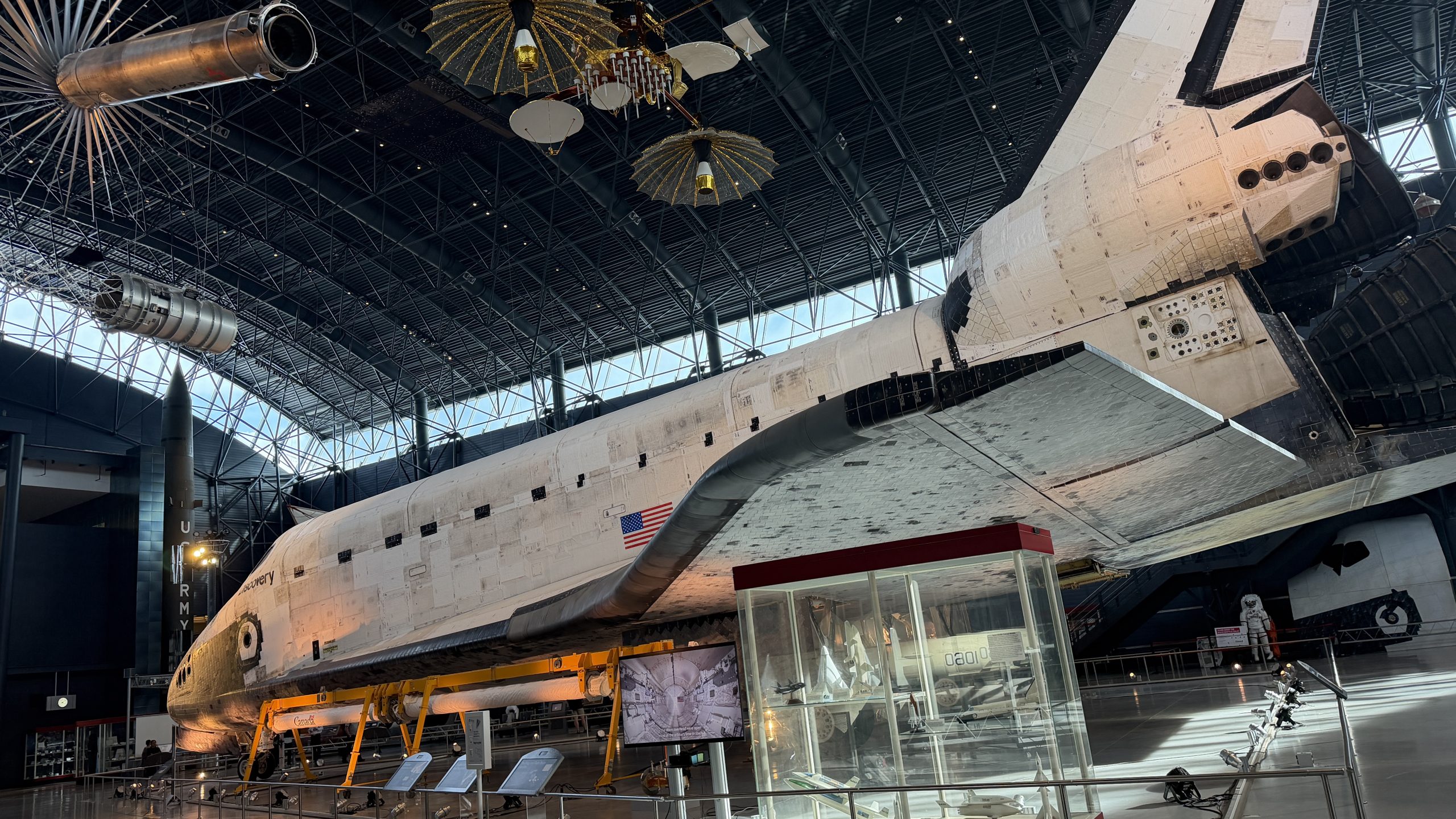
NASA Space Shuttle at the Smithsonian 19FortFive Space Shuttle Photo Shoot.
The retirement still stings because no replacement ever matched the machine. And the machine’s most astonishing act was the one it performed at the end of every single mission. An orbiter came out of orbit at roughly 17,500 miles per hour, Mach 25, and from the moment it committed to entry, it was a 100-ton glider with no engines, no second chance, and no way to go around.
It flew through air heated to 3,000 degrees around its nose and wing edges, wrapped in plasma that blacked out its radios, then bled off twenty-four Mach numbers in half an hour and arrived over the runway diving seven times steeper than an airliner, flaring at the last second to touch down near 220 miles per hour, engines silent the whole way.
The Photos in This Essay: We Love Taking Photography of the Space Shuttle
Thanks to reporter and defense expert Christian D. Orr, who photographed the Space Shuttle late last month. The author took the video at the top of this piece in 2022.
About the Author: Harry J. Kazianis
Harry J. Kazianis (@Grecianformula) was the former Senior Director of National Security Affairs at the Center for the National Interest (CFTNI), a foreign policy think tank founded by Richard Nixon based in Washington, DC. Harry has over a decade of experience in think tanks and national security publishing. His ideas have been published in the NY Times, The Washington Post, The Wall Street Journal, CNN, and many other outlets. He has held positions at CSIS, the Heritage Foundation, the University of Nottingham, and several other institutions related to national security research and studies. He is the former Executive Editor of the National Interest and the Diplomat. He holds a Master’s degree focusing on international affairs from Harvard University.

