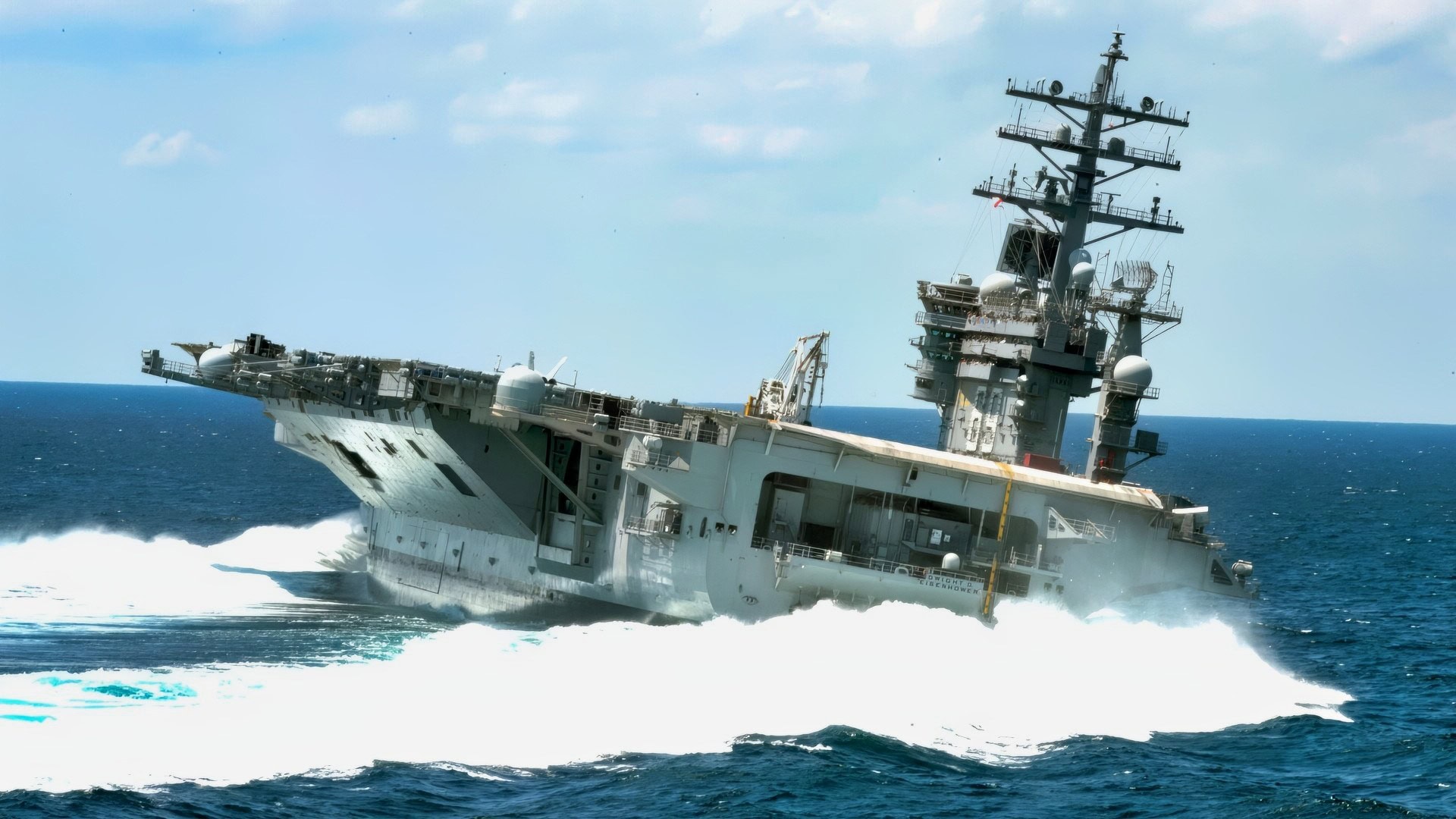
The USS Nimitz, the United States Navy’s oldest aircraft carrier, serves as the pivot point between the United States’ aging fleet of aircraft carriers and its newer replacements. The United States Navy now plans to keep the USS Nimitz — in service since 1975 — active until March of 2027. This extends the ship’s service life by ten months.
The impetus for the decision is fleet size: retiring the Nimitz before then would reduce the operational fleet of ships from its Congressionally Mandated size of 11 to 10 carriers before the arrival of the John F. Kennedy.
But the USS Nimitz’ service life extension is a consequence of industrial construction constraints too.
To sum it all up, the USS Nimitz is starting to become a headache for the US Navy.
The “Nimitz Gap”
Congress requires the United States Navy to maintain 11 operational aircraft carriers at ease.
Congress reduced this requirement from 21 in 2006, but it has remained a relatively firm constraint on carrier retirement decisions.
Separately, a 2021 defense bill also bars the retirement of a nuclear-powered aircraft carrier before its first refueling, a rule that the Nimitz, given its long service life, has already fulfilled.
For the USS Nimitz, the pressing issue keeping the ship afloat is the delay of its replacement, the next Gerald R. Ford-class ship, the USS John F. Kennedy.
When the Kennedy was procured in 2013, it was expected to be delivered of fall 2022.
But that date moved to March 2027 because of unfinished certification of the class’s Advanced Arresting Gear certification was unfinished and work on the Advanced Weapons Elevators continued.
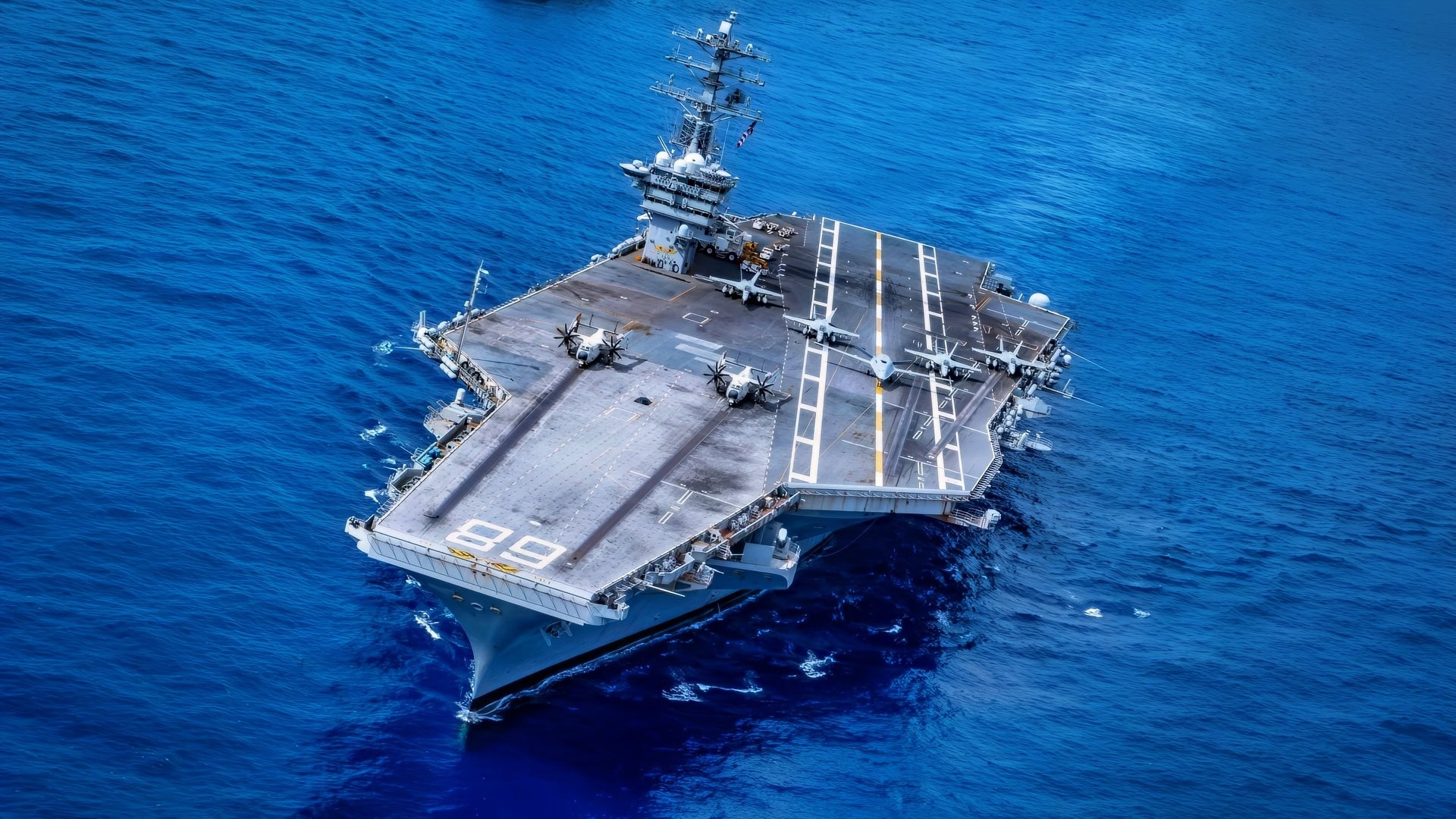
Twenty-six ships from 13 partner and allied nations steam in formation with Nimitz-class aircraft carrier USS Nimitz (CVN 68) as part of Fleet Exercise (FLEETEX) 250 in the Atlantic Ocean, June 25, 2026. Nimitz is underway taking part in Fleet Exercise (FLEETEX) 250, a series of structured multilateral training events at-sea, aimed at building cohesiveness, validating tactical procedures, and strengthening the interoperability of participating units—which include warships, aircraft, and crews from the U.S. and 13 partner and allied nations. (U.S. Navy photo by Mass Communication Specialist 3rd Class Gina M. Gallia)
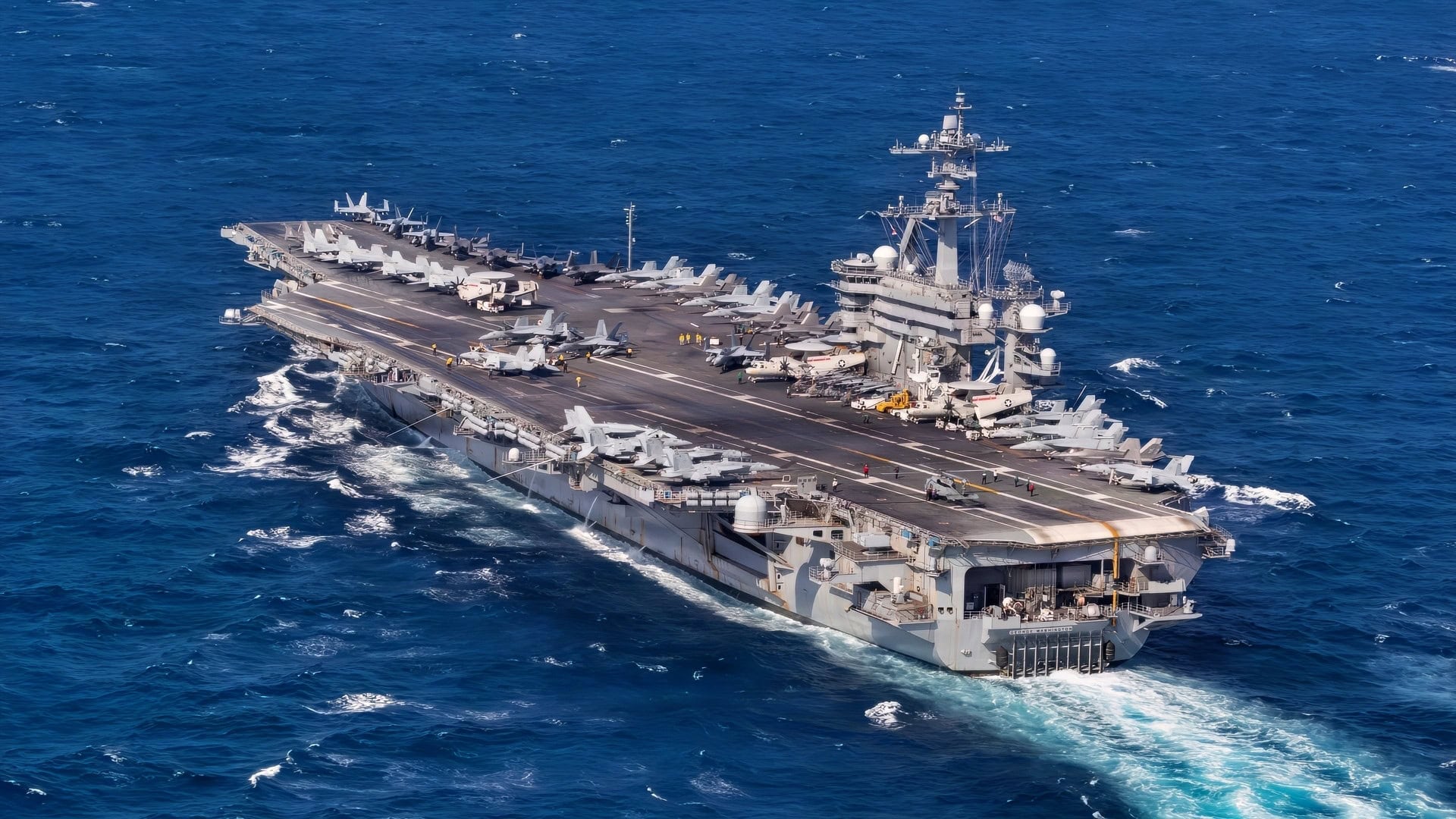
Nimitz-class aircraft carrier USS George Washington (CVN 73) operates in the South China Sea, Aug. 8, 2026. George Washington, operating in the U.S. 7th Fleet area of operations, is the U.S. Navy’s premiere forward-deployed aircraft carrier, a long-standing symbol of the United States’ commitment to maintaining a free and open Indo-Pacific, while operating alongside allies and partners across the U.S. Navy’s largest numbered fleet. (U.S. Navy photo by Mass Communication Specialist Seaman Anthony Vilardi)
These two pioneering Ford-class systems offer major efficiency gains but have had significant teething issues.
But the March 2027 service entry date does not, in fact, mean an instantaneous operational substitute. The USS Kennedy will require acceptance work, crew training, sea trials, and certification before it can assume the full operational responsibilities.
While the USS Nimitz’ projected service entry date complies with congressionally mandated fleet numbers, it does not close a potential readiness gap.
While the United States Navy has eleven aircraft carriers on paper, that tally does not necessarily reflect of many are actually ready for deployment—combat deployment.
Nuclear Fuel and Associated Constraints
The USS Nimitz was built with an approximate 50-year service life, and each of its two A4W reactors is designed to receive one mid-life refueling during a Refueling and Complex Overhaul, or RCOH, which occurred between 1998 and 2001.
An RCOH, however, is far from simple and involves opening up the ship’s bowels to reach the reactor compartments.
Workers also address the carrier’s propulsion, electrical systems, combat systems, living spaces, and a variety of other shipboard areas vital to operations.
But importantly for the USS Nimitz, the aircraft carrier is at, or beyond, the end of the interval for which its reactor plant and major ship systems were designed.
The U.S. Navy does not publicly disclose the precise amount of fuel remaining in an individual carrier’s reactor cores — nor, importantly, is there evidence that the Nimitz has expended its nuclear fuel.
Instead, the ship has no second refuel planned, which places significant constraints on its employment options
A pair of reactors with limited remaining longevity makes future deployments risky and costly. And while the U.S. Navy can most certainly use the USS Nimitz as a training or exercises platform, its window of usefulness as a combat carrier is shrinking.
Building the Fleet and the Shipyard Bottleneck
The most complex part of decommissioning a nuclear aircraft carrier is safely disposing of the ship’s nuclear reactors and reactor compartments before dismantling.
Navy yards that build U.S. carriers already struggle with limited space, long lead times, and supply chain issues—factors that have pushed back delivery dates of other ships, including another upcoming Ford-class carrier, the USS Doris Miller, from 2032 to 2034.
But the pressure also extends to the nuclear maintenance and support of the submarine industrial base. Work on the USS Nimitz, therefore, competes with construction and deactivation assignments elsewhere.
A quick retirement of the carrier would not necessarily free up dockside space immediately.
And though keeping the aircraft carrier operational postpones that lengthy task, it ties up maintenance resources and support crews on a platform with diminishing combat value.
The U.S. Navy’s choice is therefore difficult. Retire the USS Nimitz and break the 11-aircraft-carrier mandate, keep the warship and expend scarce resources on an aging vessel, or undertake deep life-extension work and further crowd shipyards already struggling with timelines for other U.S. Navy vessels.
About the Author: Caleb Larson
Caleb Larson is an American multiformat journalist based in Berlin, Germany. His work covers the intersection of conflict and society, focusing on American foreign policy and European security. He has reported from Germany, Russia, and the United States. Most recently, he covered the war in Ukraine, reporting extensively on the shifting battle lines in Donbas and the war’s civilian and humanitarian toll. Previously, he worked as a Defense Reporter for POLITICO Europe. You can follow his latest work on X.