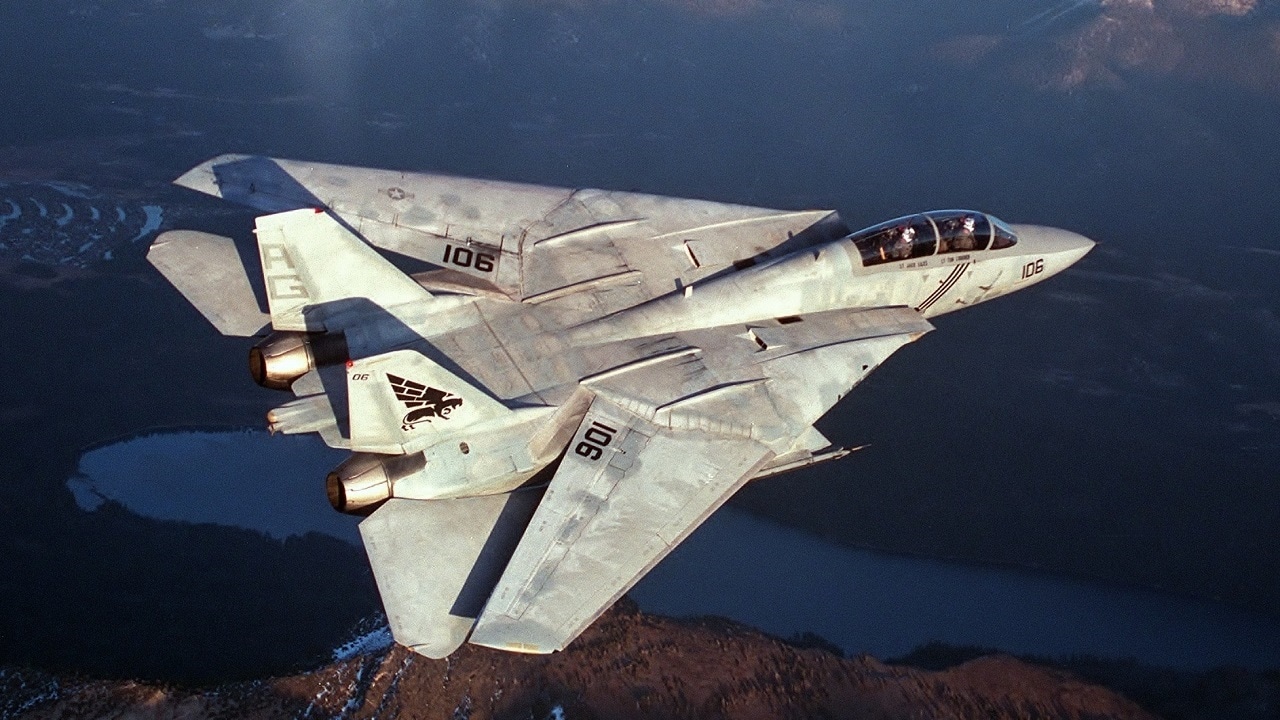
Summary and Key Points: The F-14 Tomcat spent most of its career on the wrong engine. It flew with the TF-30 from the canceled F-111B, an engine that stalled on rapid throttle changes. With the Tomcat’s engines 10 feet apart, a failure on a slow carrier approach could roll the jet onto its back. About 40 Tomcats were lost, 28% of Class A mishaps, before the GE F110 arrived in 1988. Hundreds kept the TF-30 to retirement.
Change The Plane, Keep The Problem. The Pratt & Whitney TF-30 Engine And The F-14 Tomcat
Fighter planes are always a pleasure to look at. For some reason, the smooth, sleek lines that reduce drag and increase lift in a fighter plane trigger something in our subconscious. We see a shape, and in that shape, we see speed and agility. We perceive its power without realizing the shape an aircraft takes isn’t the source of a fighter plane’s power; it’s there to make the most of the power within.
The power within is the engine, a great mechanical ugliness that our eyes see as incomprehensibly complex and mystifying. Most of us could not look at an aircraft engine and point to more than one or two things and think, “I know what part that does.”
The truth is that the engine brings the plane to life and makes it fly. If it is the wrong engine, the most beautiful airplane you have ever seen will not fly to the full potential of its design. The engine can also make an aircraft very dangerous if you mishandle the engine.
The Navy Wanted A Fighter It Could Match To a Very Special Radar And Missile
In the late 1960s, the US Navy was developing a swept-wing, supersonic interceptor that could accommodate both the Hughes AN/AWG-9 radar and the long-range Phoenix missile. An aircraft equipped with these systems could detect aerial threats 150 miles away, track up to 24, and then fire 6 air-to-air Phoenix missiles with a 120-mile range and speeds up to Mach 5.
The Navy was forced to use the General Dynamics F-111B Aardvark for this program. In the early 1960s, then Secretary of Defense Robert McNamara was all about the numbers. He didn’t see why the Navy and the Air Force couldn’t use the same aircraft to save taxpayers’ money.
The Air Force originally intended the F-111 as a high-speed, low-altitude attack bomber capable of delivering nuclear weapons.
For the Navy, the requirement represented a 180-degree change in direction. The F-111B for the carriers would be a high-speed, high-altitude fleet defense fighter armed with Phoenix missiles. As hard as the Navy tried to meet Secretary McNamara’s edict that both services use the same aircraft, the F-111B couldn’t be bent and shaped to the Navy’s requirements.
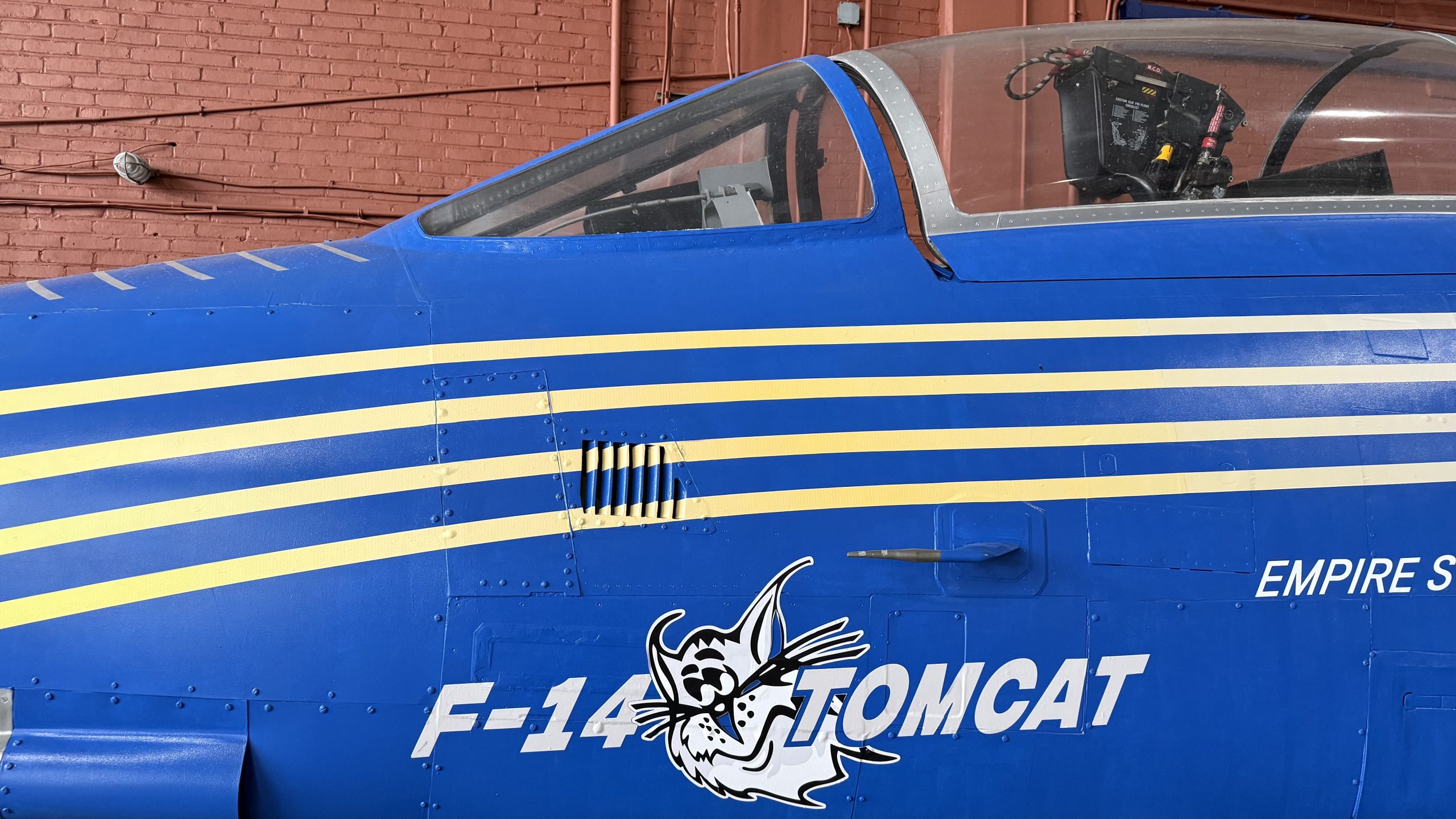
F-14 Tomcat. 19FortyFive staff photo from museum visit.
The F-111 wasn’t too heavy to take off on the Air Force’s long runways, but it was too heavy to take off and land safely on a carrier’s short deck.
The F-111B Was A Heavy Plane With An Underpowered TF-30 Engine
Another major problem was the two Pratt & Whitney TF-30 Turbofan engines.
They struggled to get the 90,000-pound Aardvark off the carrier. Landing on a carrier posed a different problem. The TF-30 engine did not like rapid throttle changes.
It preferred a smooth transition to higher power. If you were a carrier pilot trying to land an F-111B and got waved off a bad approach, you could not slam the throttles forward for more power to climb away. If you did, the sudden rush of fuel into the engine, without air to burn it, would cause a compressor stall and the engine would quit. The same thing would happen if you yanked the throttles back too quickly; you would starve the compressor of fuel, and it would stall again.
A bomber landing on a 10,000-foot runway has plenty of time to set up its landing with gradual throttle adjustments, but the Air Force also had compressor stall problems with the F-11A and TF-30 engines that required extensive intake modifications to fix.
Congress Pulled The Plug On The F-111B The Navy Scrambled To Find A New Interceptor
By 1968, Congress saw the Navy couldn’t make the F-111B work on carriers, so it ordered the Navy to stop work and go back to the drawing board.
Grumman was ready to step right in with the F-14 Tomcat and, in January 1969, won the contract to build it for the Navy using the Hughes radar and the Phoenix missile. The Navy wanted the Tomcat in production as fast as possible, but the engines weren’t ready yet.
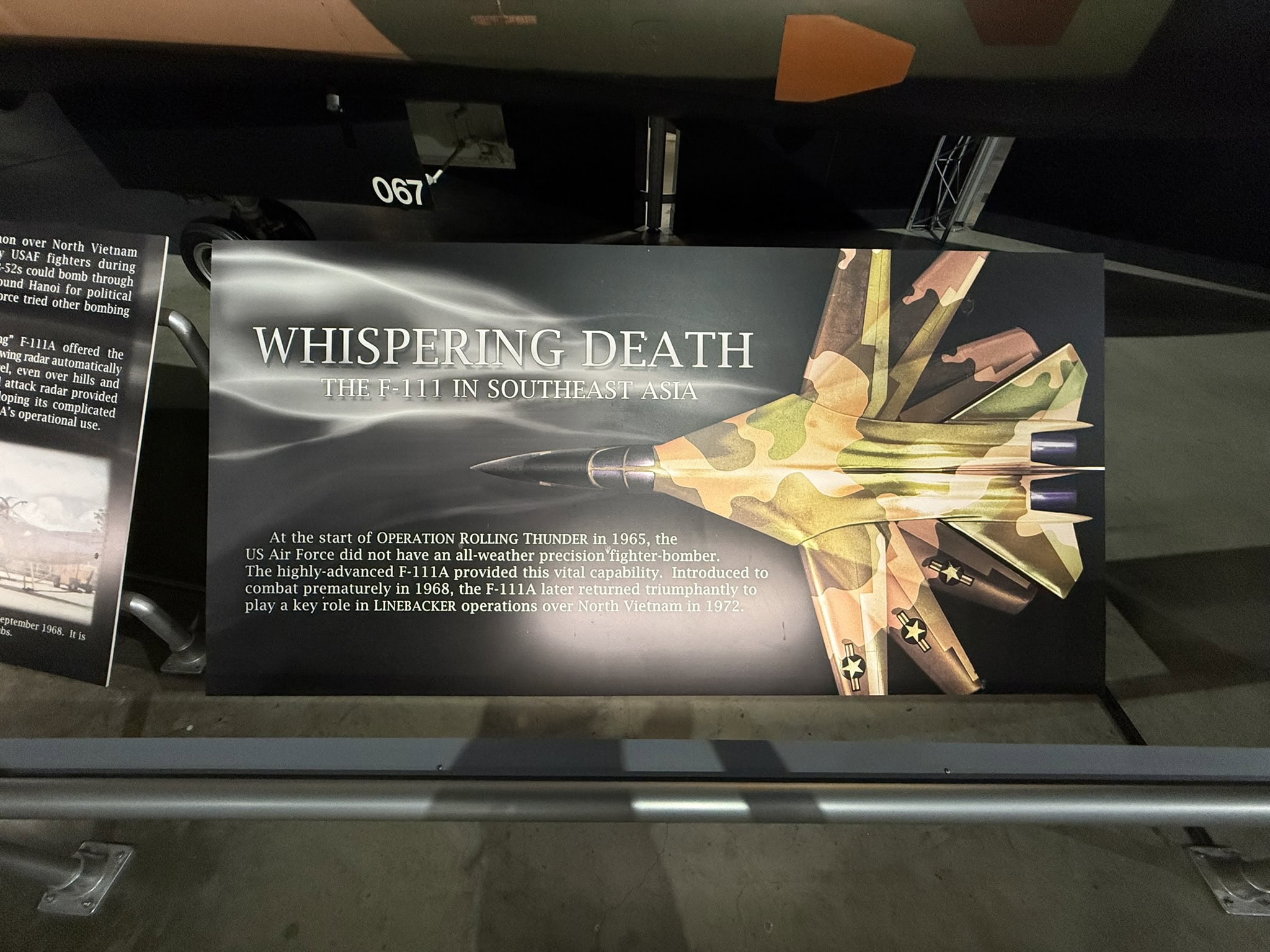
F-111 On Display at the National Museum of the U.S. Air Force. Take on July 19, 2025 by Harry J. Kazianis for 19FortyFive.com
The F-14 was supposed to run on the P&W F-401, which shared a core with the F-100 engine in the F-15 Eagle. Cost overruns and production delays meant the F-401 would not be ready within the 2-year contract window Grumman was operating under. So, they decided to use the TF-30 from the F-111B instead. This wasn’t necessarily a bad idea; the F-14 was almost 10,000 lbs. lighter at maximum takeoff than the F-111B, and it could reach the Mach 1+ speeds the Tomcat needed to perform as a fleet defense fighter.
Navy Pilots Loved The Tomcat In Flight, But Learned To Treat The TF-30 Engine With Care
When the Tomcat reached Navy squadrons, pilots loved the way it flew; the TF-30 seemed well matched to the aircraft at first. As they gained experience, they learned the F-14’s engine characteristics required careful handling.
The engines of the Tomcat were some 10 feet apart; if you had a failure at higher speeds, the F-14 still flew very well, but when you got slow to land on the carrier, that distance between engines created asymmetrical thrust that could cause the aircraft to roll over on its back at low altitude, making safe ejections difficult.
During its service, some 40 Tomcats with TF-30 engines would be lost to compressor stalls, turbine blade failures, and spins or rolls triggered by asymmetrical thrust. This accounted for 28% of Class A Mishaps.
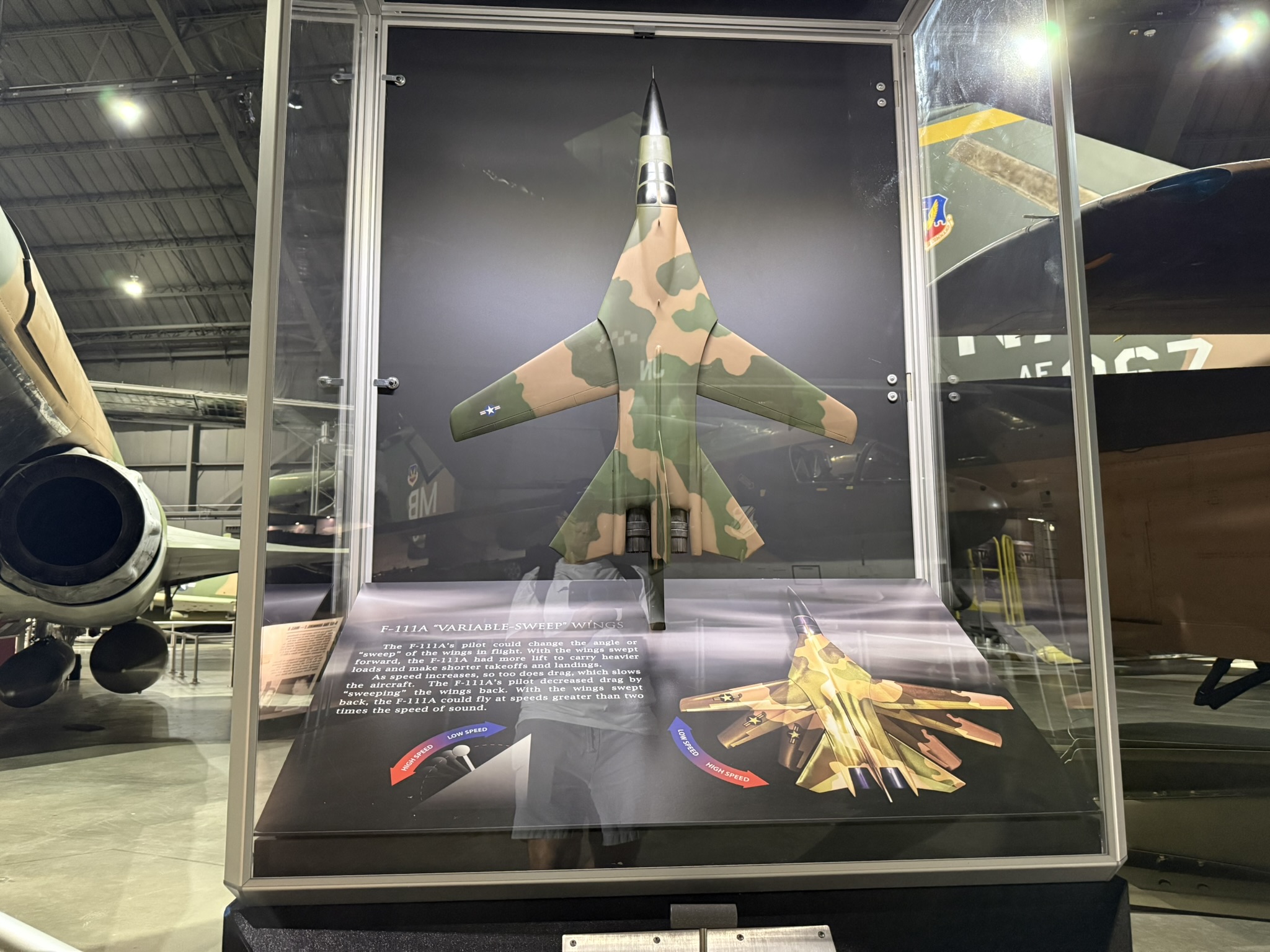
F-111 display at the National Museum of the US Air Force. 19FortyFive Photo.
Naval Aviators still loved flying the Tomcat and praised its performance, but that praise often came with a warning: “But you have to be careful with the throttles at high angles of attack and be ready to handle asymmetrical thrust if you lost an engine.”
The Tomcat Never Got The Engine It Was Supposed To Have. It Stuck With The JF-30
The Navy never put the Pratt & Whitney F-401 engine in the Tomcat. Cost overruns, technical problems, and reliability issues led the Navy to scrap that engine in 1974. In 1988, the Tomcat finally got the engine upgrade it needed: the General Electric F-110-GE-400.
These engines added more than 12,000 lbs. of thrust to each F-14 engine, increasing its climb rate by 60%. The new engine also burned far less fuel, expanding intercept radius by 62%.
Redesigned fan blades and inlet guide vanes smoothed the air, making rapid throttle changes possible for the first time. Now a pilot could shove the throttles from idle to full afterburner without worrying about stalling or spitting fan blades out of the nozzles. With these new engines, the Tomcat finally flew the way it looked, like a true fighter plane.
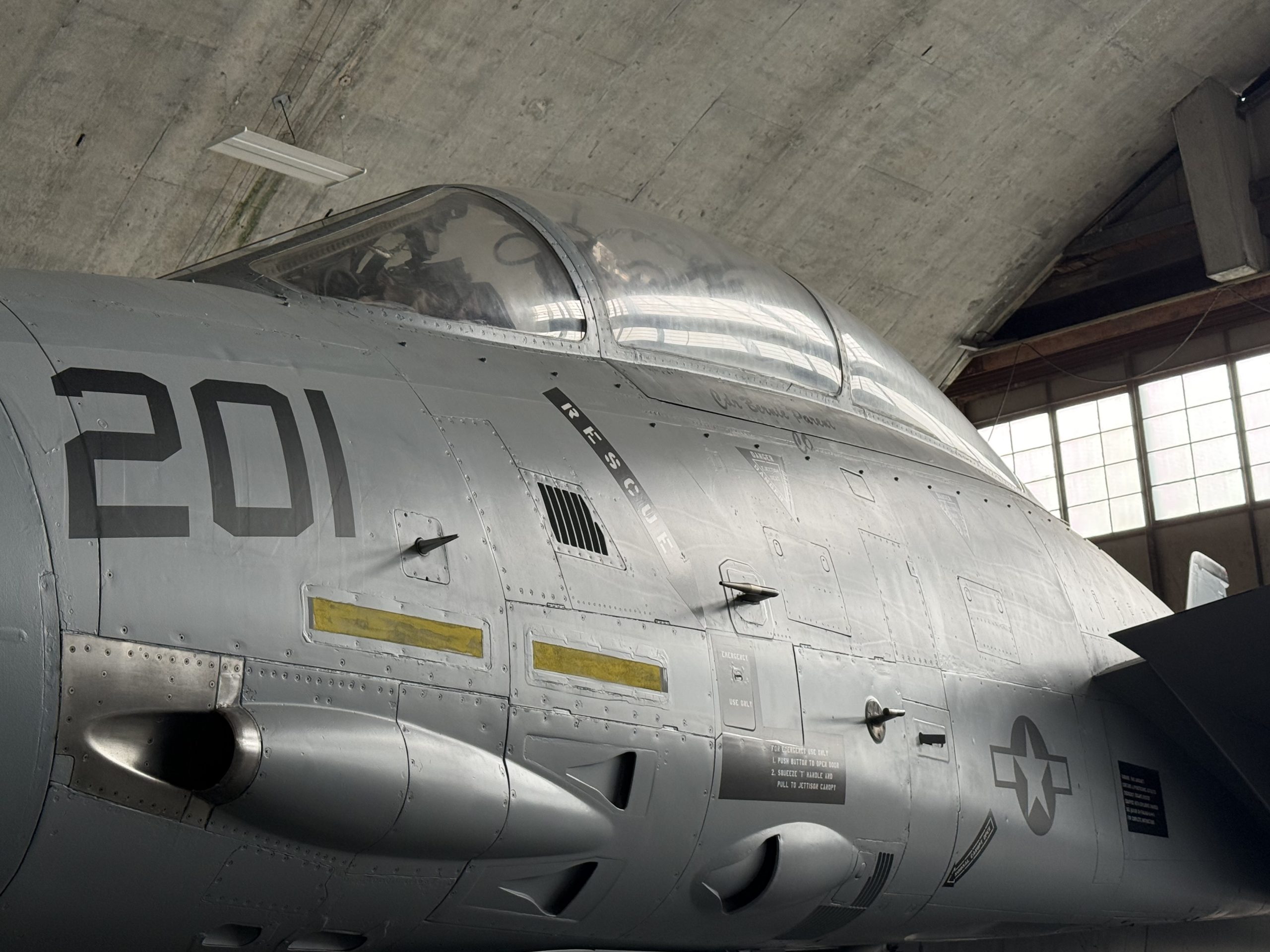
F-14 Tomcat. 19FortyFive staff photo from museum visit.
Not All Tomcats Got The GE Engine That Solved The Problems With the JF-30 Engine
The Navy had more than 700 Tomcats in service. The high cost of upgrading all of them to the new GE engines meant hundreds of F-14As would keep their JF-30 engines for the rest of their service lives.
Additionally, from the 1990s through the 2000s, the Tomcat set aside its fleet-defense role and, fitted with a LANTIRN pod and modified to carry bombs, became a strike aircraft known as the “Bombcat.”
This is somewhat ironic, as the Tomcat eventually became a fighter-bomber with TF-30 engines built for the canceled fighter-bomber F-111B.
About the Author: Sean Spoonts
Sean Spoonts is the former Editor-In-Chief of SOFREP.com. He is a military analyst, writer, and commentator whose work has appeared in Newsweek, CNS News, Ukrinform, and various military or veteran media networks and professional publications, including the Military Intelligence Professional Bulletin. He is a U.S. Navy veteran, having served as an Aviation Anti-Submarine Warfare Operator and Search and Rescue Helicopter Aircrewman.