
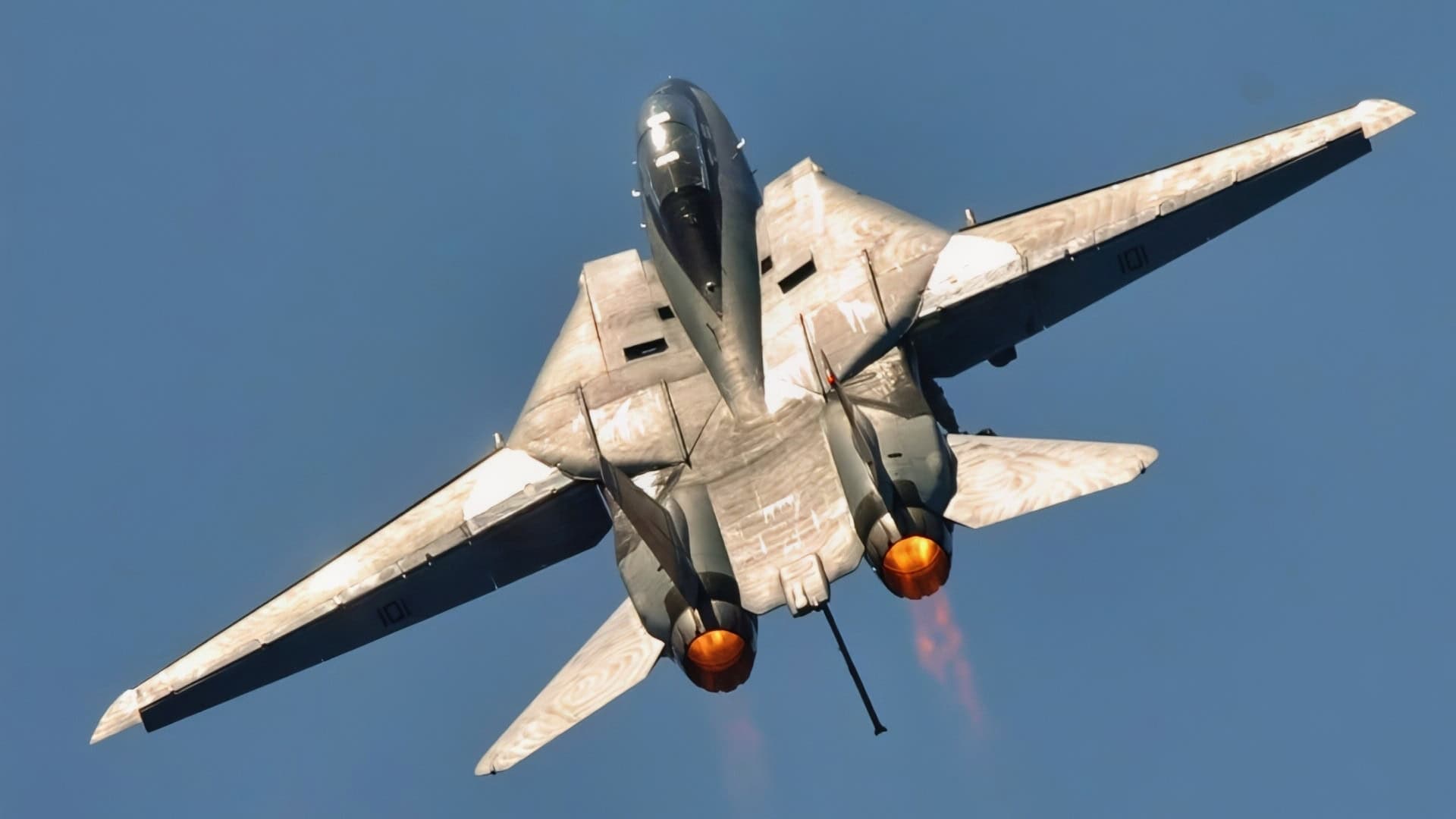
The American-made Grumman F-14 Tomcat was a legendary 4th-generation, Cold War-era jet fighter for many reasons, and chief among them was its range.
During the F-14’s first two decades of service—the 1970s and 1980s—Bell Systems/AT&T ran the catchy advertising jingle “Reach Out and Touch Someone,” and the Tomcat certainly embodied that slogan, albeit in a far deadlier context than long-distance landline telephone dialing.
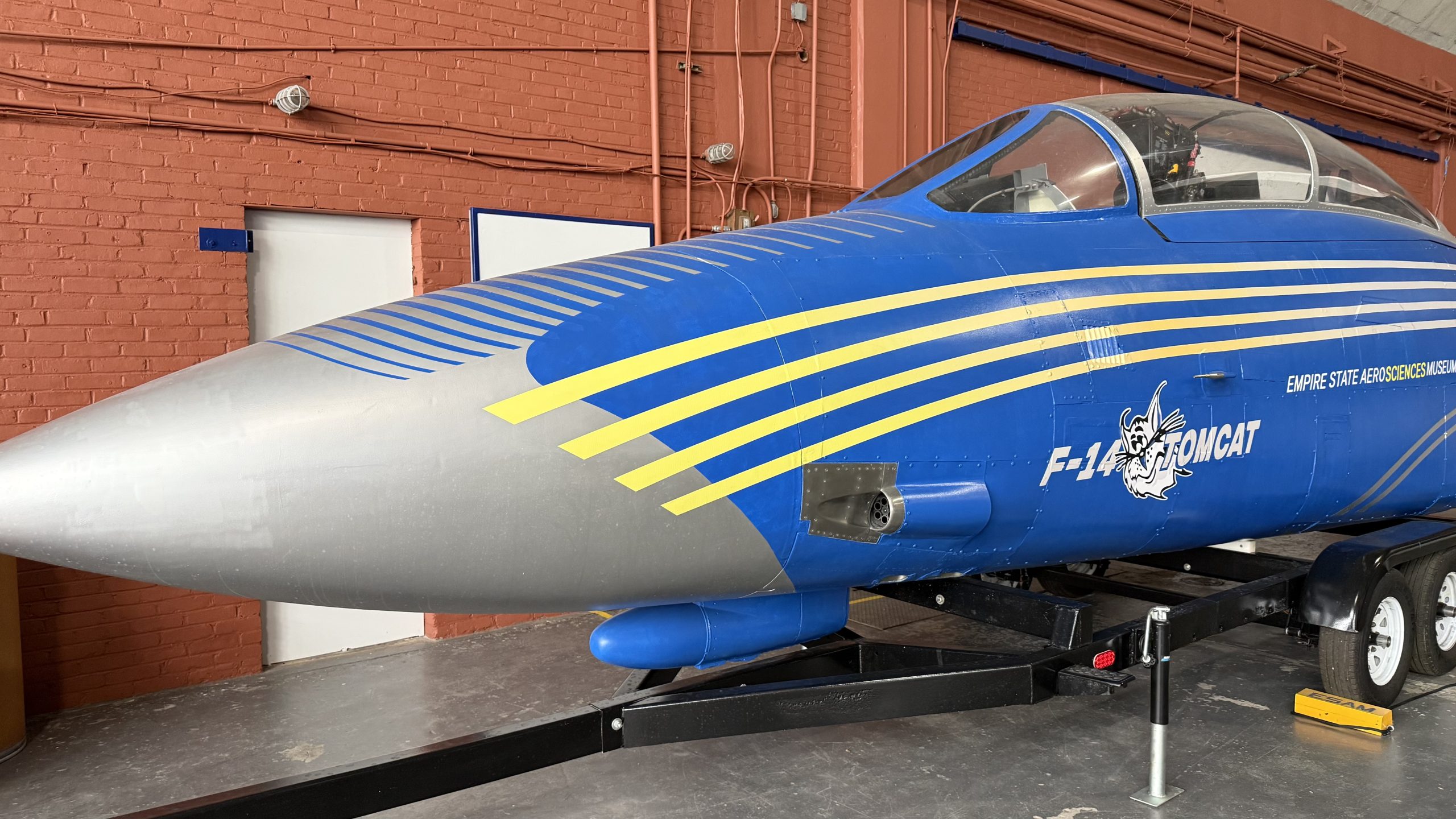
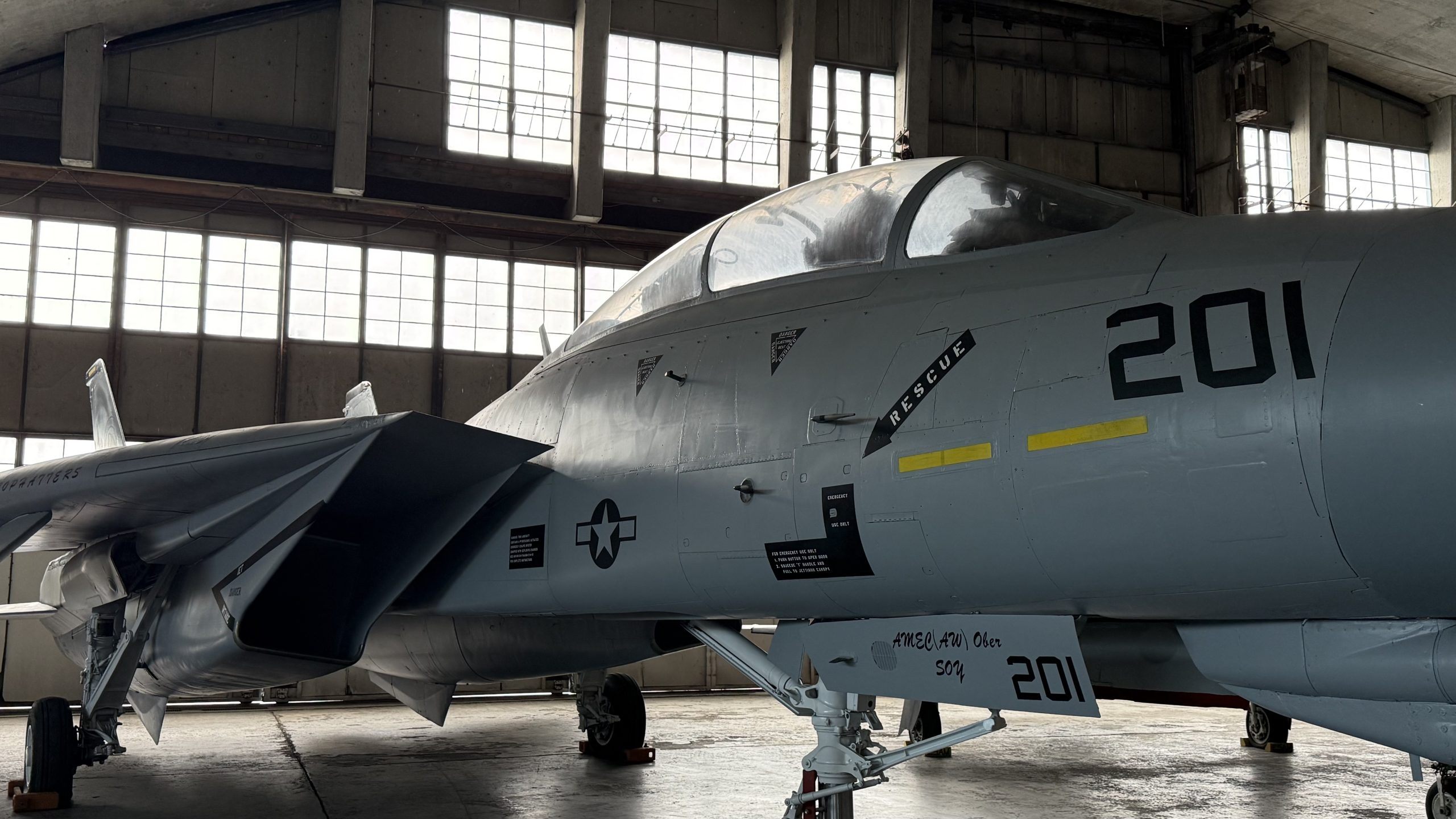
F-14 Tomcat. 19FortyFive staff photo from museum visit.
Which brings us to the point and raison d’être of this article: Notwithstanding the impressive capabilities of the Tomcat’s successor warbirds, the 4.5 Generation Boeing F/A-18E/F Super Hornet and the F-35C Lightning II 5th Generation stealth jet, the United States Navy truly misses the range capabilities of the older fighter, particularly its final and greatest variant, the F-14D.
Trekkin’ with Tomcat: The F-14’s Long-Distance Premise
The U.S. Navy’s main driver behind the Tomcat’s long-distance dialing—or, more accurately, long-distance killing—capabilities was long-range fleet defense. More specifically, it was to protect the carriers from Soviet bombers such as the Bear, Backfire, Badger, and Blackjack, all made by Tupolev. For those of you who’ve read the late great Tom Clancy’s bestselling WWIII novel “Red Storm Rising,” you will recall that the Backfires’ attack on the NATO fleet is one of the book’s most harrowing scenes.
As we all now know, with the benefit of 20/20 hindsight, the Soviet Union collapsed before that WWIII air-sea battle scenario…and as luck would have it, the F-14D variant entered into operational service in 1991, just a few months before that collapse.
Of course, the fine folks at Grumman who built the improvements into the D model of the Tomcat didn’t have a crystal ball to predict the Soviet collapse, so they kept producing the plane with those legendary long-range capabilities.
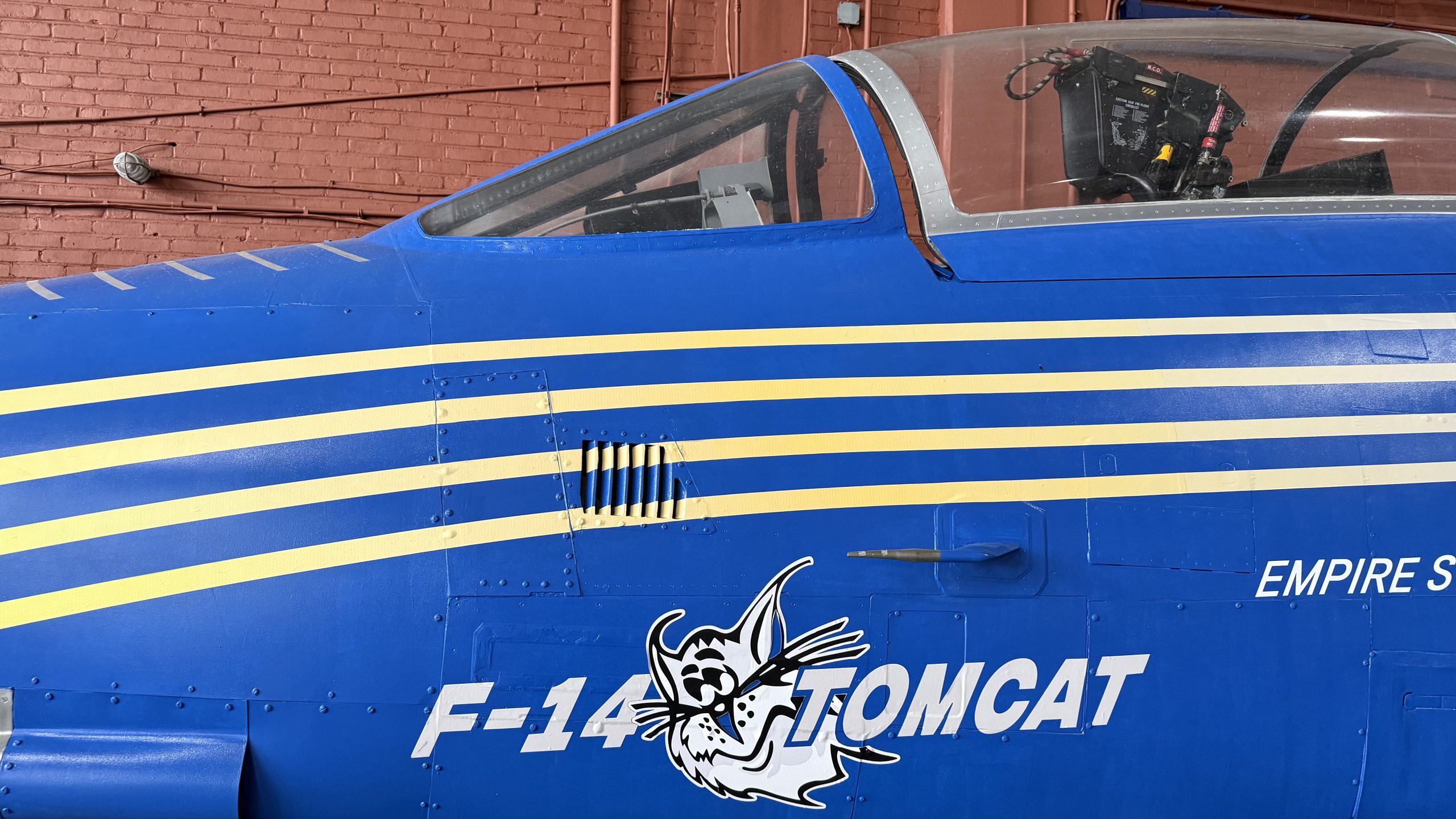
F-14 Tomcat. 19FortyFive staff photo from museum visit.
A major reason for those capabilities was the General Electric F110-GE-400 engine.
As museum docent Orrin Messinger, a retired U.S. Army Chief Warrant Officer 2 (CW2) who flew Huey helicopters during the Vietnam War, told me during my March 2026 visit to the Aviation Museum of Kentucky:
“When they first came out with the F-14, it had a Pratt & Whitney TF30 engine in it, and they were having problems with engine stalls. You get into a dogfight, and a pilot is trying to clear a stall while he’s trying to dogfight! They came out in ’76; they were gonna retire it in ’86 [coincidentally the same year the original “Top Gun” movie debuted at the box office and made movie audiences fall in love with the Tomcat]. But General Electric worked out a deal with the Navy, re-engined it with the F110-400, and finally retired it in 2006. The one pilot I talked to, I say, ‘Can you compare the two airplanes for me?’ and he said, ‘I used to have to fly the engines; now I fly the airplane! If I want power, I push the lever; if I don’t, I pull ’em back; otherwise, I forget they’re there. And the one engineer from Grumman I talked to, he said, ‘Finally, the aircraft will fly to its designed specification.’ It’s a whale of an airplane!”
To give our readers a quantifiable appreciation of the F-14D/F110-400 tandem, let’s compare the ferry range and combat range of the now-retired Tomcat with the U.S. Navy’s current fighter jets:
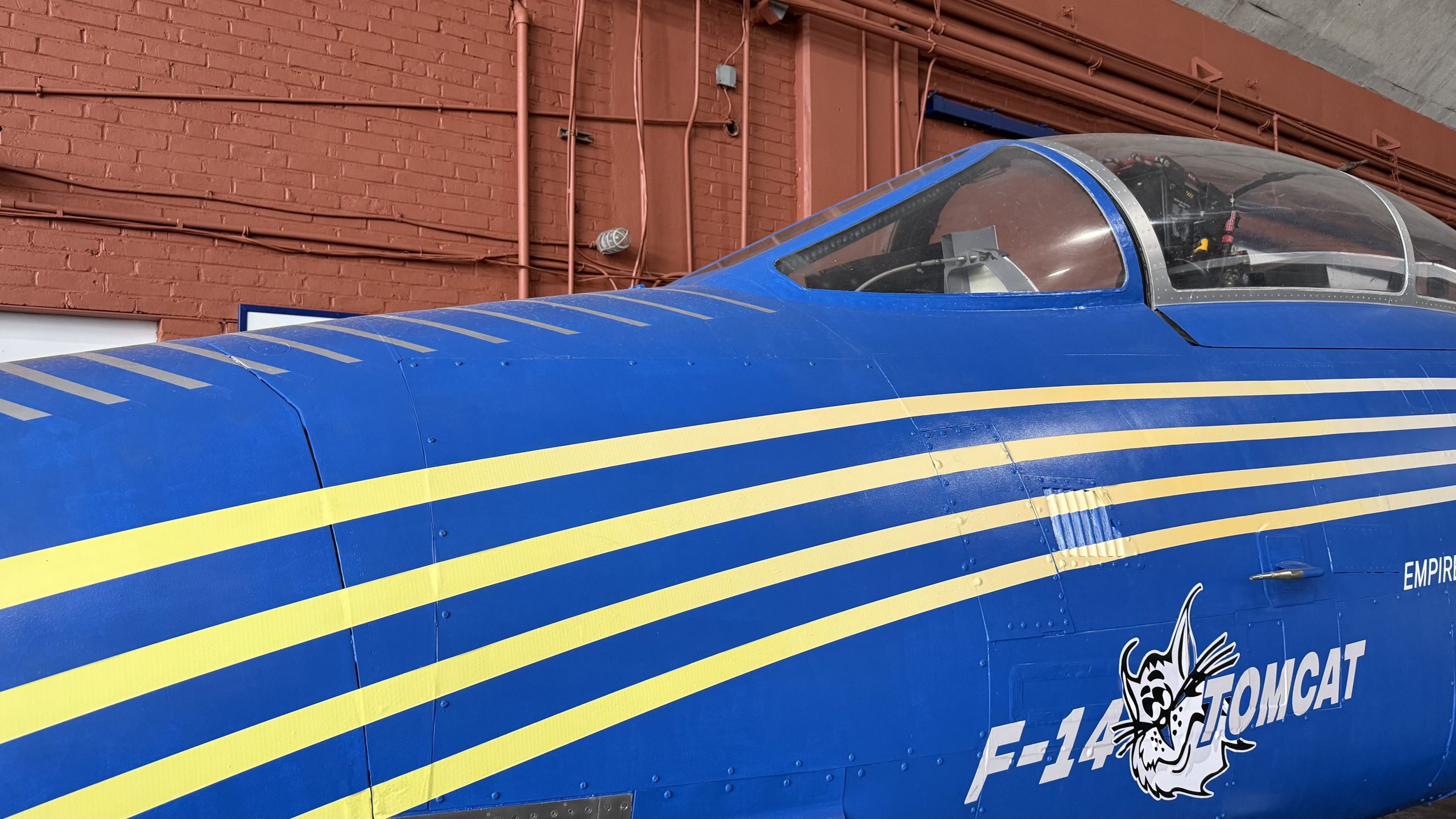
F-14 Tomcat. 19FortyFive staff photo from museum visit.
F-14D: Ferry range of 1,600 nautical miles, combat range of 503 nautical miles
F/A-18E/F: Ferry range of 1,275 nautical miles, combat range of 558 nautical miles
F-35C: Ferry range of 1,200 nautical miles, combat range of 670 nautical miles
Given the vast distances involved in the Indo-Pacific region, this would be kind of a big deal in case of an all-out war against Red China and/or North Korea.
“Swing-Wing” Savings Superiority
Another reason for the F-14D’s incredible range was its variable-sweep wings, aka “swing wings,” or variable geometry.
As the Pilot Institute elaborates, “At high speeds, especially near or above the speed of sound, swept-back wings actually lessen aerodynamic drag by delaying the formation of shock waves…This drag reduction improves fuel economy and allows fighters to reach maximum speeds without structural modifications.
Improved stability at high speeds also contributes to steady flight and better overall performance…Because these wings can adjust more naturally during flight, they can reduce drag and even save fuel.”
F-14 Tomcat. 19FortyFive staff photo from museum visit.
So Then, Why was the F-14D Retired?
The short version is, despite the improvements in safety and reliability the F-14D offered over its predecessor variants, it was still highly maintenance-intensive and expensive.
Yes, the Navy brass toyed with the notion of the Super Tomcat 21 (ST21), but ultimately put the kibosh on that super-cool hypothetical idea.
The F/A-18 Super Hornet, which became a movie star in its own right thanks to the 2022 Top Gun sequel, proved far more cost-effective and became the Tomcat’s successor.
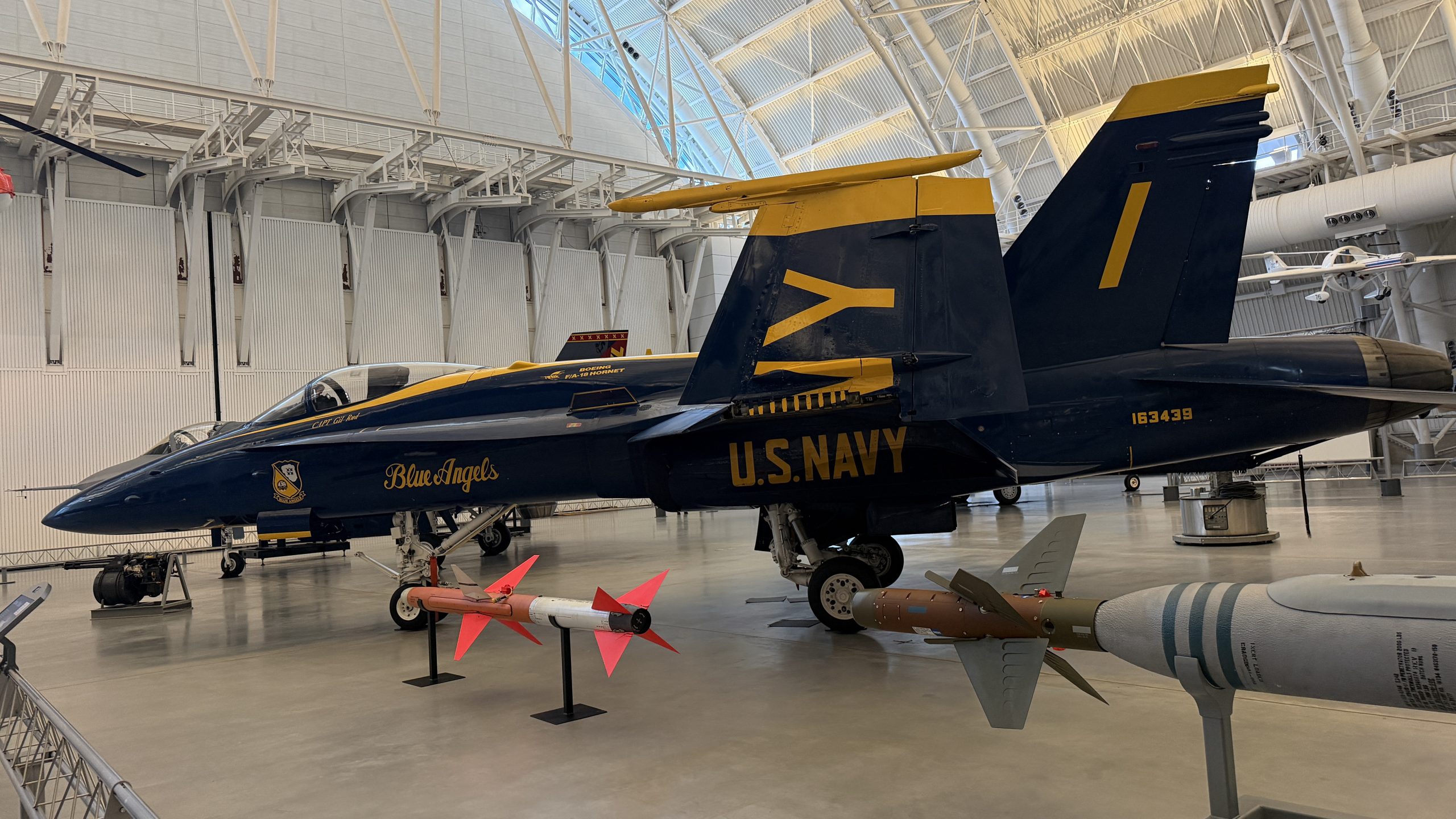
F/A-18 Hornet photo from 19FortyFive Smithsonian Visit September 2026.
All good things must come to an end.
That said, recent reports indicate that the F-14D just might soon experience a post-retirement mini-revival. Not exactly a full-scale comeback tour, mind you, but from a sentimentality standpoint, better than nothing.
Editor’s Note: Thanks to Christian D. Orr and Jack Buckby for taking these amazing photos at the Smithsonian and in Upstate New York.
About the Author: Christian D. Orr
Christian D. Orr is a Senior Defense Editor. He is a former Air Force Security Forces officer, Federal law enforcement officer, and private military contractor (with assignments worked in Iraq, the United Arab Emirates, Kosovo, Japan, Germany, and the Pentagon). Chris holds a B.A. in International Relations from the University of Southern California (USC) and an M.A. in Intelligence Studies (with a concentration in Terrorism Studies) from American Military University (AMU). He is also the author of “Five Decades of a Fabulous Firearm: Celebrating the 50th Anniversary of the Beretta 92 Pistol Series,” whose second edition of which was recently published.