
Summary and Key Points: The US Navy chose nuclear carriers in the 1950s for endurance. The price is a Refueling and Complex Overhaul that sidelines a Nimitz-class carrier for three to five years, against about 18 months every six years for France’s Charles de Gaulle, and the Ford-class reactors won’t prove a shorter cycle for years. One analyst weighs whether cheaper conventional carriers make sense, concluding they might only for a war with China.
Time for US Navy Conventional Aircraft Carriers?
With global tensions rising and a possible confrontation in the Pacific on the horizon, the U.S. Navy needs every aircraft carrier it can get to navigate today’s troubled waters.
However, as the Nimitz-class slowly ages out and the Ford-class struggles with development, the Navy is struggling to keep its carrier fleet in top shape.
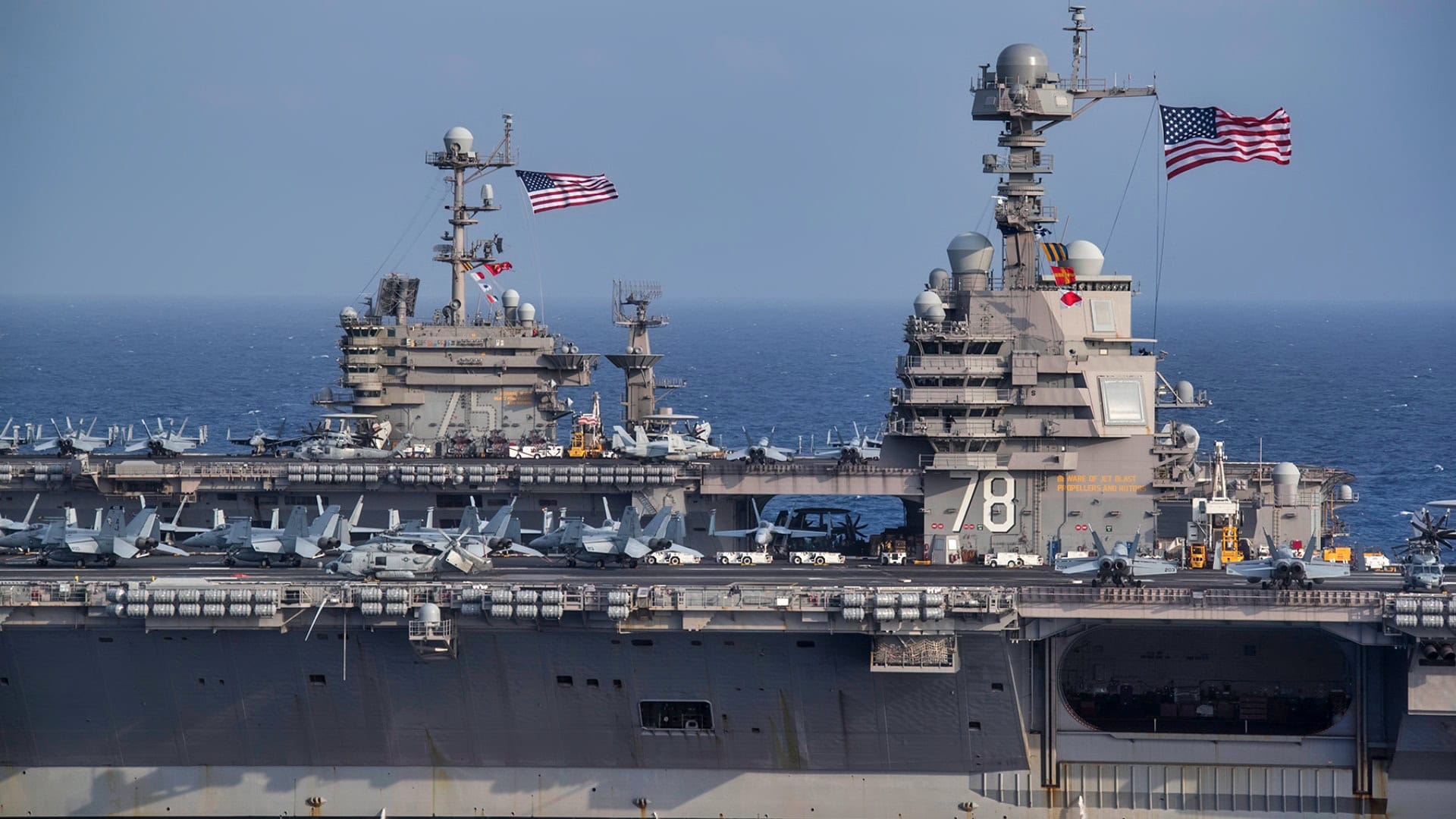
The Ford-class aircraft carrier USS Gerald R. Ford (CVN 78) and the Nimitz-class aircraft carrier USS Harry S. Truman (CVN 75) transit the Atlantic Ocean June 4, 2020, marking the first time a Ford-class and a Nimitz-class aircraft carrier have operated together underway. Ford is underway conducting integrated air wing operations, and the Harry S. Truman Carrier Strike Group remains at sea in the Atlantic as a certified carrier strike group force ready for tasking in order to protect the crew from the risks posed by COVID-19, following their successful deployment to the U.S. 5th and 6th Fleet areas of operation. (U.S. Navy photo by Mass Communication Specialist 2nd Class Ruben Reed)
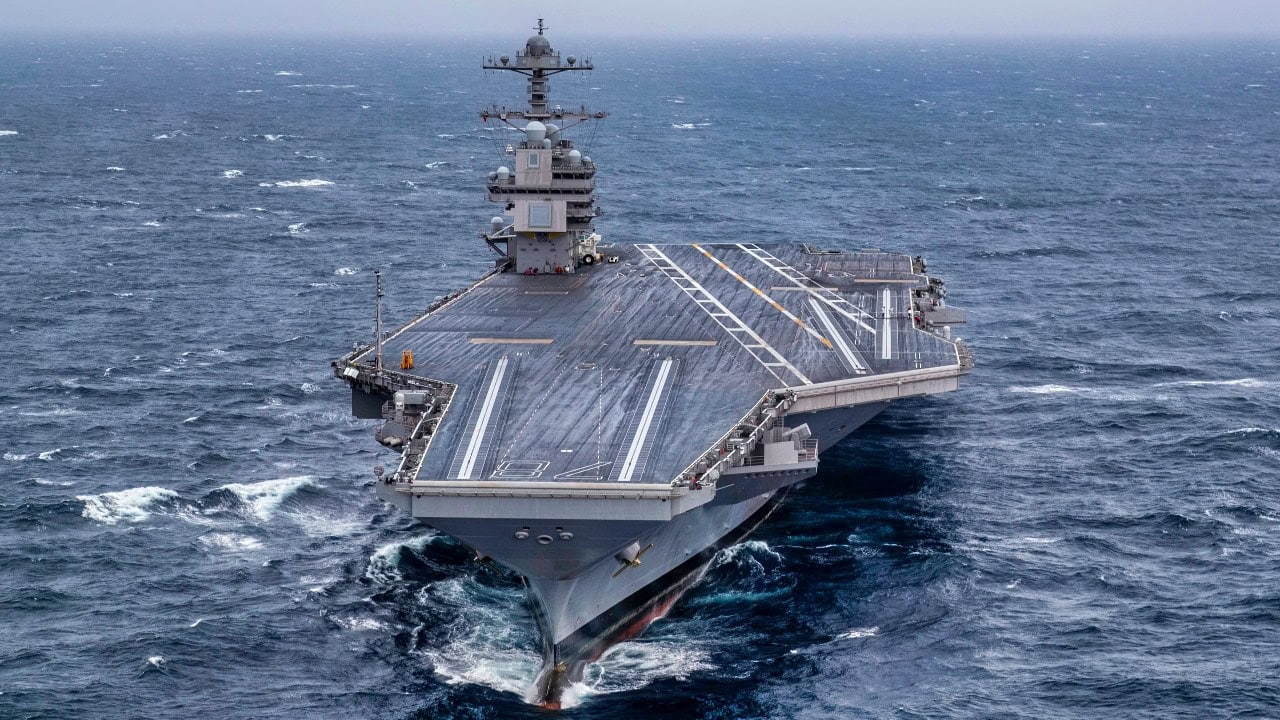
ATLANTIC OCEAN (Oct. 27, 2019) USS Gerald R. Ford (CVN 78) steams in the Atlantic Ocean for the first time since July 2018. Ford is conducting sea trials following its 15 month post-shakedown availability. (U.S. Navy photo by Mass Communication Specialist 3rd Class Connor Loessin)
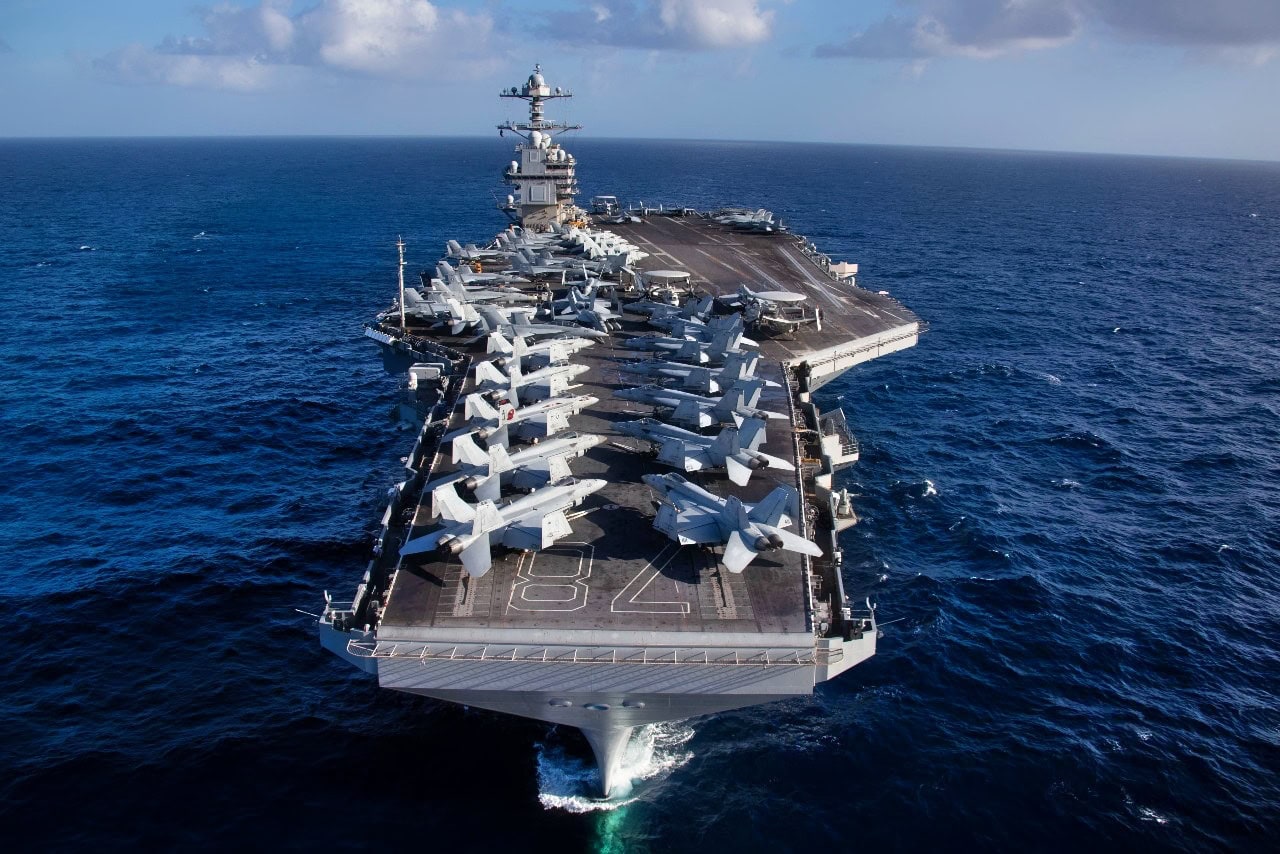
The world’s largest aircraft carrier USS Gerald R. Ford (CVN 78), steams in the Mediterranean Sea, Dec. 24, 2023. The Gerald R. Ford Carrier Strike Group is currently operating in the Mediterranean Sea. The U.S. maintains forward-deployed, ready, and postured forces to deter aggression and support security and stability around the world. (U.S. Navy photo by Mass Communication Specialist 2nd Class Jacob Mattingly)
President Trump previously suggested ditching the Ford-class electromagnetic catapults (EMALS) to cut down on costs and construction time.
However, what if the problem lies with the nuclear propulsion?
Nuclear reactors on aircraft carriers are expensive to produce and require long, costly midlife maintenance programs that keep the carrier out of service for up to five years.
Could the U.S. build and field more carriers if it switched back to conventional propulsion?
Why the U.S. Pursued a Nuclear Carrier Fleet
To answer this question, it is first important to understand why the U.S. switched to a nuclear carrier fleet. During the 1950s, the U.S. was in its “nuclear craze.” The U.S. understood how to harness atomic energy and sought to implement nuclear energy across the board.
During this time, the Navy planned a fully nuclear surface fleet, envisioning nuclear-powered aircraft carriers, destroyers, frigates, and cruisers.
These plans were ultimately sidelined when multiple foreign ports imposed docking restrictions on nuclear-powered vessels.
Despite this, the Navy procured the USS Enterprise (CVN/CVAN-65), the world’s first nuclear-powered aircraft carrier. Enterprise’s success convinced the Navy to pursue more nuclear carriers, namely the Nimitz-class.
For aircraft carriers, nuclear propulsion wasn’t a fad inherited from the 50s nuclear craze; it was a genuine strategic need.
During the height of the Cold War, the U.S. Navy needed to operate worldwide at all times.
Under contemporary doctrine, the Navy had to maintain a constant presence in the world’s oceans to establish control, which necessitated vessels with greater endurance than conventional propulsion can provide.
Nuclear power was the best option for maintaining a large blue-water navy, even if fewer harbors would accept it.
Often overlooked today, the U.S. is an ocean apart from its allies and adversaries.
To maintain a constant presence in, say, the Middle East or the Pacific, aircraft carriers must travel thousands of nautical miles from the continental U.S. and remain at sea for months. Nuclear power was the best option for achieving high endurance in the carrier fleet.
The Strengths and Weaknesses of Nuclear Propulsion
However, when the Cold War ended, the U.S. reduced its defense budget, and for a brief time, the U.S. debated whether it needed to maintain a constant naval presence.
After the 9/11 attacks and the Global War on Terror (GWOT), however, the Navy again needed aircraft carriers that could remain in the Middle East for months on end.
American carrier strike groups played an instrumental part in the GWOT, providing constant air support, controlling vital waterways, and deterring potential enemy activity.
Nuclear power has been a key component enabling and sustaining its global presence.
That said, nuclear power comes at a great cost.
Every nuclear carrier undergoes a Refueling and Complex Overhaul (RCOH), during which its nuclear reactors are refueled, and the ship’s onboard systems are updated.
The process is long and expensive.
A typical RCOH on a Nimitz-class carrier can last three to five years, depending on the ship’s condition.
The French aircraft carrier, Charles de Gaulle, the only other aircraft carrier in the world, requires an RCOH every six years, which typically lasts around 18 months.
The reactors aboard the Ford-class are designed for simplicity to reduce RCOH time, though it is unknown how effective these measures are until the USS Gerald R. Ford completes her RCOH, which is not expected for many more years.
Quantity or Quality?
Carrier production has slowed significantly in the U.S. for two reasons: carriers are becoming more complicated, and the industrial base is shrinking.
A conventional carrier could help address the complexity issue, but wouldn’t solve the current gaps in domestic shipbuilding. Industrial issues have impacted every aspect of the Navy, even its conventional surface fleet.
A non-nuclear carrier would likely be simpler and cheaper to produce.
Still, concerns remain that the shipbuilding industry may not be able to handle an influx of carrier orders, nuclear or not.
On the other hand, one could argue that a new conventional carrier class is exactly what the shipbuilding industry needs to get back on its feet.
More orders could provide more funds and job opportunities for domestic shipbuilding companies and provide the boost needed for an industrial revival.
The main question, however, is whether a nuclear carrier’s capabilities are worth sacrificing for a large quantity of cheaper, less capable ships.
The answer depends on how many losses the Navy expects to take in a confrontation with China.
China has been developing its A2/AD strategy for decades in preparation for a conflict with the U.S. Navy.
It has built up its arsenal of hypersonic anti-ship missiles, one or two of which could render a carrier combat ineffective if hit at the right places.
For a war with China, a large fleet of conventional carriers might be ideal. In all other circumstances, however, a nuclear carrier is a better option in almost every regard.
About the Author: Isaac Seitz
Isaac Seitz, a Defense Columnist, graduated from Patrick Henry College’s Strategic Intelligence and National Security program. He has also studied Russian at Middlebury Language Schools and has worked as an intelligence Analyst in the private sector.