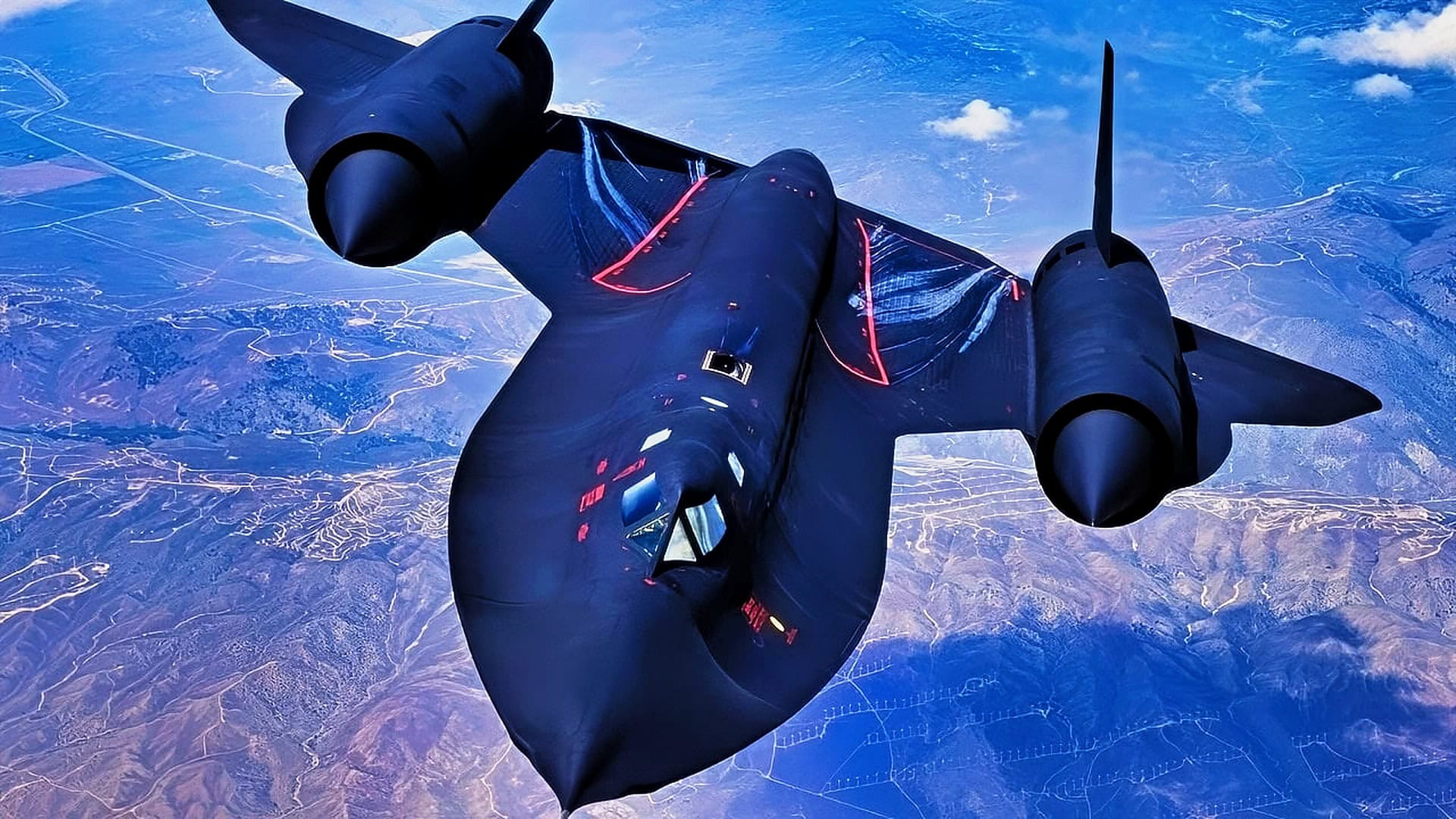
Summary and Key Points: The SR-71 Blackbird’s first operational mission, on March 21, 1968, took its two-man crew over Hanoi and Haiphong at 78,000 feet and Mach 3.17. Fog below the tanker tails closed Kadena, so the secret jet took 25,000 pounds more fuel and diverted to Taiwan flying as a KC-135, waited half an hour for C-130s to clear a hangar, and drew about 500 spectators to the fence. The flight stayed secret for decades.
The Lockheed SR-71 Blackbird Heads to Taiwan?
Lockheed’s SR-71 Blackbird remains one of the most impressive planes the military ever fielded. That’s why, at least several times a year, 19FortyFive staff go out to photograph and film this amazing spy plane to show you what it looks like today. In fact, we have many of those original photos and videos in this article.
A high-altitude, supersonic reconnaissance bird, the SR-71 was an essential platform in waging the Cold War.
It served for decades, and at least one unit retired in 1998 might be employed again by NASA soon for supersonic experiments. It has a storied history, much of which remains unknown because its work was classified.
According to Aviation Geek Monthly, an online trade publication, on March 21, 1968, the Blackbird encountered a real threat.
Fog.
Operating from Kadena Air Base on Okinawa, Japan, the Blackbird was assigned its first operational reconnaissance mission over North Vietnam.
United States Air Force Major Jerome F. “Jerry” O’Malley piloted the plane while his Reconnaissance Systems Officer, Captain Edward D. Payne, rode along.
The Mission
Flying at around 78,000 feet and at Mach 3.17, the Blackbird entered some of the most heavily defended airspace in the world at that time over North Vietnam.
Major O’Malley flew the Blackbird over Haiphong and Hanoi, snapping detailed surveillance photos of the territory below, collecting radar and electronic intelligence on North Vietnamese military installations the whole time.
The Blackbird successfully conducted its mission, even with the North Vietnamese air defenses being so robust, and left North Vietnamese territory safely.
The Blackbird flew to Thailand, where a KC-135Q aerial refueling tanker refueled it in the air.
The Blackbird received 80,000 pounds of specialized JP-7 fuel from two tankers before accelerating to operational speed and conducting another reconnaissance run over North Vietnam.
Afterward, the crew turned their plane toward Kadena, intending to return home.
The Fog of War
The only problem was that as the Blackbird approached its home base, visibility around the base had been reduced so badly that personnel reported fog extending below the tails of parked tanker aircraft.
O’Malley tried a radar-assisted approach, but he still could not establish visual contact.
So, the pilot aborted the landing at Kadena.
Fuel reserves were diminishing, so the crew requested assistance from a nearby KC-135.
They received another 25,000 pounds of fuel.
Payne then received an order to deviate to an emergency landing spot in Taiwan.
But that created its own set of problems. In 1968, the SR-71 Blackbird program was one of America’s best-kept secrets.
Its arrival in Taiwan would attract unwanted attention–especially from Chinese intelligence that routinely monitored US military communications.
Two KC-135s accompanied the Blackbird to Taiwan.
They created a ploy to keep the Blackbird’s true identity secret.
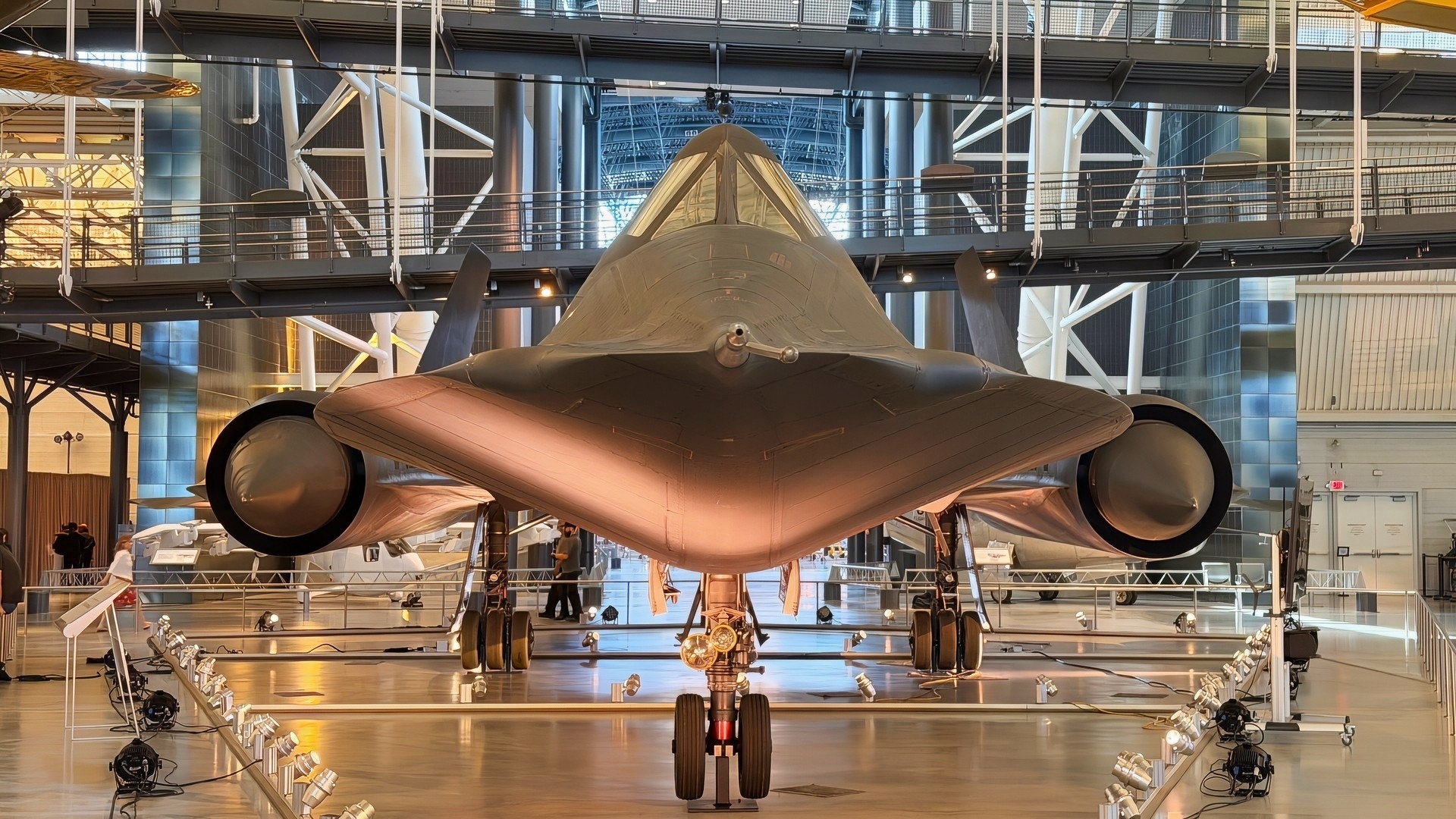
SR-71 Blackbird Sideview. Smithsonian Display Photo Taken by 19FortyFive on 9/30/2026.
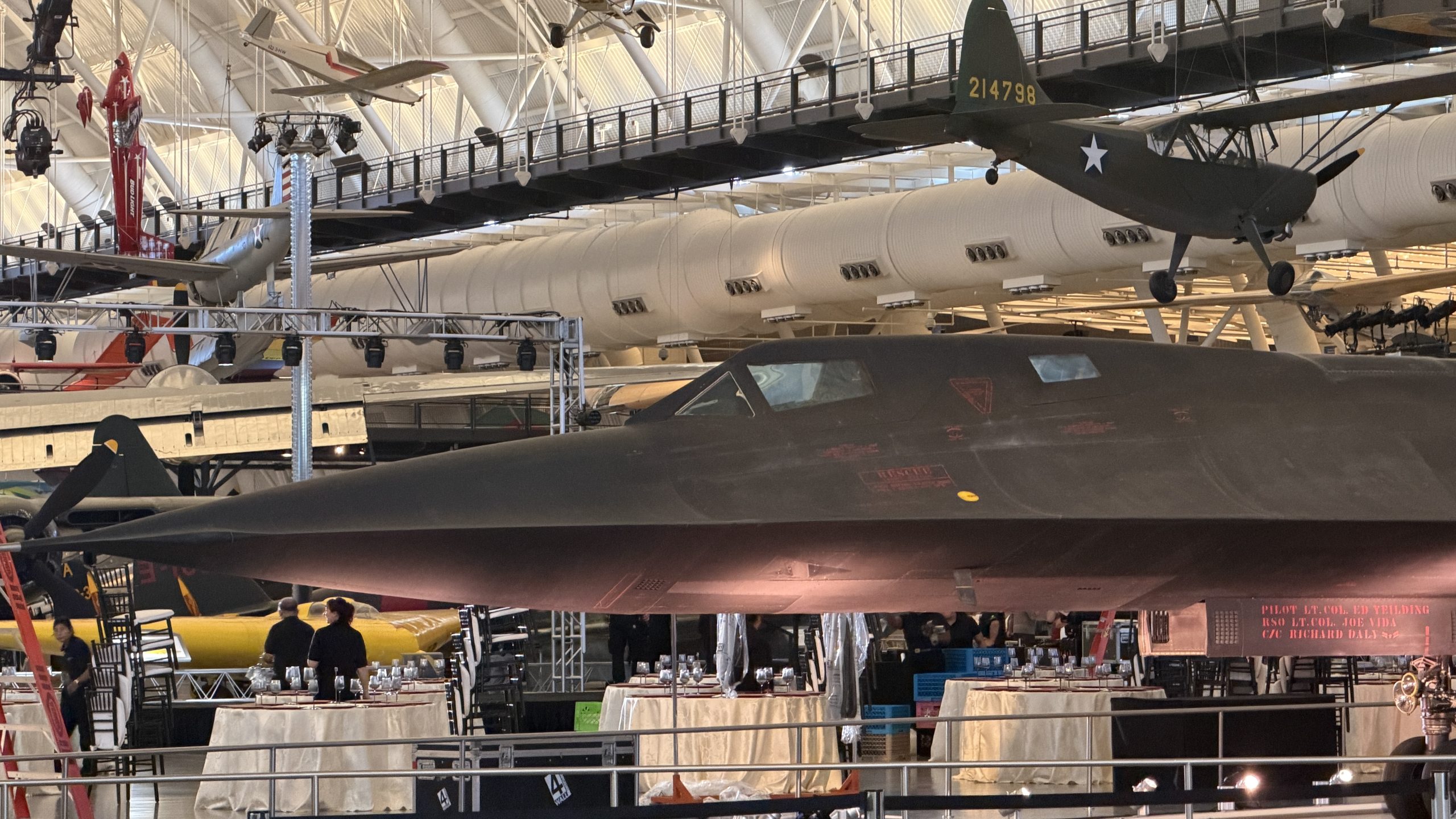
SR-71 Blackbird Sideview. Smithsonian Display Photo Taken by 19FortyFive on 9/30/2026.
So, the Blackbird adopted a KC-135 call sign and flew as the aircraft in a three-plane formation.
The Blackbird headed to Ching Chuan Kang Air Base in Taiwan and landed successfully.
O’Malley then taxied his SR-71 between the two KC-135 tankers to continue the ruse for as long as possible.
But that arrangement confused the air traffic controllers, who immediately saw an unusual black–almost science fiction-looking–aircraft identifying itself with a tanker call sign.
The crew then requested secure hangar space, but the airfield’s facilities were occupied by C-130 Hercules transport planes.
Base personnel took half an hour to move the C-130s to clear space for the Blackbird in a more enclosed area.
But the plane had already drawn attention from locals outside the base, who saw an unusual black plane sitting on the tarmac.
Around 500 Taiwanese spectators had gathered along the fence to observe the plane while it waited for the C-130s to be cleared out of the hangar.
Mission Accomplished
The Blackbird spent two nights in Taiwan before returning to Kadena.
Even though the Blackbird risked exposure in Taiwan, very little information got out beyond the air base there.
What’s more, the SR-71’s mission was important.
Using its side-looking airborne radar, the SR-71 identified North Vietnamese artillery positions around Khe Sanh, along with a large truck staging area supporting those weapons.
Although the mission was complicated by something as simple as fog, the Blackbird still succeeded, and the mission remained secret for decades.
About the Author: Brandon J. Weichert
Brandon J. Weichert is the Senior National Security Editor at 19FortyFive.com. He also manages The Weichert Brief on Substack. Weichert is the co-host of The Mario Nawfal Show on Twitter/X. He is the author of four bestselling national security books, most recently A Disaster of Our Own Making: How the West Lost Ukraine (Encounter Books). His next book, Fortress Americas: A New Monroe Doctrine (Tucker Carlson Books), is due out December 8. Follow him via Twitter/X @WeTheBrandon.