
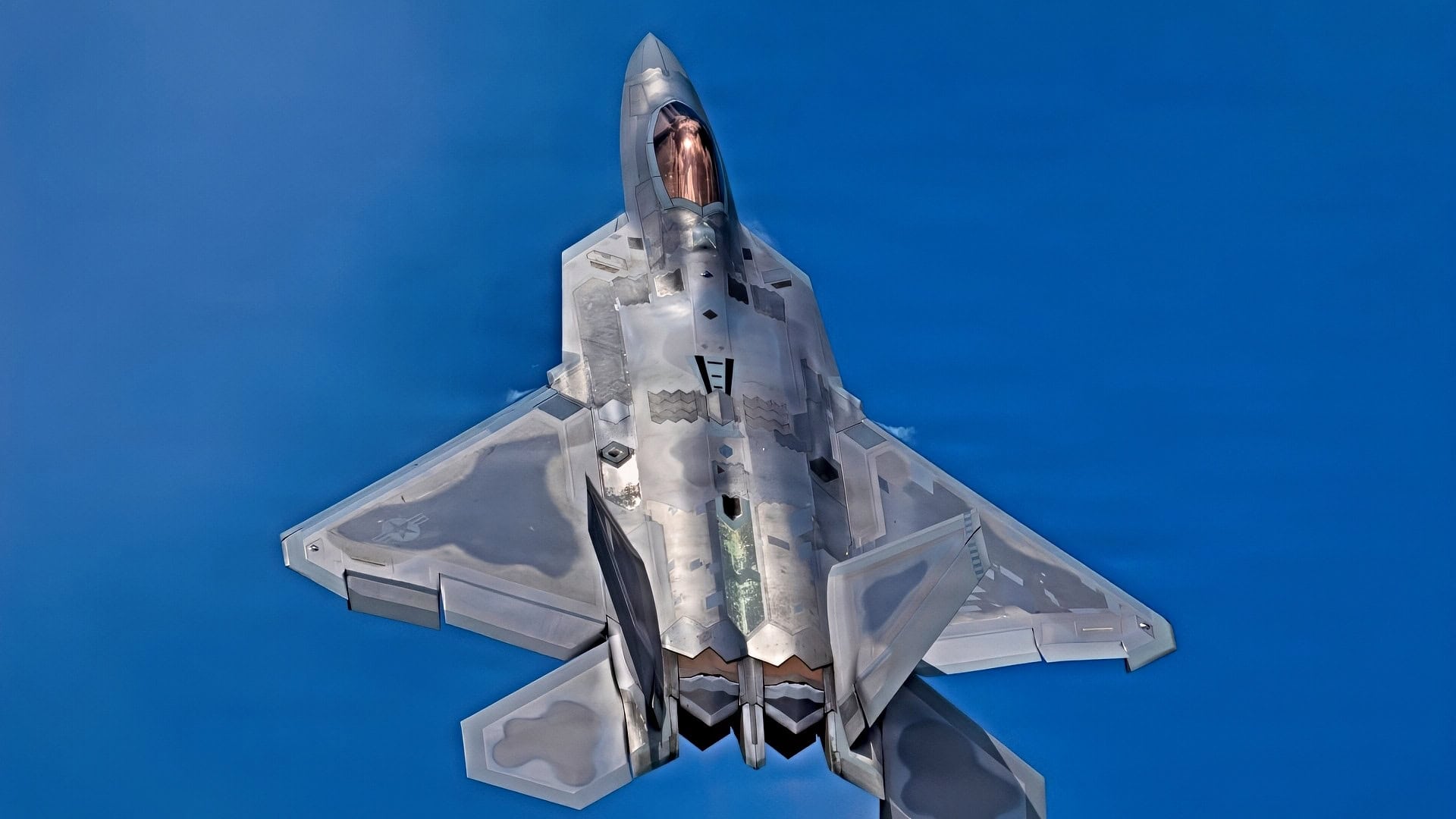
Summary and Key Points: The F-22 Raptor is one of the most capable air superiority fighters ever built, but its combat radius is only about 529 miles; the 1,840-mile ferry range needs external tanks that compromise its stealth.
The F-22 Range Challenge
The Lockheed Martin F-22 Raptor is widely regarded as one of the most capable air superiority fighters ever built, combining low-observable stealth technology, powerful twin engines, advanced avionics, and exceptional maneuverability.
The F-22 Raptor was designed to defeat enemy fighters and establish air superiority in contested airspace.
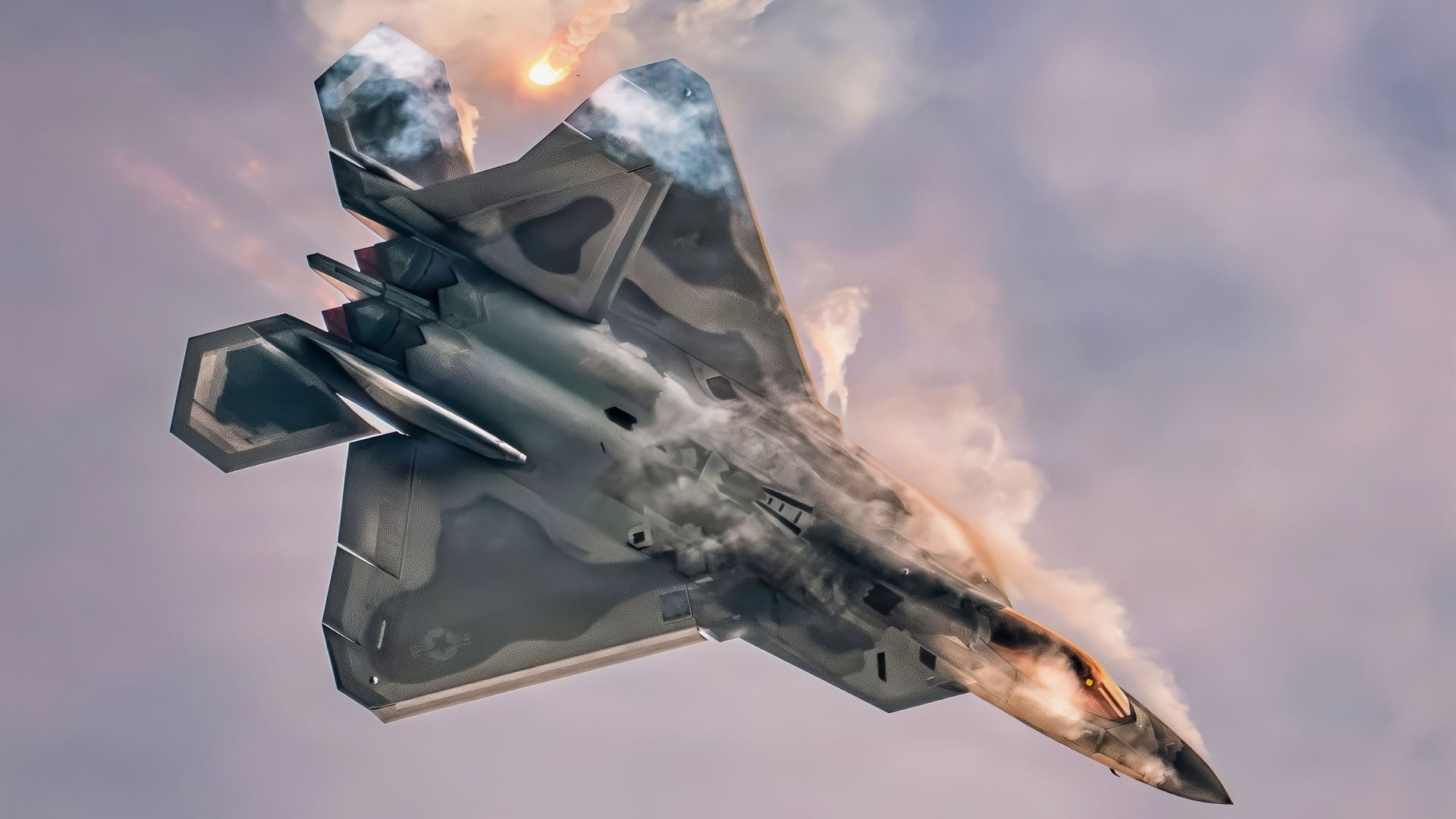
U.S. Air Force Capt. Nick “Laz” Le Tourneau, pilot and commander of the F-22 Raptor Aerial Demonstration Team, performs an aerial demonstration for the Chicago Air and Water Show in Chicago, Illinois, August 16, 2026. Le Tourneau showcased the aircraft’s performance capabilities through a series of planned maneuvers designed to highlight its speed, agility and operational employment. (U.S. Air Force photo by Staff Sgt. Mary Bowers)
Yet the fifth-generation jet has a deeply consequential limitation that has nothing to do with dogfighting performance: combat radius.
Relative to other fighters, the F-22 has a relatively limited combat radius, which limits how far it can operate from its home base without aerial refueling.
This was an acceptable tradeoff when the F-22 was designed, with the Soviet threat in mind, as an aircraft intended to operate in relatively tight-quarter European battle spaces.
But with the shift toward the Indo-Pacific and its far-flung bases and targets, the F-22’s combat radius is suddenly inadequate—a severe limitation in a region where military operations could span enormous distances.
F-22 Specifications
The F-22 entered operational service with the US Air Force in 2005 after being developed throughout the late 1980s and 1990s.
Lockheed Martin developed the F-22 with Boeing as a major partner, and it is powered by two Pratt & Whitney F119-PW-100 turbofan engines.
It is capable of speeds exceeding Mach 2 (and supercruise—the ability to maintain supersonic flight without afterburners).
The F-22’s internal weapons bay preserves stealth by carrying missiles inside the aircraft.
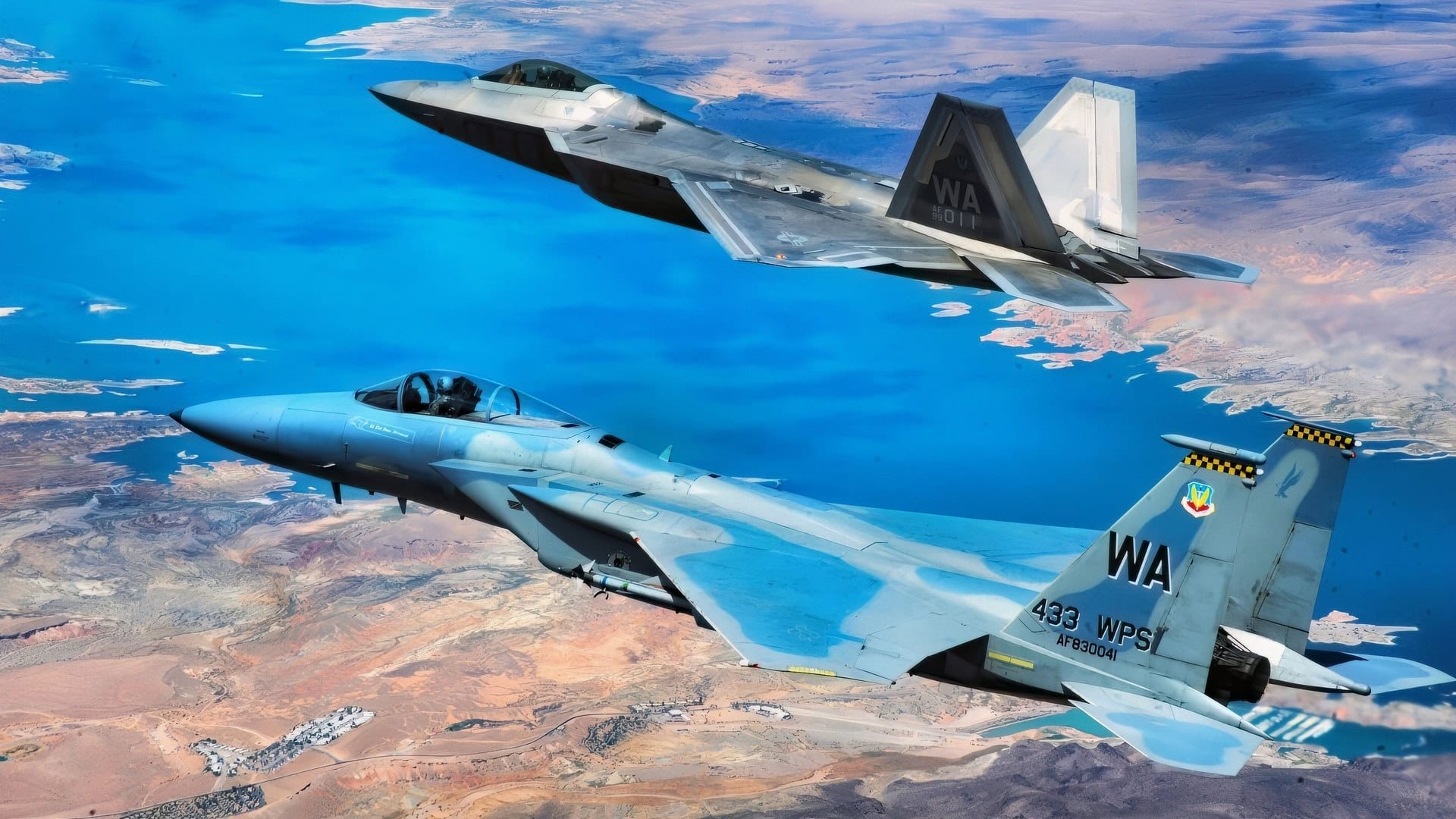
(U.S. Air Force photo/ Master Sgt. Kevin J. Gruenwald) released
Yet the jet’s combat radius is only about 529 miles, with a ferry range of 1,840 miles when using external fuel tanks (though external fuel tanks compromise stealth performance).
Combat radius refers specifically to a mission-dependent operating distance that allows an aircraft to fly to an area, perform its mission, and return.
Ferry range, meanwhile, describes the maximum relocation distance under different conditions.
Why Range Matters
The F-22 was conceived primarily to defeat advanced Soviet aircraft during the Cold War, and its design priorities were stealth, acceleration, maneuverability, and air superiority performance.
But today, 20 years after making its debut, the F-22 could be used in a potential confrontation with China, which presents a different geographic challenge.
The western Pacific features enormous distances between American bases and potential combat zones. For example, Guam is about 1,500 nautical miles from Taiwan, far beyond the F-22’s unfueled combat radius.
So American fighters operating from Guam would therefore require aerial refueling or forward deployment to reach all areas.
Bases in Japan and elsewhere along the First Island Chain are considerably closer but could face missile attack during a conflict.
The result is a strategic problem: aircraft must either operate from vulnerable forward bases or rely on lengthy missions supported by tankers. Either way, it is not ideal.
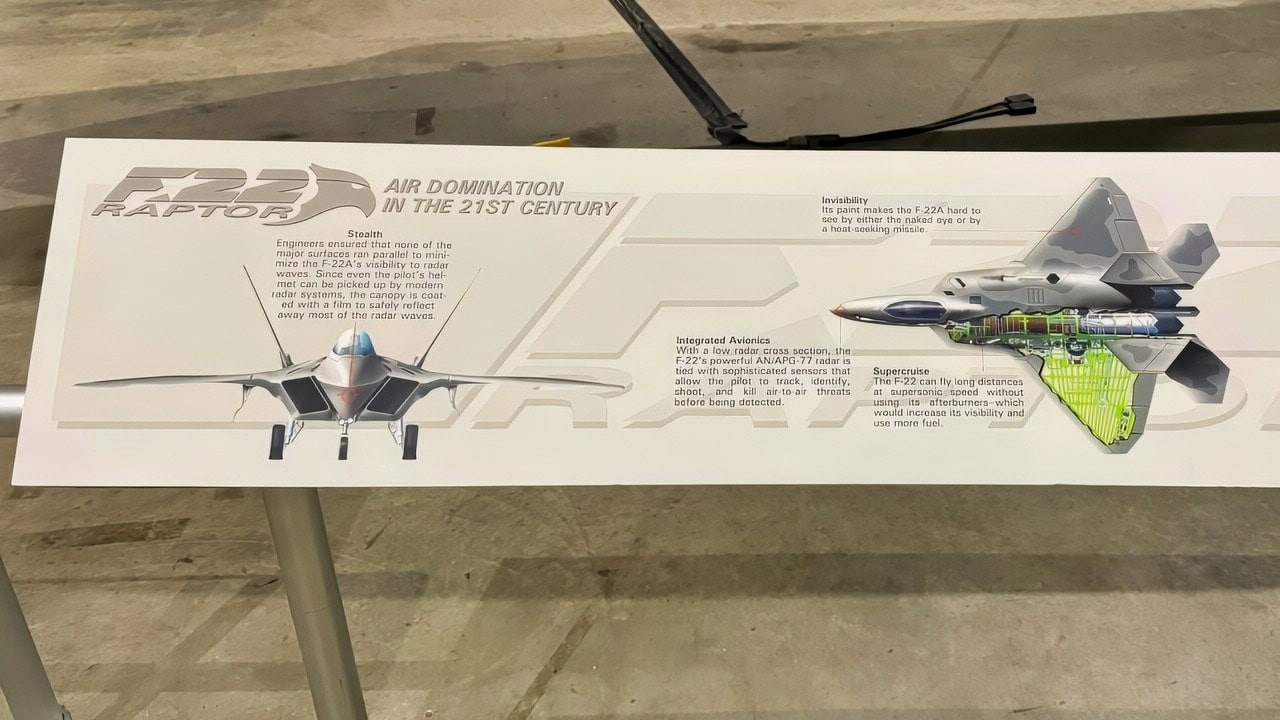
F-22 Raptor Diagram from National Museum of the U.S. Air Force. Image Credit: Harry J. Kazianis.
Aerial Refueling?
The US Air Force can extend the F-22’s operating range with aerial refueling, thanks to tankers like the KC-135 Stratotanker and KC-46 Pegasus.
However, tankers are large, slow, and vulnerable—and China’s A2/AD system was designed to target tankers and other enablement aircraft, indirectly limiting the ability of high-end fighters like the F-22 to operate in theater.
Add More Fuel?
The F-22 can carry two external 600-gallon fuel tanks to extend its range.
However, external fuel tanks increase drag and compromise the aircraft’s stealth performance.
Pilots can jettison external fuel tanks before entering contested airspace, allowing the aircraft to return to its original, cleaner configuration.
But external tanks do not eliminate the underlying need for fuel or supporting infrastructure. Meanwhile, enlarging the aircraft’s internal fuel capacity would require substantial structural redesign, as designers would have to balance fuel capacity against weight, aerodynamic performance, weapons carriage, and internal volume.
The F-22’s configuration reflects engineering decisions made decades ago against a different strategic backdrop.
The jet’s limited combat radius is not a simple fix but an ingrained problem integrated into the aircraft’s overall design.
The F-22’s range limitations are part of why the Air Force is interested in longer-range next-generation combat aircraft.
The Next Generation Air Dominance (NGAD) program seeks to develop capabilities better suited to Indo-Pacific combat. The NGAD’s F-47 is likely to emphasize far greater range than its predecessor, the F-22.
About the Author: Harrison Kass
Harrison Kass is a writer and attorney focused on national security, technology, and political culture. His work has appeared in Tablet, City Journal, The Hill, The Spectator, and The Cipher Brief. He holds a JD from the University of Oregon and a master’s in Global & Joint Program Studies from NYU—more at harrisonkass.com.