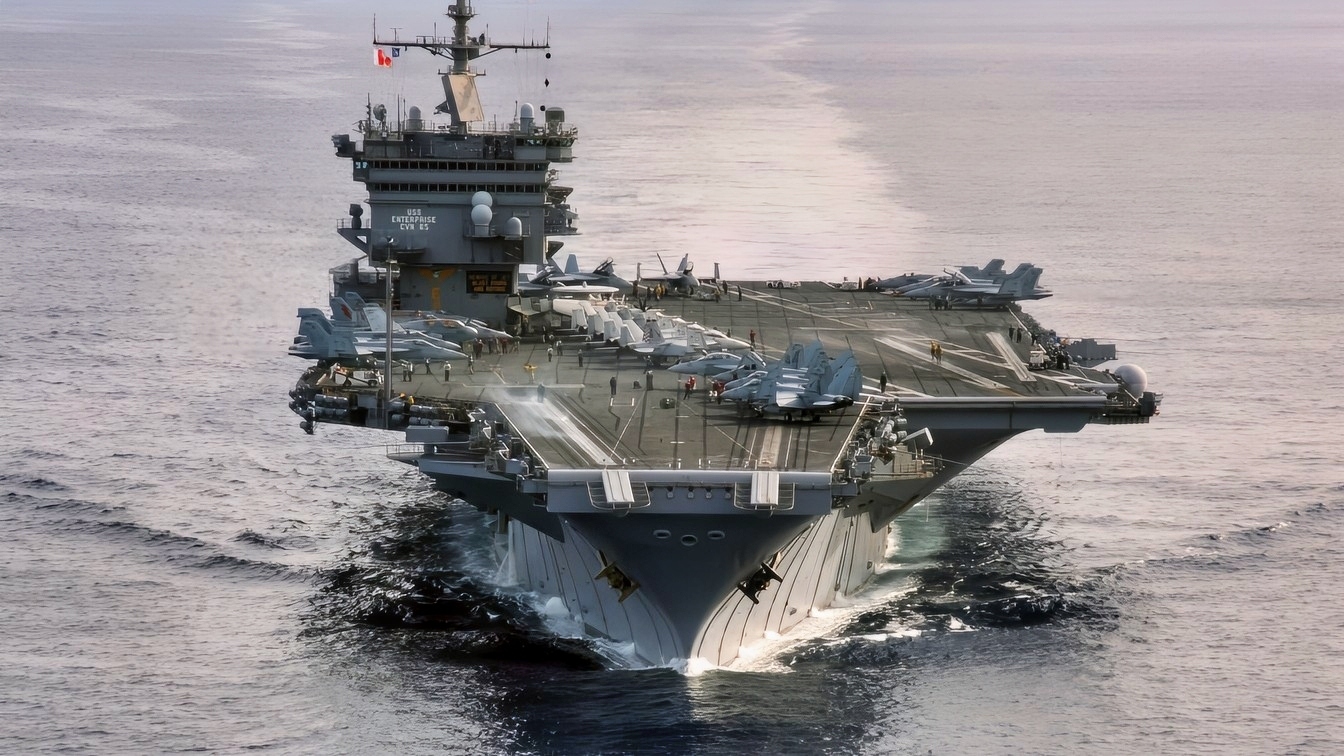
Summary and Key Points: On November 2, 2026, the former USS Enterprise (CVN-65) left Newport News Shipbuilding for Mobile, Alabama, where the world’s first nuclear-powered aircraft carrier will be dismantled. Planned as the first of six, she became a class of one after Congress balked at the cost. Enterprise was 1,088 feet long, displaced roughly 93,284 tons at full load, and ran on eight A2W reactors where later carriers use two.
Nuclear Aircraft Carrier USS Enterprise Is Saying Goodbye
On November 2, 2026, the former USS Enterprise (CVN-65) departed Newport News Shipbuilding in Virginia and began her final voyage to Mobile, Alabama.
Enterprise, or “Big-E,” as she is lovingly known, made history as the world’s first nuclear-powered aircraft carrier. Commissioned in 1961, the carrier faithfully served the U.S. Navy for 51 years.
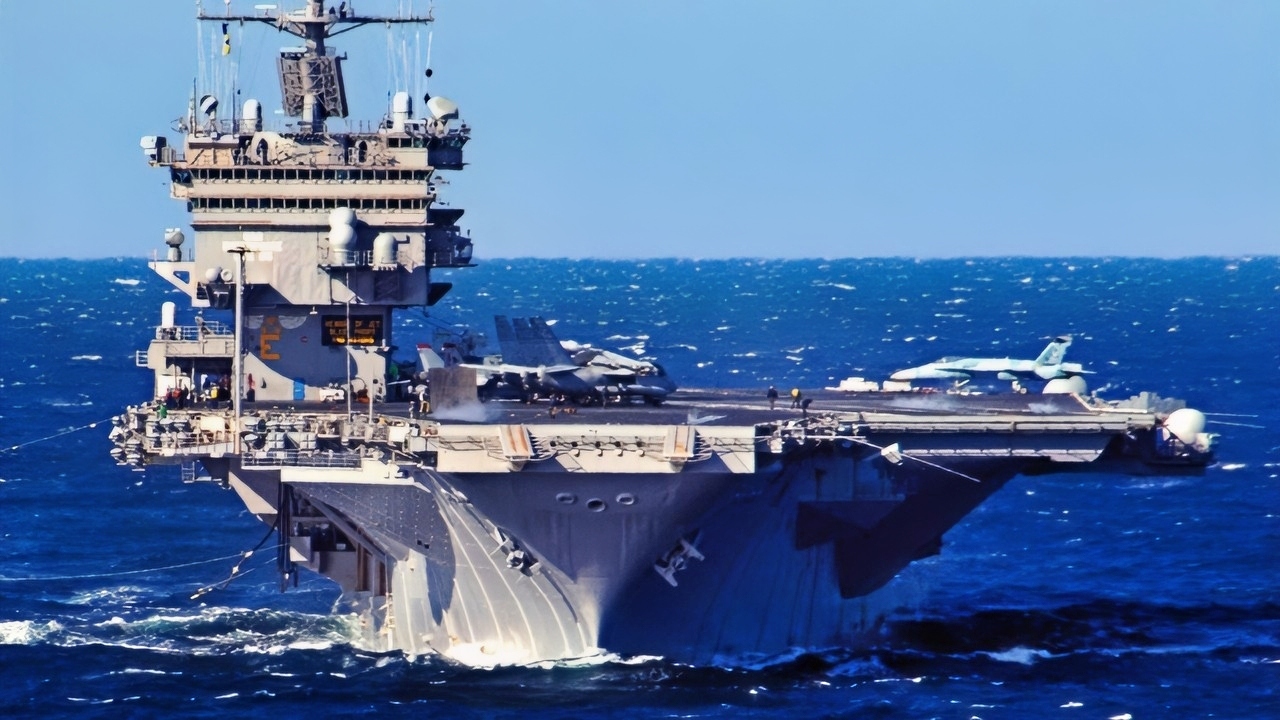
Atlantic Ocean (Feb. 6, 2006)– The Guided-Missle Destroyer USS MCFAUL (DDG 74) steams alongside the nuclear-powered aircraft carrier USS ENTERPRISE (CVN 65) for a refueling at sea. ENTERPRISE is currently underway in the Atlantic Ocean conducting carrier qualifications. Official US Navy photo by Photographer’s Mate 3rd Class Josh Kinter.
She saw service during multiple pivotal moments in modern American history, including the Cuban Missile Crisis, the Vietnam War, and various conflicts in the Middle East.
She watched as her air wing evolved from the A-4C Skyhawk to the F/A-18E/F Super Hornet. Now, she is on her way to be scrapped, ending a long and eventful chapter in U.S. naval history.
A Lookback on Enterprise’s Career
Enterprise was built under the SCB-160 project. She was originally intended to be the first of six carriers. However, due to her massive construction cost, Congress decided to purchase only one ship of the class. As the first nuclear-powered carrier, Big-E pioneered nuclear propulsion technology.
Unlike her successors, which use two nuclear reactors, Enterprise is powered by eight A2W nuclear reactors that replace traditional boilers.
At the time of her commissioning, she was the largest and heaviest warship in the world, with a full-load displacement of roughly 93,284 tons and a length of 1,088 feet.
She remained the largest warship until the arrival of the USS Nimitz (CVN-68) and later the USS Gerald R. Ford (CVN-78). Laid down in 1958, Enterprise formally entered service in January 1961.
A year after joining the fleet, Enterprise responded to her first international crisis. During the Cuban Missile Crisis, she joined the U.S. naval blockade around Cuba, taking part in one of the closest calls of the Cold War.
In 1965, Big-E was sent to Vietnam, becoming the first nuclear-powered carrier to perform combat missions. She made multiple deployments to Vietnam, and by 1968, she had launched 12,246 sorties, 9,182 of which were combat sorties.
In 1969, she was slated to head back to Vietnam when an Mk-32 Zuni rocket on a parked F-4 Phantom exploded and started a large deck fire. After repairs, she continued her operations in Vietnam until the war’s end in 1975.
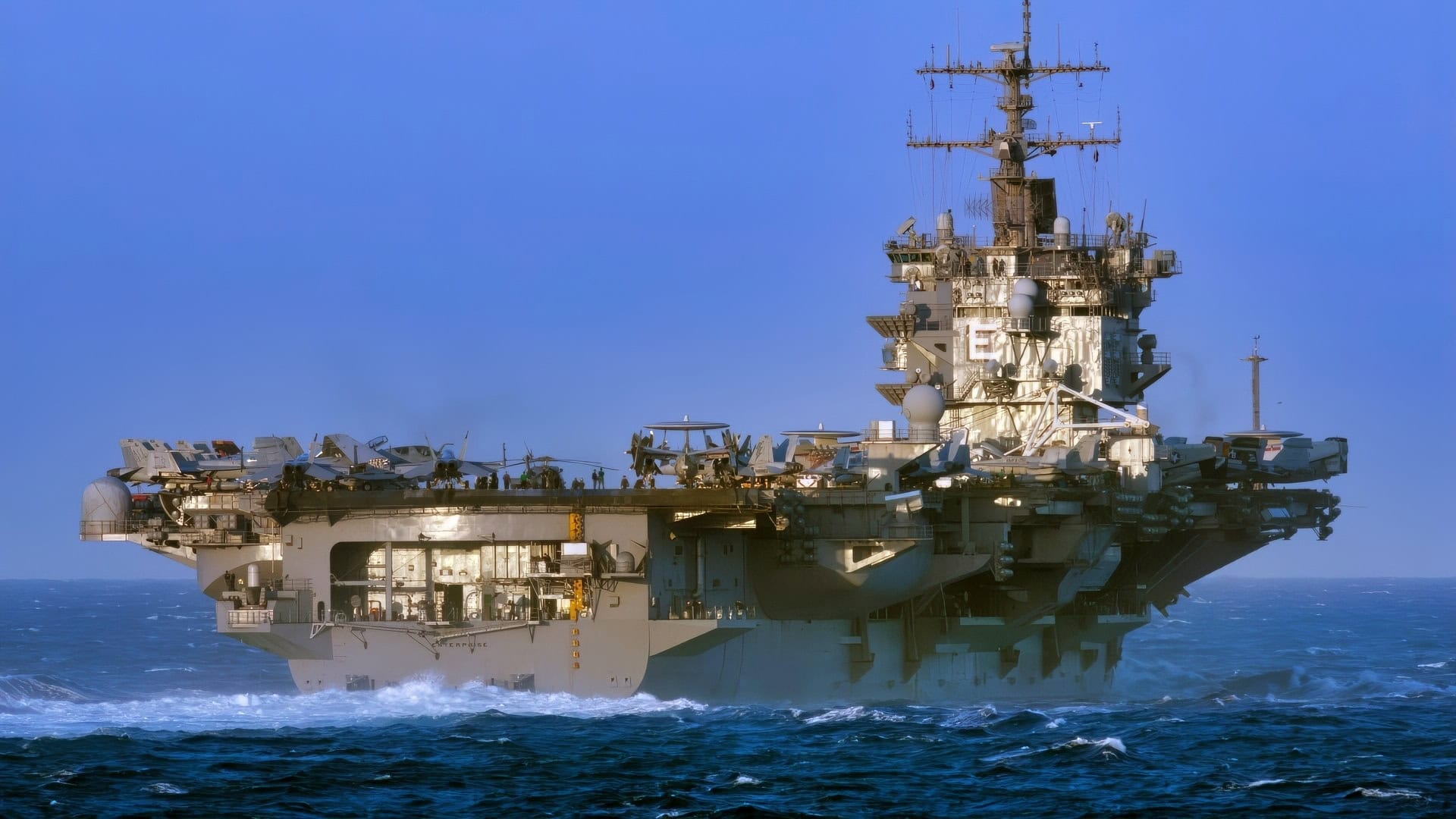
STRAIT OF GIBRALTAR (Oct. 23, 2012) Aircraft carrier USS Enterprise (CVN 65) transits the Strait of Gibraltar. Enterprise is completing a regularly scheduled deployment to the U.S. 5th and 6th Fleet areas of responsibility in support of maritime security operations and theater security cooperation efforts.(U.S. Navy photo by Mass Communication Specialist 3rd Class Daniel Meshel/Released)
Throughout the 1990s and early 2000s, Enterprise participated in numerous combat deployments to the Middle East, providing air support for Operations Enduring Freedom, Desert Fox, and Iraqi Freedom.
Serving in a Rapidly Changing World
The world changed dramatically during Enterprise’s service.
One of the most notable changes was to the carrier’s air wing.
During the mid-to-late Cold War, aviation technology advanced rapidly. During the 1960s, her air wing consisted of A-4C Skyhawks, F-4B Phantom IIs, and RA-5C Vigilantes.
In the 1970s, however, Enterprise became the first carrier to field and deploy the F-14 Tomcat.
Other aircraft aboard the carrier included the A-6 Intruder, the A-7 Corsair II, and the S-3 Viking.
By the end of her service life, Enterprise’s air wing was comprised of the EA-6B Prowler EW aircraft, the E-2C Hawkeye early-warning aircraft, the C-2 Greyhound cargo plane, the F/A-18 Hornet, and the F/A-18E/F Super Hornet.
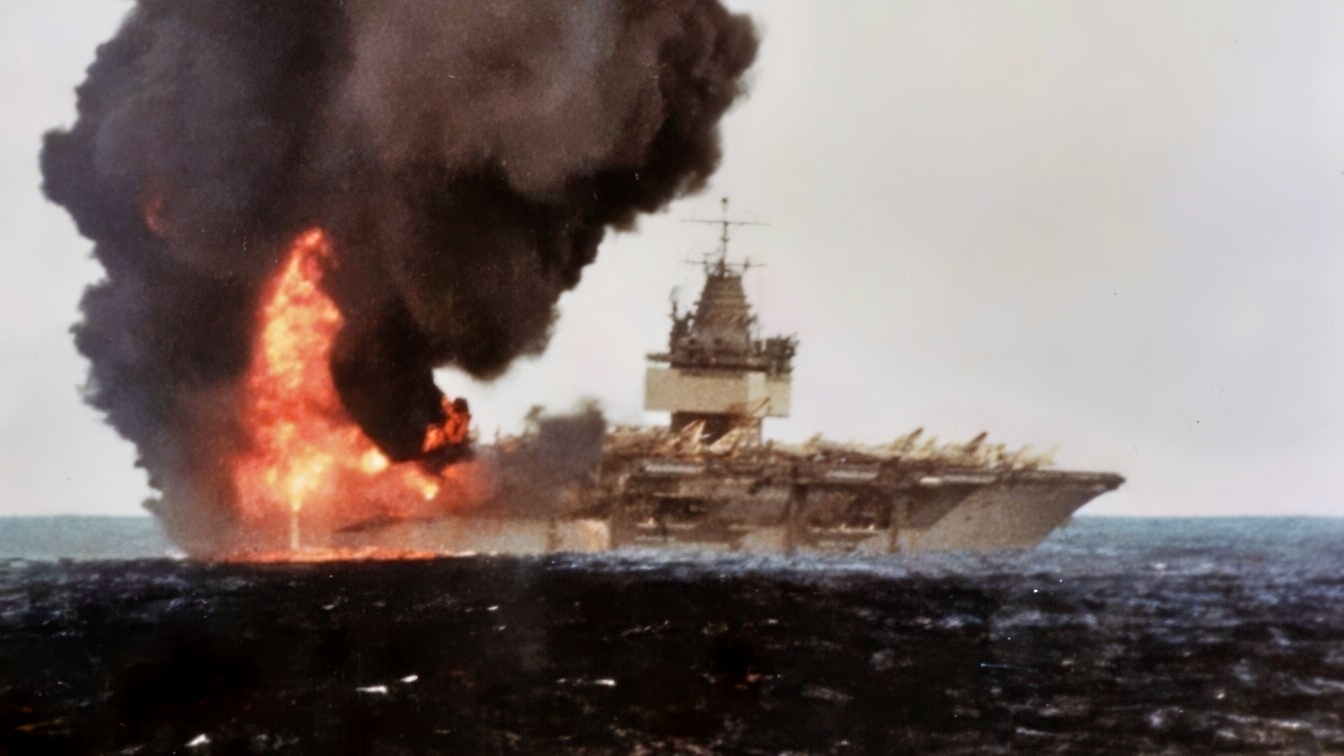
USS Enterprise Nuclear Aircraft Carrier US Navy
The technology aboard Enterprise was also heavily modified throughout the carrier’s life.
She was one of the first carriers in the U.S. Navy to receive a phased-array radar: the Hughes SCANFAR. The SCANFAR suite was comprised of two main radars, the AN/SPS-32 and the AN/SPS-33.
The system was implemented aboard Enterprise and the nuclear-powered guided-missile cruiser USS Long Beach (CGN-9).
Although SCANFAR was ahead of its time, the system was later replaced by the more reliable AN/SPS-48 and AN/SPS-49 3D/2D air-search radars during a refit from 1979 to 1982.
SCANFAR and its use on Enterprise provided valuable feedback for the Navy, which in turn led to the development of the AN/SPY-1 radar used in the Aegis system.
Out With the Old and In With the New
By the 2010s, the carrier was starting to show her age.
Maintaining Enterprise was becoming more costly for the Navy, and the ship was nearing the end of her lifespan. In 2012, the carrier began her last deployment.
She sailed 81,000 miles and launched more than 2,000 sorties before returning to her homeport in Norfolk, Virginia, for the last time.
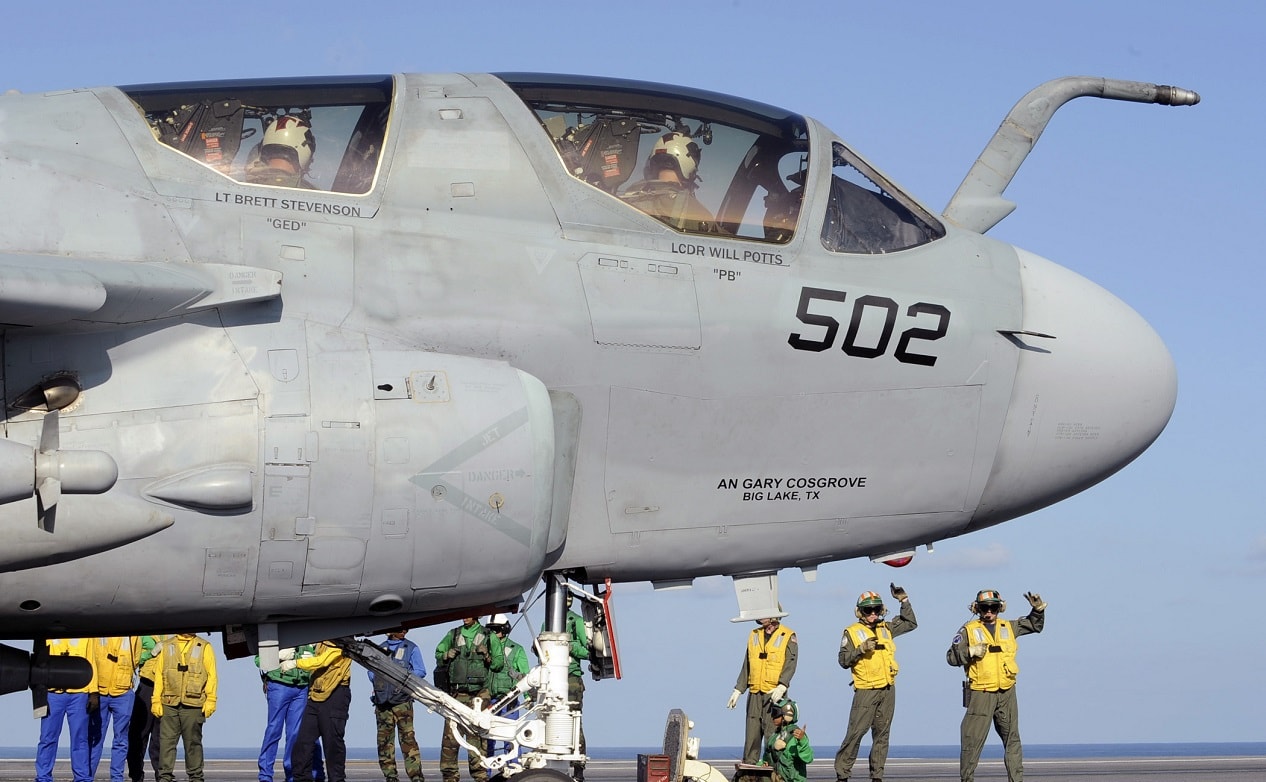
An EA-6B Prowler, assigned to the “Shadowhawks” of Electronic Attack Squadron 141 prepares to launch from a catapult during flight operations aboard the Nimitz-class aircraft carrier USS Theodore Roosevelt during carrier qualifications.
After her deployment, she was officially deactivated in December of that year.
With eight nuclear reactors powering the carrier, defueling Enterprise required several years and around $1.3 billion.
She was finally decommissioned in 2017.
In 2026, a dispute arose between the company NorthStar and Huntington Ingalls Industries over who would dismantle the carrier.
The dispute was officially settled after the Navy awarded the contract to NorthStar and HII dropped its legal charges in October.
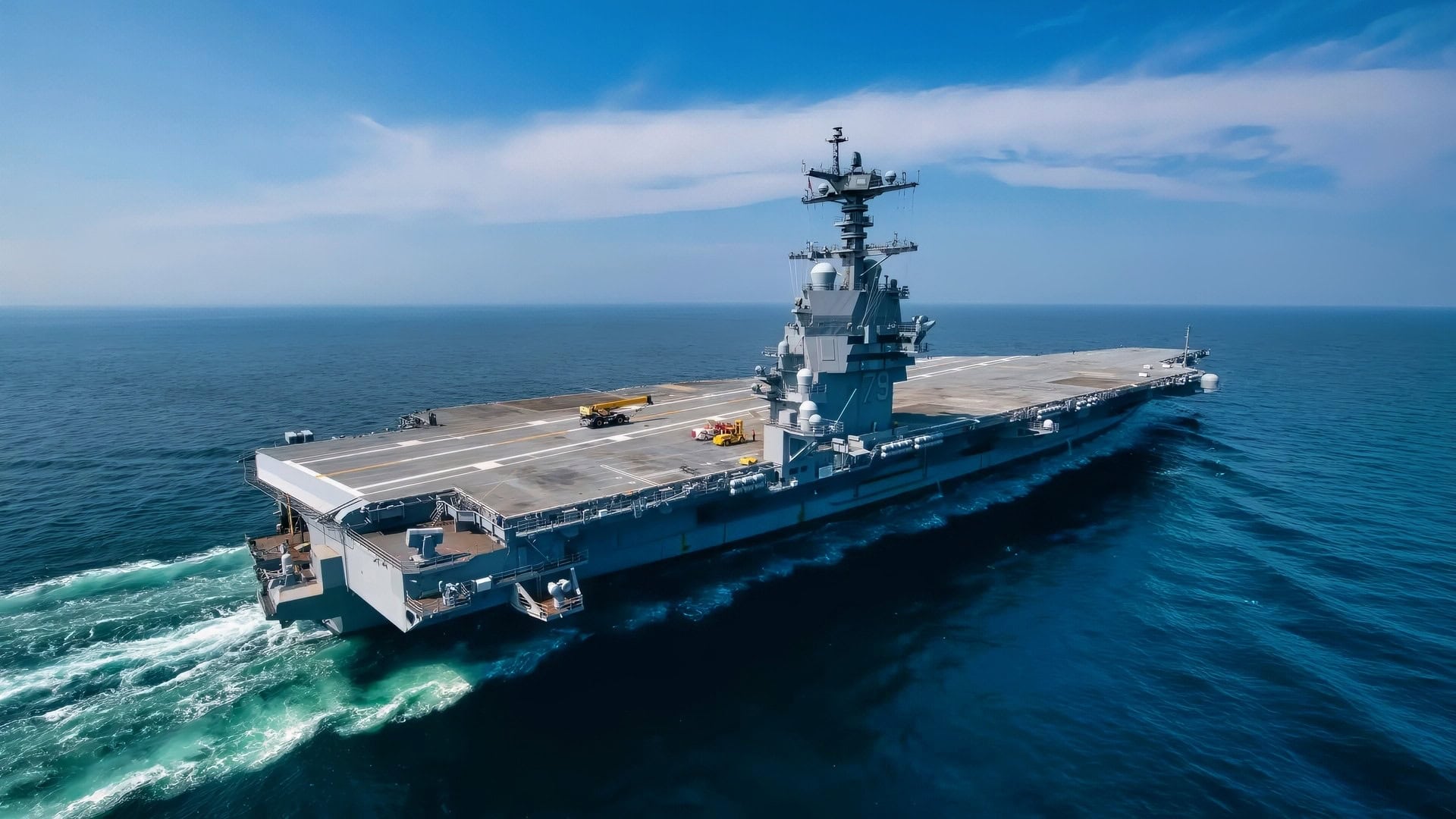
Ford-class Aircraft Carrier Industry Photo Handout
Although Big-E is set to be scrapped, her replacement is already underway.
The third ship of the Gerald R. Ford class (CVN-80) was named Enterprise in 2012, after CVN-65 was deactivated.
She will be the ninth ship in U.S. naval history to bear the name Enterprise.
She was laid down in 2022 and is expected to join the fleet in 2031. Hopefully, she will live up to the reputation of her ancestors and serve as faithfully as her predecessor.
About the Author: Isaac Seitz
Isaac Seitz, a Defense Columnist, graduated from Patrick Henry College’s Strategic Intelligence and National Security program. He has also studied Russian at Middlebury Language Schools and has worked as an intelligence Analyst in the private sector.