
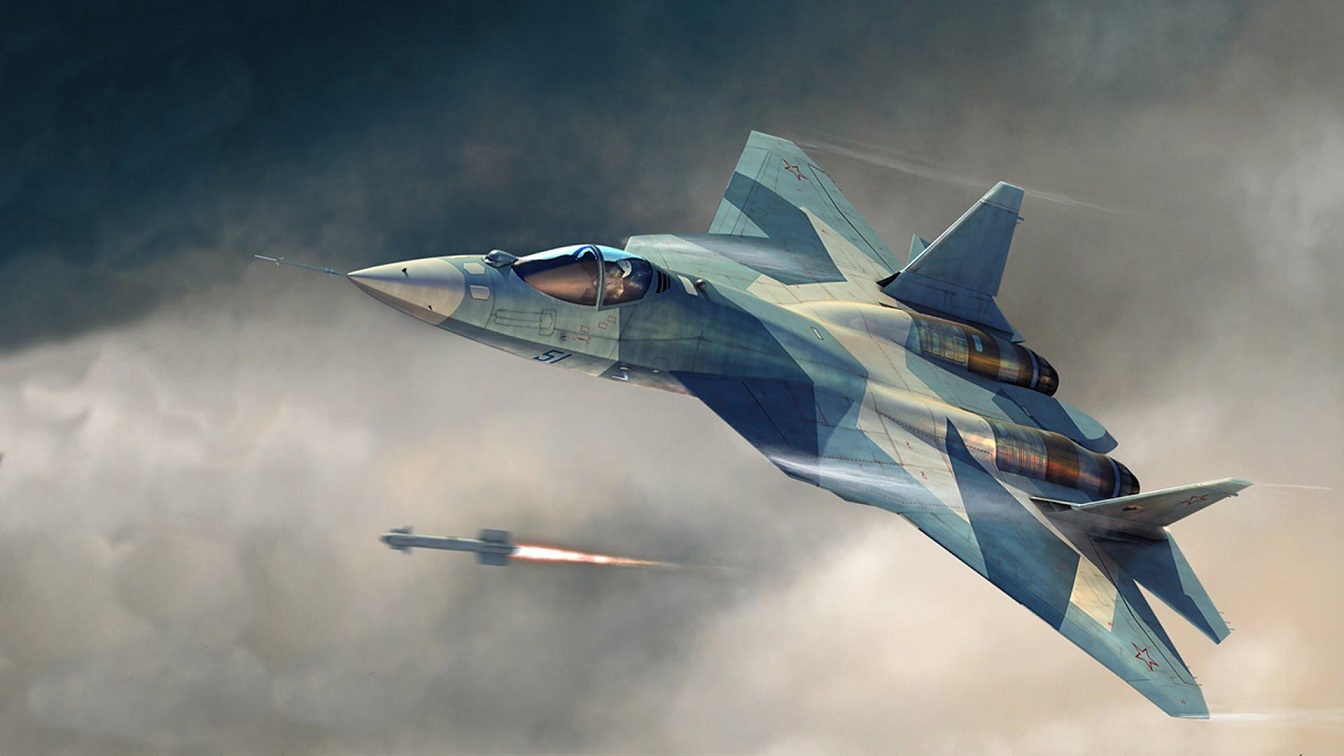
Key Points: Russia’s Su-57 Felon aims to be a fifth-generation stealth fighter capable of matching Western jets. It’s armed with advanced missiles, a 30mm cannon, and can reach Mach 2.45, but Russia’s economic strain and limited industrial capacity have hampered full-scale production.
-With estimates of only a handful to possibly a dozen in service, the Su-57 stands little chance against a U.S. fleet of over 1,000 F-35s and 187 F-22s. Its radar cross-section is significantly larger than its American rivals, calling into question how truly “stealth” it is.
-Without a major production breakthrough, the Felon will remain a niche—rather than decisive—combat aircraft.
Russia’s Su-57: Impressive Specs, but Is It Really Stealth?
The Russian Air Force prides itself on building fast, maneuverable fighter jets, and the Su-57 Felon is no exception.
Say what you will about Russian manufacturing, but they sure do “build ‘em pretty.”
Russia’s fifth-generation “stealth” fighter is a twin-engine multi-role aircraft developed by Sukhoi. The Felon (code-named by NATO) is capable of aerial combat, ground attack, and maritime strikes. The Su-57 incorporates stealth, supermaneuverability, supercruise, integrated avionics, and large payload capacity.
The Russian Ministry of Defense designed and developed the Su-57 to replace the Su-27 and MiG-29 fighter aircraft. Russia plans to export the aircraft eventually. However, after years of development, the biggest flaw with the Su-57 remains money.
The Russian economy is so bad that only a handful of operational Su-57s are available.
Brief Su-57 Felon History and a Fatal Flaw
The then-Soviet military back in 1979 recognized it needed an aircraft that would fill the multi-role platform to supersede the MiG-29 and the Su-27 aircraft. It was called the “Fighter of the 90s.”
However, after the Soviet Union collapsed in 1991, funds were so short they didn’t start the program with the first prototype until 2000, nearly a decade later. Manufacturers developed various designs, and once again, short of money, Russia sought an international partner to help pay for the project.
Russia and India signed a contract in 2010 for Sukhoi and Hindustan Aeronautics Limited (HAL) to develop a derivative of the PAK FA jointly called the Fifth Generation Fighter Aircraft (FGFA). Each country was to pay $6 billion, and the development was expected to take 8-10 years.
However, by 2014, the partnership began to crack. The Indian Air Force started voicing concerns over performance, especially the stealth feature, cost, and workshare. India found that the aircraft did not meet its requirements and left the partnership in 2018.
Leading up to India’s exit, the first flight took place in 2010. By 2013, Russia had built five prototypes, but the results weren’t satisfactory. Stress cracks were already showing on the aircraft frames. After redesign and testing, the aircraft was finally ready for production. The first plane off the production line crashed.
However, in 2019, Russian President Vladimir Putin announced a deal to purchase 76 Su-57 aircraft. As of January 2025, Russia has only 4 to 15 operational Su-57 aircraft. Different sources have different numbers, so an exact count is not easy to come by. This is clearly the fighters jets real ‘fatal flaw’.
Design and Specs
Size: 20.1 meters long, 14.1 meters wingspan, 4.6 meters high
Weight: 18,500 kilograms empty, normal takeoff weight of 26,700 kilograms, maximum takeoff weight of 35,000 kilograms
Speed: Maximum speed of Mach 2.45 at altitude, afterburners Mach 2
Range: Range of 2,796 miles
Service ceiling: Service ceiling of 65,617 feet
Flight duration: Up to 5.8 hours
Weapons Storage: Internal weapons bays and smaller triangular-section bays under the wing
Radar: Active Electronically Scanned Array radar and phased array radar Targeting: Infrared Search and Track targeting technology
Engines: Two Saturn AL-41F1 afterburning turbofan engines
Armament: 30mm autocannon under the nose, various anti-ship, anti-aircraft, and anti-armor missile configurations with eight hard points in the storage bays.
Is It Really a Stealth Aircraft?
The Russians promote the Su-57 as a fifth-generation stealth aircraft. However, while they have made serious attempts to make it more “stealthy,” its radar signature is probably 20-30 times that of an F-22, according to Alex Hollings in Airpower.
Russia sent a Su-57 to China in November for the 15th China International Aviation and Aerospace Exhibition, which was a disaster from a public relations standpoint. Chinese social media, which is very pro-China and anti-West, was quick to point out the flaws of the Russian design.
Russia made the mistake of sending a prototype Felon instead of a production model. Meanwhile, the Chinese are trying to drum up business for their own exports.
Is the Su-57 a good fighter jet? Yes absolutely. While not a true 5th-generation stealth fighter, it is more than a match for the F-16s and F-15s in the inventory. And it would give an F-22 or F-35 a run for its money. However, the stealth capability and sensing high-speed, AI-enabled computing available to the F-35 is far superior.
And numbers-wise? Even if Russia builds its 76 Felons, it would be matched against over 1,000 US and allied F-35s and 187 F-22s. That is a no-win scenario for Russian aircraft. And they know it.
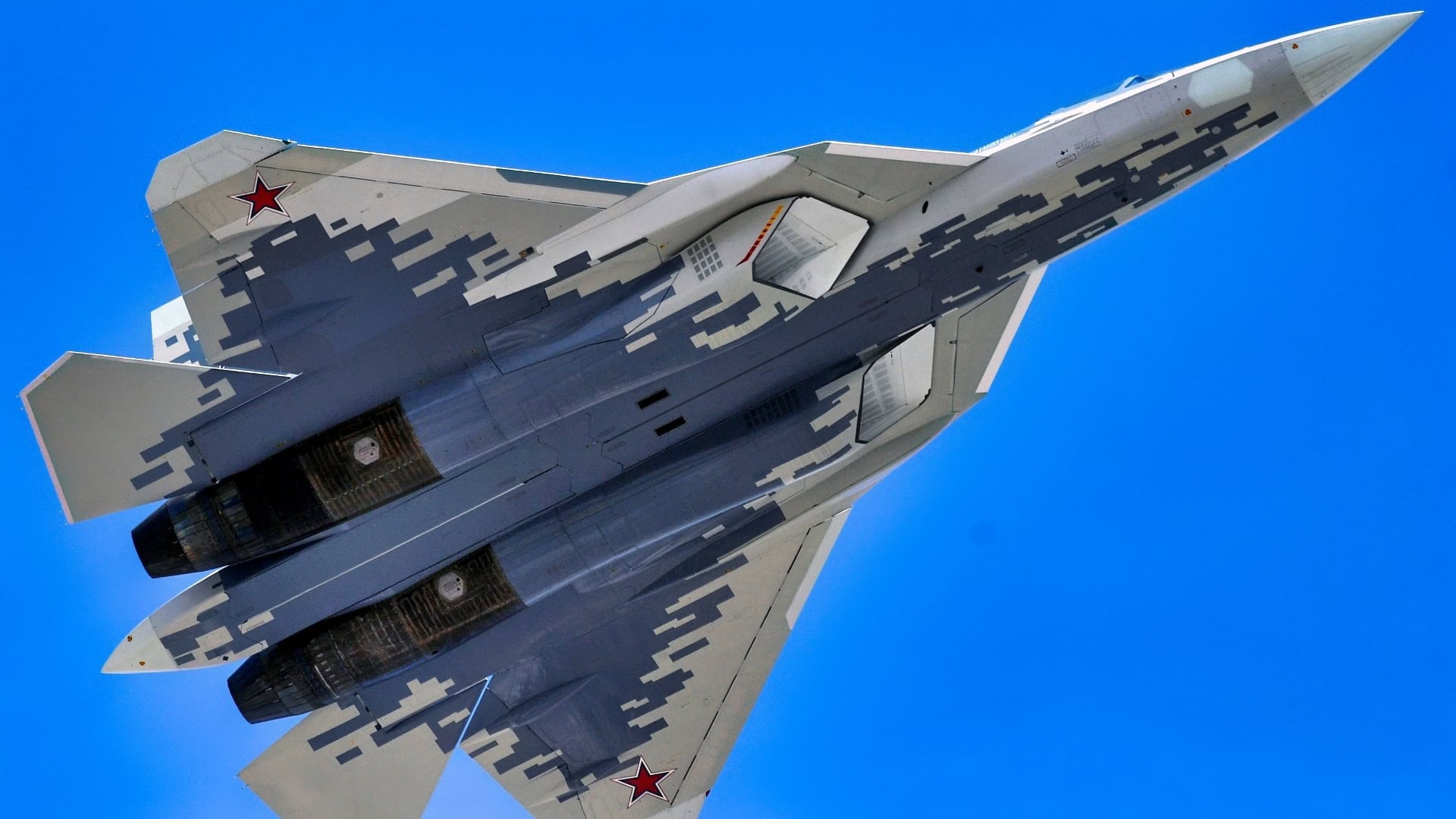
Su-57 Felon from Russia. Image Credit: Creative Commons.
About the Author:
Steve Balestrieri is a 19FortyFive National Security Columnist. He served as a US Army Special Forces NCO and Warrant Officer. In addition to writing for 19FortyFive, he covers the NFL for PatsFans.com and is a member of the Pro Football Writers of America (PFWA). His work was regularly featured in other military publications.