
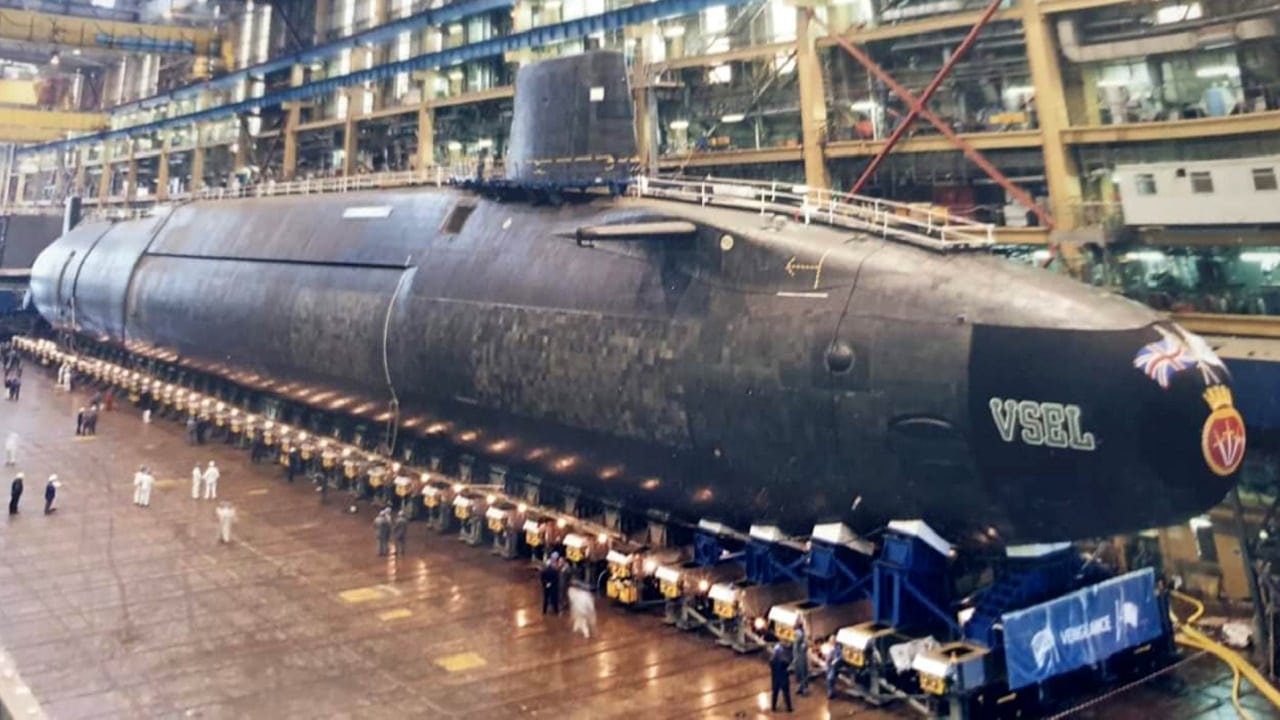
Key Takeaways – Britain’s Vanguard-class submarines are the silent backbone of the UK’s nuclear deterrent, built in the 1980s and 1990s to carry Trident II D5 ballistic missiles.
-Four boats—HMS Vanguard, Victorious, Vigilance, and Vengeance—rotate through Continuous At-Sea Deterrence, ensuring at least one SSBN is always on patrol and able to deliver a second-strike anywhere on Earth.
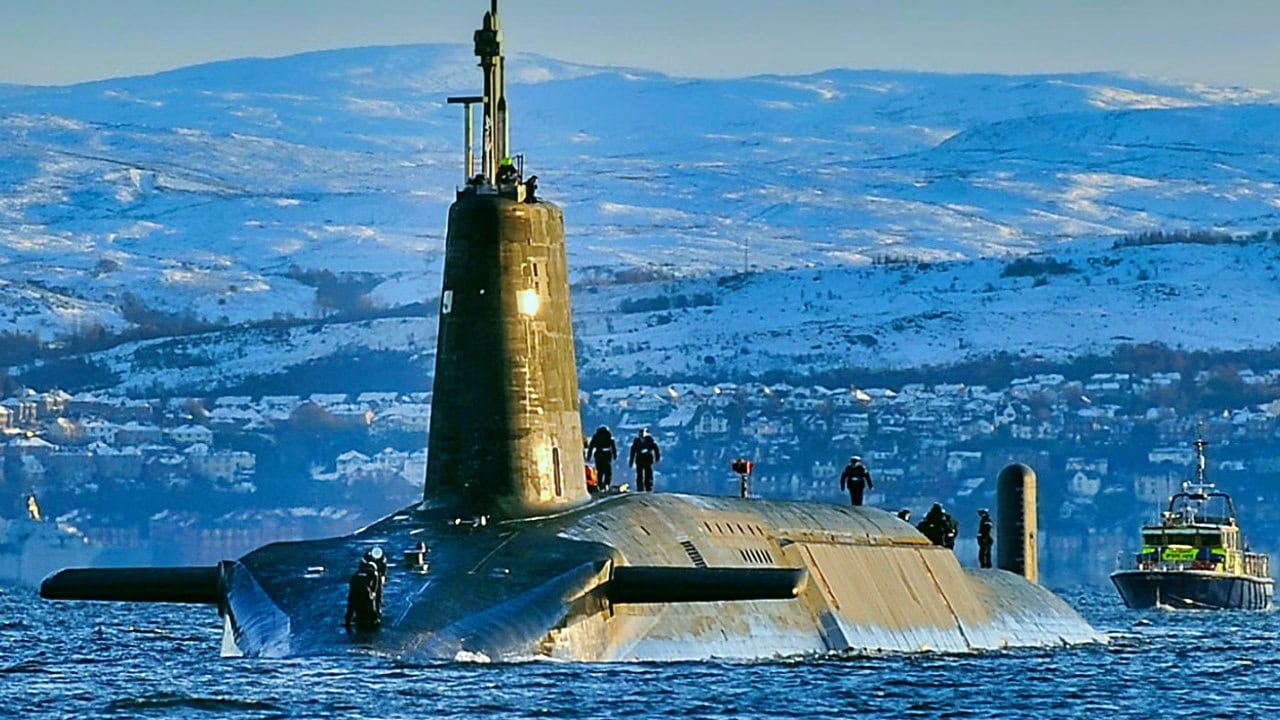
Vanguard-Class SSBN. Image Credit: Creative Commons.
-Compact but powerful, they pack 16 missile tubes, Spearfish torpedoes, and a highly sensitive sonar suite. Aging hulls and reactors, plus costly incidents like HMS Vanguard’s 2009 collision, are driving their one-for-one replacement by the longer-lived Dreadnought-class in the early 2030s.
Inside Britain’s Vanguard-Class Submarine: The Nuclear Deterrent You Never See
In addition to being the name of a pioneering shooter video game in 1981, “Vanguard” is a name bestowed on multiple warships serving in Great Britain’s Royal Navy.
These have included HMS Vanguard, Britain’s largest and fastest battleship and the last one ever built—it was commissioned in 1946—and today’s current subject, the Royal Navy’s Vanguard-class nuclear-powered ballistic missile submarines (SSBNs).
Their mission is to ensure London can drop nuclear weapons virtually anywhere on Earth
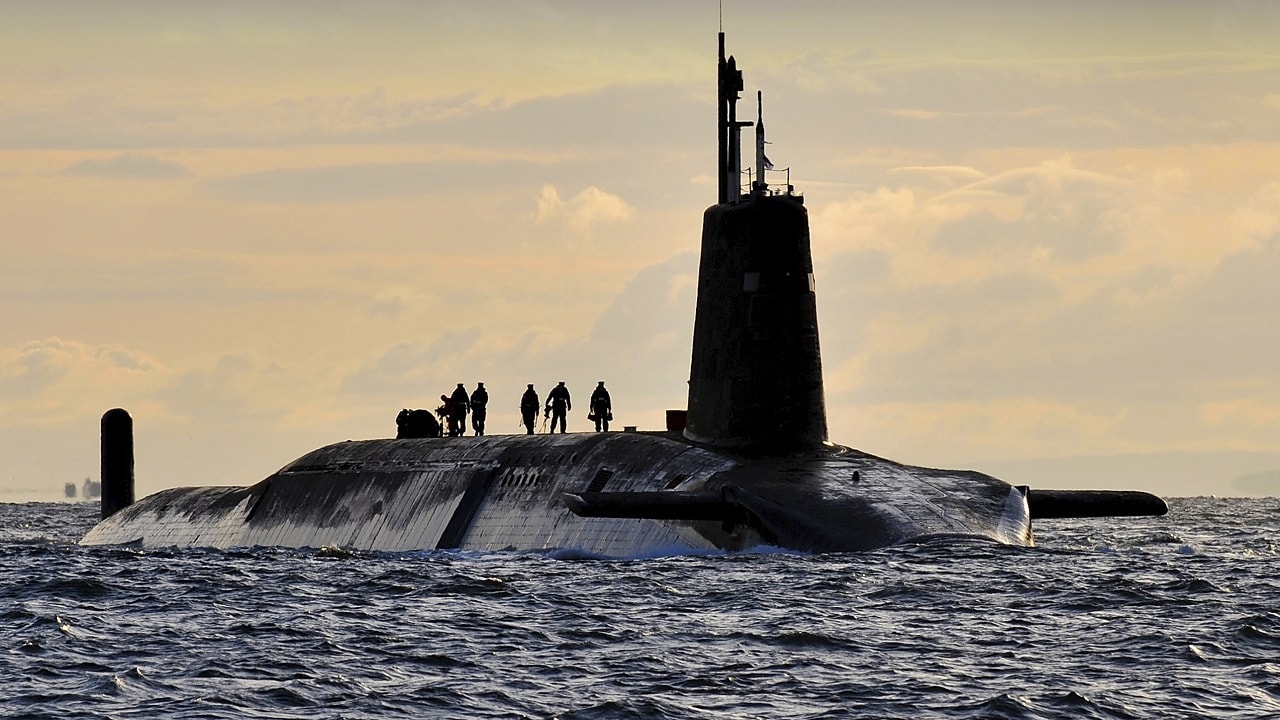
Nuclear submarine HMS Vanguard arrives back at HM Naval Base Clyde, Faslane, Scotland following a patrol.
Vanguard-Class Initial History
Built by Vickers Shipbuilding and Engineering Limited (now BAE Systems) at Barrow-in-Furness, the Vanguard-class subs were introduced to replace the Polaris missile-armed, 1960s-vintage Resolution-class SSBNs.
The Vanguards were specifically designed to carry the Trident II D5 missile system, providing the United Kingdom with a nuclear-second-strike capability.
The lead vessel of the class is HMS Vanguard, which was laid down on Sept. 3, 1986, launched on March 4, 1992, and commissioned on Aug. 14, 1993.
She was followed by three sister ships: HMS Victorious, commissioned in 1995; HMS Vigilance, commissioned in 1996; and HMS Vengeance, commissioned in 1999.
Vanguard Class Technical Specifications and Vital Stats
Courtesy of Seaforces-online:
-Hull Length: 149.9 meters
-Beam Width: 12.8 meters
-Displacement: 15,900 tons submerged
-Powerplant: 1 x Rolls-Royce PWR2 nuclear reactor; 2 x GEC turbines generating 27500 shp (20.5 MW); 1 shaft, 1 pump-jet propulsor; 2 x WH Allen turbo generators (6 MW); 2 x Paxman diesel alternators (2700 shp / 2 MW)
-Submerged Speed: 25+ knots
-Range: Unlimited
-Crew: 135 commissioned officers and enlisted seamen
-Armament: 16 x launching tubes for Lockheed UGM-133 Trident II D5 nuclear ballistic missiles; 4 x 21″ (533-mm) torpedo tubes for Spearfish heavy-weight torpedoes
As noted by the Royal Navy’s official info page, “The Vanguard Class submarines are the largest manufactured in the UK. . . . They are the third largest vessels currently in service with the Royal Navy.”
Another significant feature is the Thales Underwater Systems Type 2054 composite sonar system, which is reportedly so sensitive that it can detect other vessels more than 50 miles away.
Vanguard-Class Operational History (in Brief)
Thankfully, World War III hasn’t broken out yet. Thus the Vanguards have yet to fire any shots in anger, though they certainly stand ready to do so.
As noted by HMS Vigilant’s official info page, “The deterrent patrol cycle carried out by the Vanguard-class began in 1969 – and has continued unbroken to this day.”
Each boat operates as part of the Continuous At-Sea Deterrence program, which ensures at least one such sub is always on patrol, thereby ensuring steady vigilance.
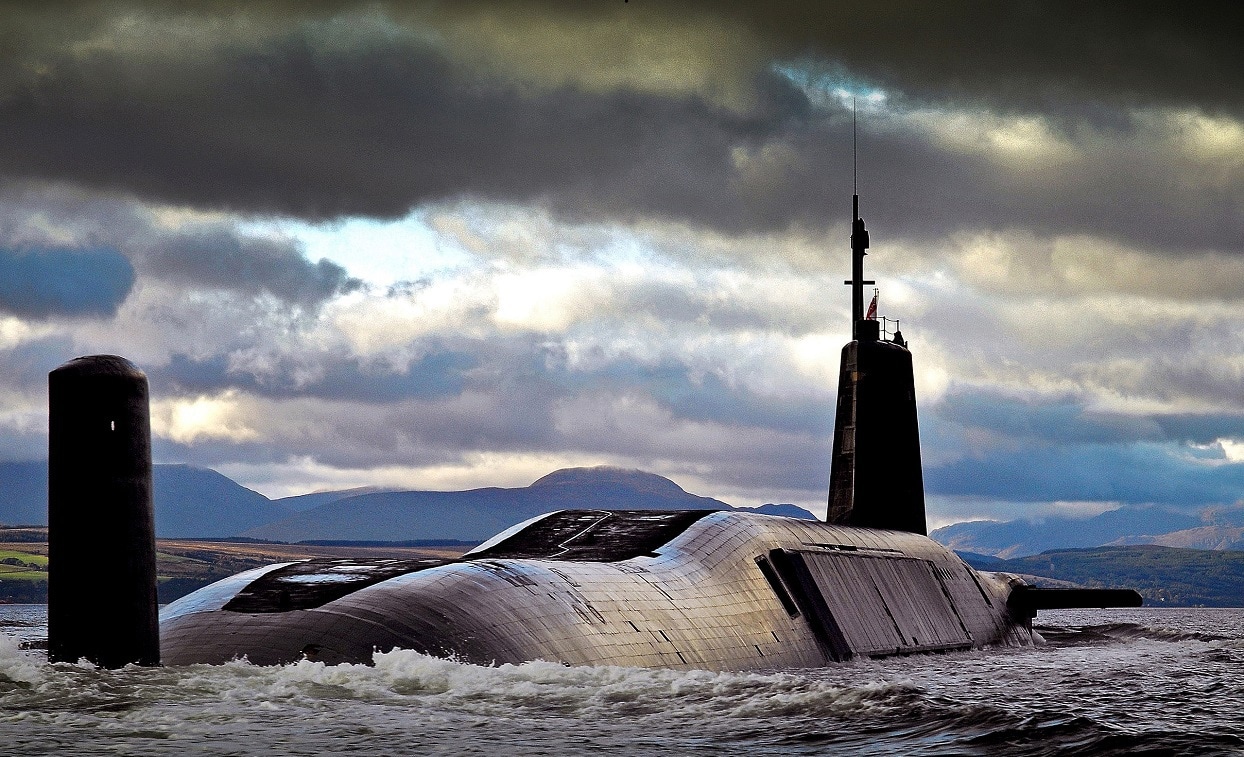
Vanguard-Class Submarine of Royal Navy. Image: Creative Commons.
HMS Vanguard was involved in an embarrassing incident on Feb. 4, 2009, when she collided with French Navy submarine Le Triomphant.
The British boat’s outer casing near its missile compartment was holed, while the French sub’s bow/sonar dome and sailplane were damaged.
Fortunately, it turned out to be a low-speed impact with no injuries or nuclear risk, and both warships returned home under their own power.
Still, some major financial pain resulted: Repairs cost an estimated £50 million ($65.20 million).
The Way Forward: Goodbye Vanguards, Hello Dreadnoughts
The Vanguards are currently homeported at HM Naval Base Clyde, in Faslane, Scotland.
Alas, nothing lasts forever, and as faithfully and reliably as the Vanguard-class submarines have served, they are getting long in the proverbial tooth.
They were initially intended to have a service life of 25 years.
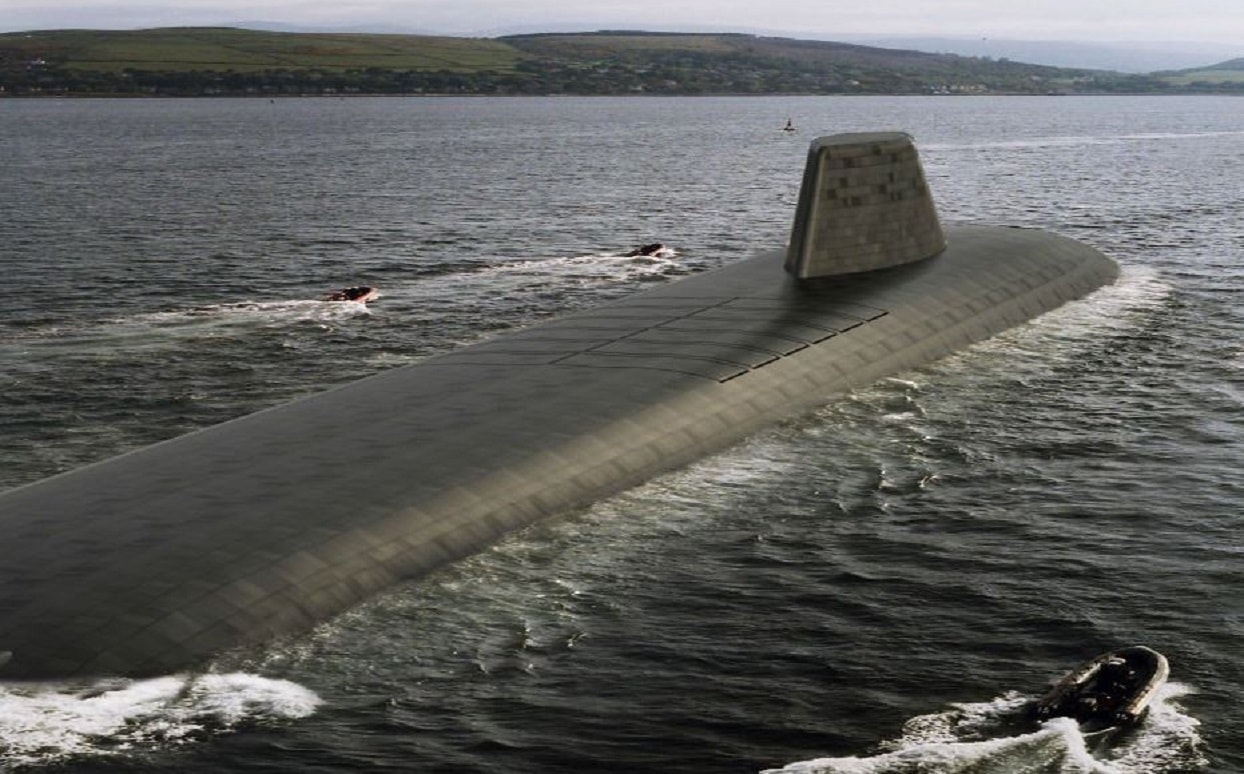
Dreadnought-Class Submarine. Image: Creative Commons.
Fittingly enough, they are now tabbed for replacement by another class of submarines that shares its name with a former Royal Navy battleship: the Dreadnought-class boats.
In the first decade of the 20th century, the term “dreadnought” was applied to a major technological advancement and innovation in battleship design, namely the employment of an all-big-gun main battery, typically comprising guns of a single caliber.
The first ship of the type was HMS Dreadnought, commissioned in 1906.
As for the Dreadnought-class SSBNs, they are expected to enter service sometime in the early 2030s.
They will replace the Vanguards on a one-for-one basis and will bear the monikers HMS Dreadnought, Valiant, Warspite, and King George VI.
Construction on these boats began in October 2016, September 2019, February 2023, and September 2025, respectively.
Like their predecessors, the Dreadnoughts will carry Trident II D-5 missiles, with the added benefit of a 50 percent increase in service life, i.e., 35 to 40 years. The total program cost is projected at £31 billion.
About the Author: Christian D. Orr, Defense Expert
Christian D. Orr is a Senior Defense Editor. He is a former Air Force Security Forces officer, Federal law enforcement officer, and private military contractor (with assignments worked in Iraq, the United Arab Emirates, Kosovo, Japan, Germany, and the Pentagon). Chris holds a B.A. in International Relations from the University of Southern California (USC) and an M.A. in Intelligence Studies (concentration in Terrorism Studies) from American Military University (AMU). He is also the author of the newly published book “Five Decades of a Fabulous Firearm: Celebrating the 50th Anniversary of the Beretta 92 Pistol Series.”