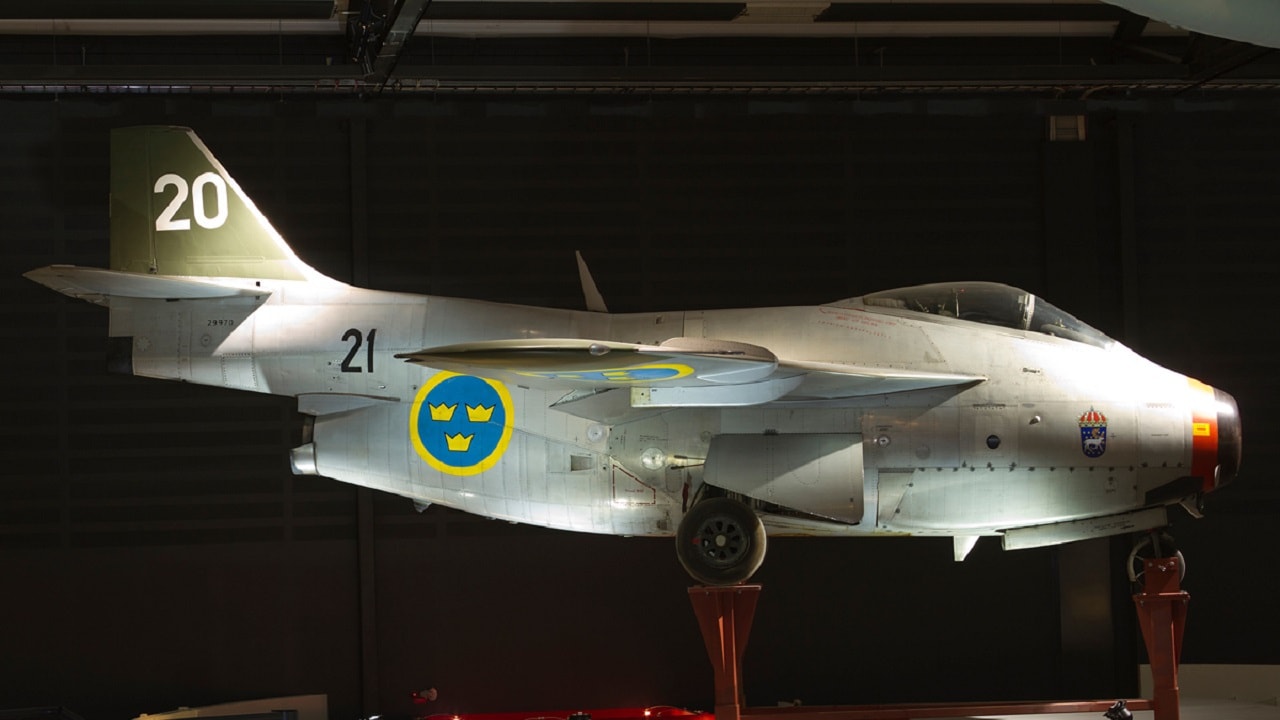
Key Points and Summary – Saab’s 29 Tunnan looked like a joke and flew like a revelation.
-Nicknamed the “Flying Barrel,” it was actually one of the most advanced early jet fighters, with 25-degree swept wings based on captured German research that put it in the same league as the F-86 and MiG-15.
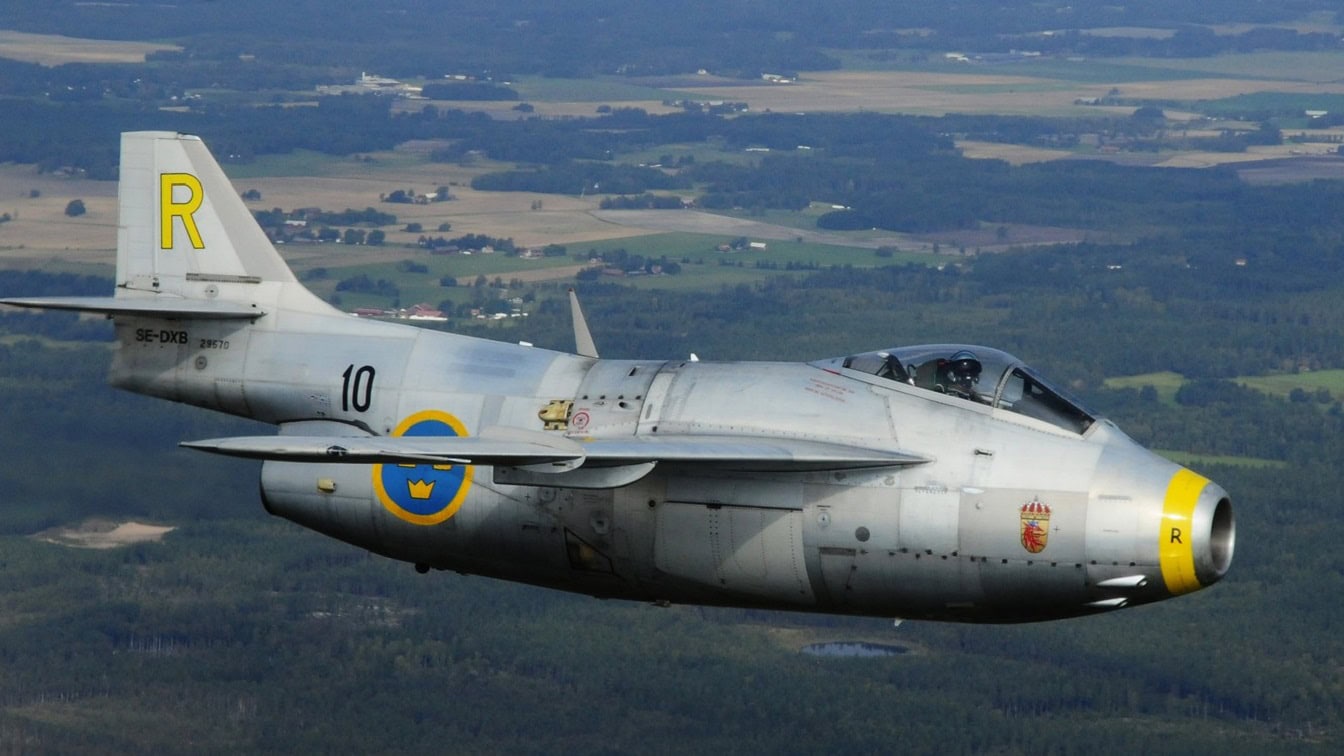
Saab 29 Tunnan
-A powerful Swedish-built Ghost turbojet pushed it past 1,000 km/h, while four nose-mounted 20 mm cannons and later rockets and bombs made it a true multirole workhorse.
-Combat-proven under UN colors in Congo, the rugged, short-field Tunnan gave Sweden a serious, exportable jet and a lasting place in aviation history.
Sweden’s Saab 29 Tunnan Was the F-86 Sabre’s Forgotten Rival
When the Saab 29 Tunnan entered service in the early 1950s, it represented a significant leap forward for Swedish aviation.
Although nicknamed the “Flying Barrel” for its stubby, rounded appearance, the Tunnan quickly proved itself in combat to be one of the most capable and advanced fighters of its generation.
One of the primary reasons behind the Tunnan’s effectiveness was its advanced aerodynamic design.
During the post–World War II transition into the jet age, many nations were still experimenting with airframes and wing shapes for high-speed flight.
Saab engineers, studying German research captured at the end of the war, implemented a 25-degree swept-wing configuration, which significantly improved high-speed performance and reduced drag as the aircraft approached transonic speeds.
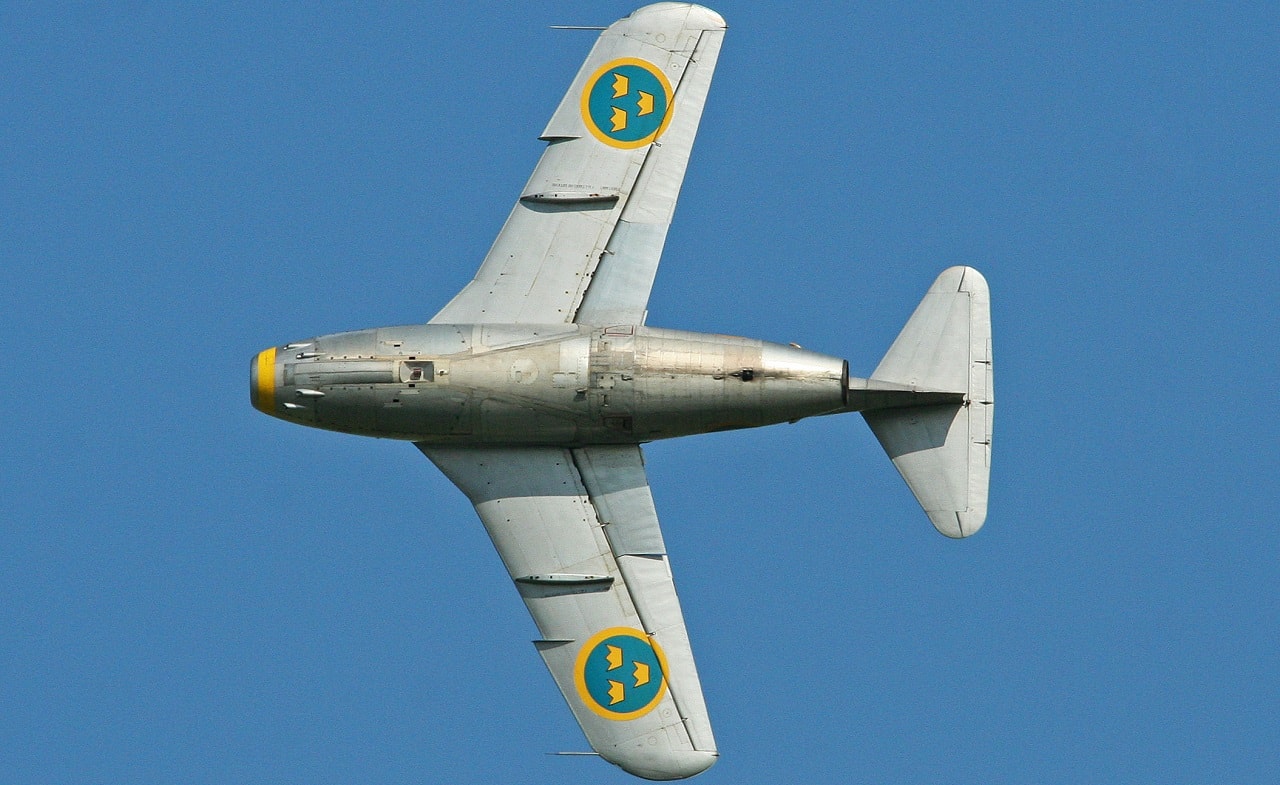
Saab 29 Tunnan. Image Credit: Creative Commons.
At a time when straight-wing jets were still standard, this design placed the Tunnan on par with cutting-edge fighters like the F-86 Sabre and MiG-15.
Despite its unconventional shape, test pilots consistently praised the aircraft for its excellent maneuverability, stability, and responsiveness.
Tunnan Speed & Thrust
Another major factor contributing to the Tunnan’s effectiveness was its powerful engine. Equipped with the Svenska Flygmotor RM2, a Swedish-built version of the Rolls-Royce Ghost turbojet, the Tunnan had impressive thrust for a 1950s aircraft, allowing it to reach speeds over 1,000 km/h.
This performance enabled Swedish pilots to intercept fast-moving threats quickly and engage confidently in air combat.
Its climb rate and acceleration were competitive with the best fighters of the era, marking Sweden as a serious player in jet aircraft technology.
The Tunnan also excelled because it was heavily armed and versatile.
Its primary armament—four 20 mm cannons—gave it devastating firepower in dogfights and against bomber targets.
Later variants supported rockets, bombs, and early guided munitions, enabling the aircraft to perform ground-attack missions as effectively as air-defense roles.
This multirole capability mirrored Sweden’s strategic need for a flexible, self-reliant fighter during the height of the Cold War.
Combat Proven Saab 29
Importantly, the Saab 29 was not only powerful on paper but also proven in combat. In the 1960s, Swedish-operated Tunnans flew under the United Nations banner during the Congo Crisis.
There, they demonstrated exceptional ruggedness and reliability in tropical conditions.
They conducted ground strikes, reconnaissance missions, and defensive patrols with success, reinforcing the aircraft’s reputation as a durable and practical fighter.
Few European jets of the era had such a combat record, making the Tunnan stand out even more.
In the Congo, the Tunnan demonstrated exceptional ground-attack capability. Swedish pilots conducted close air support missions against rebel forces, utilizing rockets and cannons with high accuracy.
The aircraft’s robust construction and wide-track landing gear enabled it to operate from rough airstrips, providing UN forces with consistent air power in areas with limited infrastructure.
Its durability meant it could absorb small-arms fire and continue flying, a vital attribute in low-altitude attack runs.
The aircraft’s reliability and ease of maintenance added to its effectiveness.
Designed to operate from dispersed bases—a key aspect of Swedish defense doctrine—the Tunnan could take off from short, simple runways, giving it operational flexibility uncommon among early jets.
The Tunnan’s primary weapons were its four 20 mm Akan m/47B autocannons, mounted in the nose. This was a very strong armament for the early 1950s and comparable to, or better than, most contemporary jets.
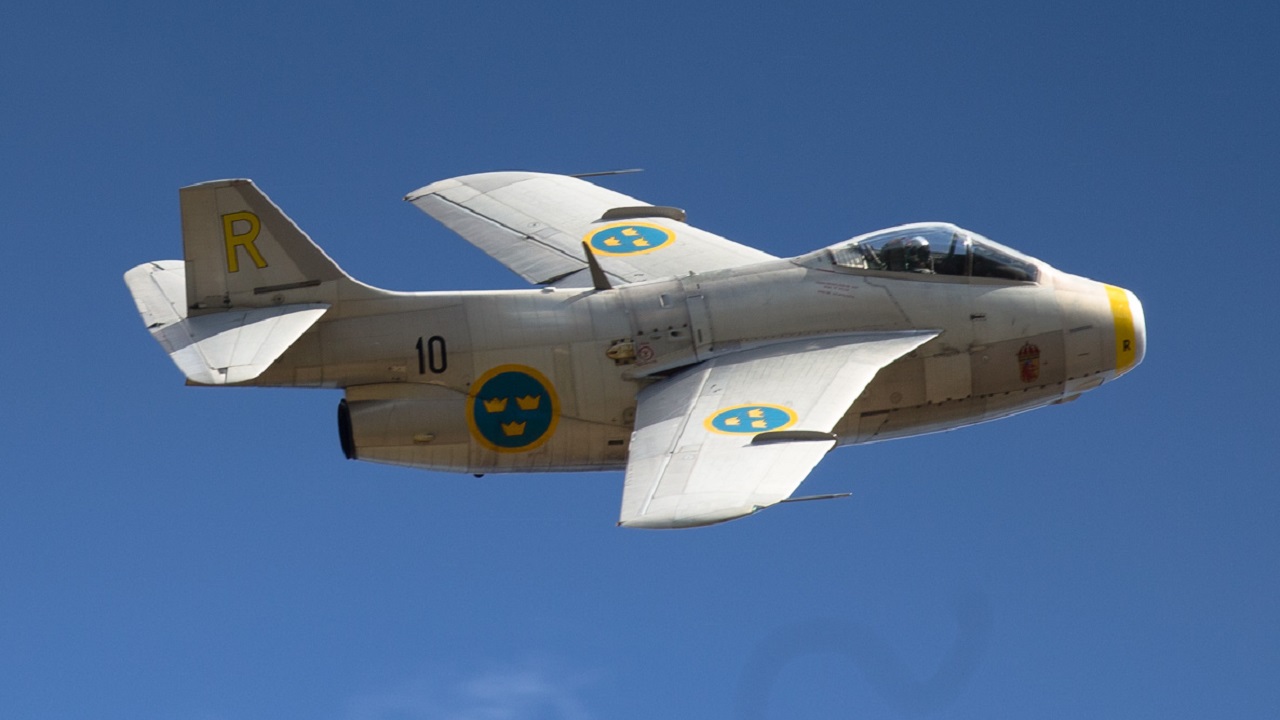
Saab 29 Tunnan. Image Credit: Creative Commons.
Tunnan Speed & Maneuverability
One major factor in the Tunnan’s combat effectiveness was its aerodynamic sophistication.
The aircraft featured a swept-wing design influenced by German wartime research, enabling it to reach transonic speeds and providing excellent climb and maneuvering characteristics.
This allowed Tunnan pilots to gain positional advantages quickly and react with agility during ground-attack and interception missions.
The aircraft’s Avon-inspired Svenska Flygmotor RM2 engine provided reliable thrust, which proved crucial in demanding tropical conditions during African operations.
Equally important was the Tunnan’s operational reliability.
With high sortie rates, low maintenance demands, and strong pilot visibility, it offered a dependable platform in a conflict where air support often determined tactical outcomes.
Its psychological impact cannot be overlooked; the sudden appearance of a fast, modern jet deterred hostile forces and boosted morale among ground troops.
About the Author: Kris Osborn
Kris Osborn is the President of Warrior Maven – Center for Military Modernization. Osborn previously served at the Pentagon as a highly qualified expert in the Office of the Assistant Secretary of the Army—Acquisition, Logistics & Technology. Osborn has also worked as an anchor and on-air military specialist at national TV networks. He has appeared as a guest military expert on Fox News, MSNBC, The Military Channel, and The History Channel. He also has a Masters Degree in Comparative Literature from Columbia University.