
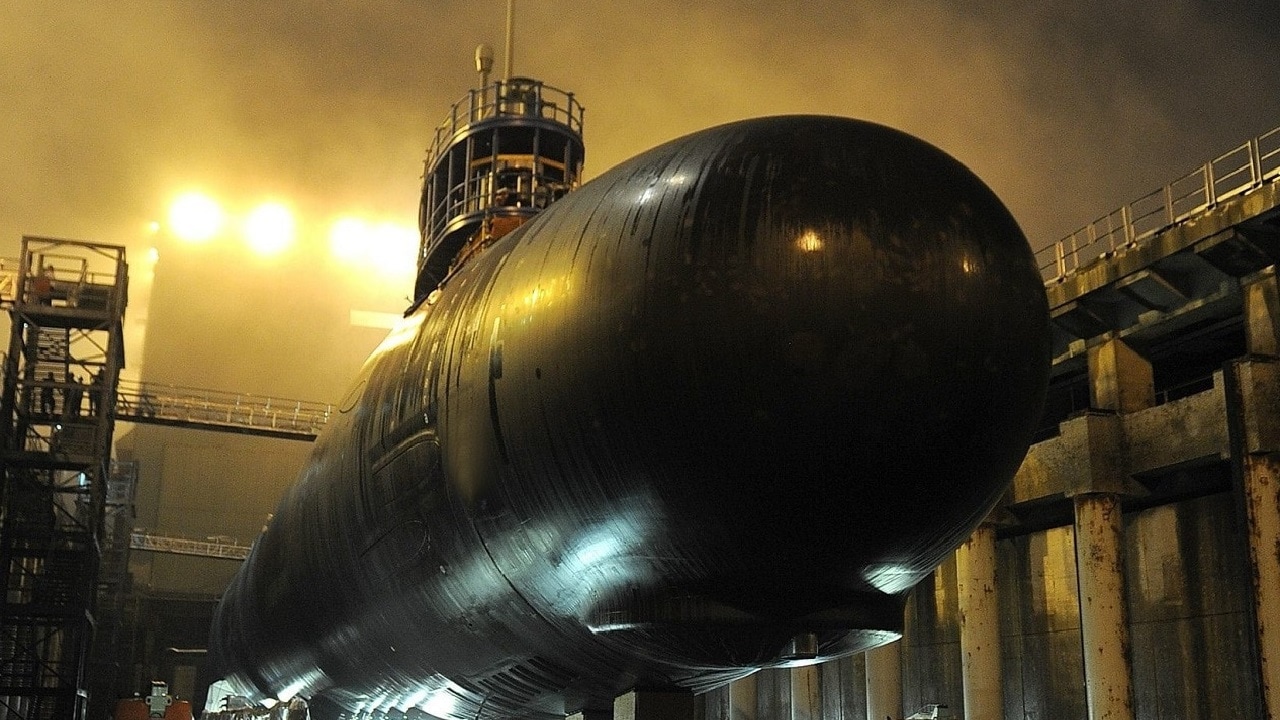
Article Summary – The U.S. Navy’s SSN(X) is envisioned as the undersea “apex predator” of the 2040s, but shipyard bottlenecks and cost pressures have pushed the lead boat into the early 2040s.
-Designed to follow the Virginia class, SSN(X) is meant to blend Seawolf-level speed and payload, Virginia-grade stealth, and Columbia-style availability into one platform.
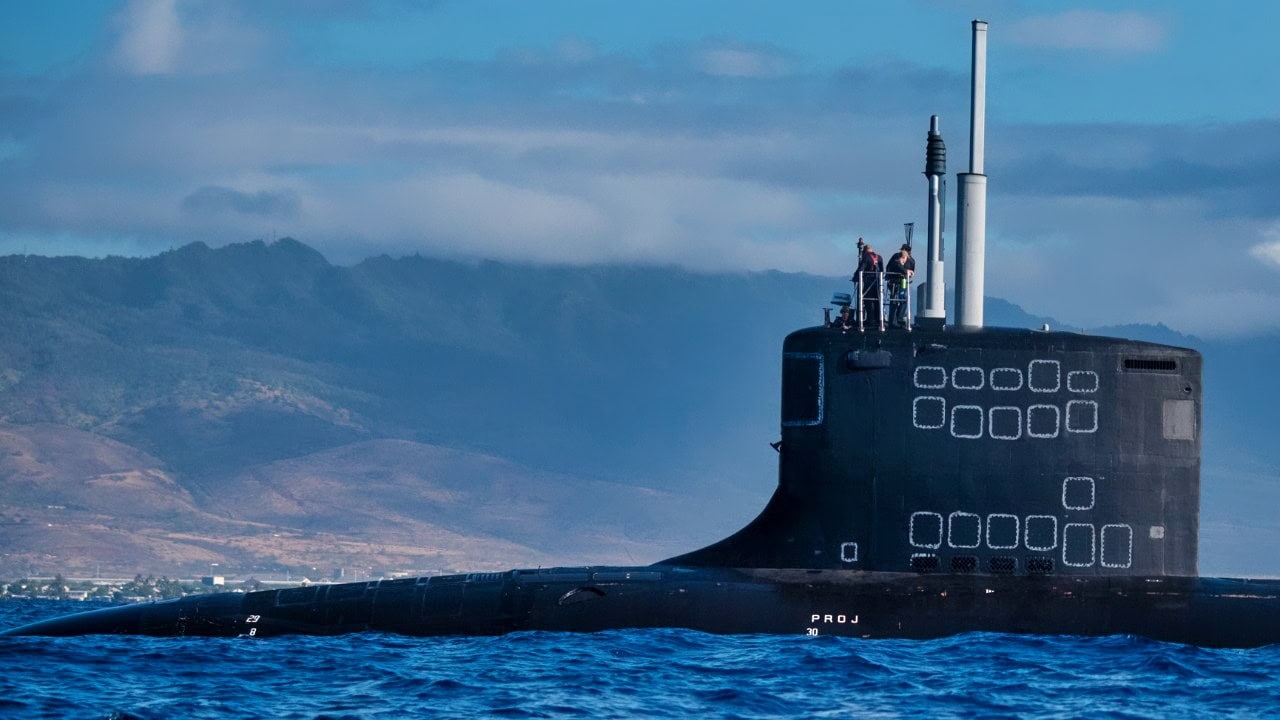
(July 9, 2018) – Multi-national Special Operations Forces (SOF) participate in a submarine insertion exercise with the fast-attack submarine USS Hawaii (SSN 776) and combat rubber raiding craft off the coast of Oahu, Hawaii during Rim of the Pacific (RIMPAC) exercise, July 9. Twenty-five nations, 46 ships and five submarines, about 200 aircraft, and 25,000 personnel are participating in RIMPAC from June 27 to Aug. 2 in and around the Hawaiian Islands and Southern California. The world’s largest international maritime exercise, RIMPAC provides a unique training opportunity while fostering and sustaining cooperative relationships among participants critical to ensuring the safety of sea lanes and security of the world’s oceans. RIMPAC 2018 is the 26th exercise in the series that began in 1971.` (U.S. Navy photo by Mass Communication Specialist 1st Class Daniel Hinton)
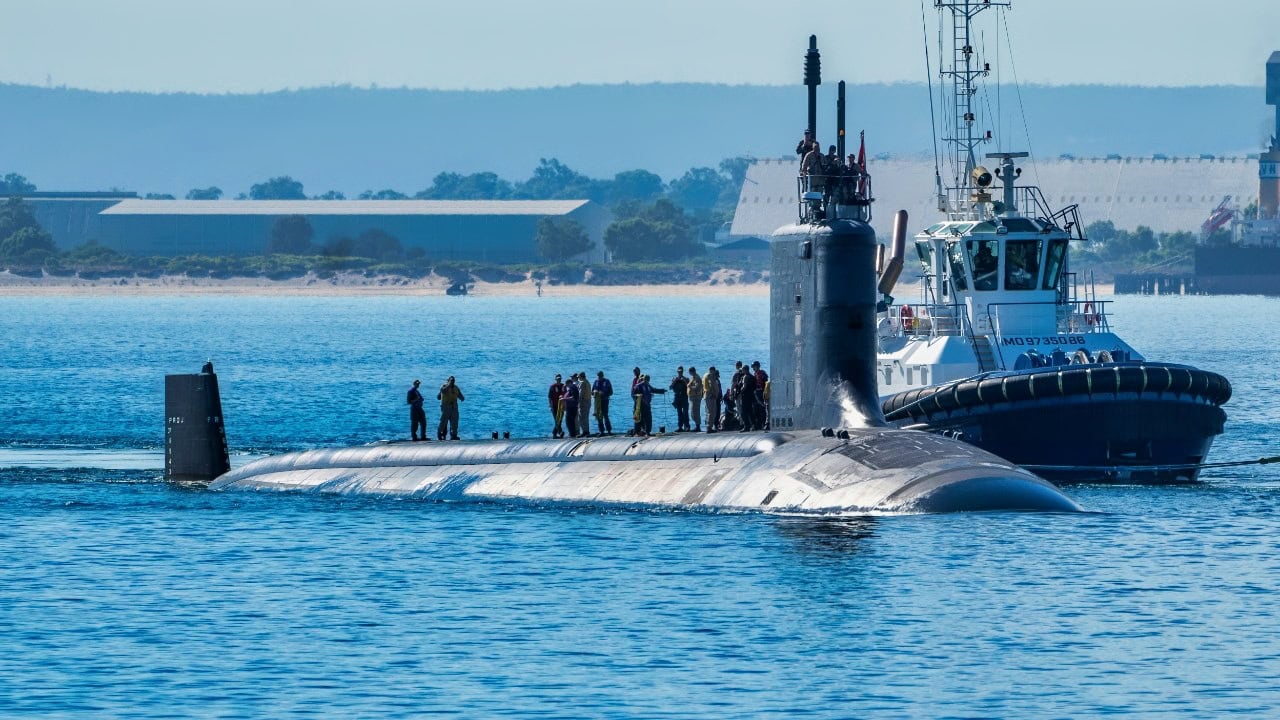
Western Australia, Australia (Feb. 25, 2025) The Virginia-class fast-attack submarine USS Minnesota (SSN 783) prepares to moor at HMAS Stirling, Western Australia, Australia, Feb. 25, 2025. Minnesota arrived in Western Australia kicking off the first of two planned U.S. fast-attack submarine visits to HMAS Stirling in 2025. Minnesota is currently on deployment supporting the U.S. 7th Fleet, the U.S. Navy’s largest forward-deployed numbered fleet, operating with allies and partners in preserving a free and open Indo-Pacific region. (U.S. Navy photo by Lt. James Caliva)
-It would carry a larger weapons magazine, use ultra-quiet electric drive and an X-rudder, and act as a battle manager for unmanned vehicles and distributed sensors.
-The catch: U.S. yards already struggle to build Virginias fast enough while China’s industrial base surges far ahead.
Delayed but Deadly: Inside America’s Next-Generation SSN(X) Attack Sub
The US Navy is developing a class of attack submarines that will serve into the 21st century. The US Navy’s SSN(X) attack submarine, now delayed until 2040, is poised to revolutionize undersea warfare with advanced speed, stealth, large magazine capacity for torpedoes and other weapons, and networking technologies.
However, a Navy spokesperson told Defense News that construction on the lead ship of the SSN(X) program, which will follow the Virginia-class submarine, is now planned to start in the early 2040s.
The Navy had planned to begin the ship class in 2031, though previously scheduled to start in 2035.
SSN(X) Shipyard Issues Are a Significant Problem
A few significant issues remain for the SSN(X) program: the budget and the shipyards. Production delays and cost overruns are common.
Alongside the potential promise of a new generation of submarines by 2040, the Navy currently faces ongoing production and development challenges, which may account for the delay in the SSN(X) from 2035 to 2040.
The Navy currently struggles to sustain a high production tempo for its evolving fleet of Virginia-class attack submarines, which will help offset or mitigate an expected attack submarine deficit as Los Angeles-class boats retire.
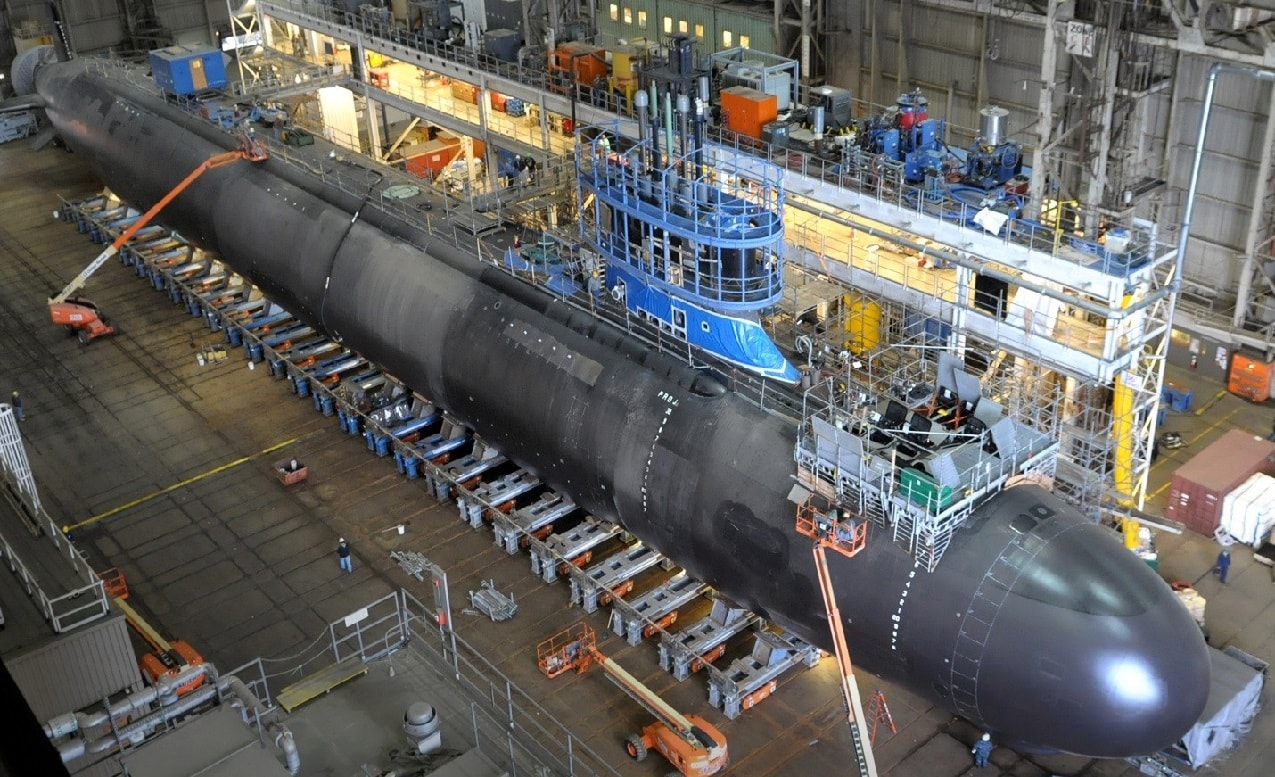
US Navy Virginia-class Submarine Under Construction.
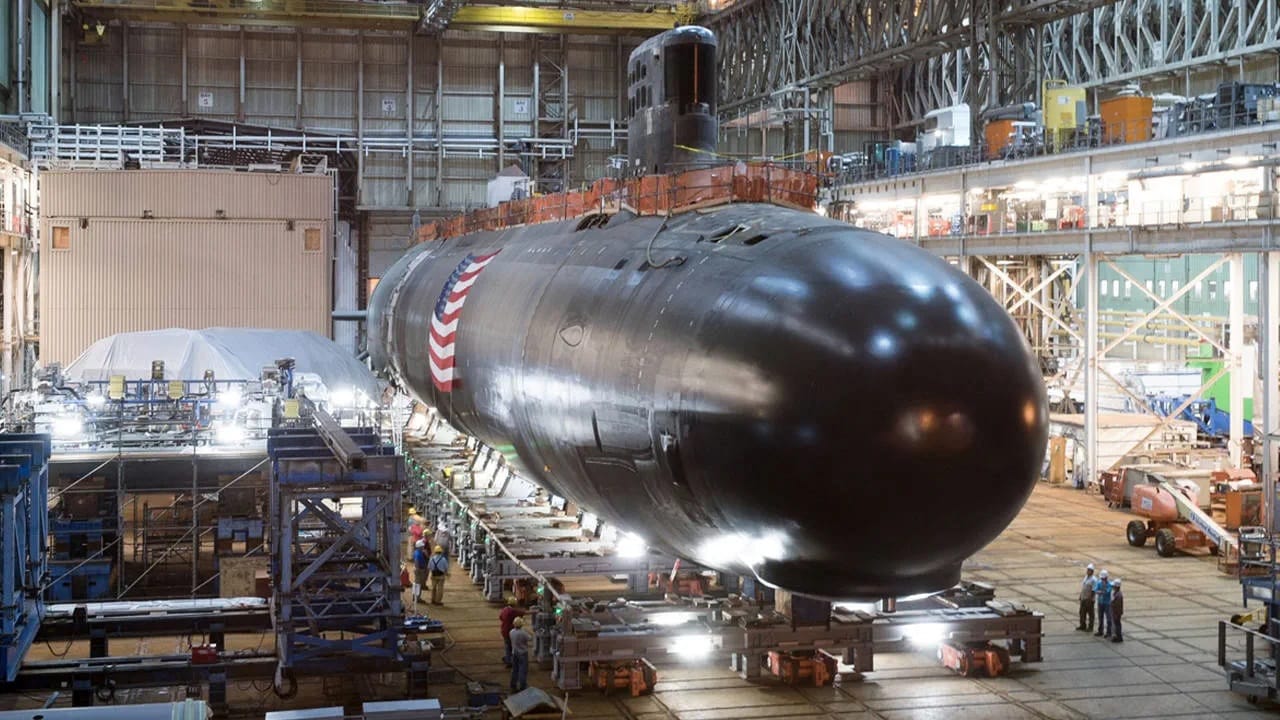
US Navy Virginia-class Submarine Under Construction.
Naval experts and officers have sounded the alarm for years. Still, the unthinkable came true in 2023 when a slide during a briefing by the Office of Naval Intelligence reported that China’s shipyards could build around 232 times more tonnage than their US counterparts.
During his address to the Joint Session of Congress, President Trump vowed to bring shipbuilding “home to America, where it belongs,” promising tax incentives and a brand-new office in the executive branch to reinvigorate the industry.
“To boost our defense industrial base, we are also going to resurrect the American shipbuilding industry, including commercial shipbuilding and military shipbuilding,” Trump said.
“I’m announcing tonight that we will create a new office of shipbuilding in the White House and offer special tax incentives to bring this industry home to America, where it belongs. We used to make so many ships. We don’t make them anymore very much, but we’re going to make them very fast, very soon. It will have a huge impact.”
SSN(X) Program
The Navy’s Block III and Block V Virginia-class attack submarines are being built with new technologies to help secure the service’s undersea technological advantages in an increasingly challenged threat environment.
Yet, the Navy is progressing with efforts to engineer another breakthrough: a next-generation class of attack submarines for the 2040s, known as SSN(X). The USNI News, in a piece about a “Report to Congress on Navy Next-Generation Attack Submarine,” wrote, In the designation SSN(X), the ‘X’ means that the exact design of the boat has not yet been determined.
The Navy stated that the SSN(X) “will be designed to counter the growing threat posed by near-peer adversary competition for undersea supremacy. It will provide greater speed, increased horizontal (i.e., torpedo room) payload capacity, improved acoustic superiority and non-acoustic signatures, and higher operational availability.
SSN(X) will conduct full-spectrum undersea warfare and be able to coordinate with a larger contingent of off-hull vehicles, sensors, and friendly forces.”
“Navy officials have stated that the Navy wants the SSN(X) to incorporate the speed and payload of the Navy’s fast and heavily armed Seawolf (SSN-21) class SSN design, the acoustic quietness and sensors of the Virginia-class design, and the operational availability and service life of the Columbia-class design.”
Networking And Data Sharing
The Navy is working on networking and undersea data sharing, which is an area that needs a technological breakthrough the most.
RF signals don’t travel well beneath the surface, and wireless systems for undersea use are difficult to engineer. Navy submarines have had to come close to the surface for years to achieve wireless and GPS connectivity across surface, land, and aerial domains.
Shallow depths expose the boat to enemy attack or detection. Undersea drones regularly need to collect and store data during missions, which can only be transferred when the drone returns to a host ship.
More Survivability In Hostile Waters
The SSN(X) is also designed to be survivable in more challenging and hazardous environments and to defend itself against underwater unmanned vehicles.
Like other next-generation platforms of the different service branches, it is also supposed to be a battle management platform that can coordinate with other friendly forces and sensor nodes.
To accomplish these missions, the plan is to equip SSN(X) with significantly quieter electric drive propulsion and fitted with an X-rudder for enhanced maneuverability.
Does The US Really Need The SSN(X)?
The Navy believes it needs the SSN(X) next-generation attack submarine. The SSN(X) is designed to counter the growing threats posed by near-peer adversaries, China and Russia, in undersea warfare, offering advantages in speed, payload capacity, acoustic superiority, and operational availability.
The Navy seeks to integrate the best features of previous submarine classes, such as the Seawolf, Virginia, and Columbia, into the SSN(X) design.
“We are looking at the ultimate apex predator for the maritime domain,” Rear Adm. Bill Houston, director of the service’s undersea warfare requirements office, said.
About the Author: Steve Balestrieri
Steve Balestrieri is a National Security Columnist. He served as a US Army Special Forces NCO and Warrant Officer. In addition to writing on defense, he covers the NFL for PatsFans.com and is a member of the Pro Football Writers of America (PFWA). His work was regularly featured in many military publications.