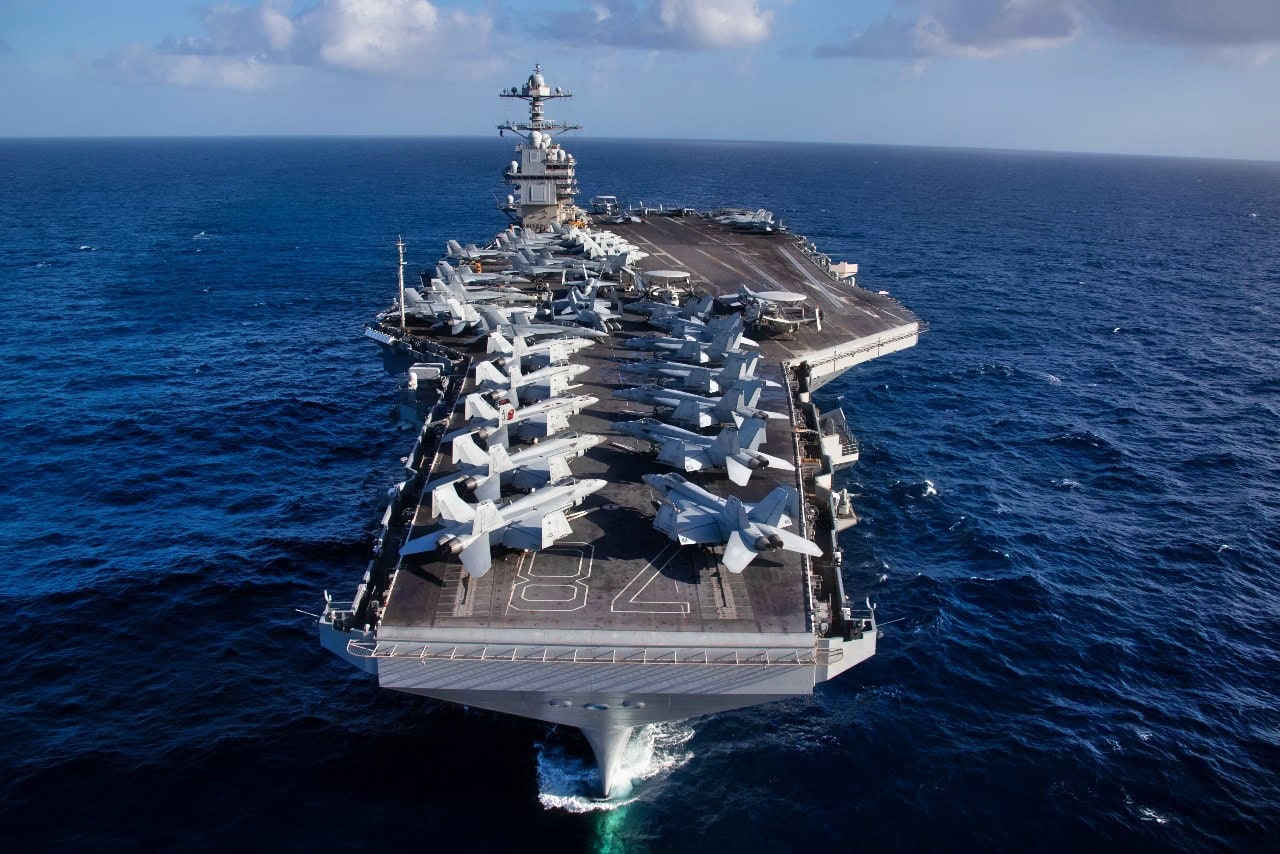
Key Points and Summary – The USS Gerald R. Ford took 12 years to build and became a symbol of cost overruns, schedule slips, and first-in-class technical risk.
-Its successor, USS John F. Kennedy, is the proof-of-concept for fixing that system.
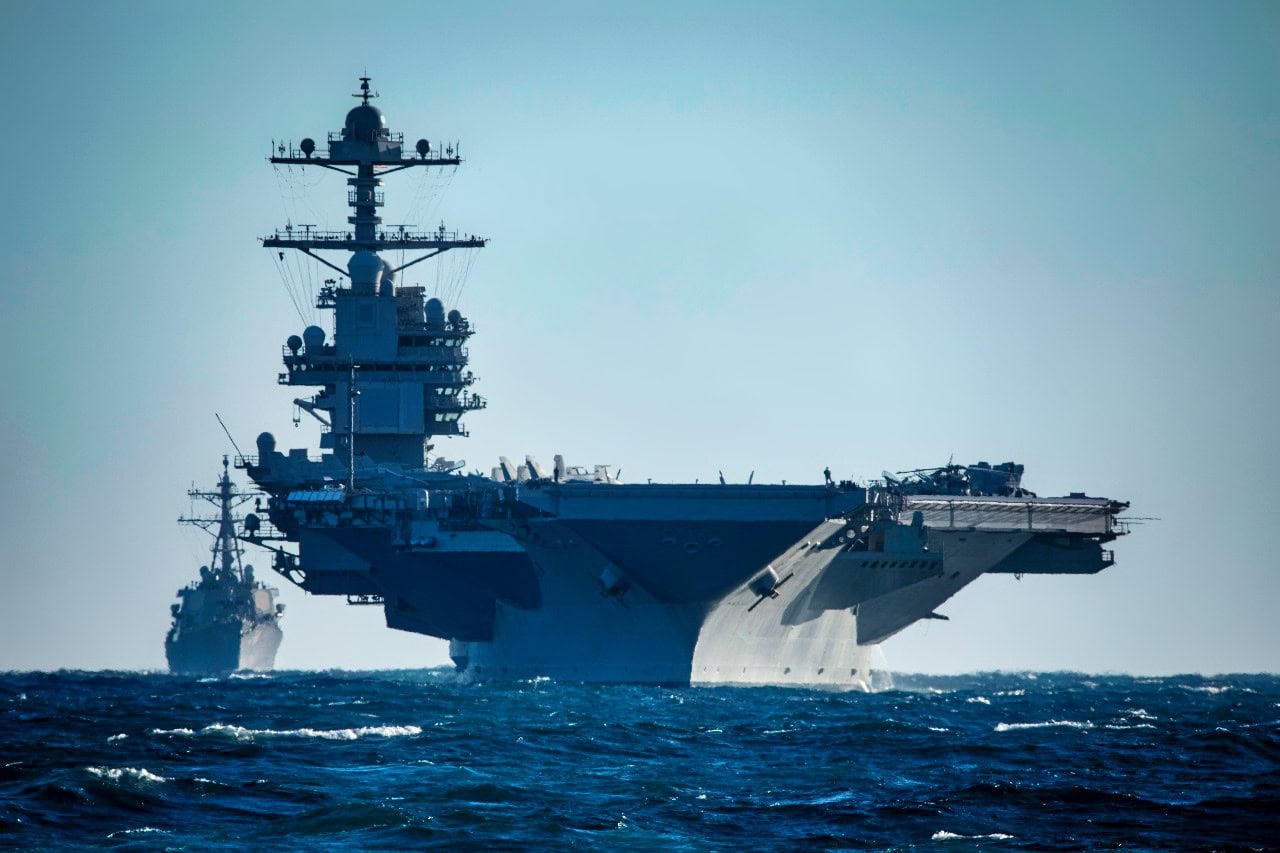
A view from the Ticonderoga-class guided missile cruiser USS Normandy (CG 60) of the first-in-class aircraft carrier USS Gerald R. Ford (CVN 78) and the Arleigh Burke-class guided missile destroyers USS Thomas Hudner (DDG 116), USS Ramage (DDG 61) and USS McFaul (DDG 74) as the ships steam in formation during a drill while underway as part of the Gerald R. Ford Carrier Strike Group March 5, 2023. Ford Carrier Strike Group is underway in the Atlantic Ocean executing its Composite Training Unit Exercise (COMPTUEX), an intense, multi-week exercise designed to fully integrate a carrier strike group as a cohesive, multi-mission fighting force and to test their ability to carry out sustained combat operations from the sea. As the first-in-class ship of Ford-class aircraft carriers, CVN 78 represents a generational leap in the U.S. Navy’s capacity to project power on a global scale. (U.S. Navy photo by Mass Communication Specialist 2nd Class Malachi Lakey)
Ford-Class Aircraft Carrier U.S. Navy. Image Credit: Creative Commons.
-Using modular construction, larger “superlift” sections, more forging instead of casting, and fully digital designs completed before steel cutting, HII has cut expected cost by at least $1.5 billion and significantly compressed the build timeline.
-With largely common design, a simpler radar, and electric instead of hydraulic elevators, Kennedy is the Navy’s bid to make Ford-class carriers affordable and repeatable.
From Ford to Kennedy: How the Navy Fixed Its $13 Billion Aircraft Carrier Problem
The famous and now operational USS Ford, the Navy’s first-in-class breakthrough carrier, took 12 years to assemble.
The first steel was cut in 2005, and the ship was commissioned for operational service in 2017, a challenging process marked by years of budgetary, technological, and scheduling difficulties.
Now the USS Kennedy is surging toward operational life in 2027. HII has leveraged new construction techniques to expedite the construction of the second Ford-class carrier.
Many of these new construction techniques emerged from lessons learned while building the USS Ford. Newport News Shipbuilders, a division of HII, has been moving forward for many years now with a process builders call modular construction, wherein ship compartments are assembled before being moved to the dock to expedite the building process.
Smaller segments of the ship are welded together into a structural “superlift,” a process designed to advance construction before the ship is lifted into dry dock.
Lessons Learned From USS Ford
In general, carrier construction begins with the bottom of the ship and works upward, with inner bottoms and side shells before moving to what’s called box units. The bottom third of the ship gets built first.
Additionally, some of the design methods now used for the Kennedy include efforts to fabricate or forge certain parts of the ship, rather than casting them, because HII builders have explained that this approach makes the process less expensive.
This construction technique for the Kennedy has included efforts to assemble compartments and parts of the ship before moving them to the dock—this expedites construction by allowing builders to integrate larger parts of the ship more quickly.
The Ford-class aircraft carrier USS Gerald R. Ford (CVN 78) and the Italian aircraft carrier ITS Cavour (CVH 550) transit the Atlantic Ocean March 20, 2021, marking the first time a Ford-class and Italian carrier have operated together underway. As part of the Italian Navy’s Ready for Operations (RFO) campaign for its flagship, Cavour is conducting sea trials in coordination with the F-35 Lightning II Joint Program Office’s Patuxent River Integrated Test Force to obtain official certification to safely operate the F-35B. Gerald R. Ford is conducting integrated carrier strike group operations during independent steaming event 17 as part of her post-delivery test and trials phase of operations.
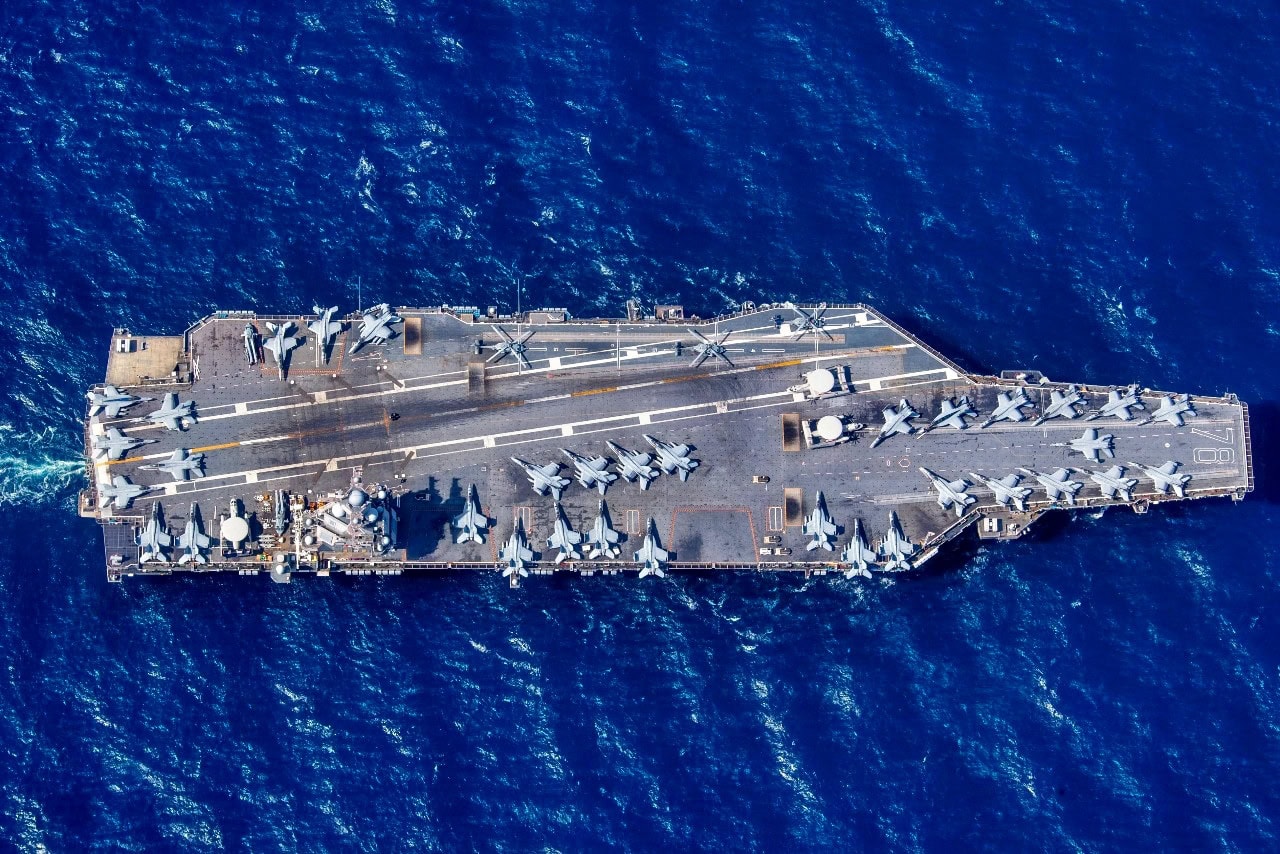
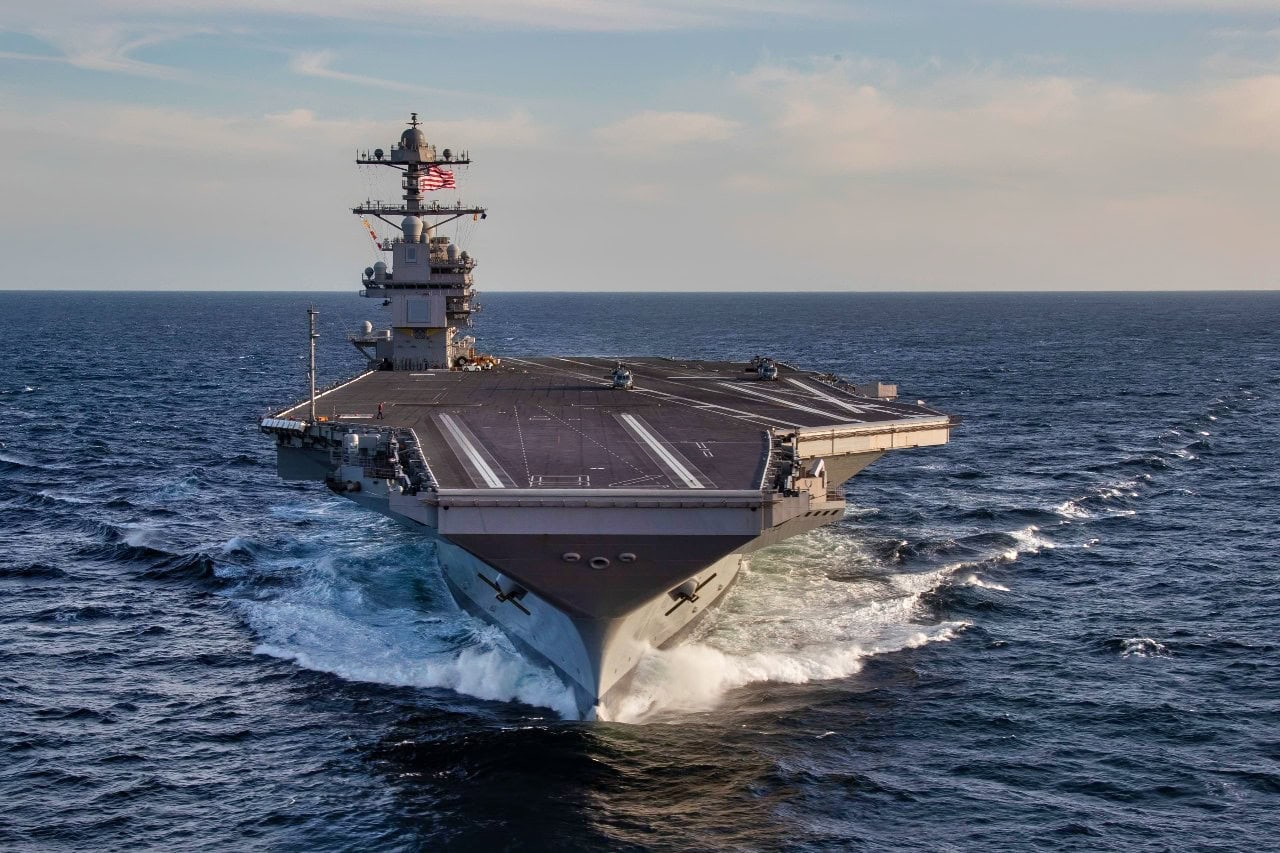
The first-in-class aircraft carrier USS Gerald R. Ford (CVN 78) transits the Atlantic Ocean, March 19, 2023. Ford is underway in the Atlantic Ocean executing its Composite Training Unit Exercise (COMPTUEX), an intense, multi-week exercise designed to fully integrate a carrier strike group as a cohesive, multi-mission fighting force and to test their ability to carry out sustained combat operations from the sea. As the first-in-class ship of Ford-class aircraft carriers, CVN 78 represents a generational leap in the U.S. Navy’s capacity to project power on a global scale. (U.S. Navy photo by Mass Communication Specialist 2nd Class Jackson Adkins)
This “modular construction” technique was also used when building the USS Ford, albeit to a lesser extent; the process involves welding smaller sections of the ship together into larger structural “superlift” units before they are lifted into the dry dock.
Aircraft Carrier Costs
HII ship developers have made progress in lowering the costs of the USS Kennedy, with some reports indicating that the cost of the USS Kennedy is at least $1.5 billion less than the cost to build the first Ford-Class aircraft carrier.
Many are likely to recall that the Navy received substantial criticism over several years from lawmakers and government watchdog groups during the construction of the USS Ford, primarily due to rising costs resulting from technological problems and scheduling delays.
The construction costs for the USS Ford ultimately exceeded early cost estimates by several billion dollars.
More than ten years ago, Navy officials responded that integrating new technologies would open the process up to challenges, adding that at least $3 billion of the Ford’s costs were due to what’s described as non-recurring engineering costs for a first-in-class ship such as this.
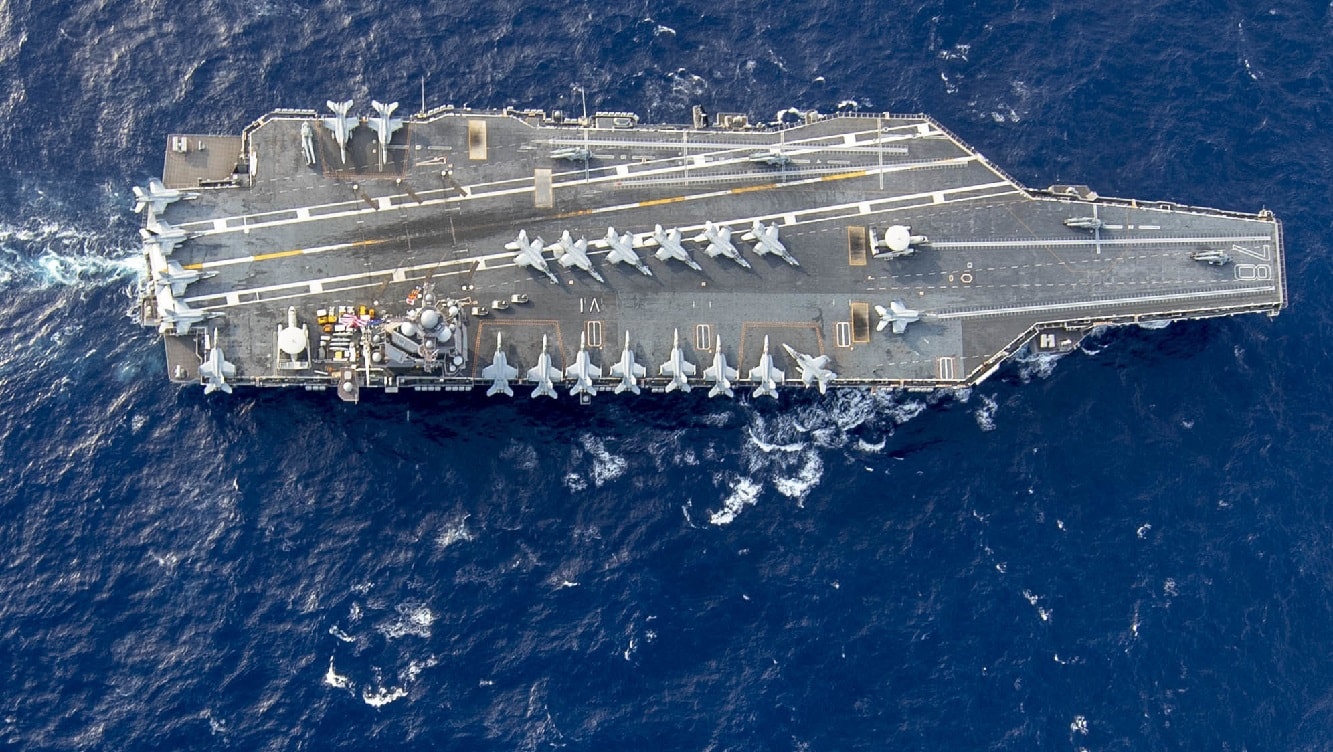
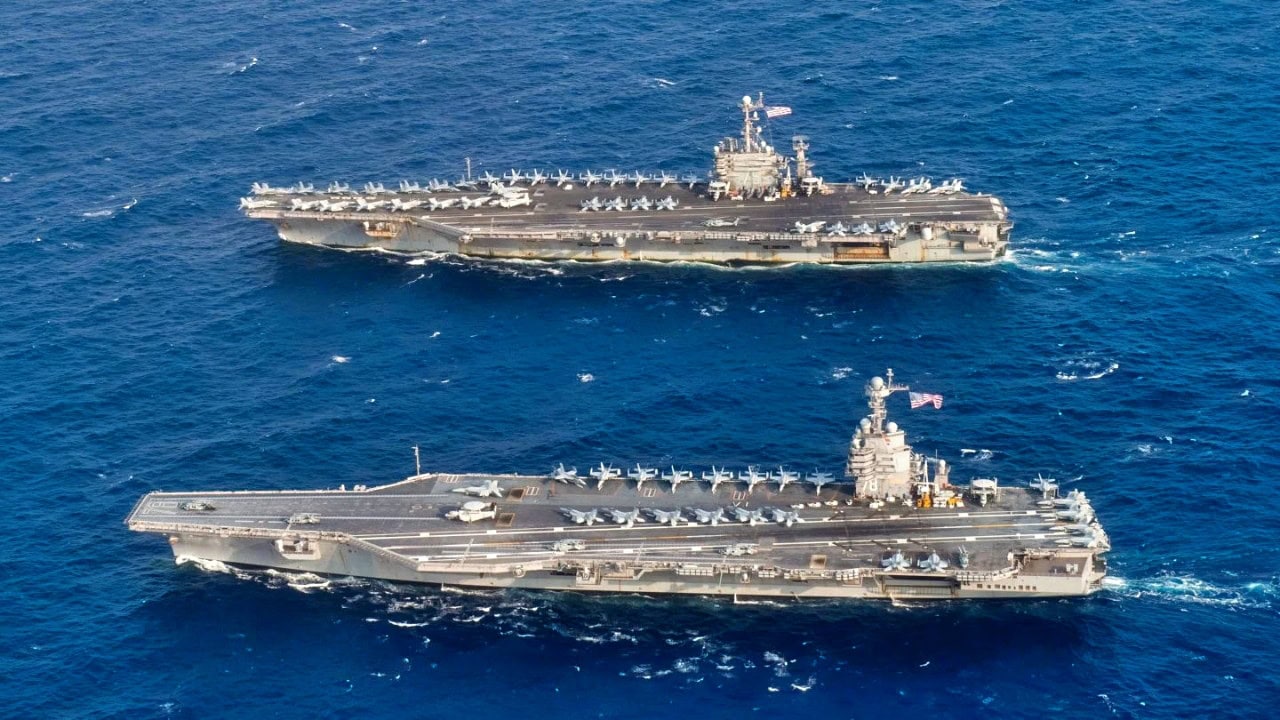
The Ford-class aircraft carrier USS Gerald R. Ford (CVN 78) and the Nimitz-class aircraft carrier USS Harry S. Truman (CVN 75) transit the Atlantic Ocean June 4, 2020, marking the first time a Ford-class and a Nimitz-class aircraft carrier operated together underway. Ford is underway conducting integrated air wing operations, and the Harry S. Truman Carrier Strike Group remains at sea in the Atlantic as a certified carrier strike group force ready for tasking in order to protect the crew from the risks posed by COVID-19, following their successful deployment to the U.S. 5th and 6th Fleet areas of operation. (U.S. Navy photo by Mass Communication Specialist Seaman Riley McDowell)
Also, Newport News Shipbuilding was able to buy larger quantities of parts earlier in the construction process with the Kennedy.
This is because, unlike the circumstances during the building of the USS Ford, the Kennedy’s ship design was complete before construction began.
This is quite significant, given that HII has for years used extensive digital modeling to solidify ship designs and support construction.
Progress with these efforts was significantly improved after the USS Ford was built, as computer models had already been designed and built.
As for the design, the Kennedy is largely similar to the design of the USS Ford, with a few minor alterations.
The Kennedy has a different radar, and its aircraft elevators will use electric motors instead of a hydraulic system to lower costs.
About the Author: Kris Osborn, Warrior Maven President
Kris Osborn is the President of Warrior Maven – Center for Military Modernization. Osborn previously served at the Pentagon as a highly qualified expert in the Office of the Assistant Secretary of the Army—Acquisition, Logistics & Technology. Osborn has also worked as an anchor and on-air military specialist at national TV networks. He has appeared as a guest military expert on Fox News, MSNBC, The Military Channel, and The History Channel. He also has a Masters Degree in Comparative Literature from Columbia University.