
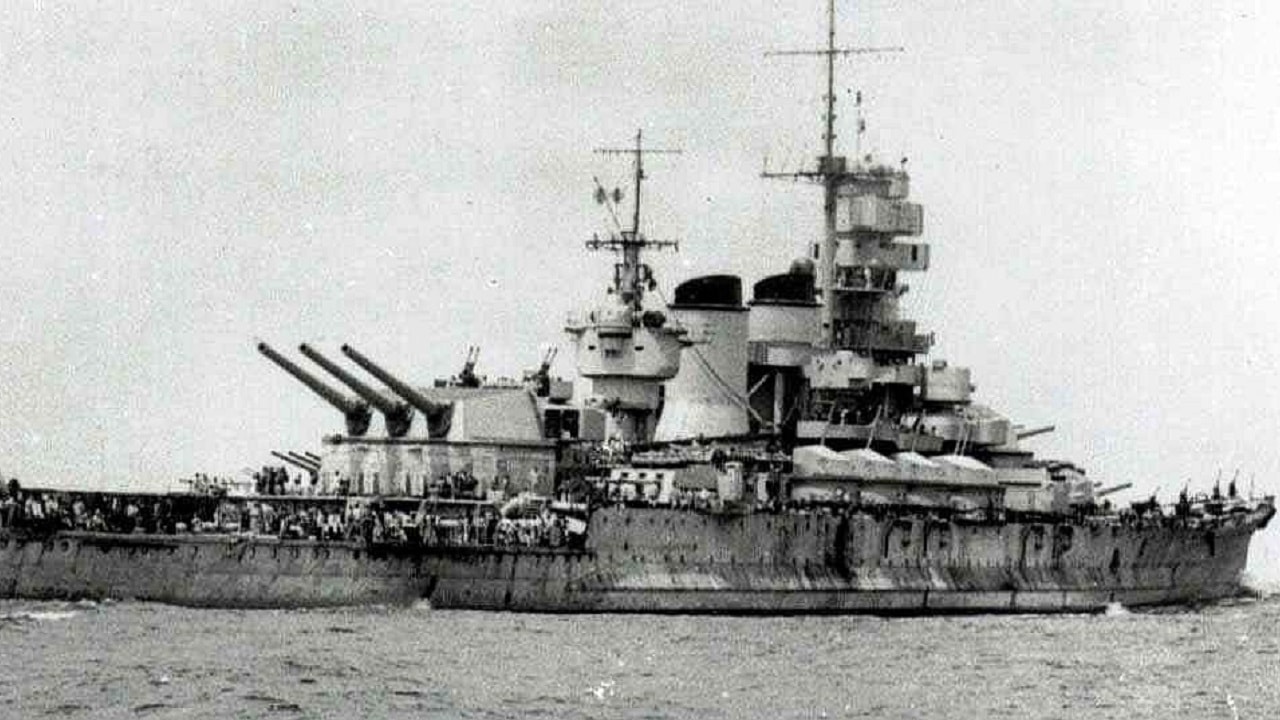
Key Points and Summary – In November 1940, Britain’s Royal Navy used HMS Illustrious to launch a night raid on Italy’s fleet at Taranto, proving carrier aviation could cripple capital ships like battleships in port.
-Fairey Swordfish biplanes—slow but steady at low altitude—dropped torpedoes modified for shallow harbor waters and punched through defenses once thought decisive.
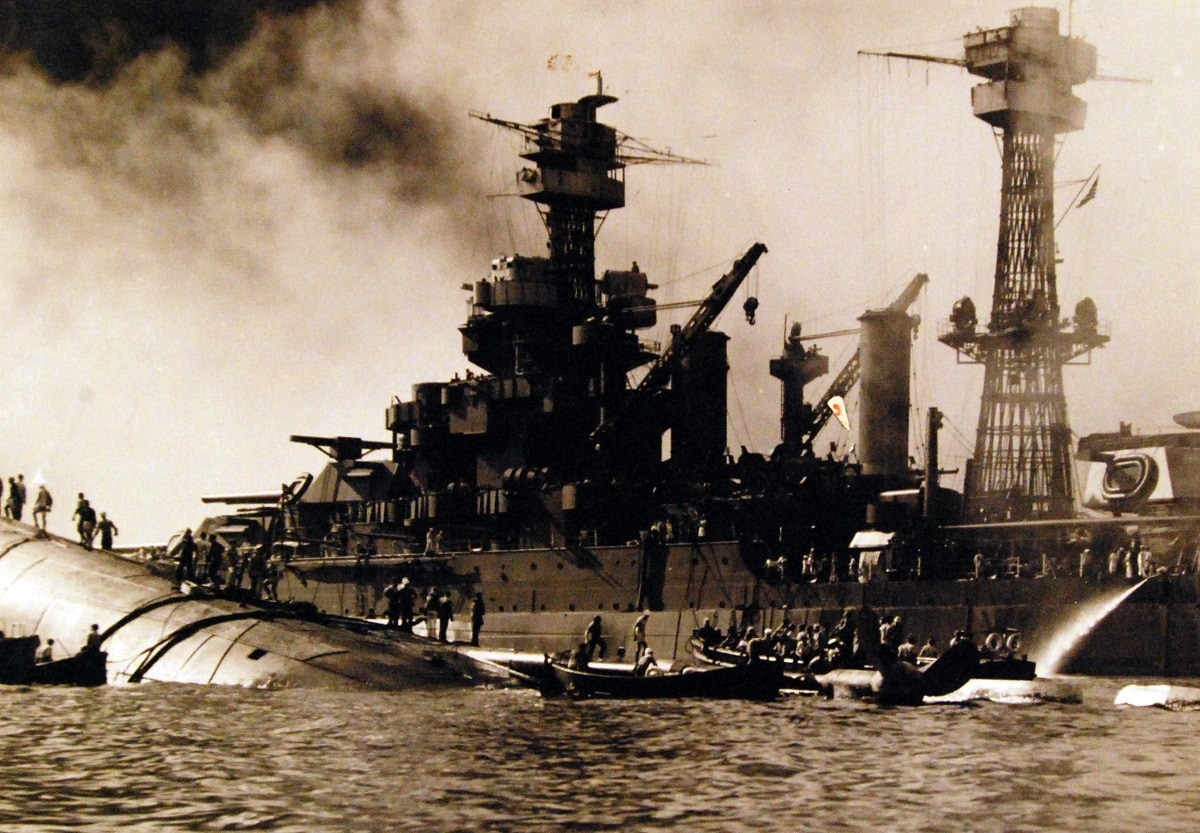
Pearl Harbor Attack. Image Credit: Creative Commons.
-Several Italian battleships were sunk or disabled, shifting naval power in the Mediterranean and, more importantly, shattering the belief that battleships were safe at anchor.
-Japan studied Taranto closely, extracting lessons about torpedoes, harbor depth, and massed airpower—then applied the concept at industrial scale at Pearl Harbor in 1941.
-Britain’s attack on the Italian fleet at Taranto in November 1940 is widely regarded as the first successful carrier-based strike against a major naval force in port.
Taranto Proved Aircraft Carriers Could Cripple Battleships—Before Pearl Harbor
Occurring before the Japanese attack on Pearl Harbor, at a time when aircraft carriers were still seen as supporting assets, Taranto helped change the perception of how carriers could be used in combat—perhaps inspiring Pearl Harbor itself.
The attack showed decisively that aircraft could cripple capital ships even when those ships were heavily defended and stationary. The raid shattered previous assumptions about naval warfare: that battleships were safest at anchor, when protected by anti-aircraft guns, nets, and geography, etc. These lessons would be applied in Hawaii, in 1941, to much wider consequence.
Strategic Context
In 1940, Britain was in strategic peril. After France’s capitulation, it was facing Germany alone. The Royal Navy was stretched thin, charged with providing Atlantic convoy protection, guarding against German invasion, and securing Mediterranean supply routes.
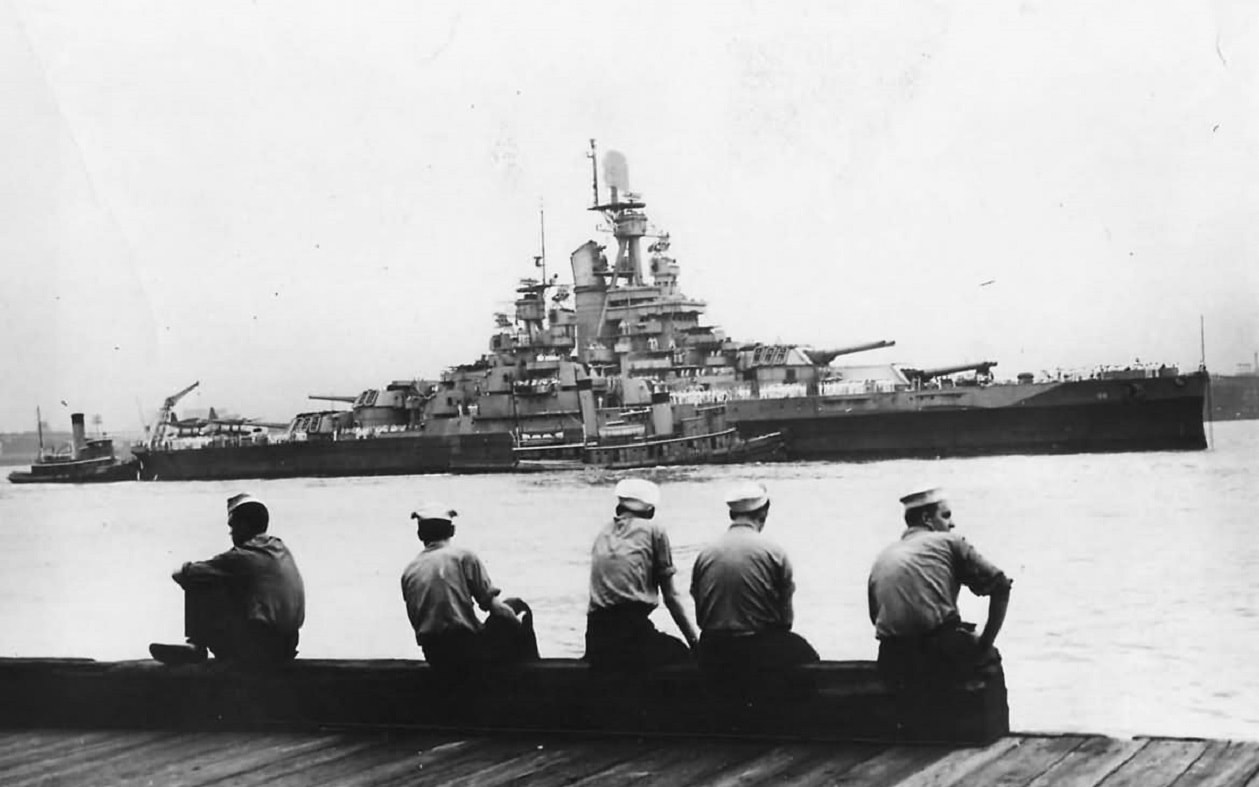
Battleship USS Nevada. Image: Creative Commons.
Italy’s entrance into the war posed a serious problem.
Italian naval bases sat astride key Mediterranean shipping lanes, allowing the Italians to threaten British access to the Suez Canal and Malta, a critical British base. The Italian Navy was capable, outfitted with several modern battleships, yet it largely avoided decisive battles, staying in port under the protection of land-based aircraft.
Britain, too strained to risk a direct confrontation, sought asymmetric solutions.
Radical Idea
At the time, the idea that aircraft carriers could destroy battleships in port was controversial and untested. Battleships were thought to be too heavily armored, too well defended, and protected by shallow harbor waters that would defeat torpedoes.
The Royal Navy, however, had been quietly studying the problem since the late 1930s and was ready to test a new philosophy: If the fleet won’t come out and fight, then bring the fight to the fleet. Use air power not as support, but as the primary striking arm.
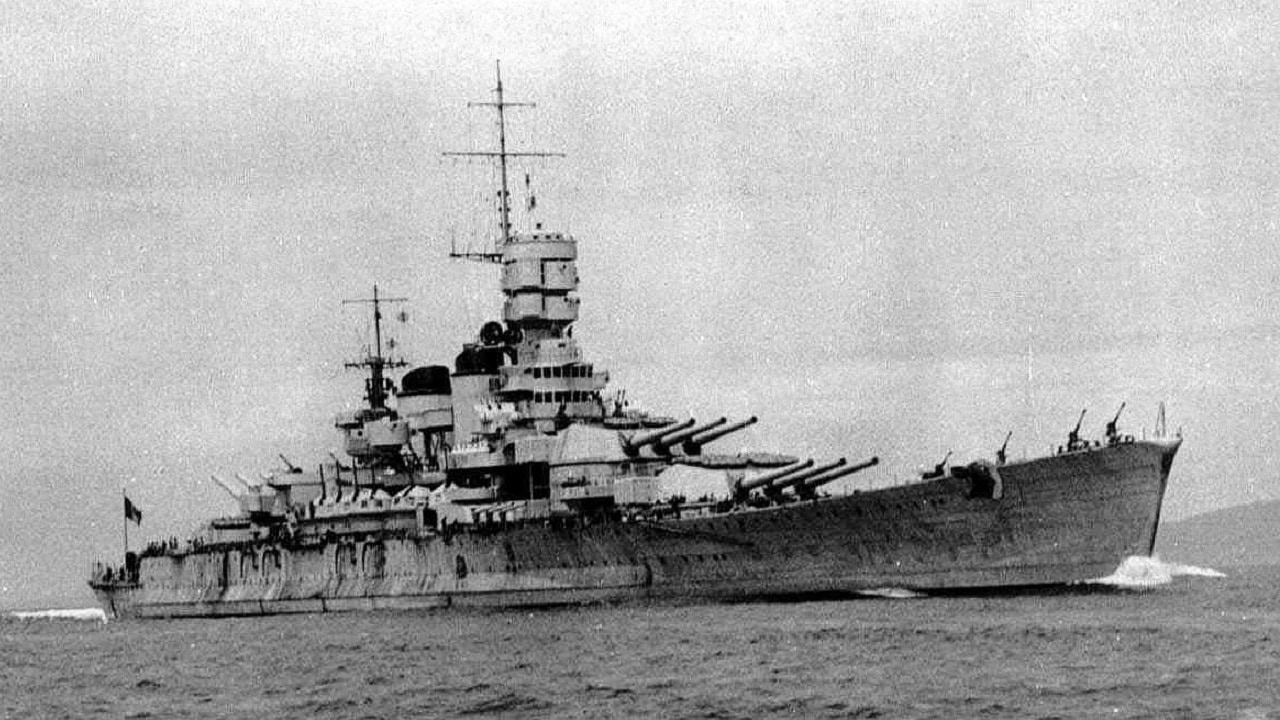
The Italian battleship Roma.
The attack relied on one aircraft carrier, HMS Illustrious, with only a modest escort. The aircraft launched from the Illustrious were Fairey Swordfish—fabric-covered biplanes that already looked obsolete in the 1940s.
But the Swordfish had their advantages—namely, high stability at low speeds, the ability to fly low over water at night, and exceptional accuracy when deploying torpedoes. This combination was perfectly tailored for attacking battleships in port. Britain further modified weaponry to suit the attack specifics, altering their torpedoes to run in shallow water, and launching the attack at night to avoid Italian fighters.
The attack worked. Three Italian battleships were sunk or disabled, while the British sustained only minimal losses. The encounter demonstrated that sometimes technological sophistication was less important than tactical daring.
Strategic Shock
The Italian fleet was not destroyed outright—only neutralized. But the most important takeaway stemmed not from physical damage, but from the resultant signal that battleships were no longer safe anywhere; air power could reach into sanctuaries once thought inviolable.
Japan, watching from afar, internalized the lesson. Naval officer Lt. Takeshi Naito, in particular, studied the Taranto attack with a focus on harbor depth, torpedo performance, aircraft numbers, and defensive failures. Naito’s insights were simple but profound: If 21 aircraft could cripple a fleet, hundreds of aircraft could destroy a fleet. Taranto had provided a proof of concept that Japan would later industrialize.
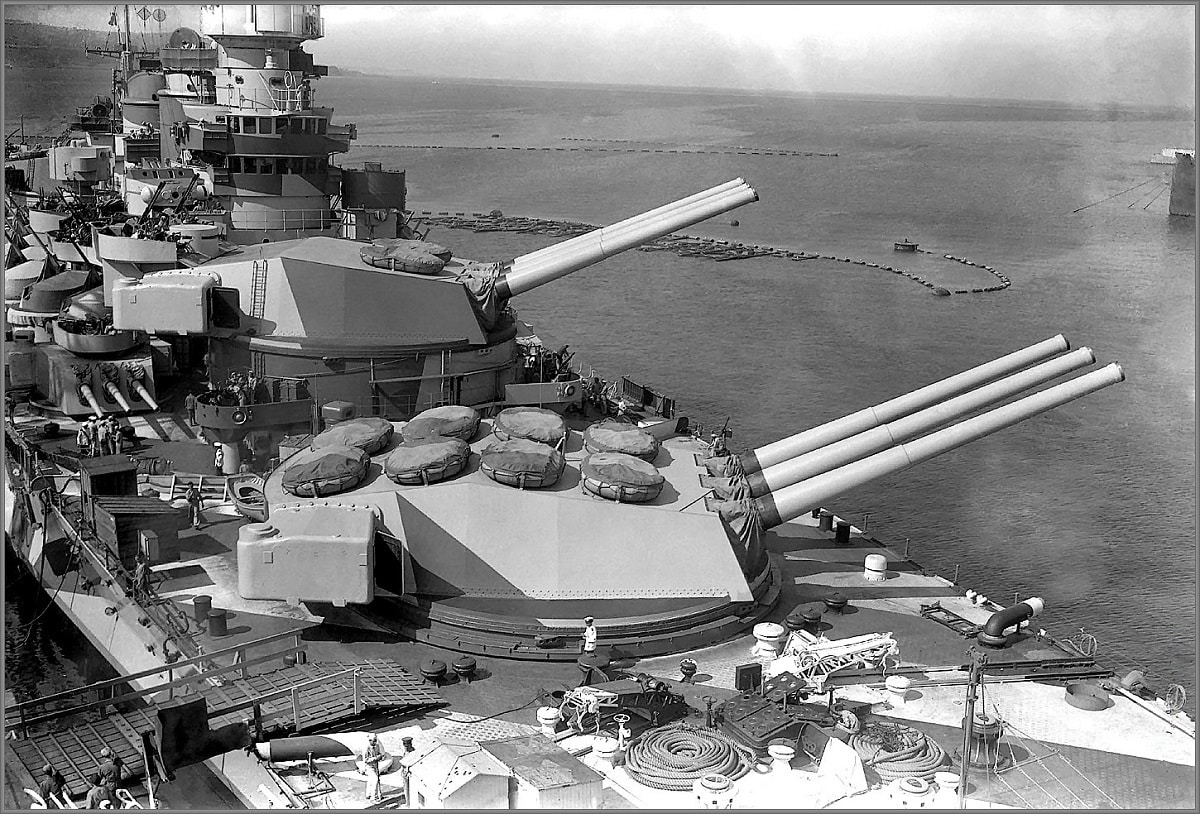
View of the bridge and forward turrets on the Italian battleship ‘Roma’.
America meanwhile failed to heed the lessons of Taranto. A U.S. officer had observed the attack first hand, and reports were written and circulated. But the bureaucracy acted slowly and existing assumptions ultimately went unchallenged.
Pearl Harbor was allowed to persist in a state of complacency, without torpedo nets installed, under the assumption that shallow water would be protective.
Japan oapplied the logic of Taranto at scale, with massed aircraft, refined torpedoes, and coordinated waves of aircraft. Pearl Harbor was devastating, proof positive that Taranto was not a fluke—and that the battleship era was over.
Taranto showed that the future often arrives quietly, and that the most dangerous innovations can look unimpressive at first. Here, the British proved a novel idea. The Japanese studied the idea, scaled it, and weaponized it.
The Americans ignored it, and the result was a catastrophic attack that initiated a four-year island-hopping endeavor across the Pacific that altered human history, climaxing in two nuclear detonations and Japan’s absolute capitulation.
About the Author: Harrison Kass
Harrison Kass is an attorney and journalist covering national security, technology, and politics. Previously, he was a political staffer and candidate, and a US Air Force pilot selectee. He holds a JD from the University of Oregon and a master’s in global journalism and international relations from NYU.