
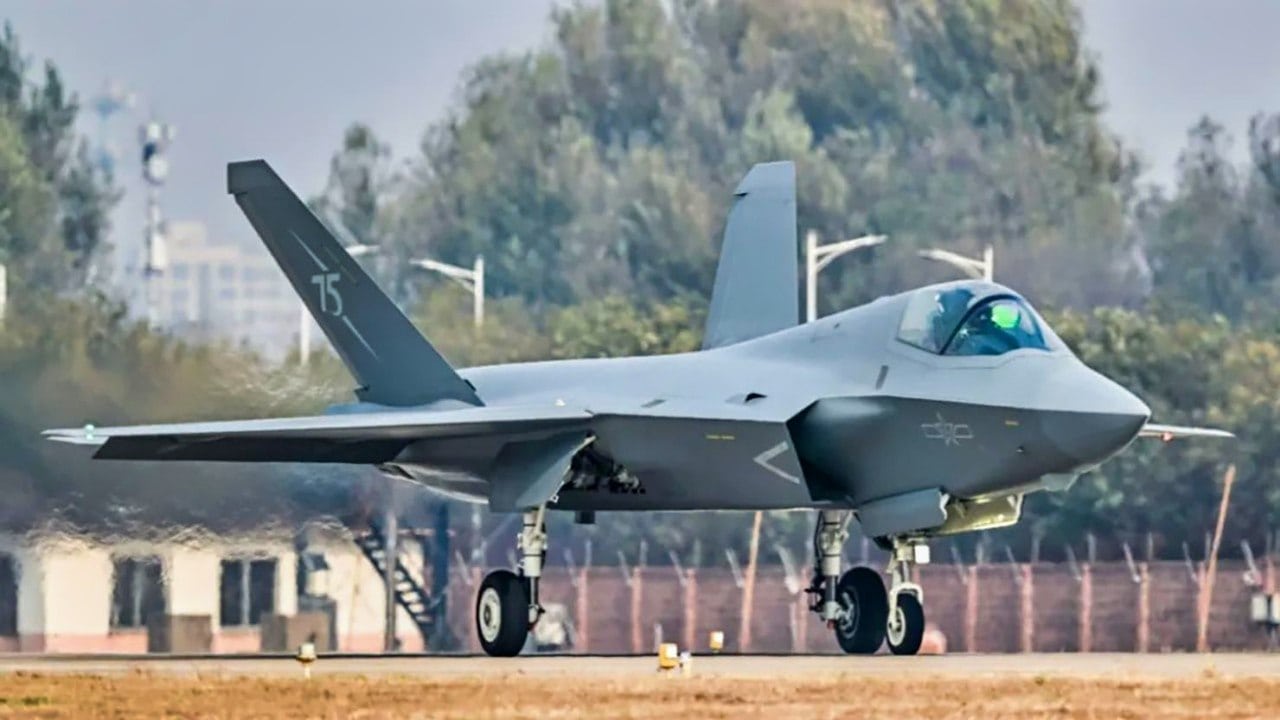
Key Points and Summary – China’s Shenyang J-35A “Gyrfalcon” is a twin-engine, fifth-generation multirole stealth fighter designed to complement the heavier J-20—and to be cheaper, more exportable, and easier to mass-produce.
-With internal weapons bays, AESA radar, IRST, and a projected 600-mile combat radius, the J-35A is built for air superiority, strike, and SEAD from dispersed mainland bases.
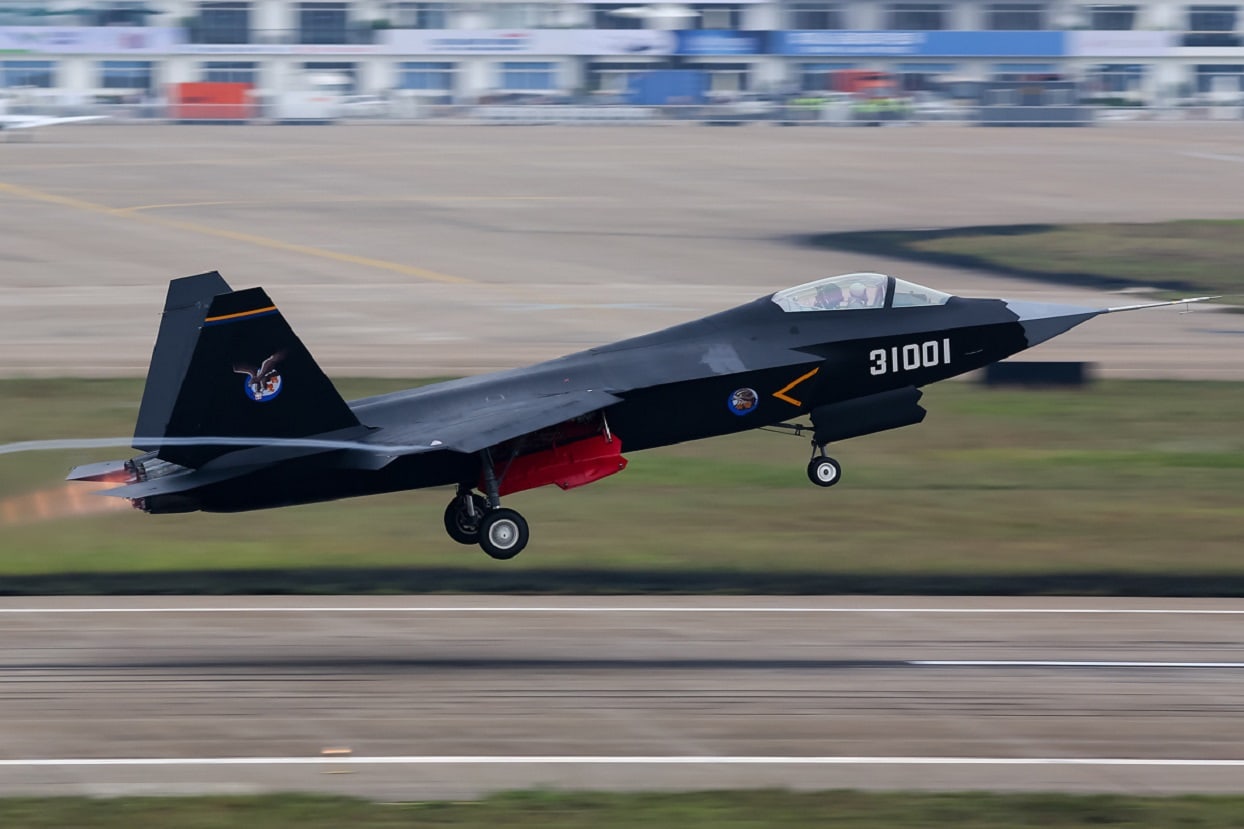
J-35 Fighter. Image: Creative Commons.
-If China can solve the WS-19 engine and scale production, hundreds of J-35As could join J-20s to form a layered stealth fleet, threatening US tankers, AWACS, and regional defenses around Taiwan and beyond while offering Beijing a fifth-gen export alternative to the F-35.
In 2 Words: Budget F-35?
J-20 Was Just the Start: China’s J-35A Stealth Jet Could Flood the Skies
The Shenyang J-35A “Gyrfalcon” is a Chinese fifth-generation multirole fighter currently in development.
The A-variant is land-based, distinct from the carrier-capable variant being developed to operate from China’s Fujian-class carriers.
The J-35A, an effort to field a lower-cost, exportable stealth fighter comparable to the US F-35, is intended to complement (not replace) the existing J-20 Mighty Dragon, a heavier fifth-generation fighter currently in service.
In Development
The J-35A first appeared as a rudimentary demonstrator prototype without consistent stealth shaping. Refinements have been made in the years since, suggesting that the platform’s stealth performance has improved.
Built with twin engines for redundancy and higher thrust loading, the J-35A features shaping reminiscent of Western fighters—with chin intakes, blended fuselage, and canted tails. Observers expect the aircraft to feature an internal weapons bay for a lower radar cross-section (RCS).
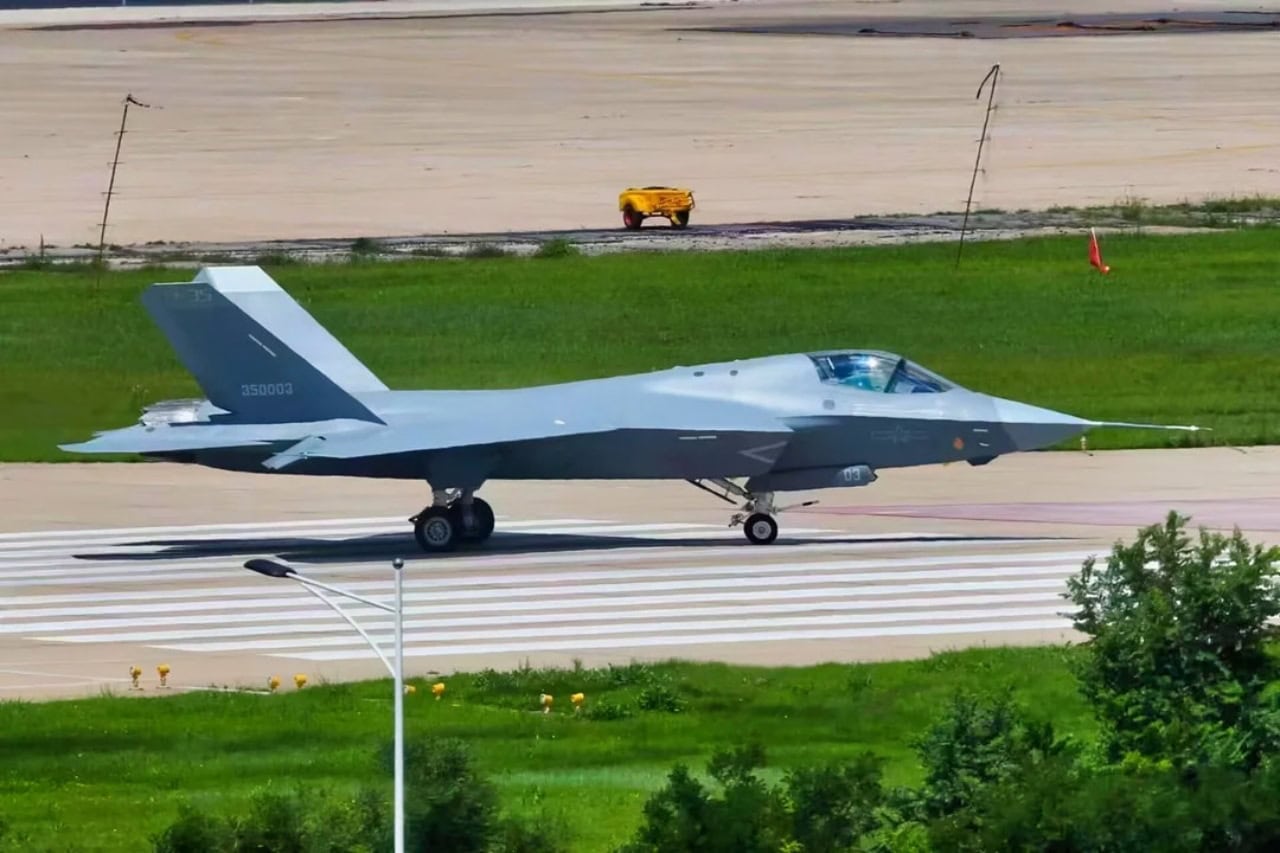
J-35 Fighter. Image Credit: Chinese Internet.
China has disclosed little about the J-35A but open source estimates suggest the following technical specifications: 55-foot length with a 37-foot wingspan; a max takeoff weight of 50,000 pounds; two WS-19 engines offering an estimated thrust of about 20,000 pounds each and a top speed of about Mach 1.8; range of 1,200 miles and a combat radius of 600 miles; avionics will likely include AESA radar, electro-optical targeting system, embedded IRST; weapons will likely include the PL-10 short-range IR missile, PL-12/15 BVR missiles, and precision-guided ground attack munitions.
Operational Application for J-35A
The J-35A is a multirole fighter, likely capable of executing air superiority, strike, and suppression of air defense (SEAD) missions.
The aircraft is expected to operate from dispersed bases across mainland China and to serve as a tactical stealth platform for early-phase operations while the larger J-20 handles deep and long-range missions.
If all goes as planned, the J-35A could be China’s first exportable fifth-generation fighter, targeting Pakistan and other suitors.
The J-35A is intended to expand China’s stealth fleet numerically and reduce reliance on fourth-generation fighters like the J-10, J-11, and J-16.
Cheaper and easier to mass-produce, the J-35A offers an affordable and numerous stealth option.
This strengthens China’s move towards a multi-tiered stealth force structure—similar to the US pairing between the F-22 and the F-35.
The strategic implications of the J-35A are potentially significant; the platform could dramatically increase the number of stealth aircraft China can field (a key metric in a peer conflict).
This enhances China’s ability to contest air superiority around Taiwan, threaten US enabler aircraft (AWACS, tankers, etc.), and penetrate regional defenses (Japan, Philippines). The presence of the J-35A could force the US and its allies to assume stealth-on-stealth engagements.
And if exported successfully, the J-35A could reshape air power balances in Asia, supporting China’s long-term effort to present itself as an alternative to US military technology markets.
Why the U.S. Air Force Should Worry
The J-35A may enter full-scale production in the late 2020s or early 2030s. Presently, the development of the WS-19 engine remains the major gating factor. Once the engine is ready, assuming production goes smoothly, the J-35A is expected to become a mainstay of China’s stealth modernization efforts, especially if the J-20 remains expensive to build in large numbers.
China’s industrial capacity is enormous, and with the J-35A appearing to be engineered for rapid, scalable production (relative to the more complex J-20), China may be able to field hundreds of J-35As.
Doing so would sharply shift the numerical component of air superiority calculations in the Western Pacific.
This would force the US to alter its war planning, having to account not just for a few elite J-20 units, but a broad stealth fleet.
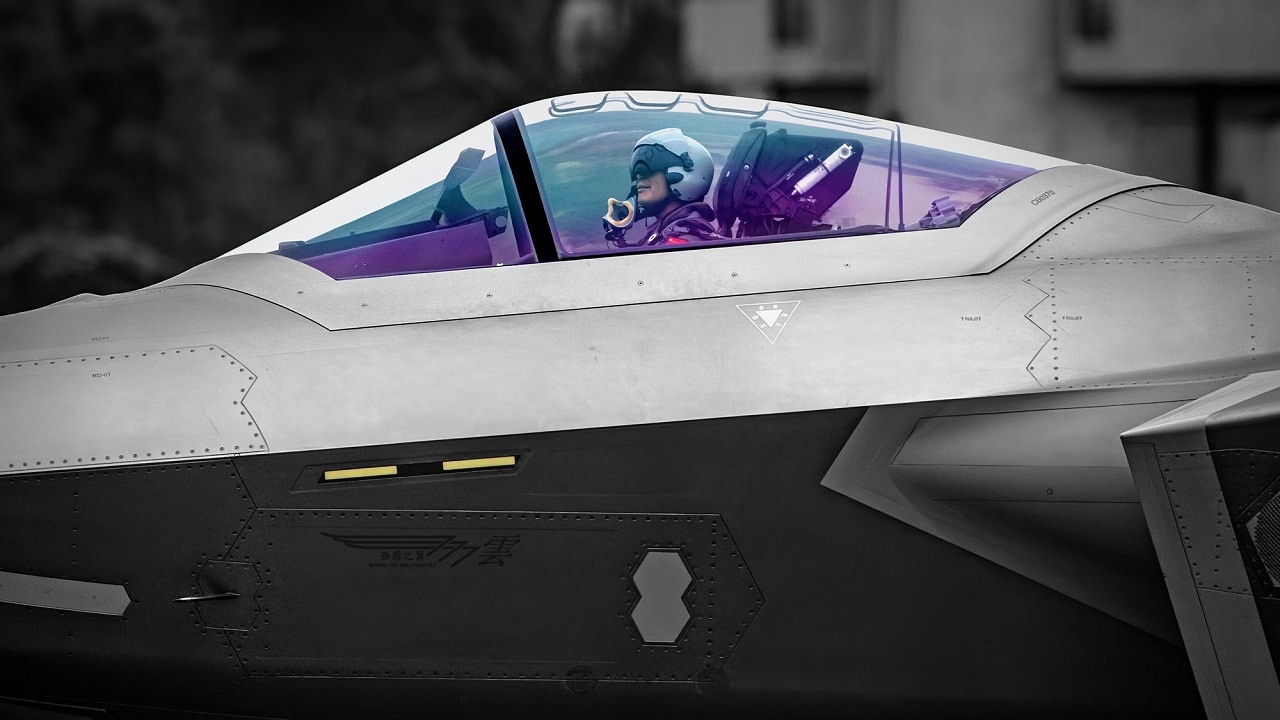
J-20 Fighter. Image Credit: Creative Commons.
The potential combination of J-20s (with long-range sensors and missile platforms) and the J-35A (offering forward mass) would allow China to conduct stealth saturation—overwhelming defenders through quantity and low observability.
This would force an adaptation from US Integrated Air and Missile Defense (IAMD), which is built around tracking and prioritizing a limited number of stealth threats.
Pressure would also be increased on US support aircraft, like AWACS, tankers, P-8 maritime patrol aircraft, and EA-18G Growlers—who are absolutely vital to US operations, a central component of US doctrine.
The presence of numerous J-20 and J-35A fighters would make these US support platforms extremely vulnerable, possibly forcing a doctrinal shift.
About the Author: Harrison Kass
Harrison Kass is an attorney and journalist covering national security, technology, and politics. Previously, he was a political staffer, candidate, and a US Air Force pilot select. He holds a JD from the University of Oregon and a master’s in global journalism and international relations from NYU.