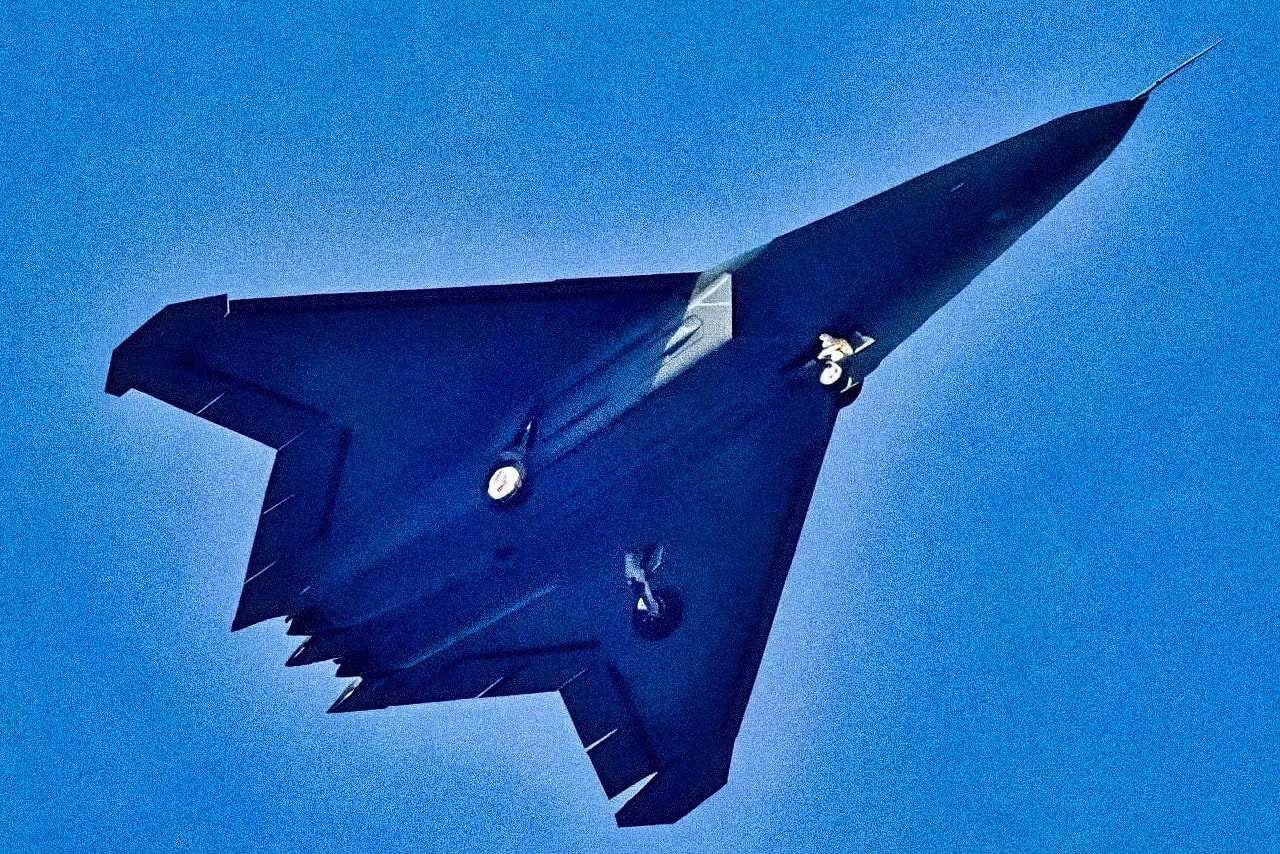
Key Points and Summary – Public glimpses of China’s carrier-launched, sixth-generation Shenyang J-50 suggest a paradox: a B-2-like “lambda wing” and tailless planform that should help reduce radar returns, paired with jagged angles, rectangular inlets, and angled exhaust geometry that could complicate low observability.
-The bigger question, though, is less about shape than what can’t be seen—radar aperture size, sensor fusion, computing power, networking, and fire-control speed.
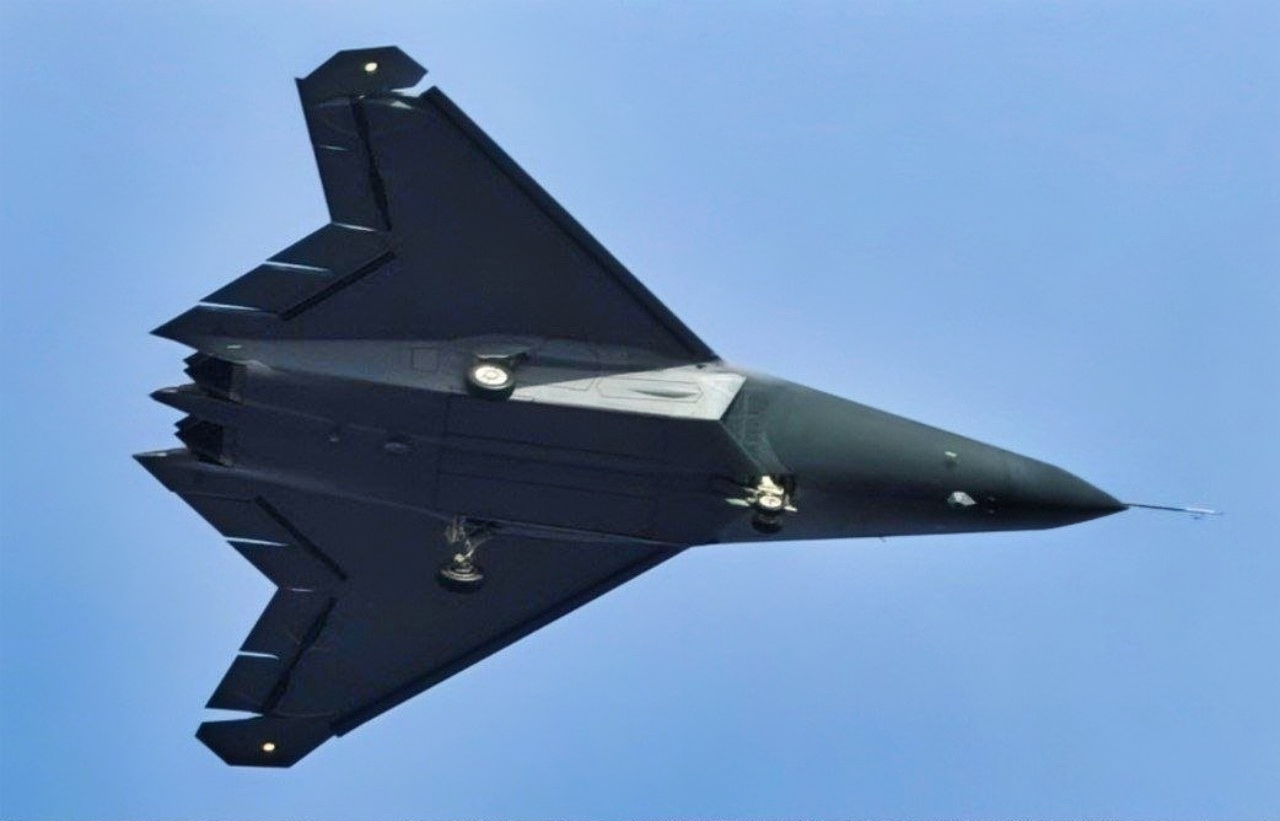
J-50 Fighter. Image Credit: Creative Commons.
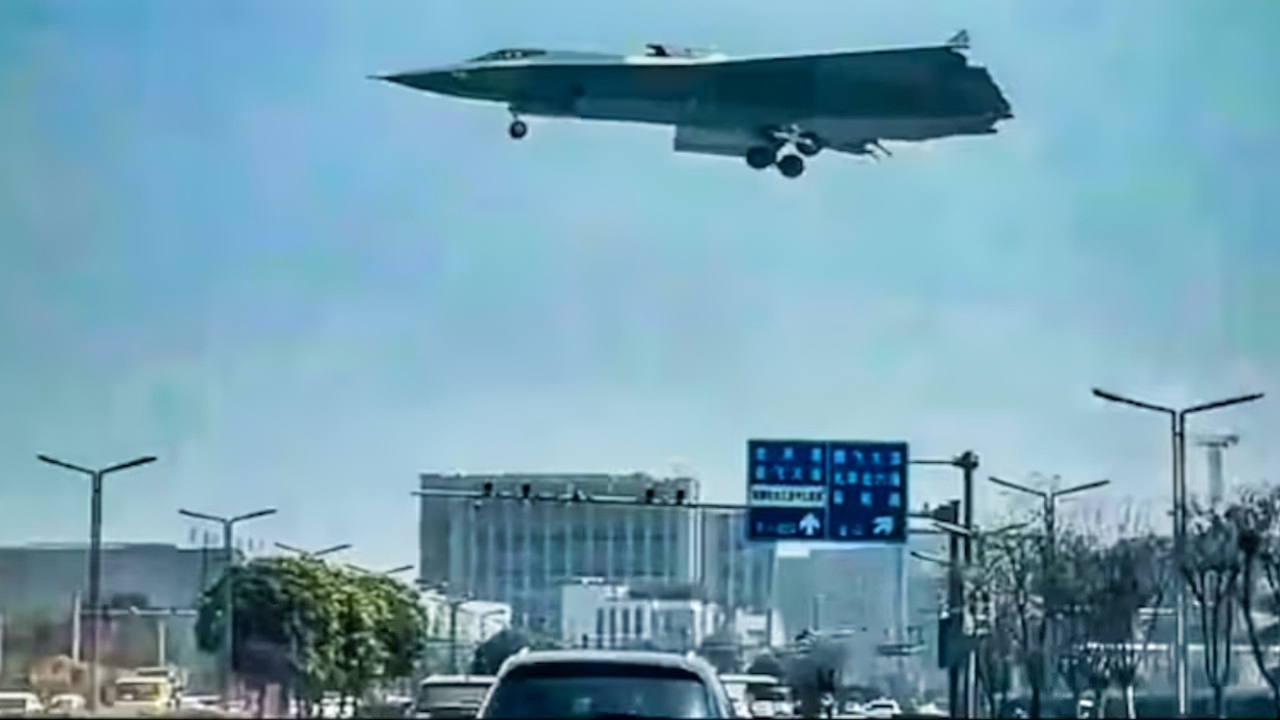
J-50 Fighter from the Road. Image Credit: Creative Commons/Screenshot.
-If the J-50 is optimized for distributed operations—using unmanned teammates for ISR and targeting—then the aircraft may not need a massive nose radar or close-in dogfighting agility.
-The decisive margin will likely be mission systems, not aesthetics.
Why the J-50 Might Not Need Dogfighting to Win
Available public images of China’s new 6th-generation, carrier-launched, stealthy Shenyang J-50 aircraft show a side-frontal view of the aircraft and its underside and rear exhaust.
The fuselage appears to have some jagged angles, rectangular inlets beneath the wings, and angled exhaust structures on the back, all of which might decrease stealth effectiveness.
Yet the J-50 does operate with a B-2-like “lambda wing” configuration, which research indicates, combines leading-edge and trailing-edge sweep with forward and backward-swept structures.
The J-50, which is also the Shenyang Aircraft Corporation’s (SAC) J-XDS, may be a 6th-gen breakthrough stealth fighter or a simple F-47 copycat effort that falls well short of US 6th-gen capacity.
Stealthy Lambda Wing
A working online definition describes the distinct lambda wing shape as a configuration that allows the inboard wing to taper heavily. In contrast, the outboard section tapers slightly or not at all, creating advantages in aerodynamic efficiency, high-speed stability, and low radar cross-section for stealth.
A research essay from Science Direct in 2013 seems to confirm or support this definition, stating, “A lambda-shaped wing has some advantages compared to the traditional trapezoidal delta wing. For instance, the aspect ratio of the lambda wing increases aerodynamic efficiency, which leads to higher cruise lift/drag ratios.”
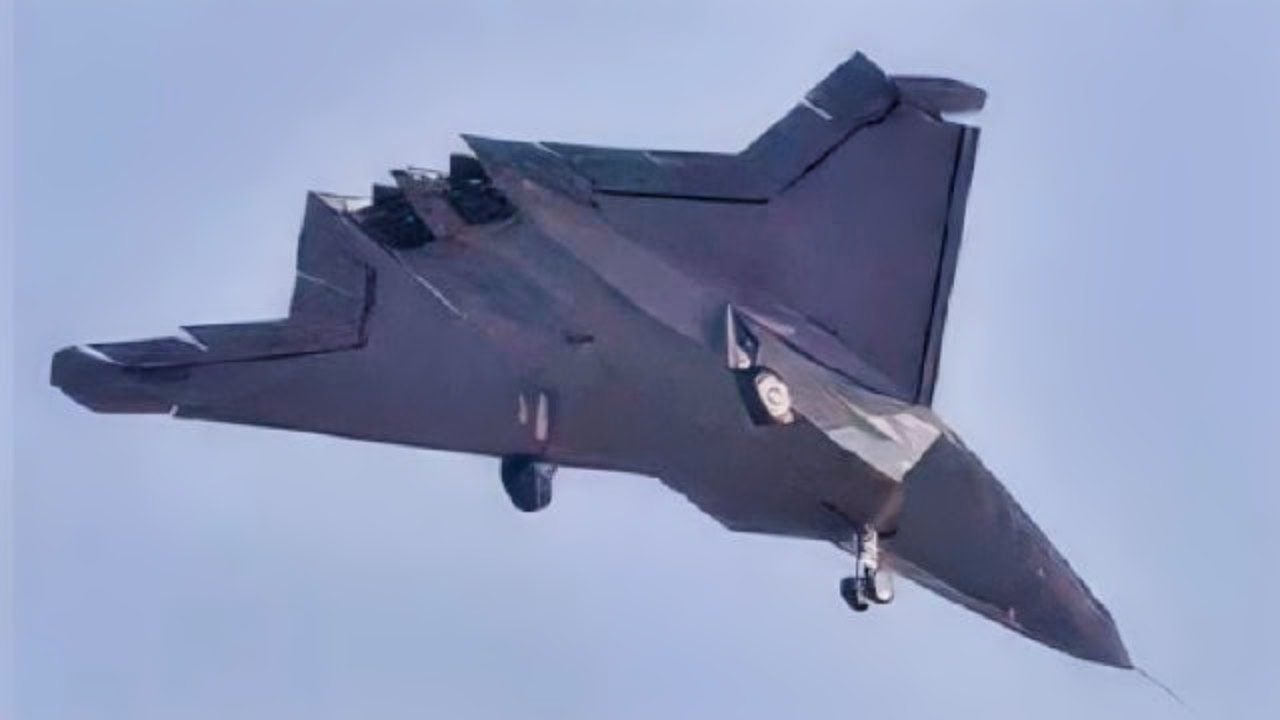
China’s J-50 Fighter. Image Credit: Screenshot from X.
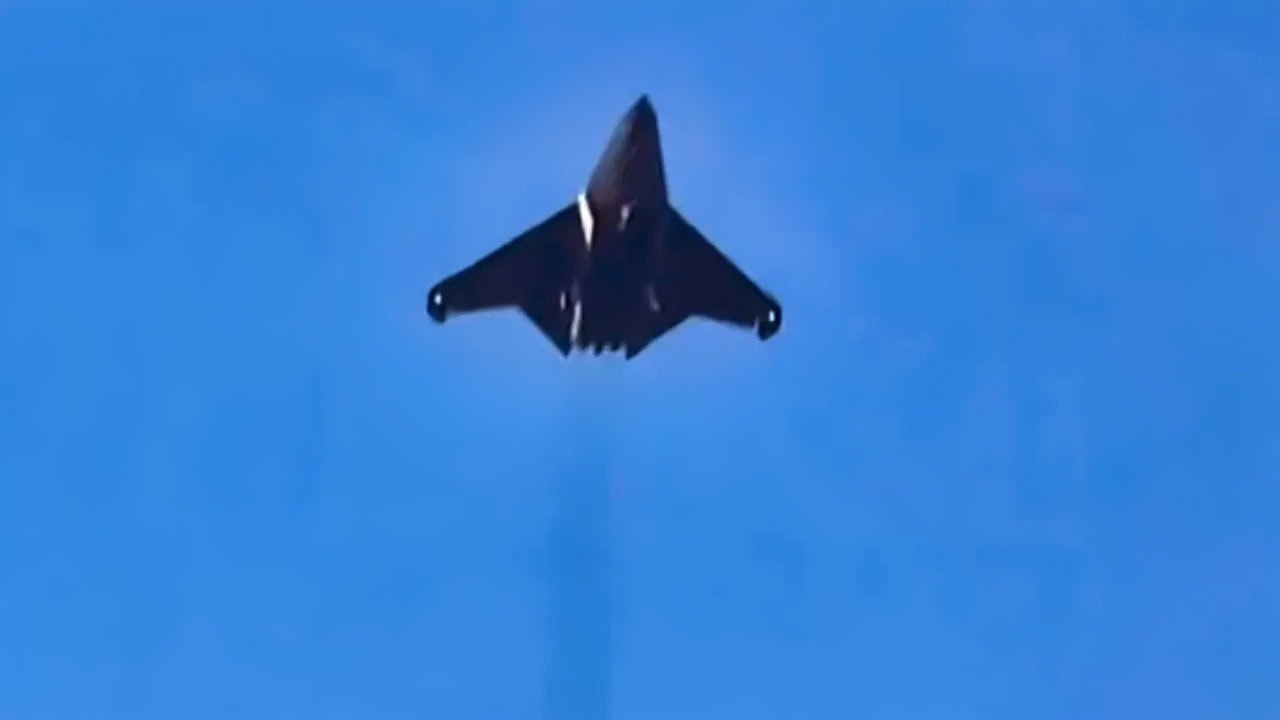
J-50 Fighter from China. Image Credit: Screenshot from Social Media.

J-50 Fighter. Image Credit: Creative Commons.
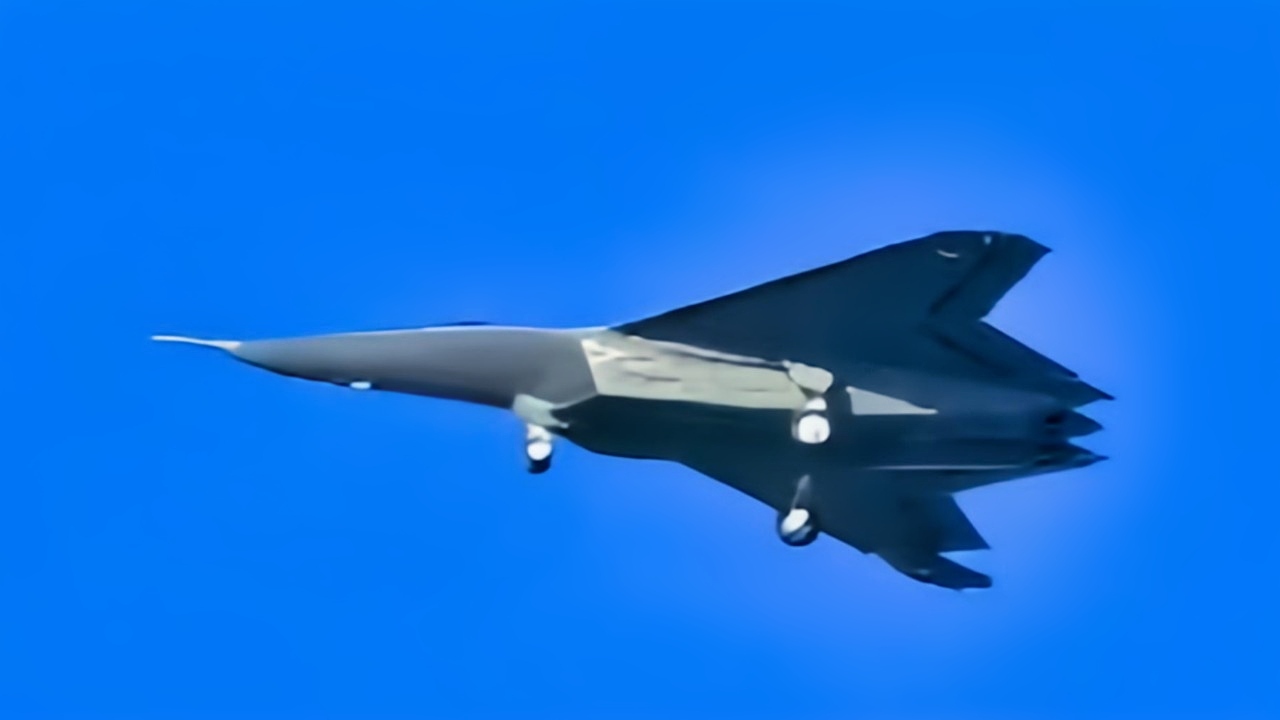
J-50 Fighter from China. Image Credit: Creative Commons.
J-50 & F-47
An advanced or superior lift-to-drag ratio would arguably position the aircraft to compete well for air dominance in an engagement, as it would enable greater air-combat agility. The J-50 looks very fast and may be an effort to match or outperform US F-22s.
With a fully horizontal configuration and no protruding structures such as tails or fins typically thought of as necessary for combat agility and air-war vectoring, perhaps the J-50 is stealthier than an F-22?
Without protruding structures and external angled shapes, ground-based air-defense radar has little to no surfaces on which to bounce an electromagnetic “ping” sufficient to generate a return rendering.
F-47 & F/A-XX Copycat?
Have technological advances in recent years enabled breakthroughs that allow air-dominance vectoring without “any” vertical structures?
Perhaps the J-50 can achieve unprecedented agility and maneuverability with a fully horizontal fuselage, devoid of vertical structures, fins, or tails of any kind?
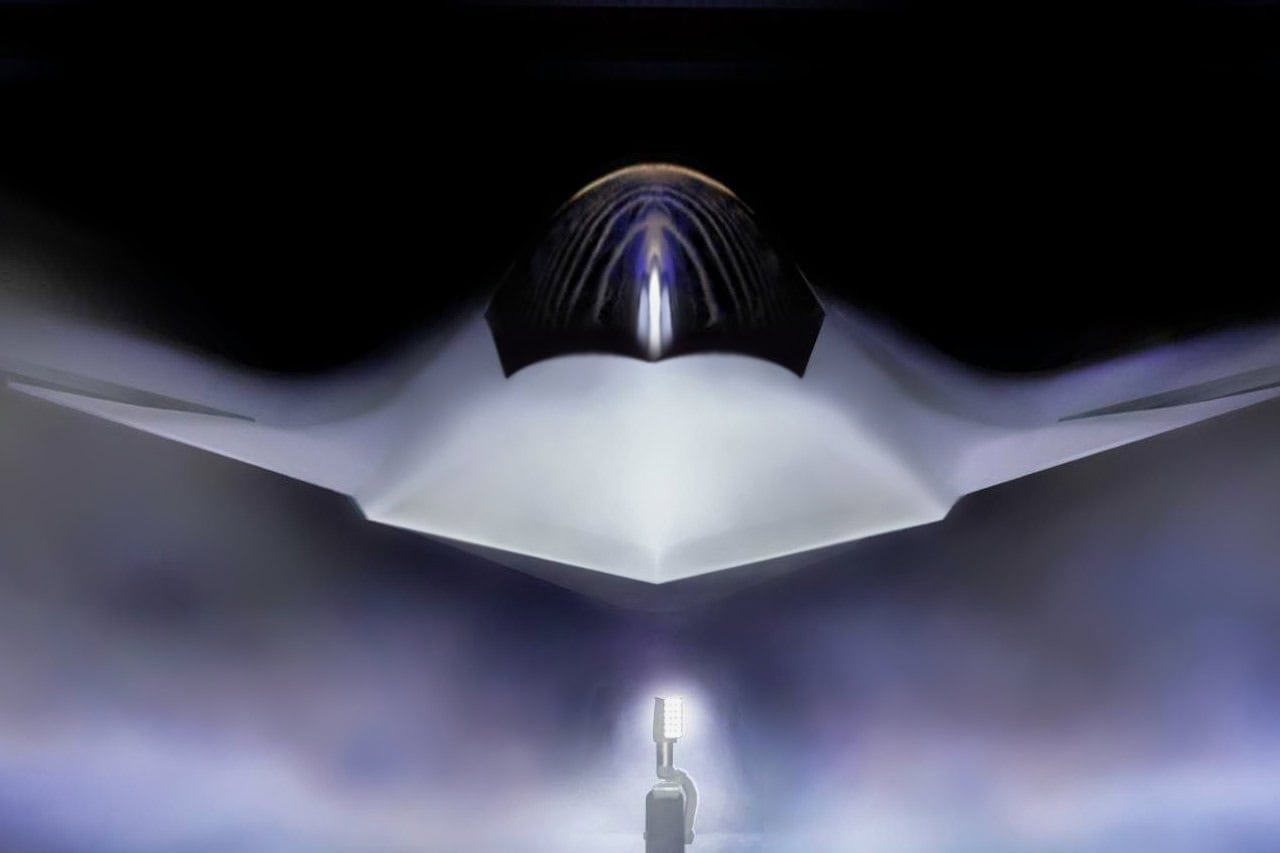
Shown is a graphical artist rendering of the Next Generation Air Dominance (NGAD) Platform. The rendering highlights the Air Force’s sixth generation fighter, the F-47. The NGAD Platform will bring lethal, next-generation technologies to ensure air superiority for the Joint Force in any conflict. (U.S. Air Force graphic)
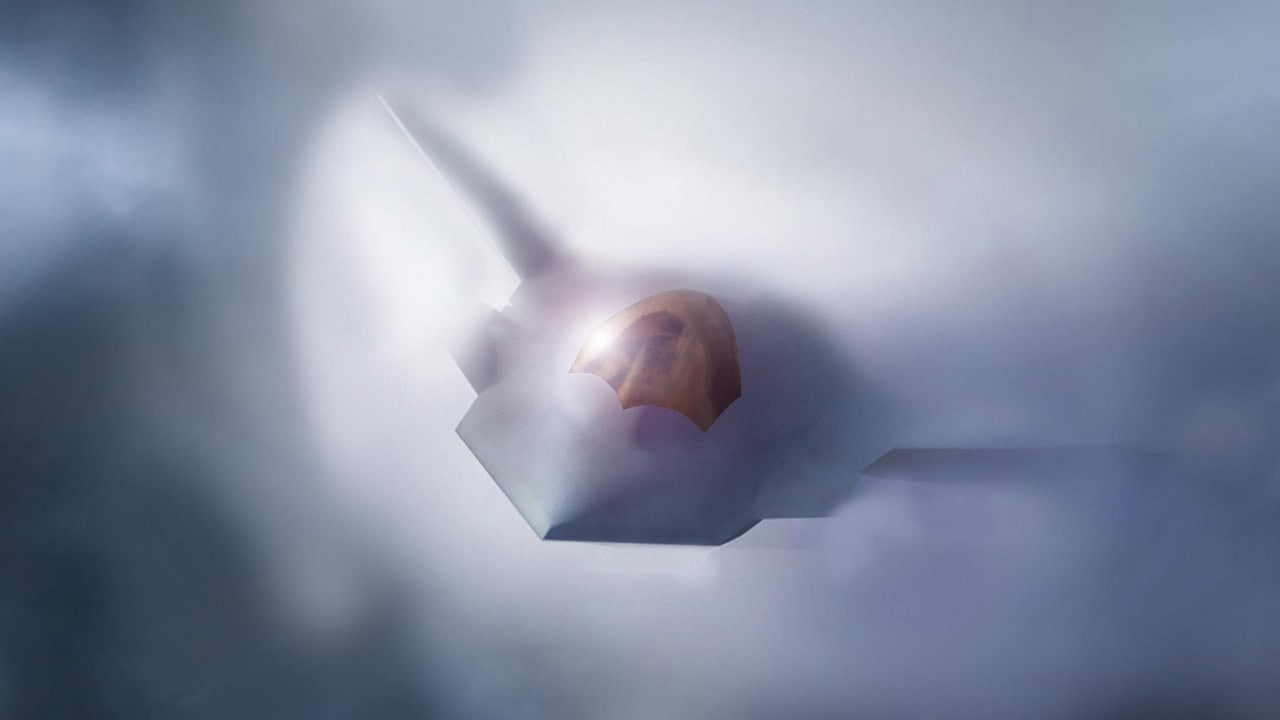
F-47 Fighter. Image Credit: U.S. Air Force.
This is certainly possible, yet it does not suggest the People’s Liberation Army Air Force (PLAAF) has made any advances beyond the F-47 or the emerging F/A-XX, given that renderings of both aircraft suggest they can operate effectively as maneuverable fighter jets without any vertical structures. Could such a breakthrough merge the stealth effectiveness of a bomber with the speed and agility of a stealth fighter jet?
This appears to be the case with the F-47 as well as the J-50, a possible indication that the PLA is simply seeking to mirror, copy, or replicate the US’s NGAD configurations.
J-50 Radar?
Regardless of what can be ascertained from photographs of an aircraft’s external configuration, the real margin of difference with an aircraft such as this would likely depend on variables less visible.
For instance, radar image fidelity and range, targeting precision, sensing, computing, and avionics are areas of the J-50 that could be difficult to determine from a cursory look at the exterior.
Yet it is precisely these kinds of attributes that will likely be more determinant in terms of how or why one aircraft prevails.
Mission systems, fire control, weapons accuracy and range, sensing, and high-speed, AI-enabled targeting and sensor-to-shooter pairing will likely be the areas through which one stealthy horizontal stealth fighter jet might achieve superiority over another.
A smaller, narrower, or pointier nose radome may bring the advantage of added stealth.
Yet it might not provide sufficient space to “package” the large, concentrated number of transmit/receive modules required to support a long-range radar. This suggests the platform is intended for closer-in air-to-air engagements or missions requiring new levels of speed and agility, such as maneuvering into position to destroy enemy air defenses and ground targets with unprecedented speed.
These missions might not require a larger, long-range radar built into the nose radome.
The J-50 could also operate in an unmanned capacity, enabling it to achieve its operational aims without a larger, longer-range radar. It may network with unmanned systems in a position to test enemy air defenses, blanket areas with ISR, or launch attacks when directed by a human. Perhaps long-range sensing and targeting have evolved to a point such that dogfighting will become much less likely.
About the Author: Kris Osborn
Kris Osborn is the President of Warrior Maven – Center for Military Modernization. Osborn previously served at the Pentagon as a highly qualified expert in the Office of the Assistant Secretary of the Army—Acquisition, Logistics & Technology. Osborn has also worked as an anchor and on-air military specialist at national TV networks. He has appeared as a guest military expert on Fox News, MSNBC, The Military Channel, and The History Channel. He also has a Masters Degree in Comparative Literature from Columbia University.