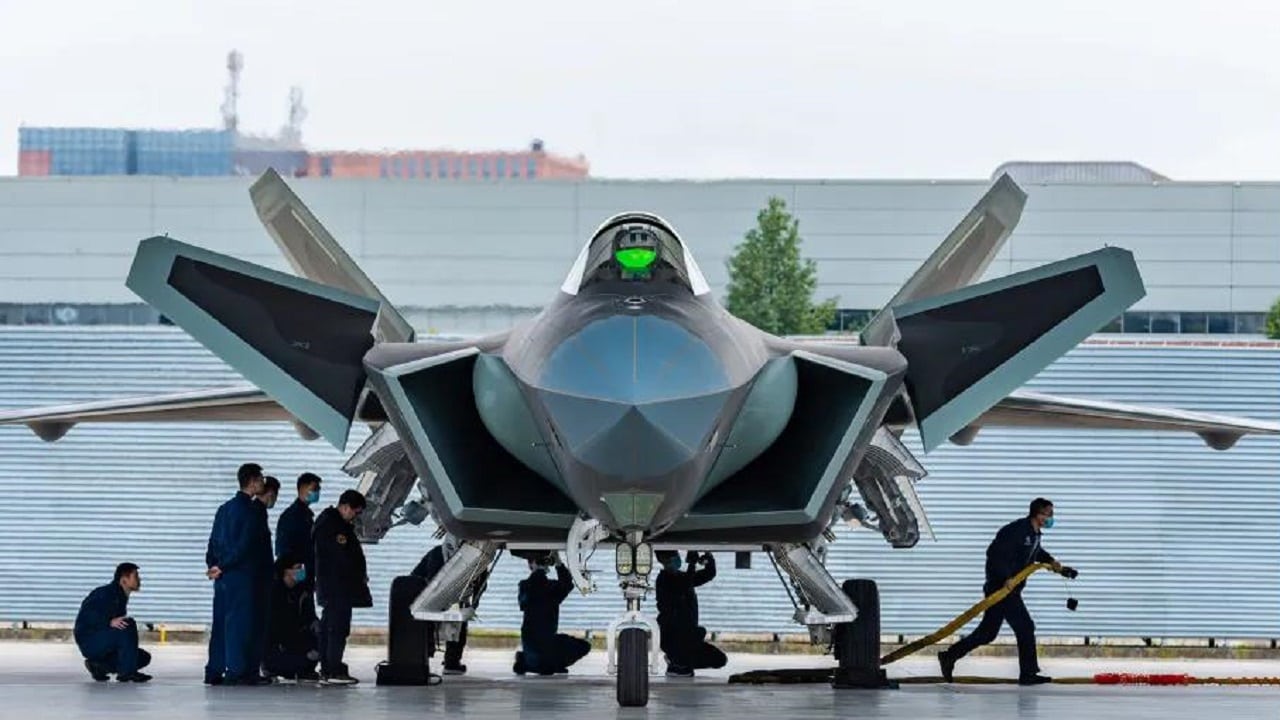
Key Points and Summary – Chinese researchers linked to CASIC report a microwave-absorbing aircraft coating for stealth fighters and bombers that is derived from dried loofah and aims to reduce detection by space-based radar.
-The process carbonizes loofah into a porous carbon network and embeds nickel-cobalt oxide (NiCo₂O₄) nanoparticles, producing an NCO-2 composite layer about 4 mm thick.
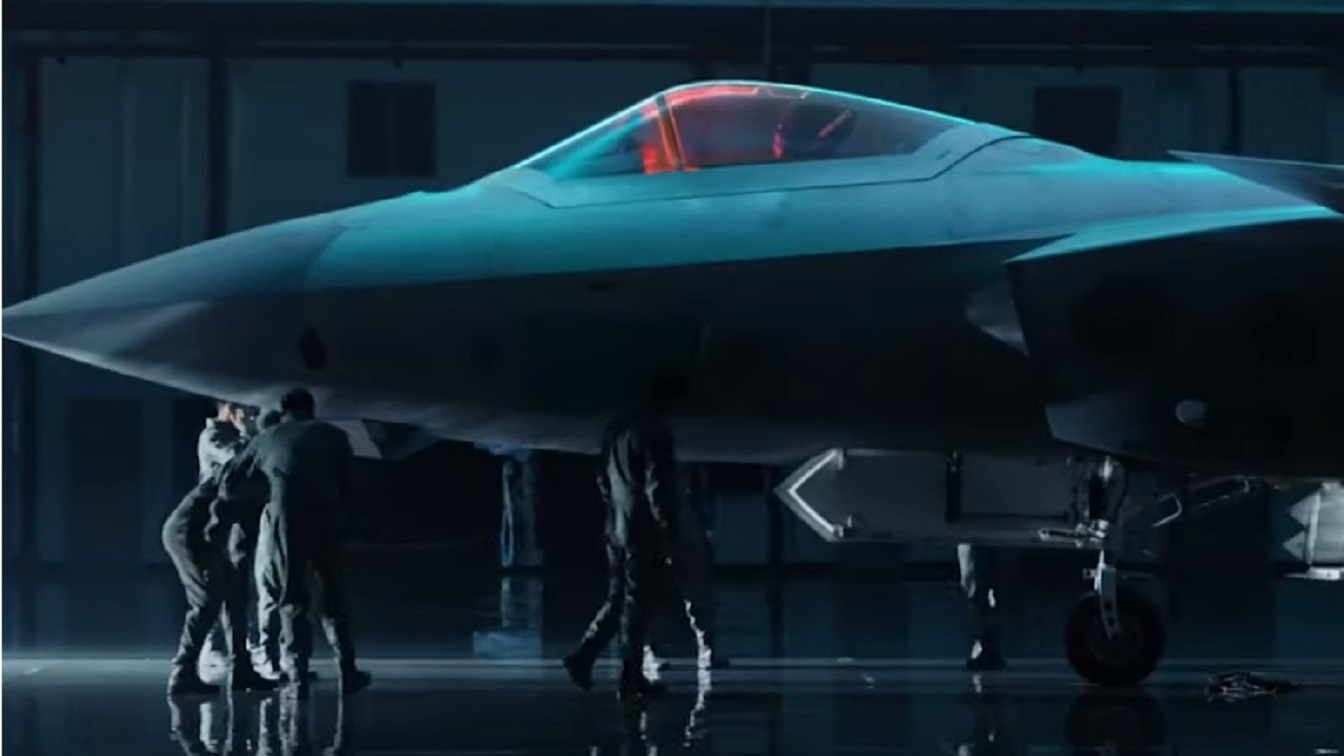
J-20 Stealth Fighter. YouTube Screenshot.
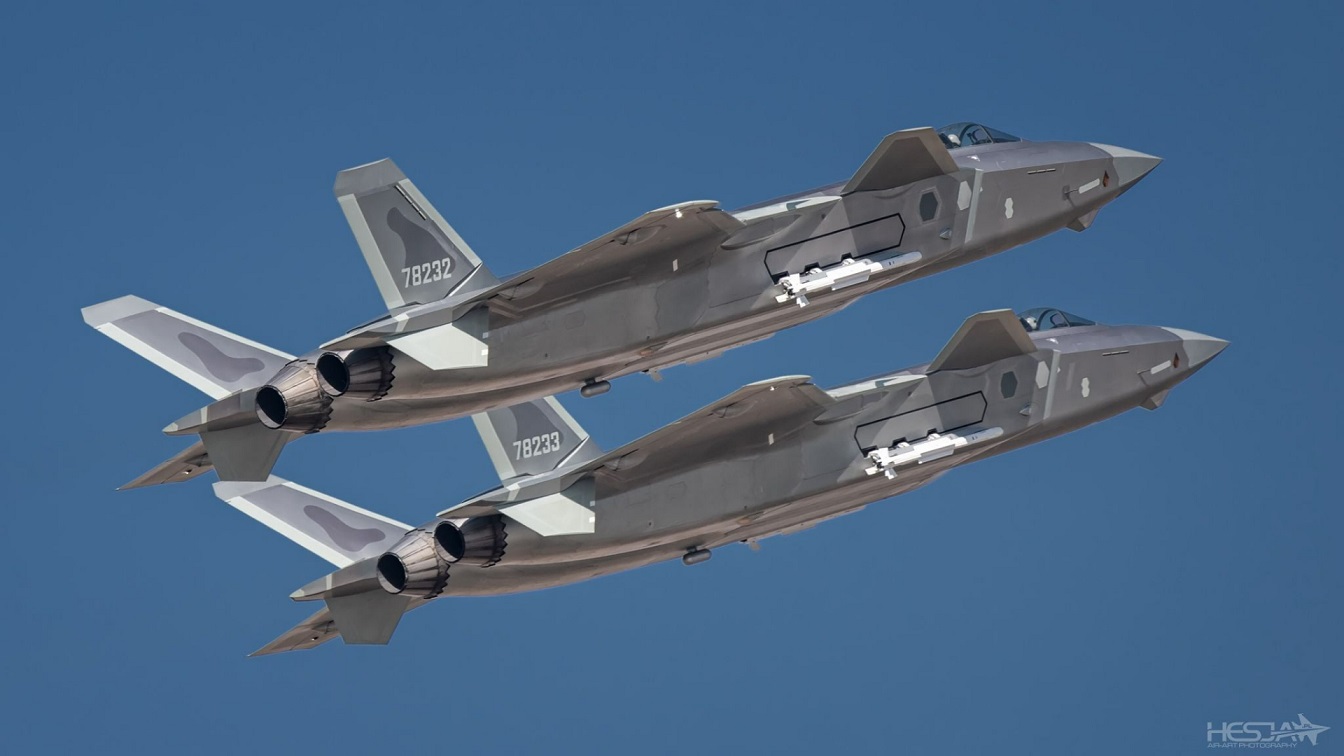
J-20 Stealth Fighter. Image Credit: Creative Commons.
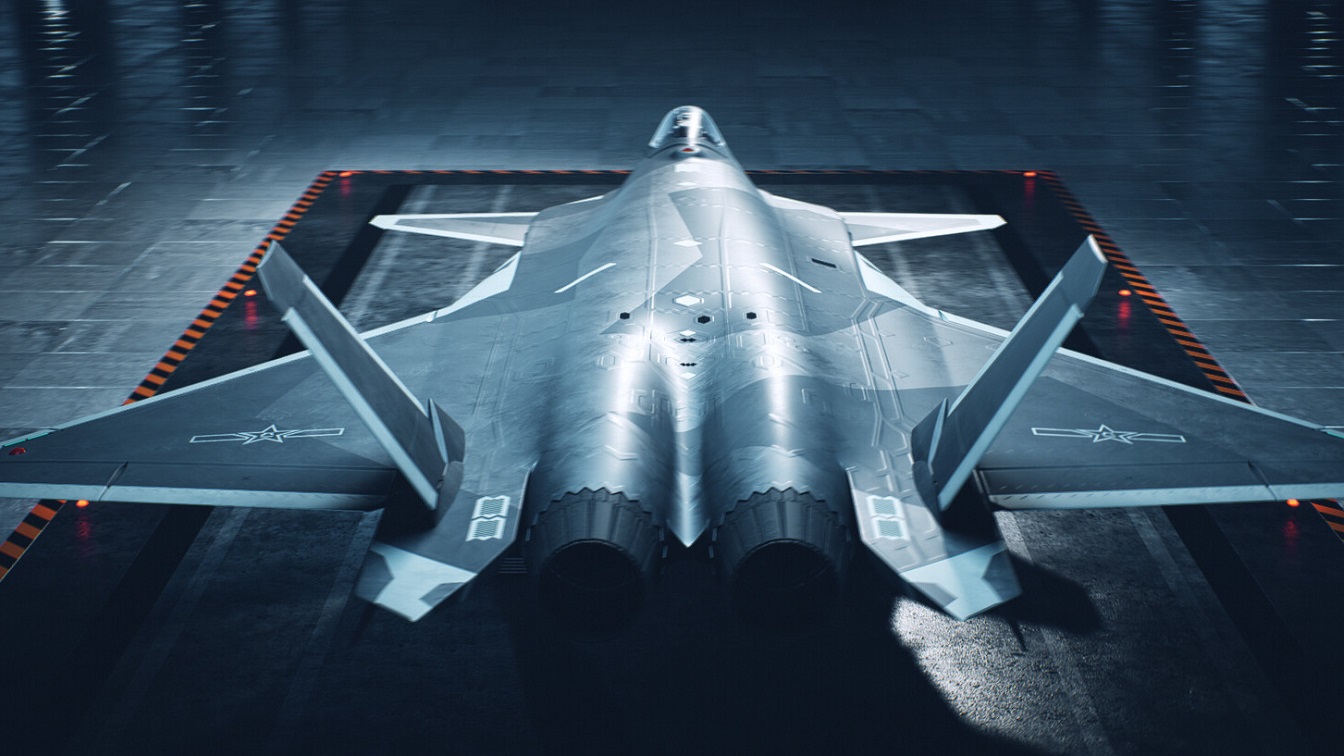
J-20. Image Credit: Chinese Internet.
-In reported tests and COMSOL modeling, the maze-like pores create repeated internal reflections, delivering strong absorption across the Ku band (12–18 GHz) and reducing reflected energy.
-If the material stays effective under heat, rain, and high-speed airflow, it could complicate satellite surveillance, though operational performance remains uncertain.
China’s “Loofah” Stealth Coating Has a Message for Satellite Radar
Research teams in the People’s Republic of China (PRC) working with the People’s Liberation Army (PLA) and the China Aerospace Science and Industry Corporation (CASIC) are reported to have developed a new coating for fighter aircraft that renders them invisible to space-based radar systems.
The key to this new radar cross-section (RCS) reduction method, according to a report in the Hong Kong-based South China Morning Post (SCMP), is derived from loofah. The loofah material is derived from the dried fruit of a tropical gourd that is part of the cucumber family. It is sometimes used for skin cleansing and exfoliation, as well as for household cleaning.The substance, known by its scientific name of Luffa cylindrica, is being used by the CASIC research team for what is billed as a new type of electronic warfare and stealth technology. The ultra-thin microwave-absorbing stealth coating used to develop this technology reportedly easily absorbs electromagnetic waves.
According to an article in the PRC scientific journal High Power Laser and Particle Beams, this new stealth coating technology absorbs the electromagnetic waves emitted by radar satellites. When radar waves hit this coating material, they then bounce around endlessly inside its elaborate maze of pores.
According to an article on the development of this material, this surface “creates multiple internal reflections and gives the material to more time to absorb energy, which ultimately hides its [the aircraft that has been treated] original identity on enemy radars.”
How The Coating Material Is Produced
According to the SCMP, the lead researcher on this project is Chen Jun from the CASIC Guizhou Aerospace Metrology and Testing Technology Institute. He and his team reportedly created a flexible, ultra-thin microwave-absorbing material by first converting dried loofah into carbon.
This material is then embedded with magnetic nanoparticles of nickel cobalt oxide (NiCo₂O₄). The result material is a special composite dubbed NCO-2, which is only 4mm (0.14 inches) thick. This material, when used as a coating for the surface of an aircraft, can reportedly absorb over 99.99 per cent of incident electromagnetic waves in the Ku-band (12–18 GHz). This is one of the most important frequencies used by modern radar satellites.
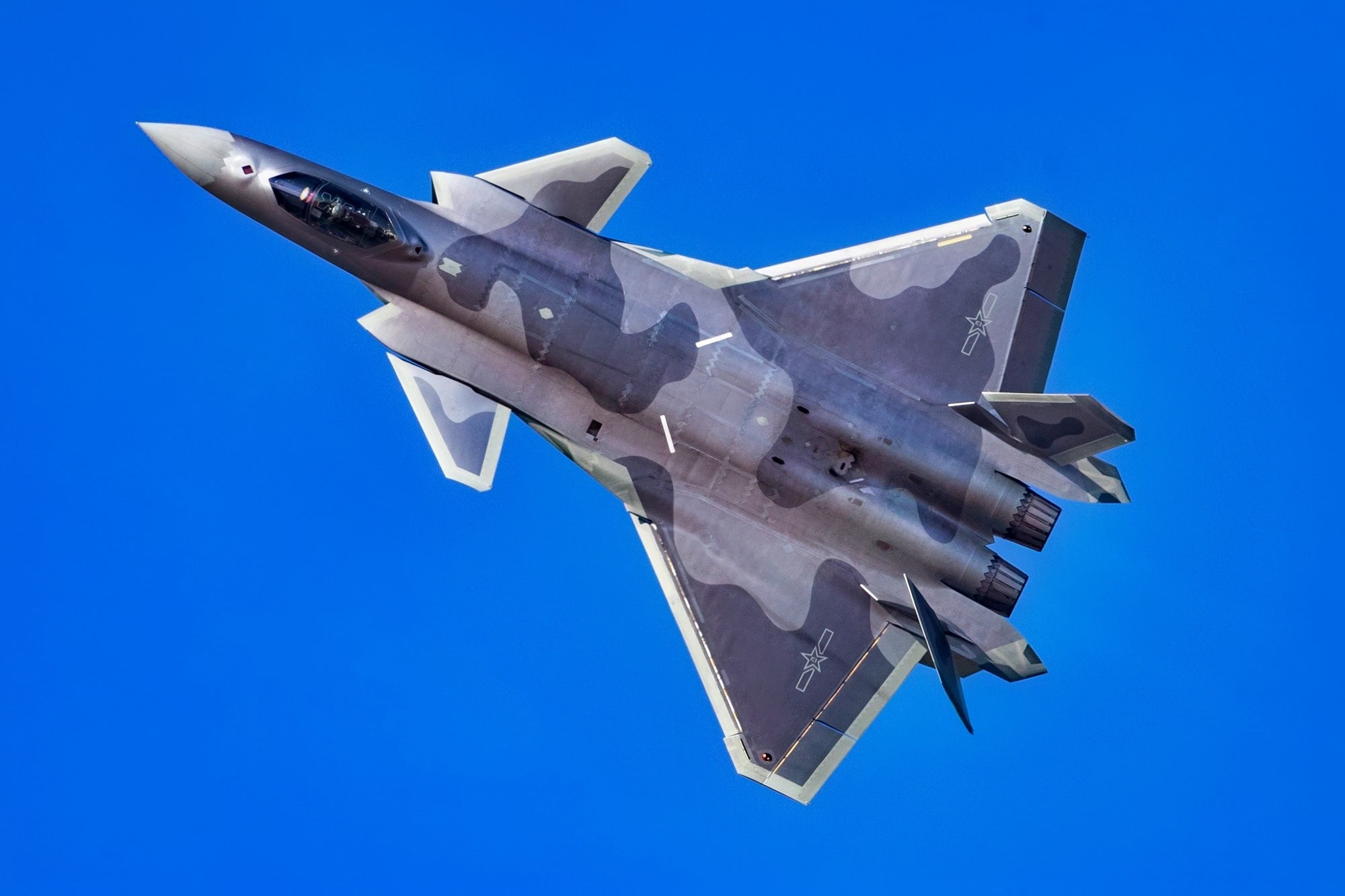
J-20 Fighter from China. Image Credit: Creative Commons.
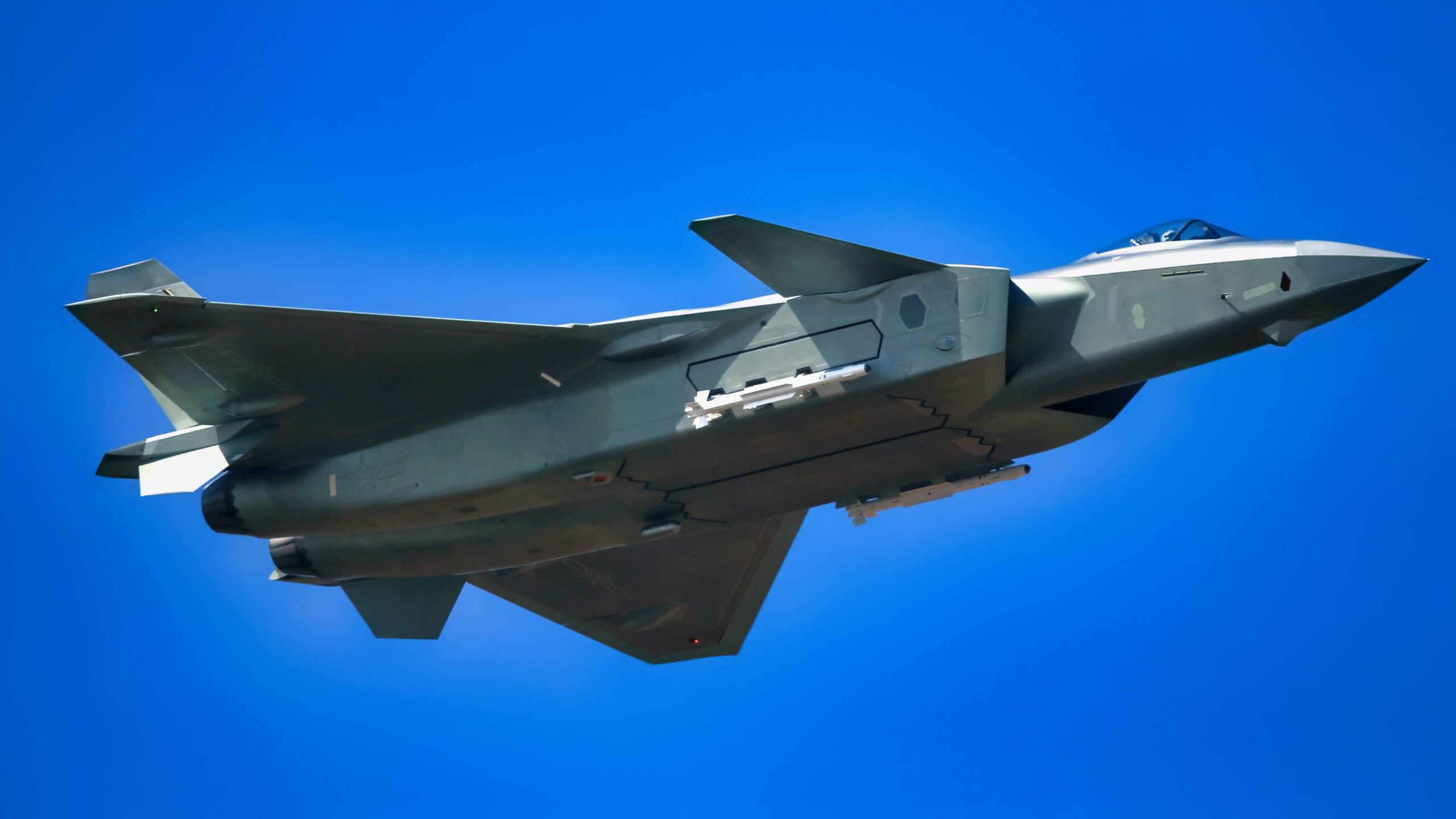
J-20 Fighter. Image Credit: Creative Commons.
“The introduction of NiCo2O4 particles not only enhanced the magnetic loss properties of the composites but also regulated the dielectric properties and optimized the impedance matching,” said researchers who were quoted in the study.
“Due to the unique mesh structure and the synergistic effect of interfacial polarization, conductive loss, magnetic loss, and other loss mechanisms, the NiCo2O4/C composites obtain good electromagnetic wave absorption properties,” reads an abstract of the study.
The design team states that this new compound can reduce reflected radar signals by nearly 700 times. The design team also notes that these coatings maintain the same RCS-reduction performance even when the radar beam is projected by a satellite from directly above the aircraft.
In terms of what this can mean for the performance of this technology in a real combat environment, a stealthy aircraft with a vertical RCS of 50 square metres (538 square feet) treated with this compound could effectively reduce its signature to less than 1 square metre (10.7 square feet).
Natural Properties
The loofah’s natural properties are reportedly part of the secret to this innovation. Its densely layered composition is like a 3D network of interconnected cellulose fibres that, when carbonized at high temperatures, becomes a lightweight, radar-wave-conductive matrix—literally a dense, microscopic jungle—as described by the SCMP.
The research team reports that their study uses hydrothermal and carbonization processes, with loofah as the carbon precursor. It introduces NiCo2O4 magnetic particles to prepare the NiCo2O4/C (NCO) electromagnetic wave-absorbing material. The actual wave-absorbing performance was verified using COMSOL software. (COMSOL is an engineering simulation software program used for modeling, meshing, physics, solving, and visualizing results.)
“The introduction of NiCo2O4 particles not only enhanced the magnetic loss properties of the composites but also regulated the dielectric properties and optimized the impedance matching,” said researchers in the study.
“Due to the unique mesh structure and the synergistic effect of interfacial polarization, conductive loss, magnetic loss, and other loss mechanisms, the NiCo2O4/C composites obtain good electromagnetic wave absorption properties.”
About the Author: Reuben F. Johnson
Reuben F. Johnson has thirty-six years of experience analyzing and reporting on foreign weapons systems, defense technologies, and international arms export policy. Johnson is the Director of Research at the Casimir Pulaski Foundation. He is also a survivor of the Russian invasion of Ukraine in February 2022. He worked for years in the American defense industry as a foreign technology analyst and later as a consultant for the U.S. Department of Defense, the Departments of the Navy and Air Force, and the governments of the United Kingdom and Australia. In 2022-2023, he won two awards in a row for his defense reporting. He holds a bachelor’s degree from DePauw University and a master’s degree from Miami University in Ohio, specializing in Soviet and Russian studies. He lives in Warsaw.