
Key Points and Summary – Defense Secretary Pete Hegseth is calling Golden Dome a “generational investment” in U.S. homeland defense: a layered shield against ballistic and hypersonic missile attacks.
-Under the SHIELD program, the Pentagon is rushing to field a networked system by 2028 that fuses satellites, Aegis ships, drones, and ground sensors into a continuous tracking and intercept architecture.

Mako Hypersonic Missile. Image Credit: Creative Commons.
-At its core is advanced AI, meant to sift massive data streams, distinguish real warheads from decoys, and instantly match each threat with the right interceptor, laser, or electronic attack.
-If it works, Golden Dome could redefine how America protects its own skies.
Golden Dome Has a Message for China’s Hypersonic Threat
“A generational investment” was the phrase Defense Secretary Pete Hegseth used to describe the highly anticipated and prioritized homeland defense “Golden Dome” effort, a series of advanced technologies intended to defend the US against ballistic missiles and hypersonic weapons.
Conceptual and developmental work has already been underway, and the Pentagon has taken specific steps to remove bureaucratic hurdles and expedite Golden Dome development with the intent of initial testing beginning in 2028.
The Pentagon has been reviewing hundreds of Golden Dome industry proposals that arrived in October 2025 for the SHIELD program, Scalable Homeland Innovative Enterprise Layered Defense.
Pentagon Outlines Golden Dome Concepts of Operation
The most essential elements of the Golden Dome, in terms of technological specifics, are not available for security reasons. Yet the Pentagon is already working intensively with its industry partners, many of whom attended a recent Golden Dome public industry day in August 2025.
Without mentioning specific technical details, many industry partners are offering advanced technologies to the Department of War.
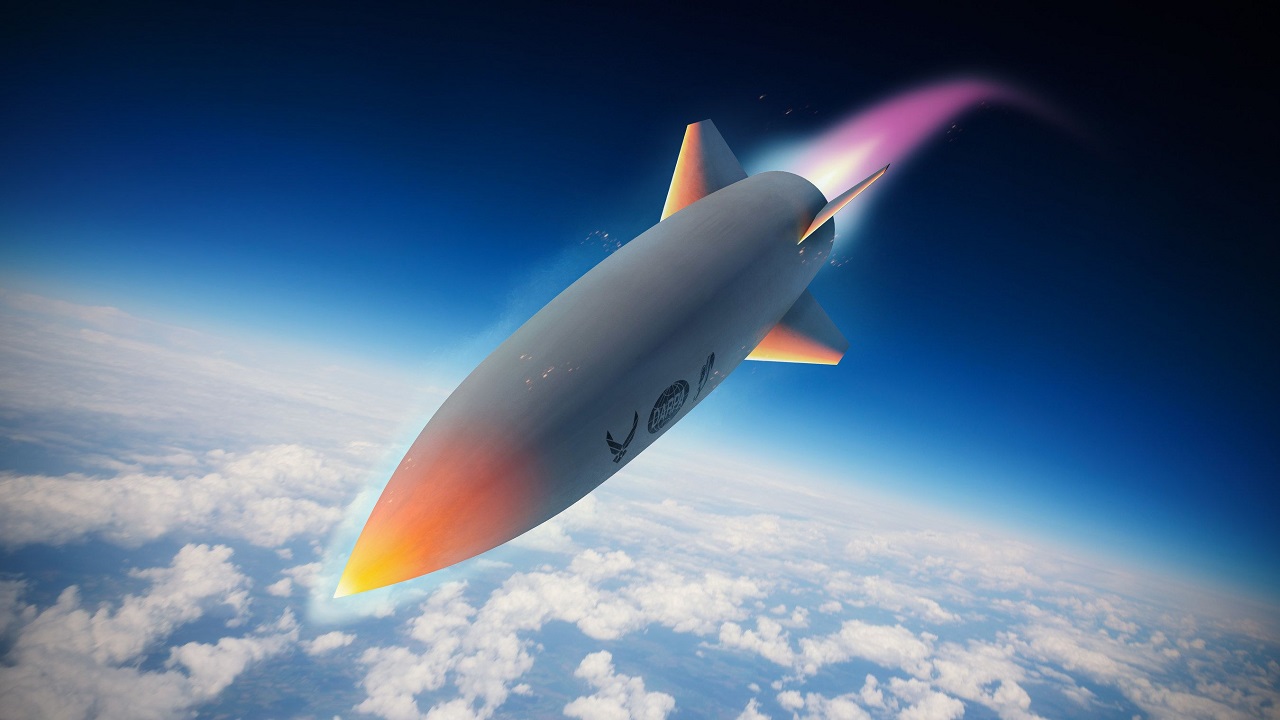
Hypersonic Missile Sample Image VIA DARPA.
While entirely unclassified, the Golden Dome industry day in Huntsville, Ala., was discussed only in general terms due to the mission’s security importance. An interesting essay in Defense One on the Golden Dome Summit cited a statement on the event from the Department of War.
“The Golden Dome for America office is examining current and future solutions across the services and interagency to identify the most effective ways to modernize and quickly field the capabilities our nation needs to protect our homeland,” the Office of the Secretary of Defense said in a statement provided to Defense One.
Command and Control
While specific offerings are not available, industry experts are discussing some of the broad technological parameters likely to shape ongoing discussions and testing regarding Golden Dome, as the threat equation is, of course, serious.
Any potential solution is almost sure to involve advanced AI and multi-domain networking.
For example, Medium and Low Earth Orbit satellites are being launched by the hundreds to increase redundancy, optimize throughput, and support advanced targeting systems that can track an incoming projectile from one radar aperture or field of view to another.
Establishing a “continuous track” is extremely difficult for missile defense systems, particularly against hypersonic weapons, which do not follow a traditional ballistic missile trajectory and maneuver at unprecedented speeds.
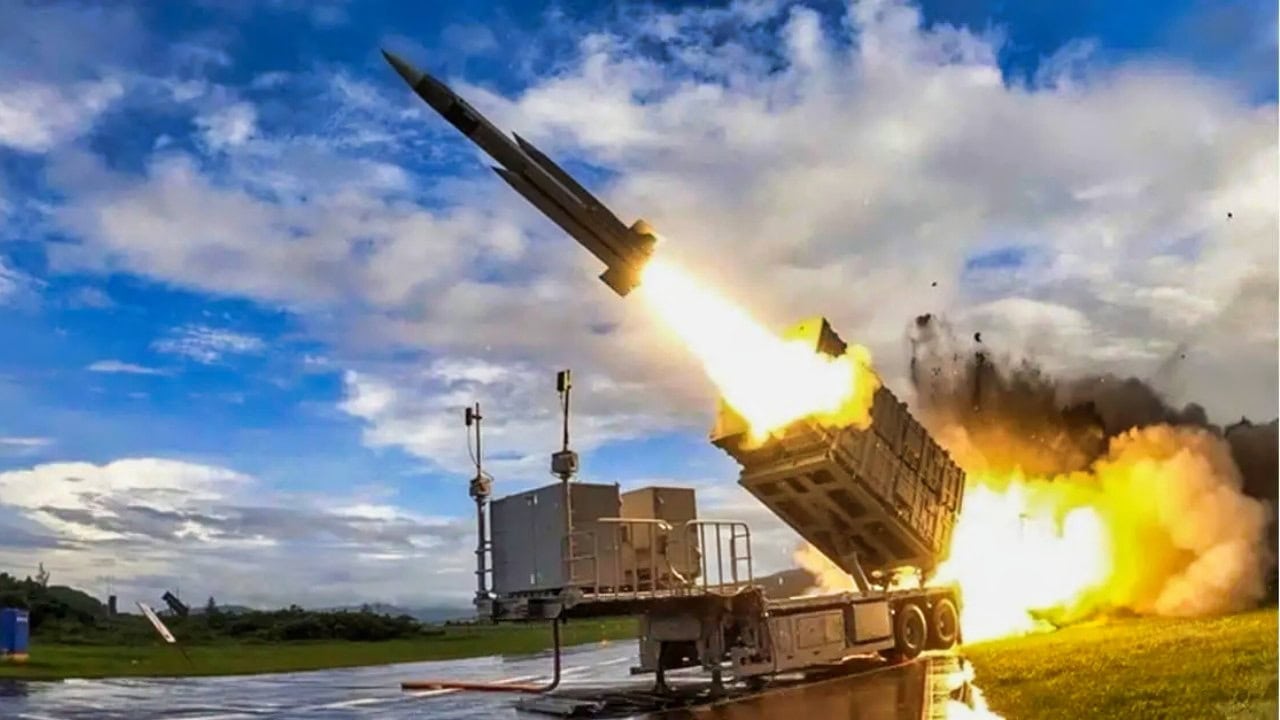
Qingtian Hypersonic Cruise Missile. Screenshot.
Golden Dome & AI
As part of the Pentagon’s surge toward early innovations for its Golden Dome homeland defense system, US military industry partners are also likely to be assessing how artificial intelligence can support national defense efforts.
While there are many potential applications, one critical area is discrimination and target verification, as AI-enabled algorithms can leverage vast databases to distinguish targets from decoys and support instant defensive intercepts.
AI-enabled systems can aggregate, organize, and analyze otherwise disparate pools of incoming sensor data. Golden Dome will likely need to connect sensor data from satellites, drones, manned ISR fixed-wing platforms, ground-based command and control, and even surface ships using Aegis radar to track ballistic missiles.
AI can be particularly significant in sensor-to-shooter pairing, as it can compare verified target information against a database to recommend an optimal shooter or countermeasure for a given threat scenario.
The area may be cloudy, so a laser weapon may not be effective. It may be a populated area, so a kinetic effector may not be feasible, as explosive material could harm civilians.
Perhaps the attack is in the form of a drone swarm or a salvo of ballistic missiles, requiring a deep magazine of interceptors, proximity fuses to generate an “area” explosion against multiple targets, or even EW to “jam” the RF signals of a group of attacking drones at once.
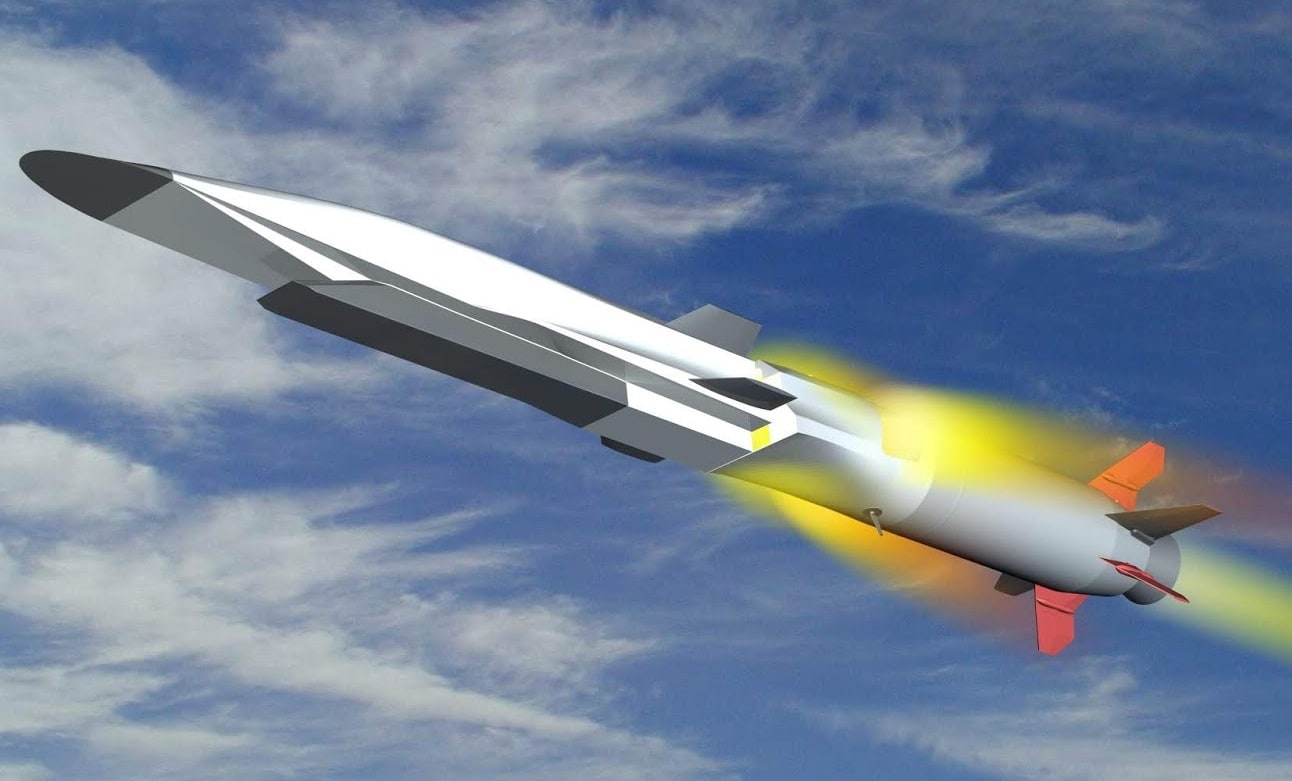
Tsirkon Hypersonic Missile. Image Credit: Creative Commons.
This kind of AI-enabled capability could support Golden Dome-like defenses against incoming rockets, mortars, ballistic missiles, or even hypersonic attacks.
About the Author: Kris Osborn
Kris Osborn is the President of Warrior Maven – Center for Military Modernization. Osborn previously served at the Pentagon as a highly qualified expert in the Office of the Assistant Secretary of the Army—Acquisition, Logistics & Technology. Osborn has also worked as an anchor and on-air military specialist at national TV networks. He has appeared as a guest military expert on Fox News, MSNBC, The Military Channel, and The History Channel. He also has a Masters Degree in Comparative Literature from Columbia University.