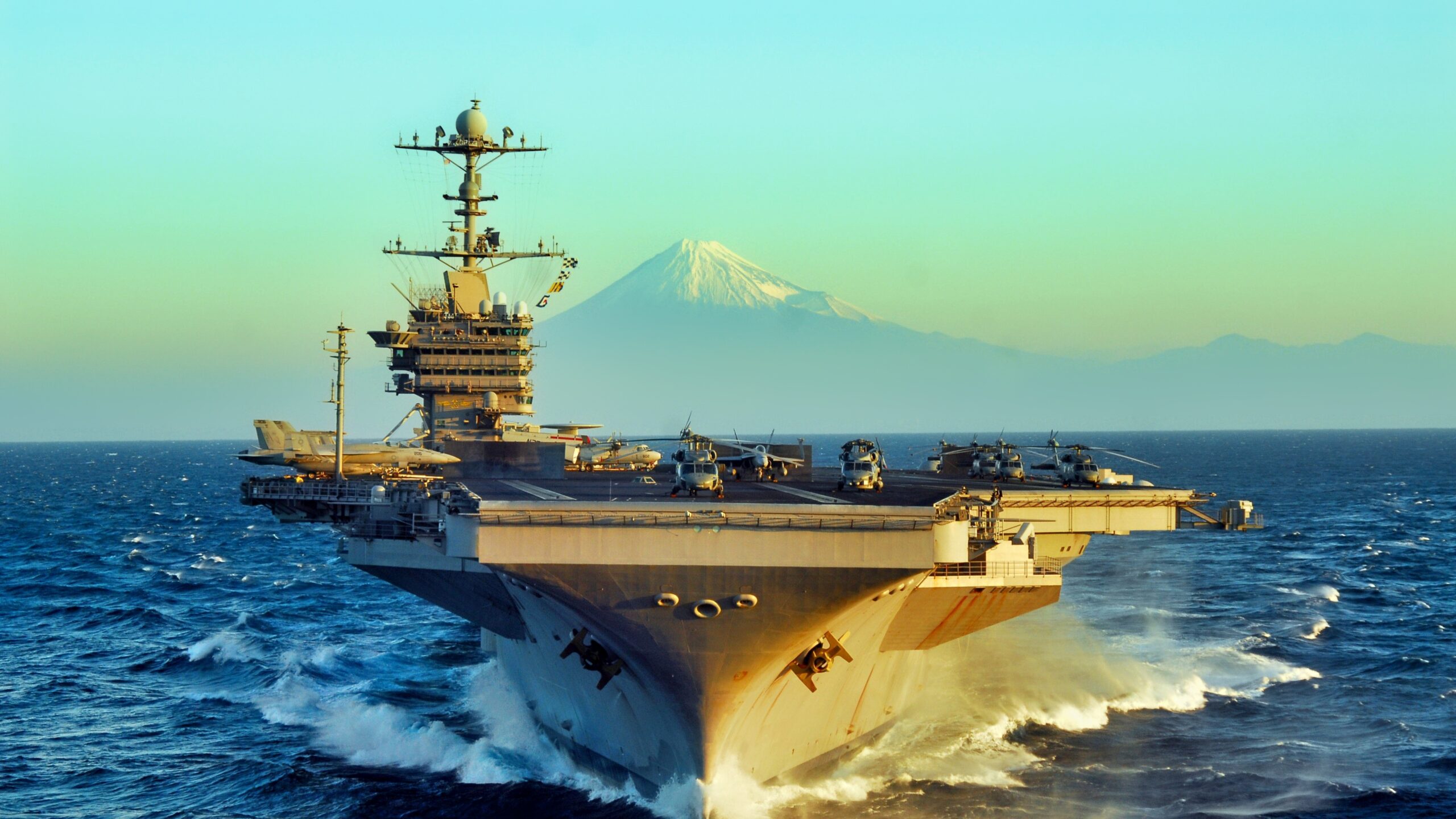
Key Points and Summary – A leaked Pentagon Overmatch brief has reignited fears that China’s hypersonic and anti-ship missiles could quickly sink U.S. aircraft carriers from 2,000 miles away.
-Beijing’s DF-26 and DF-17, plus sea- and air-launched YJ-21 variants, underpin a growing “carrier killer” arsenal designed to threaten U.S. fleets in the Western Pacific.
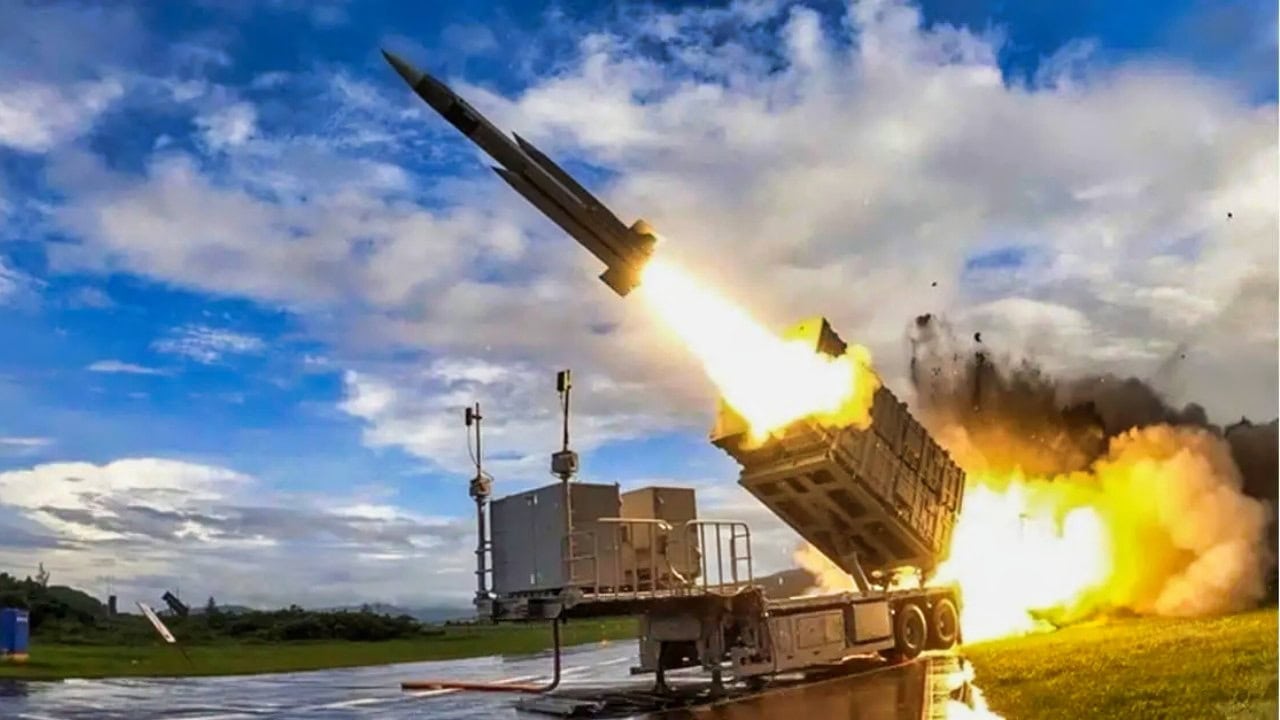
Qingtian Hypersonic Cruise Missile. Screenshot.
-Yet hitting a moving, heavily defended carrier is far harder than the rhetoric suggests.
-Carrier strike groups field layered kinetic defenses like SM-3, SM-6 and ESSM, plus Aegis and NIFC-CA networking and emerging electronic-warfare and high-power microwave systems, all aimed at blinding or killing incoming missiles before they can cripple a carrier.
Do China’s ‘Carrier Killer’ Missiles Make U.S. Supercarriers Obsolete?
The often-debated question of whether Chinese hypersonic and anti-ship missiles make US Navy aircraft carriers obsolete or ineffective is again surfacing with renewed vigor following numerous reports about the leaked Pentagon Overmatch Brief.
This question of aircraft carrier vulnerability is by no means new.
It needs to be viewed within the broader context of China’s hypersonic arsenal, yet speculation and reactive analysis following the release of the leaked report have taken a familiar tone.
The idea is as simple as it is potentially concerning for the Pentagon, as it is based upon the supposition that China’s often discussed “carrier-killer” anti-ship cruise missiles and hypersonic weapons could effectively target and destroy US Navy carriers out to ranges of 2,000 miles or more off the coast of mainland China.
Specifically, the DF-26 anti-ship missile is said by Chinese state-backed media to be capable of hitting targets with precision out to 2,000 miles.
Chinese Arsenal
The Chinese media cite China’s DF-17 hypersonic weapon as capable of traveling up to 2,000 miles at Mach 10.
China also operates surface warships that launch hypersonic weapons, such as its YJ-21, which has been fired from the People’s Liberation Army Navy’s Type O55 Destroyer in recent years.
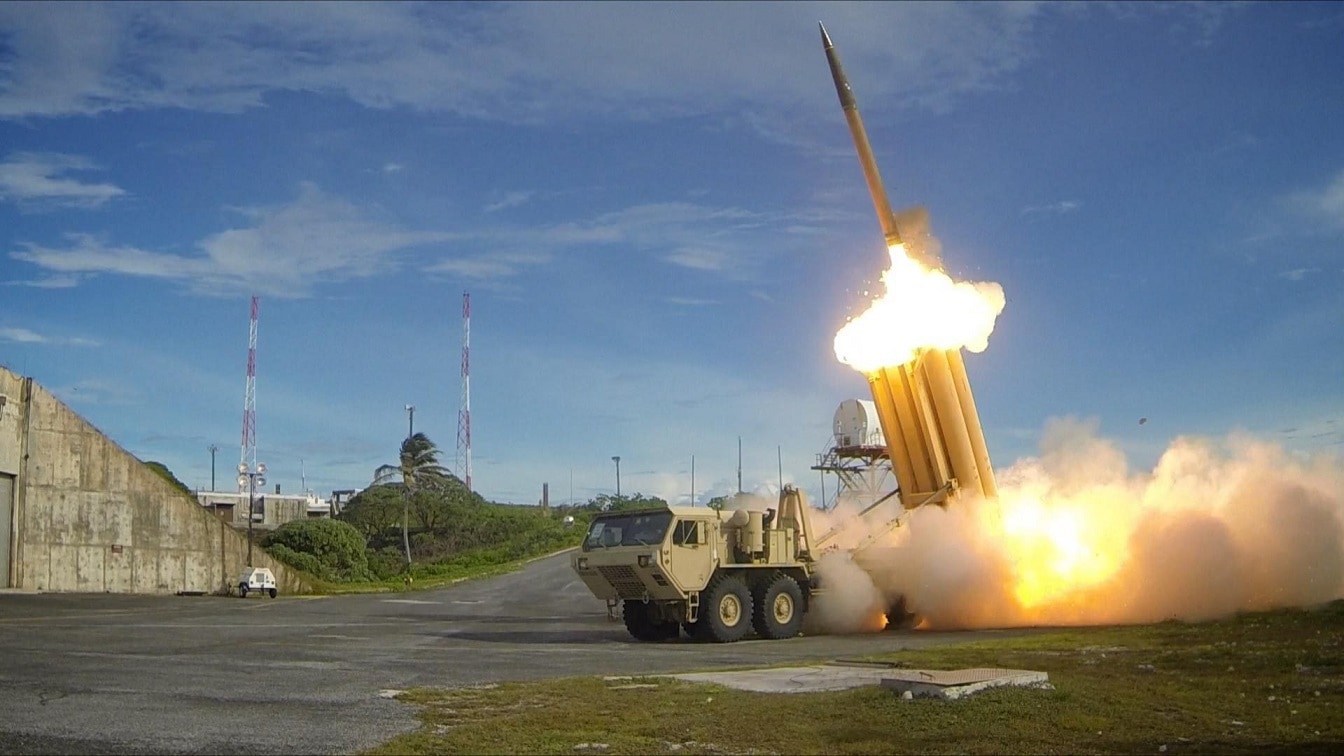
The first of two Terminal High Altitude Area Defense (THAAD) interceptors is launched during a successful intercept test. The test, conducted by Missile Defense Agency (MDA), Ballistic Missile Defense System (BMDS) Operational Test Agency, Joint Functional Component Command for Integrated Missile Defense, and U.S. Pacific Command, in conjunction with U.S. Army soldiers from the Alpha Battery, 2nd Air Defense Artillery Regiment, U.S. Navy sailors aboard the guided missile destroyer USS Decatur (DDG-73), and U.S. Air Force airmen from the 613th Air and Operations Center resulted in the intercept of one medium-range ballistic missile target by THAAD, and one medium-range ballistic missile target by Aegis Ballistic Missile Defense (BMD). The test, designated Flight Test Operational-01 (FTO-01), stressed the ability of the Aegis BMD and THAAD weapon systems to function in a layered defense architecture and defeat a raid of two near-simultaneous ballistic missile targets
An air-launched YJ-21 has also armed its H-6K bomber. In total, even a cursory look at China’s expanding arsenal of hypersonic and guided ballistic missiles would indeed indicate a fast-growing threat, particularly given that several never-before-seen Chinese hypersonic weapons were put on display in September 2025 during its parade.
This tactical or strategic possibility or risk has been on the Pentagon’s radar for quite some time, and general comments about the leaked report suggest that wargames and computer simulations of a US-China engagement in the Pacific reinforced the ongoing concern that carriers could be destroyed quickly by Chinese missiles.
US Navy Layered Ship Defenses
Sinking a carrier with an anti-ship missile seems straightforward enough.
Yet, the actual task of “hitting” and “disabling” a well-defended carrier 2,000 miles off the coast requires precision, guidance, targeting, and “hardened” sensors.
All of these variables, including potential space connectivity, in-flight hypersonic maneuvering, and built-in precision-guidance sensors on the missiles themselves, need to operate together in a seamless, synchronized fashion and, perhaps most of all, elude a vast network of layered ship defenses.
US Navy carriers in the Pacific travel with protective Carrier Strike Groups, including cruisers and destroyers armed with integrated ship defenses, including the Aegis radar networked with drones, satellites, and fixed-wing surveillance aircraft, able to “detect” approaching weapons from beyond the horizon.
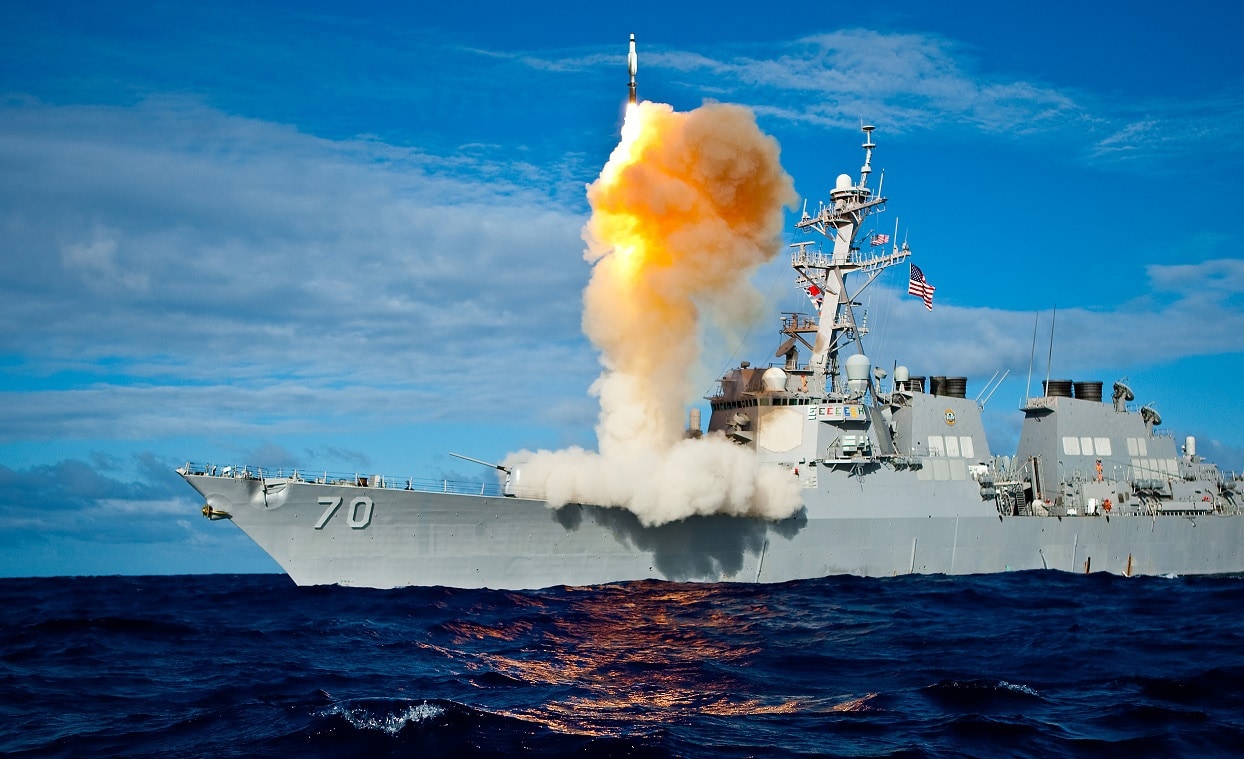
PACIFIC OCEAN (July 30, 2009) During exercise Stellar Avenger, the Aegis-class destroyer USS Hopper (DDG 70) launches a standard missile (SM) 3 Blk IA, successfully intercepting a sub-scale short range ballistic missile, launched from the Kauai Test Facility, Pacific Missile Range Facility (PMRF), Barking Sans, Kauai. This was the 19th successful intercept in 23 at-sea firings, for the Aegis BMD program, including the February 2008 destruction of a malfunctioning satellite above the earthÕs atmosphere. (U.S. Navy photo/Released)
Carrier Strike Groups operate with both kinetic and non-kinetic defenses, including missiles and lasers.
Navy ships operate with long-range interceptors such as the SM-3 Block IIA, which can intercept ICBMs as they re-enter the Earth’s atmosphere in the terminal phase.
Then there are closer-in interceptors, such as the SM-6 or the sea-skimming Evolved Sea Sparrow Missile Block 2, able to track and destroy cruise missiles flying closer to the surface of the ocean.
Beyond the Horizon
Navy destroyers also operate an integrated system called Naval Integrated Fire Control – Counter Air (NIFC-CA), in which a gateway aerial node, such as an E-2D Hawkeye surveillance plane or an F-35, transmits sensor data to ship-based radar and fire control from beyond the horizon.
With NIFC-CA, ship commanders have a much longer time window to detect incoming threats and decide on an optimal countermeasure; the system connects a ship-based SM-6 interceptor with Aegis radar and ship fire control to launch a defensive weapon earlier in the trajectory or flight path of an approaching missile.
The largest and perhaps most significant ship defenses are arguably those in the non-kinetic family, such as High-Powered Microwave or EW systems, which can potentially identify and “jam” or “disable” the guidance system of an incoming anti-ship missile.
About the Author: Kris Osborn, Defense Expert
Kris Osborn is the President of Warrior Maven – Center for Military Modernization. Osborn previously served at the Pentagon as a highly qualified expert in the Office of the Assistant Secretary of the Army—Acquisition, Logistics & Technology. Osborn has also worked as an anchor and on-air military specialist at national TV networks. He has appeared as a guest military expert on Fox News, MSNBC, The Military Channel, and The History Channel. He also has a Masters Degree in Comparative Literature from Columbia University.