
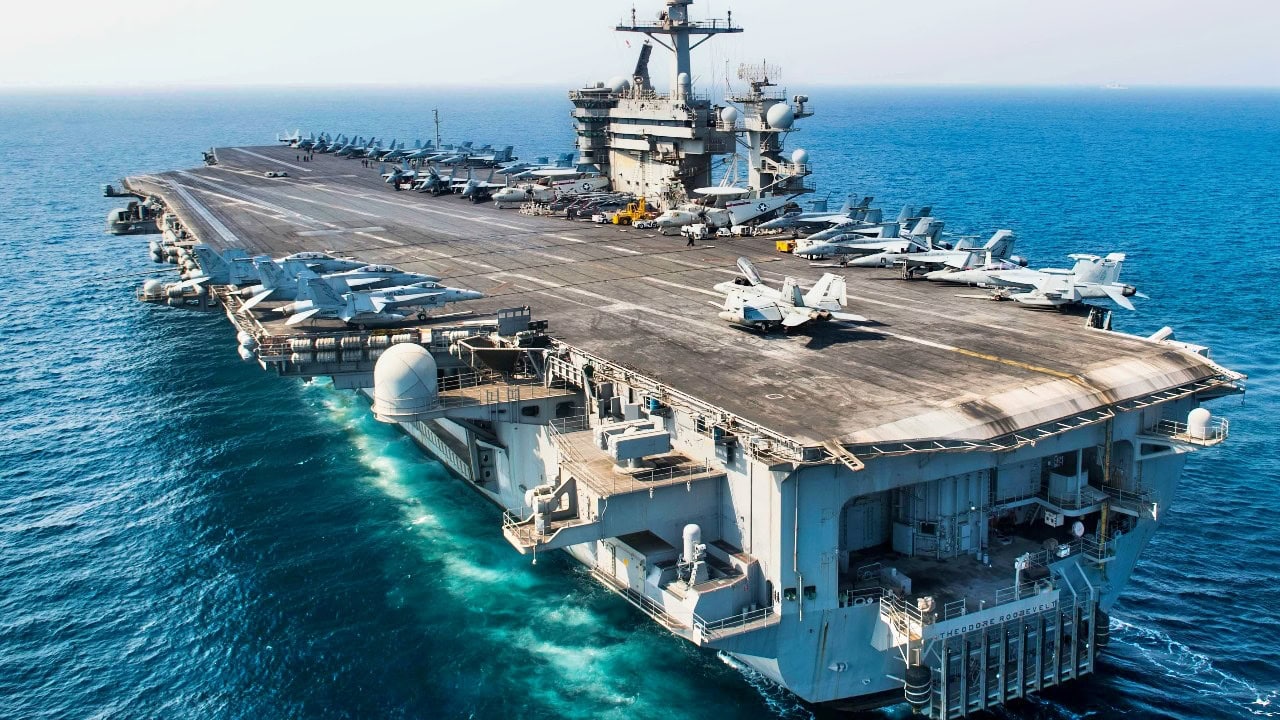
Key Points and Summary – For more than a century, U.S. aircraft carriers have been the backbone of American sea power, but a handful stand out above the rest.
-This piece walks through five of the most important carriers from different eras: USS Langley, the Navy’s first flat-top; USS Enterprise (CV-6), the WWII legend; USS Midway, the ultimate Cold War workhorse; USS Nimitz, the nuclear-powered template for modern carrier strike groups; and USS Gerald R. Ford, the cutting-edge EMALS- and AAG-equipped flagship of the future.
-Together, they trace the evolution of carrier warfare from canvas-wing biplanes to unmanned jets and sixth-generation air wings.
From Langley to Ford: The U.S. Navy’s 5 Most Legendary Aircraft Carriers
The US Navy has had some outstanding aircraft carriers in its history since the first one over 100 years ago, so trying to nail down a list of the five best of all aircraft carriers is a tough choice, because there is bound to be disagreement over which ones were left out.
That’s the beauty and the curse of compiling the five best (or worst) of anything, especially when it comes to military platforms. It is subjective, and built-in biases can creep into any list.
But suffice to say, the Navy’s touchdown percentage on carriers is Canton-worthy (that’s the Pro Football Hall of Fame for non-sports people).
So, in compiling this list, I picked carriers from different eras to avoid excluding any worthy ships. Because we all know that a Ford-class carrier is light-years ahead of the earliest class of carriers back in the day, but the list is, and should be, all-inclusive.
USS Langley (CV-1/AV-3) The One That Started It All
The USS Langley didn’t begin its life as a carrier at all. The USS Langley (CV-1) became the U.S. Navy’s first aircraft carrier when commissioned in March 1922.
She was converted from USS Jupiter (Collier #3), which was the U.S. Navy’s first surface ship propelled by electric motors when commissioned in April 1913.
Following her conversion to an aircraft carrier that began in 1920, she conducted tests in the Atlantic in 1924. She served as a test platform for developing carrier operating techniques and tactics in the Pacific.

USS Langley (CV-1) underway in June 1927
The Langley was reclassified as a seaplane tender (AV-3) in 1937. The Langley remained on station in the Pacific and supported seaplane patrols and provided aircraft transportation services during the early months of World War II.
On February 27, 1942, while transporting U.S. Army P-40’s to the Netherlands East Indies, Langley was attacked by by sixteen Mitsubishi G4M “Betty” bombers of the Imperial Japanese Navy Air Service’s Takao Kōkūtai, 23rd Air Flotilla, led by Lieutenant Jiro Adachi, flying out of Denpasar airfield on Bali, and escorted by fifteen A6M2 Reisen fighters of 3rd Air Group.
Langley took five hits from a mix of 130 and 550-pound bombs as well as three near misses, with 16 crewmen killed. The topside burst into flames, steering was impaired, and the ship began listing to port. Langley went dead in the water as her engine room flooded. At 13:32, the order to abandon ship was passed.
The escort destroyers Edsall and Whipple fired salvos of four-inch shells into the Langley to scuttle the ship to keep her from falling into enemy hands. They left the scene without actually observing her sinking.
USS Midway (CV-41)
The Midway was truly a versatile warship, and certainly the most modified. She was launched during World War II, but arrived too late to see any combat.
The USS Midway was a true Cold War warrior, participating in combat operations in Vietnam. At the same time, she served as the Persian Gulf flagship in 1991’s Operation Desert Storm. The Midway was the longest-serving U.S. Navy aircraft carrier of the 20th century. It was commissioned in 1945 and decommissioned in 1991.
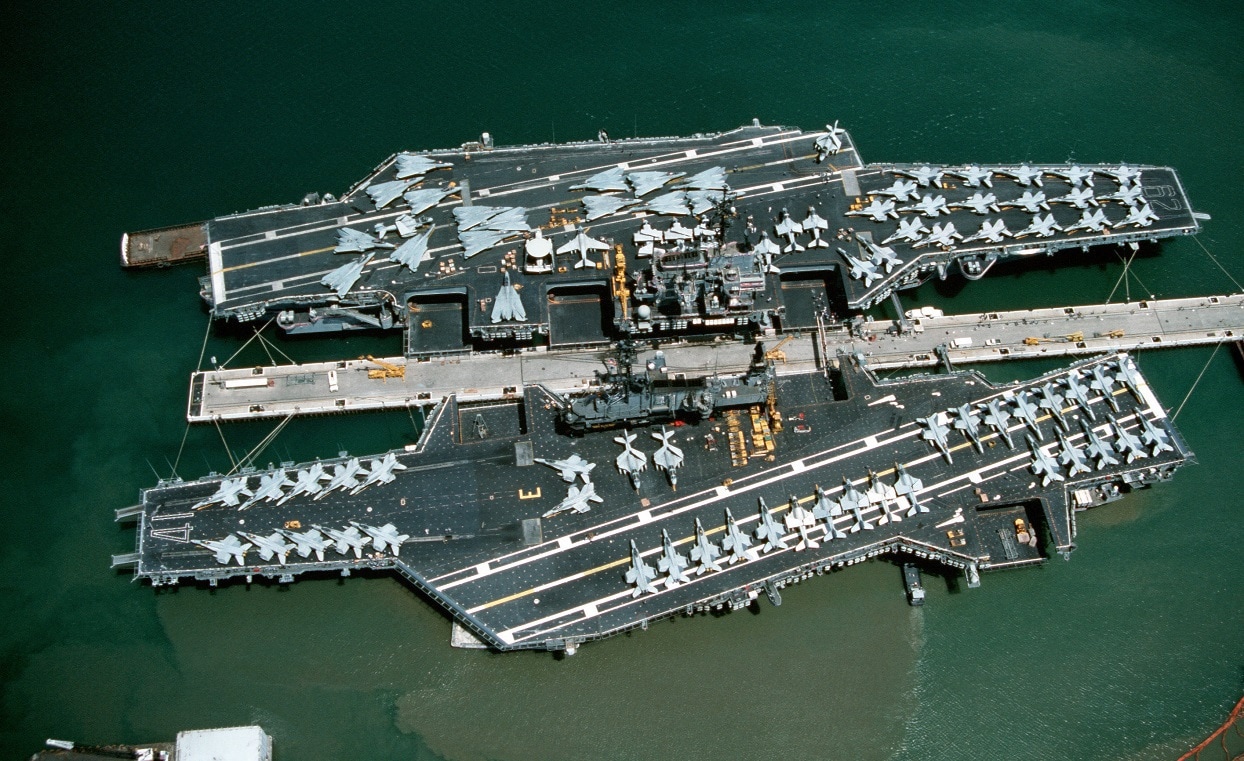
An aerial view of various aircraft lining the flight decks of the aircraft carrier USS INDEPENDENCE (CV-62), right, and USS MIDWAY (CV-41) moored beside each other in the background. The MIDWAY is en route from Naval Station, Yokosuka, Japan, to Naval Air Station, North Island, California, where it will be decommissioned in the spring of 1992. The INDEPENDENCE will travel to Yokosuka to take over as the Navy’s forward-based aircraft carrier.
During modernization work done in 1957, she received innovations such as an enclosed bow and an angled flight deck. Midway’s service was marked with incredible versatility and adaptability.
During the 1960s and 70s, the aircraft onboard were a veritable catalog of USN evolution. A-4s. A-7s, F-4 Phantoms, and F-14 Tomcats.
The Midway conducted multiple tours on “Yankee Station” off the coast of Vietnam, as well as other operations, until Desert Storm in 1991. She now serves as a museum ship in San Diego.
USS Gerald Ford (CVN-78)
The USS Gerald R. Ford (CVN-78) is the lead ship in the Ford-class of aircraft carrier, the first new class in more than 40 years, and will begin the phased replacement of Nimitz-class carriers.
The USS Gerald R. Ford (CVN 78) is the most capable, adaptable, and lethal combat platform in the world, maintaining the Navy’s capacity to project power on a global scale through sustained operations at sea.
The USS Ford’s EMALS (electromagnetic catapults) replaces steam with an electric launch, improving control of end speed across a wider aircraft weight range, including light, unmanned aircraft.
This is a revolutionary system that replaces older steam catapults and uses electrical power to launch aircraft, offering advantages such as smoother acceleration, greater launch versatility across different aircraft weights, and reduced maintenance. While EMALS has faced initial reliability issues, it has made significant progress and is a key component of the Ford-class carriers.
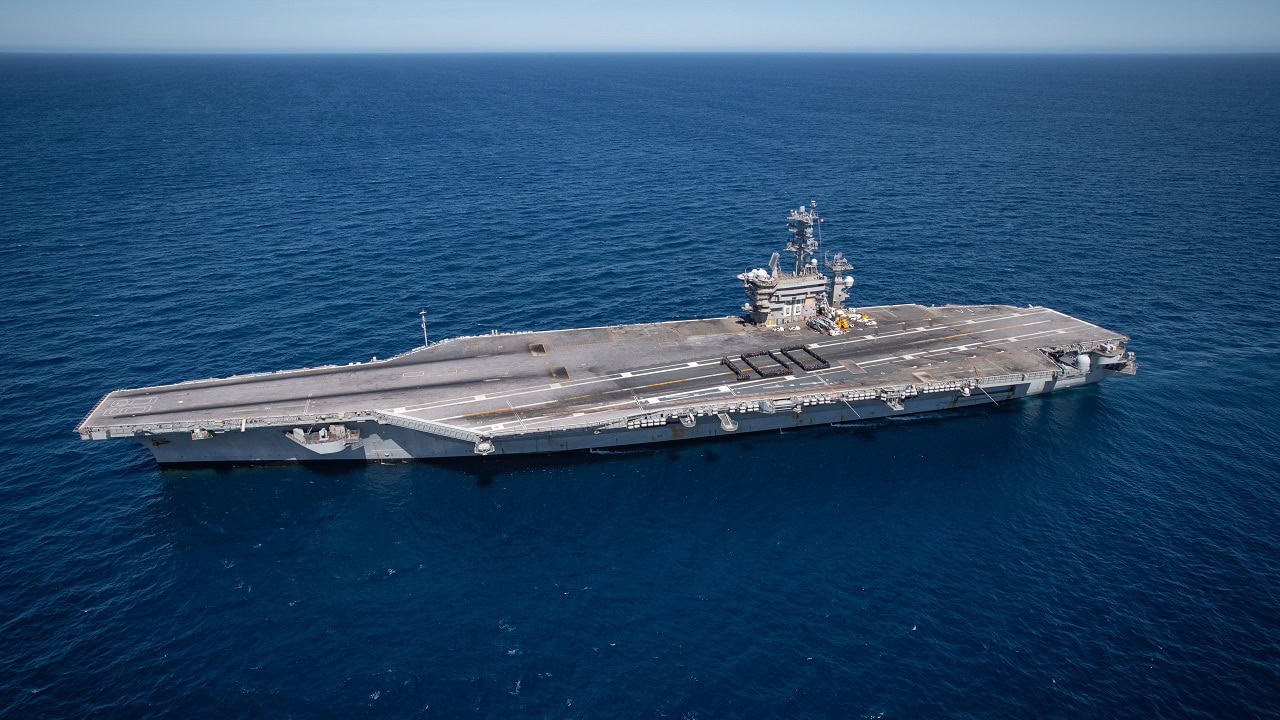
(Mar. 12, 2022) Sailors aboard USS Nimitz (CVN 68) assemble on the flight deck and form a human ‘100’ to commemorate the centennial of the aircraft carrier. On March 20, 1922 the former USS Jupiter (Collier #3) recommissioned as the USS Langley (CV 1), the U. S. Navy’s first aircraft carrier. One hundred years later, Nimitz and Ford-class aircraft carriers are the cornerstone of the Navy’s ability to maintain sea control and project power ashore. Nimitz is the first in its class and the oldest commissioned aircraft carrier afloat., carrying with it a legacy of innovation, evolution and dominance. Nimitz is underway in the 3rd Fleet Area of Operations. (U.S. Navy photo by Mass Communication Specialist 3rd Class Elliot Schaudt)
The AAG (advanced arresting gear) provides an improved system for aircraft recoveries, absorbing and returning energy with greater precision.
The Ford-class carriers are equipped with an AAG, an electromechanical system that replaces the older hydraulic arresting gear on previous carriers. It is designed to safely recover a wider range of aircraft, including unmanned aerial vehicles (UAVs), with less stress on the aircraft than the hydraulic system.
AAG is a key technology on the Ford-class, working alongside the Electromagnetic Aircraft Launch System (EMALS) to make the carrier more efficient and require less manpower.
USS Nimitz (CVN-68)
The USS Nimitz was commissioned on May 3, 1972. The big carrier is wrapping up 50 years of service, completing its final deployment en route to Bremerton, WA, before being decommissioned next year. It is the oldest US aircraft carrier in service and also the oldest in the world.
With Westinghouse A4W nuclear reactors, the Nimitz can run the airfield at sea for months. The Nimitz is where the Navy perfected the carrier strike group and matured.
A carrier strike group (CSG) is a U.S. Navy operational formation centered on an aircraft carrier that includes other support ships like cruisers, destroyers, and submarines, along with a carrier air wing of about 65–70 aircraft.
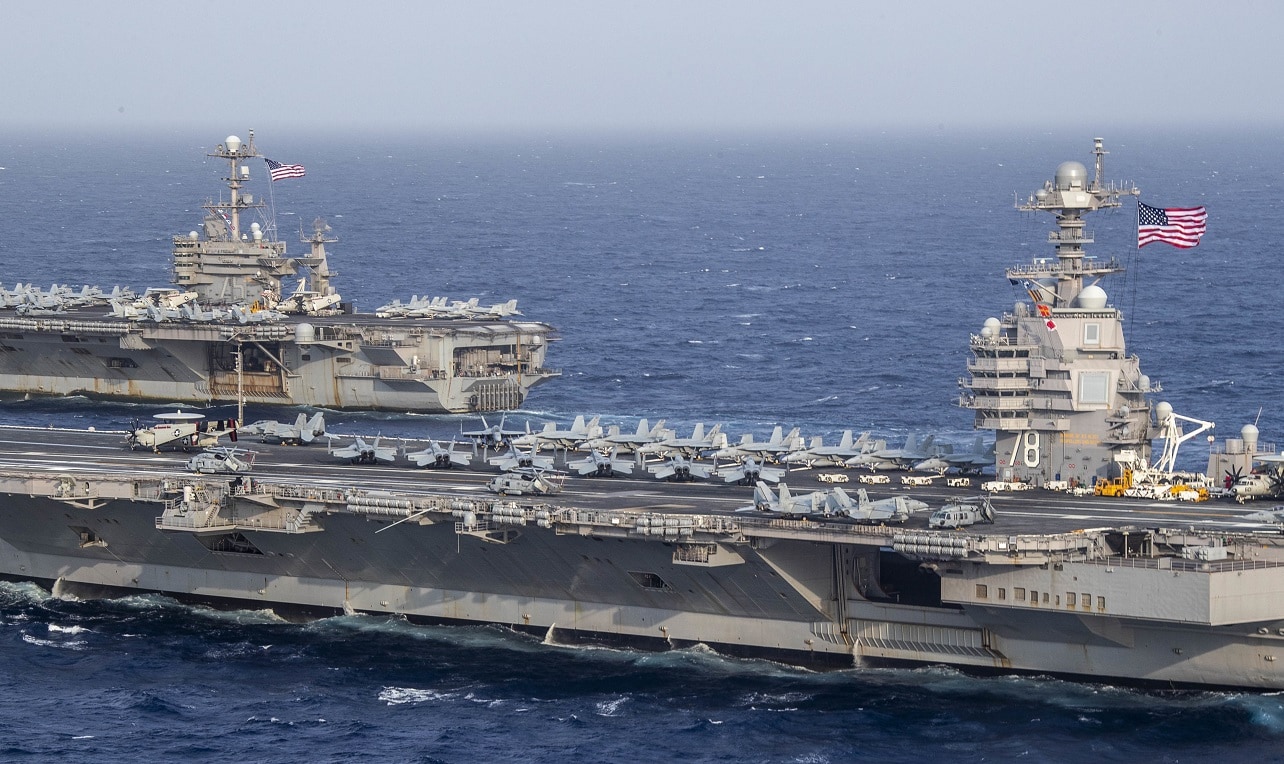
The Ford-class aircraft carrier USS Gerald R. Ford (CVN 78) and the Nimitz-class aircraft carrier USS Harry S. Truman (CVN 75) transit the Atlantic Ocean June 4, 2020, marking the first time a Ford-class and a Nimitz-class aircraft carrier operated together underway. Ford is underway conducting integrated air wing operations, and the Harry S. Truman Carrier Strike Group remains at sea in the Atlantic as a certified carrier strike group force ready for tasking in order to protect the crew from the risks posed by COVID-19, following their successful deployment to the U.S. 5th and 6th Fleet areas of operation. (U.S. Navy photo by Mass Communication Specialist Seaman Riley McDowell)
Its primary mission is to project power, achieve air, sea, and undersea control, respond to crises, and protect U.S. interests worldwide by conducting a wide range of operations from peacetime presence to wartime combat.
The USS Nimitz (CVN-68) has a rich combat and operational record, including shooting down Libyan aircraft in 1981 and participating in major operations like the Gulf War (Desert Storm) and the post-9/11 conflicts in Afghanistan (Enduring Freedom) and Iraq (Iraqi Freedom).
The aircraft carrier has deployed globally, supported ground troops, and conducted exercises, earning numerous accolades, including Battle “E” awards for excellence. It also made history by completing the first F-35 carrier landing in 2014 and logged its 350,000th arrested landing in 2023.
USS Enterprise (CV-6)
Arguably, the most famous aircraft carrier of all time, “The Big E,” a Yorktown-class carrier during WWII, had an incredible combat record. She is also arguably the greatest carrier of all time.
Launched in 1936, the USS Enterprise was one of only three American carriers commissioned before World War II to survive the war – the others being the USS Saratoga (CV-3) and the USS Ranger (CV-4).
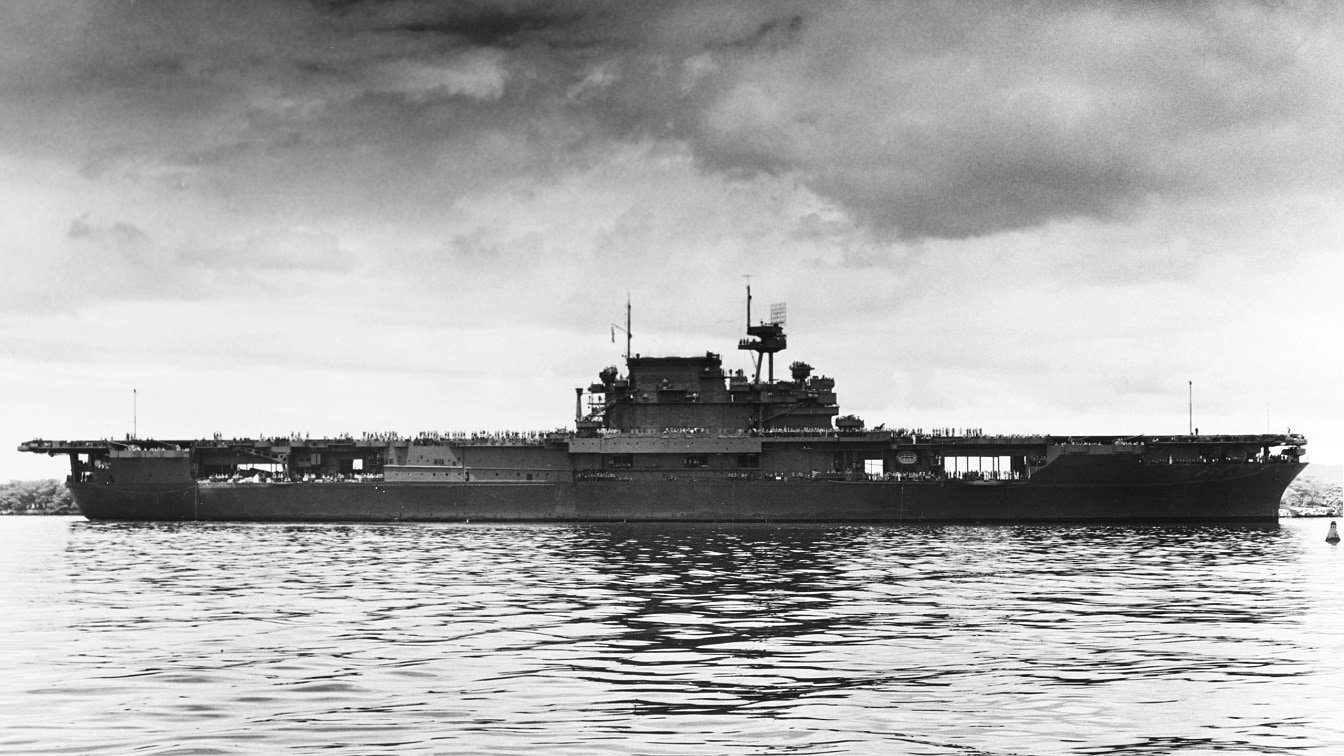
The U.S. Navy aircraft carrier USS Enterprise (CV-6) entering Pearl Harbor on 26 May 1942, following the Battle of Coral Sea and shortly before the Battle of Midway.
The USS Enterprise also participated in more major actions of the war against the Imperial Japanese Navy than any other U.S. warship during WWII. She took part in the Battle of Midway – helping to turn the tide in the Pacific against the Japanese.
USS Enterprise also fought at the Battle of the Eastern Solomons, the Battle of Santa Cruz Islands, and later in the Battle of the Philippine Sea and the Battle of Leyte Gulf. During the Guadalcanal Campaign, her aircraft provided cover for the landings. In February 1945, Enterprise took part in the Iwo Jima invasion, then raids on the Japanese home islands, and the Okinawa campaign in April.
By the end of the war, the “Big E’s” aircraft and guns had shot down 911 enemy planes, sunk 71 ships, and damaged or destroyed another 192 vessels. On three different occasions during the war, the Japanese had announced that she had been sunk in battle, which earned her the nickname “The Grey Ghost.”

The U.S. Navy aircraft carrier USS Enterprise (CV-6) underway off Pearl Harbor, Hawaii, on 2 August 1944. She is painted in Camouflage Measure 33 Design 4Ab.
Honorable mention: USS Anzio (CVE-57), the small Casablanca-class carrier that had earned 11 Navy Unit Commendations and nine battle stars during World War II.
About the Author: Steve Balestrieri
Steve Balestrieri is a National Security Columnist. He served as a US Army Special Forces NCO and Warrant Officer. In addition to writing on defense, he covers the NFL for PatsFans.com and is a member of the Pro Football Writers of America (PFWA). His work was regularly featured in many military publications.