
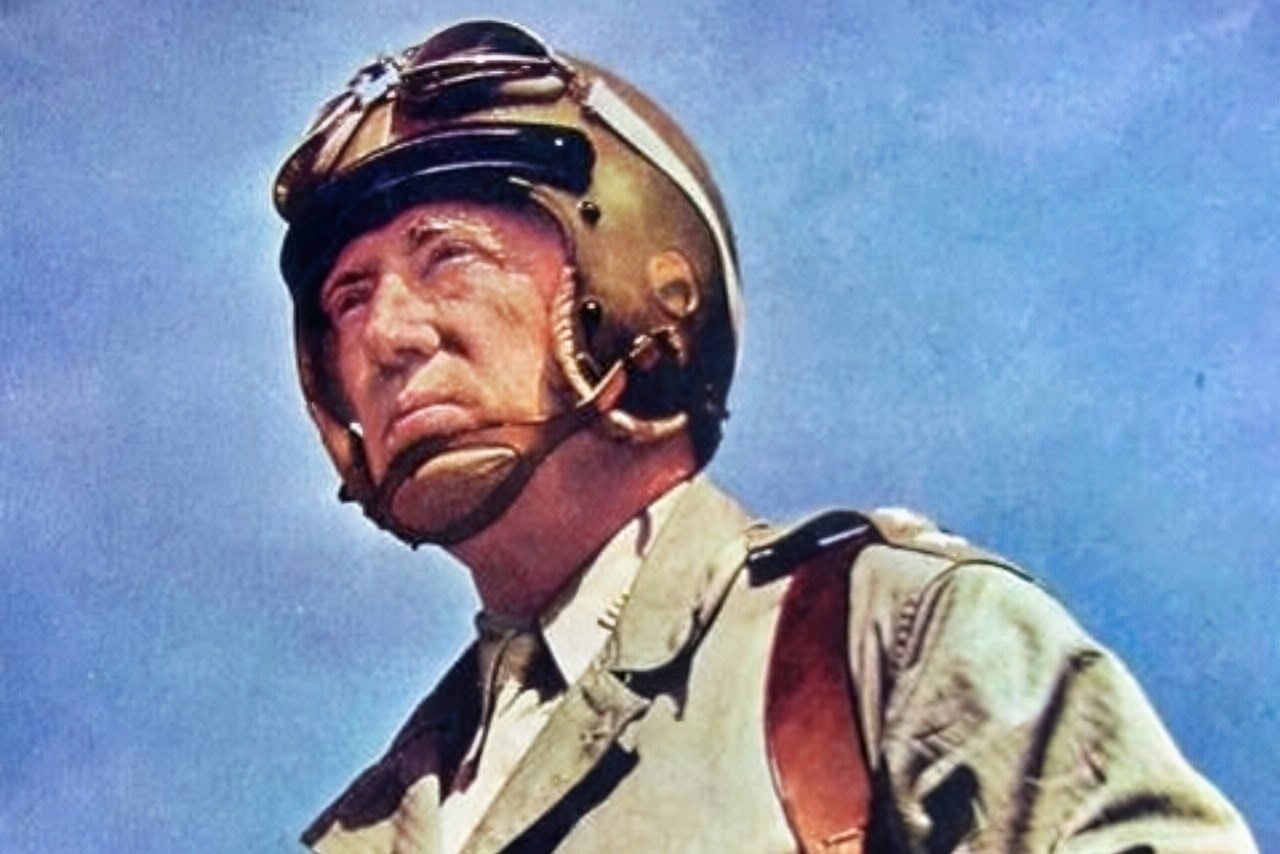
Key Points and Summary – George S. Patton left behind a long list of battlefield quotes, but “make the mind run the body” captures the essence of his leadership under pressure.
-That mindset mattered most during the Battle of the Bulge, when the Allies were caught off-guard by Germany’s surprise Ardennes offensive—helped by a major intelligence gap as German forces maintained radio silence.
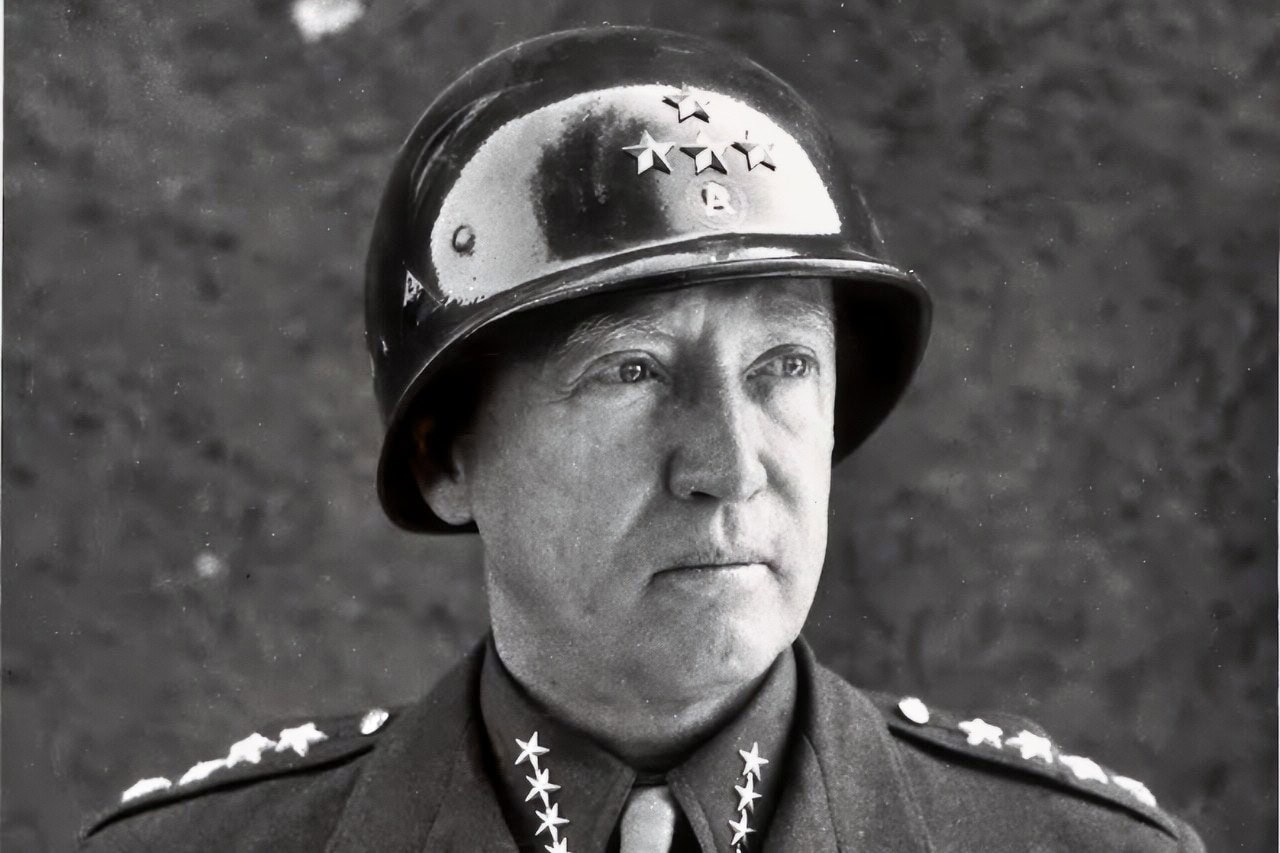
U.S. Army General George Patton
-At Eisenhower’s crisis meeting, Patton committed to decisive action, pivoting the Third Army in brutal winter conditions and driving the 4th Armored Division to relieve besieged Bastogne on December 26, 1944.
-The result was a turning point in the bloodiest battle the U.S. fought in WWII.
How Patton Pulled Off the Impossible at Bastogne in One Quote
“If you are going to win any battle, you have to do one thing. You have to make the mind run the body. Never let the body tell the mind what to do… the body is never tired if the mind is not tired.” That quote is just one of many memorable quotes attributed to General George Smith Patton Jr.
During his 36 years of faithful service to the United States Army (1909-1945), Patton had many accomplishments, from the Pancho Villa Expedition of 1916 (wherein he wielded his famous ivory-handled Colt Single Action Army (SAA) “Peacemaker” .45 Colt revolver) to commanding tanks during the First World War (first during the St. Mihiel Offensive, and again during the Meuse-Argonne Offensive).

U.S. Army General George Patton. Image Credit: Creative Commons.
But of course, it was during the Second World War that Gen. Patton truly cemented his legendary status, from the Battle of El Guettar to the Sicily campaign.
And if we had to narrow it down further to what would be considered his single most significant achievement, this writer and military veteran would have to go with the Battle of the Bulge, AKA the Ardennes Offensive (or as the Germans called it, Unternehmen Wacht am Rhein), which took place from December 16, 1944 to January 28, 1945.
Disastrous Prelude to Patton’s Victory
However, when this epic battle started, it didn’t look like it would be a smashing victory for the Allies; instead, at the outset of the fight.
It was the Allies who were getting smashed, as they had been taken completely by surprise thanks to a major intelligence failure and Gen. Omar Nelson Bradley’s complacent dithering.
By Bradley’s own ruefully candid admission, “One major fault on our side was that our intelligence community had come to rely far too heavily on Ultra to the exclusion of other sources.”
The Allies’ Ultra (AKA “Ostrich”) cryptographic intelligence project did, in fact and fairness, work out brilliantly for the most part, especially in decrypting Nazi Germany’s Enigma radio communications throughout 1944.
However, contrary to hubristic assumption, Ultra was not infallible; its most significant weakness was an overdependence on the Germans using radio, and for Unternehmen Wacht am Rhein, the Wehrmacht imposed strict radio and telephone silence.
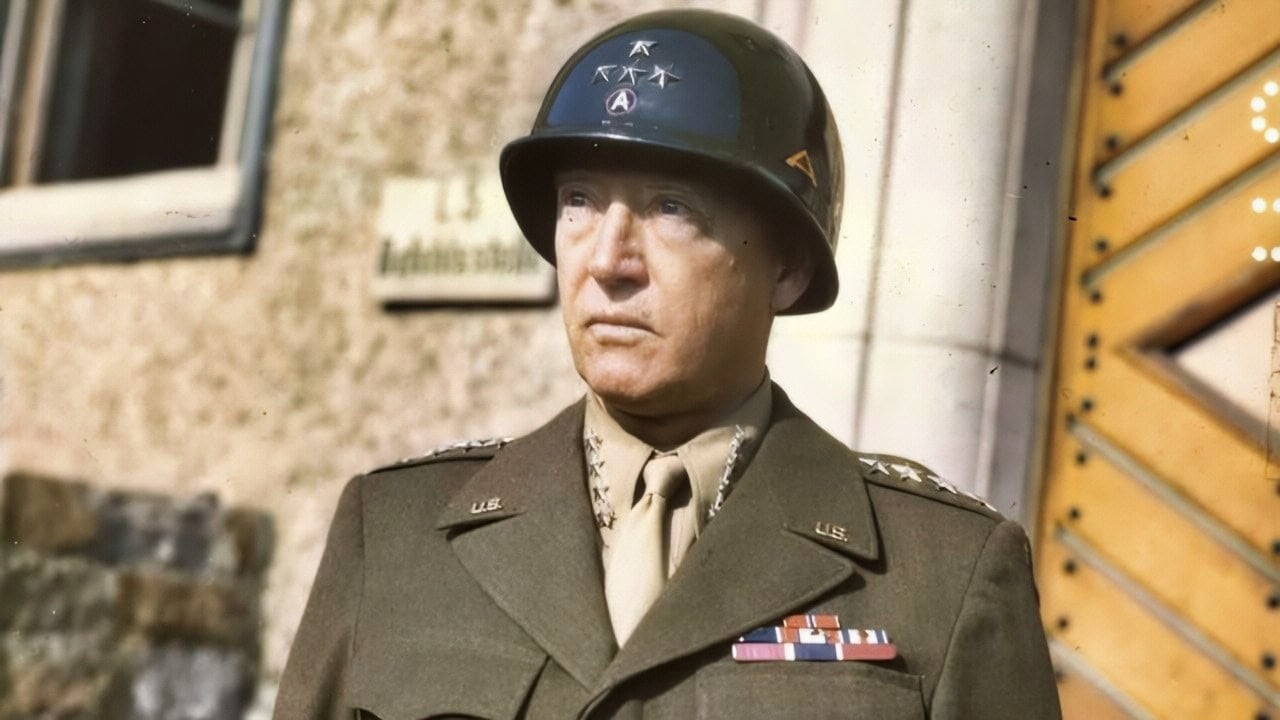
General George Patton U.S. Army Photo
(One could draw parallels between the Battle of the Bulge and the 1973 Yom Kippur War, which the Israelis won despite their own major complacency-borne intelligence failure.)
George Patton to the Rescue
On December 19, 1944, three days after the Germans launched their surprise attack, Allied Supreme Commander (and future U.S President) Gen. Dwight David Eisenhower convened a crisis meeting.
Not surprisingly, Gen. Patton stepped up to the plate.
And even though Ike and Patton had famously butted heads in the days leading up to D-Day, Ike nonetheless knew a good thing when he saw and heard it.
“Old Blood ‘n’ Guts” alone promised and then delivered decisive action, pivoting his entire Third Army of over 250,000 men and hundreds of tanks in godawful conditions, and then sending the 4th Armored Division to break the German siege of Bastogne.
As I type these words, it is Boxing Day, December 26, 2025, the 81st anniversary of when “The Battered B******* of Bastogne” (the affectionate nickname for the several regiments of the 101st Airborne Division, AKA the “Screaming Eagles”) were finally relieved after blunting seemingly countless attacks by five German armored divisions at the tiny eponymous Belgian town.
When all was said & done, between 63,000 and 75,000 German soldiers lay dead or wounded, along with 1,400+ British soldiers and 81,000 American GIs.
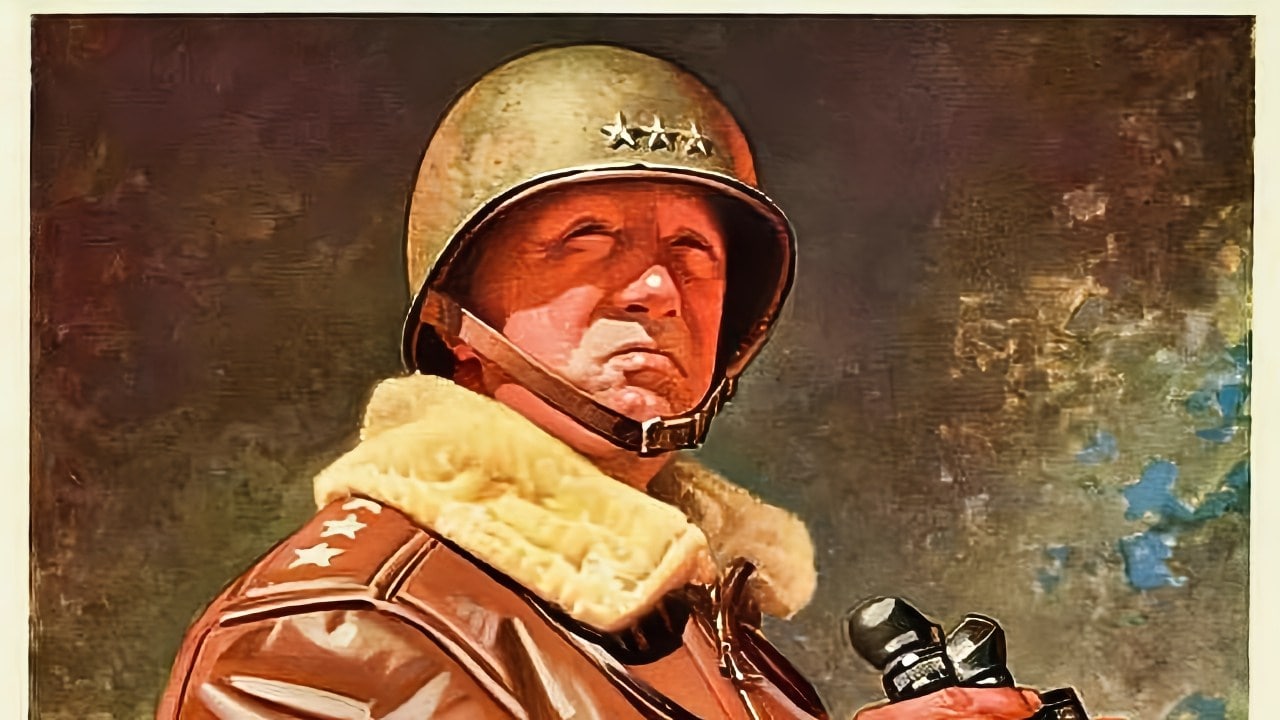
General George Patton. Image Credit: Creative Commons.
It was the most significant and bloodiest single battle fought by the United States in World War II.
One Historian’s Perspective
One of the best and most concise assessments of George Patton’s performance at the Battle of the Bulge comes to us from renowned historian Alex Kershaw, who puts it in a January 19, 202,3 article for Friends of the National WWII Memorial, “I knew that his finest hours came during the Battle of the Bulge…It is fitting that his final resting place is beside men who died for him as they defeated Hitler’s last great attack on the Western front…While the 1970 movie about him won George C. Scott an Oscar, and was in many respects remarkably accurate, it turned Patton into a cliché – a foul-mouthed, impetuous blowhard. Patton was very much a hot-head, impolitic, and hilariously foul-mouthed. But he was also the only senior Allied general to emerge from the Battle of the Bulge with his reputation enhanced.”
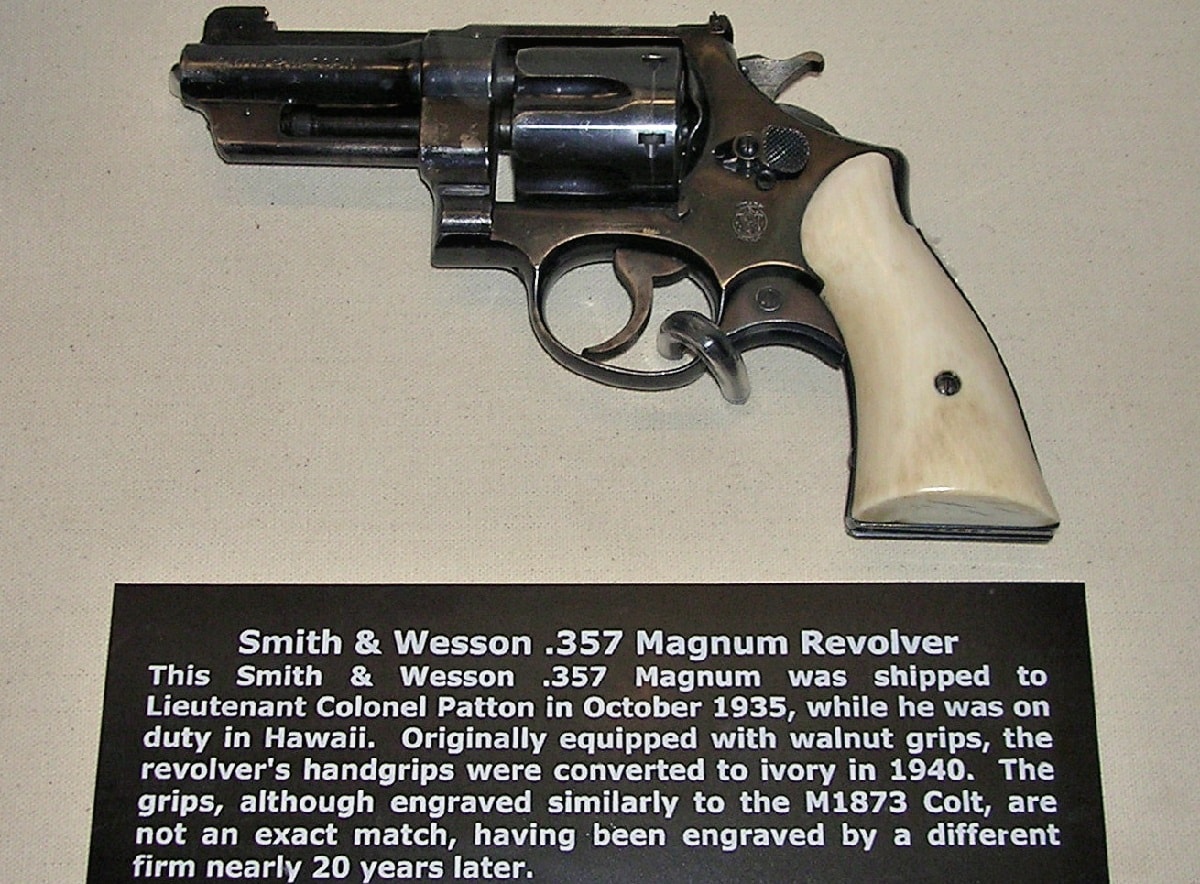
Patton’s well-known custom ivory-handled revolver.
Regarding that “foul-mouthed” bit, Patton’s legendary speech to the Third Army was actually toned down for the 1970 movie to obtain a “PG” rating from the Motion Picture Association of America (MPAA).
About the Author: Christian D. Orr, Defense Expert
Christian D. Orr is a Senior Defense Editor. He is a former Air Force Security Forces officer, Federal law enforcement officer, and private military contractor (with assignments worked in Iraq, the United Arab Emirates, Kosovo, Japan, Germany, and the Pentagon). Chris holds a B.A. in International Relations from the University of Southern California (USC) and an M.A. in Intelligence Studies (concentration in Terrorism Studies) from American Military University (AMU). He is also the author of the newly published book “Five Decades of a Fabulous Firearm: Celebrating the 50th Anniversary of the Beretta 92 Pistol Series.”