
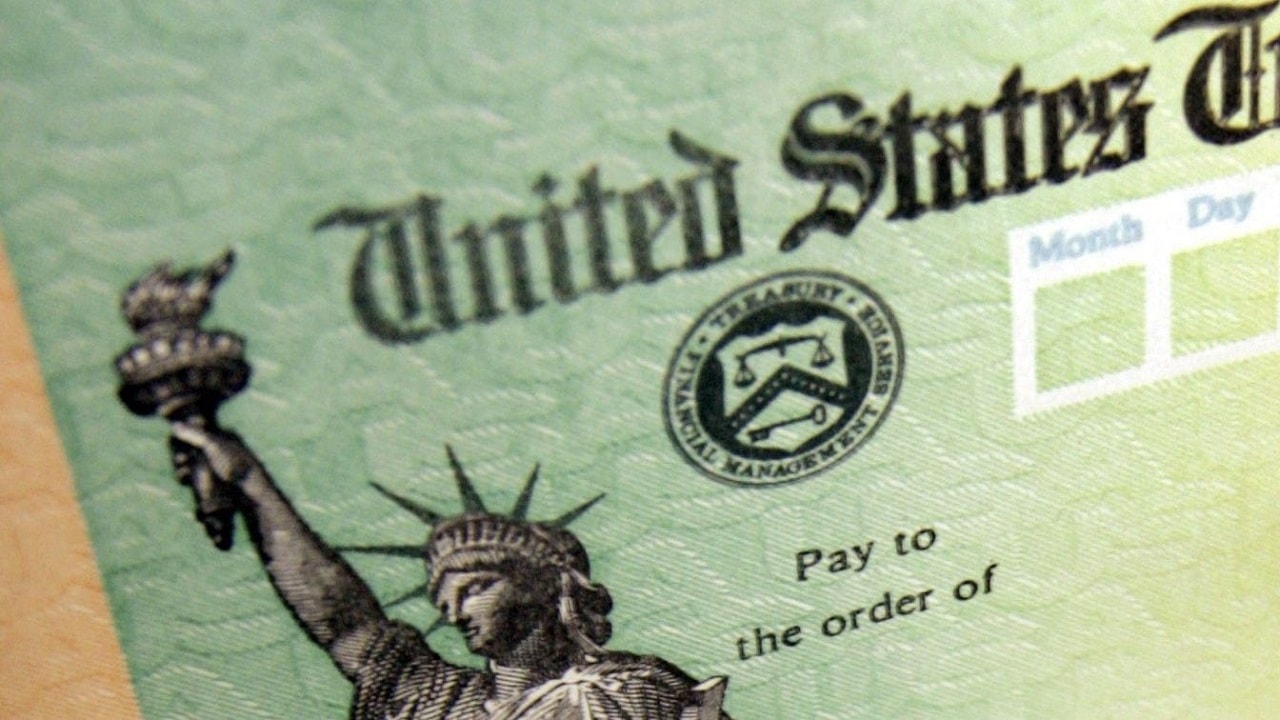
Key Points and Summary – President Trump is floating $2,000 “tariff dividend” checks as proof that his economic agenda is working. Administration rhetoric says the money comes from tariff receipts, not new borrowing, and that refunds could arrive in 2026.
-But the plan’s mechanics remain unsettled: eligibility rules, income caps, delivery timing, and—most importantly—Congressional authority.

Inflation. Image Credit: Creative Commons.
-With debt above $38 trillion and inflation still a voter anxiety, pumping billions into household cash risks political and economic blowback.
-It also blurs Trump’s anti-stimulus brand while issues like AI job losses fester. If the checks shrink, slip, or never arrive, the promise could boomerang heading into the midterms.
Are Trump’s $2,000 Checks Just Dangerous Political Theatre?
During the final cabinet meeting of 2025, U.S. President Donald Trump announced that his government was preparing to give a “nice dividend to people” in the new year, referencing plans for possible $2,000 refund checks to “working Americans” in the coming months.
“Next year is projected to be the largest tax refund season ever. And we’re going to be giving back refunds out of the tariffs because we’ve taken in literally trillions of dollars and we’re going to be giving a nice dividend to the people, in addition to reducing debt,” the president said.
While few specifics have yet to be revealed about when taxpayers should expect the check, or exactly who will qualify, the logic behind it should be clear to anybody observing the current state of politics: Trump is working overtime to prove his leadership has improved the U.S. economy as voters prepare to go to the polls in the 2026 midterm elections.
The Trump administration says that the payouts will be funded by surpluses from tariff collections rather than new borrowing – a narrative that seeks to pre-empt criticism of deficit spending.
Image: Creative Commons.
U.S. Dollars. Image: Creative Commons.
And yet, the proposal’s feasibility still remains in question. Despite repeated statements by Trump about the prospect of direct payments, no legislative or administrative mechanism has yet been established to ensure their distribution, and some critics have pointed out that a significant share of Americans might not qualify under income limits floated by some Trump aides.
What’s more, the refund’s dependence on legislation and the specifics of how tariff revenues would cover such large payouts remain contested and, arguably, vague.
Politically, the idea of funding helps fill a gap in Trump’s record of tangible domestic achievements. Since returning to the office, Trump’s signature economic initiatives – from attempts to overhaul federal efficiency with DOGE to other headline-grabbing proposals – have repeatedly struggled to survive in Congress or have been diluted through negotiation. It’s that problem that is pushing Trump to campaign in 2026 as though it’s another presidential election and seek new ways to prove his efforts are working.
And while Trump seeks to convince American workers he is on their side, the administration has repeatedly worked to block stateside regulation of AI technology that is already wildly unpopular among most Americans and is causing economic harm and job losses.
Is This A Bad Idea?
Trump may see the checks as an opportunity to prove his strategy is working, but the economic fundamentals cast a long shadow over the whole idea. After all, the United States federal debt has now surpassed $38 trillion – a historic milestone that reflects years of sustained budget deficits, spending outpacing tax revenues, and more recently, the pandemic lockdown disaster.
That debt burden is so huge it exceeds the size of the entire U.S. economy, with gross federal debt projected to remain well over 120 percent of gross domestic product.
Numbers like that pose real costs on the economy. Interest payments on the debt consume a growing share of federal spending, shrinking discretionary spending and increasing vulnerability to interest rate swings.
High debt also constrains fiscal flexibility when responding to crises, leaving policymakers with fewer tools and options should the economy slow or, God forbid, enter another recession.
Persistent deficits have long been at the center of warnings from the Congressional Budget Office, which has repeatedly cautioned that U.S. debt is now on an unsustainable path absent major spending cuts or tax increases – regardless of which party is in power.
Those warnings matter politically as much as they do economically because they undercut Trump’s attempt to frame the refunds as fiscally responsible rather than as another form of stimulus.
The risk is compounded by inflation, which, while lower than its post-pandemic peak under President Joe Biden, remains above the Federal Reserve’s long-term target and continues to squeeze household budgets.
Injecting billions of dollars into the economy through these one-off payments risks reigniting price pressures at precisely the worst moment: when inflation is beginning to ease and voters are finally looking forward to some stability in the near future.
And for Trump, after years of campaigning against debt, waste, and inflation, sending out checks risks making his policy record look indistinguishable from those of the pandemic era.
Worse for him, if the checks fail to materialize or are delayed, potentially by Congress, they could become another unfulfilled promise – and that wouldn’t exactly help his 2026 midterm campaign efforts.
About the Author:
Jack Buckby is a British author, counter-extremism researcher, and journalist based in New York who writes frequently for National Security Journal. Reporting on the U.K., Europe, and the U.S., he works to analyze and understand left-wing and right-wing radicalization, and reports on Western governments’ approaches to the pressing issues of today. His books and research papers explore these themes and propose pragmatic solutions to our increasingly polarized society. His latest book is The Truth Teller: RFK Jr. and the Case for a Post-Partisan Presidency.

