
Key Points and Summary – Eighty-three years after the attack on Pearl Harbor, the U.S. Navy has completed a delicate salvage effort to protect the USS Arizona, the war grave for more than 900 sailors and Marines.
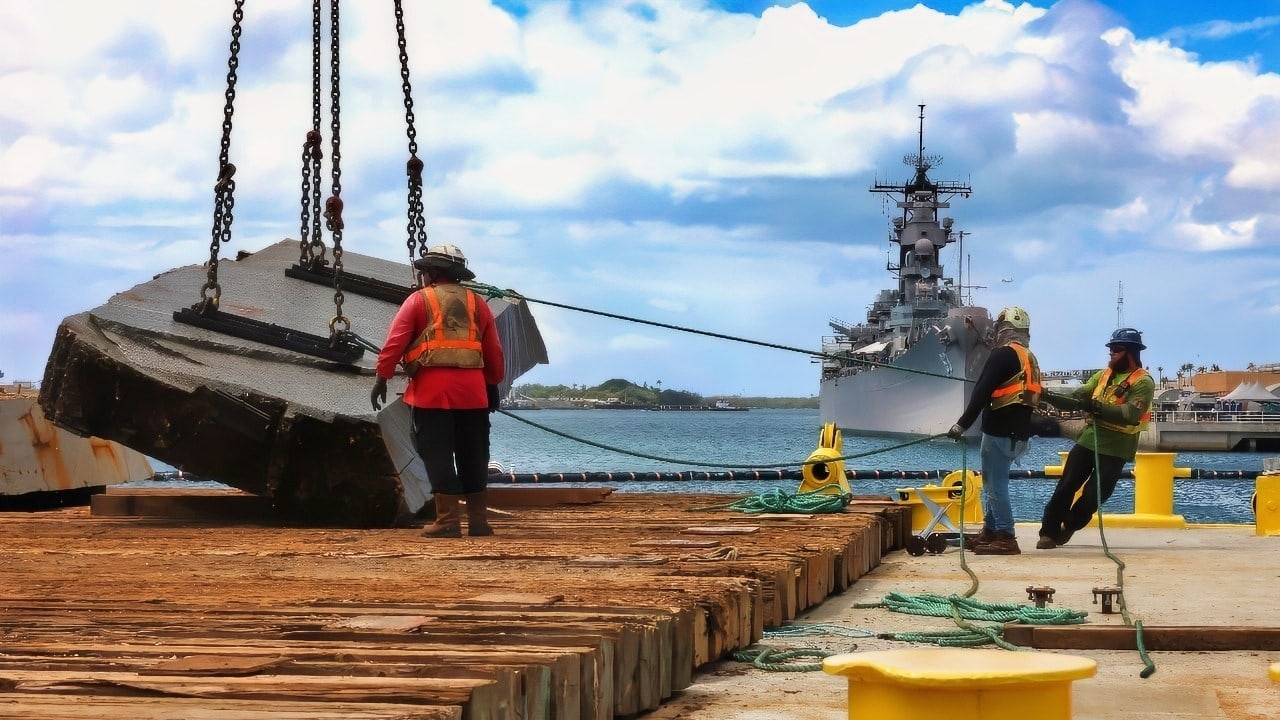
-Working with the Pearl Harbor National Memorial, Navy divers spent a month cutting away most of two World War II–era concrete mooring platforms that were threatening to collapse through the ship’s aging decks.
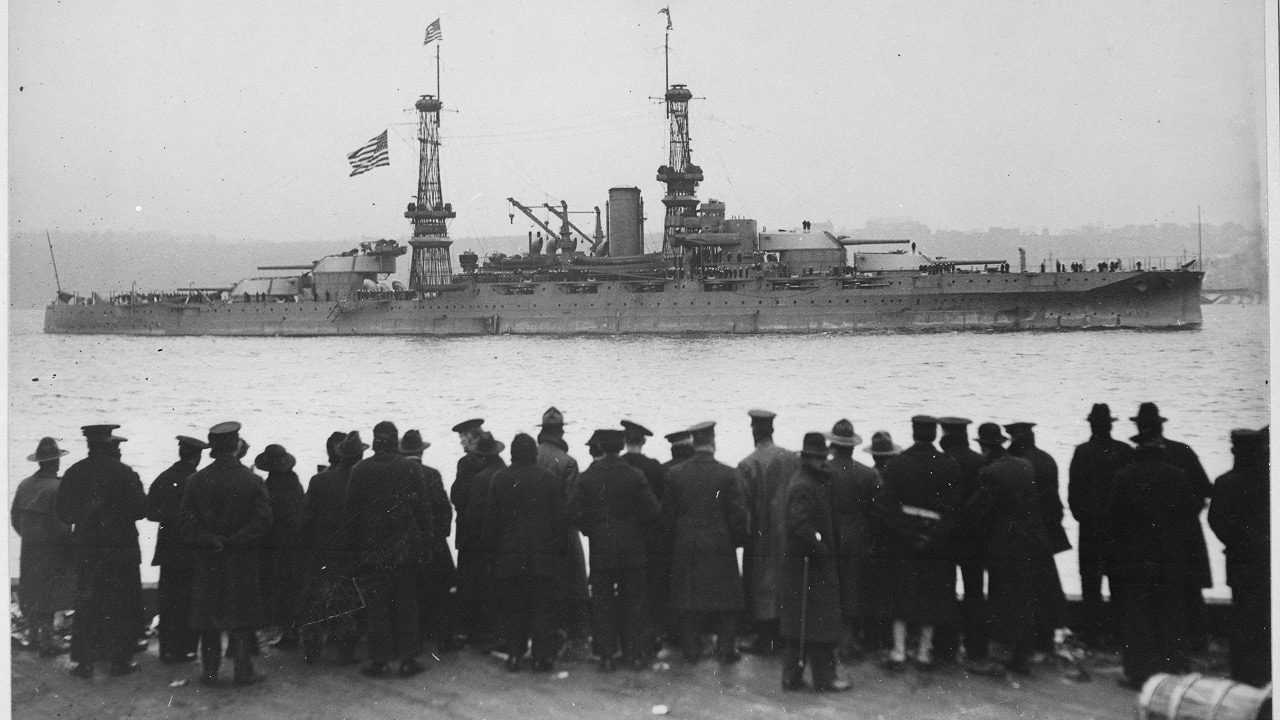
USS Arizona. Image Credit: Creative Commons.
-The team removed more than 100 tons of material while minimizing disturbance to the wreck and surrounding waters, easing structural stress on the iconic battleship and helping preserve one of America’s most sacred sites.
U.S. Navy Just Lifted 100 Tons Off the USS Arizona — Literally
The U.S. Navy recently teamed up with the Pearl Harbor National Memorial to remove “significant portions of two World War II-era mooring platforms from the USS Arizona,” the Pentagon announced on Dec. 4.
After two months of planning, the work started on Sept. 3 and was completed on Oct. 3 at Pearl Harbor.
“The Navy Mobile Diving and Salvage Unit 1, advised by the Navy’s Supervisor of Salvage and Diving and supported by local contractors, removed the majority of the 80-year-old concrete platforms in a month’s time,” the announcement stated. “At the completion of the project, the team effectively reduced the weight bearing on the Arizona’s deck with only minimal portions remaining on both platforms to avoid disturbance or damage to the structure of the ship, including features of the ship that are believed to be embedded in the concrete.”
“I’m very proud of the combined team,” Navy Capt. Lee Shannon, commander of Task Force Arizona, said in the press release. “A great deal of effort from dozens of subject matter experts, both on and off the water, resulted in a successful salvage operation, which included [crews] working 12 to 14 hours every day to complete the [mission].”
“A War Grave”
The USS Arizona (BB-39) was sunk during the attack on Pearl Harbor on December 7, 1941. The Arizona is the resting place of more than 900 soldiers and Marines killed in the attack, the Pentagon stated, while others who survived were later laid to rest there. Most estimates have placed the number killed at more than 1,000.
The platforms that were removed this fall were “originally erected to aid in the salvage of guns and munitions” from the ship after the attack on Pearl Harbor.
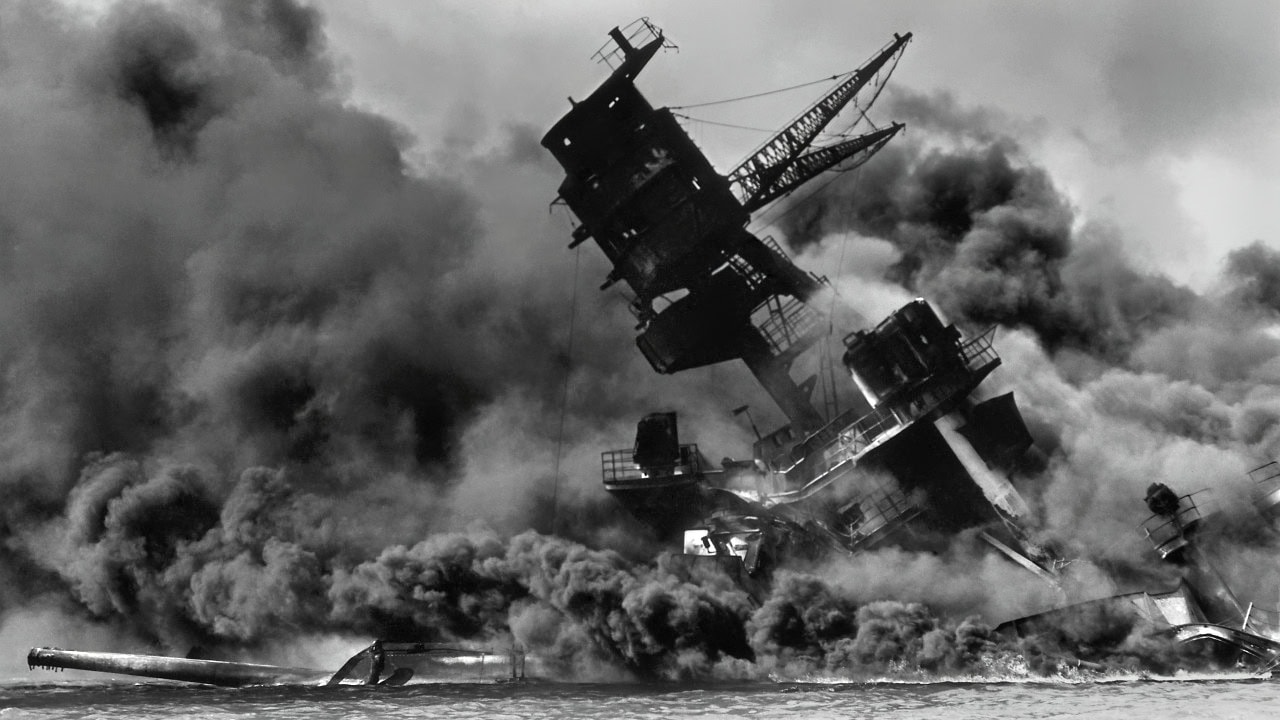
The USS Arizona (BB-39) burning after the Japanese attack on Pearl Harbor, 7 December 1941.
The Pentagon noted that during the project, “Navy staff prioritized operational safety and adherence to environmental best management practices while fully respecting the ship’s sacred status as a war grave.”
This was on the minds of those carrying out the project.
“Our No. 1 priority was to protect the USS Arizona for the future,” Navy Cmdr. Matthew Englehart, U.S. Pacific Fleet diving and salvage officer, said in the Navy’s announcement. “As the ship’s historic structure continues to age, the sheer weight of these concrete platforms posed a significant threat of collapsing through the decks. This proactive operation successfully removed over 100 tons of that burden, relieving the stress on the memorial and preserving its integrity while honoring the sanctity of the site. It was a privilege to lead this effort and safeguard this vital piece of American history.”
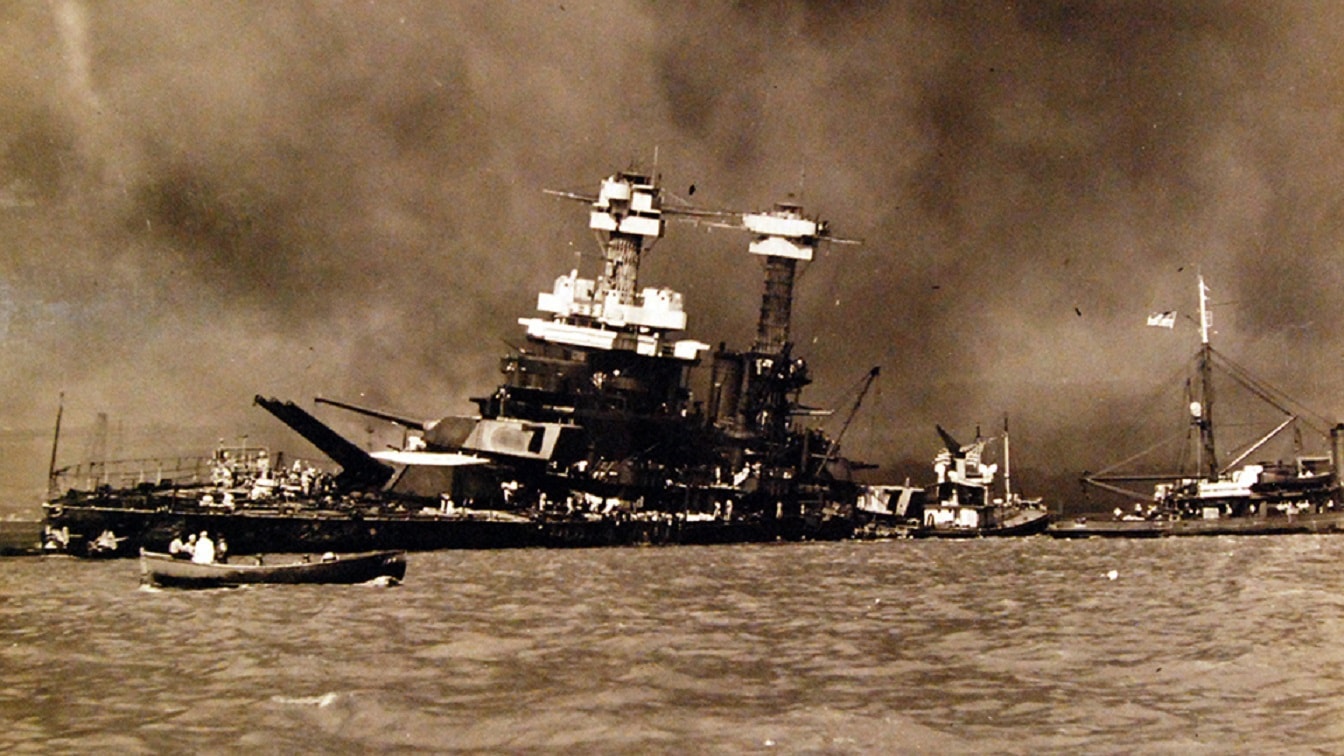
Japanese Attack on Pearl Harbor, December 7, 1941. USS California (BB 44) after the attack. Official U.S. Navy photograph, now in the collections of the National Archives. (9/9/2015).

Pearl Harbor. Image Credit: Creative Commons.
The environmental impact of the project was also a concern, the Pentagon stated.
“Navy experts in marine resources, water quality, historic preservation, and environmental review worked closely to provide proactive, comprehensive support to ensure the operation’s success,” Bill Manley, Navy Region Hawaii environmental director, said in the press release.
History of Arizona
The Naval History and Heritage Command tells the story of the Arizona and the attack that sank it. The ship, built in Brooklyn, was commissioned in 1916 and was “deployed for peacetime cruises in the Atlantic, Mediterranean, and Pacific oceans” before Pearl Harbor.
The USS Arizona was moored inboard of the repair ship Vestal when the attack began, the historical site says.
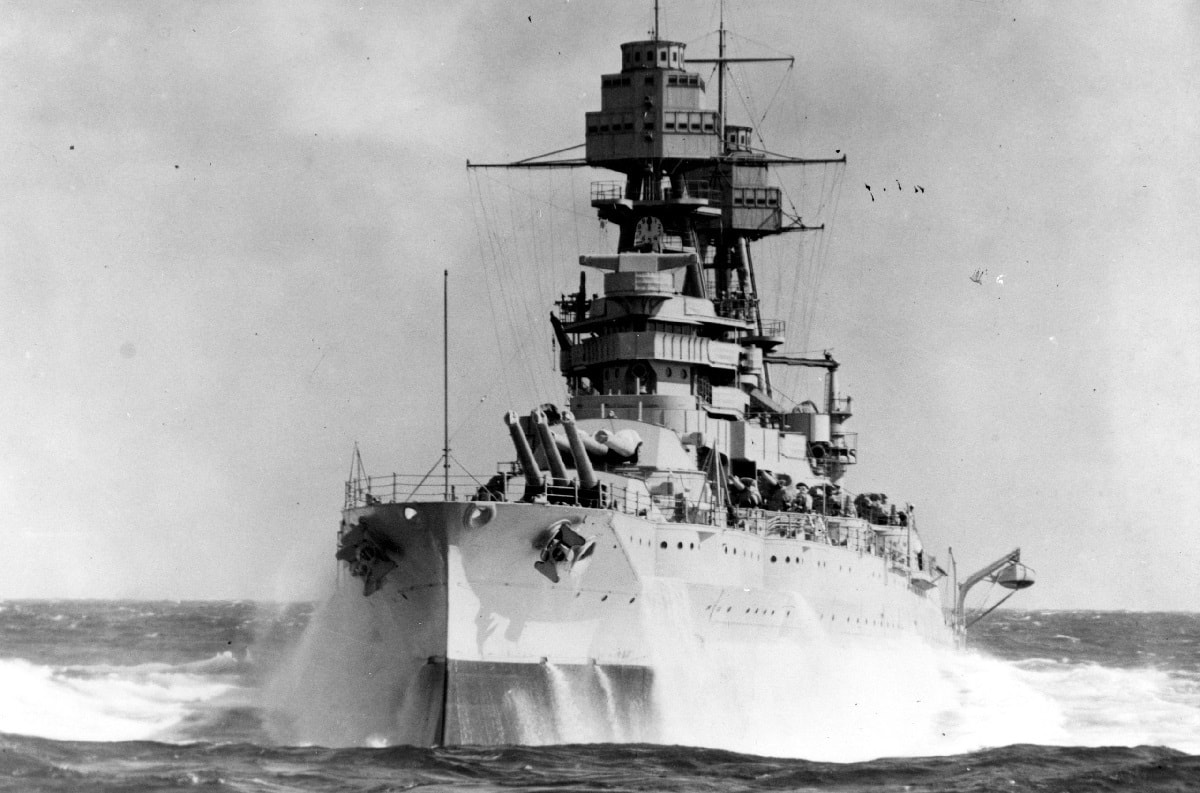
Pitching in heavy seas during the 1930s. Official U.S. Navy Photograph, now in the collections of the National Archives.
“Early reports claimed that she had been hit by one torpedo in the first part of the action. However, this appears not to have been the case, and the destruction of the ship was entirely the work of Japanese horizontal bombers, which struck her with several bombs. Some of these caused damage to her after and midships areas, but their effects were minor compared with what resulted from one that penetrated beside her forward turrets.”
There remain some mysteries about the attack.
“The massive explosion that followed has never been fully explained, since the bomb apparently did not pierce Arizona’s armored deck, which protected her magazines,” NHHC says. ‘Many qualified authorities have blamed powder storage outside of the magazines as the cause, but this is conjectural and probably will always remain so. In any case, the battleship was utterly devastated from in front of her first turret back into her machinery spaces. Her sides were blown out and the turrets, conning tower, and much of the superstructure dropped several feet into her wrecked hull.”
The ship then burned for two days, “a total loss.” Among those who lost their lives that day were Rear Admiral Isaac C. Kidd, Commander Battleship Division One, and the ship’s Commanding Officer, Captain Franklin Van Valkenburgh.
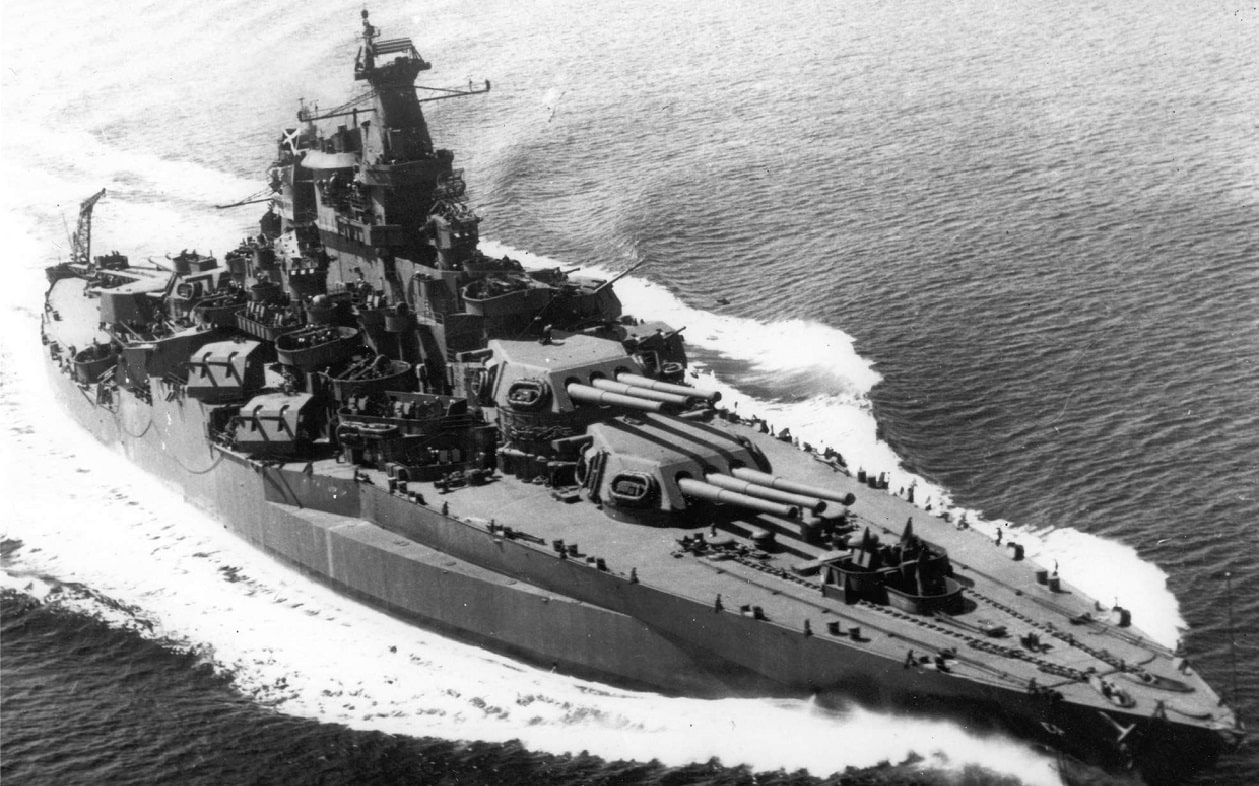
USS Tennessee. Image Credit: Creative Commons.
“He gallantly fought his ship until the USS Arizona blew up from magazine explosions, and a direct bomb hit on the bridge, which resulted in the loss of his life,” Van Valkenburgh’s Medal of Honor citation reads.
The USS Arizona Memorial has been located at Pearl Harbor ever since, as part of the Pearl Harbor National Memorial. It’s been under the supervision of the National Park Service since 1980.
The Salvaging
The National Museum of the Pacific War tells the story of how the USS Arizona was salvaged.
After the attack, Japan “retreated to avoid a counterattack,” the museum writes on its website. This “allowed America to repair what was left of their fleet and begin salvage operations.”
The Arizona and another ship, the Oklahoma, were deemed “beyond repair.”
“Rescue crews searched damaged and sunken ships for survivors, while divers and salvage teams worked to clear the wreckage,” the museum said.
“Capsized vessels were righted when possible, and repairs started on the ones that could be saved. Crews worked around the clock to pump water, clear compartments, and do everything they could to revive the bombed and battered fleet. Much of the work required the crew to wear gas masks due to the risk of toxic gas from the oil off the sunken ships.”
The salvage, once again, focused on removing guns, turrets, and ammunition, using the mooring platforms removed this fall.
About the Author: Stephen Silver
Stephen Silver is an award-winning journalist, essayist, and film critic, and contributor to the Philadelphia Inquirer, the Jewish Telegraphic Agency, Broad Street Review, and Splice Today. The co-founder of the Philadelphia Film Critics Circle, Stephen lives in suburban Philadelphia with his wife and two sons. For over a decade, Stephen has authored thousands of articles that focus on politics, national security, technology, and the economy. Follow him on X (formerly Twitter) at @StephenSilver, and subscribe to his Substack newsletter.