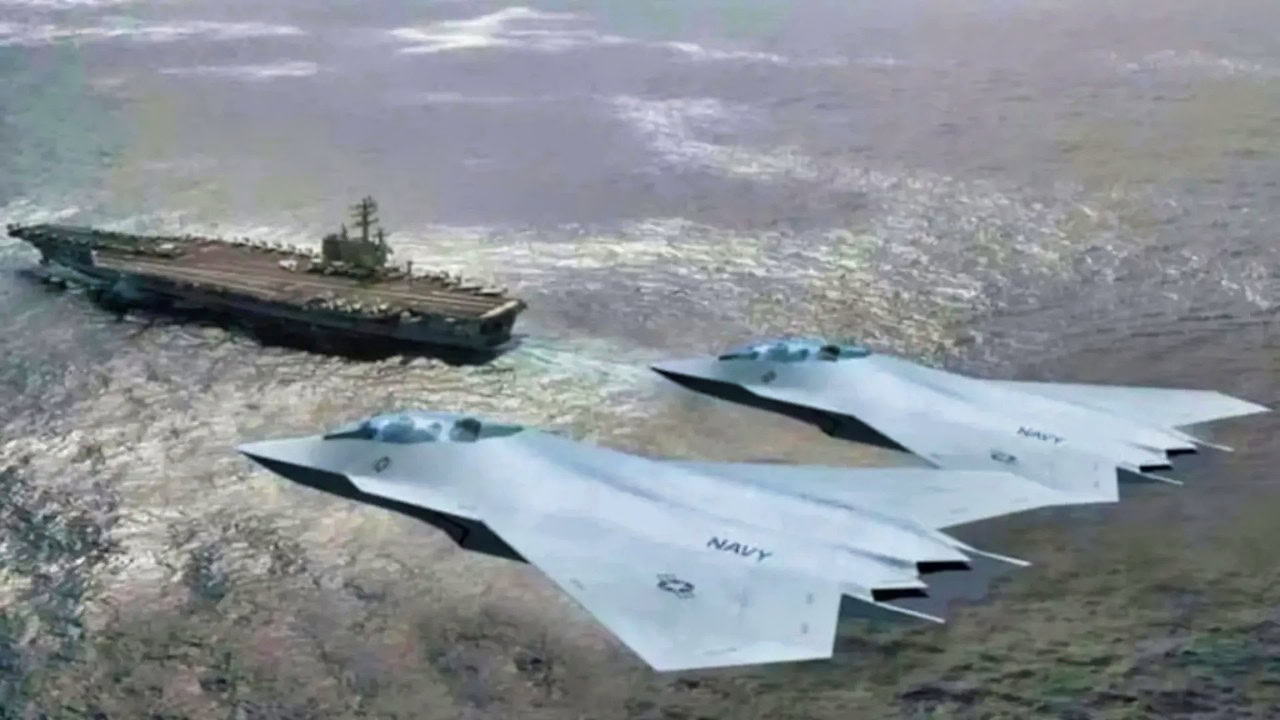
Key Points and Summary – The U.S. Navy’s future F/A-XX fighter is being designed to solve the hardest problem in Pacific warfighting: how to hit Chinese targets from far beyond “carrier killer” missile range.
-Expect a tailless, ultra-stealthy jet with advanced thermal management, a powerful AESA radar, and long legs that could nearly double the F-35C’s reach.
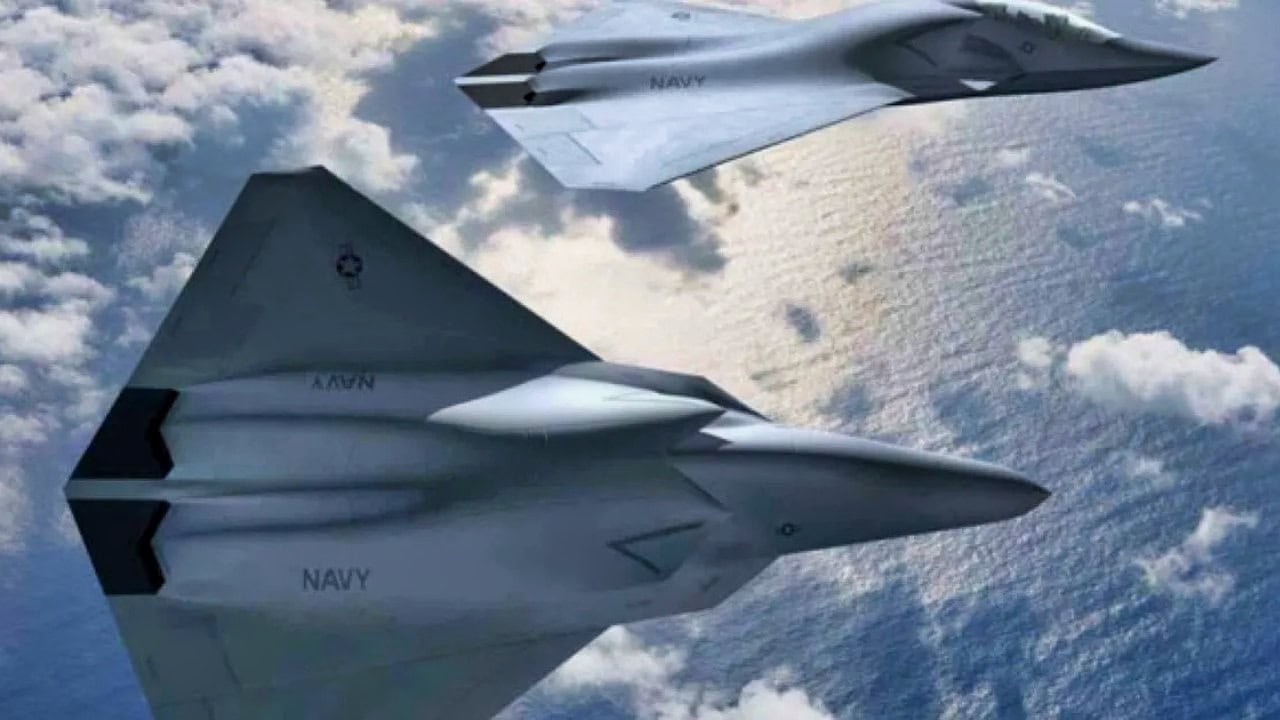
F/A-XX Fighter. Image Credit: Boeing.
-Just as important, F/A-XX will be a flying node in a larger kill web, firing hardened, smart, and networked weapons that share data with pilots, drones, and other missiles in flight.
-If it delivers, this jet could redefine carrier airpower for a sixth-generation era.
Forget Today’s Fighters: Why the F/A-XX Could Redefine Airpower at Sea
The technological attributes and performance parameters woven into the mysterious yet promising F/A-XX are likely far too numerous to estimate.
Yet, there are certain key areas of tactical need that the platform is likely to address.
It would not be at all surprising if the aircraft pioneered a new generation of maritime stealth technology, as it appears capable of vectoring at high speeds without tails or protruding vertical structures.
This profile lowers the aircraft’s radar signature by presenting fewer contours or shapes from which an electromagnetic ping can bounce to deliver a return rendering.
The aircraft will also most likely be engineered with new levels of thermal management, meaning the stealth jet will emit a much lower detectable heat signature.
The closer an aircraft is to ambient temperature, the harder it is for infrared or heat-seeking technologies to detect.
It Starts With Stealth for F/A-XX
Beyond stealth, other key performance areas are equally, if not more, important, such as speed, sensing, computing, networking, and weapons.
One critical area relates to radar, meaning its nose radome should contain an ultra-long-range, precise AESA radar with sufficient numbers of well-packaged transmit/receive modules capable of “seeing” threats from stand-off distances.
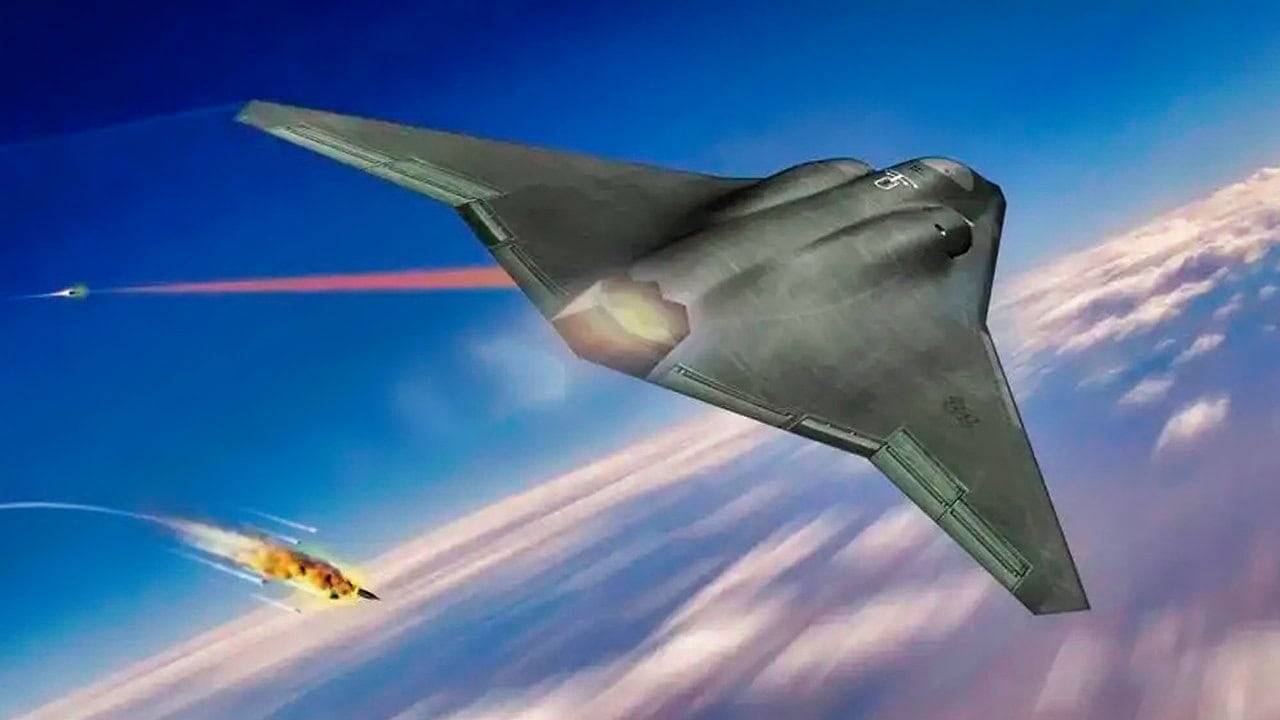
(ILLUSTRATION) — A Northrop Grumman illustration depicts a notional sixth-generation fighter in action.
Long-range target detection and targeting ability will prove critical to any potential future engagement, yet new levels of speed and agility can greatly fortify this advantage.
A stealth aircraft with unparalleled speed, agility, and vectoring ability could, for example, be positioned to prevail in engagements against rival aircraft with extended AESA detection range.
Detection, however, is merely one element of an integrated air combat process that requires fire control, computer processing, and weapons capability.
The most significant margin of difference may pertain to the ability to deploy long-range, hardened, maneuverable, and course-correcting weapons able to adjust course in flight to changing target information.
The F-35, for example, can now fire its AIM-9X “off boresight,” meaning the weapon can change direction after launch to lock in on or pursue a target behind or to the side of the aircraft.
The Air Force Research Laboratory is also making rapid progress with a program known as Golden Horde, in which AI-enabled weapons systems collaborate and share information in flight to adapt to rapidly changing targeting information. The F/A-XX will likely be able to fire hardened weapons that can share information with pilots, drones, and even other weapons in flight.
This capability means the aircraft will be positioned to hold an entirely new set of previously unreachable targets at risk. Perhaps most of all, networked weapons will enable high-speed, time-critical adjustments necessary to stay ahead of, or even ahead of, an adversary’s decision-making process.
Flight Capabilities
There is also, of course, the straightforward question of overall range and reach, which impacts dwell time, lethality, refueling, and the scope of the attack.
The F/A-XX will need to almost double the F-35C’s range, especially in the Pacific, given the area’s geographical expanse.
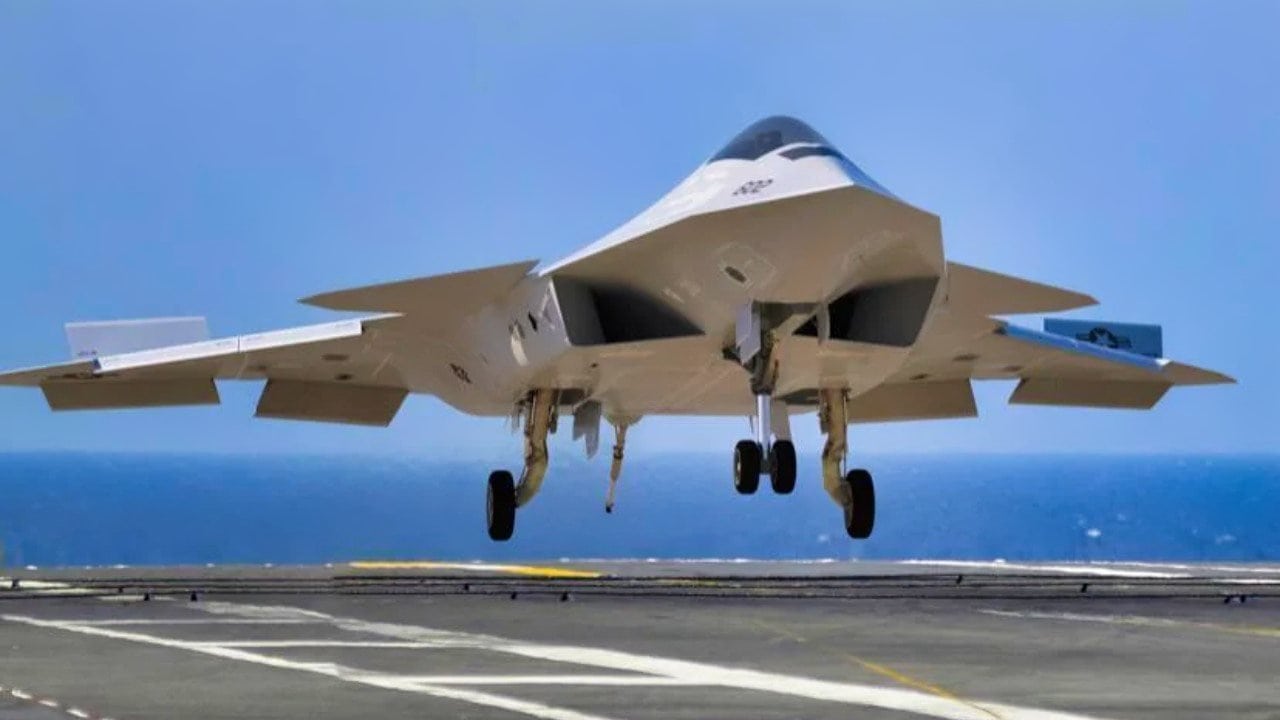
F/A-XX. Image Credit: Creative Commons.
Many Pentagon strategists and weapons developers talk about the “tyranny of distance,” meaning the extent to which distances and travel time to potential targets complicate or even preclude targeting.
For instance, the overall range of an F-35C is cited as roughly 1,300 miles, meaning it will need to launch from roughly 500-600 miles away to reach a target and attack without needing refueling.
The Japanese mainland is roughly 1,000 miles from mainland China, and its southern islands can be 500 miles from Taiwan, depending on where they launch from.
Perhaps most of all, an ability to project maritime attack power to the maximum extent from, and reduce risk to aircraft carriers from Chinese “carrier killer” missiles such as the DF-26.
The ability to sustain attacks from greater distances, with a jet capable of traveling 2,000 miles, would significantly improve the US Navy’s lethality and survivability.
About the Author: Kris Osborn
Kris Osborn is the President of Warrior Maven – Center for Military Modernization. Osborn previously served at the Pentagon as a highly qualified expert in the Office of the Assistant Secretary of the Army—Acquisition, Logistics & Technology. Osborn has also worked as an anchor and on-air military specialist at national TV networks. He has appeared as a guest military expert on Fox News, MSNBC, The Military Channel, and The History Channel. He also has a Masters Degree in Comparative Literature from Columbia University.