
Key Points and Summary – Britain’s Challenger 3 is a deep rebuild of the Challenger 2, chosen over a clean-sheet tank or foreign buy to preserve sovereign heavy armor at lower cost.
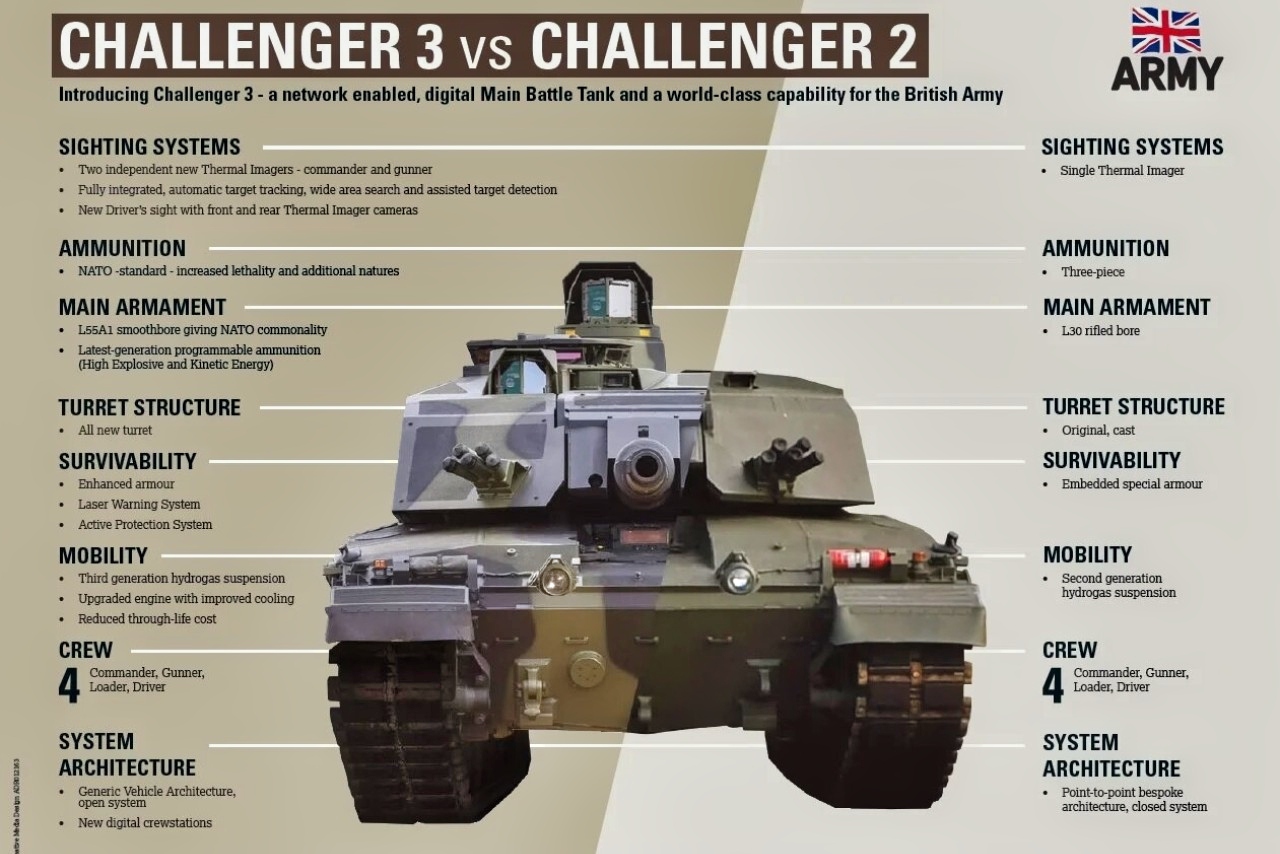
-The upgrade brings a redesigned turret, modern digital fire control, improved thermal sights, and battlefield networking, plus a NATO-standard 120mm L55A1 smoothbore that enables advanced APFSDS and programmable rounds.
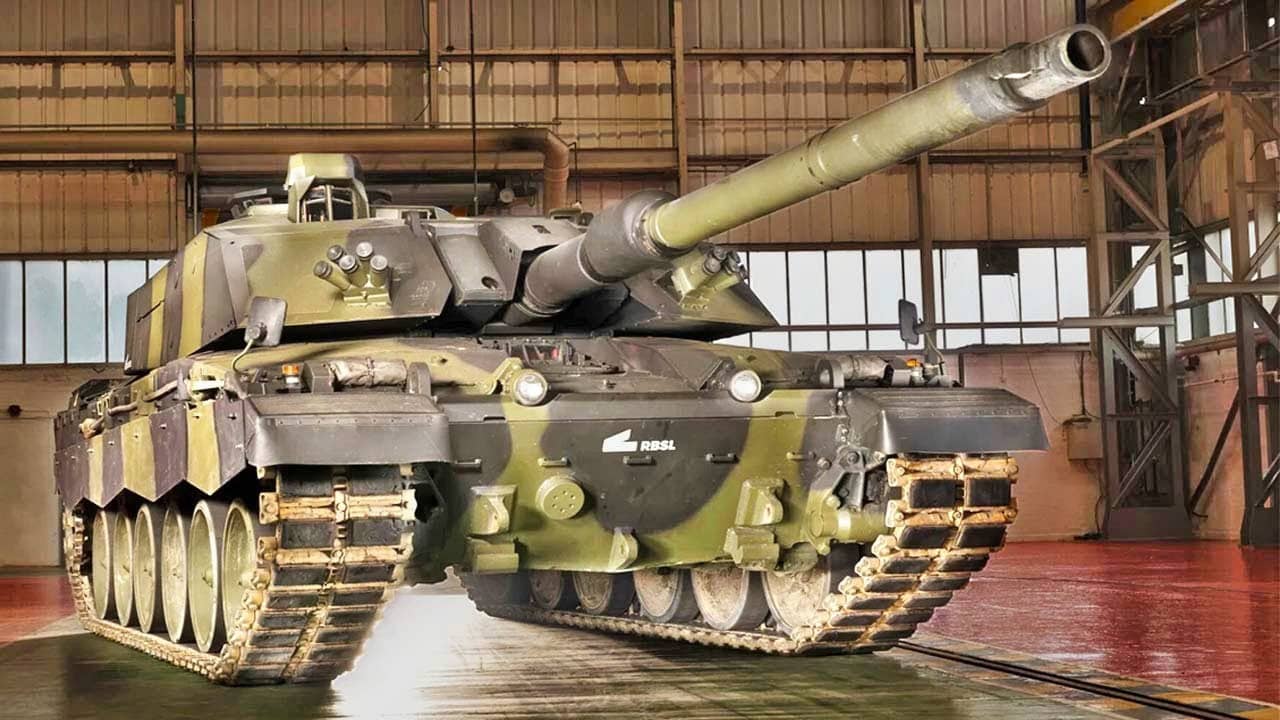
Challenger 3 Tank. Image Credit: Creative Commons.
-Survivability remains central, with updated armor and room for an active protection system, but the same 1,200-hp power pack keeps it heavy.
-With only 148 conversions, it closes a capability gap, not a capacity gap—pushing the UK toward coalition armor in an attrition war.
Challenger 3 Vs. Ukraine-Style Attrition: Quality Wins, Quantity Still Matters
In an era of Ukraine-style armored attrition, Challenger 3 closes a capability gap but not a capacity gap—leaving the UK reliant on coalitions rather than an armored mass of its own.
The British Army’s Challenger 3 is not a new concept MBT but a deep rebuild of the Challenger 2.
Technically impressive, the Challenger 3 features a new gun, turret, and electronics, making it an upgrade over its predecessor.
But with only 148 tanks scheduled to be upgraded, the Challenger 3 will have a limited strategic impact.
And therein lies the tension of the program, the quantity versus quality tradeoff, a challenge that the UK will need to navigate in their efforts to modernize without rebuilding a mass armored force.
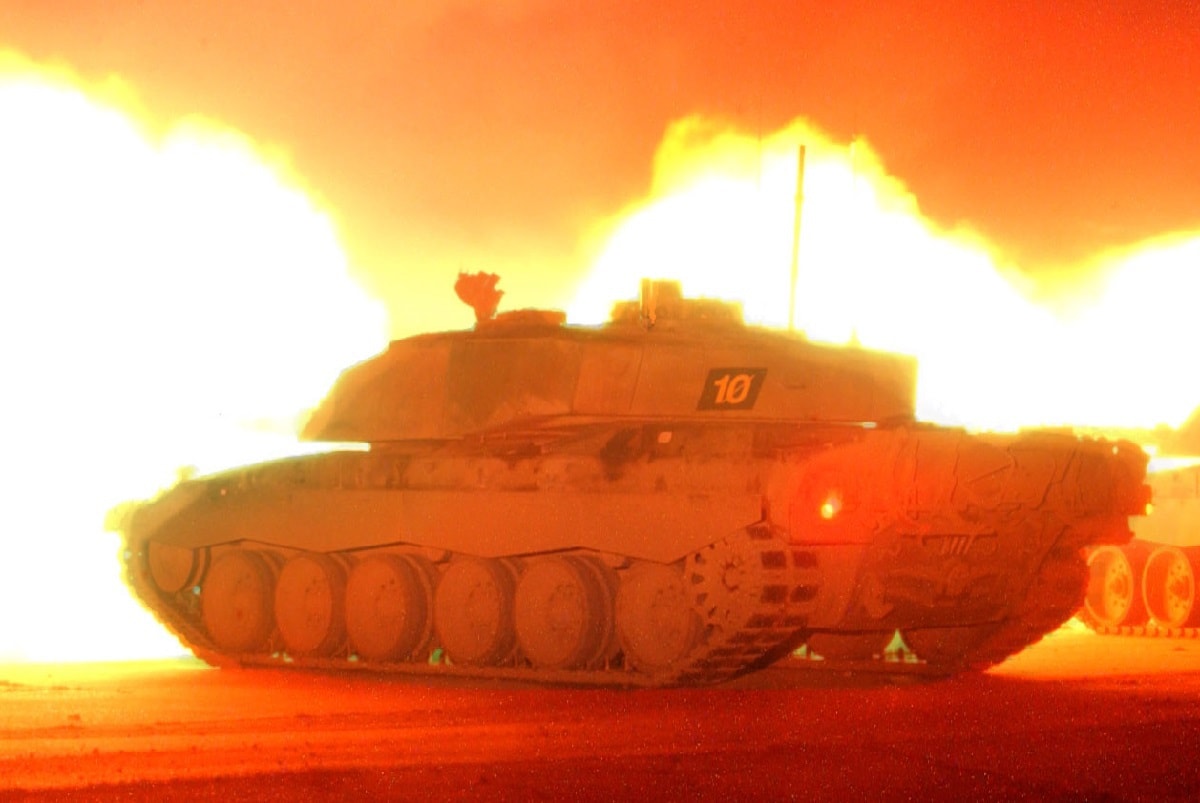
Three Challenger 2 main battle tanks firing their 120mm guns during a night firing exercise by the Royal Mercian and Lancastrian Yeomanry at Lulworth, Dorset.
Historical Context and Challenger 2
The Challenger 2 entered service in 1998, becoming famed for its heavy armor protection and excellent survivability record. But by the 2010s, the platform had become outdated, with obsolete fire control, a non-NATO standard rifled gun, and limited growth potential.
Simultaneously, the post-Cold War UK doctrine shifted away from armor, under the assumption that peer armored conflict was low. But the Russo-Ukraine War challenged that assumption, forcing a late-stage rethink of the doctrine.
In updating their armored fleet, the UK faced three viable options: buy a foreign MBT; design a new tank from scratch; or upgrade the Challenger 2 into something competitive. Option three was selected as the least disruptive and least expensive option, and as a way to maintain sovereign armored capability while avoiding total fleet replacement.
Built in partnership with Rheinmetall BAE Systems Land (RBSL), the Challenger 3 is technically impressive relative to the Challenger 2. The new tanks has a drastically redesigned turret, not just a cosmetic upgrade, with improved armor modularity and internal layout and improved integration of modern electronics. The main gun has been updated, too, replacing the 120-mm rifled gun with a 120-mm L55A1 smoothbore.
This aligns the UK with NATO ammunition standards, enabling the use of advanced APFSDS and multi-purpose programmable rounds, constituting what is arguably the single most important improvement to the Challenger 3.
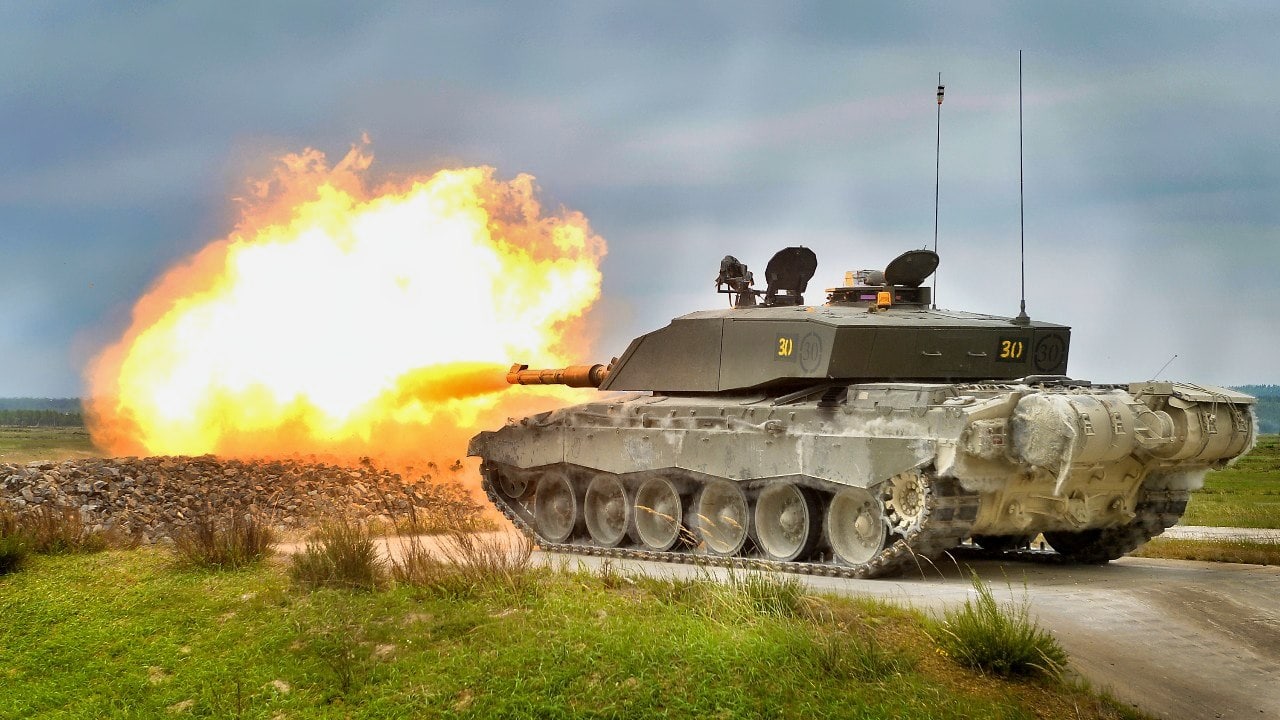
British Challenger 2 Tank. Image Credit: Creative Commons.
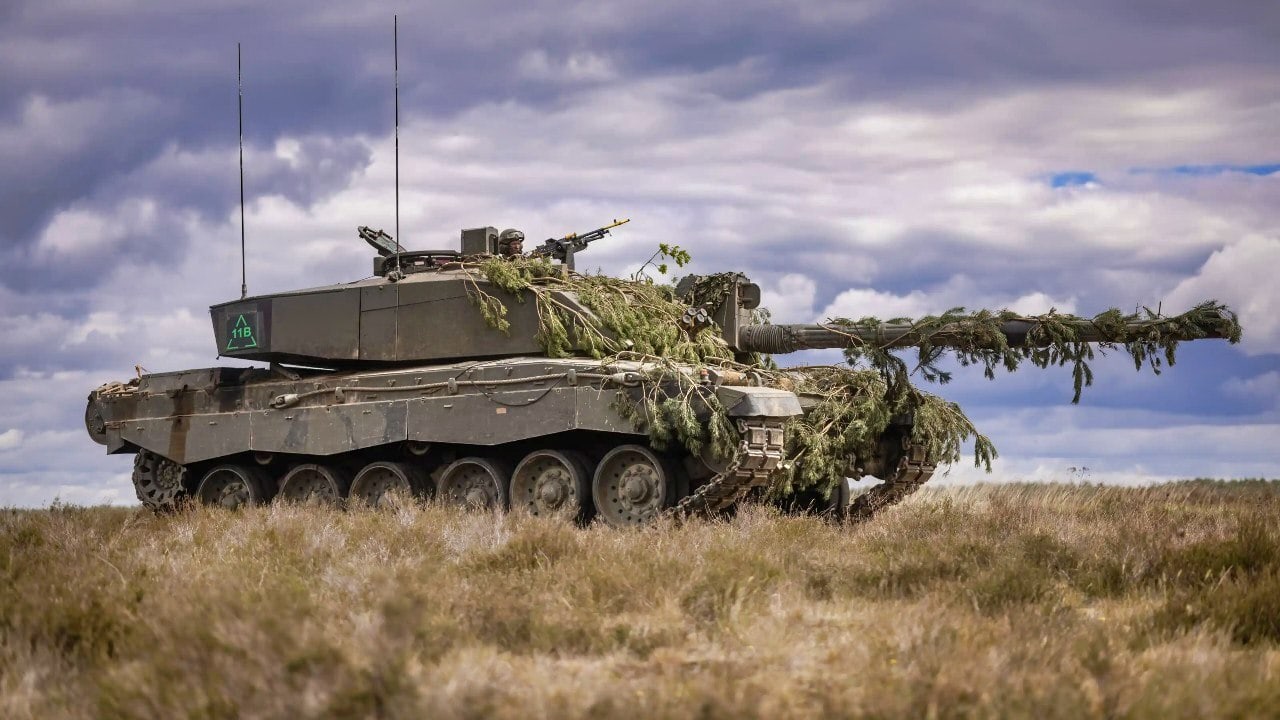
Challenger 2 Tank British Army Image.
The new tank also features an upgraded digital fire control system, improved thermal sights, and modern battlefield networking. The tank retains the Challenger 2’s famed survivability philosophy—the emphasis is still on crew survivability over speed—but adds updated passive armor with the potential for APS integration. The Challenger 3, like the Challenger 2, will be slower and heavier than the Leopard 2 or Abrams.
With the same power pack as the Challenger 2 (1200 horsepower), the Challenger 3 won’t be a speedster, although, its mobility has been incrementally improved over its predecessor.
Operational Application
The Challenger 3 has been designed for high-intensity peer conflict, rather than expeditionary policy. Intended roles include defensive armored warfare in Europe and holding terrain.
The platform is likely to operate alongside allied armor, rather than independently, as the UK doctrine increasingly assumes participation in coalition warfare, making any unilateral mass armor operation unlikely.
But while the Challenger 3 platform is capable, the production numbers may be a problem; the UK will field fewer than 150 of the new MBT total. For comparison, Poland fields hundreds of modern tanks; Germany has 300 Leopard 2s, Russia (before Ukraine losses) fielded thousands.
The UK Challenger 3 fleet, consisting of just 148 Challenger 3s, will hardly be enough to sustain training or readiness minimals. And that’s before the fleet sustains any battlefield losses.
The small fleet signals that the UK is prioritizing quality over quantity, likely focusing on niche excellence and deterrence through credibility, not scale.
The fleet size also suggests that the UK will further integrate with allied forces, rather than act independently, and will assume greater dependence on NATO, within which the Germans, Poles, and Americans have armored mass, allowing the UK to operate as a high-end contributor rather than a backbone force.
But this approach raises strategic questions. The armored attrition in Ukraine showed that mass, replacement capacity, and industrial depth remain essential, suggesting the Challenger 3 may have strategic limitations: the quantity may be insufficient for prolonged conflict.
Challenger 3 Rolls Into the Unknown
In sum, the Challenger 3 appears to address a capability gap, not a capacity gap; the program seems like a compromise for a country facing fiscal limitations and a shrinking force structure amid a rising threat environment.
The Challenger 3 keeps the UK outfitted with a truly modern tank, although not likely with the numbers to make much of an impact.
About the Author: Harrison Kass
Harrison Kass is an attorney and journalist covering national security, technology, and politics. Previously, he was a political staffer and candidate, and a US Air Force pilot selectee. He holds a JD from the University of Oregon and a master’s in global journalism and international relations from NYU.