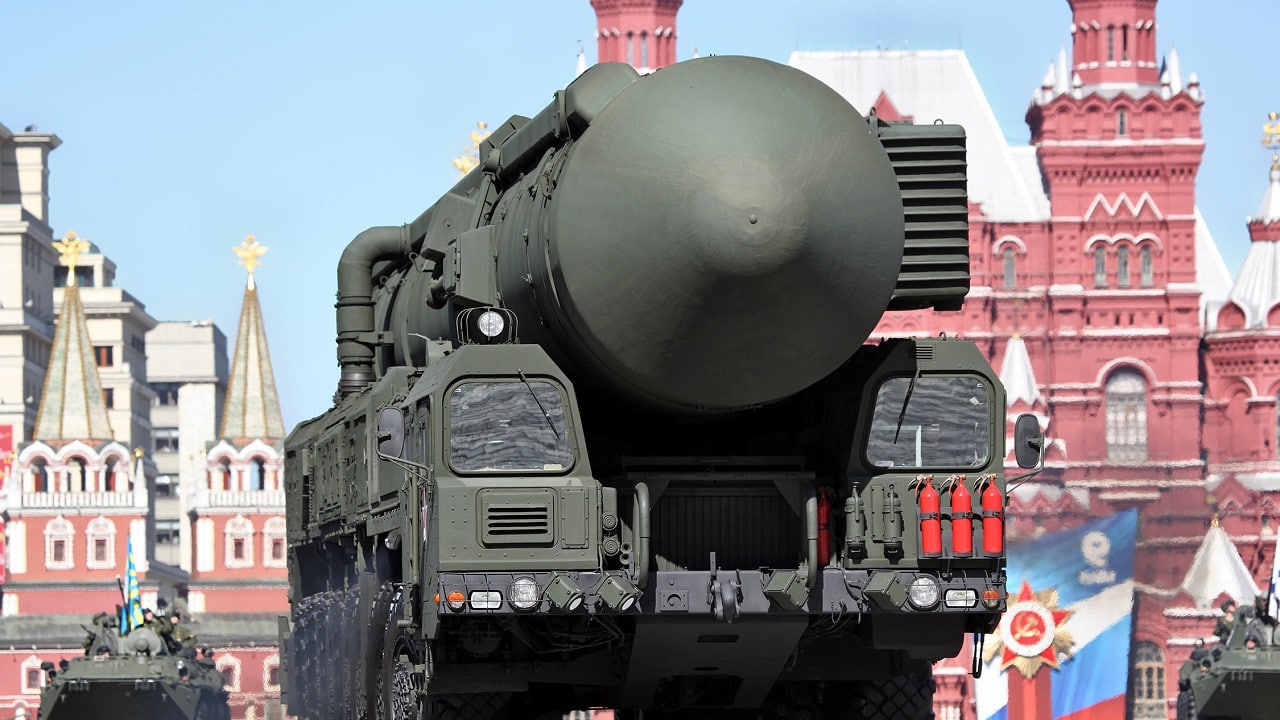
Key Points and Summary – Russia’s RS-28 Sarmat ICBM, long touted by Vladimir Putin as an “unstoppable” nuclear super-weapon, has suffered yet another spectacular test failure.
-First unveiled in 2018 and repeatedly declared “soon” to enter service, Sarmat has missed every operational timeline.
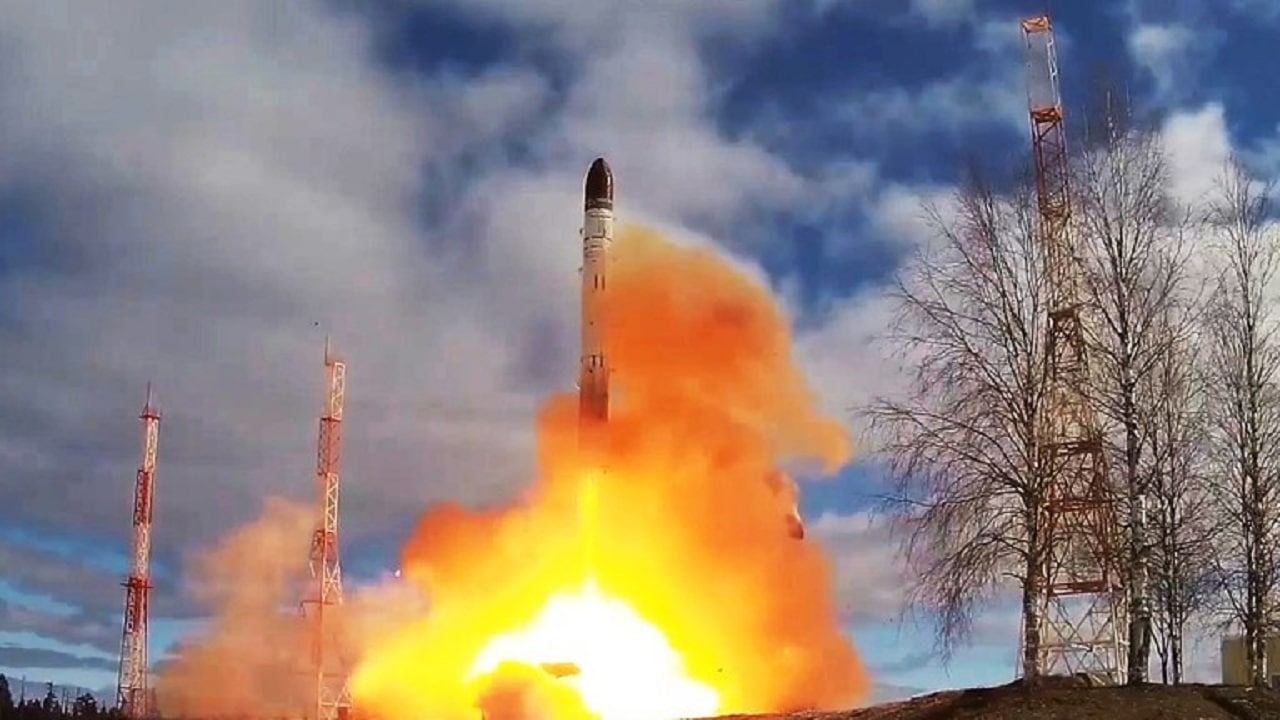
RS-28 Sarmat ICBM
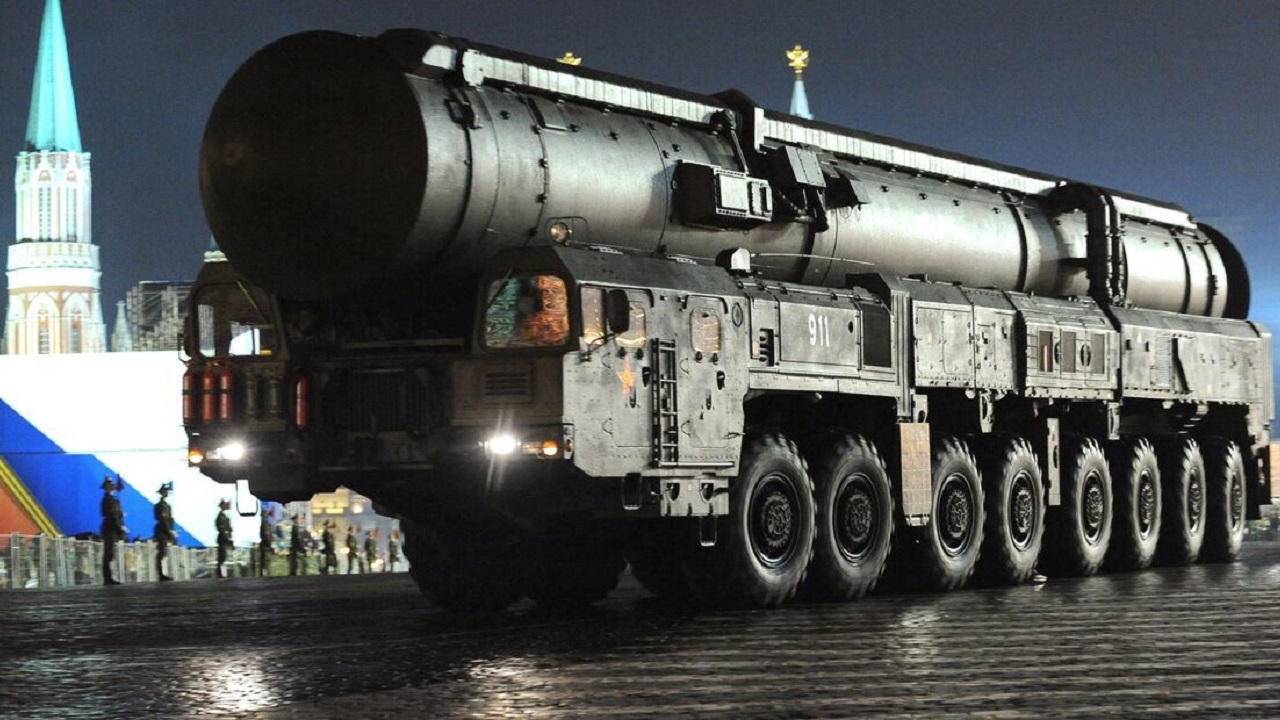
Note: Image is of a generic Russian mobile ICBM.
-In late November 2025, a test from the Dombarovsky base ended with the missile struggling to gain altitude, trailing dark exhaust, and crashing back to earth in a toxic fireball.
-Analysts point to failing acceleration sensors, emergency engine shutdown, and the use of outdated fuel as evidence of a deeper crisis: eroded technical competence and a collapsing Russian strategic missile industry.
Putin’s “Unstoppable” SARMAT ICBM Fails Another Test
One of Russian President Vladimir Putin’s fabled “wonder weapons” has failed again in another test, raising questions about its maturity and even its viability. The missile is the RS-28 Sarmat ICBM, first introduced in a speech by the former KGB Lt. Col. to a joint session of both chambers of the Russian parliament on March 1, 2018.
Putin had declared at the time that this new missile system would “soon enter service” and that, once operational, any existing missile defenses used by Western nations would prove to be “completely useless.” He also claimed that there was “no analogue” to this Russian design ever developed by the US or any other nation capable of designing and building ballistic missiles.
This was the same address where Putin introduced five other weapon systems in the same “doomsday arsenal” category, one of them being the now-famous 9M730 Burevestnik cruise missile, which is supposed to be powered by an onboard nuclear engine.
The problem with all the boastful claims that these weapons can destroy Russia’s enemies and that there is no means of defending against them is that there appears to be nothing of substance behind the boasting. As a lengthy article on the Sarmat points out, the announcement that Putin made was in the same vein as what the article describes as his “fluid propaganda. At times, the missile was depicted as already being in service, then later, it was described as being on the brink of acceptance.”
Never Completed Testing
When Putin first introduced the missile in March 2018, he claimed it would “soon enter service.” More than four years passed before the Sarmat finally completed its first successful test launch from the Plesetsk cosmodrome. Putin then announced that the missile would be placed on combat duty at the end of 2022.
Almost three more years passed before the Russian president declared that “this year we will put it [the Sarmat] on trial combat duty; next year, full combat duty.” Then, almost another year to the day later, on November 5, 2025, foreign media quoted Putin as saying: “This year, intercontinental ballistic missiles Sarmat will be put on trial combat duty.”
He added that the system’s full-scale deployment would be postponed to the following year, meaning sometime in 2026. However, even that date for the system to be declared operational – more than eight years after it was supposed to “soon enter service”- now seems unlikely, given the events of November 28.
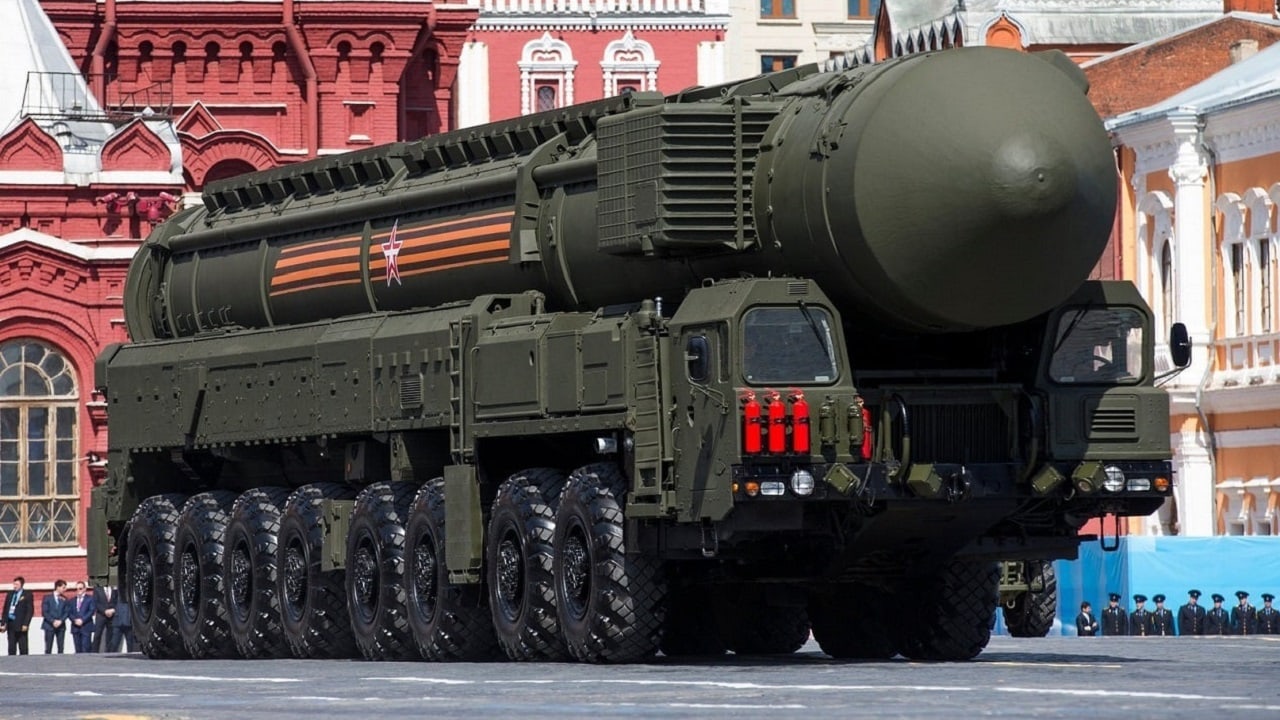
Russia’s road-mobile ICBMs that carry nuclear weapons.
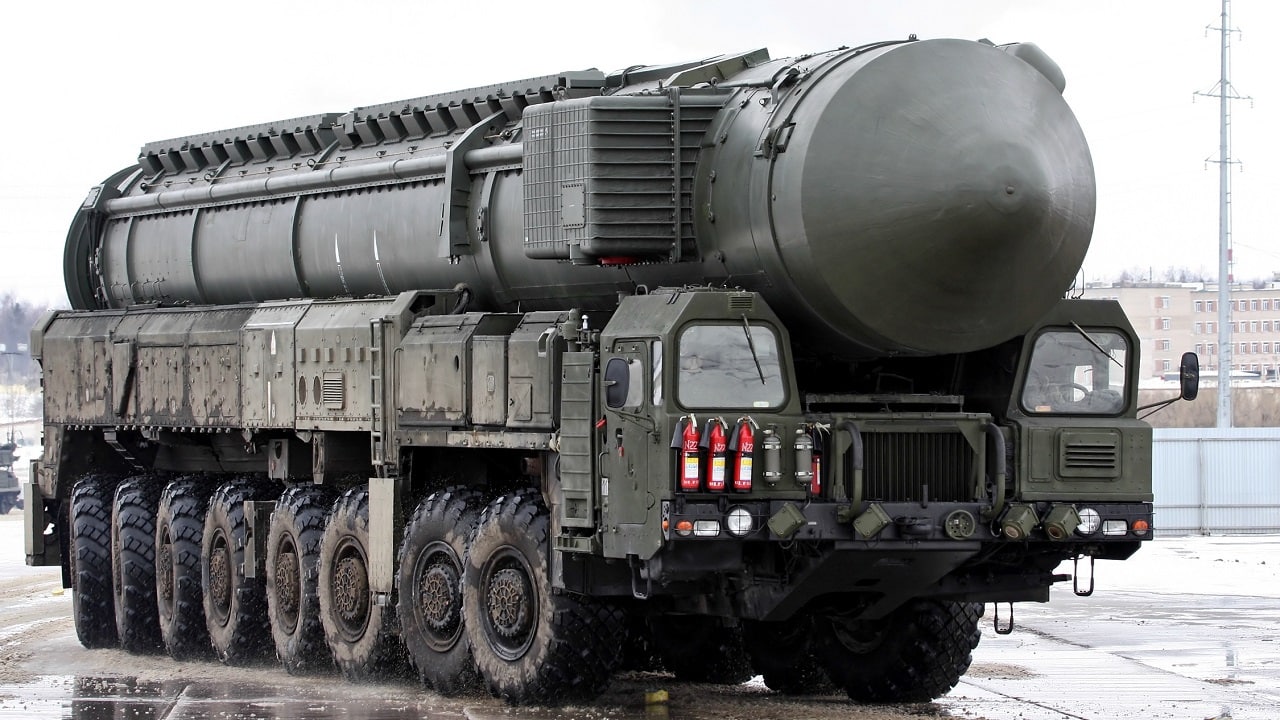
Russian mobile ICBM. Image Credit – Creative Commons.
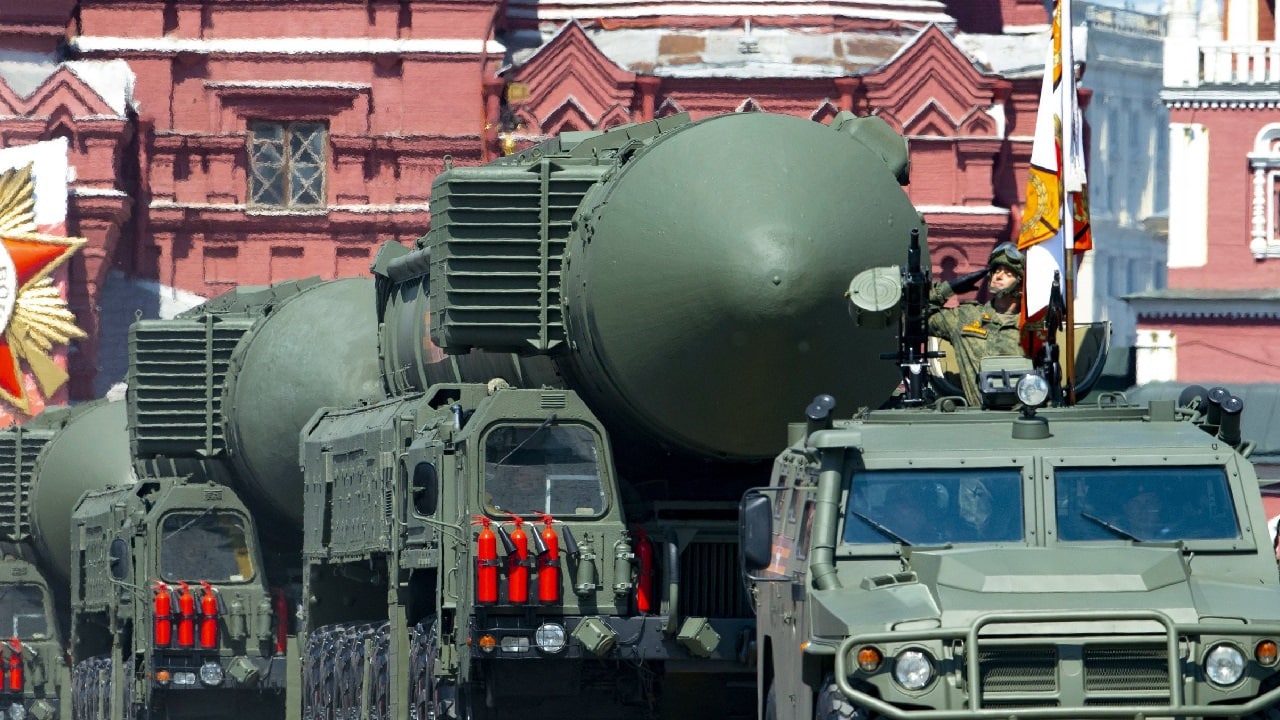
Russian Nuclear Weapons. Image is of a Russian Mobile ICBM. Image Credit – Creative Commons.
Videos posted on that date on numerous media sites show what is assessed to be a test of the Sarmat “dramatically failed on or near the Dombarovsky Air Force Base” in the Orenburg region of Russia, which is near the border with Kazakhstan. The footage of the test shows the missile struggling to gain altitude, emitting black smoke, before it slams back into the ground and erupts into a fiery mushroom cloud. Eyewitnesses in the background of the footage can be heard swearing as the missile spirals downwards.
This weapon of mass destruction has turned out to be a years-long “weapon of mass embarrassment” for the Russian president, as one of the video reports described it.
Satellite images taken on the Saturday following the test by Planet Labs showed enormous scorch marks on the ground.
A Failed and Collapsing Industry
The long and detailed report from Geopolitical Monitor reads that “judging from the maroon clouds from one of the rocket fuel components — nitrogen tetroxide (N₂O₄), known in professional circles as amyl – immediately after launch, there appears to have been an emergency shutdown of the engines due to abnormal operation of one of the rocket’s systems.”
“According to available information, the block of acceleration sensors along the rocket’s axes failed. In such cases, the launch is considered an emergency, the engines shut down, and the rocket ceases flight.”
In the sky above the Orenburg region, “everything was visible, even to non-professionals, as maroon clouds of toxic fumes marked the sudden end of a launch that was supposed to demonstrate strength,” he writes. The color of the smoke is assessed as that of a fuel considered old and almost obsolete, once again proving that this missile is anything but state-of-the-art.
But, the article written by Sergey Ivashchenko, a UK-based analyst experienced in scenario modeling, OSINT, and aerospace systems architecture, explains that behind the clouds of purple and maroon smoke “lies a deeper story: the loss of competencies, system failures, and the collapse of illusions about technological superiority” of Russia’s ballistic missile force and the industry that supports it.
The Sarmat and Putin’s claims of it being “unstoppable” are essentially an empty threat. It is a trump card that the Russian President can “never pull out of his sleeve” because it appears to have no chance of ever being a combat-ready weapon.
About the Author: Reuben F. Johnson
Reuben F. Johnson has thirty-six years of experience analyzing and reporting on foreign weapons systems, defense technologies, and international arms export policy. Johnson is the Director of Research at the Casimir Pulaski Foundation. He is also a survivor of the Russian invasion of Ukraine in February 2022. He worked for years in the American defense industry as a foreign technology analyst and later as a consultant for the U.S. Department of Defense, the Departments of the Navy and Air Force, and the governments of the United Kingdom and Australia. In 2022-2023, he won two awards in a row for his defense reporting. He holds a bachelor’s degree from DePauw University and a master’s degree from Miami University in Ohio, specializing in Soviet and Russian studies. He lives in Warsaw.