
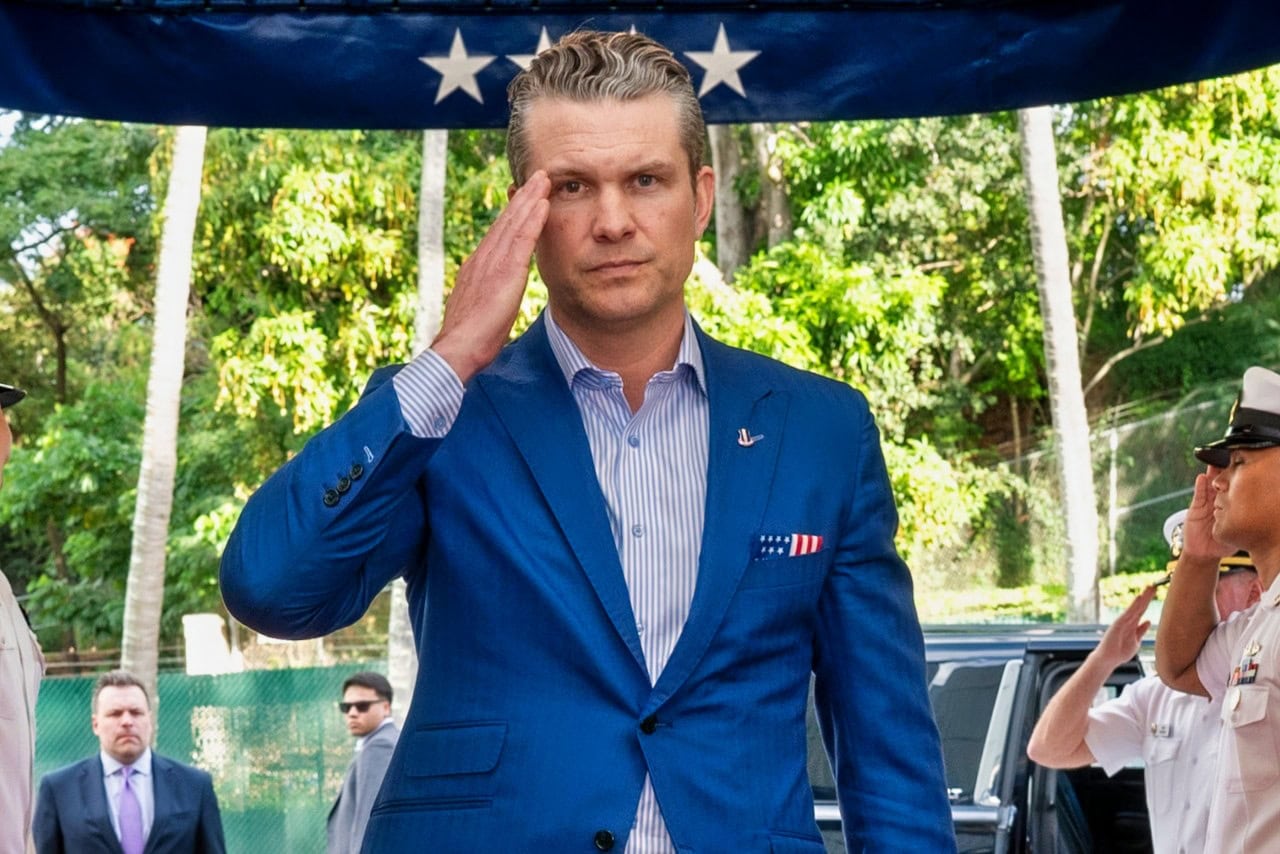
Key Points and Summary – Beards were common in the Civil War, but World War I gas-mask logic and uniformity pushed the U.S. military toward clean-shaven norms.
-The Navy briefly reversed course in 1970 under Adm. Elmo Zumwalt’s Z-grams, only to ban beards again in 1984 under Adm. James Watkins.
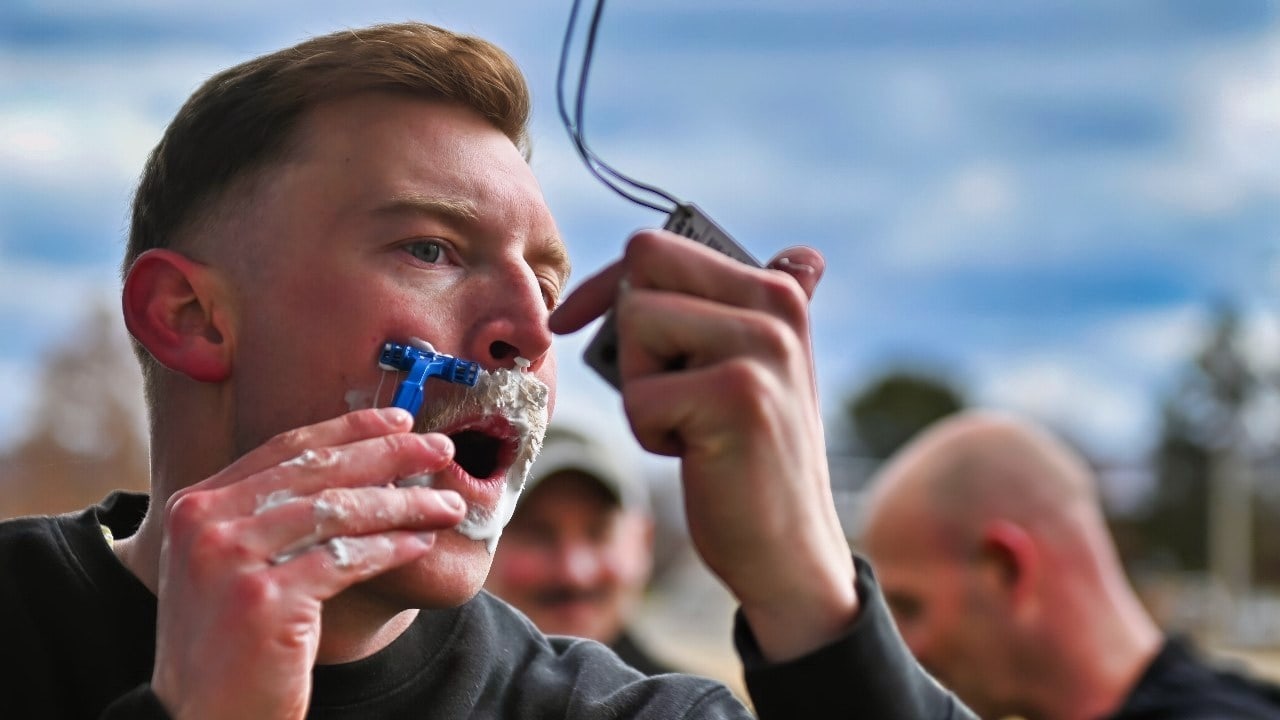
A U.S. Air Force Airman from Fairchild Air Force Base shaves his mustache off during the Mustache Dash event at Fairchild Air Force Base, Washington, March 31, 2023. The Mustache Dash was an event created to raise awareness for mental health that encompasses all four pillars of Comprehensive Airman Fitness, mental, physical, spiritual and social. (U.S. Air Force photo by Airman 1st Class Morgan Dailey)
-Since the War on Terror, beards have persisted mainly through special-operations exceptions and expanded religious and medical accommodations.
-Defense Secretary Pete Hegseth is now tightening standards, urging commanders to limit waivers, require treatment plans, and separate members needing shaving waivers after a year.
The Military Beard Fight Is Back—And Hegseth Just Tightened the Rules
A lot of attention has been paid in recent years to shaving standards in the U.S. military—including new standards recently put in place by Secretary of War Pete Hegseth.
According to a history published earlier this year, nearly every general on both sides during the Civil War sported a beard.
That started to change around the time of World War I, when chemical warfare was ascendant and gas masks became crucial kit.
“By World War I, beards were largely prohibited across the services; clean-shaven faces became the default,” the Challenge Coin Nation wrote. “The logic was practical: a beard might compromise gas mask effectiveness, impede respirator seals, or introduce hygiene and uniformity issues. In addition, mass recruitment and training required standard rules for appearance.”
The ban on facial hair across the services stuck for many years after that, with a few exceptions, including for those required to wear beards for religious reasons. This led to a culture war that has spanned generations.
A 1970s Change
In the Navy, starting in 1970, Chief of Naval Operations Elmo Zumwalt—who himself sported pronounced sideburns—issued a series of what he called Z-grams to update rules and deliver new guidance. Z-gram 57 “explicitly authorized beards and longer hair.”
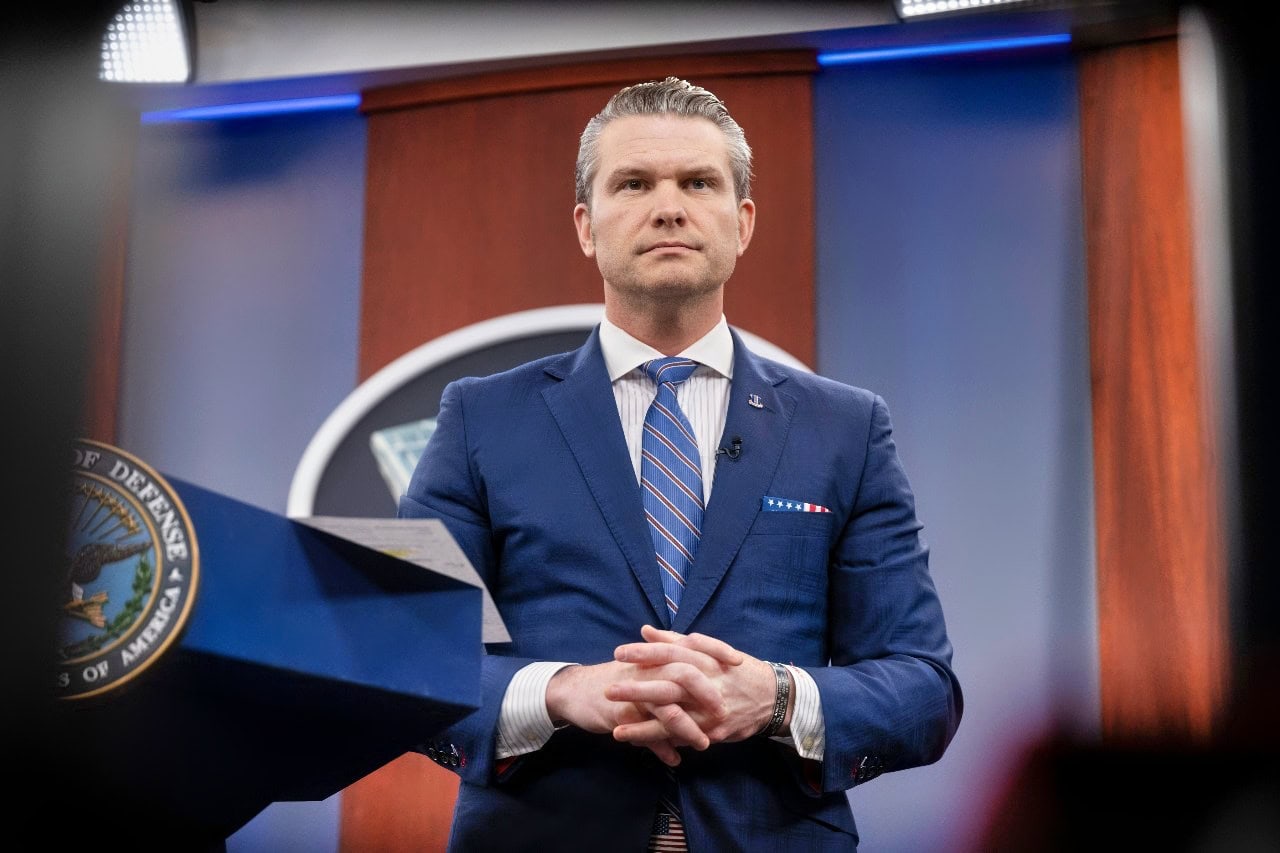
Secretary of Defense Pete Hegseth participates in a live virtual interview with “Fox and Friends” from the Pentagon, Washington, D.C., Jan. 31, 2025. (DoD photo by U.S. Navy Petty Officer 1st Class Alexander Kubitza)
“It appears that my predecessor’s guidance in may on the subject of haircuts, beards and sideburns is insufficiently understood and, for this reason, I want to restate what I believed to be explicit: in the case of haircuts, sideburns, and contemporary clothing styles, my view is that we must learn to adapt to changing fashions,” the Z-gram stated. “I will not countenance the rights or privileges of any officers or enlisted men being abrogated in any way because they choose to grow sideburns or neatly trimmed beards or moustaches or because preferences in neat clothing styles are at variance with the taste of their seniors nor will I countenance any personnel being in any way penalized during the time they are growing beards, moustaches, or sideburns.”
A 1980s Reversal
By the Reagan era, however, fashions had changed, and so again had the military’s approach to facial hair. In 1984, Adm. James D. Watkins once again banned beards in the service. As described by USNI, this was not a popular decision in some quarters.
“Some sailors shaved their heads in protest, while others threatened to send their whiskers to the CNO. Wives cried when their once rugged seamen were shorn to reveal baby faces and double chins. One sailor on an aircraft carrier yelled that the CNO would have to come get his beard if he wanted it, then stepped off the flight deck and plunged into the sea (he was later fished out of the water).”
During the War on Terror, some special forces serving in the Middle East were allowed to grow beards to “blend in” to local populations.
But overall, the services kept the prohibition in place, excepting religious accommodations—which, according to the Challenge Coin Nation history, “existed but were rare and often contested.” Mustaches were allowed, but only “under tight constraints.”
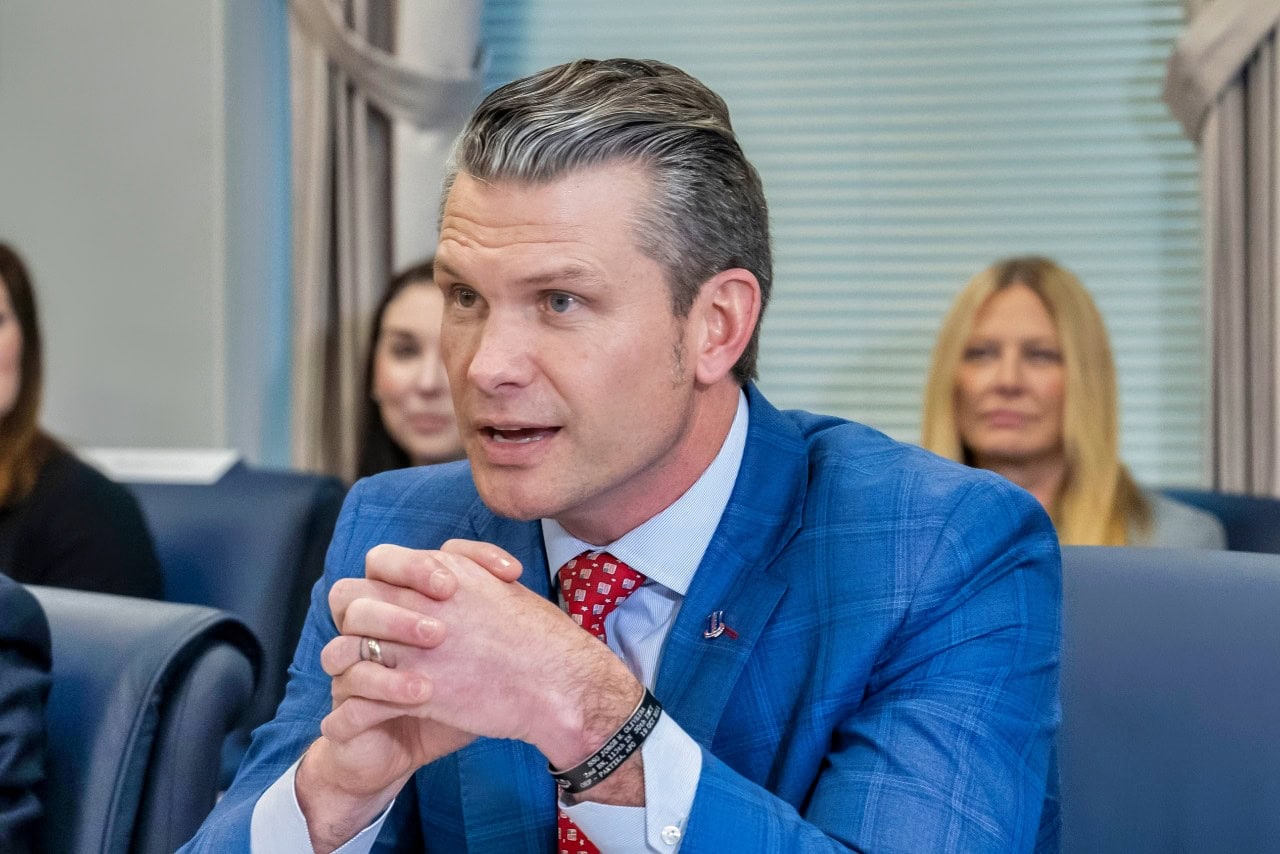
Secretary of Defense Pete Hegseth hosts a bilateral exchange with Australian Deputy Prime Minister Richard Marles at the Pentagon, Washington, D.C., Feb. 7, 2025. (DoD photo by U.S. Air Force Senior Airman Madelyn Keech)
After lawsuits during the Obama administration led to a wider set of religious exemptions, a religious exemptions policy was formalized in 2017.
In 2024, according to the Marine Corps Times, the Department of the Navy completed a study on whether the original, World War I-era justification for the beard ban—that it interfered with gas mask usage—was still relevant.
“While the study’s findings have not been disclosed, court filings make clear that the department is now mulling changes to unspecified aspects of its policies governing when sailors and Marines with religious or medical accommodations may wear beards,” the report said.
The National Library of Medicine published a study this year titled “Preliminary Results on How Longer Facial Hair Lengths May Interfere With N95 Respirator Efficacy.”
According to its findings, “Individuals who cannot shave completely should be encouraged to keep their beard as short as possible since beard length negatively impacts N95 effectiveness.”
The Hegseth Doctrine
Like a lot of things at the Department of Defense, including its name, the beard policy has changed under Hegseth.
In his speech to assembled military commanders in late September in Quantico, which included a shot at “fat troops,” Hegseth emphasized fitness and grooming standards.
“It all starts with physical fitness and appearance,” the secretary said. “No more beards, long hair, superficial, individual expression. We’re going to cut our hair, shave our beards, and adhere to standards,” he said in the speech.
“The era of unacceptable appearance is over, no more beardos.”
This followed a document from the previous month, which was called a “memorandum for senior Pentagon leadership, commanders of the combatant commands, Defense Agency, and DOD field activity directors,” on “Grooming Standards for Facial Hair.”
“The grooming standard set by the U.S. military is to be clean-shaven and neat in presentation for a proper military appearance. When authorizing individual exceptions, commanders must apply consistent criteria and appropriately consider the Department’s interests in safety and uniformity,” the letter from Hegseth read.
He also laid out how medical exemptions to the policy would work going forward:
“Military medical officers will provide a written recommendation concerning a shaving waiver to the commander, who is the final approval authority. Service members with an approved shaving waiver will participate in a medical treatment plan. Unit commanders will initiate separation of Service members who require a shaving waiver after more than 1 year of medical treatment. I have full confidence in our leaders at all levels to provide an accurate assessment of whether retention is appropriate.
“The Department must remain vigilant in maintaining the grooming standards which underpin the warrior ethos.”
The Air Force, on December 15, issued an updated medical guidance for shaving profiles, stating that as of the end of January, “all shaving profiles issued before March 1, 2025, are invalid. Airmen and Guardians who have medical shaving profiles issued prior to March 1, 2025, should schedule an appointment with a military health care provider for further evaluation before the January deadline.”
Objections were raised over possible discriminatory actions, since a large number of exemptions have come about due to pseudofolliculitis barbae, a skin condition that makes shaving painful and disproportionately affects Black men.
Why Hegseth Hates Beards
The Atlantic, earlier this month, published a piece about why Hegseth hates beards so much. Written by Alex Wagner, who served as assistant secretary of the Air Force during the Biden administration, the story claims that during a visit last month to Asia, Hegseth issued a directive that he didn’t want to see a service member with a beard.
“After years of listening to officers try to explain their discomfort with beards, I eventually came to believe that their opposition was less about policy and more about memory. Perhaps seeing troops returning from losing in Vietnam with beards and tattered uniforms had made an indelible impression,” Wagner writes.
“Perhaps Hegseth’s worldview is stunted by the same Vietnam-era fear as those Army generals: that discipline is fragile, that appearance is synonymous with order, and that a military that loosens its grip on grooming will soon lose its grip on everything else. It follows that the military must appear to look a certain way in order to be effective, ready, and lethal. Hegseth’s physical appearance—certainly more than his national-security credentials or executive experience—may have been what led President Donald Trump to select him for defense secretary. And the primacy Hegseth places on outward appearances apparently extends to those he deems not sufficiently physically fit or the wrong gender for the war movie he imagines himself casting.”
About the Author: Stephen Silver
Stephen Silver is an award-winning journalist, essayist, and film critic, and contributor to the Philadelphia Inquirer, the Jewish Telegraphic Agency, Broad Street Review, and Splice Today. The co-founder of the Philadelphia Film Critics Circle, Stephen lives in suburban Philadelphia with his wife and two sons. For over a decade, Stephen has authored thousands of articles that focus on politics, national security, technology, and the economy. Follow him on X (formerly Twitter) at @StephenSilver, and subscribe to his Substack newsletter.