
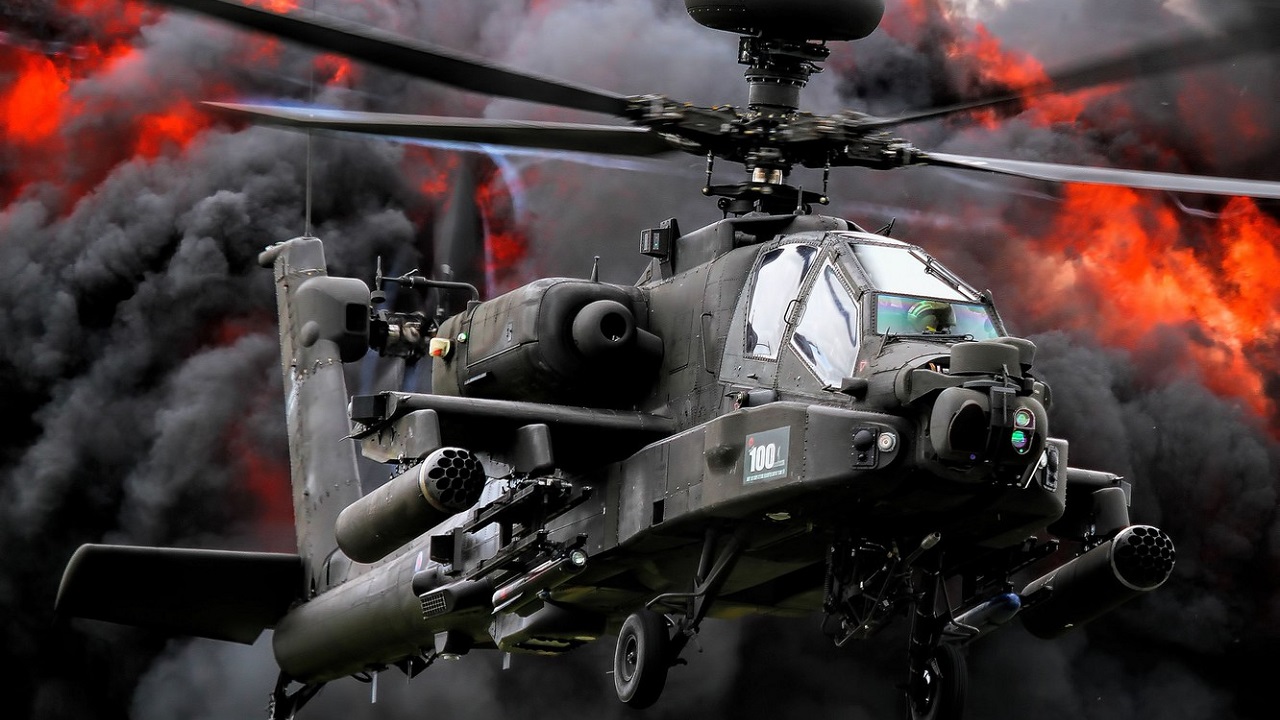
Key Points and Summary – The U.S. doesn’t field “true stealth” helicopters at scale because rotary-wing physics fights stealth at every turn.
-Spinning rotor blades and complex hubs reflect radar, engines and exhaust produce strong infrared signatures, and helicopter acoustics can give away position long before radar matters.
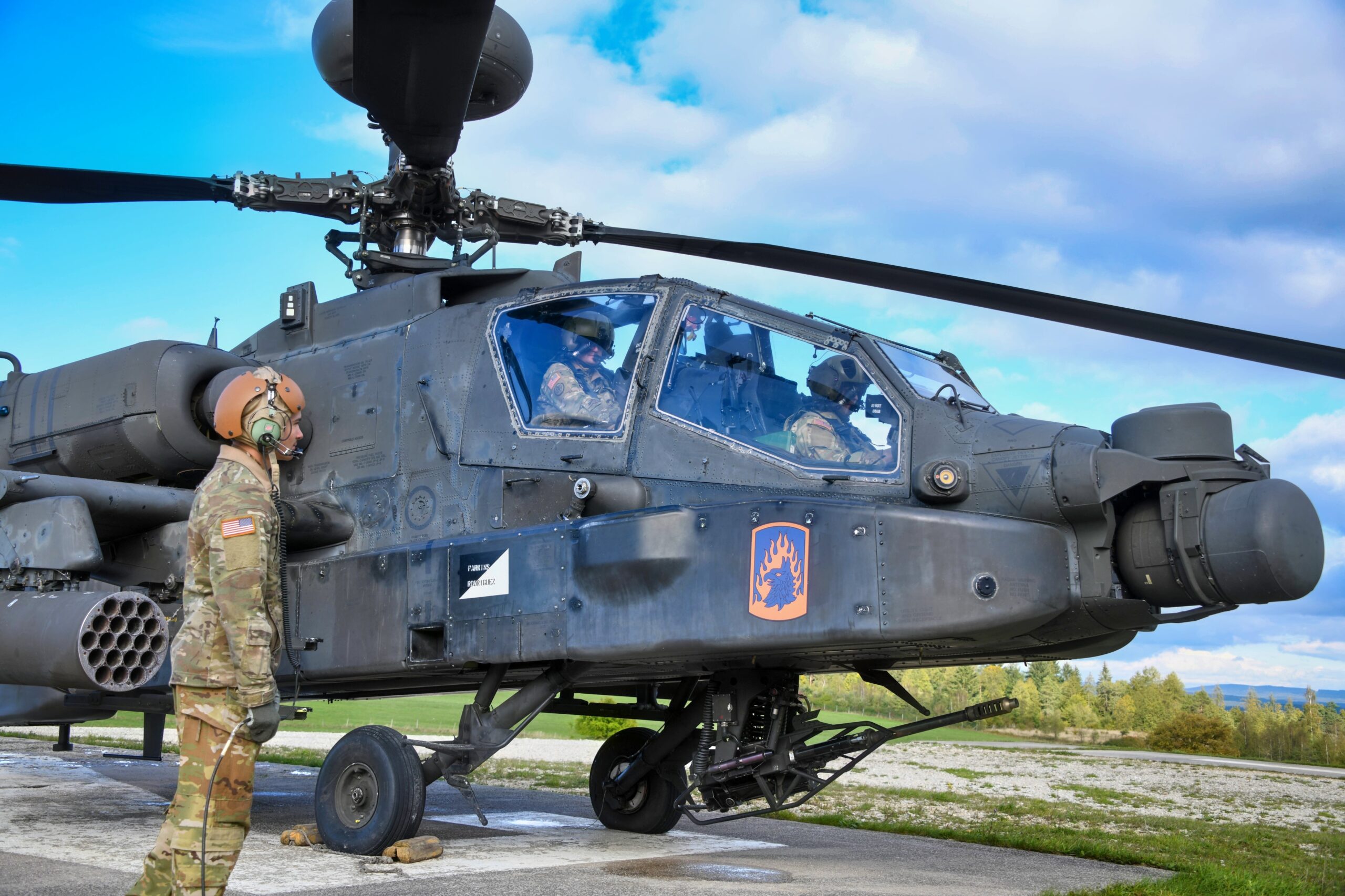
U.S. Soldiers assigned to 12th Combat Aviation Brigade conduct pre-flight checks on an AH-64D Apache longbow helicopter at the Grafenwoehr Training Area, Germany, Sept. 28, 2022. 12th CAB is among other units assigned to V Corps, America’s Forward Deployed Corps in Europe. They work alongside NATO Allies and regional security partners to provide combat-ready forces, execute joint and multinational training exercises, and retain command and control for all rotational and assigned units in the European Theater. (U.S. Army photo by Sgt. Randis Monroe)
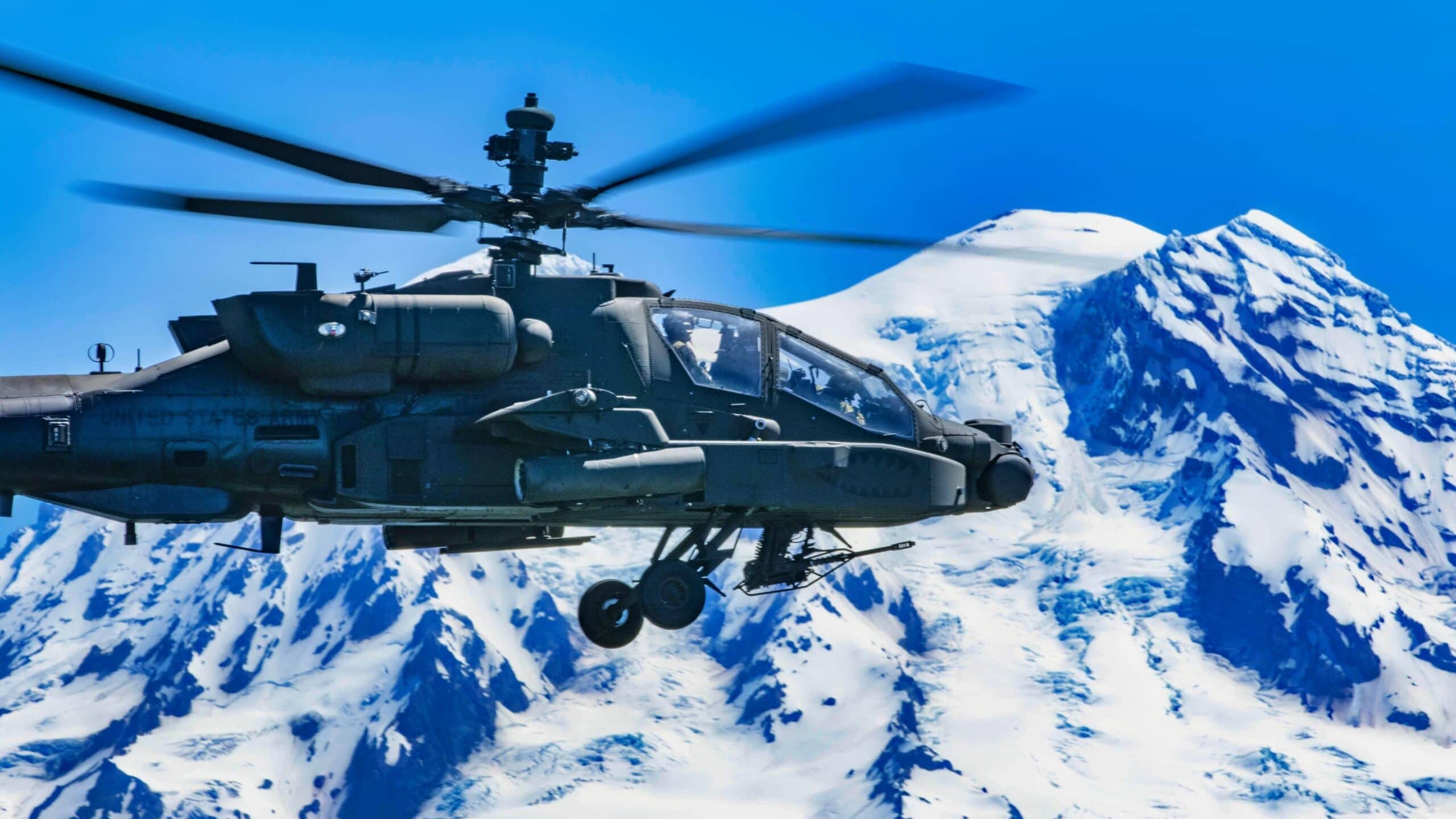
Apache Helicopter U.S. Army. Image Credit: Creative Commons.
-Helicopters also fly low and slow, often within visual and sensor range, which limits the payoff of expensive stealth shaping and coatings.
-The U.S. has pursued reduced-signature concepts—most famously special-operations modifications and the Army’s Comanche program—but cost, maintenance burden, and changing battlefield realities pushed the military toward other survivability tools.
Why the U.S. Doesn’t Fly “True” Stealth Helicopters
Stealth aircraft are not easy to produce. Adding radar-absorbent coatings to any type of airframe is expensive, labor-intensive, and time-consuming.
To deflect radar, the aircraft needs special shaping without angular features. Many systems, such as munitions delivery and engine inlets, must be inside the aircraft.
This shaping must still allow the airplane to have high performance of speed, agility, thrust, and climbing ability.
It’s Just Too Difficult and Expensive to Achieve Full Stealth
That is why the US military has decided to forego stealthy helicopters. Stealth features also require electromagnetic attributes, and that is just too difficult and costly to install on a rotary-wing aircraft. Helicopters are also loud; they often fly lower so they can be seen with the naked eye, and they emit detectable infrared signals.
Retired US Air Force helicopter pilot and former Air Force Weapons School instructor Mike McKinney told Sandboxx.com that helicopters pose many complex challenges to stealth because “they routinely operate within the heart of the threat envelope and their physical configuration does not allow for the use of many masking techniques.”
There Are Still Many Ways to Detect a Helicopter
Helicopters also give off substantial amounts of detectable heat from their engines. The engines often protrude from under the rotors. There are also a few methods for coating the main rotor or tail rotor with radar-absorbent materials. Doing so would add weight and air resistance, hindering forward movement. Helicopters move more slowly than fighter jets and are easier to spot, especially from the ground. At night, they can be heard too.
There Are Different Degrees of Stealth
Stealth is also in the eye of the beholder. The Russian Su-57 Felon and the J-20 Mighty Dragon are not as stealthy as the F-22 Raptor or F-35 Lightning II, but they can evade radar better than fourth-generation airplanes. Helicopters do not have this spectrum of stealth, which makes the technology more difficult to integrate.
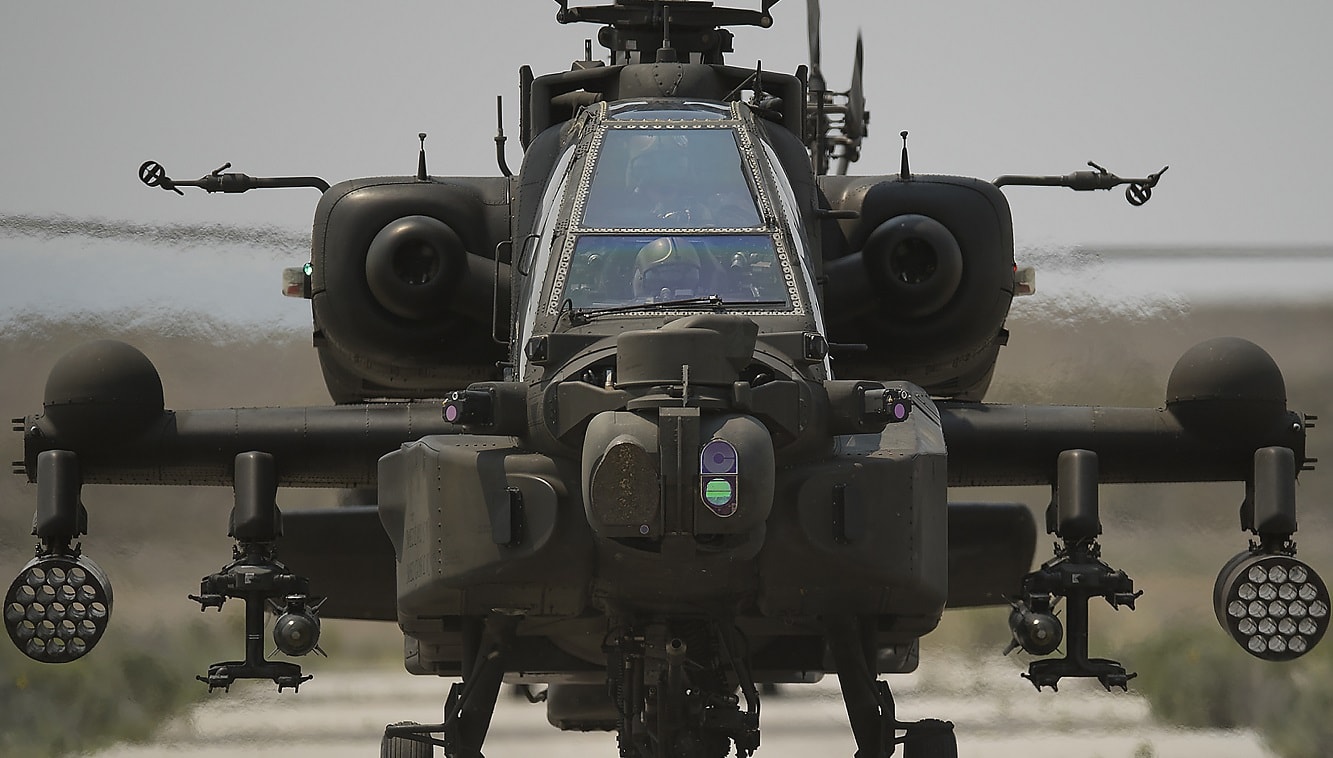
The second AH-64 Apache rolls onto the taxiway and to the takeoff pad. The Idaho Army National Guard’s Orchard Combat Training Center was host to elements of the Republic of Singapore Air Force during July. Based in Arizona, The Singapore contingent operates eight AH-64 Apache Helicopters as part of the Peace Vanguard Task Force. The Apache is an attack helicopter with a tandem cockpit for a crew of two. It features a nose-mounted sensor for target acquisition and night vision systems. It is armed with a 30 mm M230 chain gun. It also features four hardpoints mounted on stub-wing pylons for carrying armament, typically a mixture of AGM-114 Hellfire missiles and Hydra 70 rocket pods. The Apache’s first flight took place in 1975 and was formally introduced into the U.S. Army in 1986.
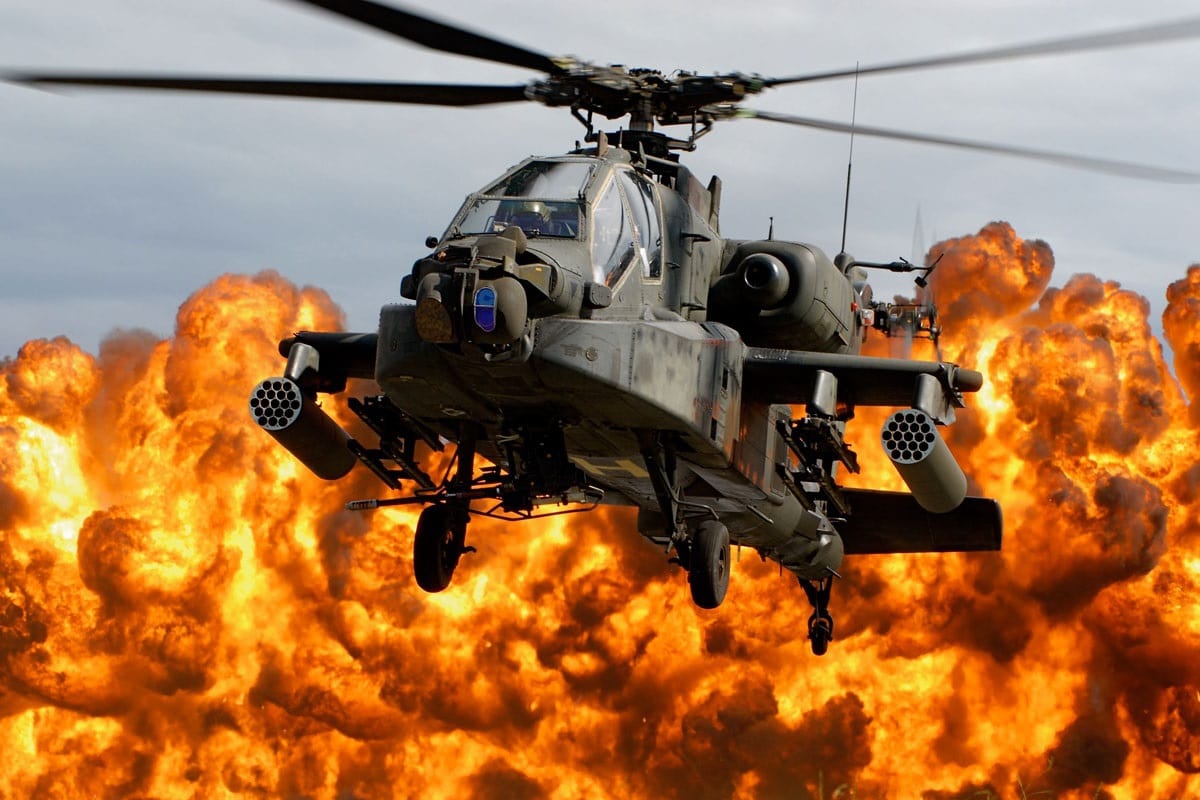
AH-64 Apache Helicopter. Image: Creative Commons.
“The 90-degree angles inherent to helicopter design, as well as how these platforms operate, almost preclude them from ever achieving the sort of low observability that’s possible in bomber or fighter designs, but it is possible to design a helicopter that’s far less observable than its in-class peers and precursors, earning that coveted ‘stealth’ designation, even if it will not be nearly as sneaky as its fixed-wing sisters-in-service, according to Alex Hollings of Sandboxx.com.
Osama Bin Laden Raid Is a Case In Point
Even though stealthiness on helicopters is notoriously difficult, there is one use case that stands out. The SEAL Team Six raid on Osama Bin Laden in May 2011 used two stealthy MH-X Black Hawk helicopters in Pakistan. Operation Neptune Spear was ultimately successful, but not before the SEALs went through some drama with the Black Hawks.
The idea behind the raid was to use the two stealth Black Hawks to allow the main element of SEALs to fast-rope into the compound. The other helicopter was supposed to set down and infiltrate more personnel and dog handlers. But one of the Black Hawks crashed inside the walls. Nobody was hurt, but it threw a wrench into the plans. The operators destroyed the helicopter so no one could take the stealth technology and use it again.
However, not all components were eliminated. The sleek tail section was still intact, and many media outlets around the world showed a photo of it. This demonstrated that stealth helicopters could be built from existing airframes.
The Comanche Helicopter Program Was a Grade-A Failure
There is still just too much vibration and noise to make a helicopter fully stealthy. One attempt at a low-observable helicopter was unsuccessful. The US Army’s RAH-66 Comanche program ultimately failed. This was a neat-looking helicopter, and the Army spent $7 billion developing it before it was canceled.
Boeing and Sikorsky built the Comanche, and the Army was excited to have a new helicopter after decades of using the UH-1 “Huey” Iroquois and UH-60 Black Hawk as utility helicopters. The Comanche was also supposed to replace the OH-58 Kiowa scout helicopter.
But only two Comanches were built. The helicopter did have stealth attributes, with a smooth design and radar-absorbent materials. The paint job was also supposed to suppress infrared signals. The five-blade main rotor was not as loud. The Army figured that the Comanche was much more radar evasive than the Apache attack helicopter.
But the features were never technologically mature. The Comanche was a paper tiger, and the ambitious attributes were expensive and unwieldy to manufacture at high levels. The software would not integrate well with the hardware. The Comanche faced difficult issues, and the Army finally gave up. None of the radar-evasive helicopters were ever built in serial production.
After that acquisition disaster, the US military did not want to try the stealth helicopter again. The design was just unworkable, and the various technologies were difficult to integrate. When I was in the US Army, the only thing that was even remotely stealthy I saw was a Black Hawk painted all black, rumored to be used by Delta Force. This was not even an active-duty aircraft, but more a helicopter headed to a museum to entertain tourists.
Could We Ever See Another Attempt for a Stealth Chopper?
However, there is always a chance the US military could give the stealth helicopter another shot. Radar-evading technologies have become more mature, and coatings can be improved with each attempt to make airplanes stealthier. It is just the nature of a helicopter’s inner and outward workings that are so difficult for manufacturers to navigate. We may never see a stealth rotary-wing aircraft again.
About the Author: Brent M. Eastwood
Author of now over 3,000 articles on defense issues, Brent M. Eastwood, PhD is the author of Don’t Turn Your Back On the World: a Conservative Foreign Policy and Humans, Machines, and Data: Future Trends in Warfare plus two other books. Brent was the founder and CEO of a tech firm that predicted world events using artificial intelligence. He served as a legislative fellow for US Senator Tim Scott and advised the senator on defense and foreign policy issues. He has taught at American University, George Washington University, and George Mason University. Brent is a former US Army Infantry officer. He can be followed on X @BMEastwood.