Nevada-Class Battleships Changed U.S. Warship Design With “All-Or-Nothing” Armor
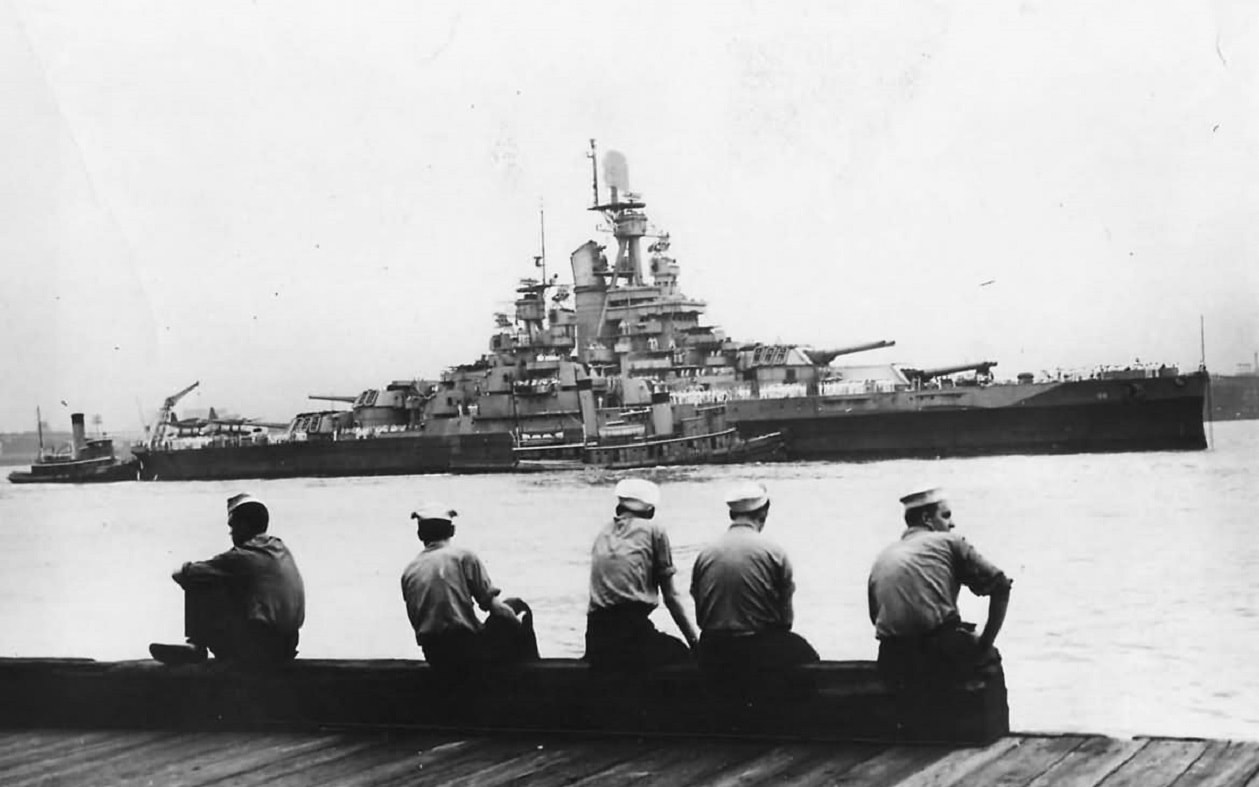
The Nevada-class battleships were a small, two-ship class, but had an outsized influence on subsequent United States Navy ships. They represented a significant break from earlier capital ships and established a new ship design that would influence the United States Navy’s ship design for many years to come.
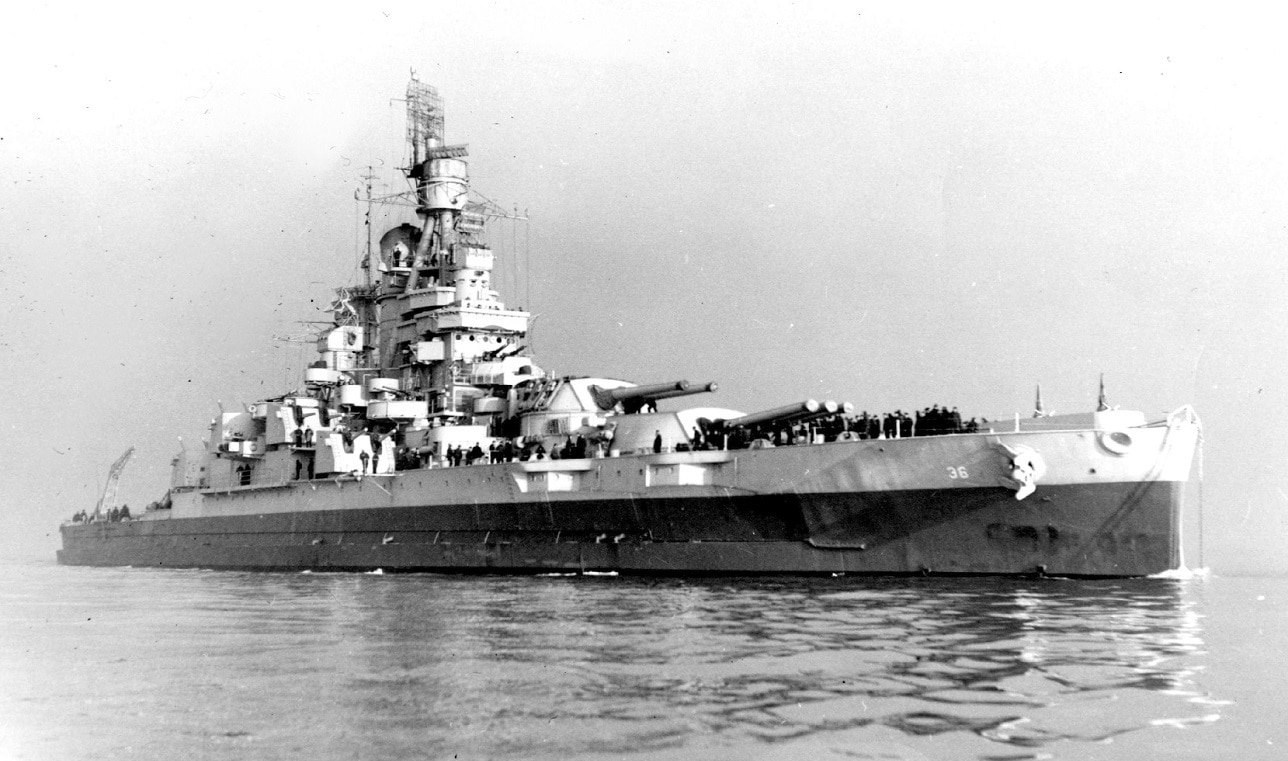
USS Nevada. Image Credit: Creative Commons.

Underway off the U.S. Atlantic coast, 17 September 1944. Photographed from a blimp of squadron ZP-12. Official U.S. Navy Photograph, now in the collections of the National Archives.
An All-or-Nothing Design
A significant aspect of the ship’s uniqueness was a design philosophy that eschewed incremental adjustments and tweaks to previous designs, opting instead for a from-scratch reassessment of battleship optimization. First and foremost, the Nevada-class embraced an “all-or-nothing” approach to its armor protection.
Rather than spreading armor protection around all parts of the ship, the Nevada-class instead armored vital parts of the ship — main gun turrets, magazines, vital machinery, and fuel areas — as much as possible. Sections of the ship that took secondary importance were either lightly armored or not armored at all.
Though not without its detractors at the time, it would prove to be a prescient design choice, one that armored only what was truly relevant to the battleship’s prowess at sea and reflected the reality that warships would be hit and would need to absorb or deflect direct hits.
The class also introduced treble-barreled gun turrets to United States Navy warships, which optimized weight and battle efficiency, enabling the Nevadas to point no fewer than 10 14-inch guns outward — a significant amount of firepower.
But the Nevada-class was not only well-armed and well-armored, but also featured modernized propulsion systems, opting for oil-fired boilers in lieu of the then-ubiquitous coal boilers then in service on many warships worldwide. The higher energy density of coal simplified ship logistics, extended range, and reduced the manpower demands of the ships compared to their predecessors.
Interwar Trials
Though completed during the First World War, the Nevada-class came into its own during the interwar period. Used primarily for fleet exercises and diplomatic visits, the ships helped refine the United States Navy’s operations in the lead-up to the Second World War.
The lead ship of the class, the USS Nevada, also underwent extensive modernization, with improved anti-aircraft defenses, reinforced deck armor to better protect against aircraft fire, and integrated modernized fire control technology.
But the ship’s reputation was cemented by their experience just before the United States entered the Second World War, on December 7th, 1941, during the Imperial Japanese attack on Pearl Harbor.
The Pearl Harbor Raid
Though the United States Navy would ultimately ride out the attack and effectively cripple the Imperial Japanese Navy just six months later during the Battle of Midway, the Japanese would strike several blows against the two-ship Nevada-class during their battle.
The U.S. Navy subsequently explained what happened after the Japanese targeting of the battleship. “The damaged Nevada got underway at 0840, about a half-hour after she was torpedoed, backed clear of her berth, and began to steam down the channel toward the Navy Yard,” the Navy writes.
“The slowly moving battleship was an attractive target for Japanese dive bombers, which hit and near-missed her repeatedly, opening up her forecastle deck, causing more leaks in her hull, starting gasoline fires forward and other blazes in her superstructure and midships area. Now in serious trouble, Nevada was run aground on the Navy Yard side of the channel, just south of Ford Island.”
“As her crew fought her many fires, the ship twisted around until she was facing back up the harbor. With the help of tugs, Nevada then backed across the way and grounded, stern-first, on the other side of the channel. Her old, much-modified structure proved anything but watertight, and water traveled inexorably throughout the ship. By the following day, she had settled to the bottom, fortunately in fairly shallow water. There she was to remain for over two months, the subject of one of the first of Pearl Harbor’s many demanding salvage projects. Of USS Nevada’s crew of nearly 1500, fifty officers and men were killed in action during the Pearl Harbor raid.”
War’s End and Postwar Years
Ultimately, the USS Oklahoma would be lost.
At the same time, the USS Nevada would be reflected and repaired, seeing service in the Aleutian Islands, and in support of the Normandy landings during D-Day, aiding operations off the coast of France as well as in the Pacific.
The USS Nevada’s ultimate fate was sealed during the spate of nuclear testing that followed the Second World War.
In 1946, the battleship participated in atomic testing at Bikini Atoll in the Pacific. Unexpectedly, the ship survived both an underwater nuclear detonation and an airburst, though the ship’s structure was deeply damaged and irradiated.
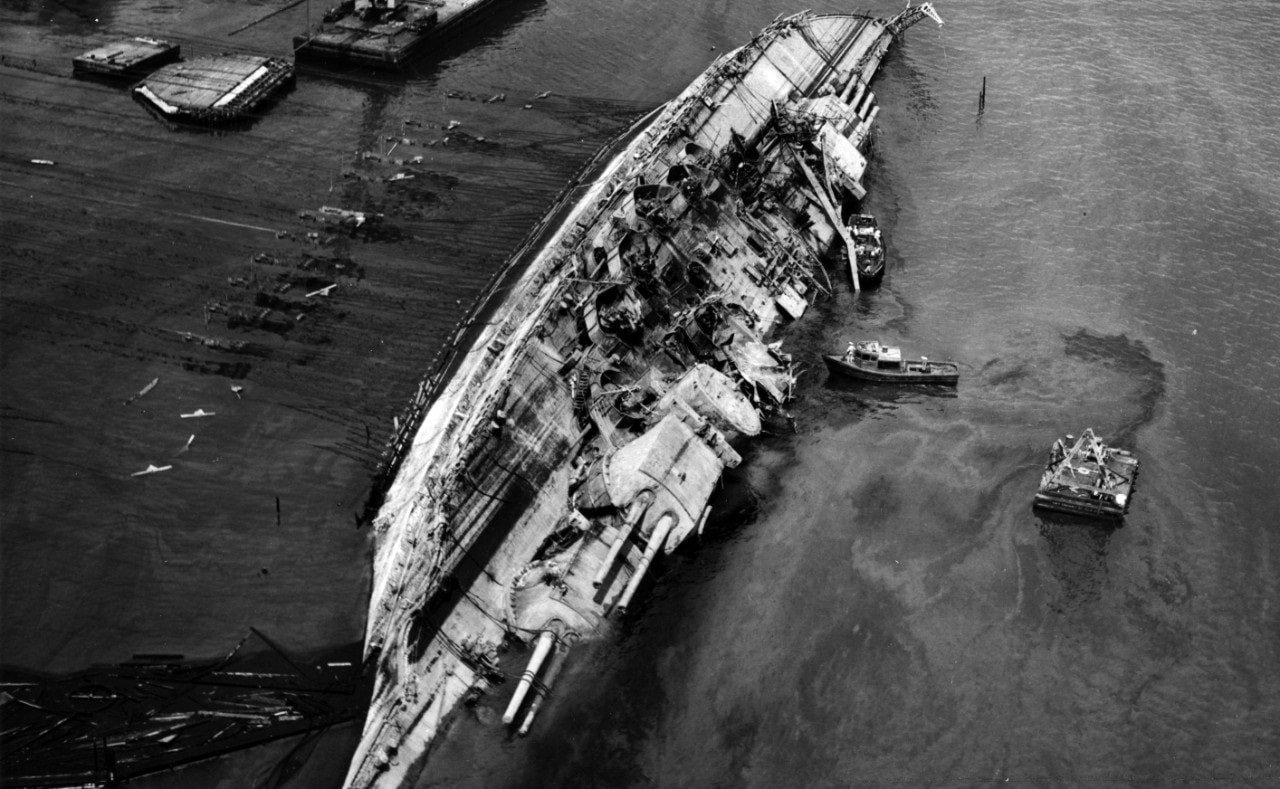
The USS Oklahoma, moored at Ford Island, Pearl Harbor, was sunk by Japanese aircraft during the attack on Pearl Harbor. A total of 429 crewmen aboard the USS Oklahoma were killed in the early morning hours of Dec. 7, 1941, after the ship quickly capsized from the numerous torpedo hits.
About the Author: Caleb Larson
Caleb Larson is an American multiformat journalist based in Berlin, Germany. His work covers the intersection of conflict and society, focusing on American foreign policy and European security. He has reported from Germany, Russia, and the United States. Most recently, he covered the war in Ukraine, reporting extensively on the war’s shifting battle lines from Donbas and writing on the war’s civilian and humanitarian toll. Previously, he worked as a Defense Reporter for POLITICO Europe. You can follow his latest work on X.