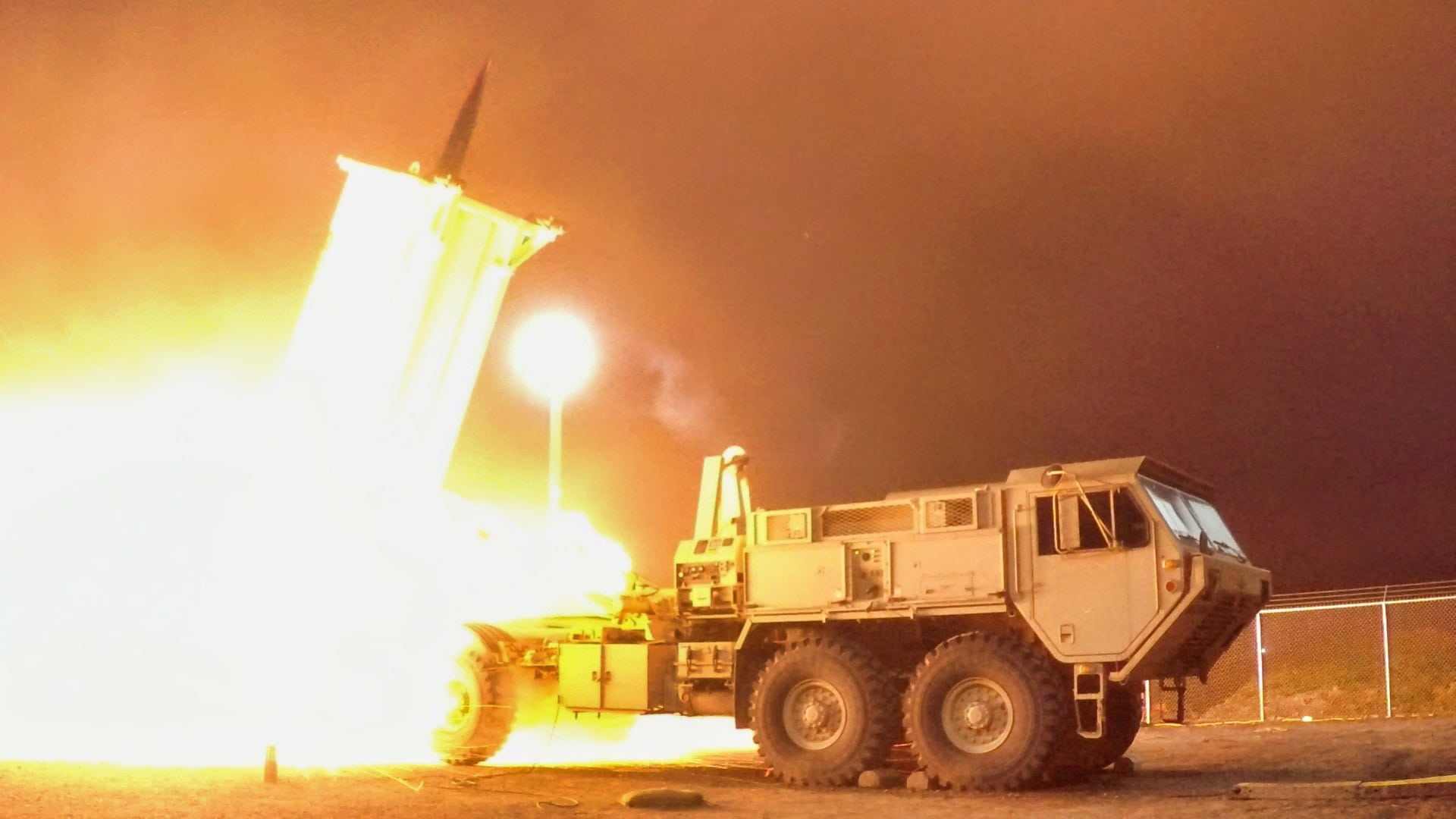
Key Points and Summary – As China’s anti-ship capabilities grow, questions have arisen about equipping U.S. Navy vessels with land-based defenses like THAAD or PAC-3.
-Experts argue these systems are ill-suited for maritime use due to their bulk, high power requirements, and design optimization for fixed land sites.
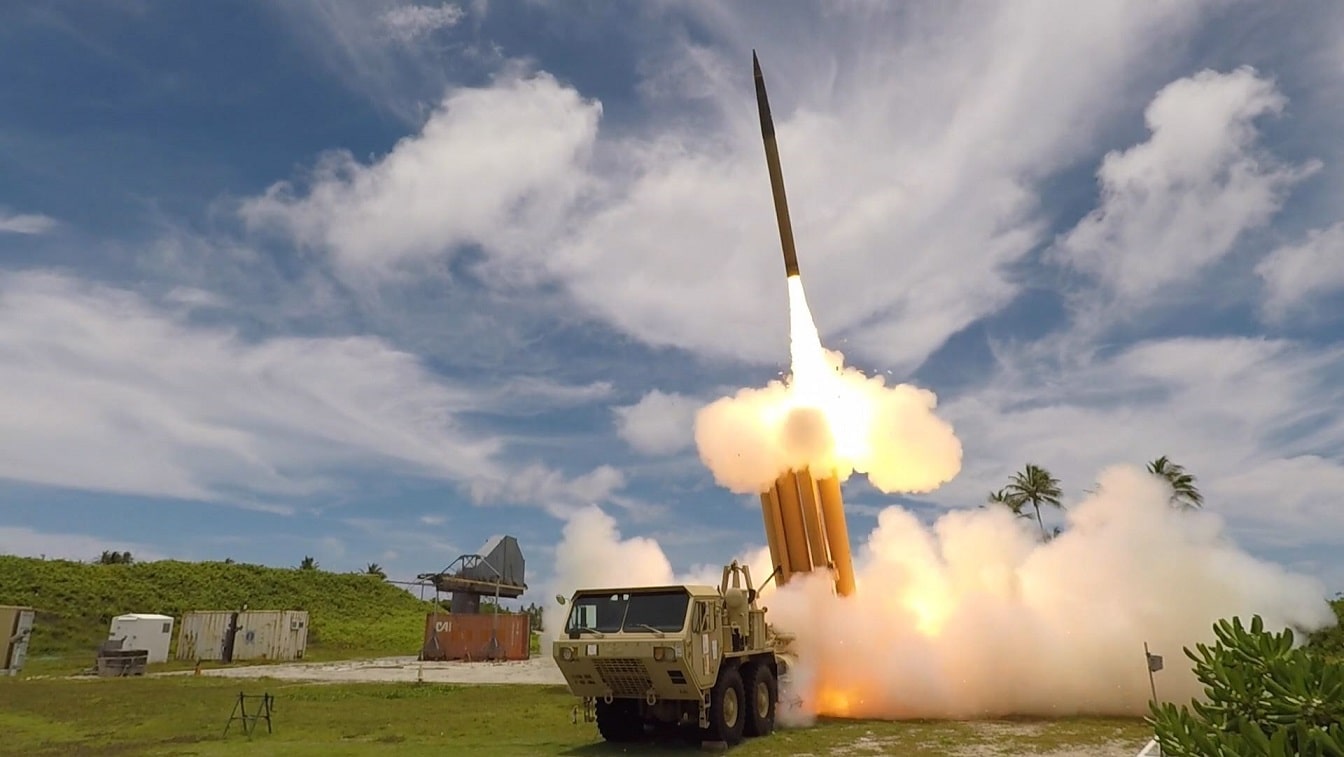
THAAD Missile Defense Battery Firing. Image Credit: Lockheed Martin.
-Instead, the Navy relies on the superior, purpose-built Aegis Combat System with SM-3 and SM-6 interceptors.
-While PAC-3 remains vital for protecting forward island bases, the Pentagon is currently focusing on a new acquisition model to boost missile production rates to meet high operational demands.
China’s Anti-Ship Threat: Why the US Navy Is Sticking with Aegis Over THAAD Upgrades
The reach of China’s anti-ship weaponry, and China’s further ability to target U.S. installations in Guam, the Philippines, and Japan, raise an important question: Are critical nodes and U.S. Navy ships adequately protected?
Could the integration of additional air-defense assets such as Terminal High Altitude Area Defense (THAAD) or PAC-3 missiles onto ships boost their defensive capabilities?
Terminal High Altitude Area Defense — an Alternative?
THAAD is poorly suited to protect warships at sea and has not been tested for use onboard U.S. Navy ships. THAAD was conceived as a land-based, fixed-site missile-defense system.
It was expressly designed to defend specific land areas, such as cities, airports and air bases, port facilities, and other high-value military or political targets against short- and intermediate-range ballistic missiles during their terminal phase.
Furthermore, THAAD batteries are bulky. They are a heavy burden when deployed on truck-mounted launchers, fire control nodes—especially with their AN/TPY-2 radar—and they require a large amount of power. Integrating these assets onto a ship would not be practical. Warships do not have the available space, and perhaps only the Navy’s nuclear-powered aircraft carriers could generate enough electricity to power these systems.
The batteries would also be ill-equipped to protect a moving ship—movement would complicate radar stability and fire control. Instead, THAAD’s AN/TPY-2 radar is optimized for ballistic missile detection at long ranges from fixed areas along known threat corridors.
THAAD is built for area defense, not the defense of individual platforms. Ships need layered air defenses while they move, something the Navy’s air and missile defenses were specifically designed to provide.
Lastly, the U.S. Navy already has a sea-based ballistic-missile-defense capability in the form of Aegis, which fires Standard Missile (SM)-3 interceptors for midcourse defense and SM-6 interceptors for terminal or endo-atmospheric interception. Aegis ships can protect other ships while underway and are increasingly integrated into naval task forces.
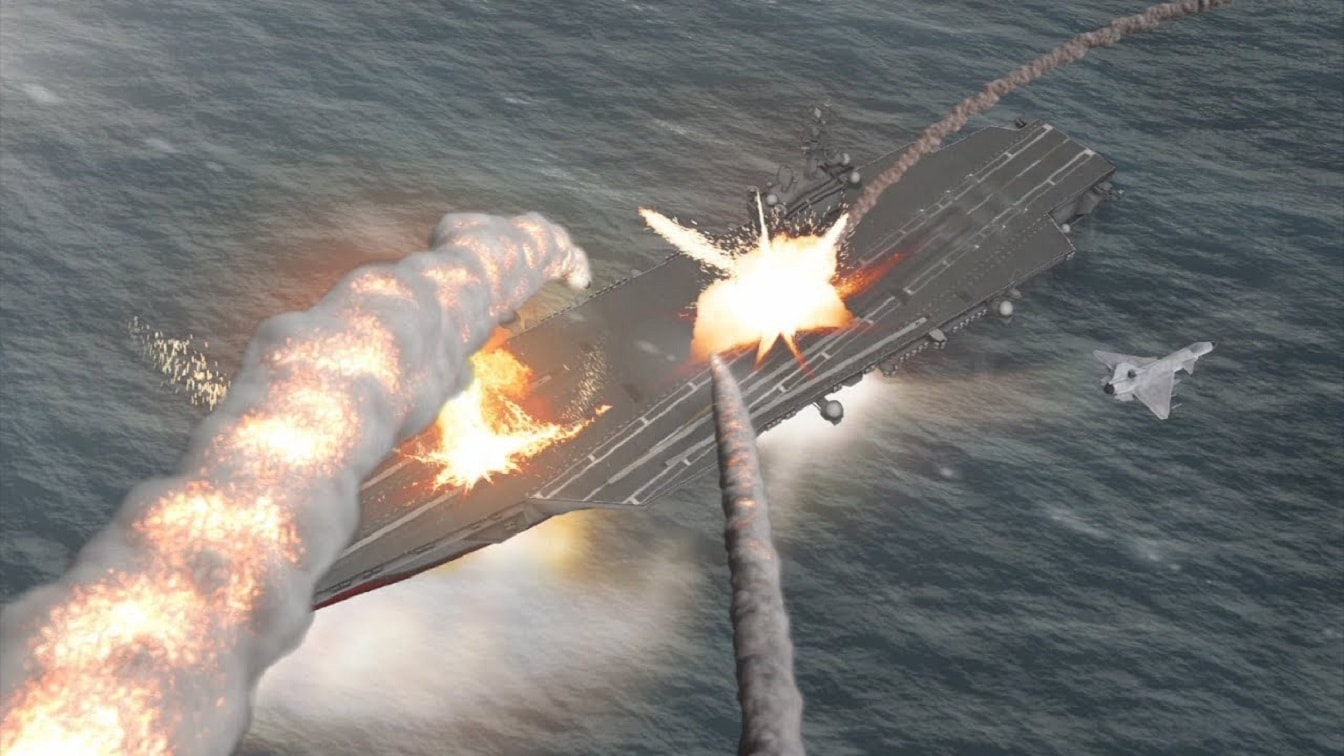
YouTube Screenshot of a Simulation of China Firing a DF-21 ASBM.
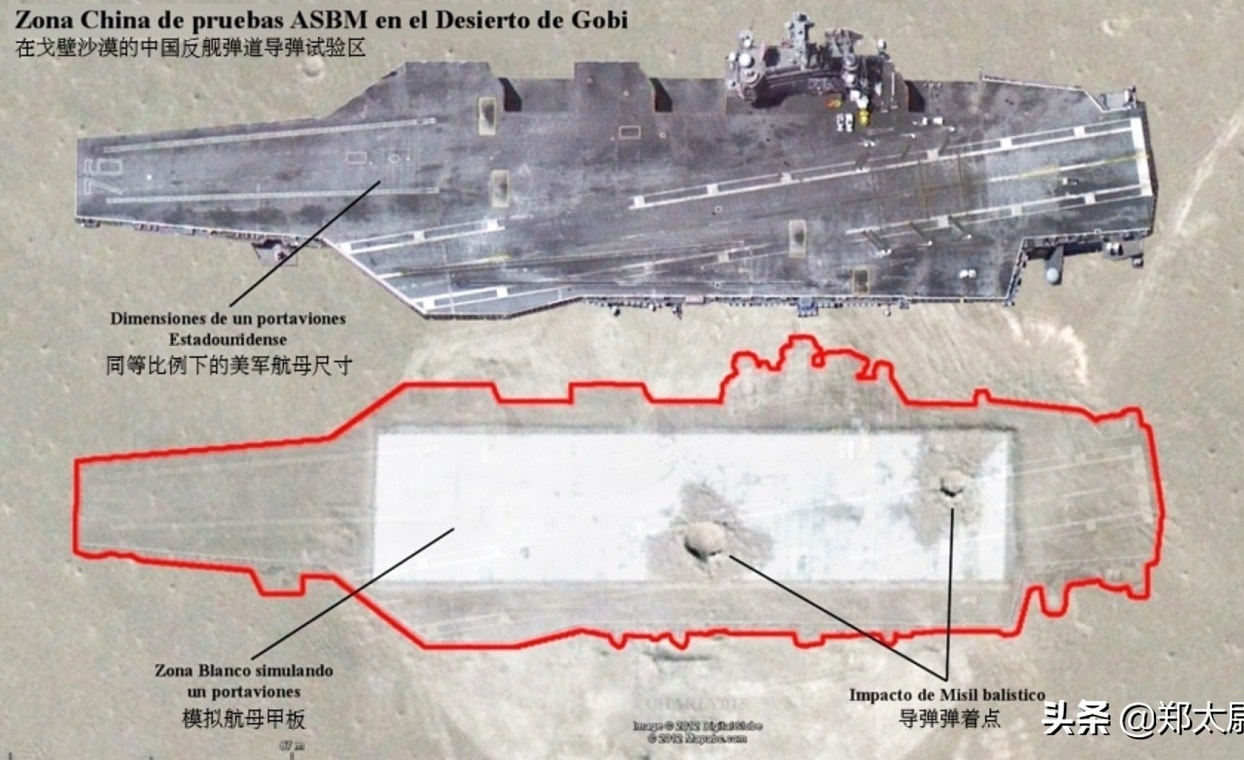
Image from the now closed WantChinaTimes. This shows a mock attack on a U.S. Navy aircraft carrier.
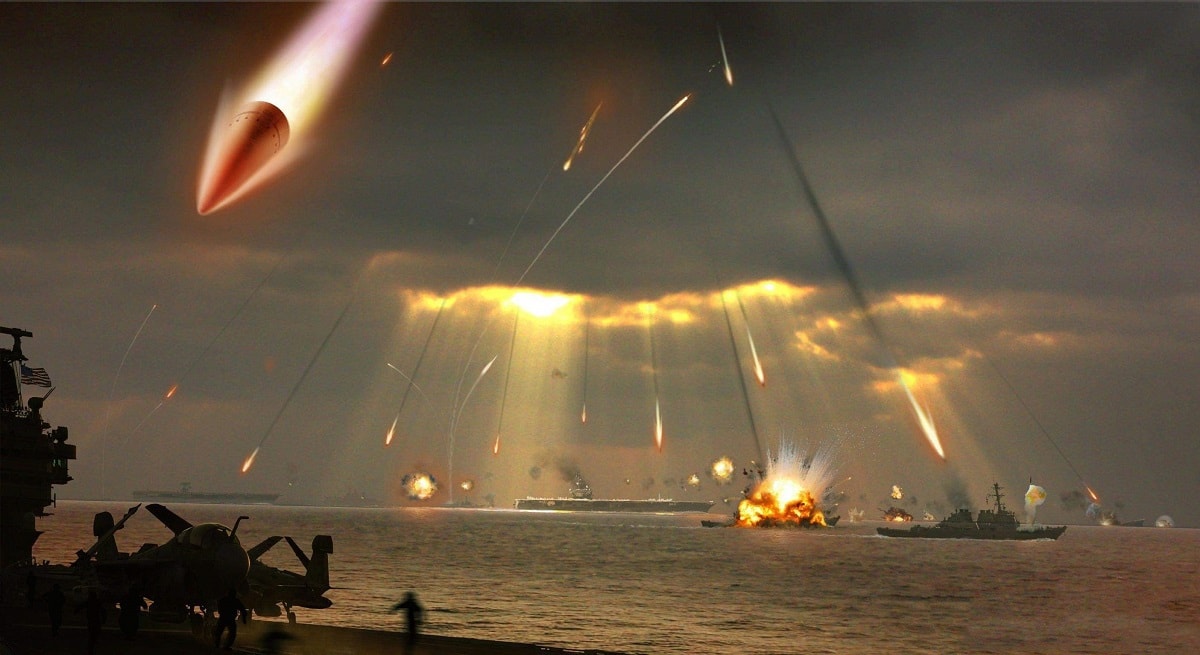
Depiction of Chinese missiles attacking the U.S. Navy. Image: Chinese Internet.
An attempt to integrate THAAD onto ships would not only duplicate Aegis’ capabilities, it would also be less effective than Aegis and incredibly difficult to manage.
PAC-3
Like THAAD, PAC-3 is a land-based air- and missile-defense system optimized to defend fixed sites against ballistic missiles, cruise missiles, and aircraft. Its relevance to Navy ships is therefore indirect. PAC-3 is truck-mounted and ill-suited to launch from platforms that move.
It has not been tested for air defense at sea, a mission for which Aegis is optimized. Where PAC-3 would be most useful in the Indo-Pacific is on forward bases such as Guam, Okinawa, and other islands to protect command nodes, fuel and ammunition depots, airfields, and other facilities.
PAC-3 is very effective against short-range ballistic missiles and terminal defense. It is also much more mobile than THAAD and can protect high-value assets rather than providing broad coverage. Defending forward bases frequented by Navy ships could be a use case for PAC-3.
But it would also mesh well with other allied air defenses, as Japan and South Korea also field the PAC-3 missile, which would work with other layers in the air defense chain.
Complementing the Aegis and other air defense systems are warships’ hard-kill and soft-kill systems that provide a last-ditch layer of protection. The Phalanx Close-In Weapon System, electronic countermeasures, decoys such as the Nulka missile, and jamming systems either shoot down or confuse missiles’ seekers.
Boosted Production?
Perhaps the most acute shortcoming affecting Navy missile defense is missile production. The industrial base was slow to adjust to the heavy supply demands of an attritional fight like the kind observed in Ukraine. But that is seemingly set to change.
The Department of Defense recently announced what it called a “transformative new acquisition model” intended to increase procurement rates for critical munitions and reduce long lead times.
Lockheed Martin, the Pentagon’s industry partner, explained more. ”The framework introduces a new model that provides long-term demand certainty, enabling industry investment, increasing production rates, and driving operational efficiencies,” the firm said in a press release.
“It incorporates a collaborative financing approach designed to preserve initial cash neutrality, allowing industry to invest confidently to meet required production levels. The agreement reflects years of collaboration to modernize acquisition and deliver critical capability at the speed and scale required by today’s security environment.”
What Happens Next?
The reality of missile defense at sea is in some ways uncomfortable. Some missiles may penetrate missile defense layers, and ships must be prepared to accept—and survive—some direct hits or near-misses.
About the Author: Caleb Larson
Caleb Larson is an American multiformat journalist based in Berlin, Germany. His work covers the intersection of conflict and society, focusing on American foreign policy and European security. He has reported from Germany, Russia, and the United States. Most recently, he covered the war in Ukraine, reporting extensively on the war’s shifting battle lines from Donbas and writing on the war’s civilian and humanitarian toll. Previously, he worked as a Defense Reporter for POLITICO Europe. You can follow his latest work on X.