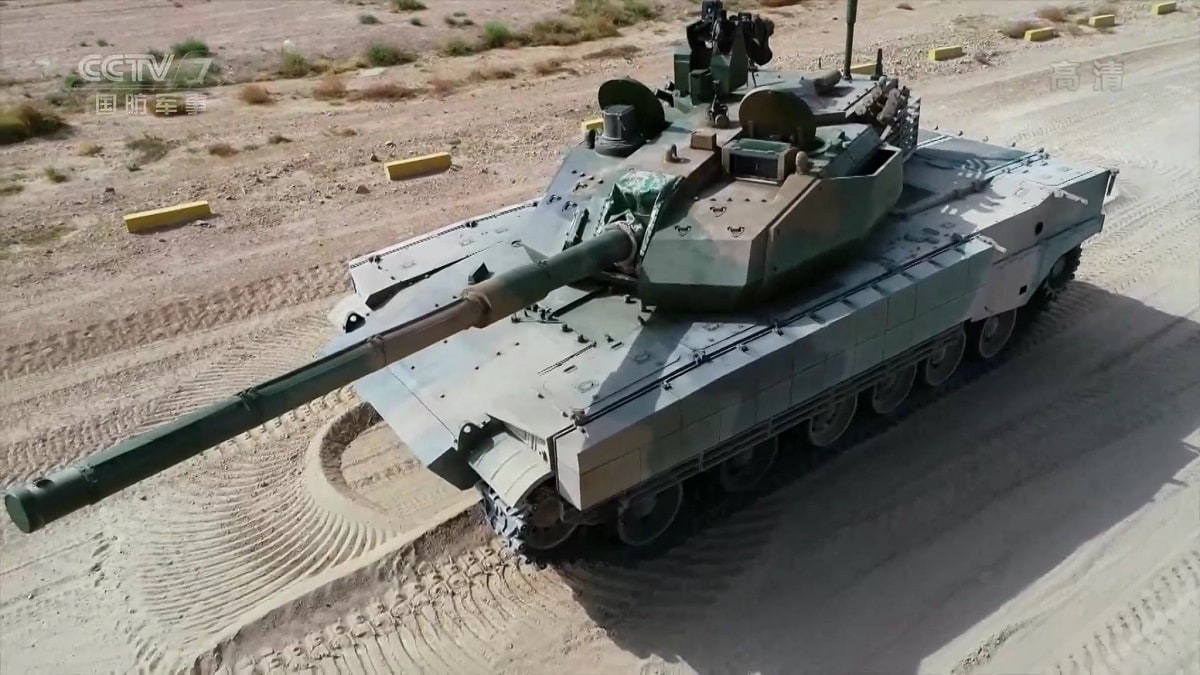
Summary and Key Points: Along the Line of Actual Control, geography shapes everything—especially armor. High altitude and brutal terrain on the Tibetan Plateau punish heavy main battle tanks by cutting engine performance, increasing fuel demands, and constraining recovery and maneuver in narrow valleys. That’s why China’s Type 15 light tank matters in the India theater.
-At roughly 30 tons, it trades some protection for mobility, a better power-to-weight ratio, and an engine tuned for high-altitude operations—useful for crisis response, coercive signaling, and limited armored thrusts rather than deep invasion.
-Meanwhile, recent disengagement steps reduce tension, but mistrust still caps stability.
China’s “Coercion Posture” vs India—and the Type 15 Is the Tip
The People’s Liberation Army’s force posture toward India is dictated by geography: The Line of Actual Control runs through some of the most complex, difficult terrain on Earth.
Beijing’s strategic force posture toward India is less oriented toward invasion and more toward coercion. The PLA wants to deter Indian pressure along the Line of Actual Control and retain escalation dominance, while also keeping the ability to respond to crises and conduct armored thrusts across the Line to assert control. It does not seek to roll through wide swaths of the Indian subcontinent.
Within this operational context, the PLA’s tanks play an important role, however constrained it is by the area’s unique geography. The high Himalayan altitudes along the Line of Actual Control and on the Tibetan Plateau complicate vehicle operations, including those of tanks.
Altitude reduces the amount of power engines can generate, and freezing temperatures cut fighting efficiency. Tight valleys and harsh terrain limit mobility.
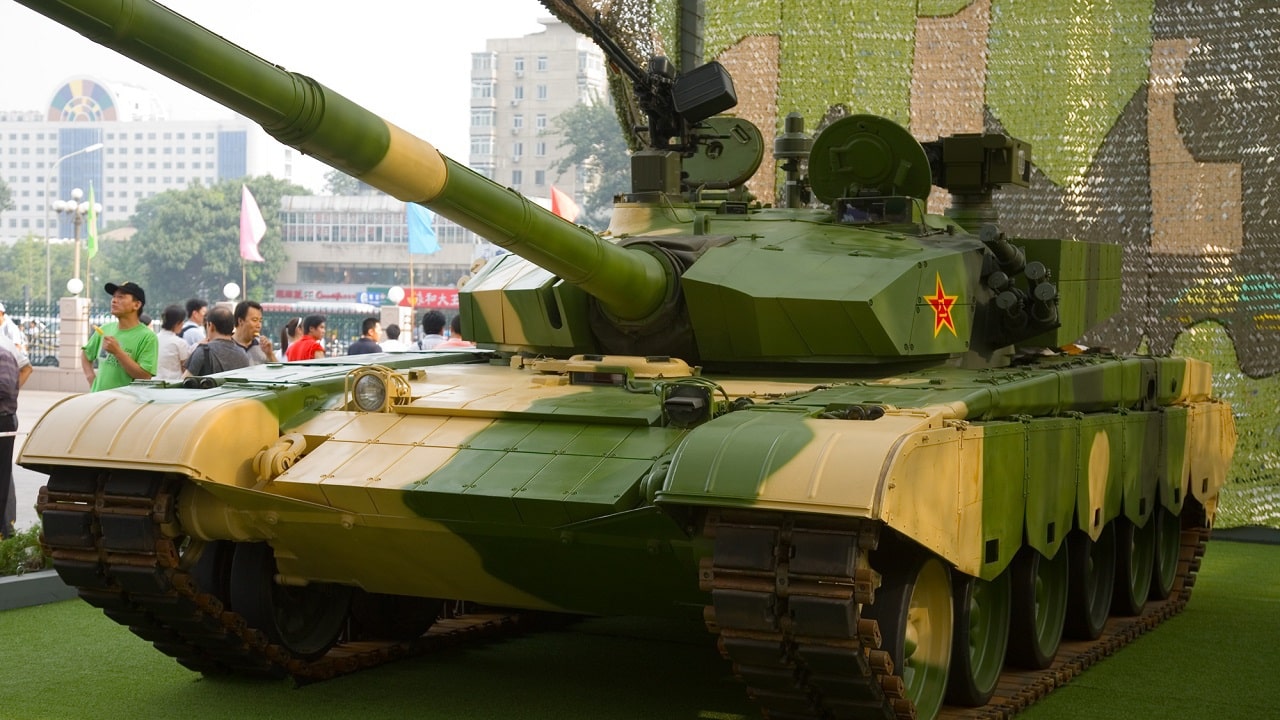
Type 99. Image Credit: Creative Commons.
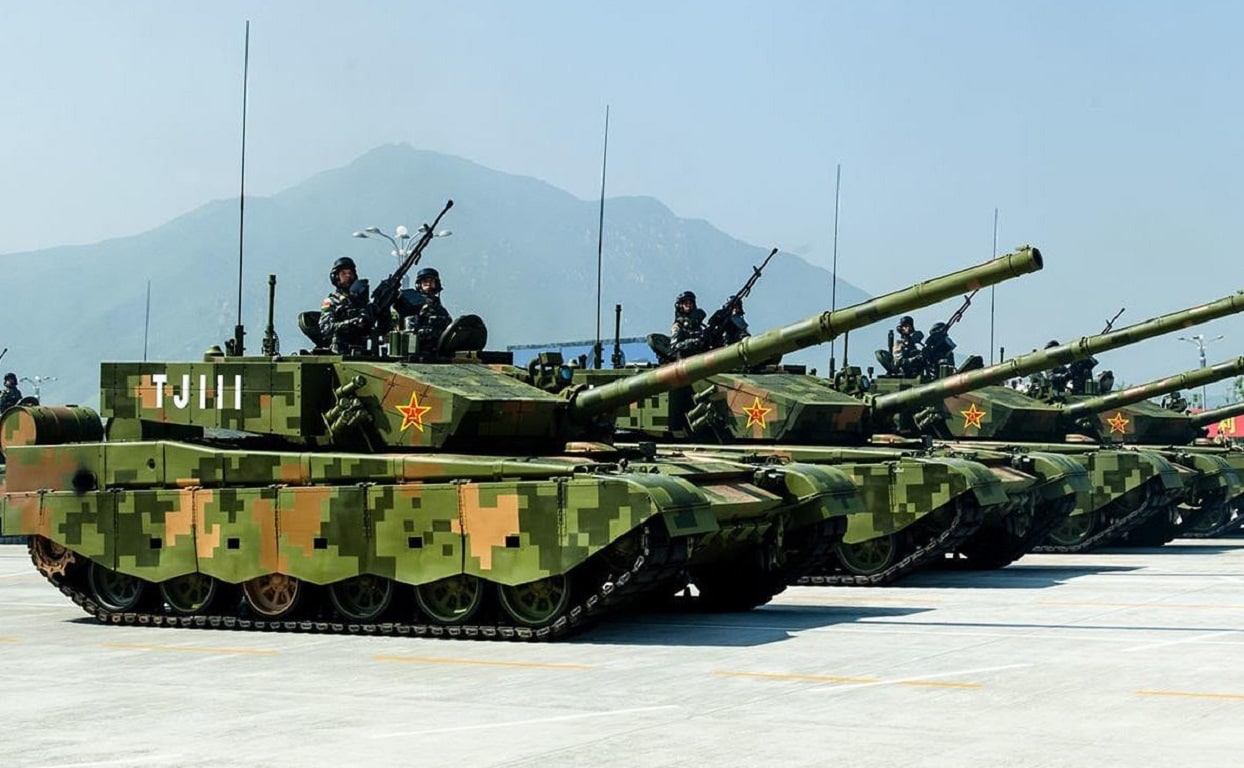
Type 99 Tank from China. Image: Creative Commons.
These conditions favor light, mobile tanks over the traditional main battle tank. Some of the PLA’s standard main battle tanks, the Type 96 and Type 99, weigh in at the low-to-mid 50-ton range and were originally designed for a possible high-intensity conflict with Russia in mainland China.
And while these main battle tanks can certainly deploy to the Himalayan region with sufficient logistical support, they are not optimized for high-altitude operations. Fuel consumption would be high, and recovery time would constrain mobility.
Light Tank
It is for these reasons that the Type 15 light tank is particularly relevant to the Indian theater for the People’s Liberation Army.
Tipping the scales at around 30 tons, the Type 15 does make certain design compromises, trading the robust, comprehensive armor protection of larger main battle tanks for a more favorable weight-to-power ratio.
This gives the tank superior tactical and strategic mobility in the mountainous terrain it could expect to encounter, and the Type 15’s engine also is optimized for high-altitude operations.
The Line of Actual Control
Recent moves by India and China indicate a desire to reduce tensions.
“In October 2024, Indian leadership announced an agreement with China to disengage from remaining standoff sites along the LAC two days before a meeting between President Xi and Indian Prime Minister Modi on the sidelines of the BRICS Summit,” the annual Department of Defense report on China explains.
“The Xi-Modi meeting marked the onset of monthly high-level engagements between the two countries, where parties discussed border management and next steps for the bilateral relationship, including direct flights, visa facilitation, and the exchange of academics and journalists. China probably seeks to capitalize on decreased tension along the LAC to stabilize bilateral relations and prevent the deepening of U.S.-India ties; however, India probably remains skeptical of China’s actions and motives. Continued mutual distrust and other irritants almost certainly limit the bilateral relationship.”
The Relationship with Russia
Although the Russia-China relationship has not always been smooth, the countries enjoy cordial ties today and do not seem likely to engage in any direct confrontation.
As evidence, take Russia’s removal of forces along the Russia-China border following Moscow’s full-scale invasion of Ukraine in 2022. But while they may be somewhat friendly, the two countries have yet to fully embrace each other militarily.
“Despite continued growth in their relationship, Beijing and Moscow remain unwilling to establish a formal defense alliance with mutual security guarantees,” the annual Department of Defense report on China explains.
“China and Russia continue to harbor a mutual distrust of each other, which likely prevents cooperation on areas each side perceives as sensitive. China also has stopped short of providing Russia with lethal aid for use in its war against Ukraine. This has allowed Beijing to preserve its close ties with Moscow while mitigating reputational or economic costs associated with Russia’s global behavior.”
Given China’s laser focus on Taiwan and its desire for eventual reunification with that country—by force if necessary—a greater role is reserved for the People’s Liberation Army Air Force and Navy at the expense of the Army.
And while there are similarities between Taiwan’s mountains and the terrain that defines the Line of Actual Control, securing a foothold on that island would first require an effective air and naval operation, making the PLA’s role secondary.
About the Author: Caleb Larson
Caleb Larson is an American multiformat journalist based in Berlin, Germany. His work covers the intersection of conflict and society, focusing on American foreign policy and European security. He has reported from Germany, Russia, and the United States. Most recently, he covered the war in Ukraine, reporting extensively on the war’s shifting battle lines from Donbas and writing on the war’s civilian and humanitarian toll. Previously, he worked as a Defense Reporter for POLITICO Europe. You can follow his latest work on X.