
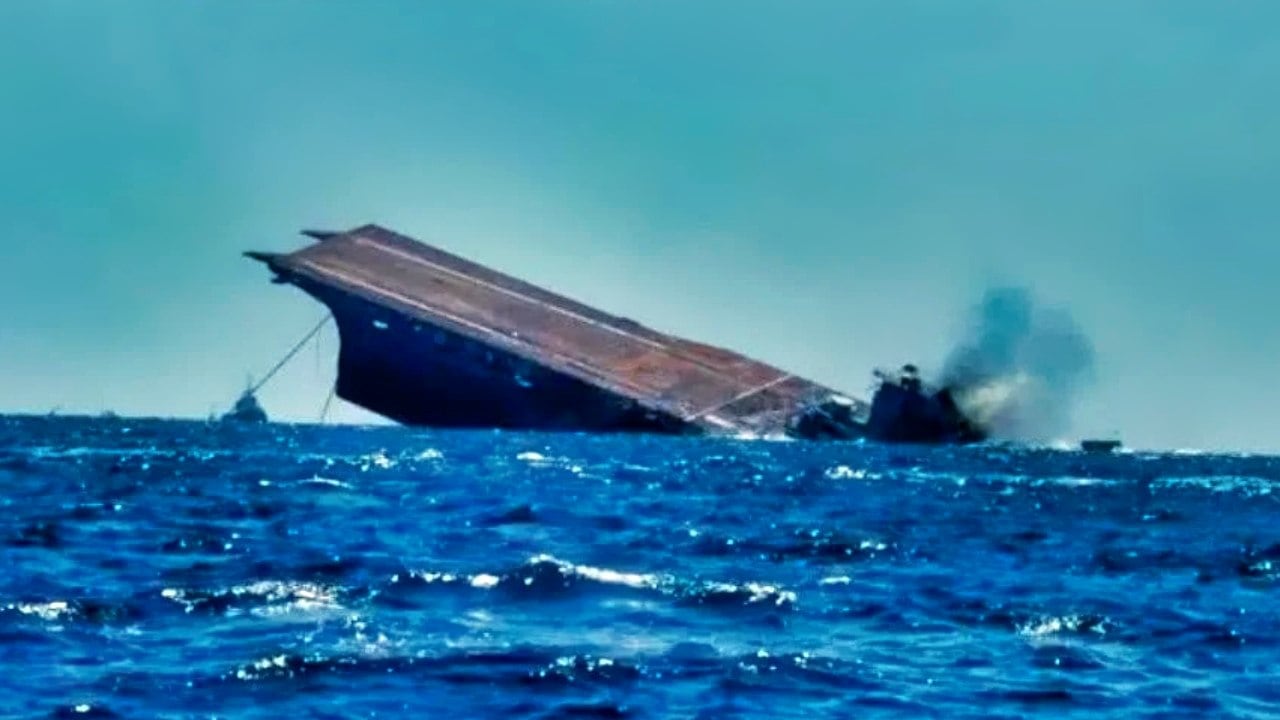
Can Iran’s “Black Hole” Subs Sink a US Supercarrier?
Now that the USS Abraham Lincoln carrier strike group has entered U.S. Central Command waters, high-value U.S. naval assets are placed within reach of Iranian weapons at perhaps the most contentious time in the region in decades.

Kilo-Class Submarine Fleet. Image Credit: Creative Commons.
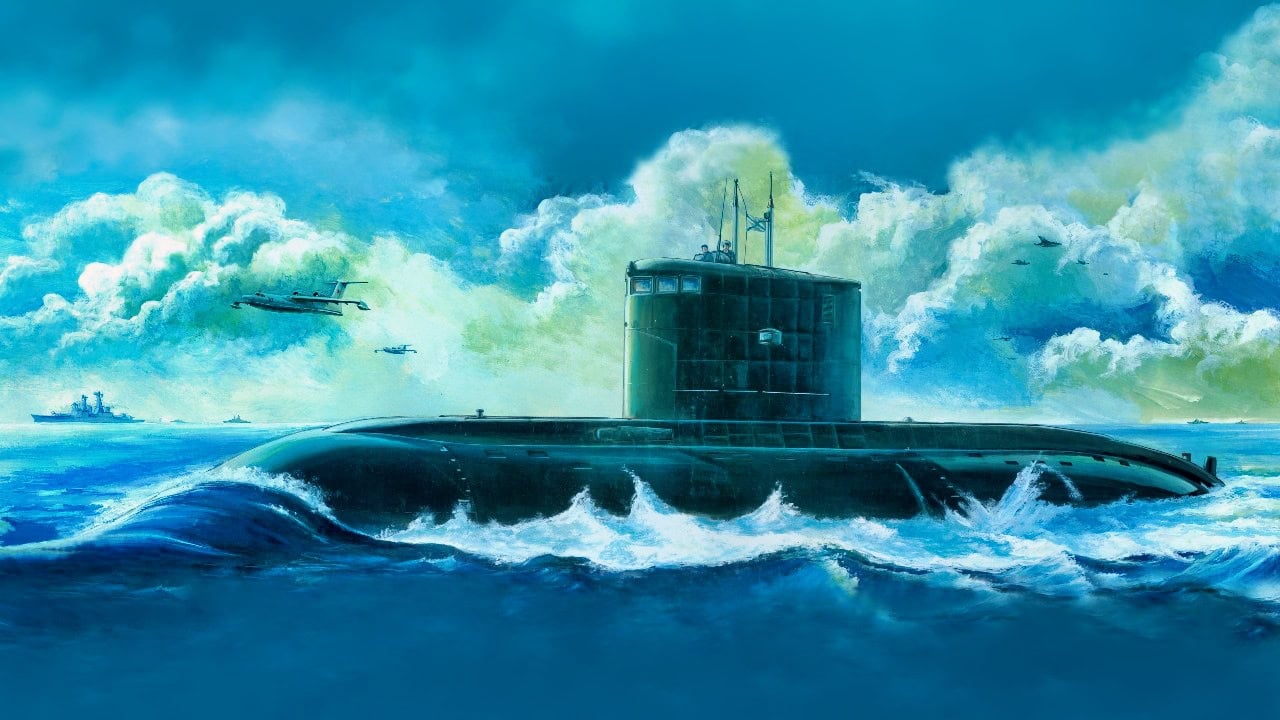
Kilo-Class Submarine
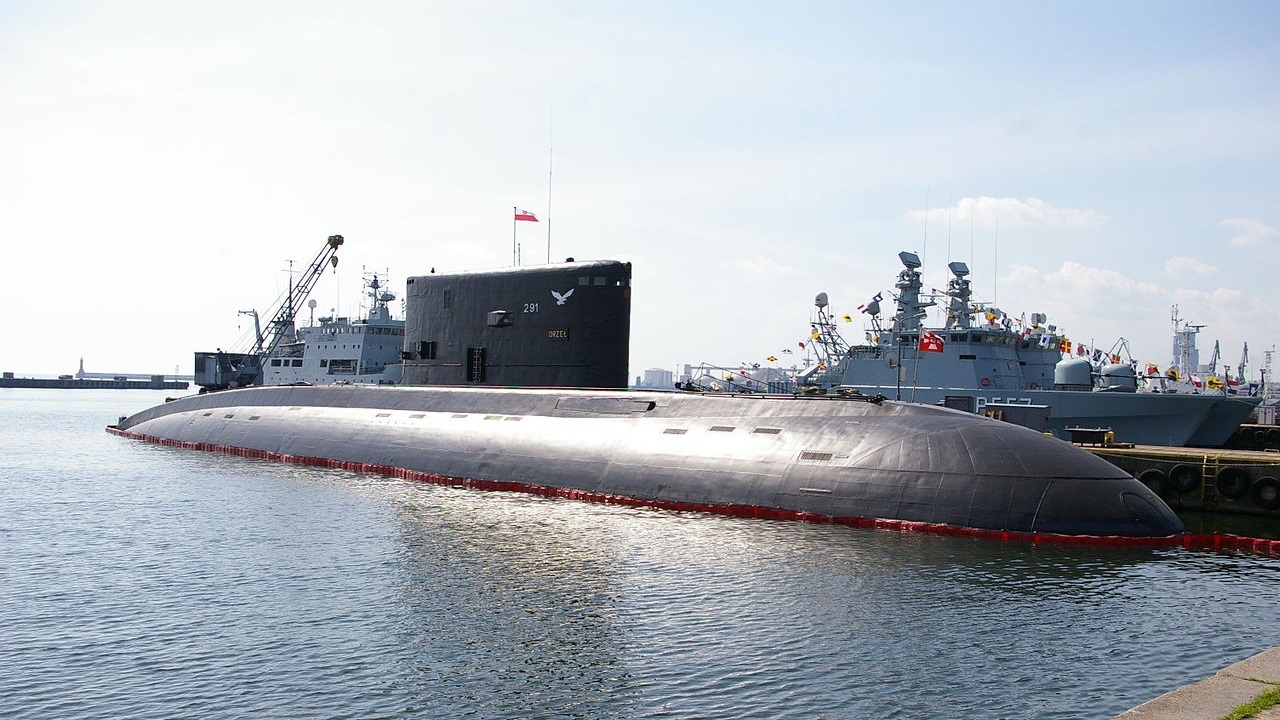
Polish Navy submarine, Kilo-Class.
The deployment comes as Iranian officials warn of the prospects of “all-out war” against the United States in the event of new strikes – a now-familiar escalation from Iran that means a little more now that U.S. surface combatants are operating within Iran’s near seas.
What Can Iran Do?
It’s important to note that Iran’s conventional missile arsenal does not contain weapons with proven ability to hit the continental United States; its ballistic and cruise missiles are essentially regional in range, capable of threatening forces in the Middle East but not the U.S. homeland.
A U.S. carrier strike group operating near the Strait of Hormuz is a different matter, however. Ships must move through predictable sea lanes in one of the world’s most constrained maritime chokepoints (a narrow, strategic passage that is packed full of maritime traffic).
This is where Iranian naval doctrine comes into play. Tehran does not seek to defeat the U.S. Navy in an open battle, if it intends to actually launch strikes at all.
Instead, it would need to focus on sea denial – meaning the goal is to make operations dangerous and costly enough to prevent strikes, rather than attempting to dominate the sea outright (which they cannot achieve).
Iran’s Strategy
When it comes to maritime conflicts, Iran leans on two arms of its military: the regular Islamic Republic of Iran Navy (IRIN) and the Islamic Revolutionary Guard Corps Navy (IRGCN), with the former operating larger submarines and the latter focusing on coastal defense and asymmetric tactics.
That force structure aids Iran’s anti-access/area denial (A2/AD) strategy, leveraging mines, coastal missiles, surface vessels, and submarines to raise the risks for adversaries operating in the Gulf.
The geography of the Strait of Hormuz aids that effort, too. Even though the strait is wider in some places, the usable shipping channels are only about two miles wide in each direction. That means traffic is concentrated into predictable corridors – and in these waters, small submarines operating close to the seabed or coastline can be difficult to detect – and that’s where Iran’s mini subs come into the picture.
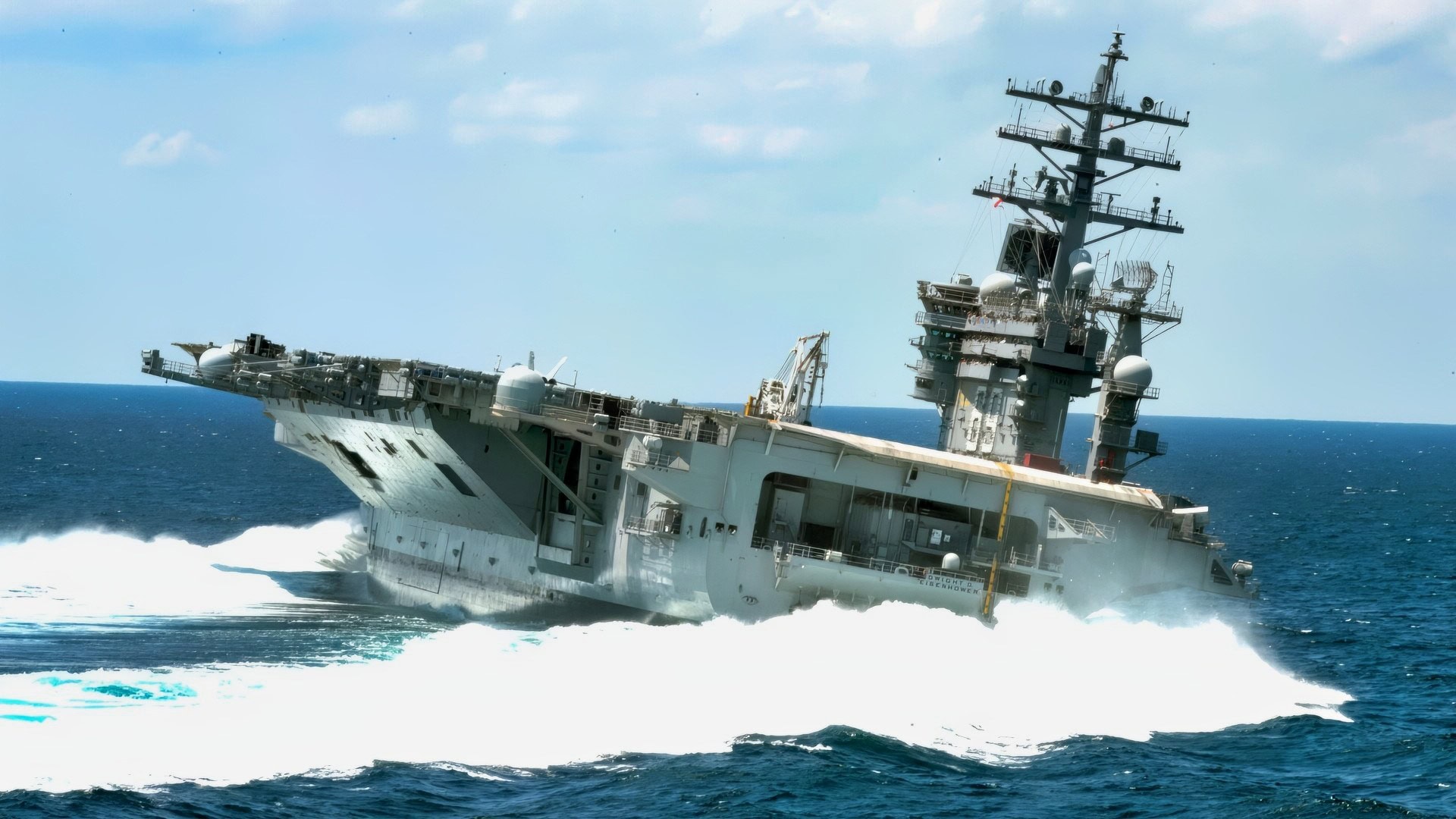
ATLANTIC OCEAN (June 14, 2011) The Nimitz-class aircraft carrier USS Dwight D. Eisenhower (CVN 69) conducts rudder turns during sea trials. Dwight D. Eisenhower completed a nine-month planned incremental availability at Norfolk Naval Ship Yard on June 10 and is scheduled to resume underway operations this summer. (U.S. Navy photo by Mass Communication Specialist 1st Class Christopher Stoltz/Released)
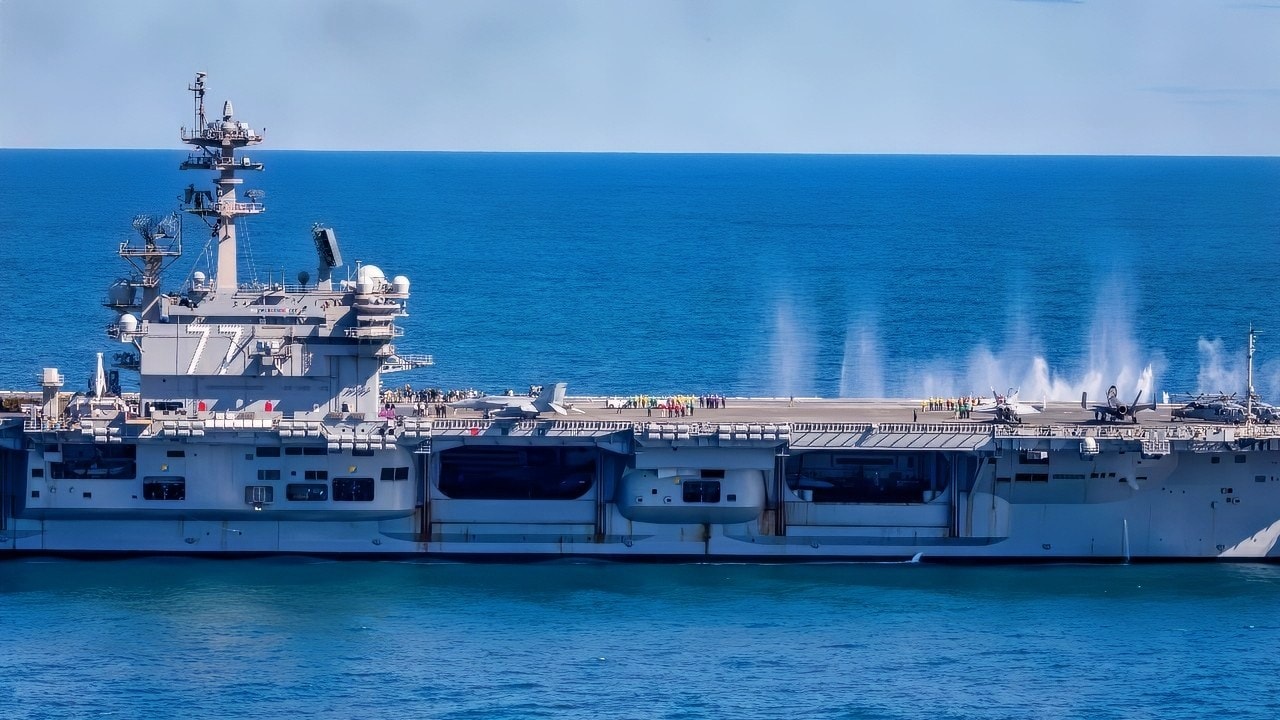
ATLANTIC OCEAN (Oct. 5, 2025) The Nimitz-class aircraft carrier USS George H.W. Bush (CVN 77) transits the Atlantic Ocean while an F/A-18E Super Hornet, attached to the “Pukin Dogs” of Strike Fighter Squadron (VFA) 143 fire rounds into ocean in support of the Titans of the Sea Presidential Review. The Titans of the Sea Presidential Review is one of many events taking place throughout the country to showcase maritime capabilities as part of the U.S Navy’s 250th birthday. America is a maritime nation. For 250 years, America’s Warfighting Navy has sailed the globe in defense of freedom. (U.S. Navy photo by Mass Communication Specialist 2nd Class Mitchell Mason)
Iran’s Mini-Subs and Ambush Boats
Iran’s most numerous undersea platforms are its Ghadir-class midget submarines – a fleet estimated at around 20 or more boats. These submarines are well-suited to Iran’s operational doctrine. They displace roughly 117-125 tons and use diesel-electric propulsion, meaning they run on battery power when submerged to reduce noise.
Midget submarines are optimized for littoral environments – coastal waters where the water is shallow, and sonar performance is impacted by seabed reflections, thermal activity in the water, and heavy civilian traffic noise. Ghadir boats are understood to carry torpedoes and can lay naval mines, making them good ambush tools against surface ships that are transiting chokepoints.
They’re effective tools, but they do have some limitations – particularly when it comes to endurance and survivability. Small diesel-electric submarines cannot remain at sea for long periods, and once detected, they are vulnerable to modern anti-submarine weapons and tactics.
Kilo-Class “Black Hole” Submarines
Mini subs are not the only tool at Iran’s disposal: its most capable submarines are its three Russian-built Kilo-class diesel-electric attack submarines. Kilo boats are significantly larger than the midget subs and can operate in deeper waters beyond the shallowest parts of the Gulf.
The Kilo’s low acoustic signature when running on batteries has earned it the nickname “Black Hole.” They are exceptionally quiet – and when coupled with the fact that the subs can carry heavyweight torpedoes and lay mines, it’s clear what a valuable asset they are for Iranian maritime forces.
However, readiness has been a recurring issue for Iran. Previous reporting has noted that maintenance periods are a persistent problem for the Kilo fleet. A combination of the submarines’ age and the fact that Iran only has three at its disposal means that they are not always available for use – and when they are, it’s unlikely all three will be simultaneously.
What Could Be Targeted – and What Could Happen Next
A carrier strike group is more than just an aircraft carrier: it includes escort destroyers, cruisers, and a number of support ships that provide air defense, logistics, and anti-submarine protection. Iran’s submarines pose the biggest threat to escorts or logistics vessels, rather than heavily defended supercarriers.
The U.S. Navy counters undersea threats like these using layered ASW (anti-submarine warfare) through a combination of MH-60R helicopters equipped with sonar and sonobuoys and P-8A Poseidon aircraft that are designed to detect and track submarines and deploy the Mk-54 lightweight torpedo.
Should Iran choose to attack the U.S. carrier strike group currently approaching, it would trigger a major retaliatory campaign that Iran’s forces would struggle to withstand alone. While Iran has ties with Russia and China, though, there is no indication that either state is prepared to enter a direct naval conflict with the United States over Iranian actions in the Gulf – meaning that, should Iran choose to attack, it would likely result in crippling retaliation that Iranian forces simply don’t stand a chance of surviving.
About the Author: Jack Buckby
Jack Buckby is a British researcher and analyst specialising in defence and national security, based in New York. His work focuses on military capability, procurement, and strategic competition, producing and editing analysis for policy and defence audiences. He brings extensive editorial experience, with a career output spanning over 1,000 articles at 19FortyFive and National Security Journal, and has previously authored books and papers on extremism and deradicalisation.

